At the risk of being repetitious, this is the first of what will be our daily count on this site until the question is answered. Navalny hasn’t been seen by his attorneys since December 6th; he has now been missing for 18 days. U.S. Secretary of State Antony Blinken said again on Saturday: “We are deeply concerned about the whereabouts of Alexei Navalny, who has now been missing in Russia’s prison system for nearly three weeks. We once more call for his immediate release and an end to the continued repression of independent voices in Russia.” Thank you, Secretary Blinken, for keeping up the pressure. And please, let us also not forget Paul Whelan, Vladimir Kara-Murza, and the other political prisoners currently in captivity in Russia.
That’s right, kiddies . . . it’s that time again. Santa’s packing up his sleigh, the reindeer have had a nice long nap and a good dinner before the big night, and the elves are making all the last-minute safety checks. So be sure you put out the milk and cookies, get to bed early, and have sweet dreams of sleigh bells and sugarplums. I’m taking the night off from my writing so I can do the same.
It’s probably already too late, but I came across a list the other day of suggested last-minute gifts for the incurable procrastinator to buy — “The 56 best Amazon gifts that will get there before it’s too late.” Some of them were excellent ideas, others a bit on the pricey side, and some just plain puzzling. So in case you’re hoping to avoid that suicidal last-minute run to the mall, let me throw just a few of Amazon’s ideas your way.
Is this how you really want to spend the day?
Amazon Kindle Scribe. For those who feel compelled to scribble in the margins of books but know they shouldn’t, just $270 will allow them to do all the notating their little hearts desire. Personally, I still love the feel of a real book, hard cover and all — and especially a beautiful leather-bound volume with its new-luxury-car scent. I’ll keep my books — $270 will buy a lot of 3M “stickies” for my notations, thanks.
Fellow Stagg EKG Pro Electric Gooseneck Kettle. No, I haven’t the faintest idea where that name came from, but I can tell you that it has nothing whatsoever to do with a test of your heart’s function. It’s a very attractive, white, electric kettle that is “calibrated for precise temperature control and designed with a spout that makes it perfect for pour-over fans. You can also schedule boils and adjust how long it’ll warm your water after boiling via app, for ultimate control.” That perfect cuppa will cost just $195 at Amazon, and yes . . . there’s an app for that.
Kona Grill Brush. This one’s a lot less pricey — only $21 on sale now at Amazon — and looks very nice for the grill-master in your family. But it’s many months to grilling season, unless they live way down south, so maybe save that one for a summer occasion.
Bedsure Satin Pillowcases. These are perfect for that Secret Santa gift at the office that has to cost $25 or less — they’re just $10 apiece. But I tried satin pillowcases once because they’re supposed to eliminate “pillow face” and not mess up your hair so much. I never did find out whether that was true, because my head kept sliding off the damned pillow until my feet were hanging off the far end of the bed, I got practically no sleep, and wound up tossing them. So, buyer beware.
The Ultimate Game for Couples. Just what you think it would be, this one features “200 unique questions and cheeky challenges designed to bring you and your partner closer together. Play against each other or as a pair for some friendly competition against other couples.” At $25, it might be worth a try; but I wouldn’t recommend it for that office Secret Santa gift. Not unless you want to be accused of sexual harassment, that is.
Fun, fun, fun!
Oxo Good Grips 3-in-1 Avocado Slicer.“Splits, pits and slices,” and it’s dishwasher-safe. Only $12 at Amazon, but keep in mind that not everyone loves avocados. I do, though, so feel free . . .
Maps International Scratch the World Travel Map. I got really excited about this $29 beauty, until I read that it’s designed to showcase the journeys you’ve already taken, and possibly inspire you to start planning more trips for the future. What I had hoped for was a map that would allow you to scratch off — and thereby actually, magically eliminate — the world’s most notorious trouble-making locations. (Okay, so I have a dark side. Who doesn’t?)
Swedish Wholesale Swedish Dishcloths. Honestly, now — if someone gave you dishcloths for Christmas, at any price, and no matter how luxurious, would you actually be able to give that Academy Award-winning performance and appear truly excited? Yeah, sure you would!
Thank you so much, Santa!
LifeStraw Peak Series Personal Water Filter. This one shows the user lying on her stomach, sucking water from an algae-green stream through this tube-shaped filter. I suppose if you have a friend or relative living near, say, the Ganges River . . . Otherwise, save your $20, or buy it and keep it for the Apocalypse when you’ll really need it.
Starface Hydro-Stars Hydrocolloid Pimple Patches. Personally, that name is enough to turn me away. But at only $15 from Amazon, this might be the perfect stocking gift for that self-conscious teenager suffering from acne. They’re little yellow stars that adhere to the skin and cover up the pimples. And these are supposed to be less conspicuous? Really??
And finally . . .
Fujifilm Instax Mini 11 Instant Camera. For $77, you can have an “adorable Instax Mini 11 from Fujifilm [that] features an updated automatic exposure function, plus a selfie mode. Gift it alongside some instant film [apparently not included] to capture all your favorite memories.” Wait . . . isn’t that why we all have smart phones?
Back to the Future?
*. *. *
Whew! I’m exhausted from all the shopping . . . and that’s only a small percentage of the list. There are other items — watches, speakers, binoculars, etc. — but those actually make sense . . . something I try to avoid at all costs.
So, happy last-minute shopping, and happy holidays to all.
It was done. I had chosen my own way, and that path had led me to places I never dreamt I would be. Now that it was over, there were decisions to be made, a new course to be plotted. And I was totally unprepared.
I had always known, of course, that once Yuri Shvets’ book was published, that part of my life would be behind me. What I hadn’t foreseen was the resultant unraveling of my long relationship with Russia: my business, my travels, and — most painful of all — my Russian friendships.
The KGB had kicked me to the curb; the FBI no longer needed my help; and my friends in Moscow were afraid to talk to me. My business plan was defunct, and my bank account was in desperate need of an infusion of cash. It was as though it had all been a long, weird dream, and I had awakened still groggy and not quite sure of what was real and what wasn’t.
So what do you do when you reach the dead end of a road? As I see it, you have two choices: you can fall apart, or you can look for a new road. I momentarily considered the first option; but then I gave myself a good lecture, pulled myself together, updated my resume, and went searching for a job. It wasn’t that difficult in Washington in those days; we used to say D.C. was recession-proof. In a matter of days I found my place — a good one — and I stayed for 21 years.
The law firm was Foley & Lardner LLP; I was assistant to one of the firm’s top corporate partners, Steve Chameides, whose extensive background included work for Russian and Ukrainian shipping and cruise lines. I was hired in part for my Russian language skills and knowledge of the country, so there was still some attachment. On the downside, there was no opportunity for travel, and I was no longer my own boss; but the work was interesting, the people were great, the location on the Potomac Riverfront in D.C.’s Georgetown neighborhood was ideal, and the pay was good. Was it exciting? For the most part, no. But it had its moments . . .
Foley & Lardner Offices, Washington, D.C.
I had only been with the firm for a couple of weeks, and was still finding my solid footing, when Steve was asked by another partner to join a meeting with some potential new clients, one of whom was from Russia. At one point, Steve rang and asked me if I could get someone from our copy center to pick up some documents to be duplicated right away. Rather than waste time delegating, I decided it would be quicker to take care of it myself and went directly to the nearby conference room. Looking only at Steve, I took the documents, left the room, and headed for the copy center. On the way, I happened to glance down at the top page of the sheaf of papers in my hand, and saw a familiar name: the name of Valentin Aksilenko’s brother-in-law from Riga, Latvia, who had been the conduit for the exchange of messages between myself and Aksilenko for a while in 1993.
“Holy Shit!”
I stopped walking and began leafing through the papers. And there was the other name I was looking for: Valentin Aksilenko himself. By one of the most bizarre of coincidences, he and his brother-in-law were partnering with a former client of Steve’s, an American man, in some sort of commercial transaction. Aksilenko had to have been in that room! Of all the law firms, in all the cities, in all the world, he walks into mine . . . (Oh, sorry — couldn’t resist channeling Casablanca.)
So now what should I do? First I took the papers to be copied, and instead of leaving them for someone else to bring back to Steve, I decided to wait for the copies and return them to the conference room myself. I just had to know. And when I walked back into that room, there was Aksilenko — seated across the table, facing me as I entered, and looking as though he wanted to slide under the table and disappear. His face was flushed, and he clearly did not know what to expect. Was this too much of a coincidence to actually be one? Was I going to say something? He was in as great a state of disbelief as I was.
But I had had time to compose myself. I handed the documents back to Steve and left the room as I had entered: without a word — but not before looking directly at Aksilenko to let him know I had seen him. I went back to my office, sat down, and waited for the shaking to stop — it seemed I wasn’t quite as composed as I’d thought. And then I called Eric at the FBI. But he was strangely unconcerned, and simply asked me to keep him advised of the outcome of the meeting. I was clearly an outsider now, and this encounter was no more than a little glitch to him. But to me, it was a disturbing indication of how small a world this really is. What’s that old saying?
Believe it!
Later, when the meeting broke up, I did what I had to do: I told Steve the story of my history with Aksilenko, and assured him that I would recuse myself from all work on any projects the firm might undertake for him and his colleagues in order to avoid even an appearance of any conflict of interest. As it turned out, though, that wasn’t necessary; it had already been decided that their proposal was not of interest to the firm and they were not going to be taken on as clients. But Steve was fascinated by my story, and we developed a great working relationship over the next two decades, and a friendship that continues to this day.
*. *. *
That was early in 1995. I have not seen, spoken to, heard from, or in any way communicated with either Valentin Aksilenko or Yuri Shvets in the ensuing 28 years. But they have never been far from my mind, and a little over two years ago — by then in retirement, with plenty of time on my hands — I decided to give voice to my memories. I began writing: not this blog, but a book. I have a nearly completed draft manuscript and a book proposal now, and I’m on a search for a publisher or literary agent. My magnum opus may never see the light of day, but writing it has been truly healing. If nothing else, it will be a legacy for my children.
And from that book was born this blog. It’s been a great way of sharing parts of my story with friends and others around the world who may be interested. And I’ve found writing a blog to be much more relaxing than writing a book: no in-depth research, no pressure, no need for grammatical perfection. No money either, but that’s beside the point.
As for all of that research, I had to do a lot of reading before I could even begin writing. And in the course of that reading, my name popped up in some unexpected places, the most fascinating being a book titled “One Nation Under Blackmail – Vol. 2,” by one Whitney Webb. It is largely about the late (and not so great) Jeffrey Epstein. In Chapter 20, the author writes about Epstein’s connection with the Edge Group, “an exclusive organization of intellectuals . . . created by John Brockman.” Yes, the same literary agent John Brockman who sold Shvets’ book to Simon & Schuster all those years ago.
Ms. Webb goes on to write more about Brockman, including his involvement with Shvets and Aksilenko in 1993-94 . . . which is where my name shows up, mostly in quotes from that old New York Times article. Nothing negative about me, but who would ever have thought I’d be mentioned, even marginally, in a book about a notorious, convicted, and now dead sex trafficker like Jeffrey Epstein? My name is even included in the Index! My grandmother would have been horrified — she used to preach that you’re judged by the company you keep. She was right, of course; but at my age, I figure any publicity is good publicity and can only enhance what’s left of my reputation. So, all in all, I’m fine with it.
*. *. *
And there we are (pictured above) at the beginning: Valentin Aksilenko, far left; Yuri Shvets, second from right; John Brockman; his wife and business partner Katinka Matson, far right; their son Max; and — in the middle of things as usual — yours truly, with the red hair and an inexplicably odd facial expression. The red hair was an accident of birth; I can’t explain the expression except to say that it was early in the morning, just prior to leaving for the city to meet with publishers, and I hadn’t slept well the night before. And judging from everyone else’s somber expressions, neither had they. Or perhaps the photographer just forgot to say “Smile.”
[NOTE: The photo is from John Brockman’s archives. Two corrections: the date was April, not June, 1993; and Yuri Shvets was a Major in the KGB, not a Captain, at the time of his retirement.]
And here I am today, retired and living in the great state of Georgia, navigating a quieter path, and still missing the excitement of Washington, Moscow, and all the other world capitals I’ve been privileged to visit . . . but grateful to be able to write about them. In my view, a life devoid of tales worth telling would be a life only half-lived.
A Quieter Road
And what about the other characters in this story? Where are they now? Also in the course of my research, I inevitably ran across articles on Aksilenko and Shvets. It appears they’ve long since become U.S. citizens, enjoying the benefits of living here rather than in Vladimir Putin’s Russia. Aksilenko, true to his nature, has kept a lower profile, reportedly running a business, writing a book of his own, and speaking from time to time before various private and governmental organizations.
Shvets, on the other hand — always the more flamboyant of the two — has maintained a somewhat more public persona. Despite his allegations that he continues to live in fear of retribution from certain forces in Russia and thus must keep his exact whereabouts secret, he has appeared frequently in print and on TV. He also has his own YouTube channel, wherein he expounds on matters of international political importance — in Russian, without English subtitles. I wonder: to whom is he speaking?
In any event, they both seem to have enjoyed the rewards of living in the land of the free. Good for them.
As for the self-proclaimed superspy Aldrich Ames, now 82, he continues to live out his life sentence, without possibility of parole, in Federal prison. Has the identity of the person or persons who blew the whistle on him ever been made public? Not to my knowledge. There were those, nearly three decades ago, who suggested it was none other than Valentin Aksilenko; but others said no, and offered a few different possibilities. I doubt we’ll ever know for sure.
Aldrich Ames (in prison)
But, if it should happen that Aksilenko — or even Yuri Shvets — was that person, then I would take great pleasure and pride in knowing that, in some very small and indirect way, I helped to make it happen. And if not, then at least it was . . . well, not fun, exactly . . . but undeniably interesting. Not everyone can say they spent two years hanging out with the FBI, the KGB, the CIA, the Russian Mafia, the Moscow Militia, two Russian defectors, and an extraordinary assortment of bit players. But I can.
And if I could turn the clock back to that cold February day in 1993, would I choose the same road again?
In fact, they’ve already started arriving. As of December 15th, Finland again closed its border with Russia for a month, “after more than 300 asylum seekers entered from Russia within two days.” [Essi Lehto and Anne Kauranen, Reuters News, Dec. 15, 2023.]
Vaalimaa Border Check Point Between Finland and Russia
In addition, in a move said by Finland to be orchestrated by Moscow in spiteful retaliation for Finland’s having joined NATO, “[s]ome 900 asylum seekers from nations such as Kenya, Morocco, Pakistan, Somalia, Syria and Yemen entered Finland from Russia in November.” [Reuters News, Dec. 15, 2023.] The border crossings have been overwhelmed by the number of asylum seekers, and have had to be closed temporarily to prevent total chaos.
And we’re supposed to believe that this sudden, “spontaneous” influx of refugees from Africa and the Middle East traveled freely into and through Russia, all heading north for the wintry haven of Finland — a country with one of the most stringent immigration policies in the free world — all of their own volition and without proper documentation, expecting to be welcomed with open arms. Uh-huh.
Syrian Refugees
Vladimir Putin had earlier warned that there would be “problems” with Finland after it joined NATO — a move that added some 830 miles of NATO-aligned border with Russia. In an interview published on Sunday, December 17th, Putin offered up the following assurances:
“They [the West] took Finland and dragged it into NATO! Why, did we have any disputes with Finland? All disputes, including those of a territorial nature in the middle of the 20th Century, have all been resolved long ago. There were no problems, but now there will be, because we will now create the Leningrad military district there and definitely concentrate military units there.” He further stated that Russia “has no reason, no interest, no geopolitical interest, neither economic, nor political, nor military, to fight with NATO countries. There is no desire to spoil relations with them, we are interested in developing relations.” [CNN, Dec. 17, 2023.]
Russian Troops
Interesting, isn’t it? Once again, it’s the other guy’s fault for inciting trouble and forcing Russia to “defend” itself against Western aggression. Now, where have we heard that before? Oh, yes! Remember the buildup of Russian troops along three sides of the Ukraine border, beginning as early as March and April of 2021, and increasing until over 100,000 Russian troops were amassed along that border by December of 2022? And remember how Putin kept saying, first, that it was just a routine exercise, then later named it a “special military operation”? And how he insisted that there was no danger of an invasion of Ukraine . . . right up until that moment on February 24, 2022, when there was an invasion?
Putin’s Special Military Operation
That’s where we’ve heard that before! And now he’s going to create a military district on the Finnish border (oddly naming it the “Leningrad” Military District — a blast from the past, since “Leningrad” is just a memory from Soviet days). But it will be labeled a defensive position, with no possibility of an invasion. And we’re supposed to take him at his word. Again.
Yeah . . . like that’s gonna happen. I know that if I lived in Finland right now, I’d be packing a bag and mapping out an escape route.
It’s hard to believe, but the Russian “justice” system has just outdone itself.
Oleg Orlov
Here’s a headline from AP News dated December 14, 2023:
“Court voids fine given to Russian activist for criticizing war . . .” Gee, that’s sounds great, so far.
“ . . . and sends case back to prosecutors.” Oh, no! Why would they do that?
Let’s look at what happened to get Mr. Orlov in front of the court in the first place. To begin with, this pleasant-looking, grandfatherly gentleman is co-chairman of the Nobel Peace Prize-winning human rights group Memorial. But he was charged and convicted of publicly discrediting the Russian military when he posted an article on Facebook criticizing the invasion of Ukraine.
Oh, that’s not good. In fact, that’s now a serious criminal offense in Russia; one simply does not criticize the military, the government, or any member thereof. Not if one values one’s freedom, one doesn’t.
Anyway, Mr. Orlov must have thought he’d gotten off easy when a lower court simply fined him 150,000 rubles — the equivalent of about $1,500 — instead of a lengthy prison term such as others have received for similar infractions. But that’s still a lot of money, so Mr. Orlov and his attorneys appealed the sentence. And that was when they found out — and here’s where the WOW! factor comes in — that the prosecution had also appealed it, demanding that the fine be set aside and the sentence be changed to three years in prison. Their reason? The prosecutors said that investigators “failed to take into account Orlov’s motive.” [Dasha Litvinova, AP News, Dec. 14, 2023.] Thus, while the conviction would stand, the severity of the punishment was considered insufficient.
Now, I personally have never heard of a prosecutor appealing a conviction . . . much less overruling a judge. But I’m an American, and we have legal protections against things like double jeopardy. In the Russian judicial system . . . well, not so much.
A Defendant’s Place In the Courtroom
The Moscow City Court unsurprisingly sided with the prosecution and remanded the case — not to the lower court, but to the prosecutors! — “for revision,” thus nullifying the earlier verdict and canceling the fine. Mr. Orlov is quoted as having said in court:
“In my view, the authorities are afraid. So afraid of the free will of the people that they destroyed the institution of elections, that they prohibited holding any kind of demonstrations for various bogus reasons, so much so that they imprison people over words.” [Quoted by AP News from independent Russian news site Mediazona.]
Mr. Orlov is said to have brought a bag of personal belongings with him to court in case he was jailed immediately. Because that’s what you do in Vladimir Putin’s Russia.
The report ends there. I assume there will be a second trial for Mr. Orlov, the outcome of which is pretty much a foregone conclusion. I’m sure he’ll have that bag with him then, too.
It’s Christmas week — in fact, it’s the month of happy holidays — and the news headlines have been so grim (earthquake in China, volcano eruption in Iceland, floods up and down the U.S. east coast, you name it), that I’ve had to go searching for something cheerful to write about. And I can’t find it. Russia is still trying to destroy and capture Ukraine; Israel and Hamas are still trying to destroy each other; and Donald Trump is still trying to convince the world he’s presidential material.
Iceland Volcano, 12/18/23
So in desperation I’ve turned to CNN’s “Style” and “Entertainment” sections. And even there I found a few items about people who have sadly passed away just before ushering in 2024, some films that have bombed, and one woman whose intestines nearly exploded (but happily, she’s recovering nicely).
I did manage to pick out a few headlines that sounded interesting, so I thought I’d toss them at you for your reactions. Maybe they’ll induce a chuckle or two out of someone.
First, from CNN Style, December 18th:
1) The Meaning Behind Pantone’s Color of the Year 2024. I’ve been holding my breath all year for this unveiling, as I’m sure you have. And at last, here it is: it’s “Peach Fuzz” — a soft color, chosen because “it conjures peace and serenity.” And Heaven knows, we all need a little of that. So everyone run out and buy some clothes in pale peach, and redecorate at least one room in a dreamy pastel color brought back from the 1960s. And be prepared to do it all over again next year, in a color that will undoubtedly conjure chaos and mayhem.
Pantone’s Color for 2024
2) Italian Designers Are Using Fruit Peel To Make Furniture. I didn’t even bother to read this one. I’m all for recycling, but this just conjured an image of my pet otter nibbling at the furniture . . . while I’m sitting on it.
3) A Space For Humans and Pigeons To Share Is Among the Highlights of Dubai Design Week. Okay, this one requires explanation. First, it’s not a residence; it’s a shade shelter, inspired by “the historical significance of pigeon towers in the Arabian Peninsula, where buildings that often featured beautiful arches and detailed engravings were built to protect pigeons during harsh weather and collect their feces for use as fertilizer, as well as showcasing the wealth of the tower’s owner. [The new design] features pigeon nests at the top of the oblong structure, while three arched entrances at the bottom welcome human visitors. The sections for humans and pigeons are separated, and bird feces collected from the top section will be used as fertilizer for plants in Dubai’s Design District.” Well, that’s a relief! But I once had two pigeons take shelter for the winter in a corner of my balcony where I had stored my outdoor furniture under a tarp. When I found them in the spring, they were decidedly dead, frozen solid, and their poop — also frozen — was scooped up, by me, to become garbage, not fertilizer. I want nothing more to do with pigeons, thank you.
One for adults, one for children?
4) People Are Making Furniture Out of Cardboard. Furniture seems to be a big item this year. But seriously, haven’t homeless people been doing this for eons? I think they should be given credit — and a share of the profits — for having started the trend.
5) A Guitar Maker Finds Music in Mushrooms. Didn’t read this one either; methinks this fellow has mistaken the magic mushrooms of his happy hippy days for musical mushrooms in his golden years. Peace out, friend.
6) Gen-Z Is Already Worried About Looking Old. Well, welcome to my world, you spoiled little brats. I’ve got a news flash for you: It doesn’t make a damn bit of difference how much healthy food you eat, how much you exercise, or how much plastic surgery you have. You’re going to get old eventually, unless you die young. Take your pick.
Laugh now, kids. Your time will come.
*. *. *
I’m sorry to say, I found even less inspiration in the Entertainment section, but here are a couple of items of some minor interest:
1) Eddie Murphy Is Back As Axel Foley In Beverly Hills Cop 4. No disrespect, Eddie, but aren’t you and the rest of the regular cast a little slower than you were 30 years ago, when No. 3 was released? Though if Indiana Jones can keep going, I guess Axel Foley can too. Good luck to you.
2) Taylor Swift and Her Dad Cheer On Travis Kelce At Chiefs Game. Let’s move on . . . there’s nothing new here. I just included it because no column on entertainment would be complete without you-know-who.
One More Pic For the Swifties
3) Why Cher Says She Doesn’t Want To Be In the Rock & Roll Hall of Fame. Honestly, I don’t care one way or the other. But here she is . . .
Uhhh . . .
*. *. *
Well, I tried; I can’t help it if the good news isn’t all that great. It’s still better than the daily gloom-and-doom . . . but not much.
I have no idea how many satchels or suitcases it would take to hold $1.9 billion; but I’m reasonably certain that Austrian businessman Jan Marsalek, former Chief Operating Officer of now-defunct payment processing company Wirecard, didn’t literally try to run off with that kind of dough in hand. What he is accused of doing is stealing — and redistributing in a most unorthodox manner — hundreds of millions of dollars from his company’s investors, and then vanishing.
Jan Marsalek, in 2019 (left) and 2017, [from the Wall street Journal/Munich Police/AFP/Getty Images]
Being able to embezzle that kind of money without being detected is, to me, mind-boggling in itself. But that’s not what really blows my mind about Mr. Marsalek’s tale. It’s the back-story that I find most fascinating. Because, you see, “Western intelligence and security officials now say they have reached the unsettling conclusion that Marsalek had likely been a Russian agent for nearly a decade.” [Bojan Pancevski and Max Colchester, Wall Street Journal, Dec. 15, 2023.] That is decidedly one very sneaky fellow.
For further details on Mr. Marsalek’s background, as well as the formation and rise of Wirecard to incredible heights, I suggest you read the WSJ article. My focus is on Marsalek’s transition from COO of a company that claimed to have processed $140 billion of transactions a year to being “[o]ne of the most wanted men in the world.” [WSJ, Dec. 15, 2023.]
According to former associates, Marsalek was “obsessed with the . . . world of espionage,” even implying to them that “he had connections with intelligence officers.” He is said to have kept a statuette of Vladimir Putin on his desk. And now, British prosecutors say that between 2020 and 2023, “Marsalek ran a ring of five U.K. based Bulgarians who are alleged to have spied for Russia, directing them to gather information on people with the aim of helping the Kremlin abduct them.” He was the go-between who enabled the Russian intelligence services to avoid direct contact with the Bulgarian agents. [WSJ, Dec. 15, 2023.]
The Faceless One
So what happened to Mr. Marsalek after 2020 when he and the $1.9 billion were no longer to be found, and Wirecard had declared insolvency? It seems he traveled by air to none other than Russia’s ally, Belarus, and was driven from there to Moscow, where he was given a Russian passport under a false name. He is believed to be spending considerable time in Dubai, where he has worked with “a retired Russian intelligence officer based there who has been acquiring weapons for Moscow.” The government of the United Arab Emirates has not responded to requests for comment. [WSJ, Dec. 15, 2023.]
I could go on quoting from the Wall Street Journal article, but that would be pointless. Again, I invite you to read the whole convoluted story for yourselves — you will be gobsmacked, as the British are fond of saying, at the nerve . . . the chutzpah . . . the out-and-out balls of this man, who is now wanted in multiple countries for the most outlandish criminal acts imaginable, committed under various names and using different passports.
It does not appear that Marsalek is solely responsible for the entire $1.9 billion missing from Wirecard. In fact, Wirecard’s CEO, Markus Braun, has been charged with fraud and other crimes, and is currently being tried; he of course denies the charges and has pled not guilty.
Markus Braun
But what did Marsalek do with the funds he did manage to siphon from the company? Well, besides the whole Bulgarian affair, he is accused — while still running Wirecard — of having funneled money for Russia’s GRU and SVR intelligence agencies to their agents in conflict zones in the Middle East and Africa . . . possibly including to the notorious, and now deceased, Yevgeny Prigozhin and his still active band of merry mercenaries.
Yevgeny Prigozhin
The Russian government, of course, denies any relationship between its intelligence services and Marsalek, and calls allegations of any such connection “politicization.” Well, now, there’s a surprise!
*. *. *
My big takeaway from this whole messy tale is not so much the disastrous end of what was once a hugely profitable multinational company. I’m much more concerned with the behind-the-scenes involvement of the COO of that company with — and financial assistance to — Russia and its spy organizations, both official and unofficial, domestic and foreign.
During the Cold War, we all heard stories of Americans and others in sensitive positions spying for Russia and other adversaries — people such as Aldrich Ames (CIA), Robert Hanssen (FBI), Edward Lee Howard (CIA), et al. But the ones who are caught are just the tip of the iceberg. How many others, like Jan Marsalek (Austrian), have continued operating below the surface even to the present time, providing vital information and hands-on assistance to a country that is openly attempting to reclaim, one by one, the countries of the former Soviet Bloc? We’ll never know for sure.
Rebuilding the Russian Empire
What we do know — and must never close our eyes to — is that virtually every recent conflict in, and every incursion into, any country in Eastern Europe, the Middle East, Africa, and even Latin America eventually seems to trace its roots back to, or have some connection with, the Moscow Kremlin.
Am I being paranoid?
Only if I’m wrong.
Marsalek’s story may read like a parody of a James Bond movie; but the ending is not pre-ordained as the films are, and its entertainment value is zero. It is, in fact, the stuff of my nightmares.
As of this date, the whereabouts of Alexei Navalny are still a mystery. Russian judges have halted seven hearings “until [Navalny’s] whereabouts [is] established,” his lawyers said. [Andrew Roth, The Guardian, Dec. 18, 2023.]
Alexei Navalny, June 22, 2023
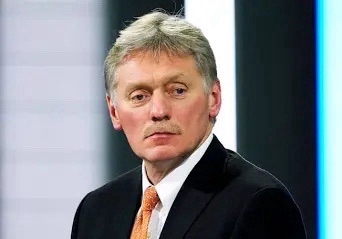
He has not contacted his attorneys in nearly two weeks. Ironically, a hearing that failed to take place as scheduled last Friday was to be held on the subject of violations of Navalny’s human rights while in detention. Prison authorities say only that he is no longer at that penal colony in the Vladimir region, and is not at any of the nearly 200 pre-trial detention centers that have been contacted. And the Kremlin has “neither the intention nor the ability to track the fate of prisoners,” according to spokesman Dmitry Peskov. The United Nations has said his absence amounts to a “forced disappearance.”
Melekhovo IK-6 Penal Colony, Vladimir Region, Russia
The cancellation of the judicial hearings today is just the latest indication that something dire has happened to Navalny — that, as his lawyers fear, he “could be muzzled or even killed as Vladimir Putin has announced plans to extend his rule for a fifth presidential term.” At the very least, he may have been transferred into a “special regime” colony, in which case he could be held incommunicado for years under Russian law. [The Guardian, Dec. 18, 2023.]
Earlier this month, Navalny was hospitalized after collapsing due to poor sanitation and nutrition at the Melekhovo IK-6 prison where he had been held and from which he has since disappeared. His appearance, as shown in a photograph (above) taken in June of this year, is pale, gaunt and sickly as compared to the Alexei Navalny we remember from less than three years ago — even after having survived the poisoning that nearly killed him.
Alexei Navalny is Putin’s most viable opponent in the presidential election scheduled on March 15-17, 2024. If he dies while in the custody of the Russian prison system, Vladimir Putin will, as always, shrug it off as being the fault of some low-level prison officials. But the world — and the Russian people to whom Navalny is a hero — all know better. Alexei Navalny’s fate is in the hands of none other than Vladimir Putin himself; and allowing the worst to happen to Navalny could prove to be the biggest mistake of Putin’s career.
Washington, first week of March 1994: Things were not going well. With word out that Shvets’ book was about to be released, the press was expected to engage in one of its usual feeding frenzies, and I knew I had to take preemptive action; I couldn’t let my Russian contacts find out about my involvement from a news release. So I went to see Natalya at the Embassy. She was expecting to hear about the conference in Malta; what she heard instead appeared to send her into shock.
Natalya Semenikhina was an exceptional woman: smart, efficient, attractive, with a natural charm and warmth that made her perfect for her position in the Cultural Section of the Embassy. And she had been extremely helpful to me in working toward the creation of my U.S. training program and establishment of a business school in Moscow. I genuinely liked and respected her, and had enjoyed working with her. And now I had to try to salvage our relationship — and all of my hard work and dreams — without betraying the two people to whom I owed a professional responsibility . . . whether they deserved it or not.
She and I sat facing one another over tea in one of the Embassy’s formal meeting rooms, talking first about Malta, the people I had met there, the business opportunities, etc. Then I said I had something else to discuss with her . . . something quite serious. And as I related the story of my meeting the year before with Aksilenko in Moscow, his revelation as to his friend’s tell-all book, their subsequent “relocation” to the United States, and the imminent publication of the book, her face paled and her expression turned to one of total horror. Although I stressed the strictly commercial nature of my relationship with them, I could see clearly that she knew exactly who they were and what was at stake. And, for the first time in all the months I had known her, she was speechless.
Finally composing herself, she said that this was completely outside her purview, and that she would have to discuss it with someone else. At that point, I’m not sure she even knew whom to go to, but she did know she couldn’t deal with it alone. She said she would call me to set up another meeting, and I left the Embassy with a sinking feeling that my work in Russia was about to come to an end. My one hope might be to cut short my working relationship with Aksilenko and Shvets, and perhaps even to forfeit my financial interest in the book. I would have to give that some thought while I waited to hear from her, but I wasn’t optimistic — you can’t unring a bell.
She called the very next day and asked me to come to the Embassy on the day after that. Her voice left no doubt that she was under serious stress. As concerned as I was for my own situation, I also felt regret that it had become necessary for her to be involved — she had had nothing to do with any of it.
The next morning I arrived at the Embassy to be greeted by a very somber Natalya. There was no tea service in the meeting room that day — a bad sign from the normally hospitable Russians. Her speech was hesitant, and had obviously been carefully rehearsed. All of the public rooms in the Embassy were assumed to be bugged, probably even wired with cameras; so I was sure she was being careful to say everything she’d been instructed to say, and nothing more. I, on the other hand, had no idea of what to expect. For me, this was going to be like amateur night at the Improv.
Natalya told me she would normally have arranged for me to meet with a Mr. Lysenko — the name was unfamiliar to me — but that he had returned to Moscow just a few days earlier. So she had talked with someone else in his department, and that person had suggested that I should prepare and submit to them — now check this out — a written statement detailing the history of my relationship with Aksilenko and Shvets, from beginning to end, leaving nothing out: everything I knew about them, everything they had ever told me, everything about the contents of the book, my business arrangement with them, and where they were and what they were doing now. Then, and only then, could my own situation be reevaluated and given careful consideration.
Momentary silence . . . deep breath . . . then . . .
“You’re kidding . . . right??!!!”
Okay, so I didn’t actually laugh. But oh, how I wanted to! Did they really believe for one moment that I would even consider delivering to the government of any country — let alone an adversarial one — any information that could conceivably be used against American interests? Did they think I was personally low enough to sell out another human being (or two)? Or that I was stupid enough not to realize that anything I might give them would go directly to the Russian Foreign Ministry as well as KGB Headquarters, and could potentially reach all the way to the Kremlin itself? And did they also believe I was weak enough or greedy enough to simply break down and submit to their transparent attempt at coercion?
Actually . . . yes, I suppose that is what they thought. Well, then . . . they clearly had no idea of what kind of person they were dealing with!
Of course, I kept all those thoughts to myself, and somehow managed to remain calm. I briefly considered keeping them hanging for a couple of days by telling Natalya I’d think it over and get back to her. But no . . . there was nothing to think over, and I wanted them to know that. So what I did say was that — for better or worse — Aksilenko and Shvets were my clients in a publishing venture, and that it would be professionally unethical and personally reprehensible (my exact words) for me to betray them in the manner her people were suggesting. Bottom line: a flat-out “Nyet!”
As I spoke, Natalya almost seemed physically to deflate. She had failed, and she looked worried, even frightened. Then she stood up, whispered something that sounded vaguely apologetic . . . and I was politely shown the door.
*. *. *
Walking down 16th Street away from the Embassy, I knew that I, too, had failed in my efforts to guide some of Russia’s middle class into the approaching 21st Century. But they would manage without me and my business school; the Russian people always did, somehow. In a different sense, though, I knew I had succeeded. I had stood my ground, refused to be intimidated, and had managed to preserve my principles of honor and decency. I was, in human terms, the clear winner.
“Ta-da!!”
When I reported all of this to Eric later that day, he told me that the man I was supposed to have met — Aleksandr Lysenko — was well known to the FBI: he had been the rezident, or chief of station, at the Russian Embassy for several months. In other words, the top KGB agent in Washington. He had been expelled from the U.S. just days earlier for his role in running the CIA turncoat Aldrich Ames. The fact that I was intended to have met with a person of Lysenko’s rank clearly indicated how seriously the Russians were treating this whole situation. On the one hand, I was obviously relieved that a meeting with him had been averted; but on the other hand, I thought it might have been an interesting experience . . . in a rather perverse way. But that’s one more thing I’ll never know.
Aldrich Ames and Aleksandr Lysenko — two men I didn’t know, and had never even heard of before they made the news just a few days earlier — had somehow, indirectly, invaded my life and changed it forever. Unbelievable!
*. *. *
In April of 1994, Shvets’ book, Washington Station, was finally released.
The Root of the Trouble
On April 9th, an article by John Markoff and David Johnston appeared in the New York Times about the book, about Yuri Shvets himself, and about my role — not entirely accurately presented — in having brought Shvets and his colleague, Valentin Aksilenko, to the United States the previous year. But the article didn’t stop there. It went on to suggest a possible connection between the arrival of the two men in the U.S. for ten days in April-May of 1993 and the opening of the FBI’s official case against Aldrich Ames on May 12th, just one week after their departure on May 5th.
And as I read that article, a comic-strip lightbulb lit up over my head. It all began to make sense, in a totally convoluted, nonsensical way. All of the attention from the FBI at home and the KGB and Militia in Moscow; the “watchers” and “Good Samaritans” repeatedly showing up during my travels; the ease with which the two former KGB spies had gotten back into the U.S. — it hadn’t been my imagination at all.
No . . . I was just a person who had been in the right place at the wrong time — not really involved, but ultimately the one who had been used to tie the various strings together. Metaphorically speaking, I had become a pawn in someone else’s political chess game, and now, at the end of that game . . . well, now I was simply collateral damage.
You just can’t make this stuff up!
*. *. *
There’s more — lots more — that I really don’t need to go into here. But there is an interesting footnote. Because of the brouhaha surrounding Aldrich Ames’ arrest and eventual conviction and sentencing on charges of espionage, Yuri Shvets’ book could not have hit the stands at a worse time. It was totally overshadowed by the bigger story. The first — and only — printing was smaller than originally planned, and didn’t do well. It was withdrawn from the bookstore shelves before most of the world even knew it was there. Other than my small percentage of their advance payment, my only royalty check arrived in the mail a full five years later, in June of 1999, in the amount of . . . drumroll, please. . . seventy-seven cents ($0.77). As I stood by the wall of mailboxes in the lobby of my apartment building and opened the unexpected envelope from Brockman, Inc., I burst out laughing — so hard, and so loudly, that several passing neighbors thought I’d lost my marbles. I managed to choke out “I’m okay,” and continued laughing all the way to the elevator, up to the third floor, and down the long hallway to my apartment.
I still have that check, and it still tickles me to look at it.
Don’t spend it all at once!
*. *. *
So how does it all end? Am I going to leave you hanging after dragging you around Europe with me for half a year, wondering why I’ve bothered writing all of this stuff? No . . . of course I wouldn’t do that to my loyal readers. So, see you next time for the grand finale.