
I have no idea how many satchels or suitcases it would take to hold $1.9 billion; but I’m reasonably certain that Austrian businessman Jan Marsalek, former Chief Operating Officer of now-defunct payment processing company Wirecard, didn’t literally try to run off with that kind of dough in hand. What he is accused of doing is stealing — and redistributing in a most unorthodox manner — hundreds of millions of dollars from his company’s investors, and then vanishing.
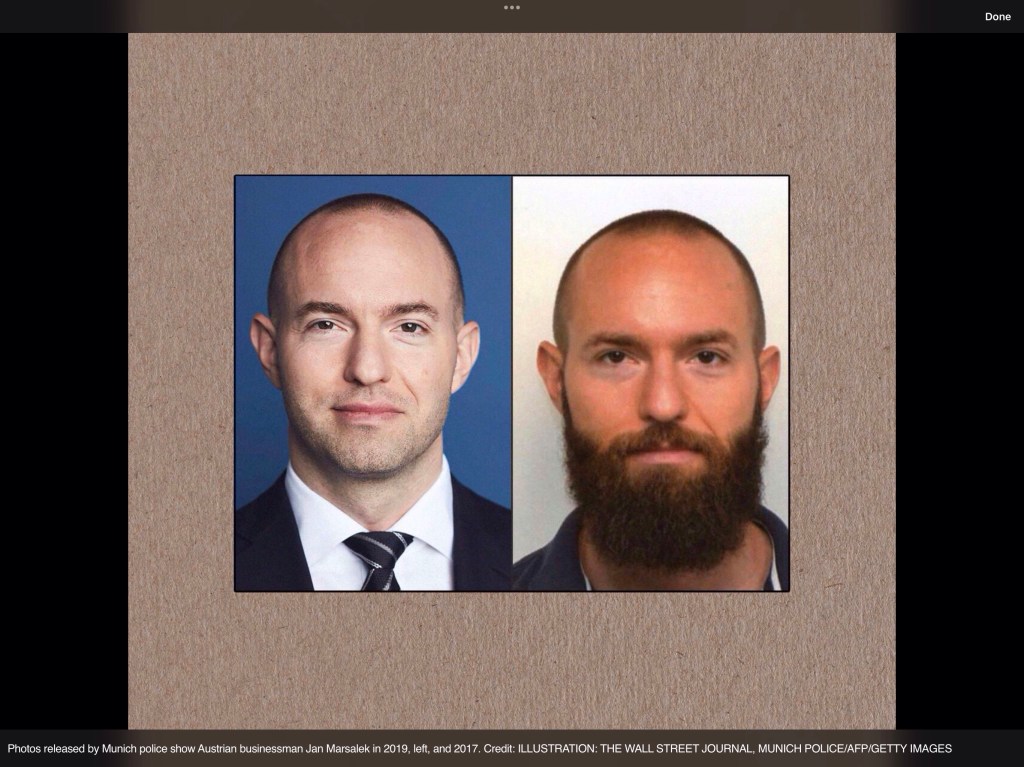
[from the Wall street Journal/Munich Police/AFP/Getty Images]
Being able to embezzle that kind of money without being detected is, to me, mind-boggling in itself. But that’s not what really blows my mind about Mr. Marsalek’s tale. It’s the back-story that I find most fascinating. Because, you see, “Western intelligence and security officials now say they have reached the unsettling conclusion that Marsalek had likely been a Russian agent for nearly a decade.” [Bojan Pancevski and Max Colchester, Wall Street Journal, Dec. 15, 2023.] That is decidedly one very sneaky fellow.
For further details on Mr. Marsalek’s background, as well as the formation and rise of Wirecard to incredible heights, I suggest you read the WSJ article. My focus is on Marsalek’s transition from COO of a company that claimed to have processed $140 billion of transactions a year to being “[o]ne of the most wanted men in the world.” [WSJ, Dec. 15, 2023.]
According to former associates, Marsalek was “obsessed with the . . . world of espionage,” even implying to them that “he had connections with intelligence officers.” He is said to have kept a statuette of Vladimir Putin on his desk. And now, British prosecutors say that between 2020 and 2023, “Marsalek ran a ring of five U.K. based Bulgarians who are alleged to have spied for Russia, directing them to gather information on people with the aim of helping the Kremlin abduct them.” He was the go-between who enabled the Russian intelligence services to avoid direct contact with the Bulgarian agents. [WSJ, Dec. 15, 2023.]

So what happened to Mr. Marsalek after 2020 when he and the $1.9 billion were no longer to be found, and Wirecard had declared insolvency? It seems he traveled by air to none other than Russia’s ally, Belarus, and was driven from there to Moscow, where he was given a Russian passport under a false name. He is believed to be spending considerable time in Dubai, where he has worked with “a retired Russian intelligence officer based there who has been acquiring weapons for Moscow.” The government of the United Arab Emirates has not responded to requests for comment. [WSJ, Dec. 15, 2023.]
I could go on quoting from the Wall Street Journal article, but that would be pointless. Again, I invite you to read the whole convoluted story for yourselves — you will be gobsmacked, as the British are fond of saying, at the nerve . . . the chutzpah . . . the out-and-out balls of this man, who is now wanted in multiple countries for the most outlandish criminal acts imaginable, committed under various names and using different passports.
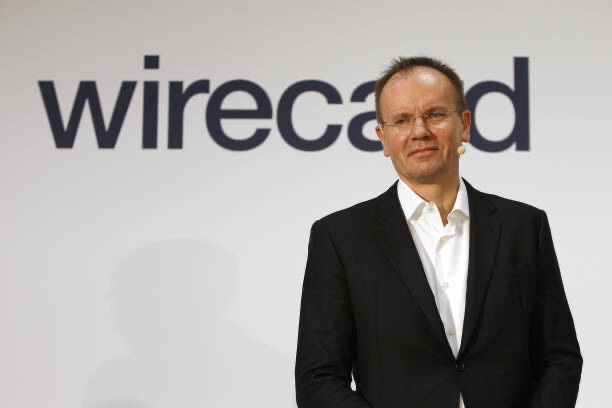
It does not appear that Marsalek is solely responsible for the entire $1.9 billion missing from Wirecard. In fact, Wirecard’s CEO, Markus Braun, has been charged with fraud and other crimes, and is currently being tried; he of course denies the charges and has pled not guilty.
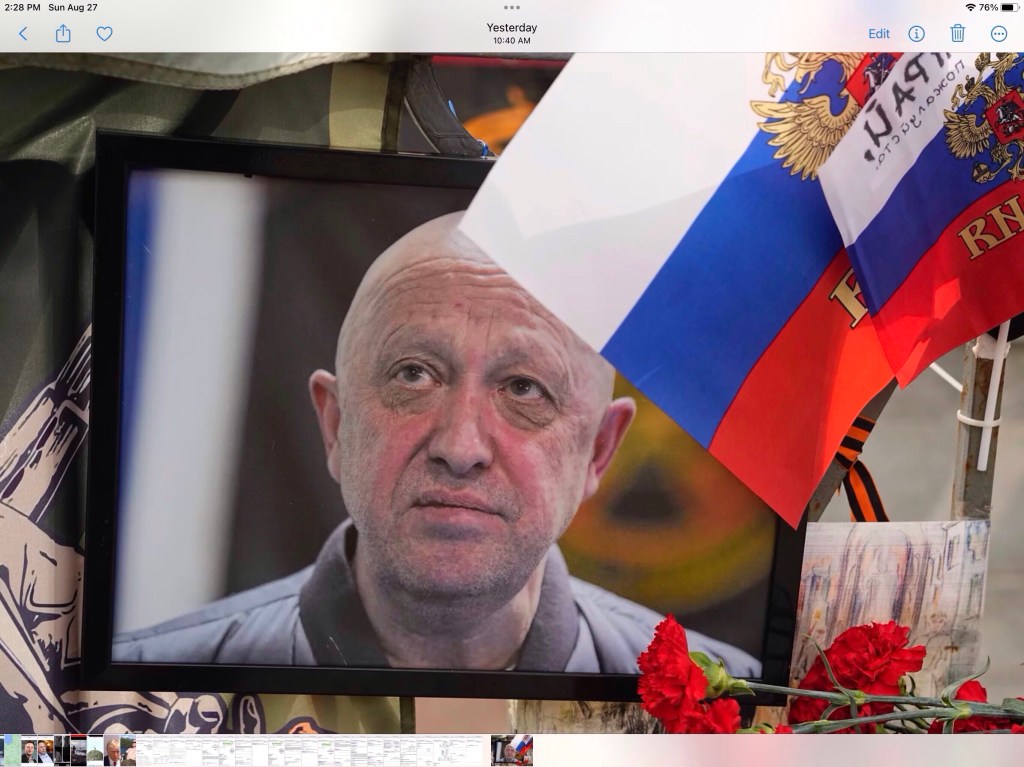
But what did Marsalek do with the funds he did manage to siphon from the company? Well, besides the whole Bulgarian affair, he is accused — while still running Wirecard — of having funneled money for Russia’s GRU and SVR intelligence agencies to their agents in conflict zones in the Middle East and Africa . . . possibly including to the notorious, and now deceased, Yevgeny Prigozhin and his still active band of merry mercenaries.
The Russian government, of course, denies any relationship between its intelligence services and Marsalek, and calls allegations of any such connection “politicization.” Well, now, there’s a surprise!
*. *. *
My big takeaway from this whole messy tale is not so much the disastrous end of what was once a hugely profitable multinational company. I’m much more concerned with the behind-the-scenes involvement of the COO of that company with — and financial assistance to — Russia and its spy organizations, both official and unofficial, domestic and foreign.
During the Cold War, we all heard stories of Americans and others in sensitive positions spying for Russia and other adversaries — people such as Aldrich Ames (CIA), Robert Hanssen (FBI), Edward Lee Howard (CIA), et al. But the ones who are caught are just the tip of the iceberg. How many others, like Jan Marsalek (Austrian), have continued operating below the surface even to the present time, providing vital information and hands-on assistance to a country that is openly attempting to reclaim, one by one, the countries of the former Soviet Bloc? We’ll never know for sure.
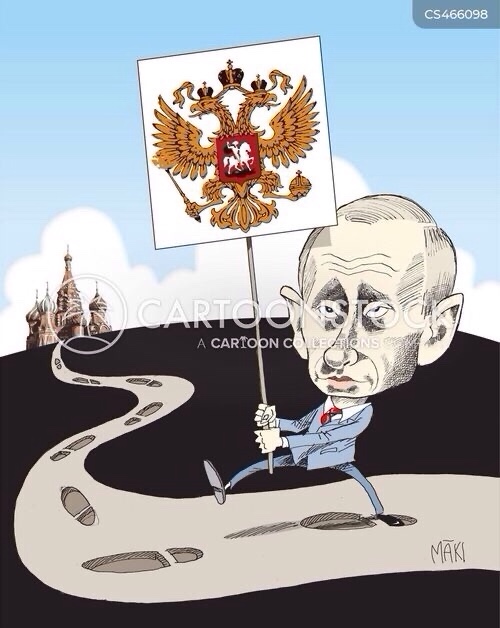
What we do know — and must never close our eyes to — is that virtually every recent conflict in, and every incursion into, any country in Eastern Europe, the Middle East, Africa, and even Latin America eventually seems to trace its roots back to, or have some connection with, the Moscow Kremlin.
Am I being paranoid?
Only if I’m wrong.
Marsalek’s story may read like a parody of a James Bond movie; but the ending is not pre-ordained as the films are, and its entertainment value is zero. It is, in fact, the stuff of my nightmares.

Just sayin’ . . .
Brendochka
12/19/23
 The Blog About Everything … and Sometimes Nothing