Yesterday, in reporting on former hostage Paul Whelan’s first year at home following his release after five and a half years in a Russian prison, I also paid homage to those still incarcerated there. I specifically named the Americans on our list, but I regret to say that I miscounted — there are seven, not six as I reported.
So, a day late — and with my deepest apologies — here again is Stephen James Hubbard, age 72 (or possibly 73 by now), from Michigan. He had been living in Ukraine since 2014, and was arrested there by Russian forces in April of 2022 on charges of fighting as a mercenary for Ukraine. On October 5, 2024, he was convicted and sentenced to seven years in a maximum-security penal colony.
Stephen James Hubbard, in Prison – 2024
And, for the 82nd Sunday in a row, here is our remembrance of those remaining in Russia, Belarus, and Azerbaijan as hostages to Vladimir Putin’s reign of terror. The names of the Americans are bolded this week, solely for clarification of my earlier error; their safe return is no more or less urgent than any of the others.
Let’s bring them all home soon.
*. *. *
Prisoners of War:
The People of Ukraine The Azov 12
Endangered Exiles:
Mikita Losik Yulia Navalnaya Countless Journalists and Other Dissidents
Ales Bialiatski Andrei Chapiuk Uladzimir Labkovich Ihar Losik Marfa Rabkova Valiantsin Stafanovic Yuras Zyankovich
In Russia:
David Barnes Gordon Black Antonina Favorskaya Konstantin Gabov Robert Gilman Stephen James Hubbard Sergey Karelin Vadim Kobzev Darya Kozyreva Artyom Kriger Michael Travis Leake Aleksei Liptser Grigory Melkonyants Nika Novak Nadezhda Rossinskaya (a.k.a. Nadin Geisler) Igor Sergunin Dmitry Shatresov Robert Shonov Grigory Skvortsov Eugene Spector Laurent Vinatier Robert Romanov Woodland
In her epic novel, Atlas Shrugged, Ayn Rand famously wrote:
“Contradictions do not exist. Whenever you think that you are facing a contradiction, check your premises. You will find that one of them is wrong.”
That’s good advice for scientists, economists, doctors, lawyers . . . and “stable geniuses” who think they know everything.
Donald Trump didn’t like the fact that the most recent report from the Bureau of Labor Statistics (BLS) showed a weaker-than-expected job market, raising worldwide alarms about his incomprehensible tariff policies. So he did what he always does in a fit of childish pique:he found someone to blame, and fired her.
This week’s victim was BLS Commissioner Erika McEntarfer, whom he accused — without evidence — of manipulating jobs figures for political reasons. [Natalie Sherman, BBC, August 1, 2025.]
Because he could. Because he needed a scapegoat. Because the numbers contradicted his delusional insistence that his punitive tariffs against every one of America’s trade partners throughout the world are, or eventually will be, beneficial.
And because he cannot stand to be wrong.
Never Wrong
But if he were smart enough, and honest enough, to check his premises, he would find that one of them — his — is indeed wrong. His tariffs are a total disaster.
Everyone in the world knows it . . . except him. Following this past week’s latest round of tariff increases, the three major U.S. indices dropped, following earlier sell-offs in Europe and Asia. [Id.]
Ryan Sweet, the chief U.S. economist at Oxford Economics, said the decision to fire Ms. McEntarfer was concerning because reliable economic data is essential to businesses, and cannot easily be replicated by private sources. He added:
“Clearly, this is a step in a very bad direction. If there are any questions around the integrity of the data … it’s going to create a lot of problems.” [Id.]
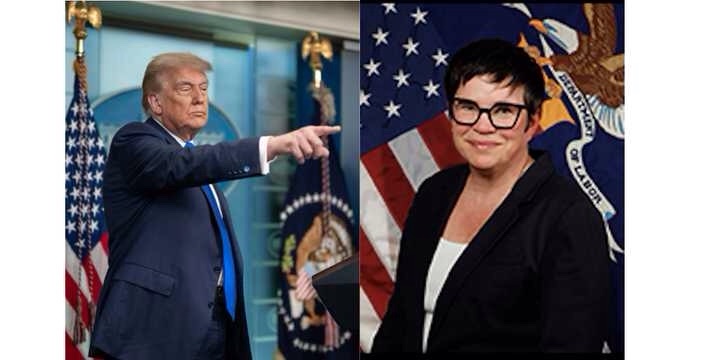
Donald Trump to Erika McEntarfer: “You’re Fired!”
Importantly, Ms. McEntarfer, who holds a degree in Economics from prestigious Virginia Tech, knows her job. She previously worked in the U.S. Treasury Department’s Office of Tax Policy, the U.S. Census Bureau’s Center for Economic Studies, and as a senior economist in the Council of Economic Advisers. She was appointed Commissioner of Labor Statistics in July of 2023 by — aha! — then President Joe Biden.
Well, there you are . . . that explains a lot.
Now Trump can fill the position with someone — a rabid Republican, of course — who will manage to come up with figures more to his liking . . . someone as qualified for the position as, say, Bobby Kennedy, Jr., is for his job . . . and we can Make America Poor Again!
*. *. *
If Trump has the slightest inkling of the scope of his latest disastrous misstep, he will never admit it. When in his entire lifetime has he ever been man enough to do that?
Clearly, someone has to have the cojones to do it for him: someone like the members of his Cabinet, or Congress, or the Supreme Court.
It doesn’t end for them the day they walk out of prison and board a plane for home.
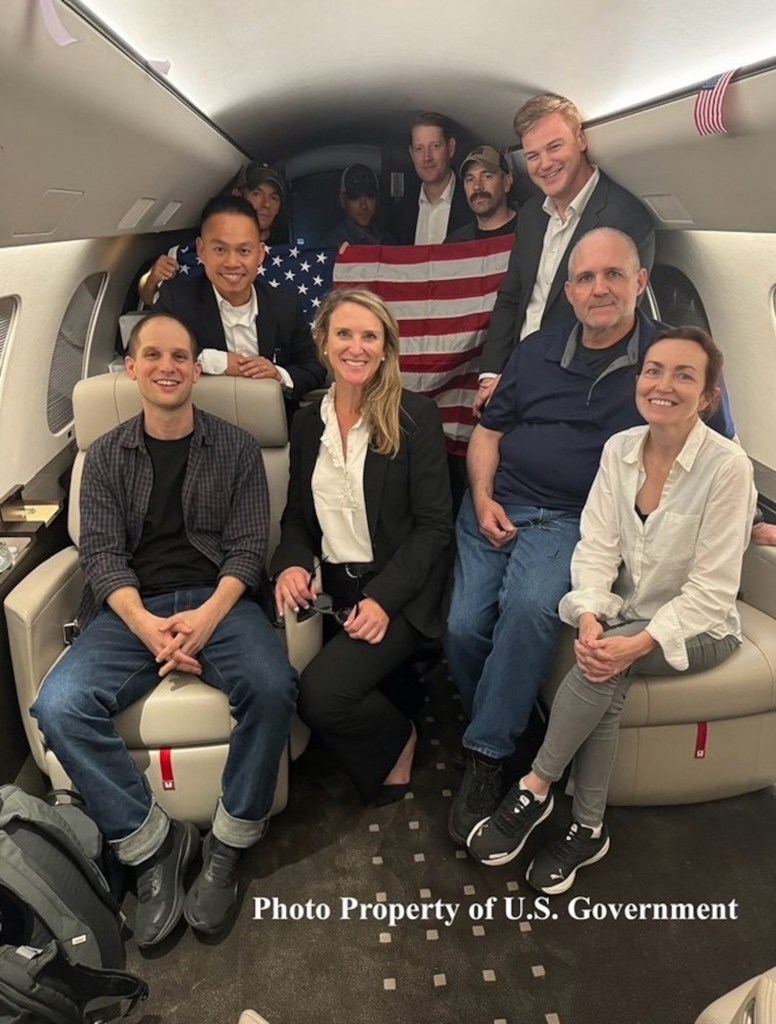
A year ago today, the world was celebrating the previous day’s release of 16 political prisoners being held hostage in Vladimir Putin’s penal colonies on a variety of specious charges, including Evan Gershkovich, Vladimir Kara-Murza, Alsu Kurmasheva, and Paul Whelan. In return, ten Russians being held on criminal charges in various locations were sent home.
On the Way Home
We were treated to joyous scenes of the returnees being reunited with their families and friends, presumably ready to resume their normal lives after a period of well-deserved recuperation.
But were their lives instantly back to normal? That, of course, would differ according to each person’s particular circumstances, and their individual mental and physical conditions. PTSD affects everyone differently.
In an interview with CNN, former U.S. Marine Paul Whelan has said that, after more than five years of imprisonment in Russia, his return has been challenging:
“You’re literally starting over. For people like me who have come home after five-and-a-half years, we really don’t have very much. House is gone. Cars are gone. Employment’s gone. No health insurance.” [Jennifer Hansler, CNN, August 1, 2025.]
U.S. Marine Paul Whelan
Having been “violently arrested” in his Moscow hotel room while visiting for a friend’s wedding, hotel rooms are now a trigger for Paul’s PTSD. He also found that he had developed new seasonal allergies from being away for so long, and that the most ordinary activities can be challenging:
“It took a little bit of time for me to kind of feel comfortable driving down the same streets that I used to or going to a park or doing things that I used to do, especially with my dog when she was alive.”[Id.]
Sadly, his beloved dog passed away while Paul was in prison, never knowing why her best friend had left her.
The Ordinary Things: No Longer Ordinary
Paul has also been unable to find a new job. He says that — despite the mitigating circumstances of his imprisonment — there are companies that won’t hire people who have been in prison for any reason. There is also the disadvantage of a six-year employment gap on his resume.
But he is working with Michigan Democratic Representatives Debbie Dingell and Haley Stevens, among others, on a law “that would fund the medical, dental and psychological care listed in the Levinson Act that was never funded,* as well as to provide compensation and things like that for former hostages who were wrongfully detained.” [Id.]
[* S.712 - The Robert Levinson Hostage and Recovery and Hostage-Taking Accountability Act of 2020]
Paul Whelan with his Parents and Rep. Debbie Dingell
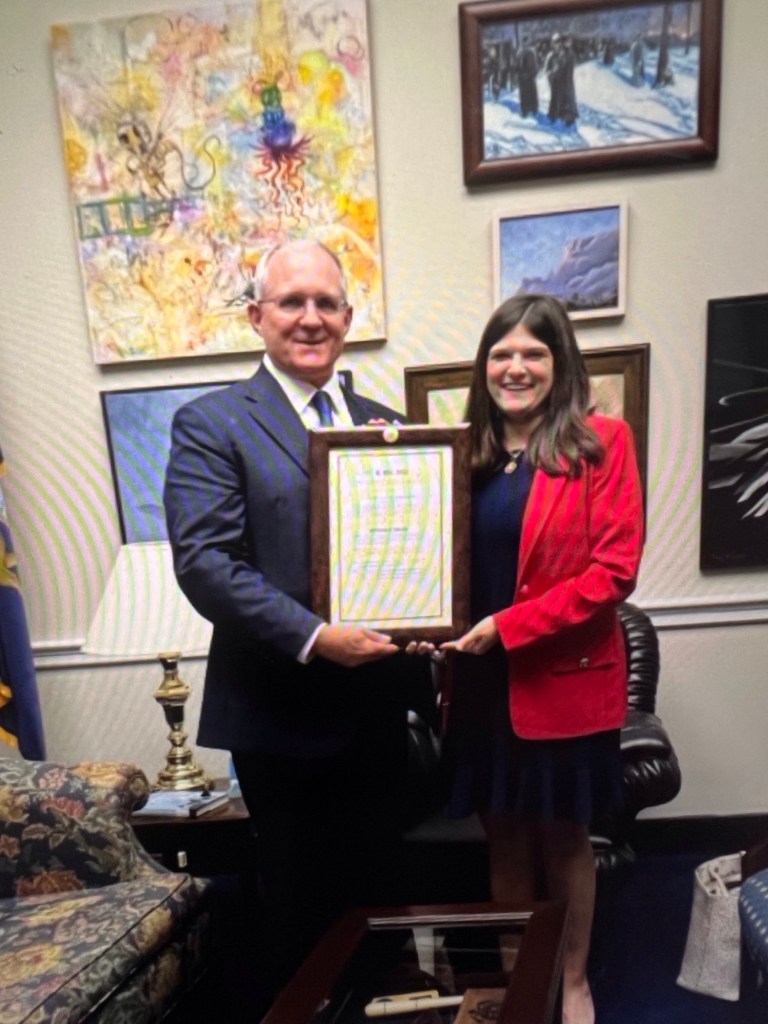
Paul Whelan with Rep. Haley Stevens
But in the meantime, Paul — and likely others as well — will continue to struggle with their reentry into their “normal” lives.
*. *. *
Since that day in August of 2024 — while a few more hostages have been swapped, including Americans Marc Fogel and Ksenia Karelina — there are countless others still being held unjustly, including at least six Americans (to my knowledge): Robert Romanov Woodland, Staff Sergeant Gordon Black, Robert Gilman, David Barnes, Eugene Spector, and Michael Travis Leake.
It is imperative that, in addition to continuing efforts to negotiate their release, work be pursued for the passage — and funding — of effective legislation to ensure that these innocent victims of Vladimir Putin’s repressive regime be given the help they need once we welcome them back home.
Surely, there must be room in the federal budget to help these people who, through no fault of their own, have been through so much. Or is that no longer the American way?
I suppose, as long as these two keep exchanging threats and snarky comments, they’ll be too preoccupied to do anything worse.
One can only hope.
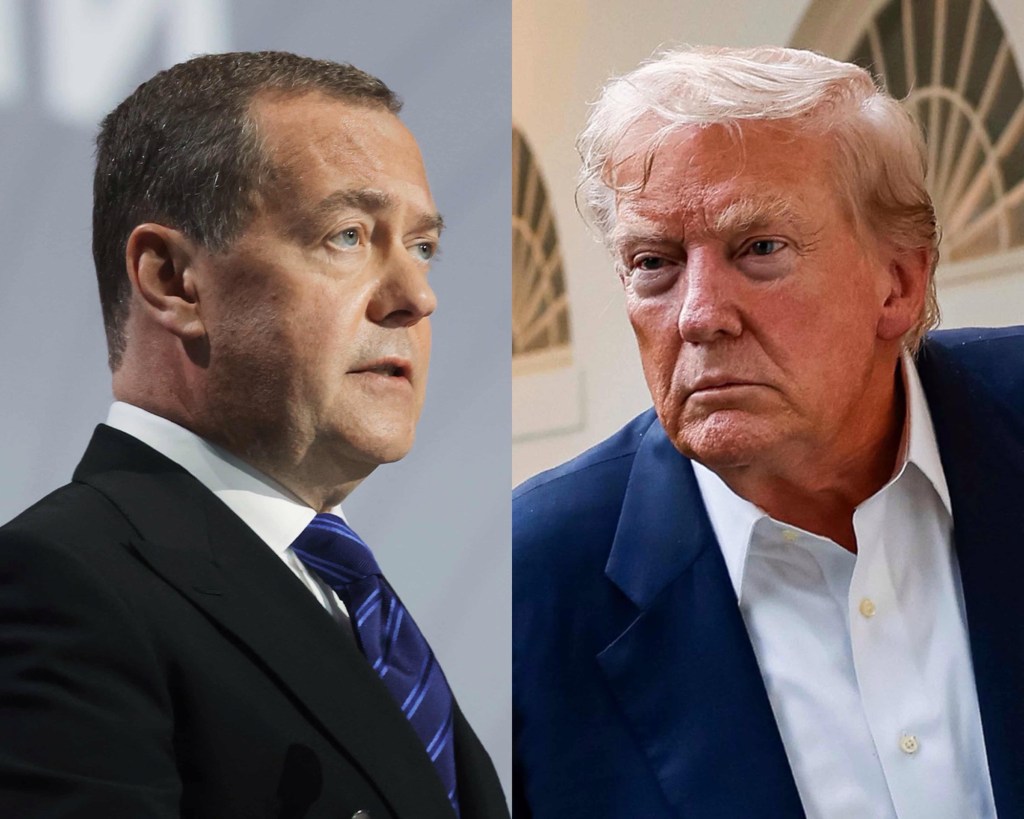
Dmitry Medvedev and a Very Tired-Looking Donald Trump
Except that the taunts keep escalating. From Medvedev today:
“If some words from the former president of Russia trigger such a nervous reaction from the high-and-mighty president of the United States, then Russia is doing everything right.” [RFE/RL, August 1, 2025.]
And the goading reminder from Trump on Truth Social:
“I have just been informed that almost 20,000 Russian soldiers died this month in the ridiculous War with Ukraine.
“Russia has lost 112,500 soldier since the beginning of the year. That is a lot of unnecessary DEATH! Ukraine, however, has also suffered greatly. They have lost approximately 8,000 soldiers since January 1, 2025, and that number does not include their missing.” [Id.]
Russian Military Losses Have Been Substantial
Yet the question remains: Is Dmitry Medvedev (derogatorily referred to in his own country as “Little Dima”) someone we need to be worried about? Or is Trump using him as the target for his invective in order to avoid a direct confrontation with Putin?
And who is Medvedev, anyway?
Yes, he was the titular president of Russia from 2008 to 2012 — but only as a stand-in for Vladimir Putin until Putin could run for his third term. At the time, the Russian Constitution provided for two permissible consecutive four-year presidential terms. So Putin served his two consecutive terms; took a required break for one term; installed his puppet Prime Minister, Medvedev, in the office in the interim; and made his comeback in 2012. (In the meantime, Putin had engineered a couple of changes in the Constitution to keep himself in office almost indefinitely.)
Russian Role Reversal
So, when Medvedev refers to himself as the former President of Russia, while he is not lying, he is glorifying his own past accomplishments. After his four years on the throne with Putin pulling the strings from behind, he returned to the position of Prime Minister in 2012. That lasted until 2020, when he was inexplicably removed from office and given the consolation role of Deputy Chairman of the Security Council of the Russian Federation . . . a position not totally without influence, but with little or no actual decision-making authority.
There are varying opinions as to whether Medvedev actually has a great deal of influence on Putin, or whether he is just kept around to play the part of the warmonger while Putin pretends to be concerned with peace negotiations and other diplomatic niceties.
But what I don’t like is the idea of Donald Trump blithely throwing around the “N” word, even if it is only a tactical maneuver. As he himself said just yesterday:
“Words are very important, and can often lead to unintended consequences, I hope this will not be one of those instances.” [Jaroslav Lukiv, BBC News, August 1, 2025.]
We’ve all heard the old adage that says the definition of insanity is doing the same thing, in the same way, over and over again, and expecting a different result.
So, why would any sane person, after all of the failures, continue to think that sanctions are going to have any effect on Vladimir Putin’s war strategy? What part of “Nyet!” does Donald Trump not understand? Could the Kremlin have been any clearer or more concise on Wednesday when they called the repeated threat of sanctions “routine,” and said they “have already developed a certain immunity in this regard,” and are “taking measures to counteract all of this or even turn it to our own advantage”? [Reuters, July 30, 2025.]
I wouldn’t have thought any further clarification to be necessary . . . and particularly when, later that same night, Moscow followed up with an especially vicious attack on Kyiv that killed 31 people, including five children: an act that Trump described as merely “disgusting” and “sad,” while vowing to slap Russia with new sanctions — you know, the ones that haven’t worked for the past three years. In his own words:
“Russia, I think it’s disgusting what they’re doing. I think what Russia’s doing is very sad. A lot of Russians [sic] are dying.” [RFE/RL, August 1, 2025.]
“Disgusting” hardly describes it
I assume he meant to reference the dying Ukrainians — but with Trump, one never knows what he means. And then he went on to add, as though his mind had begun to shut down completely:
“I don’t know that sanctions bother him,” obviously referring to Putin. [Id.]
Oh, yeah … he looks bothered
Well, I thought I had found the ultimate evidence that the old saying about insanity had just been proven . . . and then I heard the chime from my phone indicating an incoming news flash, and saw this:
“Trump moves nuclear submarines after ex-Russian president’s comments.”
And “insanity” took on a whole new definition . . . and a different persona. Because Trump’s action is not a spontaneous act of lunacy; it is, rather, a response to the latest spate of verbal offal from former Russian President Dmitry Medvedev.
Dmitry Medvedev
Earlier this week, Medvedev — now Deputy Chairman of Russia’s Security Council — accused Trump of playing “the ultimatum game with Russia,” and said that “each new ultimatum is a threat and a step towards war.” [Jaroslav Lukiv, BBC News, August 1, 2025.]
And yesterday, in a post on Telegram, he warned of a “dead hand” threat . . . which some military analysts have identified as a reference to the codename of Russia’s retaliatory nuclear strikes control system. [Id.]
In response, Trump referred to Medvedev as “the failed former president of Russia, who thinks he’s still president” — not quite accurate historically, but typical Trump. He also warned Medvedev to “watch his words . . . he’s entering very dangerous territory!” [Id.]
Now Trump has ordered two nuclear submarines to “be positioned in the appropriate regions [in response to] highly provocative” comments by Medvedev. In an unusually articulate statement, he said that this action was taken “just in case these foolish and inflammatory statements are more than just that. Words are very important, and can often lead to unintended consequences, I hope this will not be one of those instances.” [Id.]
And in his daily post on Truth Social today, he wrote:
“Based on the highly provocative statements of the former president of Russia, Dmitry Medvedev, who is now the deputy chairman of the Security Council of the Russian Federation, I have ordered two nuclear submarines to be positioned in the appropriate regions.” [Id.]
Quite properly, Trump did not identify the “appropriate regions.” He also did not say whether the submarines were nuclear-powered or nuclear-armed.
But the “N” word is now out there. And to my mind— as someone old enough to remember the Cuban Missile Crisis of 1962 — that is the true definition of insanity.
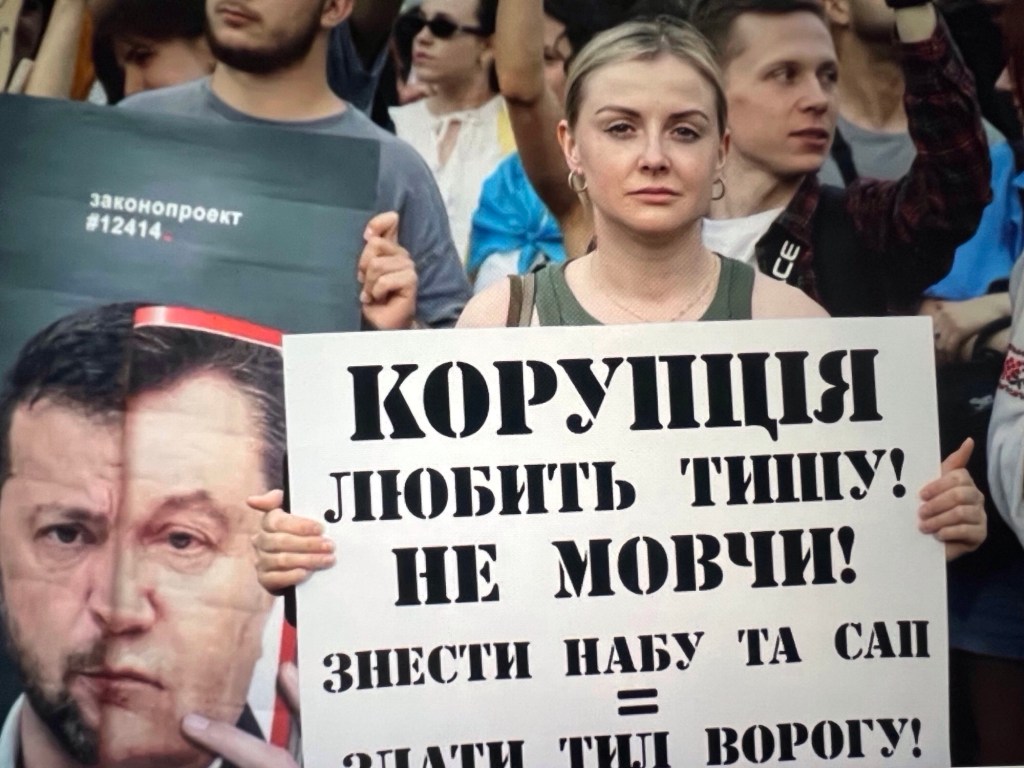
Last week, to the shock and consternation of the entire free world, Ukrainian President Volodymyr Zelensky signed into law a bill — while intended to rid the country’s principal independent anti-corruption agencies of suspected Russian influence — would in fact have granted control of those agencies to the government’s Prosecutor General.
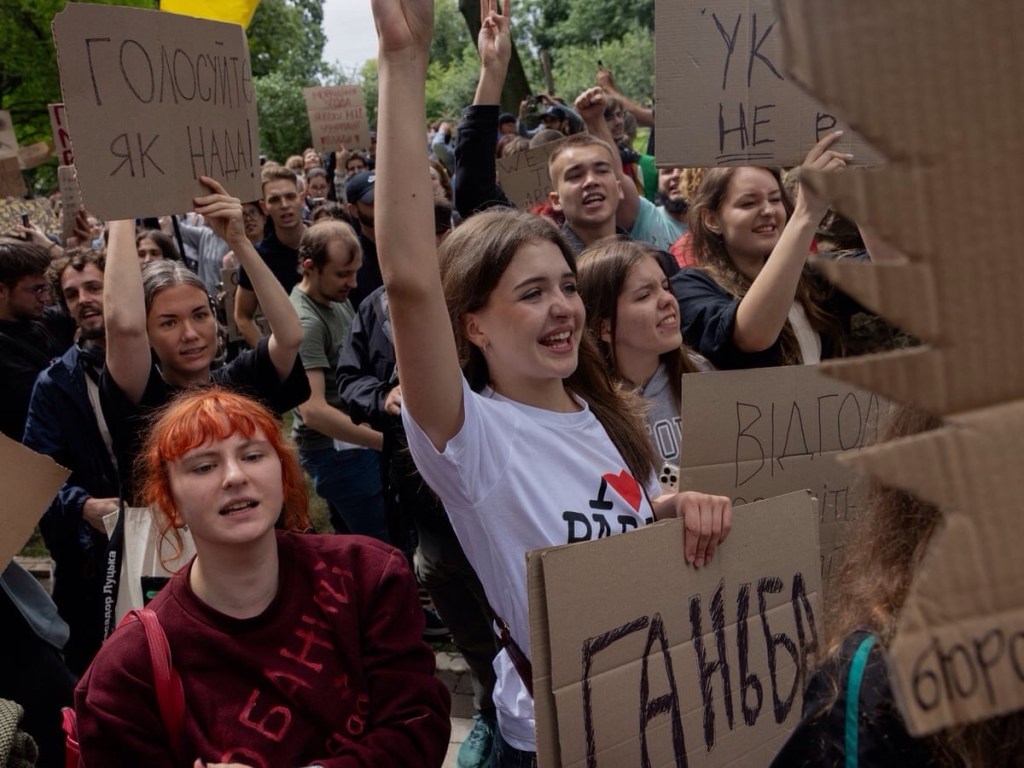
The next day, the people of Ukraine took to the streets in protest.
Kyiv – July 24, 2025
Yesterday, crowds took to the streets of Kyiv to celebrate a new law restoring the independence of those two organizations: the National Anti-Corruption Bureau of Ukraine (NABU) and the Specialized Anti-Corruption Prosecutor’s Office (SAPO).
Announcing the passage of the new law, Zelensky said on social media:
“This guarantees the normal, independent work of anti-corruption bodies and all law enforcement agencies in our country.” [RFE/RL, July 31, 2025.]
Kyiv – July 31, 2025
*. *. *
That is proof of what can be accomplished when the people speak with one voice . . . and the president listens. That is democracy at work.
But what usually happens in an autocracy when the people protest government actions? Sometimes nothing, and sometimes worse. But in an astonishing turn of events this week, the government of Iran withdrew controversial legislation intended to counter what it called “fake news,” when some politicians and civil society groups warned of the dangers of some of the language of the bill.
Iranian Parliament
Critics have called it the “bill of suffocation,” pointing out that vague phrases such as “disturbing public opinion” and “content against state security” — language echoing that of many of Russia’s oppressive laws — could be used as a pretext for arbitrary crackdowns on freedom of the press and legitimate dissent. [RFE/RL’s Radio Farda, July 30, 2025.]
Proponents of the bill naturally claim that the suggested measures are necessary to protect national security and preserve social stability . . . by providing for the punishment of anyone publishing “fake news” with onerous prison sentences of up to 15 years.
It is not clear whether this is now a dead issue, or if a revised bill is likely to be presented. But what is notable is that this retraction could occur at all in Iran — the country that Reporters Without Borders calls “one of the world’s most repressive countries in terms of press freedom.” [Id.]
*. *. *
Meanwhile, in the United States, Donald Trump has claimed that The Wall Street Journal — a bastion of independent journalism since 1889 — is ready to offer a settlement of his law suit against them for their publication of articles concerning the Jeffrey Epstein scandal.
This is just the latest in a string of atrocities committed against the mass media, universities, major industries, and individuals who have caved in to the tyrannical demands of a single greedy, uncontrollable, megalomaniacal individual.
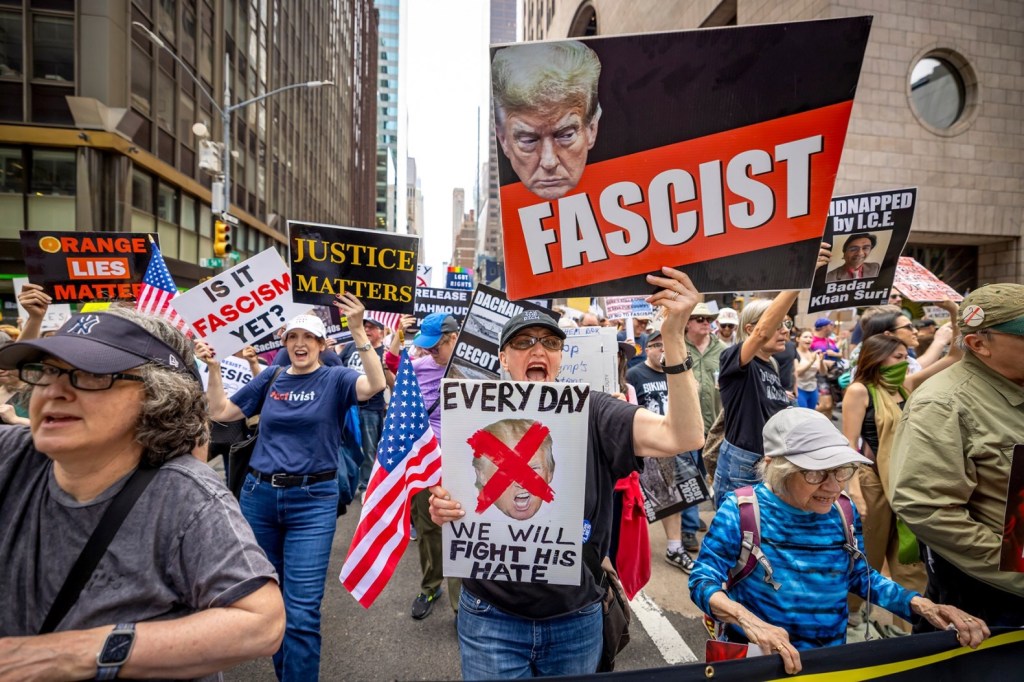
But where are the American people? Yes, we’re speaking out . . . but no one in Washington is paying attention. We have our days of protest, and many thousands of people show up . . . but nothing changes.
Why does it work so quickly in Ukraine, and even in Iran, but not here?
Clearly, we’re doing something wrong . . . or not doing enough. But the campaigns for next year’s mid-term elections are beginning, and that is where we the people can exercise our power. So if the present members of Congress are too afraid of losing their jobs to do their jobs, they might want to remember who gave them those jobs . . . and who can take them away.
And meanwhile, a lot more peaceful demonstrations wouldn’t hurt.
He didn’t even wait for the details. Solely on the basis of Donald Trump’s accelerated August 8th deadline, Vladimir Putin made his decision: sanctions are no longer a threat.
Well, who didn’t know that . . . other than Trump, that is?
So, basically, the Kremlin’s response is “yob vas, Donnie.” (Use your imaginations, or Google Translate, for that one.)
Putin Trumps Trump … Again
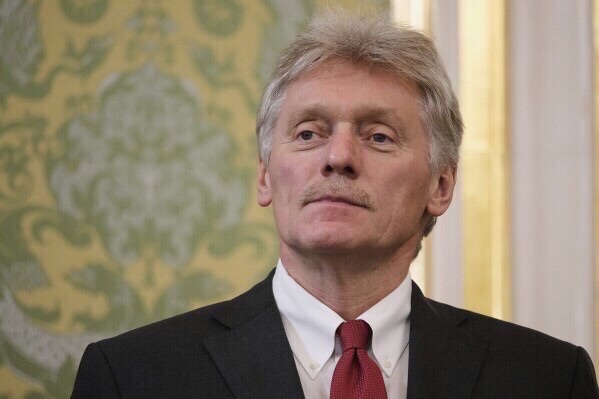
Although couched in slightly more diplomatic terms, that is essentially the message delivered to reporters yesterday by Kremlin spokesman Dmitry Peskov:
“We have been living under a huge number of sanctions for quite a long time, our economy operates under a huge number of restrictions. Therefore, of course, we have already developed a certain immunity in this regard, and we continue to note all statements that come from President Trump, from other international representatives on this matter.” [Gleb Stolyarov, Dmitry Anntonov, Mark Trevelyan and Andrew Osborn, Reuters, July 30, 2025.]
Dmitry Peskov
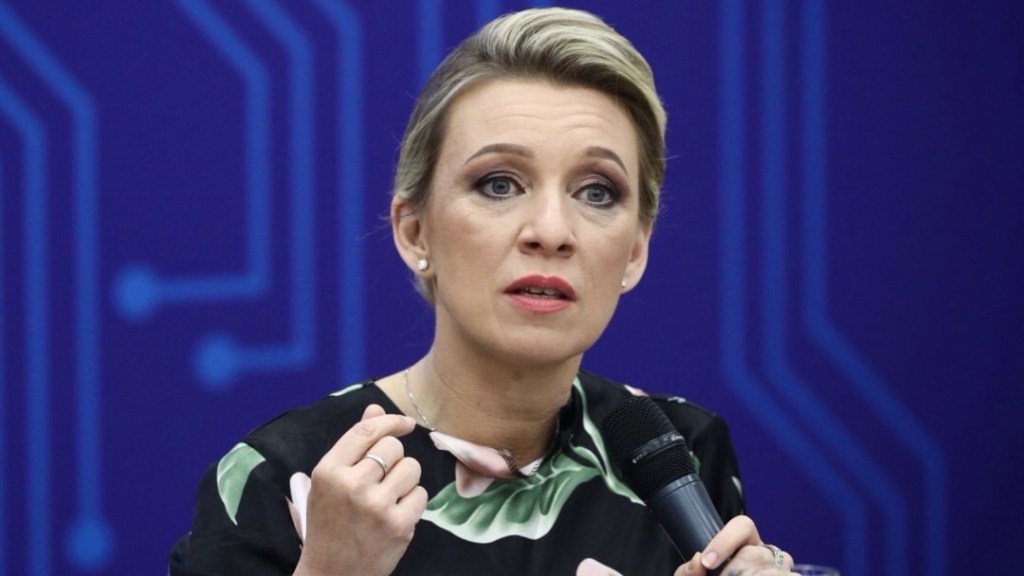
And Russian Foreign Ministry spokeswoman Maria Zakharova, calling the threat of additional sanctions “routine,” wondered why the West hadn’t yet caught on to the fact that they don’t work:
“We see that the West simply cannot let go of the issue of sanctions. It seems as if they are constantly stuck in a rut. Apparently, there are no other options left — they have been exhausted. We are responding and taking measures to counteract all of this or even turn it to our own advantage.” [Id.]
Maria Zakharova
Well, there’s another “up yours” to the U.S., to Ukraine, and to all of the European allies who thought they could strangle Russia’s economy. Not that the sanctions haven’t created any problems for them . . . they certainly have. But Putin has his own allies; and with substantial support from China, India, North Korea, Iran, and who-knows-who-else, Russia is surviving, as she always has, through just one more Time of Troubles.
Of course, Putin brought this particular headache onto himself when he invaded Ukraine, believing that it would take just days or weeks to overwhelm the smaller, weaker country. But he has adapted, and is determined to continue on his chosen course until he has won, no matter the cost.
So what options are left to the West? As Putin knows full well, no one wants World War III.
My heart is with the good people of my ancestral home of Ukraine; but my head is losing hope. It’s time for a miracle, and while we wait for it, all I can offer is a fervent . . .
We all do it now and then: start for the laundry room to get the towels from the dryer and pass the kitchen, where we realize we’ve forgotten to empty the clean dishes from the dishwasher. So we stop to take care of that, and remember that we need to defrost the meat for tonight’s dinner, and while rummaging through the freezer for the lamb chops, we spot the half-empty carton of Haagen-Dazs. So we take that out — solely in order to free up some space in the freezer, of course — and polish it off while perusing the catalogs that arrived in yesterday’s mail, which reminds us that we haven’t fetched today’s mail yet. So we head outdoors to the mailbox, noticing along the way that the hedges are in dire need of trimming. But the hedge trimmers are on loan to the neighbor three houses down, and it’s best to retrieve them now while we’re thinking about it and before she leaves to pick up her kids from school, so off we go . . .
“I’m late, I’m late, for a very important date!”
You know how this ends, don’t you? A cup of tea and a chat with the neighbor, and suddenly it’s time to start prepping the vegetables for dinner. Heading back home, it hits you that you’ve left the hedge trimmers behind, the mail is still in the mailbox, the hedges are never going to be trimmed, the lamb chops never made it out of the freezer, the dishwasher hasn’t been emptied, and the towels are languishing in the dryer.
“Oh, crap!”
And all of the foregoing is to point out the circuitous route by which I came up with the actual topic for this post.
While researching my earlier article about China’s proposed school in Russian-occupied Luhansk, Ukraine, which some suspect will really be a cover for Chinese intelligence agents, I was reminded of the famous Cold War-era university in Moscow — then known as Patrice Lumumba University (PLU) and now renamed People’s Friendship University — which was widely also believed to be a school for spies.
Oh, not the sort of schools that every country operates to train its intelligence officers, like the FBI Academy at Quantico, Virginia, or the KGB’s Academy of Foreign Intelligence. No, PLU was special.
To begin with, it was — and, from all accounts, still is — a legitimate university. But back in the day, it was also a magnet for students from a number of underdeveloped African nations in which Russia had . . . for lack of a better word . . . a paternalistic interest.
Thinking about PLU and its questionable history, I was next reminded of a wonderful Russian gentleman I had the pleasure of knowing back in the late 1980s and early ‘90s: Professor Viktor Mozolin, who had been a professor of law at PLU years before I met him through the International Law Institute (ILI) in Washington. As I sat reminiscing about the lovely evening when Viktor and his wife Valya hosted me at their apartment in Moscow on one of my visits there, I decided to see what the PLU website had to say about him, and . . .
Nothing. It had been too many years, I suppose. But my search did bring up a rather odd list of 69 names of what I presume to be their most notable alumni. Not surprisingly, 65 of them were completely unfamiliar. But the other four jumped out at me — three because they’re famous, and one because he isn’t . . . although I did know him personally.
And now you’re dying to know who they are . . . right?
*. *. *
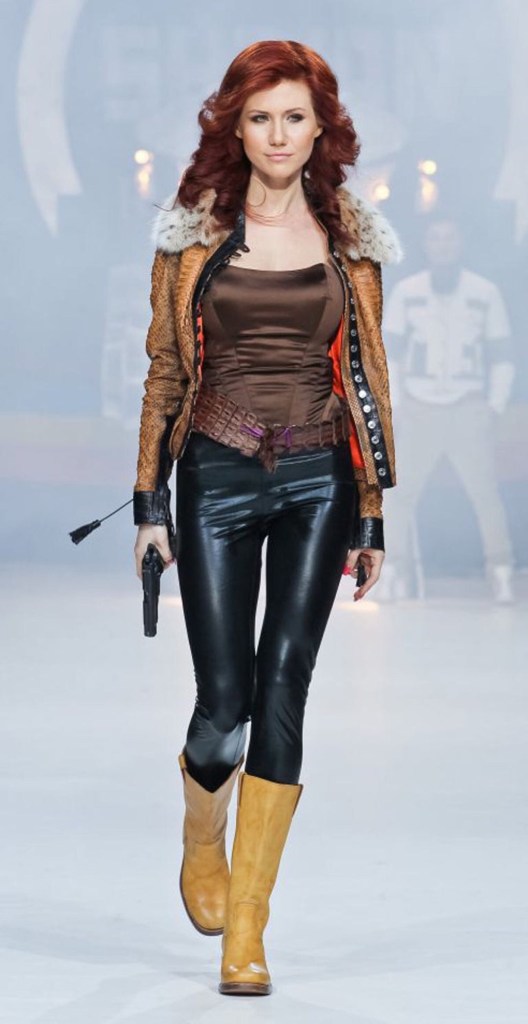
First is Anna Chapman (real name Anna Kushchenko), whose Wikipedia listing shows her occupations as “Entrepreneur, television host, and agent of the Russian Federation.” And it is in that last capacity that she became well-known in June 2010 when she was arrested in the United States for spying on behalf of Russia.
Anna Chapman, or a James Bond Girl?
The daughter of a Russian diplomat and reported KGB official, she was included in a major spy swap in July of the same year, whereupon she returned home, became a popular TV personality, a fashion model, and head of a government youth council. Probably not the best role model for young girls; but it helps to know the right people to get you into the job.
*. *. *
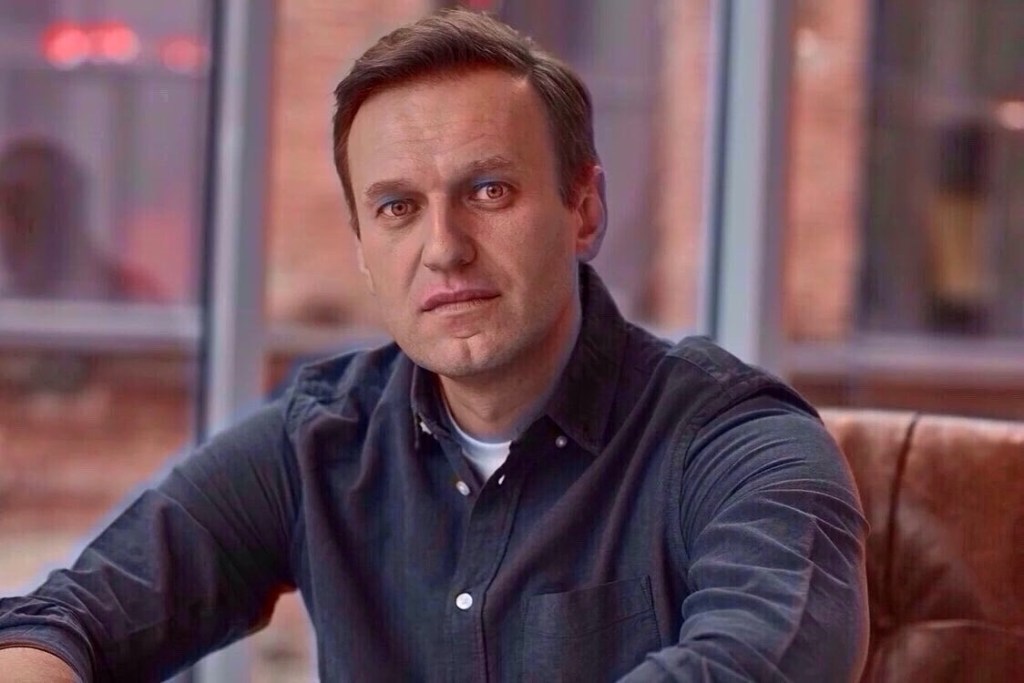
The other surprise name was that of Alexei Navalny, who needs no introduction. The most widely known and revered of all of Putin’s opposition leaders, Navalny was murdered while in a Russian prison camp in February of 2024. His name and his work live on through his Anti-Corruption Foundation, now headed by his widow, Yulia Navalnaya, and a number of his former colleagues. I knew he was a lawyer, but would not have expected him to choose PLU for his education . . . though perhaps he didn’t have a choice.
Alexei Navalny (1976-2024)
*. *. *
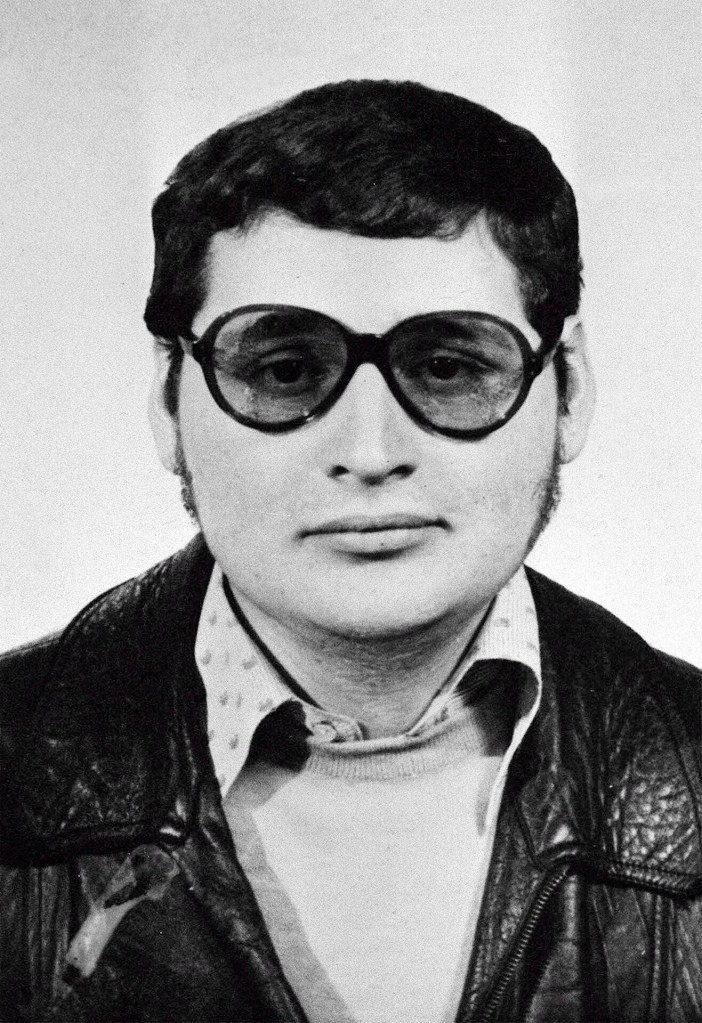
Now comes the fun part. I knew this man had attended PLU (how I knew will be explained later), but was shocked to see him listed, not by his real name — Ilyich Ramirez Sanchez — but by his infamous adopted moniker: Carlos the Jackal.
No, no, no! Not one of those jackals, but close.
The real Carlos:
Ilyich Ramirez Sanchez, alias Carlos the Jackal
You’ve probably heard of him: a notorious Soviet-trained terrorist in the 1970s and ‘80s, he is the son of a Venezuelan Marxist lawyer who enrolled him in PLU when he was refused admittance to the Sorbonne in France. (I’ll never understand how he made the mental leap from Paris to Moscow, but that’s what his bio says.) His persona and his name have appeared in countless books, movies and TV shows, adding immeasurably to his notoriety. Small comfort, though, as he has been in a French prison since his capture in 1994, serving three consecutive life sentences without possibility of parole.
*. *. *
And last, as well as the least famous, is Yuri Shvets. He is the only one of the four with whom I am — or was — personally acquainted . . . a fact which does me no credit whatsoever. And he’s also the one of whom you are least likely to have heard.
But as this article has already become much longer than intended, and I must in any event hurry off to a doctor’s appointment (just routine), I’m going to have to leave you hanging until tomorrow for the rest (and best) of the story.
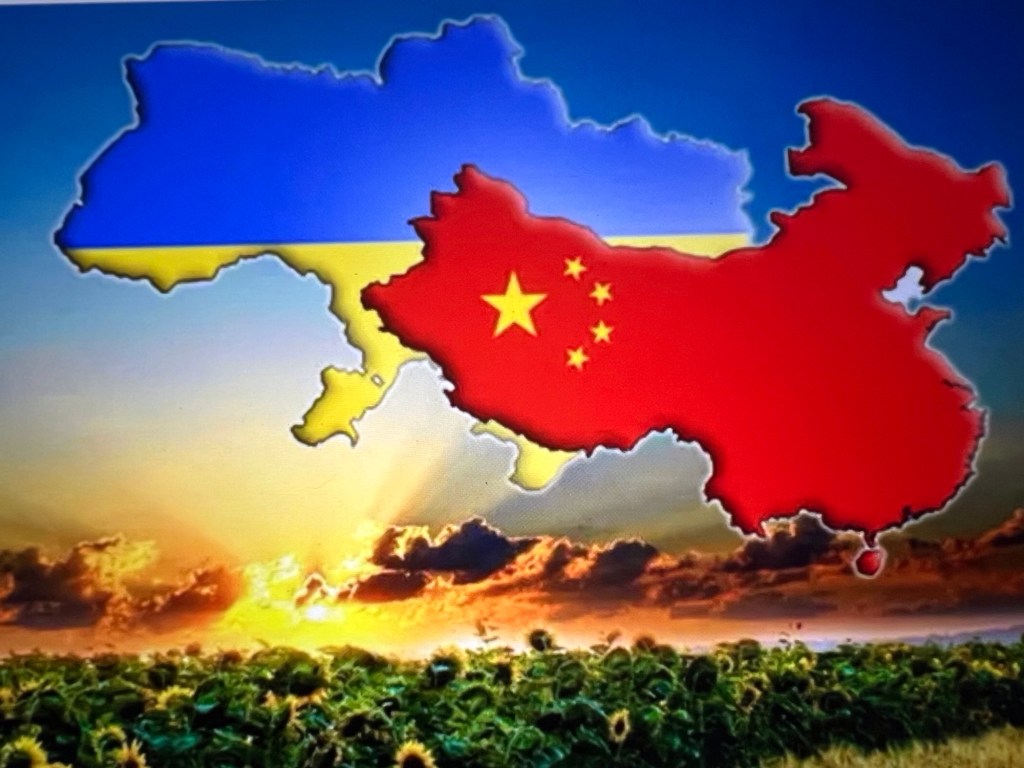
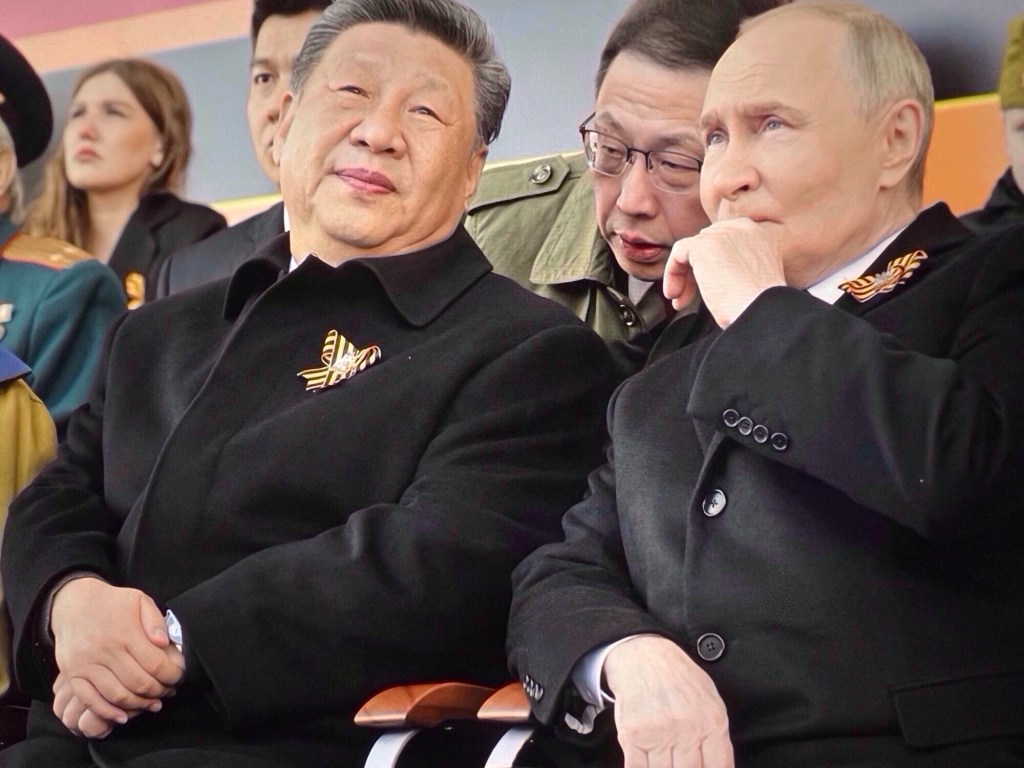
In yet another indication of the burgeoning relationship between Russia’s Vladimir Putin and China’s Xi Jinping, word has spread in Russian state media of a plan by Chinese activists to open a private school for Chinese citizens . . . in Russian-occupied Luhansk, Ukraine.
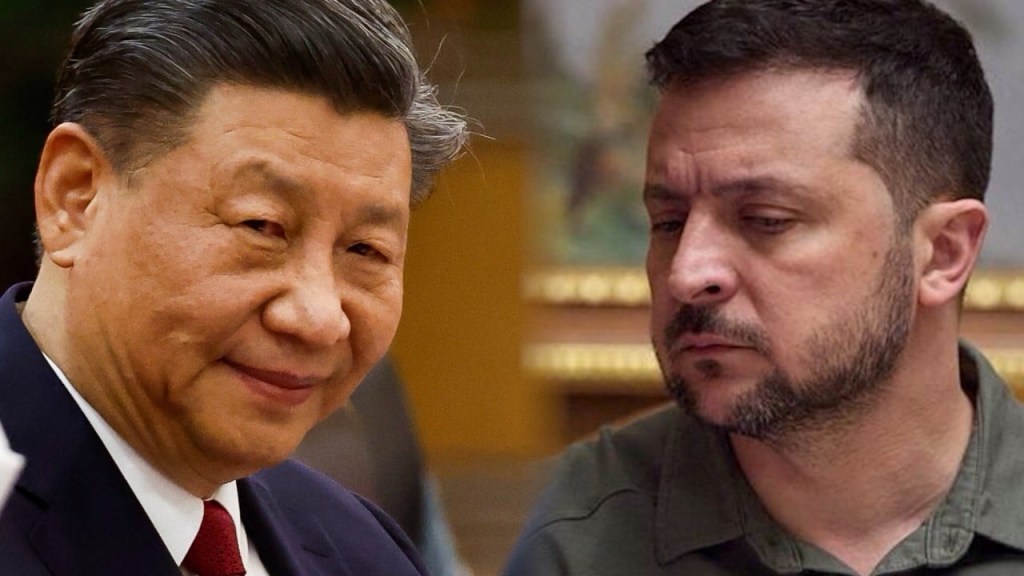
Xi Jinping and Volodymyr Zelensky
According to a story first released by Russian state outlets and repeated by pro-Kremlin Telegram channels, the school will admit 300 Chinese students, teaching them the Russian language in preparation for eventual enrollment in Russian universities.
It is officially being touted by the Kremlin as a step toward “economic normalization” in Ukraine, reflecting “changes in the geopolitical situation in the world.” [Olha Katsan and Donbas.Realities, RFE/RL, July 27, 2025.]
In other words, justifying Russia’s current, illegal occupation of 20% of Ukrainian territory.
But Ukrainian political analyst Kostyantyn Batozskiy says:
“Consider this: Would Chinese families really risk sending their teenage children into an active war zone for education? This is not about education. It’s about optics, influence, and control. . . . Like their endless talk of rebuilding the ruined Donetsk airport or restoring the town. of Shyrokyne — none of it materializes. It’s about keeping occupied populations distracted with grandiose promises.” [Id.]
Luhansk, Ukraine: Would you send your children here?
But beyond mere distraction, there is concern that other forces may be behind the proposed school. Artur Kharytonov, president of the Liberal Democratic League of Ukraine and an expert on East and Southeast Asia, cautions:
“In China’s totalitarian system, nothing of this scale happens without top-level approval.” [Id.]
Referencing Xi’s recognition of Russian elections and expressions of respect for Russia’s constitution, as well as China’s proven involvement in trade and investment activities in Ukraine, Kharytonov continued:
“Crimean wine makes its debut at Chinese trade fairs. Stolen Ukrainian grain and metals from occupied Donetsk appear on Chinese platforms, such as AliExpress, China’s online retailer. This is reality, not speculation.”[Id.]
And Yuriy Poita, head of the Asia-Pacific Section at the New Geopolitics Research Network, takes it a step further, saying that he believes the “school” may not be for teenagers at all:
“It’s more plausible that this is a facility to train Chinese engineers, technicians, or workers involved in joint Russian-Chinese projects in occupied territories. Complex equipment requires skilled personnel. You can’t deploy these systems without on-site Chinese experts. Language training for local workers — and vice versa — could easily be packaged as ‘education.’” [Id.]
In view of the existing evidence of Chinese technology and materiel being provided in support of Russia’s war in Ukraine, this makes perfect sense.
And as political analyst Batozskiy said:
“They [the Russians] desperately want to show the world that Ukraine’s occupied region is a de facto part of Russia, attracting foreign citizens for work and study.” [Id.]
Even more concerning, Batozskiy added:
“Chinese specialists brought into Luhansk might be linked to the People’s Liberation Army or Chinese intelligence services. Proximity to the frontlines gives them unparalleled access to battlefield data and Ukrainian infrastructure.” [Id.]
Bingo!
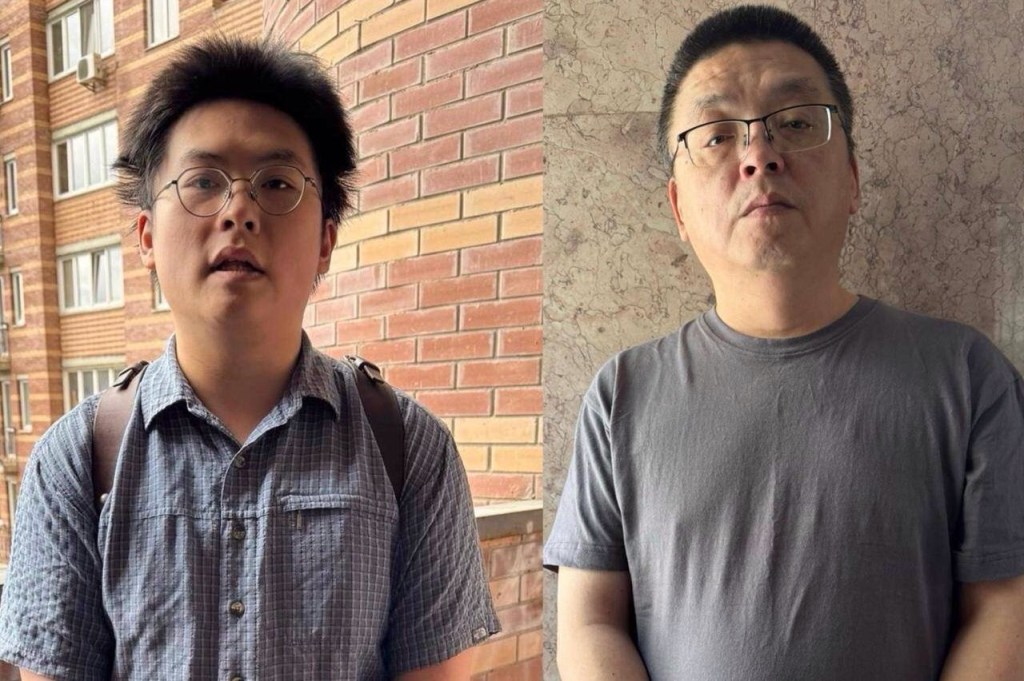
Just days ago, two Chinese men — a 24-year-old student and his father — were reported to have been arrested by Ukrainian intelligence for attempting to obtain classified information about the Neptune missile program. [RFE/RL, July 25, 2025.] And there were earlier reports of North Korean officers entering the Russian-occupied region of Donetsk disguised as students, revealed when several were killed and others captured by Ukrainian forces. [RFE/RL, July 27, 2025, op.cit.]
Father-and-Son Spy Team
But what do the pragmatic Chinese gain from such an arrangement? According to Kharytonov:
“China ideologically supports Russia’s war. It will buy anything from these territories — grain, metals, whatever — because it’s cheap and politically useful. . . . Nothing in China happens by accident. Even a modest presence — engineers, trainers, or ‘students’ — could serve multiple purposes: economic, political, and military.” [Id.]
*. *. *
Despite their sometimes competing separate interests, Russia and China are natural allies, bound by a shared political ideology and a mutual goal of displacing Western economic dominance with their own “new world order.” Nothing — not even the seemingly smallest of clues — can be overlooked in dealing with this pair.


















 The Blog About Everything … and Sometimes Nothing