Having a wonderful time reminiscing about all my past travel (and other) adventures. Hope you’ll share them with me in my blog, “All Roads Led to Russia.”
It didn’t take a modern-day Nostradamus to call this one. Vladimir Putin never intended to show up in Istanbul to talk to Volodymyr Zelensky, or anyone else.
Donald Trump made a half-hearted attempt to lure him to a meeting by (sort of) indicating that he “could” also be there. But when Putin announced the names of his second-string team members, Trump immediately backed out as well . . . so quickly, in fact, that one might have thought that was the plan all along.
And, true to his word, Zelensky told Putin to stuff it.
Some sort of meeting is apparently taking place today between Putin’s window-dressing mannequins and an equivalent delegation from Ukraine. But without Putin, Zelensky rightly refused to participate, instead meeting only with Turkish President Erdogan.
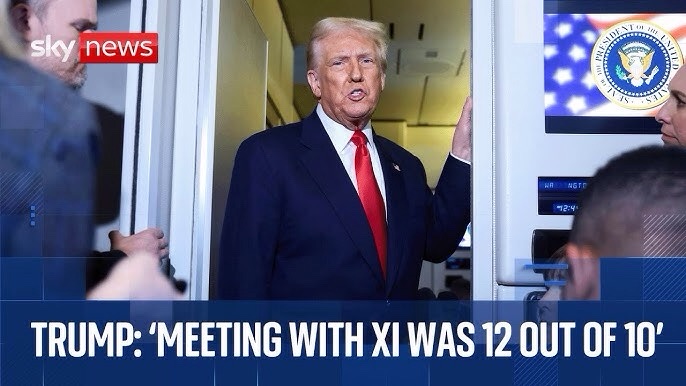
And Trump? Well, he summed it up perfectly — in his usual eloquent manner — when he told reporters aboard Air Force One (the American one, not the gifted one from Qatar):
“Nothing’s going to happen until Putin and I get together, okay? And obviously he wasn’t going to go. He was going to go, but he thought I was going to go. He wasn’t going if I wasn’t there. And I don’t believe anything’s going to happen, whether you like it or not, until he and I get together, but we’re going to have to get it solved, because too many people are dying.” [David Brennan, GMA, May 15, 2025.]
And there you have it: the fate of the sovereign nation of Ukraine will be determined, not by its own people or its government, but by two autocrats who — while allegedly holding polar-opposite political views — are in fact orchestrating a scenario that will ultimately benefit them both.
And as Ukraine continues to crumble, the world waits to find out who’s next.
Three days ago, on May 12th, I looked at the date on my calendar and wondered why it seemed so familiar. It was not the birthday or anniversary of any of my friends or relatives; there was no reminder of an appointment coming up; yet a little bell kept ringing somewhere in the recesses of my mind.
And then — as so often happens — I dreamed last night about someone I hadn’t seen or thought about in years, and it all came rushing back. So I thought I’d share it with you: the story behind May 12th, as it relates to my misbegotten past.
*. *. *
“Life’s a pitch, then you spy.” – John Alejandro King
On April 16, 1985, an American man walked into the Soviet Embassy on 16th Street in the northwest quadrant of Washington, D.C., and asked the guard at the glass-protected desk if he might speak with an Embassy diplomat, Sergei Chuvakhin. When the guard called Chuvakhin to the front entry, the American man handed him an envelope addressed to Stanislav Androsov, then the KGB rezident (chief of station) at the Embassy. Unknown to Chuvakhin, the envelope contained a few documents and an offer to procure and provide more of the same in exchange for the sum of $50,000. The American then left the Embassy and returned to his office in suburban Langley, Virginia.
Former Russian Embassy, Washington, D.C.
Upon receiving and opening the envelope and reviewing its contents, Androsov summoned his deputy, Viktor Cherkashin, then the head of counterintelligence at the Embassy, to discuss the significance of the unexpected and unconventional communique.
The American waited nervously until a month later, when he finally received a call inviting him to meet again with Sergei Chuvakhin at the Embassy on May 17th. On the American’s arrival, Mr. Chuvakhin greeted him, showed him into a small fourth-floor meeting room, and withdrew as he had been instructed. In a few moments, a different gentleman entered the room and introduced himself as Viktor Cherkashin. Their meeting was brief but productive, culminating in an agreement by the KGB to the payment of $50,000 in exchange for additional documents from the American.
Cherkashin and the American next met on June 13, 1985, at Chadwick’s Restaurant, a popular watering hole in the historic Georgetown neighborhood of Washington. The American brought with him a larger package of classified CIA files, which he exchanged with Cherkashin for the agreed amount of $50,000.
Thus began the career of Aldrich Ames as a mole for the Soviet KGB inside the CIA — a career that lasted for nine years, until his eventual arrest on February 21, 1994. Nine years, during which a troubling number of U.S. human assets in Russia were lost, engendering the beginning of a years-long mole hunt within the CIA’s ranks.
Nine years, during which Ames evaded detection despite internal CIA investigations, lie detector tests, routine vetting, and his own reckless extravagance and general carelessness.
Nine years, until — with Ames already at or near the top of the CIA’s short list of suspects — a recently-arrived former KGB officer talked to the FBI and revealed, either knowingly or inadvertently, a key bit of information that allowed the FBI to make its airtight case of espionage against Aldrich Ames.
Without the CIA task force’s relentless, top-secret internal search for a mole, Ames might never have become a suspect. But the CIA has no law enforcement authority in the United States, and so they finally had no choice but to enlist the help of the FBI. It was the joint effort of the two agencies — a rather exceptional collaboration at the time — that brought down the man who still, more than thirty years later, is described by many as perhaps the most destructive U.S. traitor of the 20th Century.
Funny … He doesn’t look like a spy.
Much has since been revealed about the extent of the damage done by Aldrich Ames and the lives lost as a result of his betrayal. But still, more than thirty years later — as he continues to live out his life sentence in the Federal Correctional Institution at Terre Haute, Indiana — Ames claims to have additional information yet to be shared with U.S. intelligence authorities.
And still — three decades after the fact — the identity of the Russian defector who provided that last vital piece of the puzzle also continues to be protected, presumably for his own safety. A few names have been posited by various sources and, not surprisingly, vehemently denied or simply not commented upon.
One was an acquaintance of mine.
*. *. *
Now, About May 12th
“Though this be madness, yet there is method in’t.” – William Shakespeare, Hamlet
On April 25, 1993, two former Soviet KGB officers — we’ll call them Comrade X and Comrade Z — arrived at JFK International Airport in New York and spent the night at the Connecticut home of their new literary agent. The following day, they met with book publishers in New York City, one of whom agreed to purchase and publish an as-yet-unfinished book being written by Comrade Z based on his years in Washington as a spy for the KGB. The two men then traveled to the Washington, D.C., area, where they remained until their return to Moscow at the expiration of their visas on May 5th. During that period, they met and spoke with agents of the FBI.
One week later — on May 12, 1993 — the FBI opened its formal investigation of Aldrich Ames, an agent of the Central Intelligence Agency suspected of being a long-time Soviet mole inside the CIA.
I am the person who brought Comrades X and Z to the United States in the spring of 1993 for the purpose of selling that book, thus making it possible for the FBI to interview them at length, and later to pave the way for their defection to the United States.
What followed were two years of madness . . . and two of the more, let’s just say, interesting years of my life. Questions were raised, by journalists and others, as to the identity of the person who provided that final piece of the Ames puzzle needed to form an air-tight case against him. Some suggested it was Comrade X — “my” Comrade X — but that has not, to my knowledge, ever been revealed. It certainly has not been confirmed (or denied) to me.
But perhaps now you can understand why May 12th is a date — along with a few others — that would bring to my mind some very distinct and detailed memories.
*. *. *
Over the years, friends have asked why I haven’t tried writing a book about my experiences of those times, and my answer has always been two-fold: First, that I’ve not been sure whether the subject matter, from the U.S. government’s standpoint, might still be sensitive; and second, because it all happened so long ago, it may have ceased to be of much interest during the years of detente between the U.S. and Russia.
But now, after so many years, and with the return of Russia under Putin to the “bad old days” of totalitarian rule . . . not to mention the near-extinction of relations between Russia and the Western allies since Putin’s invasion of Ukraine . . . it seems somehow appropriate to remind people of how long, and how consistently, the spy wars have been going on while we were looking the other way.
“The whole question is: who controls whom.” – Vladimir Ilyich Lenin
It’s hardly a surprise to anyone that Vladimir Putin, at the 11th hour, has finally announced that he will not be attending the meeting with Ukrainian President Zelensky in Istanbul tomorrow . . . a meeting that Putin himself suggested just a few days ago. He recommended the time and the place, and Zelensky immediately agreed . . . on the condition that Putin himself would be present, and not just an underling.
But no response was heard from Moscow on the last point until today — when Zelensky had already left Ukraine for Istanbul — as Putin signed an order designating a team of “negotiators and experts” to travel to Turkiye for tomorrow’s meetings. And that team did not even include his top-level people, such as Prime Minister Sergei Lavrov, or Defense Minister Andrey Belousov. Instead, he assigned Deputy Defense Minister Aleksandr Fomin; an aide who once served as Minister of Culture, Vladimir Medinsky; and — most interestingly — Igor Kostyukov, head of the Main Intelligence Directorate of Russia’s Foreign Military Intelligence Agency, the GRU. [RFE/RL, May 14, 2025.]
Igor Kostyukov
Zelensky had also spoken to Donald Trump, who is presently traveling in the Middle East, about the possibility of his attending the meetings, to which Trump — indicating that he didn’t know whether Putin would attend if he did not — responded:
“I know he [Putin] would like me to be there, and that’s a possibility. If we could end the war, I’d be thinking about that.” [Id.]
Later in the day, a U.S. official said that Trump would not attend.
So it all boils down — not to Putin’s accession to direct talks with Zelensky after all — but to a possible opportunity to meet on neutral territory with Trump under the guise of negotiations toward ending the war in Ukraine. And Zelensky was the reason they both needed for such a meeting.
But somewhere along the line, that didn’t work out . . . and Ukraine, once again, is the loser.
As Russian independent political scientist Natalia Shavshukova told Current Time:
“Putin’s only interest is a direct meeting with Trump . . . and Ukraine has become an excuse for the two leaders to meet.” [Id.]
*. *. *
Why Putin and Trump didn’t, or couldn’t, get their act together is an open question; perhaps each was waiting for the other to make the first commitment. But whatever the reason, one thing is clear:
Russia’s deadly attacks against Ukraine have not let up for a single moment. Nor will they, until Vladimir Putin gets exactly what he wants. And Donald Trump is the only person who can make that happen.
Most of us have a favorite cause . . . or, at the very least, there’s an issue that evokes a strong emotional reaction. It might be anything from animal rights, to genocide, to the building of a new highway through our neighborhood, to a sleazy fashion trend, to learning that Starbucks has discontinued our favorite latte. Whatever the issue, we find ourselves raving and ranting about it endlessly, working ourselves into a lather of righteous indignation and frustration at being powerless to fix it.
I have a few such causes. But for the past several years, I’ve been focused primarily on Russia’s regression to a Soviet-style, authoritarian form of government under the thumb of Vladimir Putin.
And my fond memories of time spent living and working in Moscow in the early 1990s — when the country had overthrown its communist rule and was inching its way toward a democratic form of government and a capitalist economy — have made the realization of Russia’s U-turn toward dictatorship that much more painful.
So I have railed against it in the only way available to me: by writing about it . . . about the new, onerous laws; about the silencing of independent journalists and other critics of the regime; about the imprisonment of foreigners on bogus charges, to be held as hostages for trade like so many head of cattle; about the rewriting of history and the reinstatement of nationalist propaganda in the schools; about the corruption in the oligarchy behind the throne; and most of all, about the war of attrition against Ukraine.
And it has all taken an emotional toll over the past couple of years. Lately, I find it more and more difficult to read the multiple news reports each day, and to find words strong enough — without becoming obscene — to express my anger and despair. I’ve attributed it to burnout, and tried taking an occasional break — a sort of mental health day — to reboot. But that hasn’t really helped . . . and last night, as I lay in bed staring at the rotating ceiling fan and wondering whether it might suddenly fly apart and decapitate me in my sleep, I had an epiphany. I know why I’m losing my edge in writing about Russia.
Sadly, tragically, it is because — as an American living through the nightmare of Donald Trump’s second presidency — I am not in a position to criticize an outsider without also looking inward. I should be writing less about Vladimir Putin and his rubber-stamp government, and more about my own.
Because, as I read these days about the atrocities being committed by the Russian government — not just against Ukraine, but against its own citizens — I find myself wondering which government I am actually reading about.
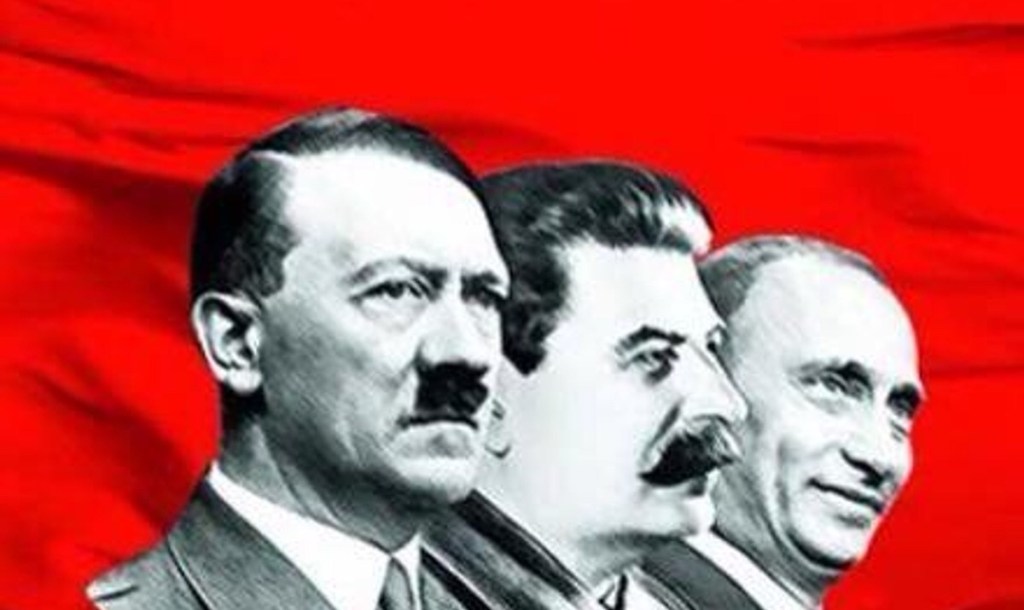
As has been well documented, Trump and Putin are cut from the same bolt of cloth. And as long as Donald Trump and his band of conscienceless sycophants continue their rampage against all that is good and decent and inspirational about this country, I can no longer limit my attention to Vladimir Putin.
When I began writing this blog some two and a half years ago, I made a conscious decision to avoid any discussion of American politics, with the exception of international relations. That was because I had seen the way in which people react — with unsuppressed anger, hostility, and even hatred — to differing opinions on the subject. And I do not ever want to be the spark that ignites that kind of a conflagration, even if it is only verbal and online.
But I have recently broken that promise to myself, because I love my country — the real America — and my conscience will no longer let me ignore the very real dangers presented by the current administration, or remain silent about them. And while I have no intention of backing off on my criticisms of Putin and his gang of thieves and murderers, I find myself looking at him from a different perspective, giving more weight to what’s happening on this side of the Atlantic, and analyzing the possible connections.
*. *. *
So stay tuned, good readers. I’m not sure what’s coming next . . . in fact, I’m never sure until my fingers touch the keyboard . . . but I have a feeling it’s going to involve a good bit more of the three Rs — reading, research and realization — and a little less sleep as well.
And hopefully a smattering of humor now and then, for the sake of everyone’s sanity.
Volodymyr Zelensky says he will be in Istanbul tomorrow, May 15th, waiting for the face-to-face meeting that Vladimir Putin said he would attend . . . and may have backed away from, yet again.
Over the past weekend, Putin himself — finally agreeing to direct talks with Ukraine’s president — suggested Istanbul as the site and May 15th as the date. Zelensky immediately agreed, and has said that he will definitely be there. But, he cautioned, he expects to meet with his counterpart Putin, and not with lower-ranking officials:
“It is with [Putin] that I must negotiate a cease-fire, as only he can decide on it. If he takes the step to say he is ready for a cease-fire then it opens the way to discussing all the elements to end the war.” [RFE/RL, May 13, 2025.]
But there has been no confirmation as yet from the Kremlin . . . only this from spokesman Dmitry Peskov:
“As soon as the president considers it necessary, we will make an announcement” . . . adding that Russia continues to “move forward with preparations for the talks.” [Id.]
I believe that’s what is known as speaking without saying anything.
Kremlin Speak
Zelensky said that he has invited Donald Trump, who is currently in the Middle East, to join in the talks. But it is not yet certain what Trump’s schedule will permit, though he did indicate that Secretary of State Marco Rubio would be among the top U.S. officials traveling to Turkey for the meeting; and there is indication that the U.S. delegation will include Trump envoys Steve Witkoff and Keith Kellogg as well. [Id.]
But whether the trip proves to be fruitful, or becomes yet another waste of time, remains to be seen . . . and depends entirely upon Putin’s game plan. Top diplomat Kaja Kallas of the EU has said that Putin wouldn’t “dare” to show up, as “Russia is clearly playing games, trying to buy time. I don’t think they are interested in peace. They are still bombing Ukraine. If they were interested in peace, they could stop right now.” [Id.]
In light of Putin’s continued attacks on Ukraine, and his refusal to discuss a meaningful ceasefire, that sounds more than likely. But we’ll just have to wait and see who shows up tomorrow.
As I was following detailed reports of a meeting of European leaders in Ukraine last week, the name of one of the participants — Germany’s new Chancellor, Friedrich Merz — seemed to strike a familiar note, though I didn’t recognize his face from the news photos.
I kept staring at this distinguished-looking gentleman, but . . . nothing registered.
Chancellor Friedrich Merz
And then it hit me. The person whose name I was recalling was the original “Fred Mertz” — a fictitious character of somewhat less distinction from the smash hit comedy series of the 1950s: “I Love Lucy.”
William Frawley as “Fred Mertz”
He played the part of Lucy and Desi Ricardo’s landlord, neighbor and good friend . . . an amiable, if sometimes slightly grumpy, guy who was a whiz at repairing the plumbing, but had no political acumen whatsoever. Certainly no one who would ever be mistaken for the head of any government.
Frankly, I never cared for the show . . . even in those more innocent days of the ‘50s, I found it silly and a little too slapstick. But for some inexplicable reason — though I’m unlikely to remember the name of someone I just met, or what I had for breakfast a couple of hours ago — the names of the characters have stuck in my mind. That seems to be just one of the many idiosyncrasies we develop and learn to live with as we grow older.
The Ricardos and Mertzes on a Road Trip
Anyway, as Shakespeare famously asked, “What’s in a name?” Apparently, the answer is: “Not much.” Any similarity between Friedrich Merz and “Fred Mertz” is, of course, purely imaginary.
And I’ll bet I’m the only person who would even think to connect the two. Which does say something about the circuitous workings of my mind.
I’m just not sure what . . . nor do I really want to know.
Saturday, May 9th, marked the 80th anniversary of Russia’s victory over fascism, thus bringing World War II to an end. Or so it is celebrated in Russia.
While no honest student of history would ever deny Russia’s immense sacrifices and their enormous contribution to the defeat of Nazi Germany and the Axis powers, they really didn’t do it alone. Still, their pride is well deserved, and they have every right to celebrate . . . and celebrate, they did.
But the massive parade in Moscow’s Red Square was not the only party held in Russia that day. Cities and towns across the country held their own commemorations — including Nizhny Novgorod, where the Feenstra family from Canada were able to celebrate alongside their adopted countrymen.
As always, they documented the occasion with some excellent video coverage. But for this special event, dad Arend refrained from his usual running commentary, letting the proceedings speak for themselves. Thus, my notes are from my own observations.
Arend did say that they were privileged to have received tickets for the entire family to stand in a choice spot, on the side nearest the Kremlin, and to attend the concert following the parade.
Now, for those not familiar with the Russian language — which would be the vast majority of people outside of Russia — the word kremlin means citadel, or fortress. And the Moscow Kremlin, while the largest and most well-known, is far from the only one in Russia. There are about a dozen in all, including this hilltop beauty in Nizhny Novgorod:
The display here was, of course, on a much smaller scale than the one in Moscow. There were just a few tanks and trucks, no heavy armaments, no drones. But there were parades of perfectly-synchronized marching military units, and a review of the various branches of the military by local officials, one of whom was addressed as “Tovarishch Polkovnik” . . . “Comrade Colonel,” to us English speakers. I found this rather jarring, as I had thought the term “Comrade” dropped out of use with the supposed fall of Communism; but perhaps there are still exceptions.
Along the parade route, there were several Jumbotrons placed at intervals for the viewing pleasure of the crowds, which showed not only the local event, but the extravaganza taking place in Moscow as well . . . including Putin’s 10-minute speech.
Most interestingly in Moscow, as Russian Defense Minister Andrey Belousov rode along Red Square in an open convertible, he too addressed the assembled troops as “Comrades.” Leaving the car, he then walked to the reviewing stand to present himself to Vladimir Putin, also referring to himself as “Comrade.”
“Greetings, Comrades.”Belousov (standing, left, in profile), Presenting Himself to Putin
*. *. *
Back in Nizhny Novgorod, when the parade ended, the crowd walked to a war memorial, where local officials placed flowers and offered a couple of brief speeches . . . accompanied by a military band playing the Russian National Anthem, and followed by a hymn from a church choir.
Church Choir
And I must confess, I choked up a bit at that moment. The martial strains of that anthem are intended to invoke patriotic fervor, and the familiar music drew me back more than 30 years to my time in Moscow. I could easily understand then, as now, how the mixture of a continuous appeal to patriotism and blatant propaganda could imbue an intense nationalistic fervor in a people who have never known anything different.
It is, in truth, a very powerful and dangerous combination. Lenin knew it; Stalin knew it; and Vladimir Putin knows it all too well.
*. *. *
And then the big day was over, and there was just time for a brief sit-down and a family photo op before heading back to the farm . . .
The Eight Little Feenstras
. . . including, somewhere along the way, an interview with eldest daughter Cora . . . who was able to show off her newly-acquired Russian language skills.
Speaking about what “men and women did many years ago.”
*. *. *
It becomes more and more obvious, as I follow this family on their journey through life in Russia, that the Feenstras are a multi-talented group. What the future holds for them, no one can know. But whatever opportunities come their way, I’m sure they’ll make the most of them.
Well, Donald Trump is off this week on his first state visit of this term. He won’t be dropping in on any of our European friends, or the good people of Japan, or any of our other traditional allies. Instead, he’ll be feted by the leaders of the three countries most compatible with his preferred opulent, gold-and-jewel-encrusted lifestyle: Saudi Arabia, Qatar, and the United Arab Emirates.
Sort of like being at home at Mar-a-Lago, but without cocktails.
Mar-a-Lago
Granted, there are legitimate political reasons for the visits with the heads of three oil-rich nations that have already pledged trillions of dollars in U.S. investments, and who could prove to be helpful in mediating conflicts in such places as Iran and Gaza.
Hasan Alhasan, a senior fellow for Middle East policy at Bahrain’s International Institute for Strategic Studies, told CNN:
“In Trump’s book, the Gulf states tick all the right boxes. [They] pledge to invest trillions in the US economy and spend colossal amounts on US weapons systems.” [Nadeen Ebrahim and Abbas Al Lawati, CNN, May 11, 2025.]
But no one gives away that kind of money without expecting something in return, and the three Gulf states have made no secret of their desire to strengthen their security and economic relationships with the United States. According to Ebtesam Al Ketbi, founder and president of the Emirates Policy Center in Abu Dhabi, each of the countries has its own priorities; and the return of Trump to the White House signals that this is the right time to “secure greater privileges in their relationship with the world’s most powerful nation.” [Id.]
In Riyadh, Saudi Arabia, During First Administration (NYTimes Photo)
While that all seems to be business as usual, there is news of a potentially troublesome issue in the form of a Boeing 747-8 jet that Qatar has offered to Trump . . . and that he proposes to accept. His plan is to have it retrofitted for use as Air Force One for the remainder of his term, “in a very public and transparent transaction” — and then to be donated to his presidential library, where it would be available for his continued personal use.
Both sides are coloring the gift as a government-to-government transaction, which Trump said on Sunday night would be accepted by the Defense Department as a “GIFT, FREE OF CHARGE.” [Kaitlan Collins and Kit Maher, CNN, May 11, 2025.]
But, at risk of becoming repetitious, let me . . . well . . . repeat myself: “no one gives away that kind of money without expecting something in return.”
Which is precisely why the framers of the U.S. Constitution included a Foreign Emoluments Clause (Article 1, Section 9, Clause 8), which specifically states:
“No Title of Nobility shall be granted by the United States: And no Person holding any Office of Profit or Trust under them, shall, without the Consent of the Congress, accept of any present, Emolument, Office, or Title, of any kind whatever, from any King, Prince, or foreign State.”
Needless to say, the partisan wrangling over legal definitions has already begun. Senate Minority Leader Chuck Schumer (D.-NY) put it succinctly:
“Nothing says ‘America First’ like Air Force One, brought to you by Qatar. It’s not just bribery, it’s premium foreign influence with extra legroom.” [Id.]
The New Air Force One Logo?
And although Trump dismissed criticism from Democrats, even one of his most hardcore supporters, Laura Loomer, said that accepting the plane would be a “stain” on the administration “if this is true.” [Id.]
Kathleen Clark, a government ethics expert at Washington University School of Law in St. Louis, said that Trump’s administration is “structuring a transaction to try to avoid the obvious application of the law,” as Congress has not consented to the gift. She added: “It is ridiculous. It’s a gift to Trump. The federal government is a pass-through.” [Id.]
*. *. *
Furthermore, the U.S. Secret Service — more concerned with security than legal semantics — said the plane would present a “security nightmare”:
“The (US Air Force) would have to tear it apart looking for surveillance equipment and inspect the integrity of the plane.” [Id.]
It is estimated that retrofitting would take up to two years to complete, by which time Trump would be more than halfway through his term. The plane would then be used as Air Force One for less than another two years, after which it would move to his Presidential Library . . . where, as previously indicated, it would become his personal plaything.
*. *. *
There have, of course, been issues raised during past administrations concerning gifts offered by foreign governments. But Jordan Libowitz, a spokesperson for Citizens for Responsibility and Ethics in Washington, said that this one is in a category of its own:
“We’ve never seen something on the level of a $400 million plane. It is a scale well beyond anything we’ve ever seen before.” [Id.]
That certainly fits well into Donald Trump’s lifelong philosophy of “go big, or go home.”
And let us not forget his own words, delivered via X on February 15th of tis year:
“He who saves his Country does not violate any Law.”
Well, there you have it: The Gospel According to Trump. I wonder what Congress will think about that.
On April 27th, I wrote the following concerning Steve Witkoff’s meeting in Moscow two days earlier with Vladimir Putin, special adviser Yuri Ushakov, and special envoy Kirill Dmitriev . . . and only one interpreter — theirs:
“And speaking of that last Putin-Witkoff meeting in Moscow, how does the U.S. negotiator walk alone . . . by himself . . . unaccompanied . . . into a meeting with the Russian president and two of his top advisers — Yuri Ushakov and Kirill Dmitriev — with only a Russian interpreter, and none from the U.S., present?”
[The following photos are screen shots from a CNN broadcast.]
Witkoff Entering AloneMeeting the Russian InterpreterThe Russian Side of the Table
“That’s three experienced, diabolically savvy politicians against one businessman with zero background in politics or diplomacy who, like his boss, takes whatever Putin tells him as gospel.
“Can you say ‘set-up’?”
*. *. *
And now it comes to light that that was not the only occasion on which Witkoff allowed himself to be trapped in meetings with no American interpreter, or even an aide with a command of the Russian language. A U.S. official and two other Western officials with knowledge of talks held between Witkoff and Putin on February 11th, March 13th and April 11th said that Witkoff had “ . . . used their translators. If they speak to each other in Russian, he doesn’t know what they are saying.” [Keir Simmons, NBC News, May 10, 2025.]
Witkoff does not speak or understand Russian. He has no way of knowing what the Russian participants are saying to each other, or whether their interpreter is translating correctly.
*. *. *
Let me give you an example from my own experience. Many years ago — shortly after the breakup of the Soviet Union, when Russia was adjusting to Gorbachev’s programs of glasnost (openness) and perestroika (restructuring), and the West was naively pouring money into new enterprises there — two attorneys asked me to arrange a meeting for them with the Russian Trade Representative in Washington, Robert Ruzanov, to discuss an opportunity for construction of housing for the military troops who would be returning from their Eastern European postings.
Although I had never met Ruzanov, I knew that he spoke English; yet throughout the meeting, he and his aide spoke only Russian, relying on their interpreter. I, in turn, spoke only English.
The talks were proceeding nicely, until one of my colleagues mentioned the sum of $8 billion, which the interpreter incorrectly (probably inadvertently) translated as $6 billion. Without hesitating, I jumped in and corrected her, saying, in Russian, “Vosem. Vosem milyardov.” Translation: “Eight. Eight billion.”
She was, of course, surprised . . . and more than a little embarrassed. I assured her — again in Russian — that it was not a problem, and explained to my colleagues what had happened, downplaying it as a simple mistake. And as I looked across the table at the Trade Representative, I saw a sly smile creep across his face as he caught my eye.
The person in the Russian Embassy who had helped me arrange the meeting had told me that Ruzanov spoke English, so quite naturally, I assumed he had also mentioned that I spoke a bit of Russian. It was simply how the game was played . . . and it still is. In diplomacy as in business, you take your advantages wherever you find them; and language differences can be a huge advantage — or disadvantage.
*. *. *
In Steve Witkoff’s case, taking those meetings without an interpreter of his own was an untenable decision on his part. According to Michael McFaul, a former U.S. Ambassador to Russia, relying on the Kremlin’s interpreter was “a very bad idea” that put Witkoff “at a real disadvantage.”
McFaul further said: “I speak Russian and have listened to Kremlin interpreters and U.S. interpreters at the same meeting, and the language is never the same. At the end of every meeting that I attended, I debriefed the interpreter to make sure we heard everything correctly, to get the ‘memcom’ [memorandum of conversation] exactly right. You can’t do that using a Russian official.” [Id.]
The memorandum of conversation, or “memcom,” is a written account of the meeting prepared for the rest of the government. Not having detailed notes of Witkoff’s meetings could create problems for other senior members of the administration, such as Secretary of State Marco Rubio and special envoy to Ukraine Keith Kellogg, as they continue discussions with the Russian and Ukrainian sides.
“How does Kellogg know what Witkoff agreed to with Putin? He only knows it through a ‘memcom,’” McFaul added. [Id.]
“Oh-oh!”
*. *. *
Vladimir Putin surrounds himself with professionals . . . the best and the brightest in their fields. If they don’t deliver the goods, they’re fired, or transferred somewhere more suited to their experience and skills. That is the one thing Donald Trump should be learning from Putin . . . and the one he can’t seem to grasp. Experience and ability don’t count in Trump’s world. He demands and rewards just one thing: total, unquestioning allegiance to him. When he should be receiving valuable advice from his so-called advisers, what he actually wants is blind obeisance . . . and never to be told he is wrong.
Well, he’s getting what he demands from his cadre of friends. The tragedy is, it’s not what the country needs.
So, it turns out that no single individual — not even the almighty Donald Trump — was able to evoke a response from Vladimir Putin beyond a half-hearted offer of a three-day ceasefire that never actually happened. In the end, it took the combined resolve of 30 nations to make a meaningful dent in Putin’s armor.
And even that dent isn’t a guarantee of a cessation of hostilities in Ukraine. But it’s a start.
It began as usual, though, with some well-scripted Kremlin-speak offered by Putin’s spokesman, Dmitry Peskov, in an interview with CNN’s Frederik Pleitgen in Moscow. Following the May 10th meeting in Kyiv of the aptly-named “Coalition of the Willing” — led by Ukrainian President Volodymyr Zelensky, U.K. Prime Minister Keir Starmer, French President Emmanuel Macron, German Chancellor Friedrich Merz, and Polish Prime Minister Donald Tusk — the interview in Moscow went as follows (transcribed from CNN News video, May 10, 2025):
Pleitgen: “In Kyiv they said they are demanding a ceasefire. Do you feel Russia is being pushed into a corner?”
Peskov: “No, I don’t think so. Well, actually a couple of days ago Putin announced a ceasefire for three days. Have you heard any reaction from Kyiv? No. We haven’t heard it either. Have you heard any criticism of Kyiv for not being able to respond or not willing to respond? No. So if Kyiv is willing to have a ceasefire, why not have a ceasefire for at least three days?”
Pleitgen: “They want the three-day ceasefire to essentially go on for 30 days.”
Peskov: “We have to think about that. These are new developments. So we have our own position. Yes, definitely. We see that Europe is confronting us. Europe is actually confronting us very openly. And we are quite accustomed to that.”
Pleitgen: “And do you think that Russia can be pressured in this case?”
Peskov: “Well, if you look during the history — during the old history, during the modern history — you will see that Russia is quite resistant to any kinds of pressure. We are open for dialogue. We are open for attempts to have a settlement in Ukraine. We do appreciate efforts of mediation. We do appreciate, and we are very grateful.”
Pleitgen: “From the Trump administration?”
Peskov: “But at the same time, it’s quite useless to try to press upon us.”
*. *. *
But then Putin had some comments of his own to make in an unusual late-night televised address, indicating a more amenable attitude toward direct negotiations:
“We would like to start immediately, already next Thursday, May 15, in Istanbul, where they were held before and where they were interrupted.” [Mariya Knight, CNN, May 10, 2025.]
He emphasized that the talks should be held “without any preconditions,” adding that:
“We are set on serious negotiations with Ukraine . . . [intended to] eliminate the root causes of the conflict . . . [and] reach the establishment of a long-term, durable peace.” [Id.] [Bold emphasis is mine.]
Then on Sunday, Putin denied that Moscow has refused to enter into a dialogue with Kyiv, and said that the “decision now lies with the Ukrainian authorities”:
“We do not exclude that during these talks there will be a possibility to arrange some kind of new truce, a new ceasefire.” [Id.]
*. *. *
But how much stock can we place in Putin’s words? His promises thus far have meant nothing . . . how can we now believe he has truly had a change of heart? Particularly when he speaks of eliminating “the root causes of the conflict.”
Keep in mind what he considers — or claims to consider — the “root cause” of his “special military operation” in Ukraine: i.e., the alleged (and totally fabricated) oppression by Ukraine’s “nazi” government against Russian-speaking Ukrainians in regions he claims as belonging to Russia: Donetsk, Luhansk, Kherson, Zaporizhzhia, and the long-occupied Crimean Peninsula.
He also faults the West for impinging on Russia’s borders by having admitted former USSR republics and Soviet Bloc countries to NATO and the EU, claiming that their proximity represents an ever-present danger to the security of Russia.
So, if he plans to come to the table in Istanbul with his mind still firmly set on eliminating these so-called “root causes,” then I fear his alleged willingness to negotiate may be nothing more than another delaying tactic, staged to lay the blame . . . yet again . . . on Ukraine and its Western allies.