Author Archives: brendochka39

Unknown's avatar

About brendochka39

Having a wonderful time reminiscing about all my past travel (and other) adventures. Hope you’ll share them with me in my blog, “All Roads Led to Russia.”

5/27/25: The Feenstras Are Just the Tip of the Iceberg

For more than a year, I have been following the adventures of Canadians Arend and Anneesa Feenstra and their eight children in their adopted home of Nizhny Novgorod, Russia. A deeply religious, conservative couple, the Feenstras had become disillusioned with what they considered to be the overly liberal trend of life in Canada, and wanted to protect their family from “wokeness,” LGBTQ, and other presumed dangers of a free society. So they sold their farm, moved to Russia, where they hoped to find freedom to live as they choose. After a bit of a rocky start, they managed to acquire a large piece of farmland, where they have built a beautiful home and farm buildings, started a couple of side businesses, and become internet celebrities and full-time propagandists for the Putin regime.

The Feenstras in Russia – c. 2024

Over the course of the past year, I have learned that the Feenstras’ story is not as unusual as I had initially believed (though the others have not been so well publicized). In addition to reading of the increasing number of conservative families from Canada and the U.S. who are following in their footsteps, I now find that the Russian Orthodox Church has also brought its proprietary brand of male-dominated conservatism to our shores . . . and one individual stands out as a perfect example of its growing success.

His name is Father Moses McPherson. An American from Texas, he is a former roofer who was raised a Protestant, and now serves as a priest in the Russian Orthodox Church Outside Russia (ROCOR) in Georgetown, Texas — an offshoot of the mother church in Moscow.

And his congregation has tripled in size in just the past 18 months.

Father Moses

Eastern Orthodoxy is just one of numerous religions represented in the United States, where freedom of religion is guaranteed by our Constitution. As in other Christian faiths, its adherents believe in one God, and in the Trinity. It stresses morality as being essential to one’s relationship with God, but differs mainly in some of its liturgical practices. And, while ROCOR has had a presence in the United States since its establishment in 1917 by Russians fleeing the Bolshevik Revolution, its numbers have been growing rapidly of late.

In and of itself, Eastern Orthodoxy is as legitimate a form of worship as other denominations of Christianity, Judaism, Islam, Buddhism, or any other religion. But what Father Moses — and, apparently, other ROCOR leaders — are offering that has become so attractive to young male converts are “absurd levels of manliness.” [Lucy Ash, BBC News, May 24, 2025.]

Judging from conversations between members of his congregation and BBC’s Lucy Ash, it appears that the recent spate of conversions is owed less to the fundamentals of the religion itself, and more to a desire for a patriarchal society. One of Father Moses’ parishioners, a software engineer, told Ash that he had felt empty inside, believing that society has been “very harsh” on men. He complained that men are being criticized for wanting to be the breadwinners of their families, with wives who will stay at home as full-time homemakers. “We are told that’s a very toxic relationship nowadays. That’s not how it should be,” he said. [Id.]

Ash said that most of the converts she met also had opted to home-school their children, in part because they believe women should prioritize their families rather than careers. And Father John Whiteford, an archpriest in a ROCOR near Houston, says that home-schooling ensures a religious education and is “a way of protecting your children, [while avoiding any talk about] transgenderism, or the 57 genders of the month or whatever.” [Id.]

Much like the ideal family units of the 1950s TV sitcoms, such as “The Brady Bunch,” and the aptly-named “Father Knows Best.”

“Father Knows Best”

ROCOR’s proponents also show a leaning toward another recent trend: pronatalism. Already popular with such prolific sperm donors as Elon Musk and Pavel Durov, it is receiving a huge boost from a growing number of conservative families. Father Moses himself shared a picture of his wife’s positive pregnancy test on his Instagram feed, and received 6,000 likes for announcing the arrival of their sixth child. And he instructs his congregation that there are two ways of serving God: by becoming a monk or a nun . . . or by getting married, avoiding contraception, and having as many children as possible.

Of course, he doesn’t explain how the average family, with a single (male) earner, will manage to support such large numbers of children. But that isn’t his problem.

Father Moses also complains of the “feminization” of the West; and many conservative young men relate to that. “I don’t want to go to services that feel like a Taylor Swift concert. If you look at the language of the ‘worship music,’ it’s all emotion — that’s not men,” he says. [Id.]

But one Greek Orthodox Sunday school teacher in Austin, Texas, Elissa Davis, says on her podcast that many of the converts belong to “the anti-woke crowd,” and have what she calls “strange ideas” about their new orthodox faith — especially those in the Russian Church:

“They see it as a military, rigid, disciplinary, masculine, authoritarian religion. It’s kind of funny. It’s almost as if the old American Puritans and their craziness is resurfacing.” [Id.]


*. *. *

Did I hear someone ask, “So what?” I’m not surprised, as that was my initial reaction as well. An individual’s choice of religion is a deeply personal matter, and I would never imply that one is more worthy than another.

And if a woman chooses to forego a career in order to stay at home as full-time mother and wife — if that truly makes her happy — then good for her. There is absolutely nothing wrong with it . . . if it truly makes her happy. But when I hear rumblings of a return to a patriarchal society, I begin to wonder, as a woman, whether I would be able to vote in the next election, or buy a house without a man’s cosignature, or express an opinion of my own.

Perhaps I wouldn’t be so concerned if this were just a localized trend. But it isn’t. ROCOR exists under the auspices of the Russian Orthodox Church — the one centrally located in Moscow — whose current head is Kirill, Patriarch of Moscow and All Rus’ and Primate of the Russian Orthodox Church . . . and whose political stance is 100% pro-Kremlin.

Patriarch Kirill with Vladimir Putin

He is known as a close ally of Vladimir Putin, whose rule he has described as “a miracle of God.” He has justified Russia’s war against Ukraine as a struggle against “forces of evil”; and the World Russian People’s Council, under his leadership, has described it as a “Holy War.” [Biography of Patriarch Kirill of Moscow, Wikipedia.org.] There is no separation of church and state in Russia.

And Putin himself has forcefully promoted (and rewarded) larger families and ultra-conservative lifestyles . . . even importing families like the Feenstras, and celebrating 2024 as “The Year of the Family.”

Vying for “Family of the Year”
(The sign reads: “Continuation of the Year of the Family”
“Roads to the Future – With Love Along the Way”)

*. *. *

It has become instinctive: When I see the hand of Vladimir Putin or his allies in any segment of American society, I take note. And when it aligns with many of the views of our current administration, I begin to worry.


Can you blame me?

Just sayin’ . . .

Brendochka
5/27/25

5/27/25: The Medvedev Solution … or … the Very Definition of Insanity

Meet Dmitry Medvedev. For those of you who haven’t followed the progression of Vladimir Putin’s reign since 1999, or who may have thought that this grinning idiot had simply faded into oblivion, let me bring you up-to-date.

Dmitry Medvedev

He was once Russia’s Prime Minister, during the early years of Putin’s presidency. Then — when Putin had to take a four-year break while he had the Russian Constitution amended to allow him to run for a third (and fourth, and fifth) term — Medvedev took over the title of President for four years from 2008 to 2012 . . . with Putin actually running things while officially occupying the office of Prime Minister. You might call it the ultimate job-sharing arrangement.

Following Putin’s reelection in 2012, Medvedev then went back to being PM for a while, and since then has served as Deputy Chairman of the Security Council of the Russian Federation — a more influential position than one might think from the “deputy” designation, since the chairman is none other than Putin himself.

In his earlier incarnation as prime minister, Medvedev gave the appearance of being a more liberal-leaning, moderating influence behind Putin’s throne. But that was either an exceptional job of acting, or he has since sold his soul to the devil, because he is now the ultimate hawk.

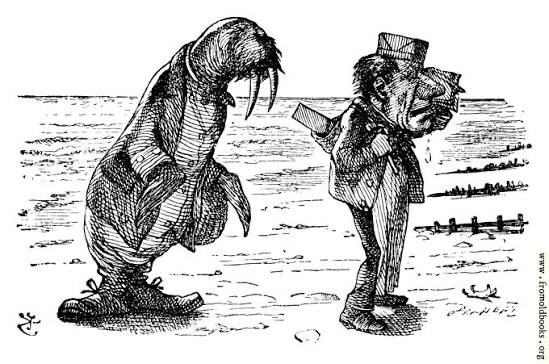
On top of which, he’s obviously gone around the bend . . . over the edge . . . off the rails . . . and down the rabbit hole.

Down the Rabbit Hole

And here’s proof:

There has been some talk, during the back-and-forth discussions of a possible peace treaty between Russia and Ukraine, of the creation of a so-called buffer zone between the two countries, to better ensure the future security of both sides. And in principle, it doesn’t sound like a bad idea.

Of course, it would take some time to work out the details of such an agreement, particularly as to the optimum size of the zone, its maintenance and enforcement, and who would finance it. We’re not talking about simply setting up a net on a tennis court here.

But Dmitry Medvedev thinks he has the answer. He is concerned that some of the Western missiles that have been provided to Ukraine may be capable of striking Russian territory from as far away as 550 km., and so the buffer zone would have to be at least that wide. In his mind, it would look something like this:

A map of shows the extent to which Medvedev wants Russia to seize Ukrainian territory, which encompasses nearly all of the country except for a sliver of land along the Polish border.
The Medvedev Solution

Yes, the pink part is Medvedev’s proposed buffer zone: the entirety of Ukraine, with the exception of that skinny little blue strip on the western border adjoining Poland.

Now, his rationale — the idea that Ukraine would be willing to turn itself into one gigantic, Slavic version of Korea’s DMZ — is laughable enough on its own; obviously, the territory would have to be taken by force. But consider this:

Military analysts from the Institute for the Study of War (ISW) calculated that Medvedev’s zone would occupy 587,459 sq. km. of Ukrainian territory. In their assessment, the analysts wrote:

“Russian forces advanced an average of roughly 14.3 square kilometers per day in Ukraine and Russia between January 1, 2025, and May 24, 2025. At this rate of advance, it would take Russian forces approximately 3.9 years to seize the remainder of Donetsk, Luhansk, Zaporizhia [sic], and Kherson oblasts.” [Matthew Loh, Business Insider, May 26, 2025.]

Those are regions already partially occupied by Russian forces. At that rate, according to the ISW, it would take Russia about 91 years to achieve Medvedev’s goal of seizing the rest. [Id.]


And this is the individual who sits at Putin’s side on the Security Council.

Actually, I think I feel a little better now about some of our U.S. policy-makers. But not much.

The U.S. Cabinet

It’s a world gone mad, and the inmates have taken over the asylum.

Just sayin’ . . .

Brendochka
5/27/25

5/26/25: Immigration: Back to the Future


Just over a century ago — on May 26, 1924 — U.S. President Calvin Coolidge signed into law the Immigration Act of 1924. Also known as the Johnson-Reed Immigration Act, it was without precedent in the history of the United States — a country that had been built by immigrants from every part of the world — in its pronouncement of isolationism and its exclusion of people of specific nationalities and ethnicities.


The spread of communism following World War I in Europe had instilled fear in the American public as well. It was also a time of racial discrimination, and a resentment of the loss of jobs to the large number of unskilled, uneducated immigrants seeking opportunities in the promised land.

Coolidge’s new law allowed the continuation of immigration for those with college educations and/or special skills, but denied admission to Eastern and Southern Europeans and Japanese. More welcome were those from Northern European nations such as Great Britain, Ireland, and the Scandinavian countries.

In 1907, then President Theodore Roosevelt had entered into a “Gentlemen’s Agreement” with Japan, allowing for more liberal immigration quotas from that country. That, too, was abolished by the 1924 Act. So angered were the Japanese people that anti-American sentiment became rampant; one Japanese citizen committed suicide outside the American Embassy in Tokyo in protest. [“This Day In History,” History.com, May 26, 2025.]

U.S. President Calvin Coolidge

It wasn’t until four decades later that Coolidge’s law was abolished by President Lyndon B. Johnson’s Immigration and Nationality Act of 1965, also known as the Hart-Celler Act. It put an end to the National Origins Formula that was the basis of the earlier act, and ended de facto discrimination against Southern and Eastern Europeans, as well as Asians and other non-Western and Northern European ethnicities. [Id.]

America was once again the land of opportunity for the “huddled masses yearning to breathe free.”


Until now.

Sixty years after Lyndon Johnson put an end to America’s spate of xenophobia, it’s back . . . not because of fear on the part of the general public, but because of the policies of an administration that doesn’t know a good thing when they see it. And that good thing is an America that has worked well, and grown, and thrived, for 250 years.

America doesn’t need to be made great again. It always has been, and still is, great.

In short: “If it ain’t broke, don’t fix it.”


Just sayin’ . . .

Brendochka
5/26/25

5/26/25: Don’t Shoot the Messenger


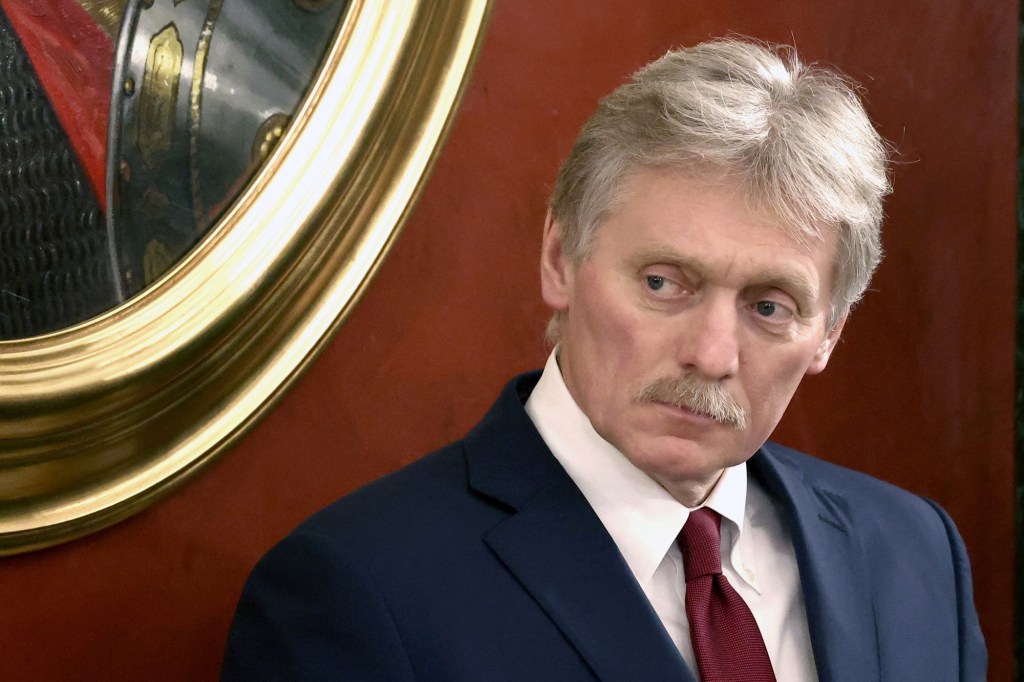
The messenger, in this case, is none other than the usually-eloquent Kremlin spokesman, Dmitry (“Dima”) Peskov, who appears to be struggling for words today . . . possibly for the first time in his life.

Dmitry “Dima” Peskov

And the person who brought about this surprising turn of events is none other than the rarely-eloquent Donald Trump, who yesterday declared that Vladimir Putin had apparently gone “CRAZY,” which left Trump “surprised” and “not happy.”


I don’t know where Putin is at the moment, but he sent his ever-faithful Peskov to respond to Trump’s shocking criticism. And the best Dima could come up with was this:

“We are really grateful to the Americans and to President Trump personally for their assistance in organizing and launching this negotiation process. Of course, at the same time, this is a very crucial moment, which is associated, of course, with the emotional overload of everyone absolutely and with emotional reactions.” [Brandon Conradis, The Hill, May 26, 2025.]

(Note: I tried to find a picture of Putin looking humble for insertion here, but none seems to exist. Oh, well . . . )


I don’t want to make too much of this brief stumble on the part of poor Dima; he is, after all, just Putin’s mouthpiece. I’m sure they’ll come up with an appropriately snarky retort soon.

And it would be naive to think we might be seeing an indication of a sudden change of heart on Putin’s part concerning his murderous rampage through Ukraine.

But it is just a teensy bit heartening to observe the Kremlin’s almost diffident reaction when Donald Trump finally locates his manhood and says the right thing.

It’s about time!

Just sayin’ . . .

Brendochka
5/26/25

5/26/25: Is This the End of a Beautiful Friendship?

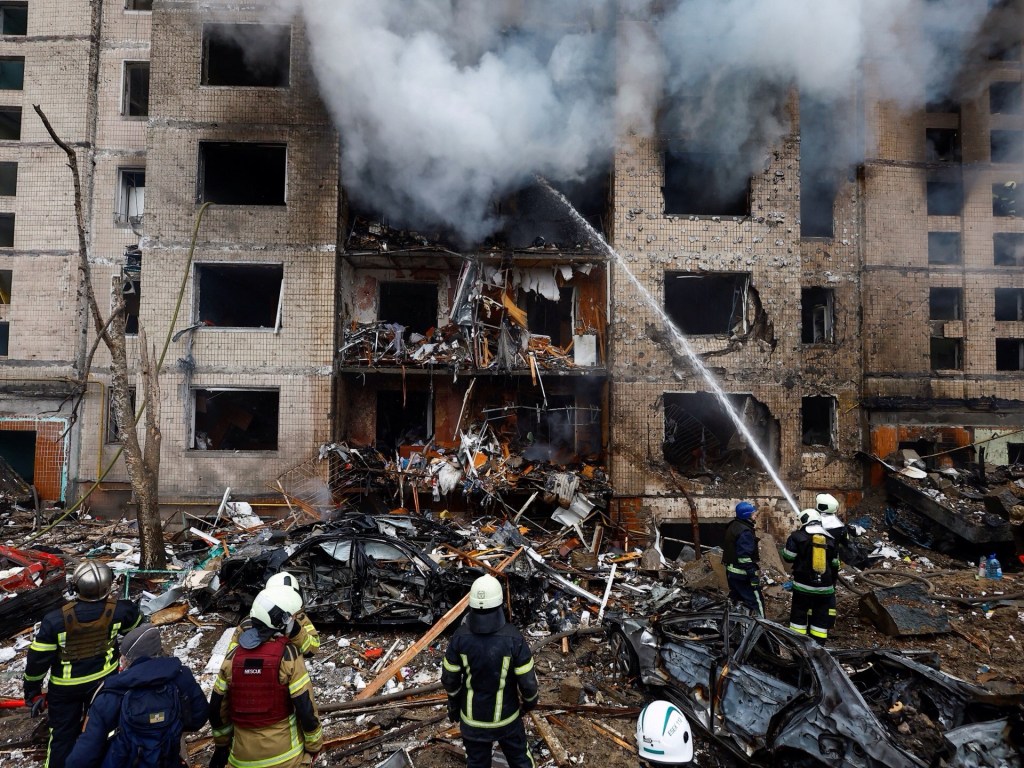
While the world waits for Vladimir Putin’s promised memorandum of talking points for proposed ceasefire negotiations, and Russia and Ukraine swap hundreds of prisoners of war at the Belarus-Ukraine border, Russia’s missiles and drones continue to devastate Ukraine‘s cities, towns and villages.

In one demolished home in the Zhytomyr region — the area from which my maternal grandparents emigrated to the U.S. in 1905 — three children were killed in the early hours of the morning.
.

Zhytomyr Region, Ukraine – May 26, 2025

And near the capital city of Kyiv, multiple private homes — not military targets — were leveled.

Kyiv Region, Ukraine – May 25, 2025

And finally, after months of enabling Putin’s endless heel-dragging, Donald Trump spoke out on social media:

“I’ve always had a very good relationship with Vladimir Putin of Russia, but something has happened to him. He has gone absolutely CRAZY! He is needlessly killing a lot of people, and I’m not just talking about soldiers. Missiles and drones are being shot into cities in Ukraine, for no reason whatsoever. I’ve always said that he wants ALL of Ukraine, not just a piece of it, and maybe that’s proving to be right, but if he does, it will lead to the downfall of Russia!” [RFE/RL, May 26, 2025.]

Later, preparing to board Air Force One in Morristown, New Jersey for the flight back to Washington, he told reporters:

“I’m not happy with what Putin is doing. He’s killing a lot of people, and I don’t know what the hell happened to Putin. [He’s] sending rockets into cities and killing people, and I don’t like it at all. We’re in the middle of talking and he’s shooting rockets into Kyiv and other cities. I don’t like it at all. I’m surprised. Very surprised. Something happened to this guy — and I don’t like it.” [Id.]


Wait . . . what??!!! Is that old guy in the hat actually Rip Van Winkle, just waking up from a 20-year nap? Where has he been during the last three years and three months while Putin’s weapons have been raining death and destruction on Ukraine?

He’s “not happy”? “Something has happened to this guy”? “I’ve always said . . .”??!!!

Where does Trump get this stuff? In what dark recesses of his mind does he actually harbor the belief that he has always known Putin wants all of Ukraine? Does he really think that these attacks are a manifestation of some recent mental disorder, causing Putin suddenly to have become a tyrannical, war-mongering, homicidal maniac? And does he honestly think he can make us believe it?

Come to think of it, he probably does . . . and that’s the scariest thing of all.


But note what he didn’t say. He said nothing about further sanctions or other retaliatory action; nor did he actually say he (and our European allies) have had enough, or that Putin’s time has run out. His comments were more critical of his friend Vladimir than usual, but considering what is at stake, they really weren’t all that tough.

So is this the beginning of the end of the Trump-Putin bromance? Or will the next 24 hours bring yet another 180-degree turn in the never-ending soap opera that is now our day-to-day world?

Stay tuned, folks.

Just sayin’ . . .

Brendochka
5/26/25

5/25/25: A Double Celebration


It turns out that we Americans have more to commemorate this weekend than we may have realized.


In addition to honoring on Memorial Day the heroes who have given their lives in defense of our nation over the past 250 years, let us also pay homage to those brave patriots who, on May 25, 1787, sat down in the State House (now Independence Hall) in Philadelphia, Pennsylvania, to begin composing the document that would govern the greatest republic ever created by man: the Constitution of the United States.

Those 55 delegates — representing seven of the then existing 13 states that had, since 1781, been only loosely joined by the Articles of Confederation — included George Washington, James Madison, and Benjamin Franklin.

(Photo from the Hulton Archive, February 9, 2010)

Over the next three months, those men devised a system of checks and balances to prevent the usurpation of power by any future would-be tyrant. They struggled over the question of state representation, with larger states voting for proportional representation and smaller states wanting an equal say; the solution was the creation of the bicameral legislature we still have today: the Senate having two elected members from each state, and the House of Representatives comprised of proportional representation.

By September 17th, the greatest governing document since the Magna Carta had been signed by 38 of the 41 delegates present. But it would not, by its own provision in Article VII, become binding until it was ratified by at least nine of the 13 states. Delaware, Pennsylvania, New Jersey, Georgia and Connecticut were the first to do so.

But some states — most strenuously, Massachusetts — refused to ratify the document as presented, because it lacked certain basic political rights, including freedom of speech, religion, and the press. Finally, in February 1788, those states agreed to ratify under condition that amendments would immediately be proposed to cover those most fundamental and vital issues.

And by June 21, 1788, Massachusetts, Maryland, South Carolina and New Hampshire joined the ranks, and it was decided that the U.S. Constitution would become the governing instrument of the United States of America as of March 4, 1789.

[“This Day in History,” History.com, May 25, 2025.]


The first 12 amendments to the Constitution — known as the Bill of Rights — were adopted by Congress on September 25, 1789, and sent to the states for ratification.

It was a long, tedious, seriously-undertaken process, conceived and developed by the best minds and the greatest patriots of the time . . . not the result of a deluge of hastily-scribbled executive orders dreamt up by a single, autocratic, would-be emperor of the very sort foreseen and intended to be precluded by the framers of the Constitution.

Today — and every day — it is our privilege and our duty as American citizens to honor and defend that Constitution, and to continue fighting the sort of tyranny that our founding fathers gave their all to prevent. So please forgive me if I repeat, once again, this reminder:

“The only thing necessary for the triumph of evil is for good men to do nothing.”


Just sayin’ . . .

Brendochka
5/25/25

5/25/25: A Happy Day In Ukraine … and Russia


Not much came out of the May 16th abbreviated meeting in Istanbul, or the lengthy May 19th phone call between Donald Trump and Vladimir Putin . . . at least, as far as negotiations to end Putin’s war against Ukraine is concerned. But on the plus side, agreement was reached to begin an immediate exchange of an estimated 1,000 prisoners of war from each side.

And on Friday, the first 780 people — 270 soldiers and 120 civilians on each side — got to go home.


The swap — the largest since the start of the war in February of 2022 — took place at the Belarus-Ukraine border, and is to continue throughout this weekend.

Ukraine’s President Volodymyr Zelensky called it “perhaps the only real result” of the earlier talks, while Donald Trump — ever the cockeyed optimist — posted:

“Congratulations to both sides on this negotiation. This could lead to something big???” [RFE/RL’s Ukrainian Service, May 23, 2025.]

Unfortunately, Putin’s continued delays and accelerated demands make Trump’s hoped-for “something big” look less and less likely. But at least there is one cause for celebration this week: the hundreds of joyous family reunions taking place on both sides of the border.

And we can all be grateful for that.


Just sayin’ . . .

Brendochka
5/25/25

5/25/25: Putin’s Hostages: Bring Them Home, Week 72: Giving New Meaning to Memorial Day

Here in the United States, we traditionally celebrate Memorial Day on the last Monday in May by spending time with family and friends, to pay homage to all of the men and women in the military who have given their lives to protect our nation . . . and to salute those who are currently serving.


This year, I’d like to extend my thoughts beyond our borders. In recognition of the ongoing struggle of the people of Ukraine — both military and civilian — in the defense of their country, I send to you my hopes and prayers for a speedy end to this horrific war, and a just and lasting peace in the future.

The people of Ukraine are, in the truest sense, Russia’s hostages. And so, you remain on my list of those to whom I pay my respects each week.


And not to be forgotten:

The People of Ukraine
The Azov 12
David Barnes
Ales Bialiatski (in Belarus)
Gordon Black
Andrei Chapiuk (in Belarus)
Antonina Favorskaya
Konstantin Gabov
Robert Gilman
Stephen James Hubbard
Sergey Karelin
Ihar Karney (in Belarus) on
Vadim Kobzev
Darya Kozyreva
Artyom Kriger
Uladzimir Labkovich (in Belarus)
Michael Travis Leake
Aleksei Liptser
Ihar Losik (in Belarus)
Mikita Losik (in Belarus)
Daniel Martindale
Farid Mehralizada (in Azerbaijan)
Nika Novak
Marfa Rabkova (in Belarus)
Igor Sergunin
Dmitry Shatresov
Robert Shonov
Eugene Spector
Valiantsin Stafanovic (in Belarus)
Siarhei Tsikhanouski (in Belarus)
Laurent Vinatier
Robert Romanov Woodland
Vladislav Yesypenko (in Crimea)
Yuras Zyankovich (in Belarus)

. . . and any others I may have missed.

Godspeed.


Just sayin’ . . .

Brendochka
5/25/25

5/24/25: It Isn’t Just About Ukraine

Contemplating the Future

Finland has been shoring up its defenses for some time now.

And this week, Germany — for the first time since the end of World War II — deployed a permanent military brigade outside its borders, this time to Lithuania. It was not an invasion; it was an action taken in support of the Baltic nation against any possible military incursion by Russia. As German Chancellor Friedrich Merz said at the inaugural ceremony in Vilnius, “the security of our Baltic allies is also our security.” [Astha Rajvanshi, NBC News, May 23, 2025.]

He added that, since the invasion of Ukraine in 2022, “Russia’s aggressive revisionism” could indicate an intent to redraw the larger map of Europe, and not just Ukraine. [Id.]

Lithuanian President Gitanas Nauseda added that both Russia and Belarus have already begun conducting military exercises on his nation’s border. [Id.]

Which is terrifyingly reminiscent of those weeks prior to February 24, 2022, as the world watched Russian forces building — in what they still insistently refer to as a “special military operation” — on the eastern border of Ukraine. And we all know how that has turned out.


The three Baltic nations of Lithuania, Latvia and Estonia are geographically the most vulnerable European countries to a future expansionist move by Russia, as they share borders with Russia itself as well as its staunch ally Belarus, and are only connected to a NATO ally — Poland — by way of the narrow Suwalki Gap.


Now, with Donald Trump finally — after three years of devastating death and destruction — realizing that his promise to end the war in Ukraine in a matter of days was never anything more than a self-serving pipe dream, Europe is preparing itself for the worst-case scenario. Will it happen? No one knows for sure. But it would be foolhardy — possibly even suicidal — to sit idly by, just waiting to see what comes next.

So the European allies are doing what they must do: they are arming, and giving fair warning to Vladimir Putin. As Chancellor Merz said, “Anyone who threatens an ally must know that the entire alliance will jointly defend every inch of NATO territory.” [Id.]

*. *. *

Following the May 19th call between Trump and Putin, which accomplished a much-desired prisoner swap but made absolutely no progress toward even a minimum ceasefire negotiation, the Institute for the Study of War (ISW) issued a summary report. It stated, among other things, that:

“Russia reportedly continues to expand its military infrastructure along its border with Finland and Estonia, likely in preparation for future aggression against NATO.” And further, that “Russian forces recently advanced in Kursk Oblast and near Chasiv Yar, Toretsk, and Novopavlivka.” [Christina Harward, et al., ISW, May 19, 2025.]

The report concluded that certain actions on the part of Russia were essential to the progress of substantive negotiations:

  • Russia must explicitly acknowledge the legitimacy of the Ukrainian president, government, and constitution and Ukraine’s sovereignty in order to engage in meaningful, good-faith negotiations.”
  • “Russia must agree that ceasefire negotiations must precede peace settlement negotiations.”
  • “Russia must show its willingness to make concessions of its own in any future bilateral negotiations, especially as the Kremlin appears to be setting conditions to expand its list of demands amid the peace talks.” [Id.]


As logical and reasonable as their recommendations are, we all know there isn’t a snowball’s chance in Hell of Putin ever delivering any of those concessions . . . he has already made that abundantly clear as he has stalled, teased, lied, and blasted his way through more than three years of war.

And why? Because he has no intention of backing off . . . ever. He wants Ukraine; and that is only the first move of his long-term game plan. One of his principal delaying tactics is his ludicrous argument that Volodymyr Zelensky is not the legitimate president of Ukraine, and thus any negotiations with him would allegedly be useless. As Russian Foreign Minister Sergei Lavrov told BBC’’s Russia editor Steve Rosenberg on Friday, when asked whether Russia would sit down and sign a peace agreement with President Zelensky:

“You’re putting the cart before the horse. First we need to have a deal. When it’s agreed, then we will decide. But, as President Putin has said many times, President Zelensky does not have legitimacy . . . Probably the best option would be new elections . . .” [Steve Rosenberg, BBC, May 23, 2025.]

Russian Foreign Minister Sergei Lavrov

And, as if that weren’t enough, Russia’s Kremlin-controlled media have chimed in with the following:

  • From Izvestia: “Russia has won the latest round of global poker.”
  • From Kommersant: “Donald Trump’s stance couldn’t be more advantageous to Moscow. In effect he backed Russia’s position of ‘Talks first, ceasefire later’ and refused to strengthen sanctions against Russia.”
  • From a social scientist, as told to Kommersant: “Donald Trump, at least for now, is our ideological partner on certain issues. His views are much closer to Russia’s than to Europe’s.”
  • Finally — and most significantly, so please read this one carefully — from Komsomolskaya Pravda to Europe’s leaders: You were warned. Don’t wave threats and ultimatums in the face of the bear. Don’t try to impose conditions in talks that have nothing to do with you. Just sit in the lobby and breathe in the smell of the new world order.” [Id.]


“The new world order” . . . Putin’s ultimate goal. And Donald Trump, in all of his gold-plated ineptness, has played right into the Russian bear’s hands.

Checkmate.

Just sayin’ . . .

Brendochka
5/24/25

5/24/25: Meet Pavel Durov: Citizen of the World

Pavel Durov

This is no ordinary Joe. In fact, he’s not even an ordinary billionaire (if there is such a thing). Consider his first 40 years:

  • Born in Leningrad, USSR (now St. Petersburg, Russia) in 1984, his family moved to Turin, Italy, when he was just four years old, returning to Russia after the breakup of the Soviet Union.
  • He and his older brother Nikolai were math prodigies, winning multiple gold medals at the International Math Olympiad. Having brought back from Italy an IBM personal computer, they were able to teach themselves how to program — a rare opportunity in those days.
  • Together with a classmate at St. Petersburg State University, he created the Russian social network VKontakte (VK) in 2006, which amassed a million users in the first eight months.
  • When in 2014 the Russian government insisted that he remove opposition politicians’ pages from VK, he refused and left Russia, saying he had “no plans to go back [because] the country is incompatible with internet business at the moment.”
  • In 2013, the Durov brothers also launched Telegram Messenger, an end-to-end encrypted messaging service that now has a billion users and reported $1.4 billion in revenue ($540 million in profit) in 2024, after showing a multi-million-dollar loss the previous year.
  • Since leaving Russia, he has obtained citizenship status in France, the United Arab Emirates, and Saint Kitts and Nevis. He travels the world the way most of us schlep around town . . . only first class.
  • In August 2024, he was detained by French authorities for allegedly allowing illegal activity (including drug trafficking, fraud, and child sex-abuse materials) to be conducted on Telegram. He says he is merely protecting the privacy of his clients. He is currently under investigation, and if convicted, may face up to ten years in prison. Pending a resolution of the charges, he isn’t allowed to travel at all.
  • On the personal side, he is unmarried, but claims to be the biological father of 100 children. Like Elon Musk, he is a pronatalist who believes the world’s population needs to be increased, preferably by superior human beings such as themselves. But unlike Musk, who prefers to hire women to bear his dozen or more children, Durov shares his largesse via sperm banks. What a stud!

But extreme wealth and a talent for procreation are not the only things he has in common with Musk. His company has been working on “conversational AI,” and has partnered with Musk’s company — xAI — to integrate its chatbot, known as Grok, into Telegram.

I guess what they say is true: that the first billion dollars are the hardest to come by; after that, the next few billion are easy.

I wouldn’t know.

Just sayin’ . . .

Brendochka
5/24/25

NOTE: Biographical details are from an article by Dave Smith, Finance.yahoo.com, May 22, 2025. Opinions and snarky comments are my own.