Author Archives: brendochka39

Unknown's avatar

About brendochka39

Having a wonderful time reminiscing about all my past travel (and other) adventures. Hope you’ll share them with me in my blog, “All Roads Led to Russia.”

Ch. 24 – A Juggling Act

August 1993: It’s disorienting, waking up in a different place and not being able to remember where on the globe you are today. I don’t know how the frequent flyers ever get used to it. When I opened my eyes that first morning at home in Virginia, it took a moment to realize that I was no longer in Moscow. And, quite frankly, I was a little disappointed. I had grown quite fond of that extraordinary, exciting place and its people, and being home seemed a bit of a letdown.
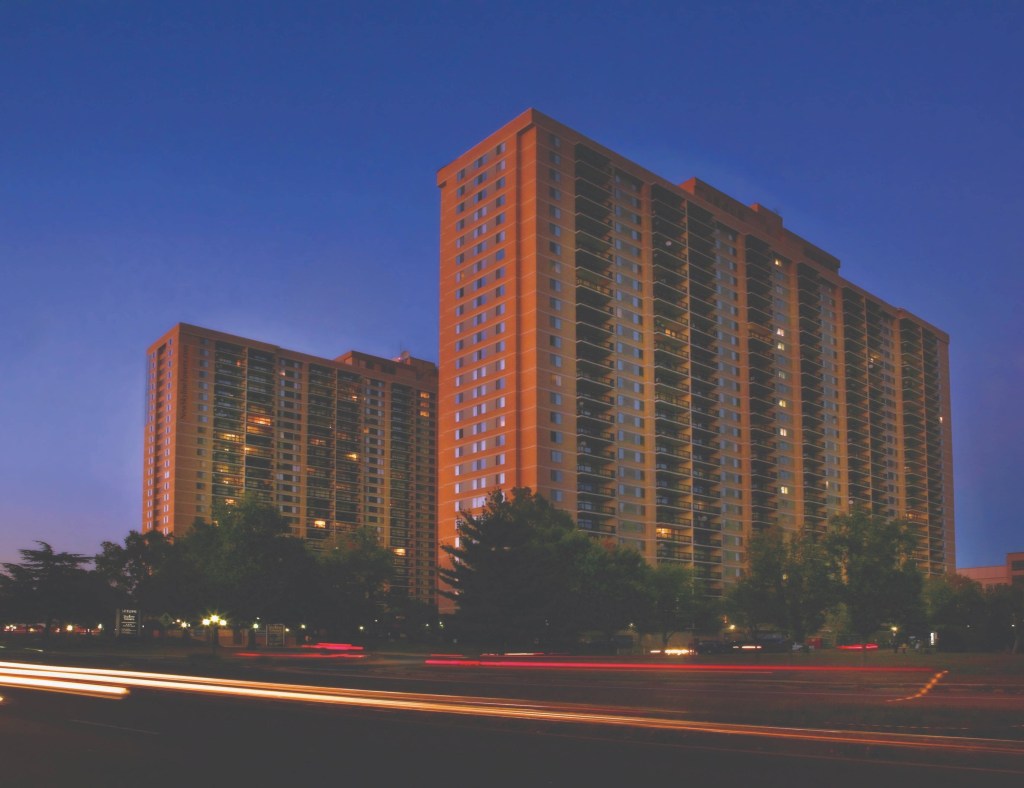
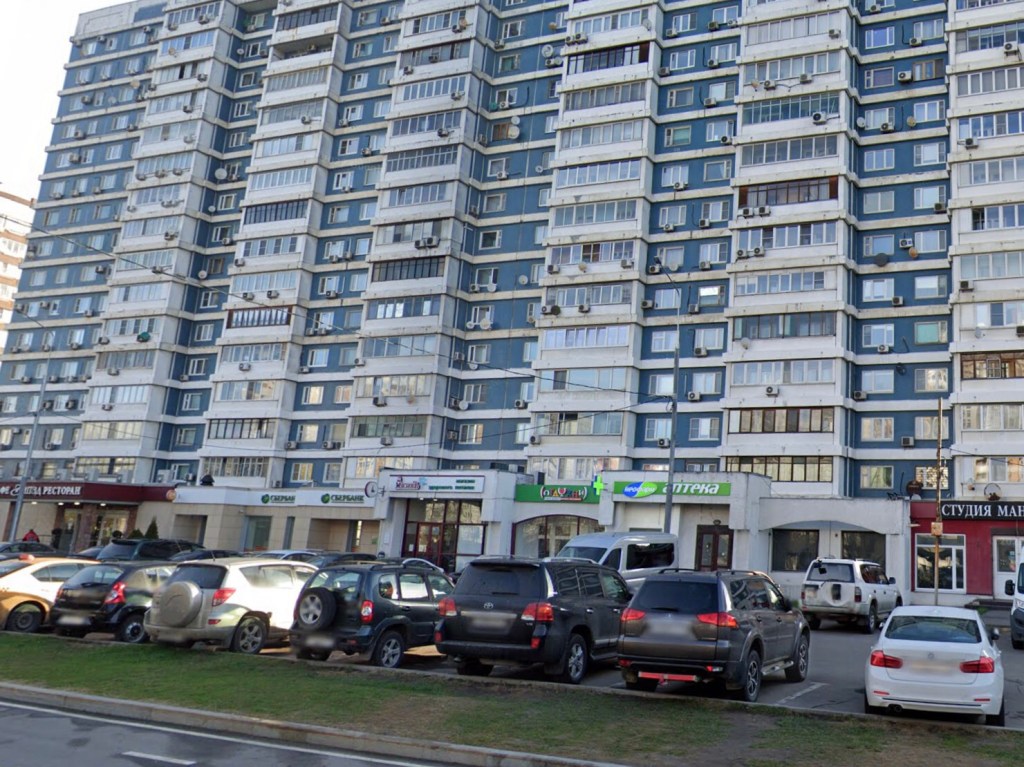
Home at Skyline Towers, Falls Church, Virginia, USA

But it took just one phone call to snap me out of my fog. The call was from Frank — FBI Frank — who was looking forward to receiving a first-hand report on my summer in Moscow, since all he had heard from me during those months was that I was alive and well. “How about lunch?” he offered. The unpacking would have to wait another day, but I was in no hurry to attack that anyway. And I hadn’t been to the grocery store for provisions yet, so lunch actually sounded pretty good.

“Uh-oh . . . empty!”

And thus began a period of frenzied activity, bouncing back and forth between my own business interests and Shvets’ book chapters being shuttled from Moscow to me to translator, back to me and on to the publishers. There were meetings with Natalya at the Russian Embassy, phone calls and faxes to and from my potential partners in Moscow, correspondence and meetings with possible sources of funding, and all the while double-checking the translations of Shvets’ chapters, and somehow finding time to keep Frank up to speed on all of it. It soon became obvious that my early return from Moscow had actually been fortuitous — there was just too much to do here at home.

Then I received word from Shvets’ literary agent, John Brockman, that he was about to issue invitations to both Shvets and Aksilenko to return to the United States for further meetings with the publishers. Really? Did they seriously expect to be able to leave Moscow again, so soon — less than four months since their last visit? I didn’t know what cover story they had cooked up as their reason for another trip, but I hoped it was a good one, for their sakes. In any event, I was relieved that I hadn’t been asked to send the invitations.

By this time, I was becoming less and less involved with the publishing venture, which was to be expected. After all, they had a literary agent working for them. My work with them was winding down. Soon I would be able to just back out completely, wait for the book to be finished and released, and collect my small share of the royalties.
Royalties

But once again, what had seemed impossible became a reality. Before I knew it, it was fall, and Valentin Aksilenko had arrived — this time with his wife. Not long afterward, Yuri Shvets managed to find his way back to the States; his wife and two sons were to come later.

Wait . . . WHAT???!!! The wives and kids were invited? That was news to me. But Shvets had left Moscow without his family, and assumed they would be able to join him later. Was he insane . . . or just colossally stupid? No — not for one moment did I believe he was either of those things. There had to be another answer to all of it, and I was being kept out of the loop.

To begin with, the two men found nice furnished apartments in Alexandria, Virginia, that offered short-term rentals. And when they asked for my assistance with things like car shopping, applying for Social Security cards and such, it became blatantly obvious that they had no intention of returning to Russia. They were defecting, plain and simple — though they later defined their situation as “seeking asylum.”

Defection, asylum . . . Potato, potahto . . . Semantics.
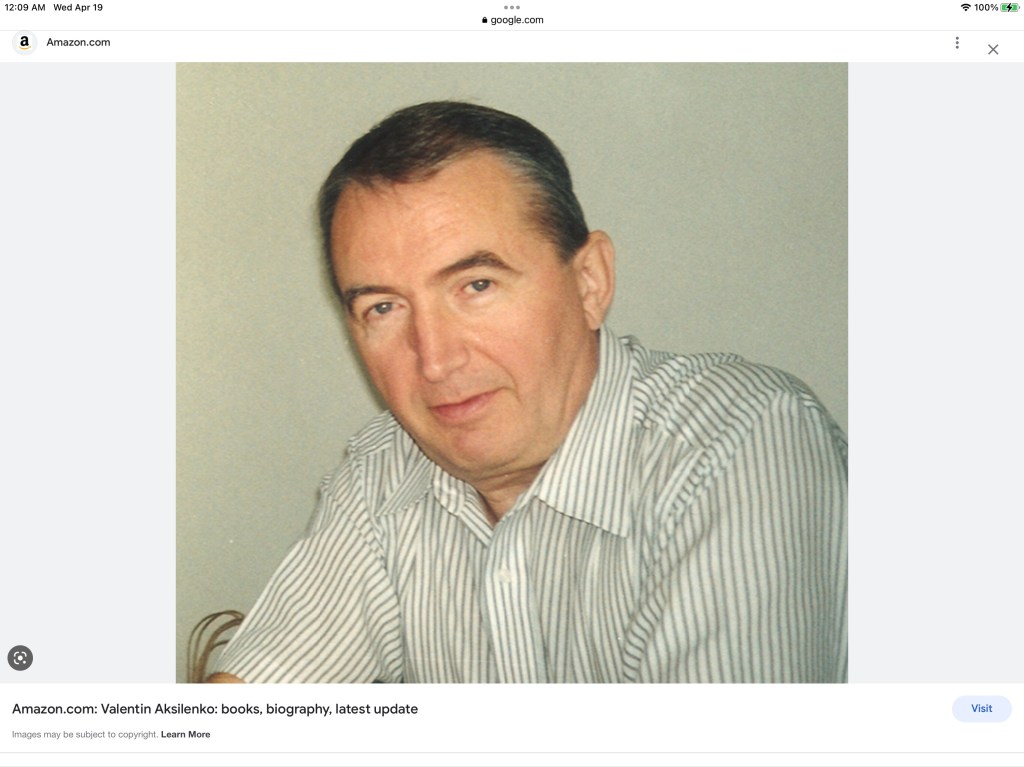
Valentin Aksilenko (top) and Yuri Shvets

Back in Moscow — and throughout Russia — new passports were being issued to all citizens by the government of the young Russian Federation to replace the old Soviet documents. But it was slow going, and Shvets’ younger son had not yet received his. This was the explanation I was given for the delay in the departure of the rest of the family. Finally, though, they decided to leave anyway, with the boy using his old passport, and were somehow able to board a flight for the U.S. — despite Yuri’s already being listed among the “missing” at home.

Don’t ask me — I don’t know. I never knew. And I still don’t have a clue as to how it all came together. As I said, I was being largely sidelined. I only know they made it, and by the end of 1993, the two families had moved into town houses in Virginia, in a lovely suburban area farther away from Washington. If you’re interested in Shvets’ telling of the story, you might read his book, Washington Station . . . Oh, wait, you probably can’t. It’s no longer available. Hasn’t been since shortly after its release, except for a few used copies on Amazon and such. But I’m getting ahead of myself again.

*. *. *

Soon, as seems to happen every twelve months, we slid into a new year. What would 1994 bring? If I had been able to look into the future . . . well, let me just say that it’s a good thing I’m not prone to bouts of depression. At first, though, the year seemed to be going pretty well. After some unexplained delays, Washington Station was nearly ready to be released — though not for another few weeks. And I had plenty of work to keep me occupied.

Then one day, at a meeting with Natalya at the Embassy, she showed me a brochure for an upcoming conference on doing business in Russia, to be held on the island of Malta in the Mediterranean in mid-February, and suggested that it might be of interest to me. Hmm . . . let me see now: a Mediterranean isle, a lovely hotel, delicious food, new people, business opportunities, and let’s not forget the world-class shopping. Yes, I could probably be convinced. I took the brochure and told her I’d look into it.
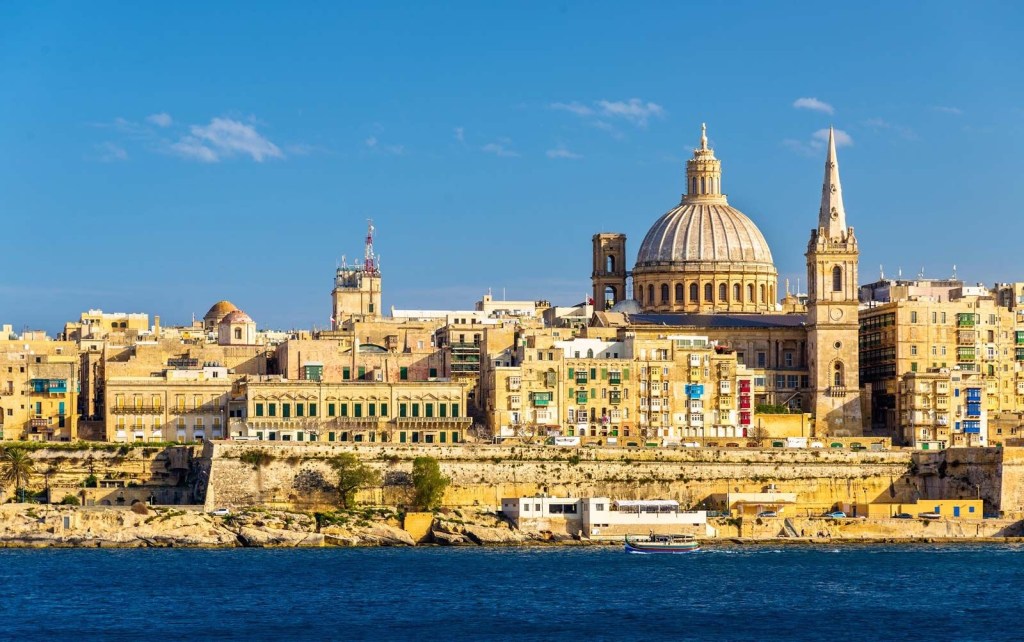
Valletta Harbour, Malta

Since I was still in contact with Aksilenko and Shvets, though, and since the conference would be putting me in touch with Russian officials and entrepreneurs, I thought I’d run the plan past Eric — the newly assigned agent at the FBI following Frank’s recent retirement. I had also checked plane fares, and found that for just $300 additional, I could fly round-trip between Rome and Moscow, giving me the opportunity to touch base with my friends and business contacts there as long as I was already going to be on that side of the Atlantic. And a call to Gil Robinson confirmed that I would be able to stay in the Foundation’s apartment — my old home-away-from-home — for free. (I figured he owed me at least that much.) It seemed there was no downside to the plan, and Eric agreed that it appeared to be a good opportunity for me. I quickly registered for the conference, made my travel reservations, set up some meetings in Moscow for the second week, and let Olga and Lena know I was coming. I was about to hit the road again.

When I told Shvets and Aksilenko about my travel plans, Shvets — ever the opportunist — immediately said he’d like me to take a few gifts to his mother, whom he had left behind in Moscow. I had had no direct contact with him during the previous summer, and certainly had never met his mother. In fact, I didn’t even know he still had one. And I was frankly not thrilled at the prospect of meeting the woman he described as a “simple Russian grandmother” who spoke no English, but who I suspected was anything but simple. After all, look at the son she had spawned. Also, because I was to spend one week in the springtime weather of Malta, and a second week in the frigid winter weather of yet another Moscow February, I would have to bring clothes for both seasons, in addition to the planned gifts for my own friends. I already had as much as I could handle.
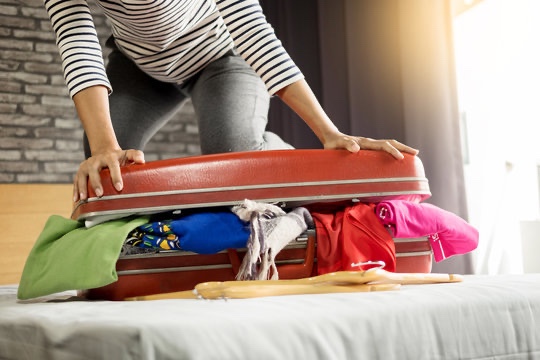
Seriously?

But I told him I would try to find room for just a couple of small items, and before my departure date, he came to my apartment carrying . . . seriously??!!! . . . a shopping bag filled with clothes, photographs and other items that couldn’t possibly fit into my airline allotment of one large suitcase and one carry-on. He was not amused when I told him I would do my best, but that I could probably only take a couple of things and he would have to send the rest to her later by international courier. So I chose what seemed to be the most important items, and left at home the bulk of what he had brought in the bag, to be returned to him later. But if he was unhappy that day, it was nothing compared to the way he was going to feel when I got back.

Traveling from Dulles Airport to Malta would turn out to be a little more complicated than I had anticipated. There was a change of planes in Rome, which I knew. But on top of that, the flights in and out of Rome first went through Milan, where all of the passengers had to disembark with their carry-on bags, claim their checked bags, go through Security in a distant part of the terminal, re-check their checked bags, and re-board the same plane with their carry-ons. Boot camp would have been easier. But I didn’t know all of that in advance. Sometimes ignorance truly is bliss.

So all of my reservations were made and confirmed, and I was scheduled to leave on February 10th, arriving in sunny Malta in plenty of time for the first day of the conference.

And then . . . as it tends to do in Washington in February . . . it snowed. And sleeted. And snowed some more. And the entire D.C. metropolitan area went into panic mode.
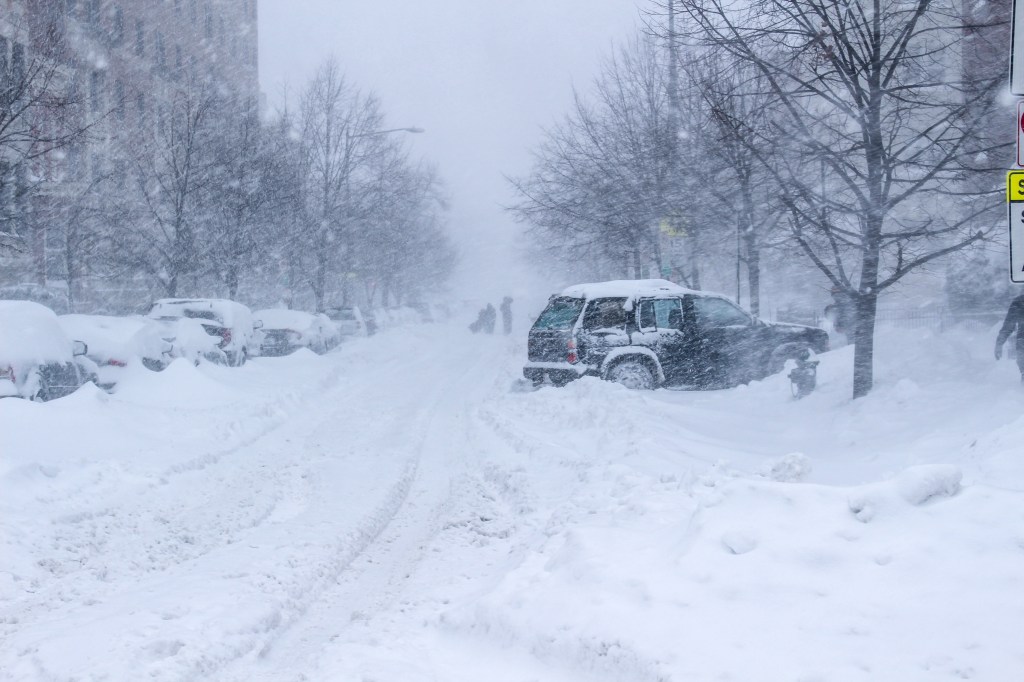
D.C. Paralysis

To be continued . . .

Brendochka
5/18/23
Ch. 23 – Lenin, Come Home

SPOILER ALERT: After today, there will be just five more installments of “All Roads Led to Russia.” When they are finished, you will have lived with me through some of the most interesting years of my life ... and their aftermath. Writing my story has been a true catharsis; but even more than that, it’s a compilation of experiences that I hope will eventually form the basis of a more serious, in-depth book. Whether anyone will publish it remains to be seen, so ... fingers crossed. The important thing is that, after 30 years, I will finally have done it.

I won’t be going away, though. Writing this blog has also brought me great joy and been a valuable learning experience, and I plan to mutate it into a more contemporary forum for my sometimes witty (I hope), sometimes insightful, sometimes irreverent, and always well-intentioned views on life and its many facets: the good, the bad, and the really ugly. (Chapters 8 and 22 were small samples.) The new name of my blog will be “Reflections,” and I do promise to try to keep the chapters shorter than they have been up to now. (What’s that? Do I hear cheering from the gallery?)

So for now, please continue with me to the bitter end of this journey, the name of which, in hindsight, should have been “All Roads Led to Russia ... and Back.”

Thanks,
Brendochka

*. *. *

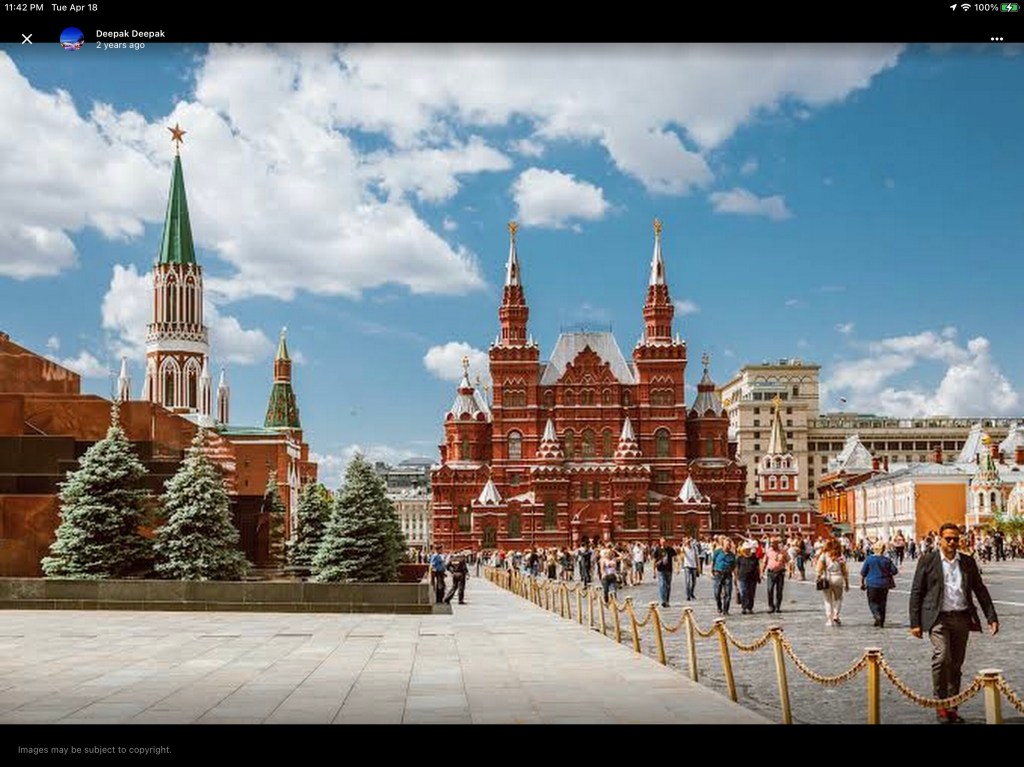
The last goodbyes had been said, the last hugs exchanged, the last promises made to keep in touch. And a couple of days earlier I had made my final pilgrimage to Red Square, which — much like tossing a coin into the Trevi Fountain in Rome — had become my personal superstitious ritual, hopefully ensuring that I would some day return to this place. It had worked so far.

Red Square, Moscow
(Lenin’s Tomb, History Museum
)

Last, but far from least, my portrait of Vladimir Lenin, still protected by its rickety wooden frame, had been carefully packed between layers of clothes in my biggest Samsonite suitcase. It just fit, thanks to Mr. Pivovarov’s having found a slightly smaller one for me than the one still hanging on his office wall. Now all I needed was a good cover story for the Customs people at the airport the following day, where the wooden frame would surely be caught on x-ray. It wasn’t an antique; but it was, technically, Russian government property.

Sleep eluded me that night as I lay staring at the ceiling, my mind a hopeless jumble of memories from my time in Russia: evenings at the ballet and opera, train rides to Kyiv, armsful of peonies, lunch at Militia Headquarters, burnt-out cars by the side of the road, caviar and ice cream (no, not eaten together), the KGB, the Russian Mafia, little girls with big hair bows, monasteries, the Fourth of July concert . . . and on and on and on. But most of all, there were the people I would miss: Olga, Lena, Vitold, Tamara, and even Maya. They had become my second family, and I had grown to love them.

On the other hand, I would of course be happy to be back with my first family and lifelong friends, and in my own apartment with all of its comforts and familiar surroundings. Little did I know, however, that life would not be calm and peaceful for some time to come. By inviting Valentin Aksilenko and Yuri Shvets to the U.S. in April, I had inadvertently opened a gigantic Pandora’s box of tsuris (Yiddish for “grief”). But for now, I just had to concentrate on getting back home.

I was dressed, packed and ready in the morning when my very own personal KGB escort, Vladimir Bragin, arrived as promised to whisk me out of town. With him was his sidekick, Militia Officer Kostylev, who apparently was to be the designated driver that day. And parked outside, waiting to transport us to Sheremetyevo Airport, was a late model Jeep Cherokee — a far cry from the broken-down truck that had brought me from the airport to my new home on my arrival in Moscow back in May. I was leaving in style, and for perhaps the hundredth time had to ask myself why. Yes, our little humanitarian aid organization did good work, but we didn’t bring millions of dollars into the Russian treasury. I wasn’t a government official, a movie star, or CEO of a major U.S. corporation. What was it that made us, or me, so special? I didn’t know the answer then, and I don’t know it today — not for certain. But it was great fun while it lasted.

There was one more goodbye to be said: to the lady at the little desk in the lobby. She wished me well, but I had the distinct feeling she was relieved to see me go. With the number and variety of people coming and going over the past months, I’m sure she was convinced I was running more than just a humanitarian aid foundation upstairs. And today, with this uniformed Militia officer and the other quiet guy and their big Jeep Cherokee . . . well, she wouldn’t be likely to miss me. And I couldn’t blame her.

Then there I was at last, seated between the two men in the front seat of the Cherokee, headed . . . in the wrong direction!!! What the hell?!! Why were we going south? The airport was north of the city. Was this my worst nightmare about to come true — the long drive to oblivion?

Well, no . . . it wasn’t. These guys had access to the “special lanes” reserved for top government officials, law enforcement, and the like. And they were headed for those lanes on what we would call the beltway, the nearest access road being slightly south of my apartment building. Once they were on the highway’s reserved lanes, where there were apparently no speed limits, they delighted in showing me what their vehicle could do, which — the last time I opened my eyes and looked at the speedometer — was registering 145 kilometers, or about 90 miles an hour. So, since apparently they weren’t going to take me out and shoot me, maybe they were just going to scare me to death instead. I began imagining my obituary in the Moscow Times , , ,

The fact that I am here today, writing this story, tells you that we made it to the airport without bursting into flames, and in plenty of time to get me, and my multiple pieces of luggage, through Customs. And now the suitcase with the Lenin portrait was about to pass through x-ray, and my two guardian angels were still standing behind me, watching over me to the very last. As the picture frame revealed itself, the Customs agent stopped the conveyor belt, studied the x-ray image, and said to me:

Him: “You have picture in suitcase.” (Duh!)

Me: “Yes.” (Brilliant comeback.)

Him: “What is it?”

Me: “It’s a souvenir.” (The absolute truth.)

Him: “Where you get it?”

Me: “The art market across the street from Gorky Park.” (Hmm . . . )

Okay, so that’s where I veered from the truth, just a teensy bit. But there was an art market across from Gorky Park, and I had been there, and maybe — just maybe — there could have been a Lenin portrait there at one time . . .

“Busted!”

And that was when I observed the Customs agent looking past my shoulder, obviously at Bragin and Kostylev behind me; and I had a clear mental image of them gesturing with their hands to “let her go, let her go.” Or perhaps it was more like “get her the hell out of here already, we’re tired of babysitting her.” In any event, the agent looked at me — did I imagine the expression of respect, or maybe fear, in his eyes? — said “Hokay,” and passed my bags through, stamping my passport and handing it back to me. I turned around, said one more quick goodbye and thanks to my two bodyguards, and headed toward the departure gates.

Once again, I lacked the ability to see into the future; I had no idea that I was not to have seen the last of Vladimir Bragin. But that’s a tale for another time.

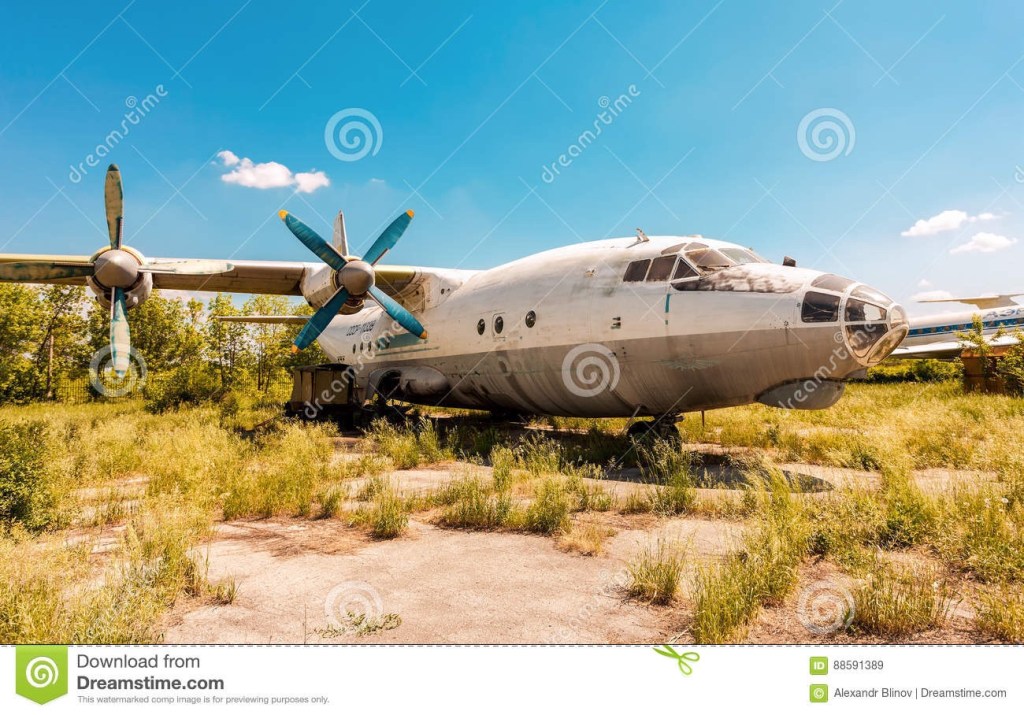
After my elegant transport to the airport, my airline reservation was, to say the very least, disappointing. Trying to save a few more dollars at my expense, Gil Robinson had booked me on Aeroflot all the way from Moscow to Washington, though as a concession I was at least seated in what was laughingly called “first class.” All that meant was more leg room. There was no division between the sections of the plane, and smoking was allowed in coach. It seemed that all Russian men smoked, so the thick gray cloud from the back of the plane easily found its way forward. The seats were incredibly soft, which may sound like a good thing, but they were hardly ergonomic. And when you stood up, the back of the seat flopped forward onto the seat itself. It wasn’t that mine was broken; they were actually designed that way.

As for the luggage rack, it was just that: an overhead rack, with a rope stretched across the front to (hopefully) hold the bags in place — no doors. If we encountered any turbulence, I guess we were just supposed to cover our heads and duck. I found myself wondering which century had given birth to this incredible flying machine, and who had cleared it for today’s flight — Mr. Magoo?

“Come on, baby — you can do it!”

There was one other American passenger aboard, a man in the row ahead of mine, who pointedly ignored me and buried his face in a book or some sort of paper work throughout the flight. Interestingly, the flight attendant correctly spoke to him in English, but when she approached me, she immediately switched to Russian — even though she knew perfectly well I was also American. I felt as though everyone in Moscow knew me and I was always being watched, or watched over — and frankly, it was getting on my nerves.

I hadn’t been feeling particularly well that morning — probably from the excessive amount of food I’d forced down my gullet at Petrovka the previous day, followed by today’s terrifying ride to the airport. So when the attendant asked what I would like to eat, I told her I didn’t want anything because my stomach was a bit upset — which threw her into a frenzy. Her job description required her to take care of the passengers, and she didn’t seem to know what to do when something disrupted her routine. She did seem genuinely concerned, though, and kept trying to find some way she could be of help — offering me medicine, or even a doctor. (I had to wonder where she was going to find one of those at 30,000 feet, but no matter.) So I finally asked for a cup of tea, and she went away happy, returning quickly with an entire pot of a delicious Russian brew. It actually did make me feel a bit better, and she was satisfied that she had done her job.

The rest of the non-stop flight, I am happy to say, was smooth and uneventful. I even managed to catch up on some of the sleep I had missed the night before, and awoke feeling almost normal. When the plane touched down at Dulles Airport outside of Washington, D.C., I heaved a gigantic sigh of relief. I had not, until that moment, realized how stressful living in Russia really had been — my body, and my mind, both constantly on the alert for . . . what? Almost anything, really. I desperately needed a spa day, and as we taxied toward the terminal, I made a mental note to place that at the top of my new to-do list.

“Aaahhh!!!”

Making my way to the baggage claim area, I managed to locate and retrieve all of my bags — though not before reaching for one that was identical to mine but, as it turned out, belonged to a Russian TASS journalist (that’s a real thing, but it’s also frequently used as a cover for KGB officers in foreign countries). When I saw the large ID tag on his suitcase, I immediately pulled my hand back, just in time to see him grab the bag and shoot me a really nasty look. I muttered “sorry” in Russian, which threw him momentarily; then I took the pieces that actually did belong to me and piled them onto two airport luggage carts.

Wheeling one ahead and dragging the other behind — and feeling oddly like Dr. Dolittle’s “Pushmi-Pullyu” — I headed for the Customs area for U.S. citizens and spotted an empty lane. The agent, seeing me with two carts piled high with bags, looked around for another person who should have been accompanying me. Not finding anyone else, he asked, “Are all of those yours?” and when I said they were, he inquired as to where I had been and for how long. I told him “Moscow, for three and a half months,” to which he nodded, smiled sympathetically, said “Welcome home, ma’am,” stamped my passport, and waved me through. I could have been bringing home a Faberge egg from the Kremlin Armory Museum, and no one would have been the wiser. Too bad I didn’t know that in advance!

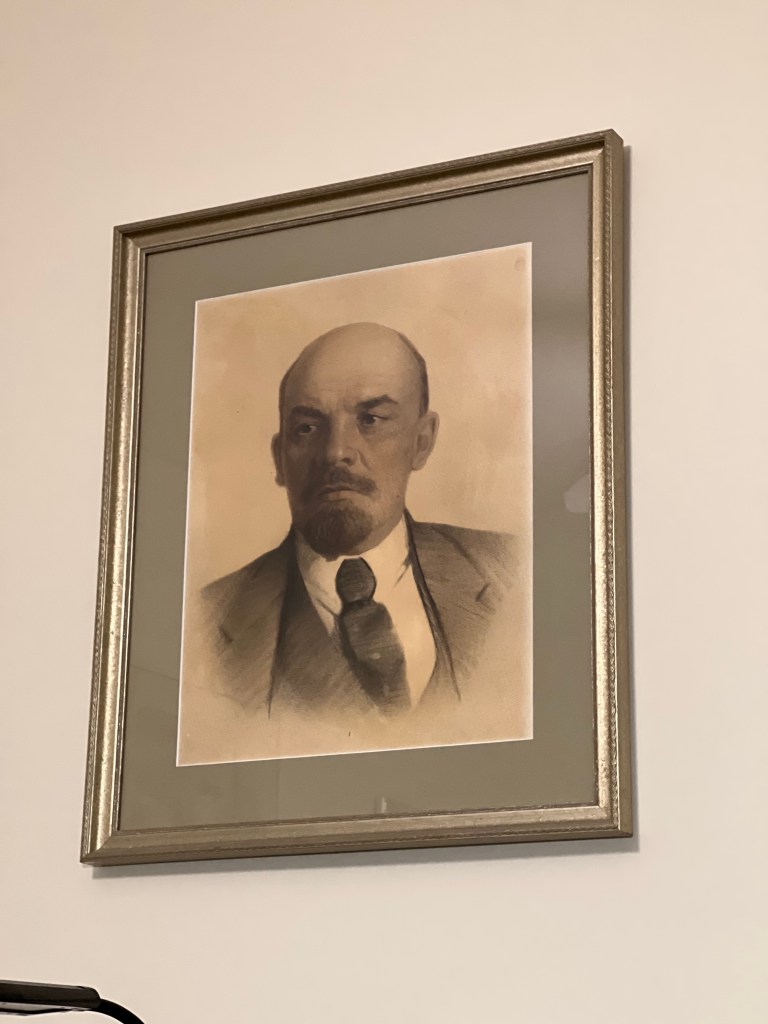
My sister was waiting to greet me on the other side of Customs, and seeing her made me realize I was really at home. When we arrived at my apartment, all I wanted was a shower and my bed. Most of the unpacking could wait until the next day, but I did pull out the gifts I had brought for her and a few others. And for myself there was the proud unveiling of the precious Lenin portrait, which had survived the trip undamaged. He had to be reframed, of course, and I had the perfect spot in which to hang him, directly over my desk in my home office. Within a few days, he had an expensive new frame, and he has resided above my desk for the past thirty years. In fact, as I write these words, he is still glaring down at me from my wall. I was once offered $1,000 for him, but I wouldn’t sell; his grim countenance helps to keep alive the memories of those days . . . and my brief career as a smuggler.

Vladimir Ilyich Ulyanov, a.k.a. Vladimir Lenin

So now it was back to the real world of closing out my relationship with Gil Robinson’s Foundation, continuing my search for financing for my business school project, receiving and dealing with the chapters of Shvets’ book being sent to me from Moscow, and generally regaining some semblance of normalcy in my life. But that’s not so easy to do with the FBI knocking at the door. It all became a juggling act, which I will go into next time. ‘Til then . . .

Do svidaniye,
Brendochka
5/11/23

Ch. 22 – Reflections on Obsolescence

I’ve been doing a little midweek mental meandering as I finish polishing this coming Thursday’s chapter on leaving Moscow; and for some reason, I’ve been focused on the subject of obsolescence. Not the obsolescence of things — we all know what science and technology have wrought . . . and discarded. Just think of the gas lamp, dial phones, manual typewriters, clotheslines, gigantic boomboxes, the Blackberry, and the icebox. No, I’m talking about the obsolescence of people.

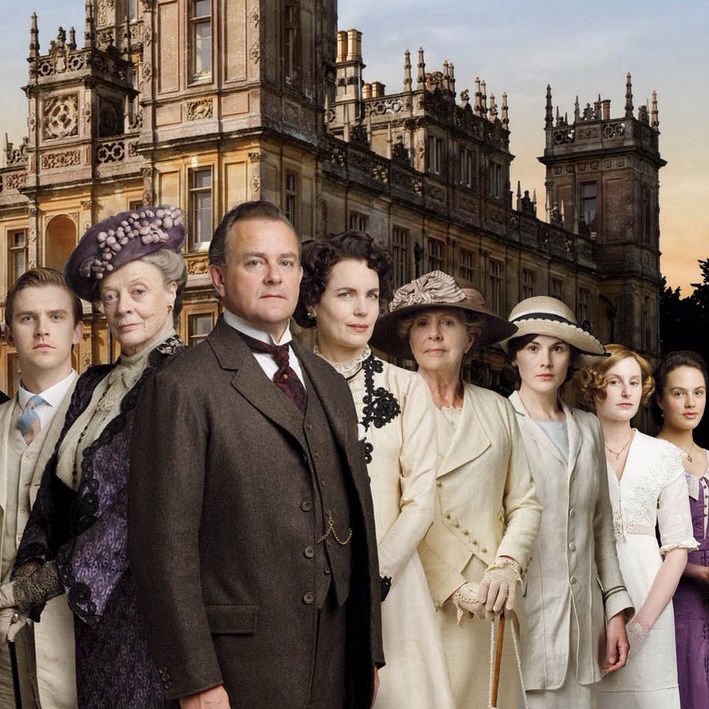
I always planned to age gracefully and beautifully, gradually becoming the matriarch of my little family — revered for my wisdom and accomplishments, feared for my authoritative nature, and loved for . . . well, just for being me. Or are matriarchs limited to wealthy, aristocratic English families, like the Crawleys of Downton Abbey? That’s certainly not my life.

The Crawleys

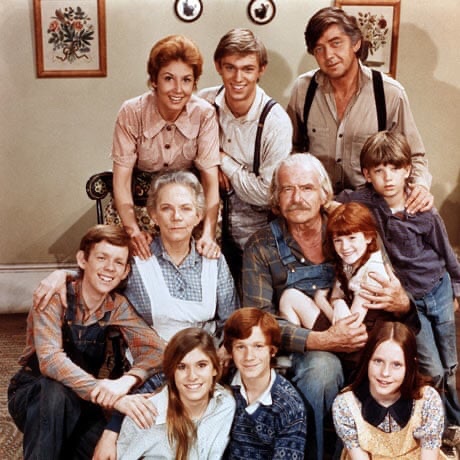
Or maybe the other end of the economic spectrum: the Depression-era Waltons of the Blue Ridge Mountains? Enormous, wonderful family; dirt poor. Nope, not me either.

The Waltons

So, no matriarchy for me.

The Japanese revere their elderly. So do the Chinese, Koreans, Native Americans, and many others. So maybe I should move to Japan and get myself adopted by a lovely family there. Not practical, but worth considering.

Yet what about the rest of us here in the United States? When did we become a nation that values the foolishness of youth above the knowledge and wisdom of experience? Why do we push people into retirement at 65, when they still have so much to contribute? When did those beautiful grandparents become an annoyance to be shuffled off to an old folks’ home where they live out their days thinking about the past because they have no future, and no present worth living?

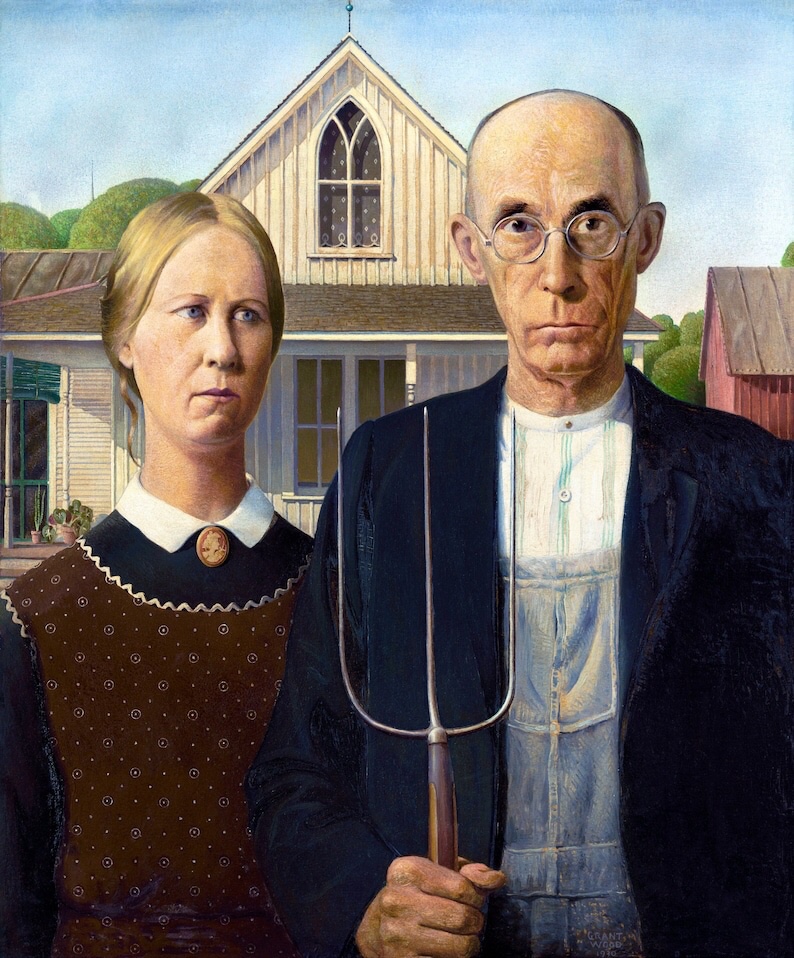
American Gothic
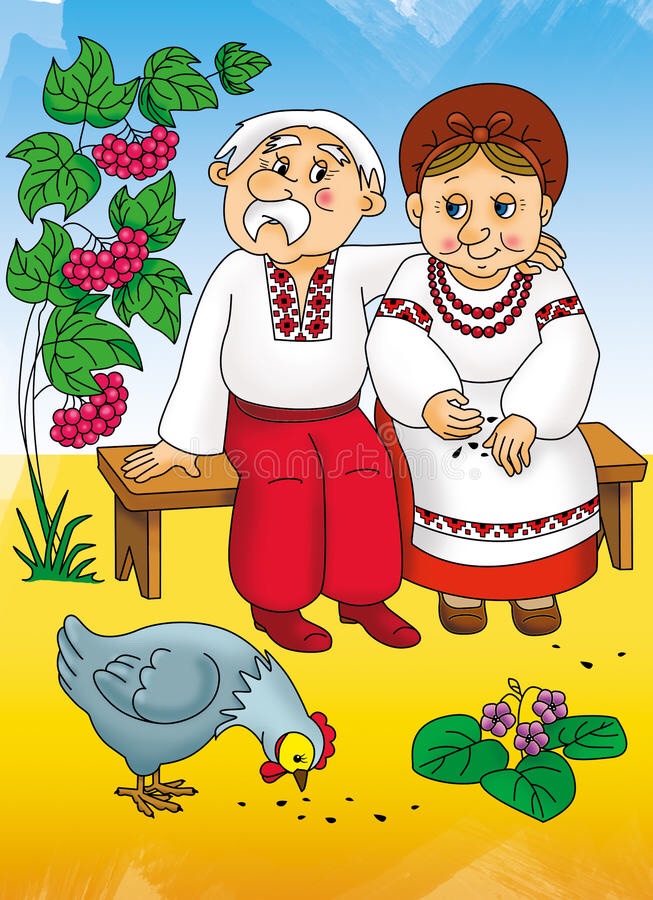
Ukrainian Ideal

Whether your “grands” are the stern-faced couple from the American heartland, or the sweet, rosy-cheeked Babushka and Dyedushka from the old country . . . treasure them. They’ve spent their lives caring for their children (your parents, aunts and uncles), and spoiling you, your siblings and cousins. Give them back the love and respect they deserve while they’re still here. They’ll be gone all too soon.

Just saying . . .

Brendochka
5/8/23

Ch. 21 – The Bones in the Basement

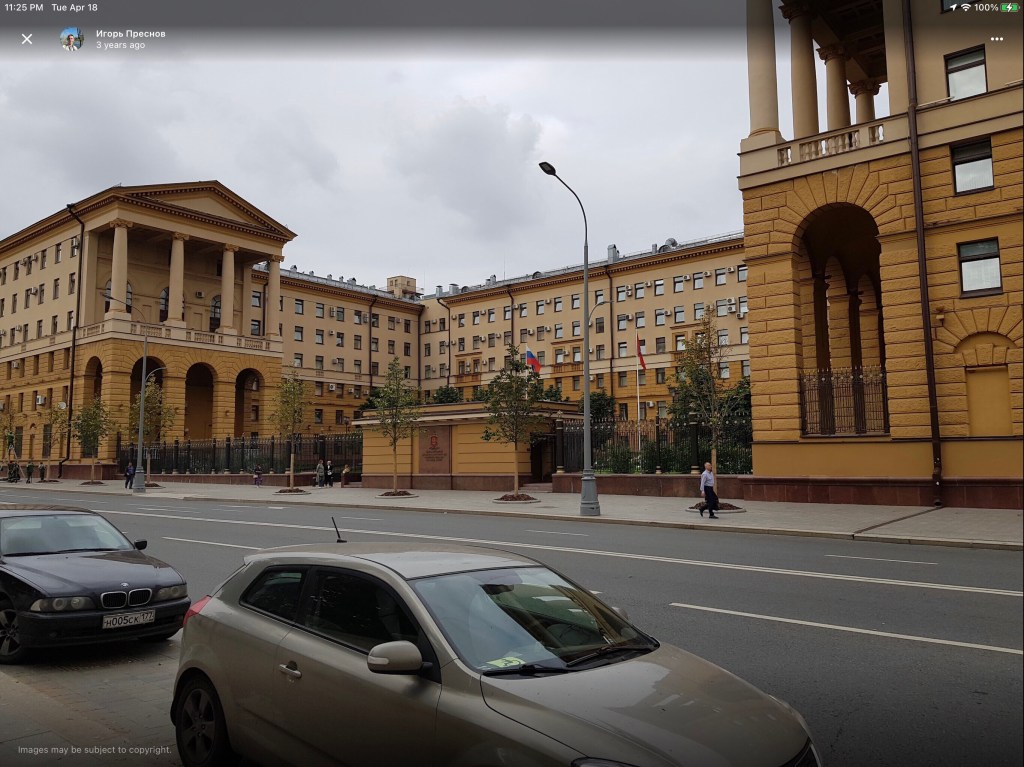
August 1993. Petrovka 38 was one of several buildings in Moscow that no sane Muscovite would ever want to see from the inside — right up there with Lubyanka (KGB HQ) and the notorious Lefortovo Prison. They were sure that, once they entered Petrovka, they would never again see the light of day. That may have been an exaggeration in most cases, but there was always that possibility.

Our first meeting with Messrs. Pashkin, Bragin and Kostylev had been held in an auxiliary building around the corner; but our final gathering was to take place in the main building — a sprawling, dark, solid, forbidding structure fronted by sturdy iron gates. This was the headquarters of the Moscow Militia, and it was meant to be taken seriously.

Petrovka 38 – Moscow Militia HQ

Gil Robinson was not in Moscow at the time, so just Lena and I were on our way with our trusty driver Vitold — who wished us well and said he’d be waiting for us outside . . . when and if we came out. Lena really didn’t need his lame attempt at humor to add to her already obvious nervousness; but to her credit, she screwed up every ounce of courage she had and walked right into that building with me.

Already present, of course, were the Militia representatives, Mikhail Pashkin and Igor Kostylev. And with them stood my KGB watchdog, Vladimir Bragin, who seemed that summer to be everywhere, all the time. An early arrival was our local foodie, Mr. Pivovarov, who I was told was already in the kitchen preparing lunch. Lena and I were given a brief tour of the public parts of the building; thankfully, no one found it necessary to show us the cells or “interrogation” rooms. Pashkin told me I was only the second American ever to have visited Petrovka 38, the first having been a top (unnamed) U.S. Government official; but somehow I felt he might simply have been trying to make me feel important. True or not, though, it sounded good.

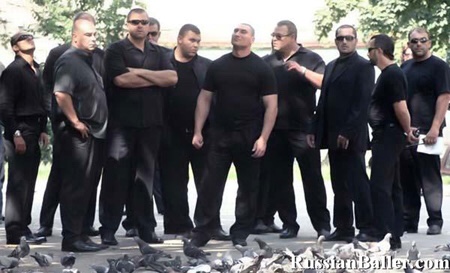
Then we were guided into the “dining room”: a large rectangular room, bare except for a very long, well-worn table surrounded by a couple of dozen chairs — obviously the lunch room for the lower-ranking officers. Seated and waiting patiently on one long side, facing us as we entered the room, were twelve of the biggest, scruffiest, meanest-looking, ugliest human beings I have ever seen gathered in one place. They stopped talking amongst themselves as soon as we entered the room, and were collectively introduced by Pashkin as undercover Militia officers (no names). They had obviously been chosen for their jobs based on their toughness and ruthlessness, and trained to deal with the worst of the worst of the Moscow criminal element — to whom they actually bore an uncanny resemblance. These twelve lucky winners had been selected to have lunch with their boss and the clearly crazy — for why else would she have been there? — American lady now taking her seat on the opposite side of the table.

As I looked at my luncheon companions, my first thought was: “Holy Mother of God! What have I ever done to deserve this?” On the one hand, I felt like Daniel in the lion’s den. But on the other hand, here was a truly unique opportunity to meet a radically different type of individuals from any I had ever known — a once-in-a-lifetime experience that I would surely never forget (and obviously never have). Unfortunately, I wouldn’t have been allowed to photograph them even if I had been foolish enough to ask. I still see them in my mind’s eye, though. And they’re still not pretty.

“Hey! Let’s Do Lunch.”

Lunch wasn’t quite ready yet, so it fell to me to try to make some sort of conversation with Moscow’s answer to the Dirty Dozen — none of whom, apparently, spoke English. Lena was there to translate, but what the hell do you say to these guys? “Where did you go to school?” “How’s business?” “Beaten anyone to death lately?” Not cool. So I started by telling them my name, where I was from, and what our Foundation was doing in Moscow, then waited for some sort of response. Nothing. Not a murmur or a spark of interest from any of them. I felt like a stand-up comic who had just bombed at the Comedy Club.

And just then, thankfully, the food arrived. There was Pivovarov, with a couple of conscripts from the kitchen, and a whole lot of veggie burgers and side dishes. The meal was actually quite well-prepared and tasty, and those twelve cops dug in as though they hadn’t been fed for days. Come to think of it, maybe they hadn’t, just to ensure their eager reaction to our food. In any event, they ate quickly, a couple of them burped in apparent satisfaction, and — on a silent signal from Pashkin — they all got up and left, still without a word. Had they been cautioned not to speak? Were they incapable of carrying on a normal conversation? Or had they simply forgotten how to say “thank you”? I considered calling out “you’re welcome” as they left, but decided it would be a waste of breath. Also, I wasn’t sure they’d appreciate the sarcasm — and I really didn’t want to annoy them! Any one of them could have snapped me like a twig.

*. *. *

At this point, I realized that I needed to use the ladies’ room, and asked if there was one. Yes, indeed there was . . . down the stairway and at the end of a long hall in the basement. Lena and I were not about to split up, so she came with me, whether she needed to or not. We found our way without difficulty, and were amazed to walk into a sparkling clean rest room in excellent condition. There were individual stalls, with doors and functional locks; and all of the plumbing was in perfect working order. Very impressive, indeed.

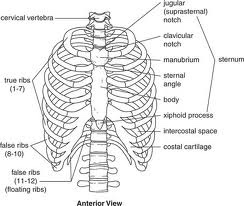
As we left the ladies’ room and retraced our steps along the hallway toward the stairs, I noticed an alcove in the wall that I hadn’t observed from the opposite direction. And in that alcove was something I certainly hadn’t expected: a pile of bones. A gigantic, perfectly cleaned and preserved, stark white . . . rib cage, lying on its back on the floor. I came to a screeching halt, at which point Lena saw what I had been looking at and clapped her hands over her mouth to keep from screaming. What — or who — was this??!!!

But a second look told me those bones couldn’t be human; they were much too large. And then of course I couldn’t resist. Placing the back of my hand dramatically against my forehead, and in my best Shakespearean voice (which admittedly is not very Shakespearean at all), I intoned: “Alas, poor Yorick! I knew him well . . .” And Lena laughed, also realizing by now that these could not possibly be the bones of a human being. Still, what were they, and what on earth were they doing there, in plain sight? But whatever the answer, I couldn’t pass up the opportunity. I had a small camera in my purse, and Lena stood watch while I hurriedly snapped a couple of pictures. Then we headed back upstairs, giggling like a pair of schoolgirls, before someone thought to ask what was taking us so long.

“Yorick! Have you lost your head?”

I had wondered why our hosts hadn’t eaten with us, and I got my answer when Pashkin announced that he had a little surprise for us. We were led into what was apparently the “executive” dining room, with a somewhat smaller table nicely set with real china, where we were presented with yet a second repast: huge servings of tender, perfectly-prepared steak with all the trimmings — and of course, vodka. This was indeed an honor. But why, then, had they let Lena and me eat all that other food? It’s not as though either of us looked malnourished. But eat, we did; and this time Messrs. Pashkin, Kostylev, Bragin and Pivovarov happily joined us. I found myself wishing I could ask for a to-go box so I could bring my portion to poor Vitold out in the car, but . . . well, no. That would have been unspeakably rude.

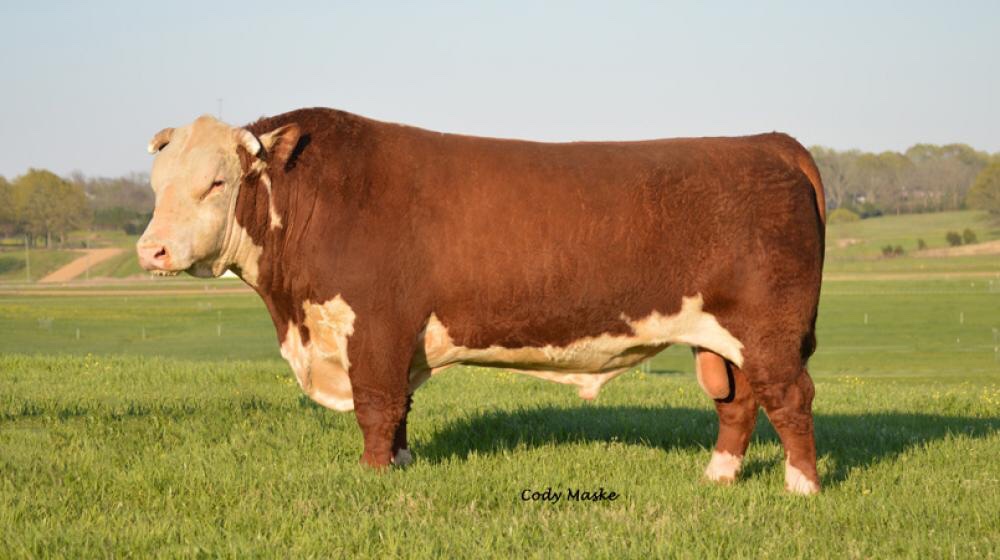
(Hey, wait a minute! Could those bones have been from the steer that gave its life for our steak dinner? Hmmm . . . )

Dinner

*. *. *

As our second feast was winding down, and we were all basking in a warm, vodka-induced glow, I found a moment to quietly ask Pivovarov about the Lenin portrait. He smiled and inquired whether I had a car and driver with me. When I said I did, he requested that we drive him to his office — he had the portrait ready for me. I was thrilled, and had made sure to bring along enough cash, just in case. It would have been simpler if he’d brought the picture with him; but I understood that he wouldn’t have wanted any witnesses to his little transaction, which was most likely against one or more laws regarding the “liberation” and sale of government property for personal profit — and especially not here, in Militia Headquarters.

Then as we were saying our farewells, Bragin asked what time my flight was scheduled to leave the next day, and said that he would pick me up at my apartment and drive me to the airport. I thanked him for the offer, but told him that Vitold was available to drive me . . . but he insisted that it was no trouble, and told me what time he would be there, around two hours before flight time. It was not a question. And when in Russia, it’s seldom a good idea to try to argue with the KGB. So I thanked him again and said I’d see him in the morning . . . and then spent the rest of the night wondering why I continued to warrant such royal treatment. Again, my mental meanderings led me to question whether it might have anything to do with Valentin Aksilenko, and if so, what was going on that I didn’t know about.

Vitold, of course, was waiting patiently in the car across the street when we left the building, and was clearly relieved to see us. I explained that Pivovarov needed a ride to his office as he had something for me there, and we took off across town once again. Lena and Vitold waited in the car while I went upstairs to the office, where I found the Lenin portrait still hanging on the wall above the desk. But there was another one, slightly smaller, that he had probably scrounged from another office or a dusty basement somewhere and had carefully wrapped in newspaper and twine. He pulled back a corner of the wrapper to show that it was the real thing, and I paid him, thanked him profusely, and headed downstairs with my bounty. When Vitold saw me, he asked how on earth I planned to get that thing home; and I realized I hadn’t figured that out yet. Oops. But I knew I’d manage it somehow; it was just too good to leave behind.

And so we finally headed back to the office. I still had some packing to finish, a framed portrait to deal with, several dear friends to bid farewell, and an early flight to catch. I could make up for the sleep I would miss that night, on the plane tomorrow.

*. *. *

But even leaving Moscow was to prove out of the ordinary — yet another tale for next week’s chapter. And until then, dear readers, I remain faithfully yours . . .

Brendochka
5/4/23

Ch. 20 – Last Tango in Moscow

August 1993. I was preparing for my departure from Moscow, and I was — to put it mildly — pissed.

I was supposed to have had a two-week hiatus at home, then returned to Russia for the remainder of the year; but I had just been advised by Gil Robinson that the Foundation’s budget had somehow suffered a shortfall and I was to be the sacrificial lamb, to be replaced by Maya — who worked for a much lower salary, of course. I knew where the money had gone — nothing illegal, certainly, but definitely wasteful and irresponsible. Obviously, I was not a happy camper. And there was the fact that our American Foundation would be left without an American on-site administrator. However, fighting it would have proven divisive and counter-productive, so I chose to shut up and suck it up. Stupid! Stupid! Stupid!

But enough grumbling. The fact is, I was preparing to pack it in within the next few weeks. And first there were things to be done: a good bit of Foundation business . . . and a couple of personal matters.

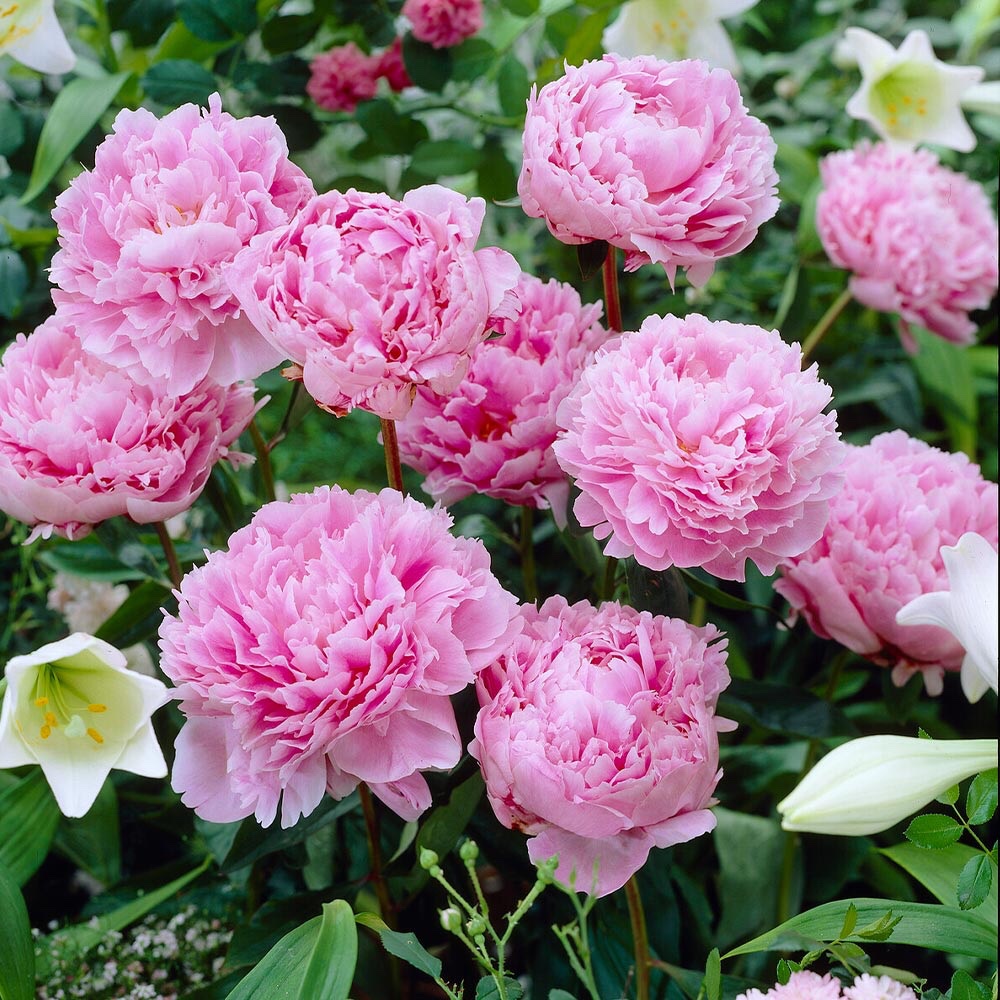
With the end of my time in Moscow approaching, I began thinking about some of the small but memorable incidents of the past months. Like the day I went for a walk in the neighborhood and saw two young women approaching with arms full of gorgeous pink peonies — one of my two favorite flowers (the other being lilacs). I stopped them and asked where I could buy some of the blooms, and they smiled, saying they hadn’t bought them, but had picked them somewhere. When they saw my disappointment, they asked where I was from, and when I said I was an American from Washington — remember, this was a time when we were much loved in Russia — one of the girls just handed me half of her armful of peonies and insisted that I accept them as a gesture of friendship. Those flowers filled my apartment with their fragrance for days, and the memory still fills my heart with joy. The world could use more peonies.

Pink Peonies: My Faves

Made you smile, didn’t they?

*. *. *

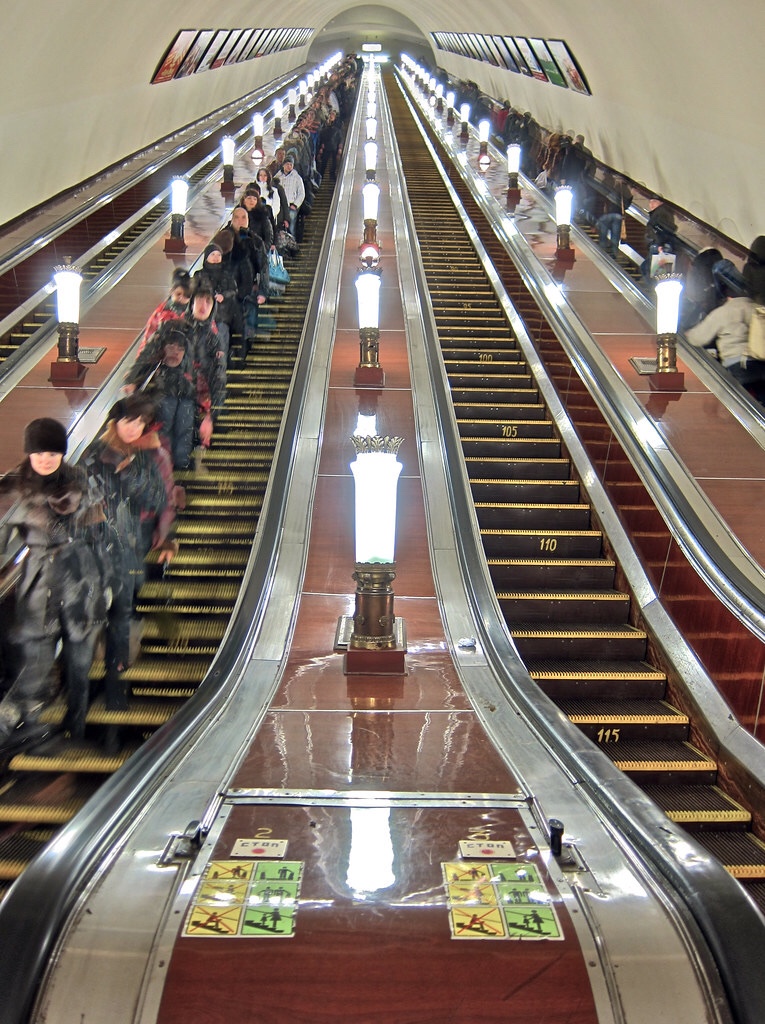
Then there was the woman in the Metro with a little girl around five or six years old and two big bags of groceries, but only two hands when she clearly needed three. As I was approaching the top of the escalator to head down into what looked like a quick ride to the center of the earth, the woman walked up to me, nudged her little girl toward me and demanded, rather than requested, that I help her child onto the escalator. With a crowd of people close behind us, there was no time to think, much less quibble; so I took hold of the girl’s hand, jumped with her onto the fast-moving escalator, and saw the mother jump on behind us, still clutching her groceries. They both were apparently expert at this maneuver.

The little girl was adorable, with two big bows anchoring her pigtails in the old Russian style, and was obviously shy. In my most friendly voice I told her my name and asked hers, but she just stared down at her feet. I said I was from America, far away, but still no response. When we finally reached the bottom, we both jumped off, her mother following close behind. The little girl then ran to her mother’s side and they hurried off — without so much as a “thank you” or “goodbye.” Nothing. I assumed she had mistaken me for a Russian woman (which happened from time to time), and that this was just how things were done there; I really don’t know. But can anyone imagine an American mother entrusting her child to a stranger that way? “Hey, you, take my kid.” I must have a really honest face.

Moscow Metro Escalator

*. *. *

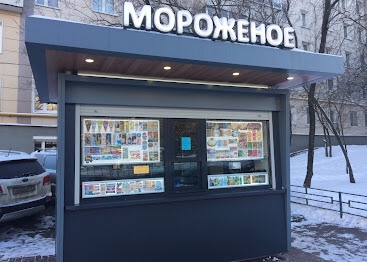
Another incident that has stayed with me had to do with an ice cream vendor in a kiosk located along our usual route home from the city center. Vitold introduced me to it, and I decided to stock the freezer with the yummy treat to share with my co-workers. There wasn’t much of a selection; actually, there was none at all. You either liked vanilla or you were out of luck. And it was sold by the “brick,” which as I recall weighed about a fourth of a kilo, or just over half a pound, each brick wrapped in some sort of butcher’s paper. So one day we stopped there, and while Vitold guarded the car, I stood in line at the kiosk. When it was my turn, I asked the lady, in my best Russian, for eight bricks, and held up eight fingers to be sure she understood me.

Oh, she understood, all right. But what she didn’t understand was what anyone was going to do with four and a half pounds of ice cream. So she demanded, in a voice resembling my fourth-grade teacher’s, “Eight?! What for?” Knowing that it would be the height of rudeness to brag about having the luxury of a freezer at home, I came up with a quick answer I thought would satisfy her: “For my friends at work.” And for probably the first time that day, she smiled. In fact, she liked my answer — and me — so much that when I came back again another day, she greeted me like an old friend and handed over my eight bricks of ice cream without even being asked.

Ice Cream Kiosk

By the way, there is — or was then — no such thing as low-fat ice cream in Russia. To hell with calories and cholesterol; you may as well die with a smile on your face — and a few extra inches on the hips.

*. *. *

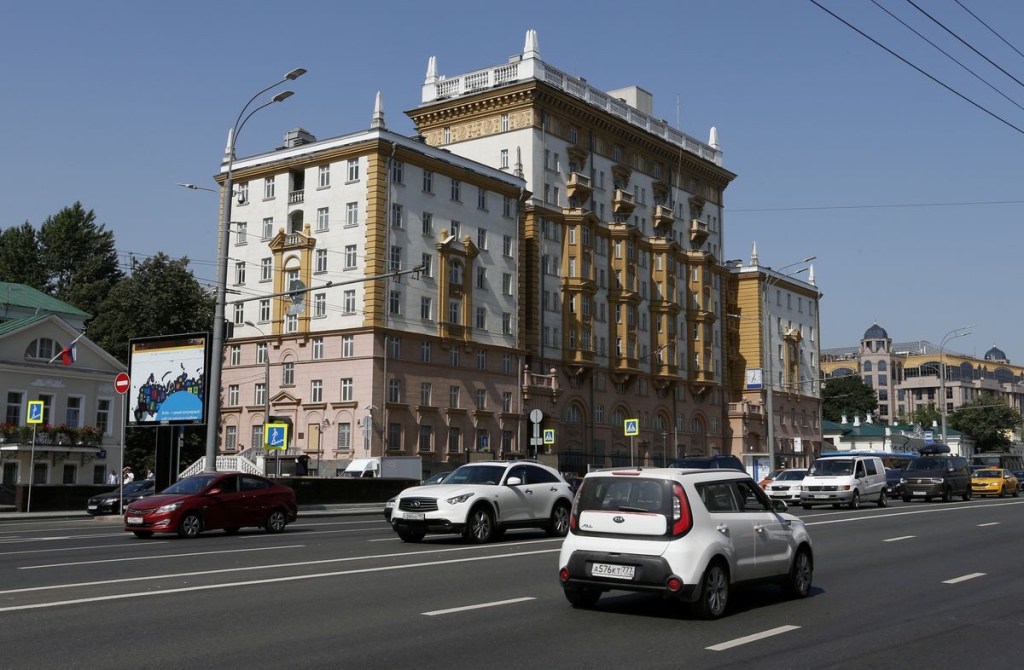
I could have gone on daydreaming, but it was time to begin wrapping things up. Unbelievably, one of the first things on my to-do list was taking Maya to the American Embassy to obtain her visa in order to fulfill one of her long-time dreams: a visit to the United States. Yes, that’s right: somehow money had been found in the budget for her plane fare and a one-week stay for . . . I believe it was called on her visa application . . . “training,” or perhaps “orientation.” She was supposed to develop, in just one short week, the skills it had taken me thirty-plus years to hone. It doesn’t matter what you call it — it stank. But as the manager of the Moscow office, I had to vouch for her to our State Department. So we spent a couple of hours in the visa office, being grumped at by an American Consular officer who clearly wanted to be anywhere but where he was, until finally he was satisfied that Maya did not pose a threat to U.S. security, and approved her application.

U.S. Embassy, Moscow

On leaving the Embassy and heading toward the nearest Metro station, we had to cross a popular cut-through street that ended in a “T” at the busier road and had only a stop sign — which was mostly being ignored by the frazzled drivers turning onto the main road. Pedestrian right-of-way appeared to be an unknown concept in Moscow, despite the presence of crosswalks, and we stood on the sidewalk for a full five minutes, waiting for a break in the traffic that never happened. Predictably, I finally lost patience. With Maya shouting for me to stop, I decided to take my chances with an oncoming black Mercedes — a rarity in those days, and obviously belonging to someone of the criminal persuasion. It appeared to be slowing for the stop sign, so I stepped off the curb, walked to the middle of the street, stood my ground, and held out my right hand in what I hoped was a good imitation of a Moscow traffic cop. All I needed was a whistle.

As I looked more closely at the driver and the other occupants of the approaching Mercedes, I saw four rather tough-looking men, well-dressed, and sporting aviator sunglasses: clearly Mafiosi. I heard Maya screaming, “Brenda! Are you crazy? Do you know who they are???” Well, sure, I knew who they were — but I couldn’t back down now, could I? The car stopped; the driver looked at me for a moment with an angry scowl; then he unexpectedly broke into a huge smile, bowed his head toward me, and dramatically waved his arm from left to right in a gesture inviting me to continue across. I smiled back, bowed my head in return, mouthed “spasibo” (“thank you”), and continued on my way to the opposite curb. Once again, I had proven that you have as much power as you can make others think you have. Armed border guards, KGB officers, Mafia dons — no difference, really.

“Are you talkin’ to me?”

Then, of course, I had to wait another five minutes for Maya to make her way across the street. But it was worth it, just seeing the fear on her face when I confronted that Mercedes. (Yes, I know that’s sadistic, but she wasn’t my favorite person at that moment, and sometimes you just have to grab your pleasure when you can.) When she asked what on earth I had been thinking, I told her that those men — regardless of who they were — undoubtedly had mothers, wives, sisters, and/or girlfriends, and wouldn’t be likely to run over a woman unless she was pointing a gun at them. Another calculated risk taken . . . and survived. Moscow was such fun.

*. *. *

We were scheduled to present a luncheon promoting our much-touted veggie burger at Petrovka Headquarters on the day before my departure from Moscow, so there were still preparations to be completed for that event. Co-hosting the luncheon, and instructing the “chef” at Petrovka, would be one Vladimir Pivovarov, then head of the Department of Alimentation (Nutrition), whom I had not yet met. I had a meeting scheduled with him a couple of days prior to the luncheon.

When I arrived at his office — a second-floor walkup in an old building on Leninsky Prospekt, away from the center of the city — the first thing I noticed was a portrait of Vladimir Ilyich Ulyanov, better known as Vladimir Lenin. Those mass-produced portraits had occupied a place of honor in every single government office and every single shop and factory throughout the entire Soviet Union. But since the dissolution of the USSR at the end of 1991, they had rapidly disappeared from most of those walls. The fact that Pivovarov still had his copy proudly on display spoke volumes to me about his political leanings. Or perhaps he was just too lazy to take it down. In any event, I suddenly had another of my diabolical little ideas.

When we had finished our discussion of the arrangements for the luncheon, I stood up as though to leave, but then hesitated. Pointing at the Lenin picture, I asked, “Would you be willing to sell that, and if so, for how much?” Clearly taken by surprise, he said he had no idea, as he had never been asked that before. I told him I would pay $50 for it, and he could think it over until our next meeting two days later. In 1993, $50 in hard currency was a lot of money to an underpaid government apparatchik, and I was pretty sure I would be going home with Lenin in my luggage . . . somehow.

*. *. *

On the personal business side, there was also one more meeting to be held with Valentin Aksilenko before leaving. He came to my apartment on a Sunday, when none of my co-workers were there. We made small talk for a while about my departure, whether I was glad to be going home, etc. Then, pointing at the ceiling and placing a finger across his lips in the universal signal that someone might be listening, he handed me a plain, white, letter-sized envelope and gestured toward a desk drawer, indicating that I should get it out of sight. Finally he said out loud that he had to leave, and silently gestured that I should go outside with him. I replied that I would walk him out and we left the confines of the apartment, remaining silent in the elevator and as we passed the lady at the desk on the ground floor. I felt as though I was taking part in a really bad spy movie.

Rublevskoye Shosse 16 – My Home in Moscow

Directly outside the entrance was a rather busy parking area for residents of the building, so we walked around the corner toward the street. But he stopped along the side of the building and motioned to a specific spot where we should stand and finish our conversation. It was a rather odd place to stop, completely empty and exposed, and it appeared that he had pre-selected it. As I glanced at the neighboring building, just a driveway’s width away, I spotted a man standing on his second-floor balcony, leaning on the railing and making no secret of the fact that he was watching us — whether out of simple curiosity, or for some other reason, I had no way of knowing. I mentioned him to Valentin, but, without even looking up, he simply shrugged and said not to worry about it.

Not to worry? His nonchalance alone was cause for concern, especially considering his extreme caution just moments before. Did he already know the man was there? Had he intentionally chosen this spot to stand and talk? Who was that person? This was more than a little weird, and I was beginning to feel seriously creeped out.

We stood there and talked for ten minutes or so about Yuri Shvets’ continuing work on his book, during which time he also cautioned me to guard the contents of the envelope he had given me very carefully. I was to keep it for him until next we met, presumably in Washington. I didn’t like this at all. — Not. One. Bit.

Side of my apartment building where Aksilenko and I stood and talked

Then we shook hands and said goodbye once again. He walked away toward the street, and I wondered whether that would be the last time I would ever see him. I turned in the opposite direction and headed back toward my building entrance, catching a glimpse in my peripheral vision of the man still watching from his balcony. It took every ounce of self-control I could muster to keep from looking directly up at him. I slept fitfully that night, dreaming that people were trying to break into the apartment, and waking several times in a cold sweat.

*. *. *

But despite the lack of sleep, I still had to survive my final appearance the next day at Petrovka 38, where — unbeknownst to me that night — I would be facing a dozen terrifying plain-clothes Militia strongmen, Officer Bragin from the KGB, and a huge surprise in the basement. Details to follow, next time.

TTFN,
Brendochka
4/27/23

Ch. 19 – Return to Kyiv*

* NOTE: In deference to the tragically and brutally besieged, independent nation of Ukraine and its strong preference for the use of its own language, I have switched to the Ukrainian spelling of its capital city, Kyiv, rather than the Russian “Kiev.” Slava Ukraine.

*. *. *

Things had changed.

The day after Christmas of 1991, the Soviet Union had ceased to exist. In its place were now fifteen independent nations that previously had been Soviet Republics. And in the summer of 1993, most were still in the process of establishing their chosen forms of government, legal codes, and the institutions required to administer them. Ukraine was one of those fifteen nations, and as part of its development had established Embassies in various countries around the world . . . including neighboring Russia. It had also created official crossings along its nearly 7,000 miles of border abutting seven countries . . . also including Russia.

When I arrived in Moscow in May of 1993, much of this work was still in the process of being completed by the Ukrainian government, and my first train trip to Kyiv was easy and seamless. But by the time I was planning my second visit there, it was a whole new ballgame. There was now a Ukrainian Embassy in Moscow, and so I called to inquire whether I would need a visa to cross the border as a U.S. citizen with an American passport. It took a while to find someone who would even attempt to answer that question, and when I did, I was told that people with U.S. passports did not require visas to cross into Ukraine. Good news.

It was especially good news because this time I would be traveling with two American companions. Scott was working with the Foundation in the U.S., assisted by Michelle. Neither of them spoke Russian, and would be relying on my limited translation skills during the trip.

The fun began when we arrived at the Kyivsky Train Station in plenty of time for our scheduled evening departure. There was a woman taking tickets and checking I.D.s, and when she looked at our passports, she asked, in Russian, “But where are your Ukrainian visas?” Stretching my linguistic ability to the max, I explained to her the details of my call to the Embassy and what I had been told about not needing visas with U.S. passports. And she said, quite authoritatively, “Nyet!” I had apparently been given bad information, and her instructions were to see visas from everyone — Americans included.

I also explained that we had to leave that day as we had meetings scheduled the following morning with Ukrainian government officials and could not postpone our departure. She asked how we would get back into Russia, and I said we could get our return visas in Kyiv. She then asked what we would do about the border crossing. At that point, I moved a little closer to her, smiled conspiratorially, and whispered, “Well, that’s the Ukrainian government’s problem, not yours. Right?” Something from her lifetime of Soviet upbringing must have clicked into place. She smiled, handed our passports back to us, and said, “Khorosho” — “Fine.” And we boarded, three foreigners en route to Ukraine without visas. What a great start!

Kievsky Railroad Station, Moscow

It got even better when the same lady who had taken our tickets showed up as concierge on the train and offered us tea. She obviously wore two hats for her job with the railroad, and I wasn’t crazy about this one, to say the least. She knew we didn’t have visas. What was going to happen when we reached the border? She would be blamed, unless she had a plan in place. This did not bode well for us, but it was too late to do anything about it now. We were already underway, captive on the train for the next 14 or 15 hours.

Michelle and I were sharing a two-bunk sleeper compartment, and Scott had a single at the far end of the same car. I was glad of the company, and we all sat up late in the “girls’ dorm,” swapping stories from our life histories, eating the food we had brought with us, and drinking good Russian tea, before finally kicking Scott out to his own quarters and locking our door. We had dressed comfortably for the trip, and something told me that Michelle and I should sleep in our clothes that night. I was later to be grateful for that decision.

The movement of the train soon lulled us to sleep, and it was around dawn when we were awakened by the screeching sound of brakes being applied and a whole lot of rattling and clanking going on. We had arrived at the border. Suddenly our door — the carefully locked door — was unlocked and slammed open with great force. Michelle and I both bolted upright in our bunks and were confronted by a very tall, very young, heavily-armed Ukrainian border guard, who stuck out one hand, palm up, and demanded, “Passports.”

Uh-oh. The moment of truth had arrived. Thank goodness we were spared the indignity of having to face it in pajamas!

I told Michelle to hand over her passport and to say nothing. Suddenly, I found myself in charge. Yeah, right. He was the one with the sidearm, not I. And he knew it. He also knew — compliments of the ticket-taker/tea service lady — that I spoke some Russian, and that we had no visas. But he dutifully scanned through our passports before saying to me, “Where are your Ukrainian visas?” Once more, I went through the whole story of the telephone exchange with the Embassy in Moscow. Then the following dialogue — in Russian — ensued.

Guard: “But you must have visas.”

Me: “No, they told me we didn’t need them with American passports.”

Guard: “But you must have them.”

Me: “We will get them in Kyiv.”

Guard: “No, you must get them in Moscow.”

Me: (Looking dramatically at my wristwatch): “But it’s too late.”

Guard: (Repetitiously): “No, you should have gotten them there.”

Me: (For the umpteenth time): “But they told me we didn’t need them.”

Guard: “Well, they told you wrong.”

That was when my patience ran out. But I recalled what someone had told me years before, in an entirely different context: that you have as much power as you can make other people believe you have. So — from my still-seated position — I slammed my hand on the small table attached to the wall between our bunks, making the water bottles and glasses do a little dance, and angrily declared, “Well, that’s not my fault, is it?!!”

And there stood one very surprised border guard, wondering who this tough-talking, unintimidated, Russian-speaking American woman might be. At best, I probably reminded him of his mother; at worst, I could have been the First Lady of the United States for all he knew. He clearly had no idea of what to do next. So he did what came naturally: he passed the buck. Taking two steps backward into the corridor, he beckoned to someone farther along the car, and suddenly we had two young, tall, well-armed border guards in our little compartment. They began whispering between themselves, and all I could catch were what sounded like “psst-psst-psst-Americans,” and “psst-psst-psst-no visas.” Then the second guard looked at me and asked, “You will get your visas in Kyiv?” to which I replied, still with supposed authority, “Yes; I already said we would.” Shaking an index finger at me, he came back, “You be sure?” And as I waved a hand dismissively toward the door, I replied, “Yes. Now you get out!”

And by some miracle, they did just that. I had known all along that they were just waiting for me to offer a bribe (undoubtedly to be shared with the tea lady who had tipped them off), and I was prepared to pay if all else failed. But when I didn’t offer, they backed off as any schoolyard bully would have done. But I also realized that they had had the power to put us off the train in the middle of nowhere. Thank God they were young and inexperienced!

When they were gone, Michelle finally exhaled and asked what had just happened. I shrugged and told her we would get our visas in Kyiv. No worries.

After more rattling and clanking sounds, the train started forward, and Michelle and I looked at each other and in unison exclaimed, “Scott!” He had been on his own, with no visa, and not speaking a word of Russian. As we rushed out into the corridor to find him, he was walking toward us, grinning from ear to ear. He asked if we were all right, and I said we were fine — that I had managed to talk our way out of it. But how had he gotten through it? Still smiling broadly, he replied, “Oh, I just kept babbling at them in English until they gave up and went away.” There’s frequently more than one way out of a tough situation, and Scott had found his.

P.S. For the remainder of the trip, we saw no more of the tea service lady. Perhaps, being Russian and not Ukrainian, she was dropped off at the border.

*. *. *

But as clever as Scott had been on the train, he nearly got us into big trouble in Kyiv. On an afternoon when we had some spare time between meetings, we decided to go for a stroll through a nearby park. We were delighted to come across two elderly gentlemen playing chess at a permanently-affixed stone table — a classic scene, just as you see in practically every movie about Russia. I talked to them for a few moments, introducing us as American visitors, and leaving with a traditional Russian farewell, “Vsevo khoroshevo” — “All the best.”

A little farther on, we came to the banks of the Dnieper River, and followed it for a while, enjoying the sound of the rushing water. And then we found ourselves at the edge of the park, on a quiet street alongside a large office building. Turning right, in the general direction of our hotel, I wondered what the building was used for, saying I was feeling an eerie vibe from it. Of course, Scott and Michelle laughed at me. So when we saw a local lady walking toward us, I stopped her and asked, “Excuse me, do you know what this building is?” Her facial expression changed dramatically as she looked all around and over her shoulder. Then she whispered, “KGB.” I just mumbled a quick “Thank you,” as she hurried on her way. I was right about that vibe, and didn’t hold back from rubbing it in.

But Scott had an idea of his own. When we reached the corner and looked at the front of the building, we saw the name clearly engraved above the rather grand entrance: Komitet Gosudarstvennoi Bezopastnosti “Committee for State Security.” KGB. Suddenly calling out “Take my picture,” Scott went charging up the tall staircase to the landing at the front entrance and struck a pose, shouting for one of us to snap a photo. Knowing that it’s never a good idea to photograph a government building in that part of the world — and especially the headquarters of an intelligence agency — I yelled at him to get the hell out of there and refused to photograph him. But he decided this was fun, and wouldn’t budge. Finally I convinced Michelle that we should just walk away, and after a momentary pause he grudgingly gave up and joined us.

And as we left, I noticed a car parked just yards from us, with two men seated in it. Just sitting . . . and watching. And I knew we had been spotted by KGB security. I quietly pointed them out to Scott and Michelle, both of whom finally realized that I hadn’t been joking and that we all needed to behave ourselves. The Soviet Union may have broken apart; but the KGB was, unfortunately, still very much alive. Needless to say, we had no further trouble with Scott on that trip.

In two days we had wrapped up the business side of our visit — my last one ever to Kyiv — and headed back on another long train ride to Moscow, this time with our return visas safely in hand. Scott and Michelle left for home a couple of days later, and I began preparing for our big event scheduled at Petrovka 38.

See you next week,
Brendochka
4/20/23

Ch. 18 – A Yankee Doodle Dandy in Moscow

July 4, 1993 – So far, so good. I had been in Moscow for nearly two months, and I was still alive and unscarred. In fact, I was thoroughly enjoying myself. And with the occasional unscheduled drop-by visit from Vladimir Bragin of the KGB, I was feeling well protected.

I had received a surprise phone call earlier that week from a friend in Washington, Mary Saba. (You may remember her from the London and Prague episodes.) Her husband, Joe, had just left on a business trip to one of the “Stans” — the five Central Asian Republics of the former Soviet Union whose names all end in “stan” (Kazakhstan, for example) — and Mary and their teenage son, Colin, were going to join him there. Since they would have to travel through Moscow and had never been there before, she and Colin were planning to stay over for a couple of days, and she was letting me know of their imminent arrival.

I was thrilled to be seeing a good friend from home. When she told me where they were staying — a Soviet-style hotel on the outskirts of the city — I told her they would find that to be both inconvenient and generally miserable, and that I would pick them up and bring them to my apartment, where I had two spare bedrooms. It didn’t take much to convince her.

The Sabas are the kind of people who fit in anywhere. They’re smart, funny, caring, personable, and genuine — that rare breed known as completely lovable, good people. Mary got along beautifully with Olga, Lena and Tamara; and Colin managed to find common ground with Tamara’s two teenaged daughters, even though they didn’t speak each other’s languages. We did the usual sightseeing tour, and then Colin said he had a special request: he wanted to see the Moscow Military Museum. Tamara’s husband was an Army officer, and he gladly offered his services. He arranged for our admittance, and five of us crammed into his little car.

But first came lunch — at McDonald’s, of course. Doesn’t every American travel 5,000 miles to eat at a Mickey D’s? Colin and Mary were just curious to compare it to the ones at home; Tamara and her husband had never eaten there, because it was too expensive for them as a family of four. So off we went, my treat. Cheapest restaurant meal I ever had — and surprisingly good. Far better quality than in the U.S., in fact. All of the meat and vegetables were locally produced, and the rolls freshly baked. It was worth the wait in line.

At the museum, admission was free — but I found that I had to pay one ruble (about 1/10 of a cent at the time, as I recall) for the privilege of taking pictures with my own camera. These, of course, were the days before cell phones, so my camera was simply that: a camera — and with actual film, as it was also the pre-digital age. (God, I am old, aren’t I?) As we wandered through the several rooms and I snapped away, I lost track of how many pictures I had taken, and suddenly ran out of film. I only realized it because my camera told me so, when it started beeping . . . and beeping . . . and beeping. At the unfamiliar sound, all of the other visitors in the room froze where they were standing, and two armed guards came rushing in from the next room, hands on their holstered weapons, to find out who had the bomb. When I saw them, I instinctively held the camera up in the air and called out, “Nyet, nyet! Fotoapparat! Fotoapparat!” (I’m sure you’ve figured out that that means “No! No! Camera! Camera!” I have no idea why I said it twice.) That quick action saved me, though, and I was neither shot, tackled, nor arrested; but the guards and I had managed to scare the bejeezus out of each other . . . and quite a few more people besides. Clearly, I still hadn’t mastered the art of quietly blending in. Come to think of it, I never did.

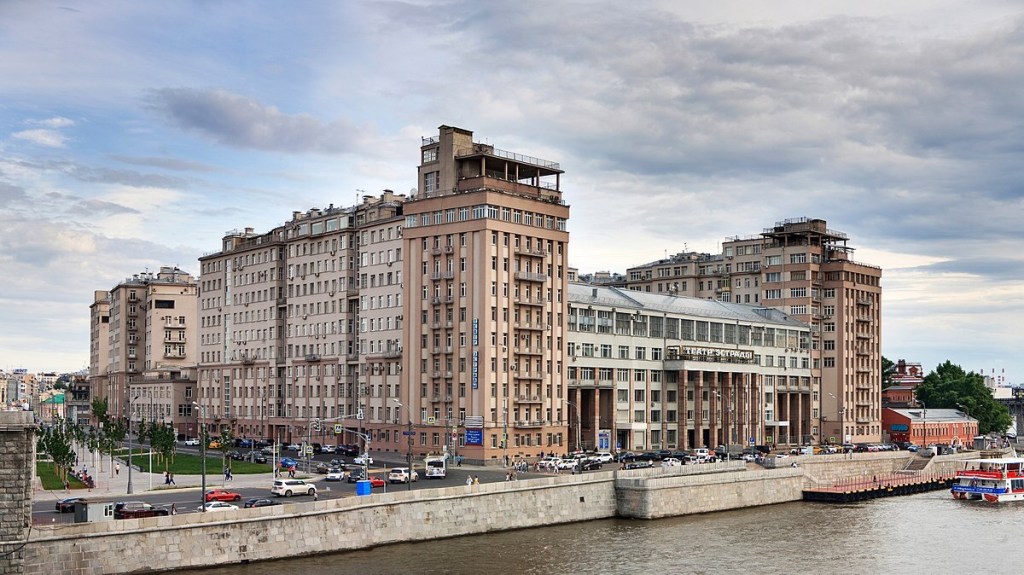
Mary’s trip happened to fall over the 4th of July weekend, when it turned out that there was to be a show given by some Broadway musical performers at the Estrada Theatre in the renowned (or infamous, depending upon the year) House on the Embankment. Just one of the many outsized Stalinist monstrosities still dotting the landscape throughout the city, this one was completed in 1931 specifically to house the government elite of the time, many of whom later became victims of Stalin’s paranoid political purges. (Sorry — I just seem to keep alliterating). Anyway, someone had given Gil Robinson a pair of tickets, but he wasn’t going to be in Moscow that weekend, so he passed the tickets along to me. Leaving Colin in the safe company of Tamara’s family, Mary and I set out for a girls’ night on the town. As we had done in London, we managed to make it a memorable one.

Vitold had offered to drive us to the theatre, and said he would be happy to come back to pick us up as well, but I felt that would be too inconvenient for him. The traffic pattern in front of the building was a total mess, and there was no way of knowing what time the show would end. I knew there was a taxi stand in front of the Kempinski Baltschug Hotel, about a 15-minute walk from the theater, so I told him we would manage to get home on our own. Brave words.

For once, Vitold managed to get us to our destination without being stopped by the police for speeding, running a red light, or nearly knocking down any pedestrians. We actually arrived a little early, and since it was a lovely, mild evening, we stood outside the theatre for a while, watching the arrivals and chatting with a couple of acquaintances I had seen in the crowd. The U.S. Ambassador, Thomas Pickering, had already arrived for the occasion. As a motorcade of three or four expensive foreign cars flying Russian flags pulled up, I knew that a Russian VIP had to be in one of them. President Yeltsin was out of the country that week, so I was curious to see who might be taking his place that night. As a man emerged from the car and started up the steps toward us, flanked by three improbably large bodyguards, he passed within a few yards of us and I recognized him immediately. I drew a sharp breath and grabbed Mary’s arm, exclaiming, “Oh my God! It’s Yevgeny Primakov!” Mary wasn’t familiar with the name, and when I told her he was the head of the KGB, she was startled, but also delighted to have a story to bring home to Colin. The crowd then began to move inside, and we headed to our seats.

The House on the Embankment
Moscow

The show was outstanding. The performers were members of the supporting casts of several hit Broadway shows, and had the audience in the palms of their hands from the get-go, singing and dancing to Broadway tunes and a few patriotic songs to honor the holiday. First, however, the orchestra had played the national anthems of both countries, for which everyone stood in unison, but with the Russian and American halves of the audience singing their respective anthems in turn. I am proud to report that our half was louder and much more enthusiastic. Living in Moscow — fascinating though it was — made you all the more proud and happy to be an American.

The performance ended much too soon, as all good things seem to do, and we filed out into the dark Moscow night around 11:00 p.m. The crowd was huge, and some of the people were walking, as we were, in the direction of the Baltschug, so we didn’t feel at all uncomfortable. And as we approached the hotel, we could clearly see the line of waiting taxis. They were facing away from us, and we had to pass the entire row of about a half dozen cars in order to get to the first taxi in line. No problem.

Mary walked around to the left rear door, behind the driver, and I opened the right rear door. When we were both seated and had closed our doors, the driver turned to his right, looked over his shoulder at me, and said, “Rublevskoye Shosse shestnadtsat?” — my exact address. Rublevskoye Shosse 16. And my heart leapt up into my throat. What the hell . . . ???

My first impulse was: RUN! But that was obviously not an option. And I had Mary to think of. Since she didn’t know a word of Russian, she assumed the driver had asked where we were going. So I gulped my heart back down into place, smiled weakly at the driver, and said — in Russian — “That’s right. You have a very good memory.” Mary thought I was giving him our address.

Good memory, my ass! I hardly ever took taxis in Moscow — I had two drivers and an excellent Metro system at my disposal, so who needed taxis? Then who the hell was this guy? He simply nodded, smiled back, and began moving the taxi slowly forward. Once again, I mentally foresaw my imminent death. But as I watched to see the direction he would take, he drove straight along the quickest route, sticking to the main roads, and right up to my building and around to the entrance in the rear. He knew exactly where he was going, and never said another word throughout the 30-minute ride — quite possibly the longest half hour of my life. I thanked him, added a generous tip to the fare, and he waited until we were safely inside before driving off.

So, once again, who was he? How did he happen to be at exactly the right spot at exactly the right moment? If I had ridden with him once before and just didn’t remember, what were the odds of my getting the same taxi twice? Or of his recognizing me, in the dark, in a city of nine million people, and remembering my address? And not saying a word about the coincidence? Was this just another manifestation of Moscow paranoia, or was something spooky actually going on? Could Officer Bragin somehow be keeping tabs on me? But how would it even be possible to arrange such a thing? Again, too many questions without answers.

I still don’t know the truth, and never will; but I can still feel the fear in the pit of my stomach when I think back on that night. I never did tell Mary.

And while I give you a week to mull that over, I will be — in writing, at least — hopping another train to Kyiv, but this time with two American companions, and complications on the Ukrainian side. Til then . . .

Have a great week,
Brendochka
4/13/23

Ch. 17 – An Unholy Triumvirate: The Moscow Militia, the KGB, and the Russian Mafia

Back in Moscow following my first visit to Kiev, I had settled into a comfortable routine of busy days and quiet evenings. I’d even begun venturing out by myself on weekends. The nearest Metro stop was an easy walk of only about a kilometer, along a pleasant pathway that skirted a patch of undeveloped, public parkland; and it was a quick ride from there into the city. More often, though, I would investigate my own neighborhood, finding handy little shops and introducing myself to the shopkeepers who didn’t quite know what to make of the newly-arrived American lady in their territory. Or friends would take me to some of the non-touristy areas of Moscow, and invite me to their homes for some good food and “kitchen conversation” — the traditional Russian after-dinner talks around the table that go on for hours. I finally came to understand why my grandparents had rarely used their living rooms: the kitchen was the true heart of the home.

One weekend, Vitold offered to drive me to an amazing place called Izmailovsky Park on the outskirts of the city, which featured a huge weekend open-air market that quickly became my favorite place to find items for the apartment: hand-woven rugs, hand-embroidered tablecloths, hand-crocheted bedspreads, hand-sewn curtains — everything beautifully handmade. And there was the odd trinket, like the famous Russian matryoshka (nesting doll) — a couple of which are staring across the room at me even now, thirty years later, as I write this chapter.

Then one day the office phone rang, and I answered it to hear a man’s deep voice introducing himself as Mikhail Pashkin of the Moscow Militia — and specifically, head of the Moscow Police Workers’ Union. I waved Lena over to the phone to be sure I didn’t miss anything, as Pashkin was, of course, speaking Russian. She was understandably a little nervous, since no law-abiding (or other) Russian citizen wants to be involved with the law enforcement authorities for any reason, even over the phone. And we’d already had one unannounced drop-in by a uniformed officer, “just checking to see how things are going.” Why had we become the beneficiaries of such loving attention? Surely, I thought, they must have better things to do. Did they check up on all registered foreign organizations this way? Quite possibly. Or was there something special about ours? My association with Aksilenko, for example? There was no way of knowing.

This day, however, Officer Pashkin was calling to invite me to visit him at Militia Headquarters, known to Muscovites by its infamous street address, Petrovka 38. He had heard of our Foundation and was interested in obtaining — gratis, of course — a quantity of our Veggieburger product “for the widows and orphans of Militia officers killed in the line of duty.” A nice way of making it impossible to refuse.

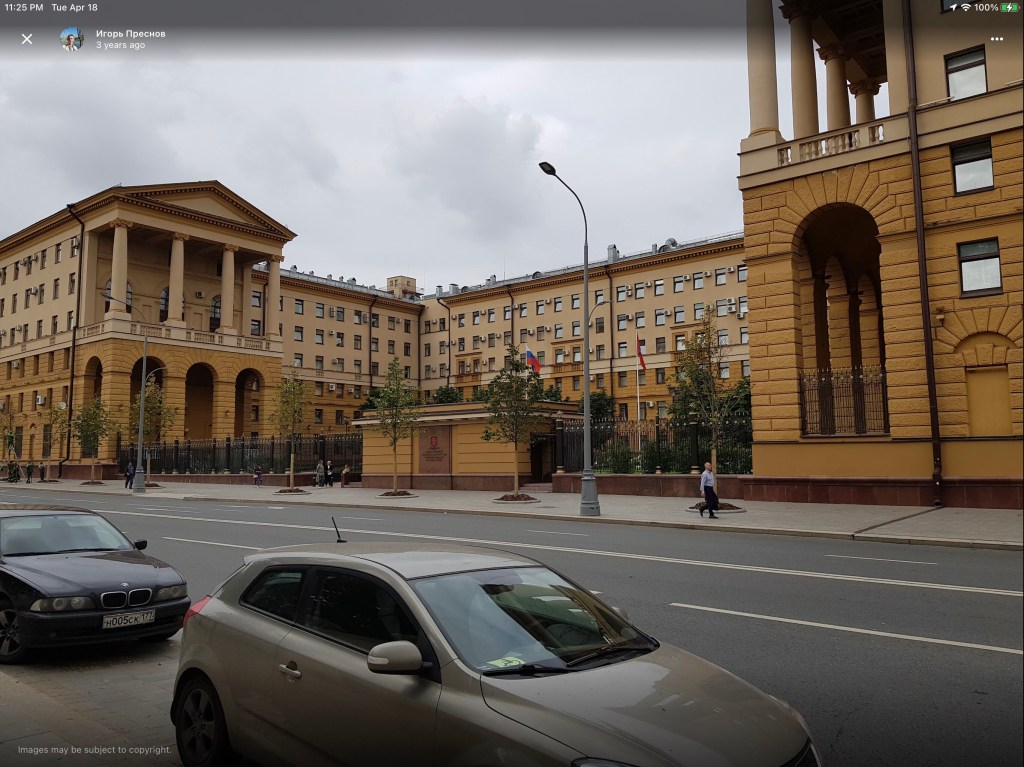
Petrovka 38, Moscow

As luck would have it, the head of our Foundation, Gil Robinson, was due to arrive in Moscow in a few days. I relayed that information to Officer Pashkin, and we scheduled a meeting several days ahead in order to include Gil. That gave me plenty of time to work up a good case of nerves. But from a practical point of view, I decided it was better to have friends in certain places, in case I ever needed a favor. Spoken like a true Russian citizen.

A few days later, Gil arrived as scheduled. He decided that Maya should accompany us on the visit to Petrovka, mainly because she was the most self-assured of our three interpreters and least likely to be intimidated. So off we went at the appointed time, with Vitold driving but refusing to enter the scary building with us. He would wait in the car, no matter how long it might take, but would not set foot inside. We had been given directions, not to the main headquarters, but to a small, dilapidated old building around the corner. The guard at the desk was expecting us, and accompanied us up the stairway to the third floor (there was no elevator), gratuitously pointing out along the way the “interrogation room” on the second floor — mercifully unoccupied at the moment.

Oh, please! Was that really necessary? Did he actually think we’d enjoy a touch of gallows humor to begin our day? Speaking for myself, I could have done without it.

On the third level, three men were waiting in a small — really small — office: one seated behind an old, somewhat scarred desk, and one standing to either side and slightly behind him. There were three mismatched chairs on the front side of the desk for us. And that’s all there was room for in the office; it wasn’t exactly the executive suite. Gil took his seat in the middle, flanked by Maya to his right and me to his left.

The man seated at the desk was, of course, Mikhail Pashkin. He was movie-star handsome, dark-haired, with shoulders, pecs and biceps that strained at the seams of his short-sleeved, light blue shirt. This was not a man you would ever challenge to an arm-wrestling contest. If his intention was intimidation, he succeeded magnificently. (All right, now I’m starting to sound like a Mickey Spillane novel. Enough of that.)

Pashkin introduced the uniformed man to his left (our right) as Militia Officer Kostylev. And on Pashkin’s other side, now perched casually on a windowsill, was a pleasant-looking man in khakis and a plaid sport shirt, who introduced himself as Bragin. Just . . . Bragin.

After we three had identified ourselves, Gil began by politely asking a couple of questions as to the specific jobs of our hosts. Pashkin talked a bit about his work within the Police Workers’ Union, and Kostylev said that as an officer in the Militia, he was also a member of the Union. Then Gil turned to Bragin and asked, “Are you also with the Militia?”

And that was when the fun began. Bragin simply shook his head and softly replied, “No.” Obviously a man of few words.

Now remember, please, that Gil Robinson was a former Ambassador-at-Large with the U.S. State Department — supposedly a trained diplomat, right? In Washington, and every other world capital, when someone gives you a non-responsive response like that, you don’t press them; you assume their job involves some sort of classified work. And Gil, of all people, should have remembered that. But did he? Oh, no. Instead, he asked, “Well, where do you work?” And when Bragin responded, “A different department,” Gil incredibly went on: “Well, what department is that?” And Bragin softly replied, “It doesn’t matter.”

At this point, as Gil prepared to push the envelope with yet another idiotic question, Maya and I began elbowing him in the ribs from both sides, saying quietly, “Gil, drop it.” “Let it go, Gil.” “Just leave it.” Maya understood; I got it; but the professional diplomat remained clueless. Meanwhile, Bragin had caught my eye. Seeing that I was shaking my head in embarrassed disbelief, he smiled and nodded knowingly at me. In that instant I sensed that Vladimir Bragin (I learned his full name later) had become my newest friend in Moscow. He then looked at Gil again, shrugged resignedly, and said, in Russian, “КГБ” — which Maya and I translated for Gil, in unison: “KGB.”

KGB Badge

If the floor had opened up beneath Gil’s chair at that moment, he would have been a happy man. As it was, he was trapped in that little office, trying to worm his way out of a gigantic faux pas. His face turned several shades of reddish-purple, and he began to stammer. I believe the only word he actually managed to choke out was, “Oh.” To his credit, though, he did shift gears fairly quickly, turning from Bragin to Pashkin and asking what we could do for the good folks of the Militia; and the meeting then began in earnest.

When I looked again in Bragin’s direction, he was once more looking at me and smiling. You might say we bonded over Gil’s embarrassment, and I was to be the beneficiary of that connection throughout my stay in Moscow. He was my Russian krysha, literally “roof” — my protection — and it never cost me a thing. It didn’t change what he did for a living, of course, but he turned out to be a very likable fellow.

Now, you’re probably wondering where the Russian Mafia comes into play in this story. At that time in Russia — and I’m not sure how this may have changed under the current regime and with the rise of the oligarchs — it was difficult to know with whom you were dealing at any given time. The so-called “Mafia” families — actually just criminal gangs who named themselves after the Italian originals — were so seamlessly woven into the Russian hierarchy and society in general, you simply couldn’t avoid them.

In the case of Pashkin and his buddies at Petrovka, it all had to do with the final distribution of the huge shipping container of Veggieburger we were able to deliver to them. Information we later received indicated that the widows and orphans had enjoyed little, if any, of it. All or most of it went in the front door and right out the back, directly onto the black market, earning a sizable profit for both the “wholesalers” and the “retailers.” And those operations were generally controlled by the various Mafia gangs. So while I spent those months in Moscow for the most part steering clear of the criminal elements, it proved impossible to bypass them entirely.

One example of the steps we took to protect ourselves was the safe in the apartment. The ‘90s were a time of rampant criminal activity in Russia, sometimes referred to as “The Great Mafia Wars.” There were daily drive-by shootings; burnt-out vehicles by the side of the road; and kidnappings or slayings of individuals as they entered or left their banks with large amounts of cash — much like living in Newark or Detroit. So we had a sturdy safe in one of the bedrooms in which we kept the thousands of dollars periodically carried over by Gil Robinson for payroll, rent and other expenses. As with the front door, it would have taken a bomb to get into that safe; and it relieved me of the need to go near a bank . . . ever.

*. *. *

When I was preparing to leave D.C. for Moscow that May of 1993, people frequently asked whether I wasn’t afraid to be going to such a dangerous location. At the time, I had been living in the metropolitan Washington D.C. area for most of my life, and I simply pointed out to them that I was already in what was then known as the murder capital of the United States. The only difference, I argued, was geography. I had long since developed a “que sera sera” attitude, and didn’t think too much about the daily hazards of life. My philosophy was, and still is, that we’re all born with a pre-determined expiration date — though it’s not stamped on our bottoms like a can of beans — and if my time was due to come up in Moscow, then so be it. I was going to have a grand time while I could.

And so I did, for the most part. But there were nerve-wracking moments as well. One of those involved the aforementioned need for my continuing contact with Valentin Aksilenko. We kept our telephone communications brief and infrequent, and only actually met a couple of times during the entire summer. He seemed relaxed enough, but again, I attributed that to his years of KGB training. We would “walk and talk” — strolling outside in busy places near my apartment building to avoid any electronic bugs that might be hidden in the apartment — and I think I managed to appear nonchalant enough. But my insides always felt as though I’d swallowed a gallon of Mexican jumping beans. I fully expected at any moment to be pounced upon by a couple of big thugs, dragged into a car with darkened windows, and driven to an isolated spot where I would be shot in the back of the head and left for the crows to feed on. But then, I always did watch too many bad spy movies. Obviously, I survived without anything of the sort ever happening.

*. *. *

But there were other moments as well. It seemed that even a holiday — specifically, in this case, the American Fourth of July celebration — could turn scary in Moscow, and not just from any errant fireworks. Join me next week for that memorable episode, which still gives me the willies when I think about it.

So long for now,
Brendochka
4/6/23

Ch. 16 – Home, Sweet Home in Moscow

May 11, 1993 – Sheremetyevo Airport, again. But at least this time, it wasn’t a snowy February. It was springtime, and I had someone waiting for me at the baggage claim area: good old Vitold. He had thoughtfully brought a friend with him, one who owned a truck. Vitold was a little crazy, but he wasn’t stupid — he knew his Lada automobile would never be able to hold a woman’s six-months-worth of luggage.

Sheremetyevo International Airport, Moscow

That ride — from the airport far to the north of central Moscow, to the Foundation’s apartment at the far opposite end of the city — has to go down in the record books as one of the most miserably uncomfortable rides in history. In my history, at least. This truck wasn’t a Ford pickup, or anything even close. It was a nameless rattletrap, a junkyard reject, a pitiful conglomeration of spare parts seemingly held together with Scotch tape and baling wire. Its creator had obviously never heard of shock absorbers — or, for that matter, padding in the seats. Welcome home, Brenda; your limousine awaits.

Add to that, the driver from hell and the notoriously rutted Russian roads (pardon the alliteration), and it’s no wonder I was ready to kiss the ground when we finally arrived at No. 16 Rublevskoye Shosse: a 16-story, blue and white Soviet monstrosity, ground-floor commercial space in the front, parking and entrance in the rear, springtime mud everywhere. (A picture is available on Google Maps, minus the mud.) And in the dismal little entryway, a small desk at which was seated the ubiquitous dezhurnaya: the lady concierge cum watchdog whose responsibility it was to report — to whomever her bosses were — on the comings and goings of all residents and visitors. Innately suspicious of the newly-arrived American on the sixth floor, she eventually decided that I wasn’t there to kill her or to steal anything, and by the time I left Moscow, she had almost come to accept me. I considered that one of the major accomplishments of my time in Russia.

Home Sweet Home – Moscow

The building was owned by the Ministry of Defense; but the apartment belonged to an army officer who had been sent, along with his family, on indefinite assignment to Tajikistan. I’m sure they were thrilled. But they were allowed to rent out their apartment, and were delighted to find American tenants willing to pay in dollars. They had hired one of their neighbor families on the same floor to look after the place and collect the rent, and we in turn hired the lady of that household, Tamara, to do a bit of cleaning and cooking. I do not know what I would have done without her. She was a great cook, and she knew where to shop for the best meats, produce and bread. In return, I would bring items for her from the hard currency stores that weren’t otherwise available to her. She also volunteered to do my laundry for me. I would have adopted her and brought her home with me when I left Moscow, but her husband and daughters objected rather strenuously for some reason.

Happily, the interior living spaces were far superior to the building’s exterior. My apartment was unusually large for Moscow, clearly indicating that it belonged to a somewhat privileged family. It had a spacious living-dining room, three big bedrooms, two well-appointed bathrooms, and a very nice eat-in kitchen that had been upgraded with German-made appliances and cabinetry. The furniture wasn’t beautiful, but it was comfortable and clean, and I immediately felt right at home. There was also a large enclosed balcony, which became a very handy storage room. Part of the main living area had been portioned out as office space, with a desk, file cabinet, computer, satellite phone, and a Xerox printer/copier (one of the 16 pieces I had brought with me).

My favorite feature of the place, though, was the apartment door. It was made of steel, roughly three inches thick, and had a three-fingered steel deadbolt, each finger, or rod, measuring a good inch or so in diameter and about six inches in length. Nobody was going to break through that sucker — not without a bomb, anyway.

And more people came with the office as well. Olga and Lena had been hired by Gil, and were soon my new best friends. They were delightful women, both fluent in English, who acted as interpreters and office assistants. Olga was outgoing, Lena more on the shy side, but we all got along beautifully, and I soon was referring to them as my Russian sisters. Many an evening I would invite them to stay after work for zakusky (hors d’oeuvres), vodka and a movie. With Vitold’s help — I nicknamed him “the Scrounger” — I discovered kiosks where I could buy the best caviar at the equivalent of about $3.00 for a two-ounce container, decadently rich ice cream to stock the freezer, and vodka that wasn’t rotgut. With all that good food and a VCR player, my popularity was pretty much assured, even though they did suspect I was a CIA agent because why else would an American learn to speak Russian? It had been less than two years since the breakup of the Soviet Union, and paranoia still ran deep.

The final two members of our little family were Vitaly and Maya. Vitaly was a quiet sort, and acted as a back-up driver and gofer. Maya was a strikingly beautiful young woman, married without children, and the spoiled daughter of an army general. She was also intelligent and an excellent interpreter, but was obviously more interested in her social life and eventually visiting America than in actually doing any work.

So this was my home, and these were my people, for the next several months. How on earth had this come to be? What twists of fate had led me from my prosaic childhood in New England to this strange and forbidding place? As I thought about it, the answer became obvious: it was all Walter Surrey’s fault. (Sure, blame the guy who’s not here to defend himself.) When I walked into the offices of Surrey, Karasik & Morse for the first time in April of 1979, I was taking the initial, unsuspecting step toward this moment. Every path, every byway, every road from that point on led me directly — do not pass “Go,” do not collect $200 — to my lifelong obsession with all things Russian . . . and now, to Russia itself.

As I write about these people who were such a big part of my life that summer, I have a hard time picturing them as they would be now, thirty years later, and I can’t help wondering how their lives have turned out. It broke my heart when, less than a year after leaving, the roads to Russia were suddenly closed off to me, and I had to lose touch with them — but that’s a whole other story for another chapter (or two).

There was little time to get acquainted that first day — I was off to Kiev just 24 hours later, compliments of Gil, who had arranged for me to meet with our Ukrainian partner. Olga had made my train reservations, I had brought a small bag already packed for a two-nighter, and Vitold drove me to the Kievskiy Vokzal — the Kiev Train Station — which, coincidentally, is located around the corner from my old standby, the Radisson Hotel.

I had a sleeping compartment on the train, and headed off — alone once more — into the unknown. The train left Moscow around 5:00 p.m., and arrived in Kiev in the morning. I had brought along food and bottled water, and had been warned to use the bathroom early in the voyage, as it was unisex and would be too disgusting to use later. They were right. It’s hard to aim on a moving train.

Somewhere Between Moscow and Kiev

Somewhere in Ukraine, we made a fairly lengthy stop at a village where we were able to leave the train and mill around the station for a few minutes. There were vendors, of course, and I bought a couple of pieces of fruit and bottles of mineral water. I even had a chance to talk with a very sweet lady, who was tickled to learn that I was an American whose grandparents had emigrated from her region around the time of the first, failed Revolution of 1905.

Around 9:00 p.m., I left my compartment to stretch my legs in the corridor, and was looking out the window at the passing scenery (it was not quite dark), when we made a brief stop at a small station. As I glanced at the people on the platform, I suddenly noticed a familiar face: a woman who appeared to be the identical twin of my mother’s older sister — or, rather, as she had looked many years before. Unfortunately, there was no time to disembark, and I have always regretted that I was unable to talk with her. She may have been a distant relative; I will never know, but I like to think so.

We arrived without incident in Kiev in the morning, and as I stepped down onto the platform, a woman approached me and introduced herself as Irina Shakhova. Irina was a little younger than I, spoke fluent English, and looked enough like my mother’s side of the family to have been my cousin. It was obvious that we felt an immediate affinity for one another; we talked as though we’d known each other all our lives, and soon became fast friends. Later, when she and her husband Yuri moved to the Washington area with their two children and Irina’s mother, we remained close.

In addition to meetings at the Ukrainian Ministry of Health and the storage facility that housed our shipments of food, Irina did manage to give me a driving tour of the beautiful, historic city of Kiev, and a couple of exquisite restaurant experiences where the food was reminiscent of my grandmother’s cooking when I was a little girl. But the most amusing incident involved a small demonstration of coal miners from the Donbas region — an area so tragically in the news this past year — in front of a government building across the street from my hotel. I had some free time, and wandered over to see what I could learn, and to take a few pictures.

The crowd was peaceful; they had no choice, really, as the militia seemed to outnumber the demonstrators. As I was wandering about among the two hundred or so miners, a man — obviously spotting me as a foreigner — approached and began speaking to me in Russian. He asked where I was from, and when I said “Washington,” he became very excited and asked me to take a message back to my President. Okay, sure, glad to; I’m from Washington so obviously I know the President, right? And what was his message? Quite simply, that a dentist had implanted a radio transmitter in his mother’s teeth through which the government was spying on their family. [Cue Twilight Zone theme.] Never mind the other coal miners’ legitimate complaints about poor wages and working conditions; let’s first take care of Mama’s listening device. The poor man must have inhaled one too many liters of coal dust. I didn’t want to upset him, or invite trouble for him by enlisting the help of a Militsionaire, so I assured him I would do my best and hightailed it out of there, back to the safety and quiet of my hotel room.

But the most memorable — and saddest — event of that trip to Kiev was my visit with Irina to a treatment center for child victims of the Chernobyl nuclear disaster some seven years earlier. These were some of the children who were receiving our Veggieburger. If you can recall how the poor orphans were portrayed in the movie versions of Charles Dickens’ “A Christmas Carol,” you’ll have an idea of how these children looked: pale, emaciated, eyes dark-ringed and sunken, and faces sad beyond description. There was not a spoken word or a hint of a smile from any of them, as though they had never known a moment when they weren’t ill, and they realized the future wasn’t going to be any better. Their faces haunt me to this day. And these were just some of the less-afflicted children — the ones who were mobile and not visibly deformed. I was not given access to an inpatient hospital or an orphanage, undoubtedly for good reason. And of course, I was not allowed to touch the children, though I wanted desperately to give each one a huge hug. But the danger of radiation contamination was still too great.

Yet their condition, as greatly as it affected me, in no way surprised me. For those three days in Kiev, I had a sore throat that felt for all the world like tonsillitis, only it couldn’t be, because I’d had my tonsils removed decades earlier. But I had breathed the Chernobyl-polluted air and eaten locally-grown food, and that was enough. As soon as I left Kiev, I felt fine again; my sore throat disappeared, and to my knowledge I have suffered no lasting ill effects from that brief exposure to nuclear contamination. But those children had been breathing that foul air for all or most of their young lives. An entire generation had been sacrificed to the ravages of mankind’s insatiable lust for advancement.

Then it was back “home” to Moscow on another overnight train, and onward to a summer of fun and games in the ancient land of the Tsars, the Commissars, and the Oligarchs. Near the top of my to-do list: discreetly reestablishing contact with Valentin Aksilenko.

*. *. *

Today, I can’t remember what I had for dinner last night; but the details of those months in 1993 remain etched in my mind as though I had just lived them. Please join me again next week, when I revisit my first encounter with the Moscow Militia and the local KGB, on their turf, at a place known only by its address: Petrovka 38.

TTFN,
Brendochka
3/30/23

Ch. 15 – The Russians Are Coming! The Russians Are Coming!

February 21, 1993 – Eight time zones away in Moscow, Valentin Aksilenko answered the ringing telephone: “Allo?”

“Valentin, what in hell is going on over there?!!” I was clearly in no mood for preliminaries.

Valentin chuckled, not at all surprised to have heard from me. “Oh, you saw the Washington Post?”

So this Yuri Shvets quoted in the article was the friend he had told me about in Moscow. The entire scenario had obviously been carefully planned, by both of them, well in advance. And Shvets’ last interview had taken place while I was still in Moscow — perhaps at the very moment that I had been sitting and talking with Valentin in the Radisson’s business center. What kind of dangerous game were they playing? And how had I managed to be dragged into it? Was my being in Moscow at that exact time just the worst kind of serendipity?

In disbelief, I responded: “Is he crazy? Does he know what he’s doing?’

I was clearly upset, yet Valentin remained perfectly calm. He assured me that everything was fine, that there was no cause for concern, and that his friend had things well under control. Seriously?? This Shvets guy was advertising the fact that he was about to blow the whistle on the KGB, and everything was “under control”? How was that even possible? But I somehow managed to restrain myself, and not ask any further questions. I reminded myself that we were, after all, on an unsecured phone line between Moscow and the United States. Valentin’s calm demeanor, at first puzzling, was actually smart; he had been well trained. I should have realized that in the first place, but this was unfamiliar territory for me.

Valentin further confirmed that our business arrangement was still in place; they would draft an agreement to be signed by the three of us, granting me a percentage of any income from the “transaction”; and I should please go ahead with the search for a publisher. That was the least of my worries at the moment, but I took my cue and thanked him, told him I looked forward to receiving the agreement, and we said our goodbyes. Then I started pacing from room to room.

I never did get breakfast that day, and I’m not all that sure about lunch either. I kept rereading the newspaper article and trying to imagine a scenario in which Shvets’ book could be published without creating a firestorm in Moscow; but I wasn’t having any luck. First, however, I decided I had to protect myself on this end — not just financially, but legally. I needed to be sure that a commercial transaction of this type would not be in violation of any U.S. laws, regulations, or existing sanctions against Russia. As for the controversial content of the book, that would be the publisher’s problem, not mine. It was Sunday, so I couldn’t make any phone calls that day, but I knew whom I had to call on Monday: a friend in the Justice Department.

I woke early Monday morning and made the call. My friend asked a few questions, then assured me that there was no legal restriction against the type of business arrangement I had described, and no reason why a book by a Russian author couldn’t be published in the U.S. One of his questions concerned the identities of the two men.

The next day, the FBI came to call.

FBI Headquarters, Washington, DC

One or both of the names had apparently sent up a red flag in the Justice Department’s database, and my inquiry had immediately been referred to the Department’s investigative arm, the FBI. My first thought was that they were going to suggest that I back off and not get involved with anyone, former or current, from the KGB — which, of course, would have been sound advice. But that’s not what happened. In fact, they said they saw no problem, but asked that I keep them informed of my progress.

If you’ve never been in this type of situation, let me assure you that it’s really hard to say no to the FBI. They’re the good guys, right? — no threats, no strong-arm tactics, polite and friendly, bravely protecting our country’s interests. If you’ve done nothing wrong, not broken any laws, then you naturally want to help, to give something back to the country that has given you so much. It’s a no-brainer . . . or so it seemed. So I said fine, I’ll keep in touch.

Without going into the boring details, I was able, through a mutual acquaintance, to arouse the interest of a leading literary agent in New York, John Brockman. John was taken with the story of the would-be author Shvets and his colleague Aksilenko, but said that he could not consider representing an author he had never met or spoken to. He urged me to send an invitation to the two men to visit the U.S. for a brief period, during which he could assess the validity of their story and the likely value of Shvets’ manuscript.

Oh, okay, sure . . . no problem. Two (allegedly) retired, high-ranking KGB officers — Colonel Aksilenko and Major Shvets — would certainly be allowed to leave Russia for the United States, and thereafter be permitted by our State Department to enter the U.S., unquestioned and unrestrained at both ends. Just a little ten-day business jaunt — a piece of cake.

What it really was, was insane.

But I told myself I had to try. Regardless of who they were, or had been, I was representing them in a legitimate commercial transaction, and had a contractual obligation to them as my clients. I also, of course, had made a promise to the FBI, and I dutifully reported this development to them. I issued the requisite official letter of invitation to each of the men for a ten-day business-related visit in the spring, and sat back to wait for the State Department’s inevitable (I assumed) denial of their visa applications.

But what actually occurred was mind-boggling. With lightning speed, the visas were approved and issued by our embassy in Moscow; the two men managed to make airline reservations on the Russian airline, Aeroflot; and Aksilenko advised me that they would be arriving at JFK International Airport in New York on April 25, 1993, for a ten-day stay. Someone obviously wanted them here — but who? And why? And how had they managed their departure from Moscow so easily? These were just the first of scores of questions yet to be encountered . . . and never answered. Regardless of how or why, the Russians were coming.

I was to travel to New York to meet them on their arrival. John Brockman had invited all three of us to stay overnight at his country home in Connecticut, and was sending a car and driver to transport us there from JFK Airport. We would drive back into New York City the following morning for meetings with prospective publishers. It was VIP treatment, and all very efficiently arranged. But a funny thing happened on the way to the airport . . .

I had opted to travel to New York by Amtrak’s express train. On arrival at New York’s Penn Station, I took a taxi to JFK Airport, instructing the driver to drop me at the international arrivals terminal for incoming Aeroflot flights. Whether he didn’t understand me, or simply didn’t know his way around the airport, I don’t know; but I was delivered to the wrong terminal. And by the time I got inside and realized it, my taxi was gone and there were no others around. And no shuttle bus in sight. I had no idea of how to get where I was supposed to be; I’m a Washingtonian, not a New Yorker.

And just then the clouds parted, the hand of God descended and delivered to this lost lamb an angel from Heaven.

Or, more likely, the FBI had reached out and sent me an agent. A very respectable-looking man approached me, said I appeared to be lost, and asked if he could help. I explained my problem, and he said — miracle of miracles! — that he was also going to international arrivals and would be happy to give me a lift. His car just happened to be parked nearby.

Now, I’m not a stupid person, and under normal circumstances I do not get into vehicles with strangers. But this was not a normal circumstance, and he was not your average stranger. Plus, I was running late and becoming desperate. So with some trepidation I accepted the Good Samaritan’s offer. He knew exactly where to go, dropped me off in front of the correct terminal, said goodbye and good luck, and drove off. I never saw him again; apparently he had no business in international arrivals after all.

But there was no time to think about that. I ran into the terminal, looked around near baggage claims, and found Valentin Aksilenko standing next to a man, obviously our driver, who was holding a card with my name written on it. What a relief! But where was Yuri Shvets?

As I greeted Valentin and the driver, apologizing for my tardiness, a man came inching out of a nearby corner, where he had been partially hidden in the shadows. He was of average height, slight build, with luxuriant dark hair that was styled in what could only be described as a pompadour (you younger readers can look that up), and conspicuously well dressed and unwrinkled for a long-distance traveler. Was this the mysterious author, whistle-blower, and spy extraordinaire? Really?

After a quick introduction, we grabbed our respective suitcases and headed for the car to take us to Connecticut. I sat in the front seat with the driver, giving the two visitors a bit of privacy in the rear. In addition to jet lag, they must surely have been stressed beyond belief. We chatted a bit about their flight, the lovely countryside, and other nonsense, and then I left them alone to talk softly between themselves — in Russian, of course. I couldn’t catch a word of their conversation, nor did I try.

The Brockmans were the perfect hosts, and we all spent a delightful evening, with drinks on the enclosed porch, a stroll through the historic farm property, a lovely dinner, and endless conversation. The following morning, we rode into the city, met with three prospective publishers, and Shvets’ book was quickly bought for publication by Simon & Schuster. After a brief meeting back at the offices of Brockman, Inc., we enjoyed a celebratory lunch (again, compliments of John Brockman) in a restaurant with a beautiful view of Rockefeller Plaza, and three of us — the two exhausted Russians and I — hopped a train back to Washington, where I had left my car parked in the Union Station garage. I drove across the Potomac River via the 14th Street Bridge, checked them into their previously-reserved rooms in a suburban Virginia hotel, and took myself home to collapse. They weren’t the only ones feeling the stress.

It later became public knowledge that, during their stay in Washington, they met with the FBI. How many times they met, or for how long, or what was discussed, I do not know — and I’m sure it’s better that I don’t.

*. *. *

I have to backtrack a bit here. Following my February trip to Moscow with Kate Williams, I had received an offer from Gil Robinson to join his Foundation as their Moscow office manager for an estimated three to six months. Needless to say, I jumped at the opportunity. I spent a couple of weeks part-time in the Foundation’s Washington office, and was scheduled to leave for Moscow on May 10th. Valentin’s and Yuri’s visas were due to expire on May 5th. I was cutting it close, with only five days between their departure and my own in which to get ready for the move. And all the while I was spending time with them, with the FBI (whose presence had increased dramatically since the arrival of the two visitors), with my family and friends, on the phone with Brockman, suspending home deliveries and services, cleaning out my refrigerator, and packing half my wardrobe and an entire pharmacy. Today, just thinking about it is exhausting.

So when they took off as scheduled on May 5th, I was relieved, to say the least. And on May 10th, I left on an Air France flight from Dulles International Airport with 16 pieces of baggage — seven or eight of my own, the remainder being office supplies and equipment belonging to the Foundation. The overweight charges were enormous, but luckily a very sympathetic Air France supervisor, on hearing that we were doing humanitarian aid work for children, cut the costs in half. Also fortunately, I had the Foundation’s American Express corporate card to cover the still hefty charges.

And off I went, leaving everyone and everything behind, heading into . . . what? I had no idea, but I was sure it wouldn’t be dull. And I was so right.

Join me next week, as I arrive in Moscow to get settled, meet my new “family,” visit Kiev, and become much too well acquainted with the Russian authorities.

So long for now,
Brendochka
3/23/23