Having a wonderful time reminiscing about all my past travel (and other) adventures. Hope you’ll share them with me in my blog, “All Roads Led to Russia.”
He was an adorable little ‘droid, to be sure — but George Lucas’ 1977 visions of man’s future adventures in space were limited in comparison to . . . Well, let me illustrate:
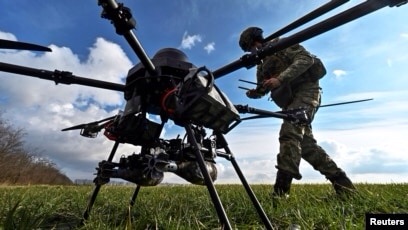
“R2-D2,” Born 1977, Hollywood, California, USA“MeShoot-YouDie,” Born 2024, Beijing, China
See what I mean? What a world of difference less than half a century can make! “R2” was a cute, lovable, squeaky-voiced little guy that every child in the world was soon begging to receive for Christmas. Whereas “MeShoot” (my made-up name for it, lacking an official one) . . . well, let’s just say that no kid of mine would ever have seen this under the tree.
It is, after all, a pretty scary character. A military “man” that doesn’t need to be fed, clothed, paid, or otherwise cared for — except perhaps for a little squirt of WD-40 in the seams every now and then. And if it gets blasted to smithereens in battle, there’s always the possibility of retrieving some spare parts. It’s far less traumatic than having to notify the next of kin.
“MeShoot” made its debut earlier this month during a joint China-Cambodia military training exercise. It is battery-operated, and is said to be able to function independently for two to four hours. It can move forward and backward, lie down, and jump (which is more than I can do these days, so I’m impressed). And it can also plan routes, approach targets, and avoid obstacles. One of the models was shown fitted with a rifle to shoot at targets — presumably of the human variety. [Mikhaila Friel, Business Insider, May 28, 2024.]
Welcome to the wonderful world of robotics and artificial intelligence. Combine them, and you get:
* [Parody of “Ragtime Cowboy Joe,” Sony/ATV Music Publishing]
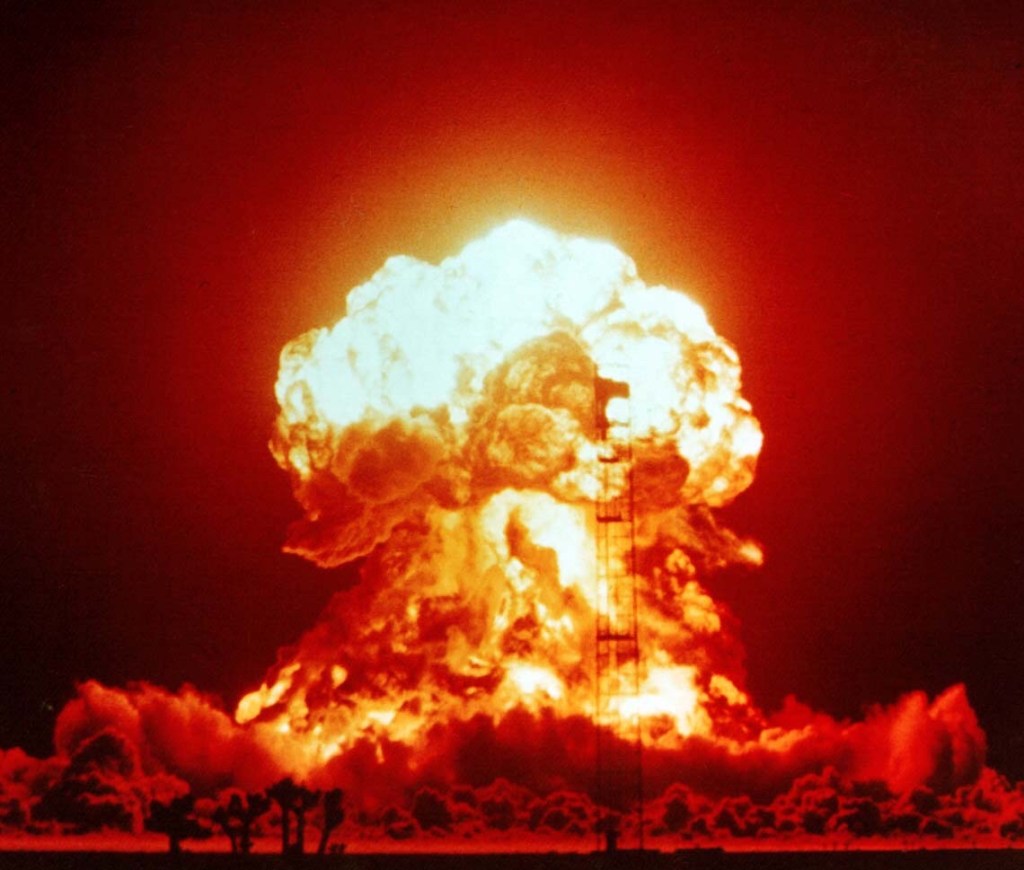
Now granted, this is still less terrifying than, say, the nukes we keep hearing about from the likes of Vladimir Putin and his sidekick Dmitry Medvedev. And it does have its upside, in that it might actually save a lot of lives . . . on China’s side, anyway. But it just gives me one more reason to hate AI technology, and the speed at which it seems to be advancing.
My Most Recent Worst Nightmare
*. *. *
And while we’re on the subject of Xi Jinping . . .
“Hong Kong police have made their first arrests under a newly passed local national security law over social media posts deemed ‘seditious’ by authorities, just days ahead of the 35th anniversary of the Tiananmen Square massacre.” [Nectar Gan and Chris Lau, CNN, May 28, 2024.]
Tiananmen Square Protest – 1989
Six people thus far have been charged with taking advantage of the forthcoming anniversary — formerly widely commemorated in Hong Kong — to “incite citizens’ hatred of the central authorities, the city government and the judiciary, and to incite netizens to organize or participate in illegal activities later on.”
Sounds vaguely Russian-style to me. But no, it’s the ruling Chinese government at work. Since control of Hong Kong reverted to China in 1997, this has been the obvious political direction in which the government has been headed. I’m just surprised it’s taken so long.
The “what” is unquestionably the worst kind of mischief, while “they” are the mischief-makers: Vladimir Putin, Xi Jinping, Aleksandr Lukashenko, Viktor Orban, and others too numerous to name . . . right down to and including old Beelzebub himself. For surely all of those earthly demons must have had a creator.
Beelzebub: The Case Against Blind Dates
As I’ve changed my focus a bit this past week, I’ve been concerned that I might have missed a vital news flash or two. So I tried to catch up today, and found that, first, the world has not come to an end, but sadly, it’s still trying to do just that. Allow me to encapsulate a few of the highlights into one article, so that hopefully I might begin the week fresh tomorrow.
Vladimir Putin: What better place to start than with the man we most love to hate — that master manipulator of facts, destroyer of hard-won freedoms, invader of sovereign nations, ruthless obliterator of countless thousands of lives. This week, he took aim at his own military, beginning a purge of high-ranking officers and officials now accused of corruption. Most noted among these are Vadim Shamarin, Deputy Chief of the General Staff; Deputy Defense Minister Timur Ivanov; and Yury Kuznetsov, head of personnel for the Defense Ministry . . . each charged with some level of bribery. But apparently Mr. Putin’s dictionary offers a different definition of “purge” than my Webster’s Unabridged, because he claims that that is a misnomer; this current rash of arrests is merely part of an ongoing crusade against corruption and financial waste in the military. The fact that it just came to light with the appointment of a brand-new Defense Minister — a civilian economist by the name of Andrey Belousov — is, of course, coincidental.
As is the sudden but not totally unexpected removal of the previous Defense Minister, Sergey Shoigu — a close friend and fishing partner of Putin himself, who had served in his post for a dozen years and now finds himself with a new nameplate: that of Secretary of the Security Council of Russia, seated at the head table in the Kremlin between his old buddy Putin (who is also Chairman of the Security Council) and the Council’s Vice-Chairman, Dmitry Medvedev. Yes, that Medvedev: the two-faced, name-calling, war-mongering, nuclear-waving excuse for a statesman who somehow transitioned from the politically moderate placeholder of the Presidency from 2008 to 2012, into the fire-and-brimstone hell-raiser you see today, without so much as batting an eyelash.
All I can say is: Watch your back, Sergey.
Sergey Shoigu
And the former Security Council Secretary, Nikolai Patrushev, who had been keeping that seat warm for the past 16 years . . . what has become of him? Well, for some reason that has yet to be explained, he’s been kicked downstairs to some “vital” job “in charge of transportation.” Wikipedia identifies him currently as “Aide to the President of Russia.” For once, I think even Wiki may have been stumped.
Nikolai Patrushev
And finally, in one of his rare, unintended moments of dark humor, Vladimir Putin himself — in a visit to another good buddy, Aleksandr Lukashenko, presumptive President of Belarus — questioned whether Ukrainian President Volodymyr Zelensky “has the legitimacy to negotiate on Ukraine’s behalf.” He bases this on the fact that Zelensky’s five-year term of office was to have ended on May 20th . . . completely ignoring the fact that new presidential elections in Ukraine have been suspended while that country is at war. Zelensky is still President. [Jim Heintz, Associated Press, May 24, 2024.]
I just hope Putin doesn’t try to bring up issues of constitutionality, because if any stone-thrower ever lived in a glass Kremlin . . .
Volodymyr Zelensky
*. *. *
But enough about Putin. Now on to . . .
Xi Jinping: Ah, the inscrutable Chinese . . . not so inscrutable this time, but right out there in the open. Somewhat miffed at the nerve of the good folks of Taiwan for having held a presidential election without China’s permission or oversight, and of the new president, Lai Ching-te, for calling on Beijing to “cease its intimidation tactics,” China decided that a “punishment” was in order for these “separatist acts,” and thus launched two days of large-scale military drills surrounding Taiwan.
But, President Xi, wait a second . . . haven’t you overlooked something? Like the fact that Taiwan does not and never did belong to China? You say that it is part of your territory, despite the fact that you have never had control of it. But saying it doesn’t make it so. You could claim territorial rights over Jupiter, but . . . come on! Even you can’t believe your own hype this time. You haven’t been eating Magic Mushrooms, have you?
Xi Jinping – No More Mr. Nice Guy
*. *. *
Viktor Orban: On my one and only visit to Hungary in 1990, that country — along with much of Eastern Europe — was in the throes of casting off the shackles of Soviet communist rule and rewriting its constitution along democratic lines. It was a wonderful, hopeful, joyous time under the leadership of democratically-elected Prime Minister Jozsef Antall, and the people of Hungary were embracing the changes wholeheartedly.
But 34 years on, things have changed. Hungary has been a proud member of NATO since 1999. But the current Prime Minister, Viktor Orban, is an admirer and good friend of Vladimir Putin; and a little thing called the Russian invasion of Ukraine has proven to be something of an inconvenience for Mr. Orban. NATO’s members have been consistently supportive of Ukraine in that country’s defense of its sovereignty. But it seems that the terms of the NATO Treaty are somewhat at odds with Orban’s desire to, shall we say, keep his lips within kissing distance of Putin’s hind end.
So now Viktor Orban is busily trying to find a solution to this political conundrum. He said last week on state radio that:
“Our lawyers and officers are hard at work to see how Hungary can maintain its NATO membership in a way that it wouldn’t have to take part in NATO actions outside NATO territory.” [Sinead Baker, Business Insider, May 24, 2024.] In other words, he wants it both ways.
Who the hell does he think he is . . . Prince Harry?!!
Viktor Orban (with fishing buddy Vlad)
And that, dear readers, is the week that was . . . aside from a few natural disasters and the usual domestic political dust-ups. I, for one, am glad it’s over.
Author Mitch Albom has written many delightful books, my favorite being “The Five People You Meet In Heaven.” After I’d read the book for the second time and watched the movie (equally wonderful), I started thinking about the five people I’d really, really like to meet in my afterlife, and I found that five weren’t enough. Perhaps I’m greedy, or maybe I’ve just lost too many wonderful people; that’s what happens as you grow older. So I allowed myself an extra five to include some people I never actually knew but would like to, and I made a list. Then I gave myself explanations as to why I had chosen those particular people. It was an exercise that offered me an entirely new perspective on the people who have had the greatest effect on my life — and, in some cases, how I affected theirs.
As Good a Guess As Any
Obviously, no living person knows where or what Heaven actually is, or whether it exists at all; but the general consensus seems to be that, if there is a Heaven, it’s up. Probably because that’s where there’s the most room for all of those dead souls, or angels, or whatever we become in the next life. In my imagination, it would look something like Cape Cod, or maybe a never-ending English garden — someplace pretty and smelling like flowers or the sea. And all of the people there would be good, and happy, and healthy, even if they hadn’t been exactly like that on Earth.
So here are my ten choices, from last to first, and my reasons for wanting to meet up with them when I take my final trip.
No. 10: Mikhail Sergeevich Gorbachev. It should be no surprise to anyone who knows me that I would wish for a chance to talk to one or two dead Russians — not people I knew personally, but a couple of individuals of great historical importance, not the least of whom would be Mikhail Gorbachev. I would like to start my conversation with Gorby by asking him what on earth he was thinking when he dismantled his country’s political and economic structure (communism) before he’d had a chance to create something viable to take its place (presumably, democracy and capitalism). By doing so, he left the door wide open for every opportunist, every charlatan, every criminal in Russia to jump in and create total chaos — which is exactly what happened. He thus also created the foundation for his own political demise.
My second question to him would be, “If you had it to do over again, what would you do differently?” Not that it’s possible to rewrite history, but I’d love to know the answer to that one. I often wonder: what would Russia — and the entire world order — be like today if things had not played out for him as they did? Sadly, he was a good man, with good intentions, who just didn’t get it quite right.
Mikhail Sergeevich Gorbachev
No. 9: Vladimir Ilyich Ulyanov (Lenin). Vladimir Lenin may seem an odd choice for my list, since it’s not clear to me that a mass-murdering despot would ever have made it into Heaven in the first place. But he’s the guy who started it all, so I’d really like to chat with him. Therefore, on the off-chance that he may at the last moment have repented his sins, and that his repentance was sufficient to have earned him admittance through the Pearly Gates, I imagine asking him this: Why — since his initial aim was allegedly to rescue the Russian people by ridding them of the tyrannical rule of the Tsars — did he then feel compelled to become the worst possible version of himself . . . far worse than Nicholas II, the Tsar he had so cruelly overthrown? Or was he simply an inherently evil individual with a good sales pitch?
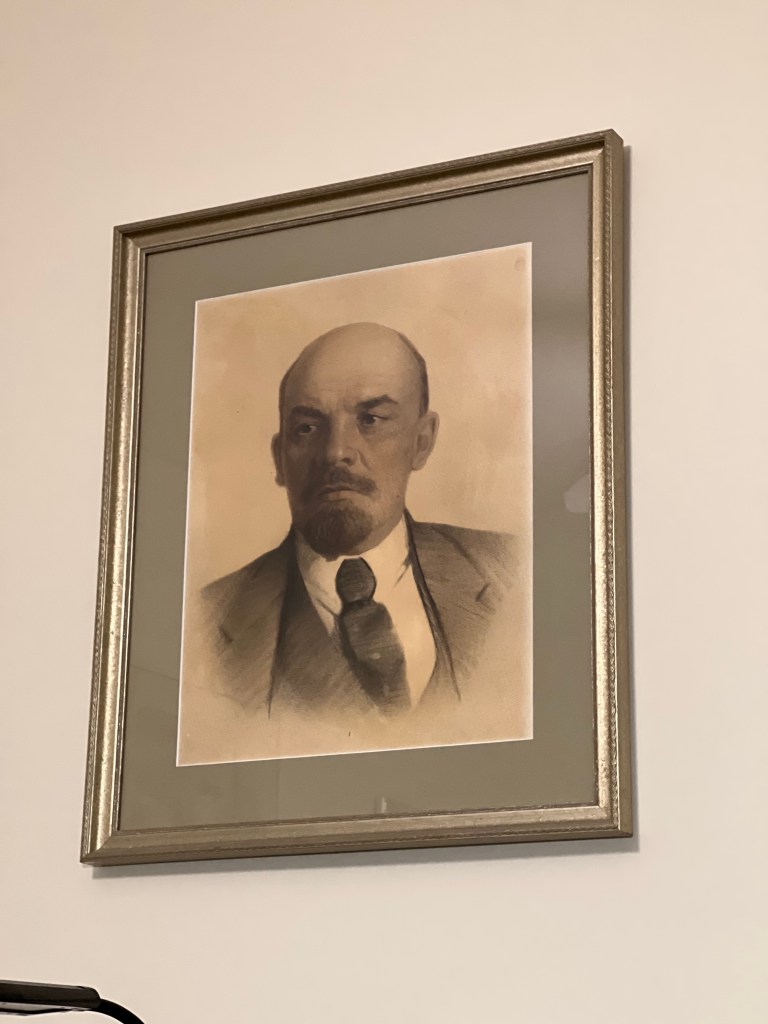
And while I was at it, I would like to ask him to autograph the portrait of him that has been hanging above the desk in my den since 1993 — the one I smuggled out of Moscow in my suitcase after buying it from a Russian government official who had undoubtedly stolen it from some government facility specifically to sell it to me for $50 U.S. money. This, of course, is on the assumption that I will have been allowed to bring that prized possession into Heaven with me — along with (I would hope) some family photos, a couple of favorite books, my iPad, and a big bag of M&Ms.
My Portrait of Vladimir Ilyich Ulyanov, a.k.a. Lenin
No. 8: Abraham Lincoln. Talk about a 180-degree turn-around — from Lenin to Lincoln! There would be so much to discuss with this remarkable man, whose portrait looks for all the world as though he was envisioning his own demise. Or perhaps he was just unbearably sad at the state of the world. If so, it’s a good thing he can’t see it as it is today . . . or perhaps he can.
I would first ask him whether he regrets, or ever regretted, issuing the Emancipation Proclamation, in view of the turmoil that followed . . . and which, to a different degree, continues to this day. And I would like to know whether he issued that Proclamation as a result of his firm belief in the inherent equality of all people, or for the more pragmatic purpose of hopefully bringing an end to the Civil War and preventing a permanent dissolution of the Union. Or, more likely, both.
The one question I would not ask is the one that has become a meme of sorts — and a sick one at that: “Other than that, Mr. Lincoln, how was the show?” Not cool. Not cool at all.
Abraham Lincoln
No. 7: Marilyn Lewis. One of the Golden Girls — my Golden Girls, not the ones on TV. We were five women who worked together and became BFFs, then brought my sister into the fold making it an even half dozen. Marilyn was the mother to all of us; not because she was the oldest (she wasn’t), but because she was by nature an Earth Mother — loving, nurturing, at once a tower of strength and an incurable softie — caring for her own family, her friends, and everyone she met who needed a hug or a helping hand. She exuded warmth and a joy of living that was contagious. I would have no questions to ask of her; I would simply tell her how happy I was to see her again, and then move in for one of those huge, heavenly hugs.
No. 6: Dora Lipson. My mother. At once a smart, attractive, honest, hard-working, practical, sometimes funny woman; but also an insecure, jealous, controlling, possessive, manipulative one. I would first want to determine whether she had shed the negative traits and retained the positive ones, as I would hope we all have a chance to do in Heaven. And then I would want to ask whether she had been aware of the effect those negative qualities had on her family and friends. And I would wait for an apology.
Then I would forgive her — because that’s what you do in Heaven — and I would begin making up for lost time, perhaps by mixing up a pitcher of her favorite whiskey sours and sitting down at the piano with her to play one of her favorite duets. She loved the “Poet and Peasant Overture” — but, as always, she would want to play the melody while I got stuck with the rhythm part. Oh, well . . . baby steps, even in Heaven.
No. 5: Rose Swartz. My maternal grandmother: my Bubbe. Always there, always ready with a bit of old-world wisdom, a lecture, a word of encouragement, something to eat . . . or all of the above. A steady, loving, non-judgmental presence in my early life, she brought comfort when it was needed and gentle discipline when it was called for. And the best food I have ever eaten, even to this day. Of her I would ask for stories of what her life had been like in the old country (Ukraine), and how she and my Zaide (grandfather) had managed to come to the United States and make new lives for themselves here.
I would also like to know what her maiden name (Goldman) and married name (Swartz) were originally, back in Ukraine, before the Immigration folks in America mangled them into something more pronounceable here.
And then I would ask: “What’s for dinner?” Given a choice, it would be her rolled cabbages (golubtsi), or pot roast with potato latki, and maybe some blueberry varenniki for dessert, and later a midnight snack of rugelach filled with raisins and walnuts and cinnamon, and a cup of tea. I’ll bring the Pepto Bismol, since my digestive system isn’t what it used to be; but it will be well worth it. Or maybe indigestion doesn’t exist in Heaven. That would be really nice!
No. 4: Emily Ross Taggart. My beloved granddaughter. In my imaginary Heaven, Emily has cast off her physical challenges and become whole, enabling her finally to be the beautiful, healthy, active, happy-go-lucky girl she should have been on Earth. Her brilliant mind and huge heart led her to do so much good for so many during her short time in this world; hopefully, she has been able to carry that over into her second life.
I would have only one question for my Emily: “Are you happy?”
I love you and miss you, my sweet girl.
Emily
No. 3: Merna Lipson. I’ve already devoted an entire chapter to my sister, so you know that she was my best friend and stalwart confidante. But I would first tell her that I’m sorry about so many things: about the years we spent arguing instead of fully enjoying one another; about tarnishing her perfect school reputation with my mischief and misbehavior; and mostly about not being able to ease the suffering of her last illness.
As for all the times I embarrassed her in public by fainting, or shooting off my big mouth, I have only this to say: Sorry, not sorry. Had to do it.
And then I would ask her if she’s made our reservations at the spa, and reserved our tickets to Les Miz. This is, after all, Heaven . . . right?
Merna, with Emily and Nate, c.2000
No. 2: Walter Sterling Surrey. Where do I begin with this man who had unquestionably the greatest influence on the second half of my life? His accomplishments were legion: brilliant attorney; former member of the OSS during World War II; principal draftsman of the Marshall Plan and the NATO Treaty; advisor and confidant to heads of state and corporate leaders; and father figure to so many, myself included. For me, he opened up a whole new world of international relations, history, and intrigue.
I would have so many questions for him — far too many to list here. But there are three that are foremost in my mind:
1) How would you fix the current problems with Russia, China, North Korea, Iran, India . . . ? Okay, that’s a multitude of questions, but you can’t fix one without the others.
2) Do you think I did the right thing in 1993 when I agreed to help the two KGB officers defect to the United States? and
3) What was the origin of your nickname “Dink”? You trusted me with everything else, but never that.
See you later, Walter.
Walter Sterling Surrey
*. *. *
And finally . . .
No. 1: Robin Williams. Because I just want to exit this life, and enter the next one, laughing my ass off. And this is the guy who could do it for me.
Yet another Sunday has rolled around without any of Vladimir Putin’s HOSTAGES having been released. But this week has given us news of another variety of victims of Putin’s Purges: those high-ranking military officials suspected of the all-encompassing crime of “corruption”: bribe-taking, favoritism, outright theft, and the like.
These cases are different from the purely political arrests of dissidents and others opposed to the current regime. These individuals may actually be guilty of real crimes . . . although in three notable cases nothing has yet been proven, nor have trial dates been set. And once they are brought before a court (presumably, in their cases, a military court), the verdict is almost a foregone conclusion: in Russia, once charged, you can pretty much count on being adjudged as guilty.
The three we’re talking about have been in charge of various aspects of Putin’s ongoing invasion of Ukraine: Vadim Shamarin, Deputy Chief of the General Staff; Deputy Defense Minister Timur Ivanov; and Yury Kuznetsov, head of personnel for the Defense Ministry. (And not incidentally, the Defense Minister himself — Sergei Shoigu — was removed from his post, though he did land another cushy job as consolation.)
Sergey Shoigu, Former Russian Minister of Defense
All three of the unfortunate arrestees have been charged with various levels of bribery. And it is reported that they are not alone; similar charges have been leveled against other members of the military. Yet the Kremlin, not surprisingly, insists that this cannot be labeled a “purge.” To them, it is merely the government’s ongoing crusade against corruption and financial “waste” — in these cases, specifically focused on the military.
Too bad they didn’t start closer to home, right there on the doorstep of the Kremlin itself.
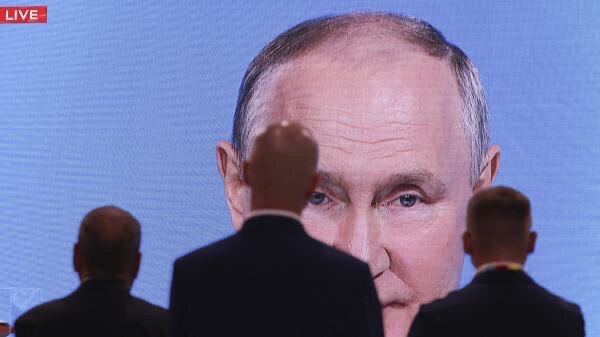
Vladimir Putin, Chasing Down Corruption
*. *. *
But let us not forget the true HOSTAGES, still wasting away in various Russian prisons and penal colonies for the simple act of disagreeing with Vladimir Putin’s excessively onerous edicts. It is for them that this regular Sunday posting is written.
And so, once more: To those known . . .
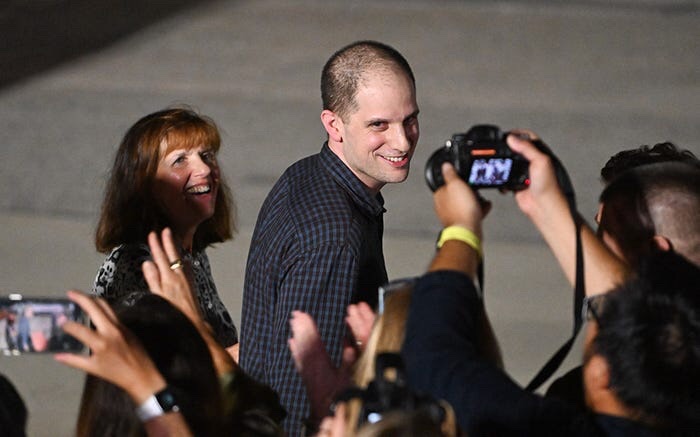
Vladimir Kara-Murza – HOSTAGE Evan Gershkovich – HOSTAGE Paul Whelan – HOSTAGE Ilya Yashin – HOSTAGE Robert Woodland Romanov – HOSTAGE Boris Akunin – HOSTAGE Marc Hilliard Fogel – HOSTAGE Asya Kazantseva – HOSTAGE Ilya Barabanov – HOSTAGE Alsu Kurmasheva – HOSTAGE Aleksandr Skobov – HOSTAGE Antonina Favorskaya – HOSTAGE Oleg Orlov – HOSTAGE Boris Kagarlitsky – HOSTAGE Oleg Navalny – HOSTAGE Ksenia Karelina – HOSTAGE Ksenia Fadeyeva – HOSTAGE Lilia Chanysheva – HOSTAGE Vadim Ostanin – HOSTGE Sergei Udaltsov – HOSTAGE Konstantin Gabov – HOSTAGE Danuta Perednya – HOSTAGE Olesya Krivtsova – HOSTAGE
. . . and those hundreds of others whose names remain unknown to me . . . you are not forgotten, nor have you been abandoned. The fight continues on your behalf.
Today, May 26th, is National Paper Airplane Day! I’ll bet you didn’t know that . . . and neither did I, until I consulted my list of “holidays-most-people-aren’t-even-aware-of.” It’s not a holiday when the banks are closed and you get a day off from work; but this year it falls on a Sunday, so most of us are free to celebrate anyway.
So why not channel your inner origami-ite and start folding? There must be some spare paper somewhere around the house . . . and for whatever reason, folding paper seems to be more fun than folding laundry.
Let her fly!
Or, for the uncoordinated or the simply uninterested, you could just hunker down in front of the TV, or with a good book. No pressure . . . as I said, it’s Sunday. Enjoy.
“No good deed goes unpunished.” – Oscar Wilde? Walter Winchell? Clare Boothe Luce? Anyone?
*. *. *
It has been nearly a year since the world went on a search for Yevgeny Prigozhin, longtime friend and confidant of Vladimir Putin and founder and head of the Russian “Wagner Group” of mercenaries. And I followed the progress of that search with posts titled “Where’s Yevgeny?” – Parts 1 through 7. First he was in Rostov; then in Belarus; then in St. Petersburg; then there was a sighting, however brief, in Moscow.
And then he was dead, the victim — along with nine others — of a fiery plane crash near a place called Kuzhenkino, just 60 miles north of Moscow. But there were the inevitable questions as to whether he was actually on that private plane. And finally his remains were identified — or so they said — and he was buried by his family in a private ceremony in St. Petersburg, next to his father’s grave.
Yevgeny Prigozhin
But the legendary Prigozhin refused to die . . . in memory, at least. Because despite the Kremlin’s repeated pronouncements that the plane crash that took his life had been “accidental” — due either to mechanical fault or pilot error or some such nonsense — not many people really believed it. You see, Yevgeny — for all the years of friendship and loyalty to Putin — had recently staged a revolt. Not so much against Putin himself, but against the Russian military and the rampant corruption he had witnessed while serving with them in Ukraine. The revolt failed, Yevgeny disappeared for a while, and when he resurfaced, he was no longer Putin’s best friend. But he was alive . . . for a few months, at least, until that fatal day in August of 2023. And then he wasn’t.
Few people were surprised; everyone knows how touchy Vladimir Putin can be.
Vlad the Impaler
*. *. *
All of that took place less than a year ago. And during the past couple of weeks, we have witnessed the removal from office of the long-time Russian Minister of Defense, General Sergei Shoigu, and his replacement by a civilian economist, Andrey Belousov . . . followed almost immediately by the arrest of a number of top military officers and officials on charges of . . . anyone care to guess? . . . Do I hear “corruption”? If so, you’re absolutely correct. The latest was Vadim Shamarin, Deputy Chief of the General Staff, on charges of large-scale bribery-taking. His arrest was preceded within the last month by those of Deputy Defense Minister Timur Ivanov and the Ministry’s head of personnel, Yury Kuznetsov, both also on bribery charges. (To date, General Valery Gerasimov, Chief of the General Staff and Shamarin’s boss, still has his job; but I wouldn’t put money on his long-term prospects.)
Vadim Shamarin
Aleksandr Khramchikhin, Deputy Director of the Moscow-based Institute for Political and Military Analysis, said that “It’s a real fight against corruption. In wartime, money must be spent correctly.” [AFP News, May 23, 2024.]
(Oh-oh . . . he called it a “war.” I hope he’s not next.)
He added that “the Kremlin has long ‘understood’ that its military spending is ‘inefficient.’ ‘But it became too obvious in wartime to turn a blind eye to it.’” [AFP, id.]
(And there’s that word again. I do hope he’s all right.)
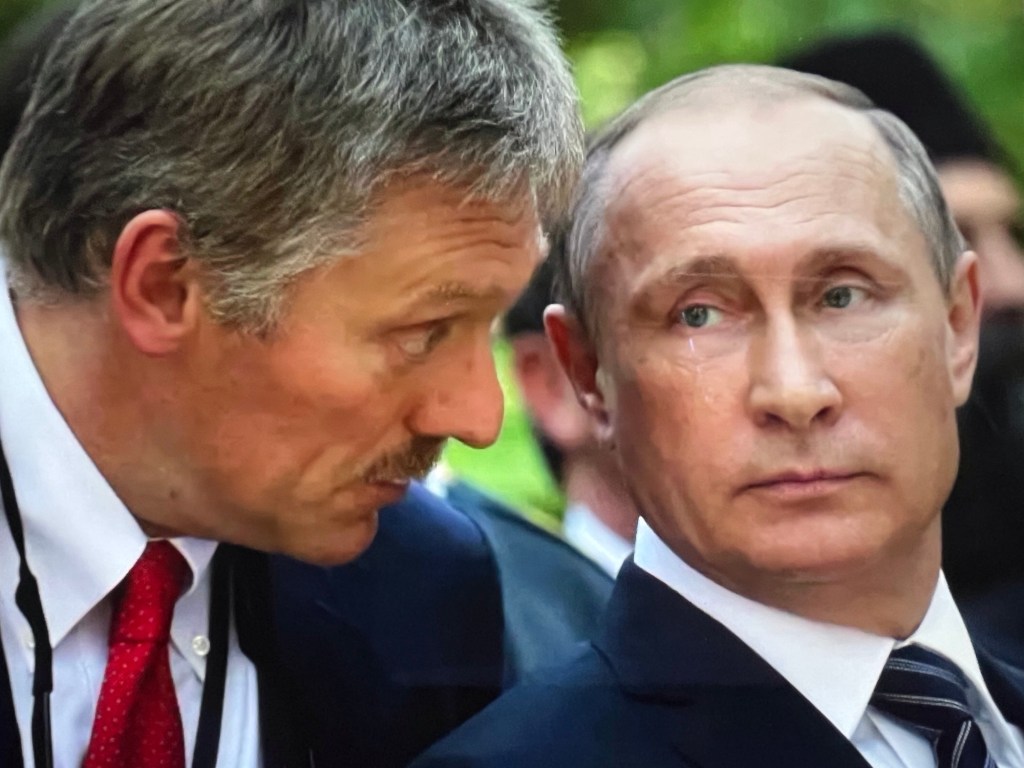
Even my favorite cutie in the Kremlin, spokesman Dmitry Peskov, had a few words to say (as always), denying that the arrests constitute a purge of the military:
“The fight against corruption is an ongoing effort. It is not a campaign. It is an integral part of the activities of law enforcement agencies.”
And if it came from the lips of my boy Dima, then of course it must be true. Right? Of course, right.
Dmitry (“Dima”) Peskov, Kremlin spokesman and all-around good sport
*. *. *
But what does all of this have to do with the late and not-so-great Yevgeny Prigozhin? Well . . . vindication, of course! Because isn’t “corruption” what he had been shouting from the rooftops for ages? And when no one listened, isn’t that why he gathered his troops and staged a march from Rostov toward Moscow: to make them listen? And isn’t that what, ultimately, he died for?
And now, suddenly, it has “[become] too obvious in wartime to turn a blind eye to it.”
Well . . . no shit, Sherlock! Welcome to reality.
In all honesty, Yevgeny, I didn’t have much use for you when you were alive. You were a murdering, thieving, violent, hateful . . . okay, just leave it at that. But you were right about the Russian military; and you tried to do the right thing in calling it to Putin’s attention, even if not for the right reason. And for that, I’m sorry you failed, and I’m sorry you’re not alive to take pleasure in being proven right. Perhaps it will be of some consolation to your surviving family that you have at last been vindicated.
So rest in peace, Yevgeny Prigozhin. You tried.
Yevgeny Prigozhin’s Grave Site, St. Petersburg, Russia
No, I am not a brilliant family counselor — I’m not a brilliant anything. I can’t colonize Mars; I can’t solve the Middle East crisis or end the war in Ukraine. And I can’t penetrate the tangled web that Charles and Camilla and William and Catherine and Harry and . . . what’s-her-name . . . you know, the overbearing American interloper . . . oh yeah, Meghan . . . have woven for themselves. But I think I can help to resolve the all-encompassing, obsessive, absolutely compulsive need that so many of us common folks seem to harbor when it comes to butting into the personal lives of the Royals (and former Royals) of the United Kingdom.
Quite simply, it’s none of our business.
WHAT??!!! None of our business??!!!
You heard me. Think about it. Would you want the whole world knowing every sordid little detail of your family’s innermost secrets? Would you want it all splashed in the headlines day after day after day? Not likely — and I’m betting that your family secrets aren’t half as titillating as theirs.
But that — right there — is the heart of the problem: the headlines. The media just won’t leave it alone.
Well, that’s not entirely fair either, really. First, because the Royals are among the most famous people in the world. And because Harry and . . . what’s her name again? . . . oh yeah, Meghan . . . have continued to insist that they want to live quiet, normal, private lives and to protect their children from the insanity of the “Firm,” while simultaneously reinventing themselves as the worst kind of intrusive, invasive, obnoxious publicity hounds imaginable.
And whiny. My God, are they ever going to stop whining?!!
.“Nobody likes us anymore.”
All right, before you start jumping all over me, that’s just one side of the story. Maybe they really were mistreated at the Palace. Maybe they were just “the spare” and “that American actress.” Maybe life was too restrictive for an independent young woman. But didn’t she know that before she married him? In any event, they were unhappy and they decided to take action, which was their absolute right as adult human beings. So they ran away from home.
They weren’t exactly penniless, and they landed comfortably in a nice little house in California, where they proceeded to write a first book, give TV interviews, start businesses and media sites . . . all on the basis of the royal positions they claimed to hate so much. And instead of settling in and enjoying their new-found independence (not to mention their prosperity), they yammered, and shouted, and screeched about how mean Harry’s family was for taking away the titles he said he never wanted, the royal homes they had already moved out of . . . and the allowances that went with all of that.
Frogmore Cottage: Their little home in EnglandThe Montecito Mansion: Not too shabby either
The little boy had left his toys behind, and now he wanted them back. But he didn’t want to do anything to earn them. And the little girl who thought she should have been a princess was especially upset, because no one was treating her like one.
*. *. *
We all know the rest of the story — the part that has been made public, at least: the charges and counter-charges of insults, lies, and family feuds. And there has to be so much more that we don’t know . . . and shouldn’t. It is, after all, a family matter, although a family constantly in the public eye.
What does matter to us, though, is the way it’s being handled.
The “Firm,” or the “Crown,” or whatever you choose to call it, has always been exceedingly close-mouthed about personal matters, which is probably smart, given the public’s insatiable curiosity and tendency toward nasty comments. But Harry and . . . dammit, what is her name? . . . Maggie? Muggles? No, it’s Meghan, right? Well, they just can’t stop scratching their fingernails down the royal blackboard, making the family shiver with a pseudo-royal visit to Nigeria and talk of a second tell-all book.
I guess the bottom line is this: If they want so badly to be non-royal, ordinary (but upper-income-level) civilians, then they should just shut up and be that. Stay home, run your business ventures, and enjoy your children before you turn around and find they’ve grown up and still aren’t sure who they really are.
Everyday Harry and Meghan (Yes! — her name is Meghan! I finally got it right!)
And as for us, the readers who inhale all of the crap — both favorable and “un” — that’s written about them every single day . . . well, if we’re sick of it, we should just stop clicking on all the articles. It’s our own fault for being such incurable voyeurs.
Note: This next bit of sentimentality was first presented in June of 2023. But while I’m on my writer’s break — or, to be more accurate, slogging my way through the swampland of writer’s block — I’m filling in with a few of my better efforts from the last couple of years. So here we are, headed back to the future again. Thanks for hanging in there with me. -Brendochka
*. *. *
Welcome back. For those of you who have been following me through my long-ago travels around the western hemisphere, and especially my Russian adventures, this new series will prove quite a departure. And for those who are brand new to my blog: welcome to my wonderfully weird world of wit, wisdom and winsomeness — or at least, that’s what I’m aiming for as we start out along this new road.
But as I sat down at my keyboard to begin this chapter, I realized that I was showing clear signs of withdrawal, and that I’m one of those people who probably needs to taper off gradually, like when I tried to give up sugar. So, rather than attempting to make too clean a break from all that Russian stuff at once, I thought I’d start things rolling with a little bit of Russian-related nostalgia. Just a touch — you know, so I don’t crash and burn. And here we go . . .
*. *. *
Ekaterina Alekseyevna (Katya, for short) was a delightful little lady from Moscow, who was teaching Russian at Northern Virginia Community College in 1985, when I decided that studying an impossible language might be a relaxing way to spend my evenings and weekends after working 40-plus hours a week at a super-stressful job in a high-powered Washington law firm. So now you know something about me: I am a glutton for punishment.
Roomful of Hopefuls
Our Russian 101 class started off with, as I recall, 27 students, only one of whom had ever studied the language before but needed a refresher course because he had met a Russian woman on one of his trips there and wanted to marry her. (Talk about gluttons for punishment? Sad to say, that did not work out well for him.) The rest of us were total neophytes; I, for example, knew how to say exactly three words in Russian: “yes,” “no,” and “goodbye,” which actually placed me well ahead of the rest of the class. As for the Cyrillic alphabet . . . well, judge that for yourselves:
Clear as mud . . . right?
But I am as stubborn as I am masochistic, so I dug right in, and at the end of the first semester, I was one of the 12 remaining students in our class. The high attrition rate was no surprise — just look at the freakin’ alphabet! And don’t even get me started on the grammar, or how to pronounce a word that begins with four consecutive consonants. As it turned out, though, I had something of a knack for the language, even though other, simpler languages had always eluded me. In fact, after one of our evening classes, as several of us were walking together toward the parking lot, Katya asked me if I had ever studied Russian before. I said I had not, and she asked, “Well, why do you suppose you’re so good at it?” I told her I thought it might be genetic, because all four of my grandparents had come from Russia — the part that is now Ukraine. She stopped in her tracks, pointed a finger at me (no, not that finger, silly!) and declared, “Aha! It’s in your blood.” And thus, I swear, she put a curse on me. I’ve had this Russian obsession ever since — the language, the history, the culture, even (God help me) the politics — and that was almost 40 years ago. Let me tell you, that’s a long time to be obsessed with anything!
Oy!
*. *. *
Relax . . . I don’t really believe in curses. But the part about the Russian grandparents was real, and particularly my maternal grandmother, to whom I was most attached. My Bubbe was an amazing lady: sweet, warm, loving, hard-working, nurturing . . . and tough as nails when she needed to be. She came here in 1905 from the old country — a town called Zhitomir, not far from Kyiv — as a young wife with one baby. She and my Zayde (grandfather) spoke no English when they arrived in America; but they were multi-lingual, speaking Russian, Polish and Yiddish, and quickly learned to speak English without ever being able to read or write it.
They settled in Woonsocket, Rhode Island — God knows why! — and had four more children, all five finishing high school with top grades, which was quite an accomplishment in those days. By the time their first grandchildren — my sister and I — came along, my grandfather had a thriving bakery business; they owned a multi-unit house, fully paid-for, where we and two of my aunts and uncles lived and paid rent; and they were the darlings of the surrounding, predominantly French-Canadian-Catholic neighborhood.
Downtown Woonsocket, R.I. – c.1940s
But back then I wasn’t really interested in my heritage, though now I wish I had been. They were just my loving grandparents, and were as much of an influence on my childhood as my own parents were. So what was it like, growing up with an ever-present Russian-Ukrainian-Jewish grandmother hanging over you — watching, listening, feeding, touching, hovering, feeding, scrubbing, scolding, feeding, hugging, fussing, and — did I mention? — feeding you every hour of every day for the first nine years of your life? Sound awful? Well, you’re wrong. It was wonderful, and not only because of the food. We were cared for, looked after, taught right from wrong (and almost everything was wrong . . . right?). We were loved, and we were safe.
And we grew up good.
And God help us when we misbehaved! If a grandparent or an aunt or uncle caught us doing something we shouldn’t, they didn’t conspire with us to hide it from our parents — they ratted us out, big time. And, depending on the severity of the crime, either we were sent to our room without supper, or . . . for the worst offenses, like lying, or killing the neighbor’s cat by sitting on it (my sister actually did that)* . . . we were spanked. Bare-bottom spanked. Usually with a strap. Did anybody report our parents to Social Services? Ha! What Social Services? — they didn’t exist. Did we hate our parents? Well, yeah . . . at the moment, we did. But not for long, because then we’d get supper in bed and a big hug along with the inevitable lecture, which usually ended with the best lesson of all . . .
“Because I said so, that’s why!”
And we grew up good.
* Note: I was too little to remember my sister’s dead cat episode, but I’ve been told she didn’t mean to kill it; she just wanted to go for a ride. You know: “Gidyap, Kitty!” I guess it was a really big cat. I’m thinking maybe Maine Coon size.
There were dozens of pearls of wisdom that my Bubbe had brought with her from the old country, mostly cautionary, like “Stay away from that girl; she’s a kurva.” (You can probably figure that one out.) Or, “Don’t sit on the stone steps; you’ll get piles.” (I think that meant hemorrhoids). Or, “Don’t ever touch a frog! You’ll get warts.” And my personal favorite: “If you keep frowning, your face will freeze like that.” Well, between the “piles” and the warts, how could I not be frowning?!!
But there were no warnings about playing in the dirt; or about stuffing ourselves with huge meals made with solid Crisco or schmaltz (chicken fat) and unlimited amounts of salt; drinking from each other’s soda bottles; climbing trees; roller skating without a helmet (who had helmets?); or reading comic books filled with bad guys blasting the good guys with their deadly ray guns.
“Blam!” “Zap!” “Gotcha!”
And still we grew up good.
There was one other member of my grandparents’ household: my great-grandmother (Bubbe’s mother), who was called “Baba.” She was ancient — probably not much older than I am now, though I’m not a great-grand yet. She must not have been well, because I remember her spending most of her time in her room. Or maybe it was because we were all speaking English and she had never learned how and felt left out. But there were times when she was up and about, shuffling around in a housedress, an apron, and floppy bed slippers. She always had hard candies in her apron pockets along with — for whatever reason — mothballs. (Don’t ask me why; I really don’t know.) The candies weren’t individually wrapped in those days, so when she would sneak some to my sister and me, they tasted a little like . . . what else? . . . mothballs. There was also usually a little pocket lint stuck to the candy, but we didn’t care; candy was candy. Unless it was a mothball.
And we grew up good — though sometimes I wonder how we grew up at all.
It was a household crawling with relatives — parents, aunts, uncles, cousins, second and third cousins from out of town, and of course, the ever-present old folks — all talking at once, arguing (they called it “discussing”) about anything and everything, and sharing each and every minuscule detail of their lives. It would probably drive me crazy today, but at the time it was normal, and I loved each and every one of those people — my people — with all my heart.
“So you think you know everything?”
My Zayde and Baba both passed away when I was just eight, within three days of each other; and my Bubbe lived another thirteen years after that. I miss them still, and when I finally get to that great shtetl in the sky, they’re the first people I want to see. Because of them, I got sucked into what my sister later dubbed “that whole Russian thing.”
And because of them, I think I grew up pretty good.
Well, I’m still on a semi-break from writing, but cannot stand a blank page (or screen). So I’ve decided to bring back one or two of my oldies but goodies, starting with a look back into my childhood and some of my earliest, and fondest, memories. Come with me, if you will, to a time most of you won’t remember because you hadn’t been born yet: the 1940s — the era of big bands and swing music, 19-cent-a-gallon gas, stay-at-home moms, and World War II . . .
*. *. *
Yes, younger readers, there are still people alive who remember the 1940s and are lucid enough to write about them. I was an infant/toddler in the earliest years of that decade, but I do remember the second half, and even parts of World War II, referred to simply as “The War.”
Keep in mind, as I flash back to those times, that my viewpoint was that of a little kid, so everything seemed so much bigger. Our street, for example, was considered a main thoroughfare. Returning for a visit years later as an adult, I was shocked to see that it’s just a two-lane street. And our huge front and back yards are merely little patches of green. Different perspective, now. And through the miracle of Google Maps, there it is, pictured below:
280 Rathbun St., Woonsocket, R.I. – My actual childhood home
Looking at it today, it actually seems to be in better shape than it was then, and appears to have had all of the old asbestos siding shingles removed. I’m also glad to see they’ve added fire escapes, because the one narrow inside stairway made this place a death trap in case of fire. Gone are the shrubs along the front, and the lilac bushes I loved for their fragrance in the spring. My grandparents owned it, and raised their five children in the big apartment on the first floor. Later, we — my parents, older sister and I — occupied the second floor front, with an aunt and uncle in each of the rear apartments on the second and third floors. Third floor front was rented by an “outsider” — a single man who was quiet, respectful, and who we hardly knew was there most of the time. He paid his rent on time every week, minded his own business, and didn’t burn the place down; and that was all that mattered.
I remember the bedroom I shared with my sister Merna: twin beds, a night stand between them, one closet, one dresser, and flowered curtains on the window. There was one tiny bathroom for the four of us. We mostly hung out in the big kitchen with its ice box and oil stove and the table where we ate all our meals. The parlor (not grand enough to be called a living room) was for “company,” or for evenings spent around the radio listening to Jack Benny, Fibber McGee and Molly, Duffy’s Tavern, or President Roosevelt’s fireside chats. And of course, in the summer, the Boston Red Sox baseball games from Fenway Park.
Family Time
My sister and I sometimes played on the floor of the parlor, which was the only room with a carpet — but only on rainy days or after dark; the rest of the time we were outside, even in the coldest of New England winters, where we were sent to “get some fresh air,” but more likely just to get us out of the way. Indoor play included Checkers, Tiddly Winks, and paper dolls, or reading our Superman or Archie comic books. I remember Merna teaching me to read, write and do simple arithmetic at a time when I was considered by the adults to be too young to learn those things. Thanks to my big sister, I was reading newspapers by the time I was three. My parents used to make me read for all of their friends, like some sort of carnival act, and everyone thought I was a genius. I’m not. I just had a big sister who didn’t know she was doing the “impossible.”
And I remember some things about The War: the flag with three stars in my grandparents’ front window, for their two sons and one son-in-law fighting overseas; the ration coupons for certain scarce food items like sugar and butter; the blackout curtains on the windows to be drawn shut during air raid drills; and the scary war newsreels in the movie theater every Saturday. And my father, rejected for military service as “4-F” because of his flat feet, doing his part for the War effort by working in the shipyard in Providence, actually helping to build the warships like the ones that landed at Normandy on D-Day. And everybody saving things— scrap metal, rubber, even newspapers — to contribute to the War Drive.
And who could forget the day The War ended in Europe? My sister and I were outside in the front yard as usual, when my mother hollered out the window, “The War is over!” I didn’t fully comprehend, but Merna did, and she let out a “Yippee!” and began dancing around the apple tree, chanting “The War is over! The War is over!” So of course I had to join in, because . . . well, because she was my big sister and if she was happy, then so was I. And the whole family was happy because all the uncles were coming home, alive. No one knew about PTSD in those days; the veterans and their families simply reunited and re-adapted, some better than others. We were lucky.
It’s Over, Over There
*. *. *
I remember digging a round hole in the dirt with the heel of my shoe to play marbles in the back yard. And sitting on the grass, searching for four-leaf clovers. Or playing “Red Rover, Red Rover” and “Simon Says” with our neighborhood friends. Roller skating down the sidewalk and knowing where every crack in the concrete was that we had to avoid. And sending away for our favorite movie stars’ autographed pictures, then waiting breathlessly for the mail to arrive every day. And in the winter, sledding down the same little hill where we roller-skated in the summer. Happy times indeed.
I also remember nearly every adult smoking, we kids living in a perpetual blue-gray haze of second-hand smoke, and ashtrays everywhere filled to the brim with stale cigarette butts. And being given a quarter to run to the store for a pack of Camels or Chesterfields or Lucky Strikes for one member of the family or another. There was no legal age requirement for buying carcinogens in those days, because no one knew what a carcinogen was.
*. *. *
My grandfather was a baker, with his own bakery just down the street; rye bread, challah, yeast rolls and bagels were his specialties, and Bubbe contributed her incredible “babka” coffee cakes redolent with cinnamon and raisins. Saturday was the only day Zayde didn’t work — it was the Sabbath, when he would walk to the Synagogue and spend the day in prayer. After sundown he would walk back, with a stop at the neighborhood bar to knock down a couple of whiskeys with his friends before coming home to a late supper with the entire family at the big dining room table. Sometimes he would lose track of time and linger at the bar; then my sister would be sent to fetch him and they would stroll home together, hand-in-hand. No one worried about a 12-year-old girl walking into a saloon full of men; not one of them would have dreamt of saying or doing anything improper — they were our neighbors and friends. Then, after dinner, Zayde would go back to the bakery to prepare the dough and heat the big brick oven for the next day.
Sunday was his biggest work day. Every Sunday, after he had made his usual customer deliveries in his old, beat-up truck, he would come home with two miniature, hot-from-the-oven, round rye breads — one for my sister and one for me. He would stop his truck at the front of the driveway where she and I would be waiting for him. We would jump onto the running boards on each side, hold on tight, and ride with him to the garage in the back of the house; then we would grab our very own loaves of bread and head to our grandparents’ kitchen. There, with real butter for the warm bread, and a bowl of my Bubbe’s homemade vegetable soup, we ate our Sunday lunch. When I close my eyes, I can still smell it and almost taste it. Nothing since has ever been that good. And after lunch, we would sit with him at the kitchen table and help him sort the coins he had been paid by his customers that day.
Sunday’s Lunch
We were far from rich, but we always ate well. I remember our un-homogenized milk being delivered to the back door in glass bottles, with the cream floating at the top; my mother used to spoon it out into a glass jar to be sparingly added to her coffee. And — carrying the most practical traditions with them from the old country — my grandparents had built a chicken coop in the back yard, with one very happy rooster and a bunch of hens that kept us supplied with eggs and were destined eventually to become Sunday dinners. I even remember Baba (my great-grandmother), on some of her better days, out there gathering eggs, or scattering chicken feed on the ground.
But one day, that rooster was gone, soon to be replaced by another from a nearby farm. When I was a little older, my mother finally told me why: It seems that pompous piece of poultry hated my Baba (the feeling was apparently mutual); and one day when she happened to trip and fall while feeding the chickens, he took advantage of the opportunity, attacked her mercilessly, and was pecking away at her face and arms until my grandfather rescued her. Exacting revenge without benefit of due process, he wrung that damned rooster’s neck, right there on the spot. Apparently, Zayde had also brought with him from the old country an unequivocally Russian sense of justice!
We also had Bubbe’s vegetable garden — labeled a “victory garden” during the War years — with everything from tomatoes and cucumbers to potatoes, carrots, corn, and of course the beets for her homemade borshch. She even grew fresh dill and pickling spices for the cucumbers and green tomatoes she would put up in canning jars and stow away in the cellar until they turned so sour it hurt to bite into them.
Who Needed Store-Bought?
*. *. *
When we were sick — and we did get all the childhood diseases, like mumps, measles, chicken pox, and the annual case of the “grippe,” now known as the flu — our family doctor came to the house. Everyone knew you didn’t take a sick child out to the doctor’s office to infect other kids and get sicker themselves! “What are you . . .crazy??!!!” Depending on the ailment, we were given doses of Milk of Magnesia, cough syrup, or a regular aspirin crushed and mixed with a spoonful of orange juice to try to disguise the horrible taste; and — for practically everything — Bubbe’s homemade chicken soup, otherwise known as Jewish penicillin. And there was the dreaded thermometer that didn’t go under your tongue, but got dipped in Vaseline and inserted . . . well, you know where. Oh, the indignity of it all!
You may have noticed all the references to homemade soups — vegetable, chicken, and borshch. (And by the way, that is the correctly transliterated spelling; there is no “t” at the end, and don’t ask me why we English speakers insist on adding it — possibly because we don’t have a letter pronounced “shch” in our alphabet. Spellcheck hates it, by the way, but that’s too bad.) Anyway, soup is another wonderful old-world tradition they brought with them, served at the start of every meal except breakfast, and often as a meal on its own. It’s a delicious, nutritious, filling, and economical way of feeding a crowd, and I learned to appreciate it all over again, decades later, when I spent those months living and working in Russia. (Seriously, folks — just read the first 28 chapters, okay?)
Borshch
*. *. *
There are also things I don’t remember about those days, because we didn’t have them. We didn’t have central heating; the only warmth was provided by that oil stove in the kitchen, so the parlor door was kept shut in the winter, and the bedrooms were always freezing cold at night when the stove was turned way down to conserve the oil. We didn’t have a second bathroom, a second car, a second phone, or a guest bedroom. We also didn’t have a washer or dryer. I clearly recall my 98-pound mother every Monday, down on her knees, leaning over the bathtub and scrubbing our clothes, towels, sheets, everything, on a washboard; then rinsing and rinsing, and wringing it all out by hand — she had some strong hands! — then finally hanging it all on an outside clothesline to dry. In the winter, everything would freeze to the texture of cardboard, and the sheets stood up by themselves and smelled so clean and fresh. And then, of course, it all had to be ironed.
Laundry Day
We didn’t have TV yet — not until 1950 — and the home computer was decades in the future, still the stuff of science fiction. So where did we get our information? At the library, of course — that wondrous repository of thousands of old, well-worn, musty-smelling volumes filled with knowledge and inspiration. And our news was broadcast every hour on the hour over the radio, and delivered to our little neighborhood store every morning printed on cheap paper with ink that rubbed off on our fingers. But what more could you expect for three cents?
And where did we shop? Well, there was no Amazon — no “online” at all. But we did have the neighborhood grocery, the neighborhood pharmacy, the neighborhood ice cream shop, the neighborhood hardware store, bakery, butcher shop . . . you get the picture. Stores where the proprietors greeted us by our first names, and kept us up-to-date on all the neighborhood gossip. And for those special purchases, like clothes and shoes . . . well, that required an excursion downtown to the department store; but luckily that wasn’t necessary too often because clothes got mended by Bubbe on her treadle sewing machine and handed down from generation to generation, or recycled to the younger siblings and cousins.
Neighborhood Grocery
We also didn’t have a problem with boredom — there wasn’t time, what with all the laundry, cooking, cleaning and egg-gathering to help with, and homework to be done. And you didn’t “sass” your parents, teachers, or other adults, because if you even tried, you got smacked — hard — by all of them! And no parents went into debt to be sure their children had the latest and greatest electronic gadgets, because those things didn’t exist yet so we didn’t miss them. We learned early on to think for ourselves; there was no Siri to do it for us. We kids didn’t have house keys either, because we didn’t need them; there was always a grownup there when we got home from school. The “latchkey kid” hadn’t been conceived of yet, so there was little opportunity for us to get into serious trouble.
What we did have, though, were things like respect — for others, and for ourselves — and quality family time, and fun. And most of all, we had hope. Even during the War years, there was a certainty that it would one day end, that the good guys would win (we did), and that all would be well again (it was). Sure, there were problems — every age has its share of those. But we didn’t whine or angrily “tweet” about them; we dealt with them and worked together to solve them.
Have you ever just shut down? I mean, mentally, physically, or both? You’re not sick; you just haven’t got it . . . whatever “it” is.
Well, that was me yesterday, and it seems to have carried over to today. I read the day’s news — all depressing and demoralizing, as usual — but nothing really inspired me to comment. And certainly nothing tickled my funny bone.
Which reminds me: Did you know that that bone leading up from the elbow to the shoulder is named the “humerus” — thus the “funny bone” designation? Try whacking it sometime; it’s anything but funny.
The Very Un-Funny Funny Bone
Okay, TMI — or at least, more than you ever cared to know about the human skeletal system. But you see how my mind just keeps drifting today, from one silly, insignificant subject to another? I mean, the President of Iran was just killed in a helicopter crash; the International Criminal Court is issuing warrants against the heads of both Hamas and Israel; and gazillions of cicadas are about to become crunchy outdoor carpeting in various parts of the world. And all I care about is the difference between “humorous” and “humerus.”
Remember Alfred Hitchcock’s “The Birds”?
But come to think of it, that’s a great idea for a future chapter: the reason English is such an exasperating language to learn, even for native speakers. Just think of “there,” “their,” and “they’re.” And what the apostrophe actually stands for. And why “so fun” is grammatical homicide. And the use of subjective and objective pronouns. And . . .
Okay, enough. Really going to take that break now. So, ‘til tomorrow, I hope. In the meantime . . .