Having a wonderful time reminiscing about all my past travel (and other) adventures. Hope you’ll share them with me in my blog, “All Roads Led to Russia.”
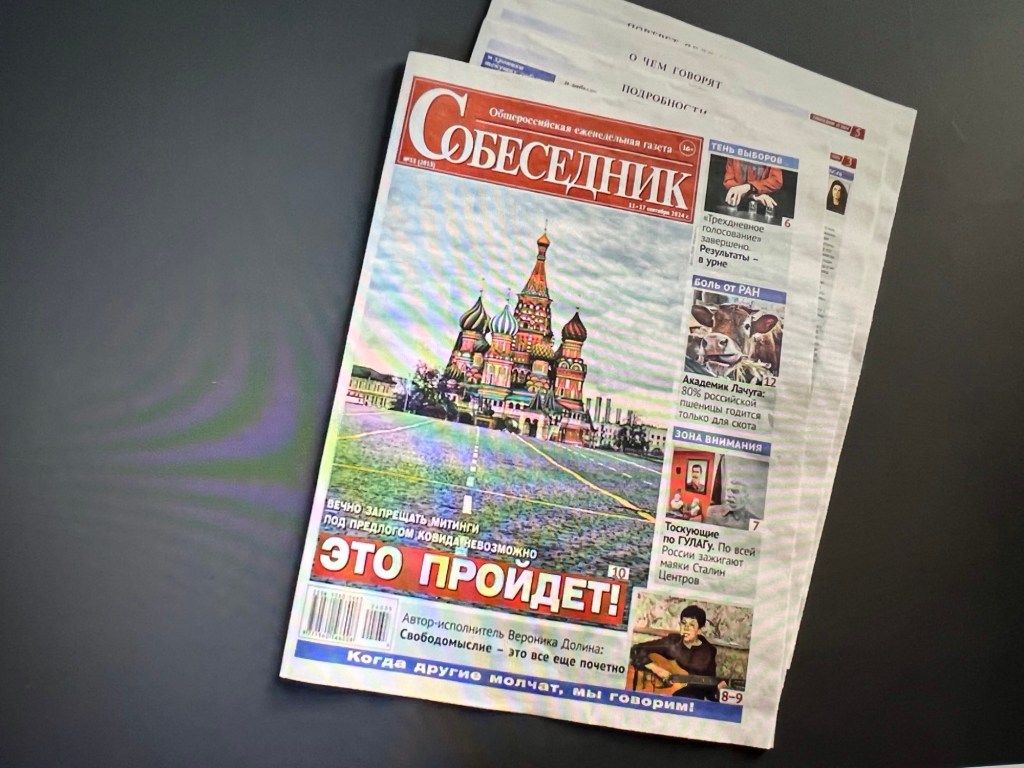
“Sobesednik” is the Russian word for “Interlocutor.” Now, with the designation of the publisher of Russia’s last independent print news medium, Sobesednik, as a “foreign agent,” the Interlocutor is indeed dead.
“Sobesednik” – Interlocutor
It began in February of this year, on the 40th anniversary of the founding of the weekly newspaper, when the staff were visited by a colonel from the Orwellian-inspired “Centre for Combating Extremism,” a branch of the Russian Interior Ministry. One by one, they were called into a separate room for questioning. [Lucy Papachristou, Reuters, October 2, 2024.]
The previous day, the paper had featured a two-page spread on the death of opposition leader Alexei Navalny, who had died under mysterious circumstances in a Siberian prison colony. Included were a lengthy obituary, coverage of the vigils that had been held in his honor, and a large picture of Navalny with the caption, “… but there is hope!” [Id.]
Alexei Navalny
The journalists knew that the mere printing of Navalny’s name was risky, but that is what this paper did: it presented the truth.
Nothing happened, other than the confiscation of that print run, and business continued as usual, without interference . . . until September. The papers’s editor-in-chief, Oleg Roldugin, had waited in dread for repercussions, and they came when the authorities officially labeled the paper’s publisher a “foreign agent” — a moniker held over from Soviet times, which today carries oppressive reporting requirements. In addition, each article in the future would have to be prefaced with a statement that its publisher was a foreign agent.
According to Roldugin, “It would be impossible to read. The paper would have to be sold sealed and labelled ‘18+’ like pornography. Because we did journalism instead of propaganda.
”It’s impossible to carry on.” [Id.]
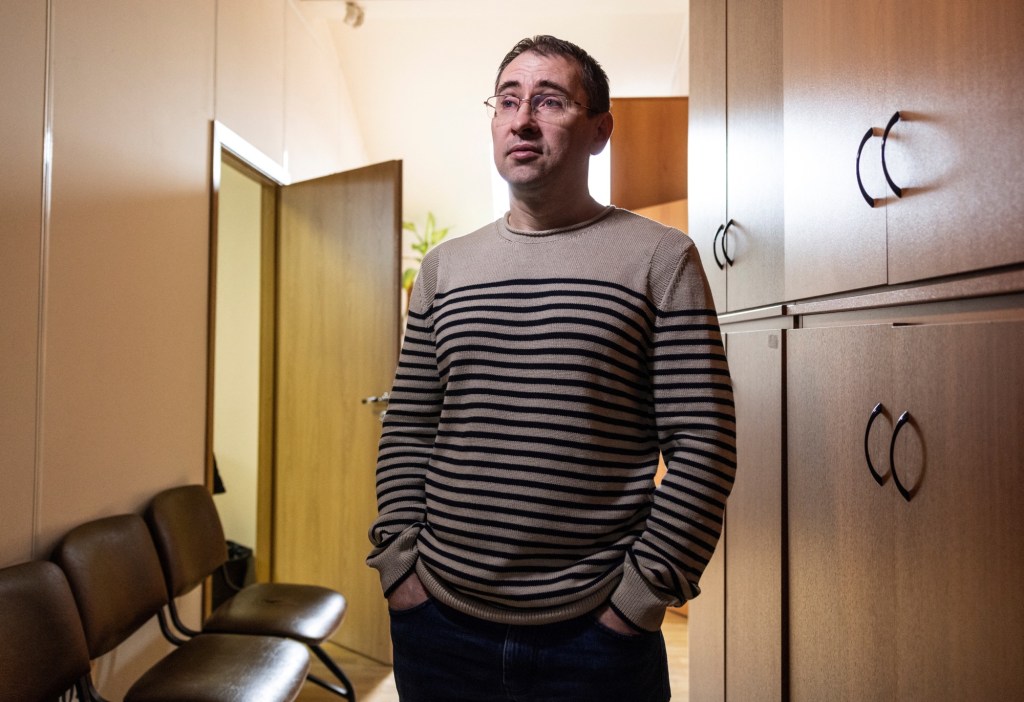
Oleg Roldugin, Editor-In-Chief, Sobesednik
Roldugin knew that his advertisers would be frightened off; further publication was out of the question. The paper suspended publication.
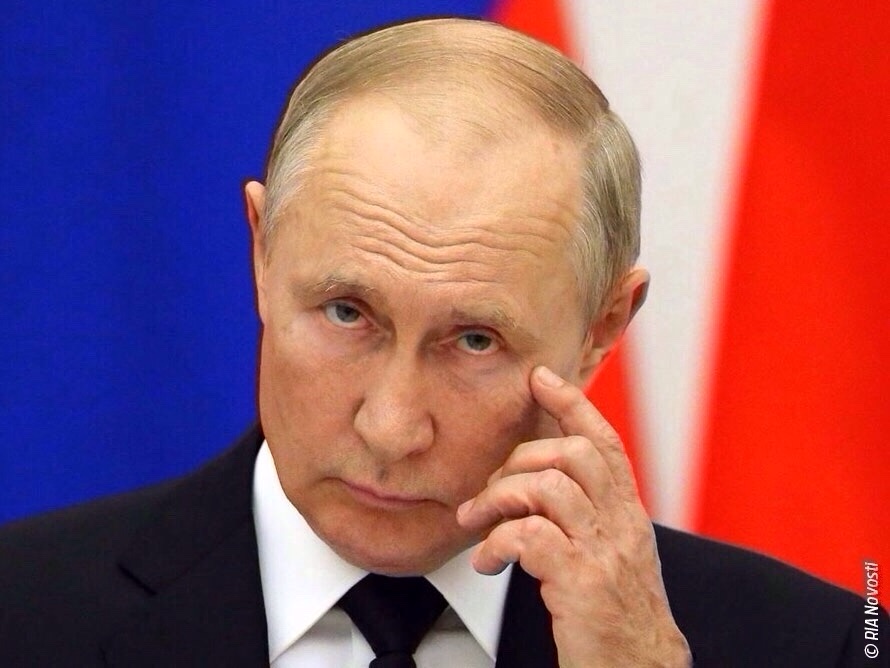
This was hardly a unique event. Under Vladimir Putin’s reign, nearly all independent media have disappeared, being shut down completely or forced into exile. Only state-controlled media remain.
*. *. *
Dmitry Bykov began writing for Sobesednik in its first year, while he was still a journalism student, eventually becoming an editor and contributing an estimated 3,000 articles. He spoke of the many Russians who have read the paper throughout their entire adult lives; and the fact that now, their “constant, sincere, unobtrusive and well-informed conversation partner” is gone. [Id.]
“We were regularly sued,” Bykov continued. He said that their paper had frequently upset Moscow’s notorious previous Mayor, Yuri Luzhkov, during his years in office (1992-2010), and that lawsuits against them had become more frequent during Putin’s presidency. [Id.]
No surprise there. Vladimir Putin has no use for the truth, and has become quite adept at erasing it and dispensing with those who persist in speaking or writing it.
*. *. *
And thus fades another spark of truth and hope in Russia. The Russia that I knew and fell in love with in the early 1990s is no more. They are once again the “glavniy vrag” — the main enemy; and I weep for them and with them.
I just read a story about a 97-year-old lady who had recently passed away. When asked whether the woman had had any particular secret to her longevity, a relative replied that she loved her beer and her ice cream, and never saw any reason to cut back on either one.
I am happy to report that, thanks to that spunky lady, I no longer carry any guilt for my nightly serving of Haagen-Dazs. In fact, I may have a little extra tonight, to compensate for the absence of beer, which I simply don’t like. Or maybe a little wine instead . . .
I’m nowhere near 97, but now I’m not worried about whether my ice cream addiction might be shortening my life expectancy. I believe it is, in fact, extending it.
They don’t seem to make the news any longer, this pioneering (translation: idiotic) family of ten who sold their farm in Canada, packed up and moved to the golden land of opportunity and anti-LGBTQ: Russia.
All the Happy Little Feenstras
No longer able to tolerate the perceived immorality of their native land, the parents, Arend and Anneesa, sought refuge in the one place they felt they could be free — get that? free! — to be their natural, ultra-conservative selves, raising eight of their nine children in peace and harmony.
Oy!
The ninth child — a son — opted to stay behind in Canada. Smart kid.
But, for all of their obvious ignorance of the facts of life, I can’t just write them off, because I can’t stop thinking about those eight youngsters now growing up Russian. So every now and then, I check in on their YouTube program, even though I know it’s closely monitored for political correctness, Russian-style. At least it assures me that they’re all still alive.
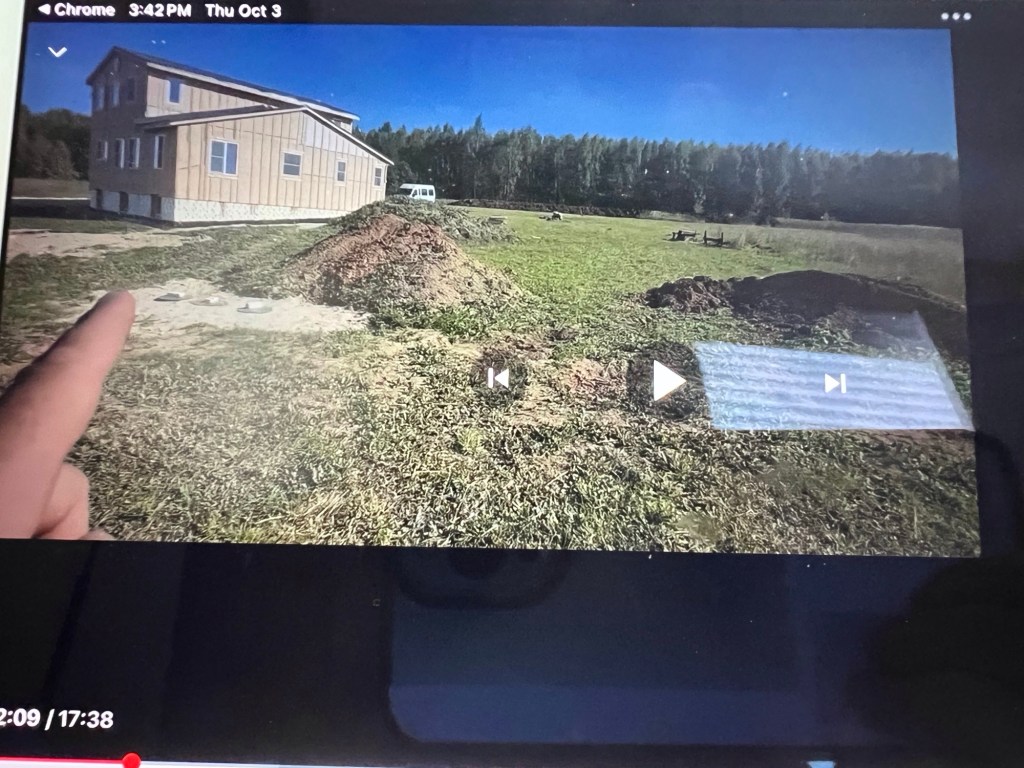
The dad, Arend, goes on endlessly about the details of building their big new house on their big new farm, which is pretty boring to watch. It’s also a nice piece of propaganda, supposedly demonstrating what can be accomplished in Russia with a little hard work and perseverance. And money.
The Feenstra Farmhouse – Still a Work in Progress
Speaking of which . . . their original bankroll must surely be running low by now, and they don’t seem to have any local source of income. But their YouTube channel does mention something about donations . . . And in another episode, Arend said something about a septic tank “that we were provided.” He didn’t say by whom.
*. *. *
Anyway, about the youngsters. I’m sorry I don’t know their names or much about them. They seem like really nice kids, who just happen to have been born to a couple of well-meaning though seriously misguided bigots.
In the episode I watched the other day, the children were harvesting vegetables from their farm: huge pumpkins, zucchini on steroids, beets, carrots, onions, and the like. Even for such a large family it seemed a lot — perhaps they are able to sell some of it. More likely, Mom will be doing a lot of canning for the long winter ahead.
The conversation among the children was obviously scripted, all having to do with the wonderful vegetables they were gathering. What impressed me was the ease with which the kids are obviously picking up the Russian language. The eldest — a daughter who looked as though she should be getting ready for the prom, not grubbing around in the dirt — spoke for the camera in full Russian sentences. Though she hesitated from time to time, and obviously was still thinking in English, her pronunciation was excellent, she was grammatically correct, and she knew the names of all of the veggies. And the younger siblings understood her and responded appropriately.
So yes, they’ll adapt and fit in very nicely. Which is what bothers me. Not that I want them to be misfits; I’d just rather they had been able to remain Canadians. But that decision was not mine to make.
Russian school children, displaying support of war in Ukraine
Also, the second oldest daughter — the one with glasses — had a big patch over her right eye in the video. No mention was made of it, so I don’t know the reason for it. I just hope that, out there in the countryside, they have access to decent medical care.
But for those of you who, like me, continue to be concerned about the welfare of the Feenstras, at least we know that they’re doing better than they started out that first week.
I do wonder, though — and I really don’t know the answer — about what will happen when the oldest boy reaches conscription age.
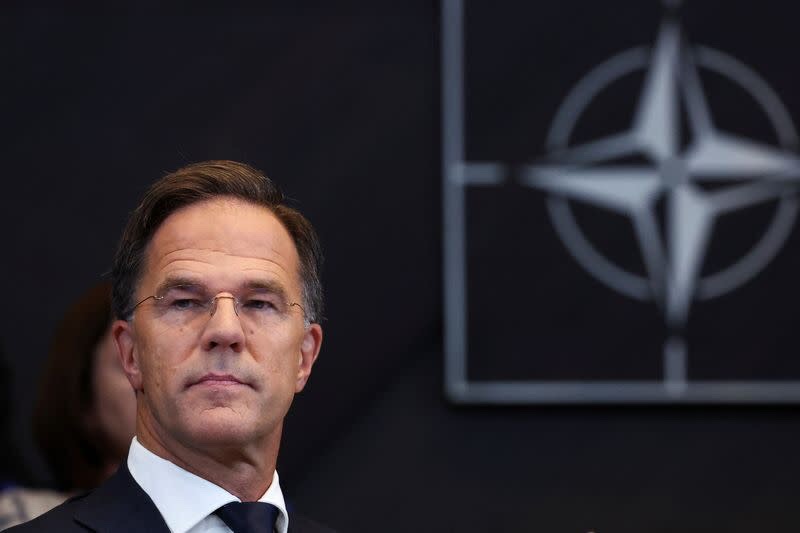
NATO has a new Secretary General, following the close of Jens Stoltenberg’s term. He is Mark Rutte, former Prime Minister of the Netherlands.
Mark Rutte
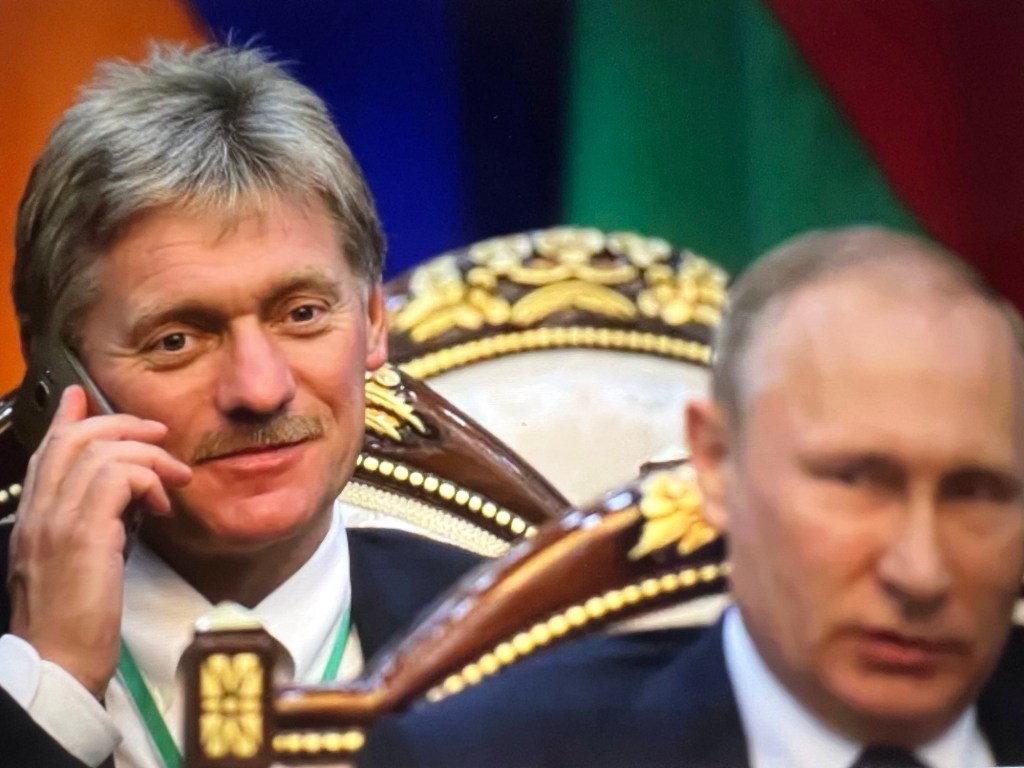
And predictably, my favorite Russian mouthpiece — Kremlin spokesman Dmitry Peskov — had a few thoughts on the subject. Saying that Vladimir Putin was well acquainted with Rutte, he told the world that:
“Our expectations are that the North Atlantic alliance will continue to work in the same direction in which it has been working.
“At one time, there were hopes for the possibility of building good pragmatic relations — at least, such a dialogue was conducted — but subsequently we know that the Netherlands took a rather irreconcilable position, a position on the complete exclusion of any contacts with our country.
“Therefore, we do not think that anything significantly new will happen in the alliance’s policy.” [Dmitry Atonov and Mark Trevelyan, Reuters, October 1, 2024.]
Dmitry “Dima” Peskov, with The Boss
Well, he started out on the right track. But in the next breath it was, basically, “Blow it out your ditty bag, NATO.”
While taking a dim view (to say the least) of the prospects of improved relations between Russia and NATO, Peskov is not altogether wrong — other than that “irreconcilable position” thing, where as usual he shifts the blame for Russia’s own actions onto the nearest scapegoat.
On Tuesday, Rutte told reporters at NATO headquarters in Brussels:
“We have to make sure that Ukraine prevails as a sovereign, independent, democratic nation.”[Id.]
That’s pretty much what you were talking about, isn’t it, Dima? You expected business as usual. Hope that’s “usual” enough for you.
While Ukraine hunkers down for its third winter of Russia’s devastating invasion; and while Russian fighter jets buzz American aircraft off of Alaska’s shores; and as Vladimir Putin continues to threaten the West with nuclear annihilation . . . emergency warning sirens are blaring throughout Russia, in eerie echoes of Cold War days.
This is nothing new. Begun in 2020, the now twice-yearly exercise has doubled in frequency since the Russian invasion of Ukraine in February of 2022. According to the Russian Emergency Ministry, its purpose is to check the systems, the readiness of the persons responsible for launching them, and to raise public awareness — adding, “Don’t panic — everything is according to a plan.” [Lidia Kelly, Reuters, October 2, 2024.]
I’m sure that makes the people feel much better as the sirens blast for a full minute, accompanied by loudspeakers shouting “Attention everyone!” and TV and radio broadcasts are interrupted. I know that would make my day.
“Bozhe moi!”(“My God!”)
Yet, it’s understandable. In the face of a war that they themselves started, they seem to have been surprised at the recent retaliatory strikes by Ukraine on Russian territory. While on-the-ground incursions have thus far been limited to the regions around Kursk near the Ukraine border, there have been drone strikes in the Moscow region and perilously close to the Kremlin itself. And Vladimir Putin is worried about the possibility of Ukraine’s eventual use of long-range missiles aimed deeper into Russia.
Of course, Putin and his perspicacious propaganda puppets will find a way to turn this around, blaming us — the West — for having put them on the defensive and creating an atmosphere of fear in their poor, beleaguered country.
“Run for it!”
Well, do your best, Mr. Putin. The world knows perfectly well who started this on February 24, 2022. In your unbounded arrogance, you simply overlooked the possibility of retribution.
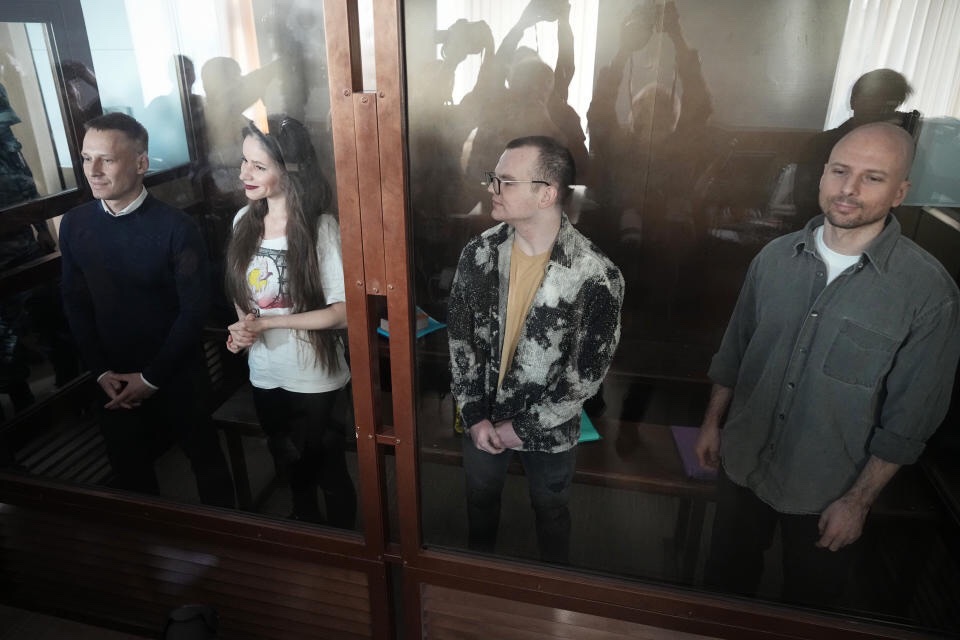
Today in Moscow, four Russian journalists went on trial — in a single proceeding — on charges of having worked with an “extremist organization” in 2021. That organization: the late Alexei Navalny’s Anti-Corruption Foundation (ACF). The “crime” with which they have been charged carries a penalty of up to six years in prison. All four have, rightly, pled not guilty.
The Four Defendants (L-R): Konstantin Gabov, Antonina Favorskaya, Artyom Kriger, Sergey Karelin
Three of the four — Gabov, Favorskaya and Karelin — had already made it onto my earlier hostage list; Artyom Kriger will be added now.**
Favorskaya and Kriger worked with SotaVision, an independent Russian news outlet that covers protests and political trials. Gabov, a freelance producer, has worked for multiple organizations, including Reuters. And Karelin, a freelance video journalist, has also worked for Western media outlets, including the Associated Press. [Dasha Litvinova, Associated Press, October 2, 2024.]
Unusually, the defendants were permitted to speak from behind the glass of the prisoners’ box before the court declared the proceedings closed. Kriger advised independent journalists remaining in Russia to leave, saying, “It is not a joke, any person can be charged with anything.” [Id.]
And Favorskaya took advantage of the opportunity to strike a note of hope: “Everything that is happening now, the darkness that surrounds us, it is not forever, and we will definitely see the country that Alexei (Navalny) dreamed of, we will definitely live in a country where rights and freedoms will be (respected) and journalists and other people will not be jailed for their views.” [Id.]
Alexei Navalny
And then the doors were closed, at the request of the prosecution, despite defense objection. As in the other politically-motivated cases, the verdict is assumed to be “Guilty,” with only the length of the sentence remaining in question.
In an interview with the Associated Press, SotaVision founder Alexandra Ageyeva said that her journalists are regularly detained while working. She specifically mentioned instances when Kriger and Favorskaya were followed — Kriger while covering protests, and Favorskaya while reporting on Navalny’s court cases.
She said as to the trial, “. . . we expect the worst. And we expect a further crackdown on our news outlet. Of course, we’re not violating any laws, we’re working completely openly. But, apparently, independent journalism is too dangerous for the current regime.”[Id.]
Alexandra Ageyeva
That statement alone required an act of great courage on Ageyeva’s part.
Just sayin’ . . .
Brendochka 10/2/24
** NOTE:
The list of hostages originally included four Americans who were among the prisoners released in the historic spy swap of August 1, 2024:
Evan Gershkovich Vladimir Kara-Murza Alsu Kurmasheva Paul Whelan
Those remaining, to my knowledge, are:
Ilya Yashin Staff Sgt. Gordon Black Robert Woodland Romanov Marc Hilliard Fogel Ksenia Karelina Stephen James Hubbard Robert Gilman David Barnes Eugene Spector Michael Travis Leake Boris Akunin Asya Kazantseva Ilya Barabanov Aleksandr Skobov Antonina Favorskaya Oleg Orlov Boris Kagarlitsky Oleg Navalny Ksenia Fadeyeva Lilia Chanysheva Vadim Ostanin Sergei Udaltsov Danuta Perednya Olesya Krivtsova Konstantin Gabov Sergey Karelin Sergey Mingazov Artyom Kriger
It’s almost that time of year again: time for the annual BRICS summit. This year’s gathering will be hosted by Vladimir Putin in Kazan, Russia, from October 22-24, presumably with all of the pomp and ceremony for which Russians have long been known.
BRICS is an organization that was supposed to have been created “to highlight investment opportunities, . . . [but] evolved into an actual geopolitical bloc . . .” [Wikipedia, last edited July 26, 2024.] And they have been meeting annually, and sometimes in between, since the group’s inception in 2009.
Current membership consists of the five founding members — Brazil, Russia, India, China and South Africa — plus Iran, Egypt, Ethiopia, the United Arab Emirates, and most recently, Saudi Arabia. Their real purpose: to create a new world order, carved in their own image.
The Founding Nations (L-R): Brazil, China, South Africa, India and Russia.
And one of the topics on this year’s agenda will no doubt be Russia’s “special military operation” in Ukraine, and the involvement of the United States and its Western allies in the defense of Ukraine.
In these weeks prior to that summit, we’ve heard repeated threats from Vladimir Putin and other members of the Russian hierarchy to the effect that any attack on Russian soil, even with conventional weapons, could well result in nuclear retaliation. Is the timing of these increased warnings coincidental, or will Russia be seeking the support of its fellow BRICS members in its stance against Western aid to Ukraine? We shall see.
And now, another voice — that of Deputy Foreign Minister Sergei Ryabkov — has been added to the din. Ryabkov, who is in charge of overseeing arms control and relations with Washington, was quoted yesterday as follows:
“We must prepare for a long-term confrontation with this country. We are ready for this in every sense. We are sending all the warning signals to our opponent so that it does not underestimate our determination.” [Guy Faulconbridge, Reuters, October 1, 2024.]
Russian Deputy Foreign Minister Sergei Ryabkov
* . * . *
Yes, it’s more of what we’ve been hearing from Putin, from Lavrov, from Medvedev, from Peskov. But the repetition alone, the frequency of the threats, and the number of people from whom the threats are issuing, all combine to create a sense that they’re not just making conversation.
Might it be bravado? bullying? bluffing? bluster? bullshit? It’s possible, of course. And I’m not saying we should make a mad dash for the nearest shelter. But we — our U.S. government and its allies — shouldn’t ignore it either. I’m reasonably certain they’re not, but . . .
You probably think you’re afraid of the possibility of a broken bone, or a concussion. But what it really is, is the embarrassment. Especially if you can’t get yourself back up without help. And you have to call 9-1-1, even though you’re not hurt. You know that commercial that goes, “Help! I’ve fallen and I can’t get up”? It’s not so funny when it’s you . . . all alone . . . down there on the floor . . . on your ass.
But I’m getting ahead of myself. Let’s go back five or six years . . .
There I was, the consummate City Girl, happily living by myself in my big, beautiful apartment in a big, beautiful high-rise apartment building in northern Virginia, just eight miles outside of big, beautiful Washington, D.C. I’d lived in the D.C. area since the age of 13, and in that apartment for some 30 years — the last 25 or so on my own. I had even done a couple of solo overseas expat stints, in Prague and Moscow, back in the early ‘90s. Fiercely independent, I knew how to take care of myself.
But even the smartest, the toughest, the most careful of us stumble now and then. On this occasion, I was merely bending over to pick up a piece of paper I had dropped, lost my equilibrium, and felt myself going — oddly enough, not in the forward direction toward which I had been aimed, but backward. And in slow motion.
“Oo-o-o-o-o-o-h . . . no-o-o-o-o-o-o!!!!!”
. . . I heard myself moaning in an unnaturally deep voice. Or at least that’s how it sounded in my head, as I ever-so-slowly (I thought) drifted toward the floor, trying desperately to grab for something solid that wasn’t there.
A Picture of Slow Motion … But Much More Graceful
And then I hit the floor with a thud that must have had the folks on the floor below thinking the building had been hit with a wrecking ball. And as I snapped out of my slo-mo state, I realized I had simply sat down hard, landing on the best-padded part of me, and luckily not hitting my head or twisting any limbs. I was fine, though my backside was going to be one massive bruise.
But I had this long-standing problem — an orthopedic one. Actually, several of them. Two artificial (steel and titanium) knees; five fused lumbar vertebrae; two surgically-repaired rotator cuffs; four calling birds; three French hens . . . No, not the last two. But all the others.
And all of that makes it difficult — sometimes impossible — for me to haul myself up. But I had to try. So I butt-crawled to the nearest living room chair to use as a prop, but it was too tall. Next I tried the stone-top coffee table, but it was too low. And as I looked around, I realized there was no “Goldilocks” piece of furniture that I could grab onto in order to pull myself up off the freakin’ floor.
The one thing I did have was my phone. So I made the call.
“Help! I’ve fallen and I can’t get up! . . . No, this is not a joke!”
And here’s where I felt about as stupid as I ever had before or since. That is, until I heard the 9-1-1 operator’s question. I told her what had happened, that I was not injured but had mobility issues and couldn’t get myself up from the floor. She said she’d send the EMTs, and I remembered to tell her that I had latched the safety chain on my apartment door, so they would need to bring heavy-duty bolt cutters with them. And she said:
“Well, can you take the chain off before they get there?”
[Pause for laughter and snide comments about intelligence.]
My first thought was, “Yeah, lady, the chain is down here at floor level.” But what I said was, “Ma’am, if I could stand up to reach the chain, I wouldn’t need to call you for help.”
I wish I could have seen her face as she paused, then apologized and said the EMTs were on their way . . . with the bolt cutters.
9-1-1 Lady
The nearest fire station was just five minutes away, so they arrived post haste — all four of them. Three men and a woman, just to pick little old me up from the floor. I had managed to butt-scoot over to the door and reach the door knob to unlock it and to prop the door open slightly, so that when they arrived I could simply tell them to cut their way in. And when they snapped that chain and walked in, there I was — sitting like Buddha’s mother in the middle of the living room rug, laughing myself silly. Because it really was funny.
And they smiled, but were professional enough not to laugh outright, though they obviously wanted to. They insisted on checking my vitals and asking a few questions, and finally one huge guy stepped around behind me, put his big meathooks under my armpits, and in one motion lifted me up so easily and so quickly I thought he was going to toss me up in the air. Which would have been fun too, as long as he caught me on the way down again.
Remember how it felt?
And that was it. They did their job; the building management was kind enough to replace the door chain without charge; and I got to tell my story over and over, to everyone who would listen. Because (I repeat) it really was funny.
We all have embarrassing moments in life. As long as everything turns out all right in the end, there are two ways to react: you can agonize over the short-term embarrassment; or you can look at it as a great story to be repeated, for the rest of your life, when the occasion arises. Like now.
I recommend going for the laugh; it’s good for the soul.
Yesterday I was reminded, by an item in my favorite “This Day In History” column, that it was the 75th anniversary of the end of the post-World War II Berlin Airlift — an event that even I am not old enough to remember. But it brought to mind another major event of that war — Lend-Lease — that, some 50 years after the fact, was the impetus for a brief but memorable adventure in my life.
It involved a trip in July of 1990 from my home in Washington, D.C., to an airfield in Harlingen, Texas, with two American attorneys, the Minister-Counselor from the Soviet Embassy in Washington, and the Minister-Counselor’s wife; plus the U.S. State Department; a clueless border crossing guard; and a dip in the Gulf of Mexico.
This is beginning to sound like the plot of a Gilbert and Sullivan operetta. (Musical cue: “I am the very model of a modern Minister-Counselor.”) **
** Take-off on The Major-General’s Song, from “Pirates of Penzance.”
Sorry . . . easily sidetracked.
So why don’t I just fill in the blanks by re-printing my original blog post of February 16, 2023, enticingly titled “The Confederate Air Force.”
They Had An Air Force?!!
And off we go . . .
*. *. *
CH. 10: The Confederate Air Force
The War Between the States — more popularly known as the Civil War, though there doesn’t seem to have been anything even remotely civil about it — ended just about 158 years ago, on April 9, 1865, at Appomattox, Virginia. But history cannot be erased entirely, despite growing efforts to disclaim parts of it; and the use of “Confederate” still pops up from time to time in the American South.
One day in 1990, an attorney friend of mine from Washington, DC, Bill Anawaty, was in his home state of Texas, driving along a highway near Harlingen, when he spotted a sign directing travelers to something called the Confederate Air Force. The imaginative name caught his attention, and on a whim he decided to check it out. What he found was so totally unexpected that it led him to undertake a project that would ultimately involve a group of World War II pilots, diplomats from the Soviet Embassy in Washington, another attorney from DC, and yours truly.
CAF’s “Miss Mitchell” B-25
A naturally gregarious individual, Bill went directly to the CAF’s office and began asking questions of some of the people there. What he learned was that the CAF (today known by the more politically correct name of Commemorative Air Force) had begun in 1957 with the purchase and restoration of a single P-51 Mustang by a small group of ex-service pilots, and had since grown to include an example of virtually every aircraft that flew during World War II. [For more information on the fascinating history and mission of the CAF, check out their website at commemorativeairforce.org.]
Timing is everything in life, and the timing of Bill’s impulsive detour could not have been more fortuitous. The 50th anniversary of the start of America’s World War II Lend-Lease program was coming up in 1991, and he had just stumbled upon a group of WWII veterans, with a collection of WWII planes, performing WWII-themed air shows around the country. Why not take the show across the Atlantic to Europe, Bill thought, where the Lend-Lease program had actually taken place half a century earlier? What an amazing hands-across-the-sea celebration that would be!
Never one to let grass grow under his feet, Bill immediately began looking into the possibilities. And as his excitement grew, so did his vision. Along with Great Britain and France, he reasoned that we couldn’t ignore the Soviet Union, which had been one of our staunchest allies in the fight against Nazi Germany. And who better to make the initial contact with the Soviet Embassy than his Russia-obsessed friend: me?
Another attorney friend, former American Enterprise Institute president Bill Baroody, signed on, and the two Bills set about planning and seeking logistical and financial support for the project. At the same time, I contacted my friend at the Soviet Embassy — the aide to the Ambassador mentioned in last week’s Chapter 9 — to determine what the level of interest might be on their end. I never dreamed that the mere mention of WWII planes would have such a dramatic effect. It turned out that my friend — let’s call him Dima — was crazy about planes, and about history in general. And when I told him that we had also discussed inviting the Soviet Ambassador to accompany us on a visit to the CAF in Texas, the deal was as good as sealed. Dima took the plan to the Ambassador, who loved the idea, and dates were chosen for a trip to Texas in July.
But, as we all know, the best-laid plans . . .
As apparently happened all too frequently, the Ambassador’s schedule changed at the 11th hour, and he — accompanied by a terribly disappointed Dima — was needed elsewhere. But interest in the Lend-Lease project was still high, and the then Minister-Counselor/Deputy Ambassador, Sergei Chetverikov, was given the pleasure of taking the Ambassador’s place, with Mrs. Chetverikov to accompany him. Second only in rank to the Ambassador himself, Sergei was no slouch when it came to diplomacy. And he and his wife were a delightful and fascinating couple, who contributed greatly to what turned out to be a memorable few days.
Being the closest thing our trio had to a Russia expert, it fell to me to figure out the legal and diplomatic implications of traveling from state to state with a Soviet diplomat, and then to make the appropriate arrangements. Since diplomats and staff members from the Embassy were not allowed to travel more than twenty-five miles from Washington without special permission, it was necessary to begin my inquiries with the U.S. Department of State. Talk about opening a bureaucratic can of worms! Not only did I have to answer more questions than a new patient in a doctor’s office; I was also told that I was to be the individual responsible for the welfare, safety, and good behavior of the Chetverikovs. So if something were to happen to either of them on this trip . . . Well, I didn’t even want to think about that.
Among the slew of questions asked were several having to do with our means of travel and our actual schedule. Bill Anawaty had made all the travel arrangements, so airline schedules were no problem. But, to cap off the day at the CAF in Harlingen, he had thoughtfully booked a huge duplex apartment for a two-night stay on South Padre Island, in a building directly on the shores of the Gulf of Mexico, with its own private strip of beach. The man at the State Department asked how we were going to get from the airport to Harlingen and then to South Padre, and when I said we would be driving, he wanted to know the make, model, color, and tag number of the car. But I couldn’t answer that one. Bill had reserved a rental car, and we wouldn’t have those details until we picked it up at the airport. So I was instructed to call a certain number at State and report in once we had arrived at Houston Airport and gotten the vehicle.
Sounds good, right? Well, first of all, this was at a time before cell phones were attached to everyone’s hands, and it was anyone’s guess as to whether I would even be able to sneak off to a pay phone. I did manage to find one easily enough, but no one answered at the number I had been given, and there was no voice mail at that number, and no one to take a message. I even tried reaching my contact through the main State Department number, but still no luck. So I shrugged it off and decided to try again later. Their mistake; their problem. But Sergei was very observant and noticed my telephone activity. Irritated at the State Department official’s failure to be where he was supposed to be when he was supposed to be there, I decided to let the team in on the screw-up. Sergei merely rolled his eyes, shook his head, and smiled. He was well acquainted with bureaucratic bull . . . er, nonsense.
In the rush to get to the CAF, that call never did take place. But somehow we were still on someone’s radar, as evidenced by the man and woman — dressed in business suits despite the blistering hot weather — lingering in the CAF hangar, ostensibly eyeing the planes but clearly far more interested in our group as we were given a tour by our new CAF friends. Sergei also spotted the couple, and he and I had a good laugh at their expense. I never did figure out whether they were “our” people or “his,” but my guess is they were ours. Subtle. Really subtle.
Not Too Obvious
That day was spent on an airfield and in the gigantic hangar in what I call 99-square weather: 99 degrees, with 99% humidity. It was brutal. We did take a break from the heat in midday, when we met to discuss our vision for the European tour, and were treated to a lovely lunch (in an air-conditioned dining hall) by the great airmen of the CAF — all World War II veterans, of course — followed by a flight in a plane of our choice. The two Bills and Mrs. Chetverikov passed on the offer, and only Sergei and I opted for a flight — he in a fighter plane, and I in a biplane with the passenger seat in front of the pilot, and just above tree-top level. I felt as though I was piloting the plane, and I could have stayed in the air forever — or until we ran out of fuel — whichever came first. But as exhilarating as it was, I kept wondering how quickly I could get across the border into Mexico in the event Sergei’s plane took a nosedive into the ground and the full force of two governments came looking for me.
World War II Biplane
One other nerve-wracking incident occurred when Sergei decided to go swimming in the Gulf the next morning. I don’t know whether the water there is always that choppy, but again I was plagued by nightmarish mental images of his being carried out to sea on a giant wave. I was beginning to feel like Walter Mitty with a death wish! But Sergei was a strong swimmer and emerged from the sea unscathed and refreshed. We spent the remainder of the day relaxing, playing chess, eating, drinking, and discussing every controversial subject imaginable.
All too soon the two days had passed and it was time to leave for the long drive back to the airport. Sergei asked if it would be possible to see the Mexican border, as he had never been to Mexico. He knew he would not be able to cross the border that day either, but he just wanted to be able to say he had seen it, and perhaps to buy some Mexican souvenirs. Bill Anawaty knew of a place at Brownsville where the Rio Grande River was quite narrow and nearly dry at that time of the year, and there was an actual border crossing, so off we went.
The crossing at that point consisted of a pedestrian bridge, over which Mexican workers would come into the U.S. each morning to their jobs, and return home at the end of the day. There were no souvenir shops — or shops of any kind — within sight, so I approached the lone Border Patrol officer and asked if he knew of any on this side of the river. He said there were none, but that we would find plenty if we just walked across the bridge into Mexico. I explained to him that we couldn’t do that, as two of our party were a Soviet diplomat and his wife from Washington, and that they did not have clearance to leave the country.
Brownsville border crossing today. In 1990, there was just a footbridge, with a guard’s shack on the U.S. side; none of this existed.
Now, our modern-day problems along the U.S.-Mexican border are legion and well-known, but nothing I’ve heard lately can compare with the response I received from that officer. He simply shrugged nonchalantly and said, “Oh, that’s all right — they can go across. No problem.”
NO PROBLEM???????What the hell had he been smoking??!!!
I gave him my best “mother-who-just-caught-her-child-sneaking-a joint” look, and said, “Well, it may not be a problem for you, but it damn well would be a problem for the Soviet Embassy, and it would be a problem for your bosses, and it would be a problem for the State Department — and it would be a gigantic problem for me!” Sure, this was long before 9-11, so things were somewhat more relaxed, but still . . . I tried to explain the legal and diplomatic implications to him, but he just didn’t get it. So we turned around, got back into our rental car, and continued on our way to the airport. I have no idea whether we were still under surveillance at that point, but if we were — and whoever they were — I can just imagine the nail-biting that went on in their vehicle when the Chetverikovs walked right up to that border crossing!
Luckily, we found a Mexican restaurant along the highway with a nice little gift shop. It was between lunch and dinner hours and they were officially closed; but when we introduced ourselves, they happily invited us in, went back to the kitchen, and prepared a wonderful, authentic Mexican lunch for us. So we were able to satisfy our appetites for food and souvenirs, and to meet some lovely, generous people, before continuing on our way.
We made it to the airport with plenty of time to spare, and also in time to witness the very swift, well-executed arrest of a young man, on charges unknown. Drugs? Smuggling? Mass murder? It’s always something, isn’t it?
Our flight home was smooth, except for the mother with the crying baby seated next to me, whom I did manage to calm down for a while by making funny faces and letting him play with my keys. Oh . . . and there was the encounter with the Stealth aircraft. At some point during the flight, the pilot announced that if we hurried and looked out the left side of the plane, we might catch a glimpse of a Stealth fighter passing in the opposite direction. Being seated on the right side, and with a baby on my lap, I didn’t even try. But Sergei did, and was disappointed to have missed it. Then he said to me that of course there was no way we could have seen it anyway, since it was a Stealth and thus invisible.
Excuse me? Did I hear that correctly? I have to assume he was joking, right?
The Stealth: Not Actually Invisible
Well, we finally landed safely at National Airport, and I was able to return the baby to his mother and Mr. and Mrs. Chetverikov back into the hands of their Soviet keepers. I also reported in to the State Department the following morning. They never asked why they hadn’t heard from me earlier, and I wasn’t about to bring it up.
The disappointing end to this story, though, is that, despite our continuing efforts and the enthusiastic backing of all of the countries involved, the financing for the project never came through. It turned out to be horrifically expensive to try to transport all of those planes and people over to Europe and from country to country, with no guarantee that the shows would earn enough to cover the costs. Which is why you never heard anything about it, of course. But it was a wonderful idea, and would have been a grand adventure.
It wasn’t a total loss, however. New friendships were forged, with the wonderful airmen of the CAF, and with the Chetverikovs (who later chose to stay in the United States, where Sergei — an accredited attorney — joined the renowned law firm of Hogan Lovells in Washington).
Of course, I had no idea at that point that a different sort of adventure awaited me a year later, in the summer of 1991. So tune in again next week, please, for my tale of castles, water shutdowns, German tourists, power failures, beer halls, gypsies, dogs, Paul Simon, and the Czech President. And arguably the most beautiful, magical city in the world: Prague.





























 The Blog About Everything … and Sometimes Nothing