Yesterday my blog site asked me to “describe a random encounter with a stranger that stuck out positively to [me],” which immediately sent my mind off in a hundred different directions — most of them to places I’ve traveled outside the United States. It turns out that my most memorable random encounters — particularly the positive ones — took place overseas . . . and most of those, not surprisingly, in Russia, since that’s the one place I spent the most time outside the U.S.
Oh, there had been earlier experiences in other places, like the Romany (Gypsy) man lying unconscious in the street near my apartment in Prague, with blood oozing from the back of his head. But I didn’t interact with him — instead, I found a police patrol car and led them to him. (He was alive.)
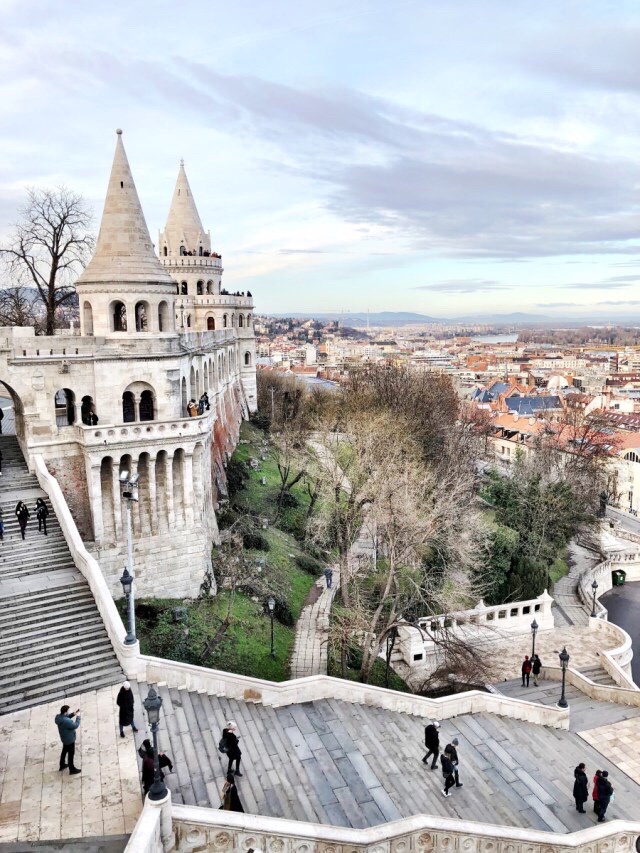
And there were the cute young Russian soldiers near Fisherman’s Bastion in Budapest; but I unintentionally scared them off when I spoke to them in Russian. It was 1990, just before the breakup of the Soviet Union, and I’m sure they thought I was from the KGB or GRU, keeping tabs on them. I tried to tell them I was American, though I’m not sure they believed me. Couldn’t really blame them.
But then there was Moscow — a city of about nine million people at the time, and one of the last places a foreigner would expect to find warm, friendly, generous strangers. But I did, all the time.
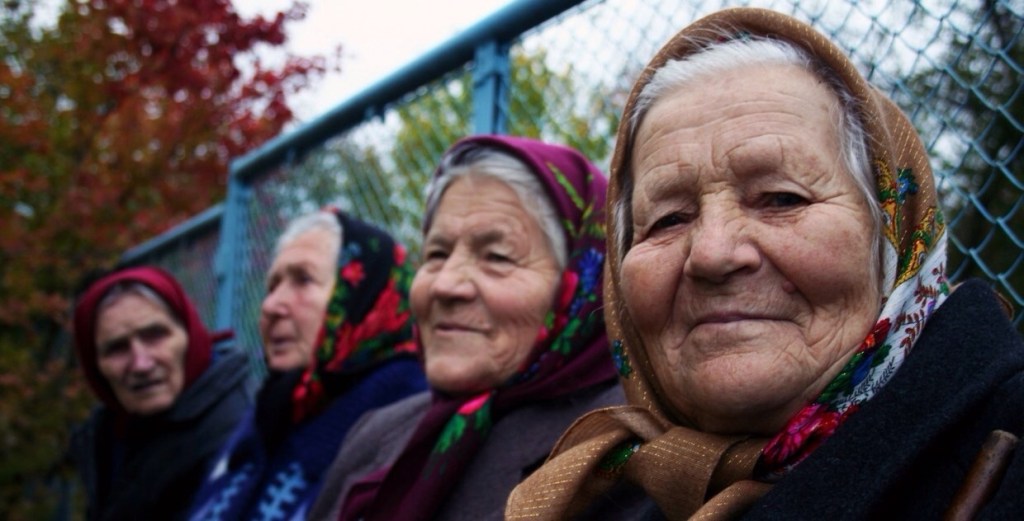
Like the little old woman, on a bitterly cold February afternoon, who was appalled at my uncovered head (I hate hats) and rushed up to me, trying to pull my scarf up to cover it while loudly warning that I was going to catch pneumonia. I kept telling her I was from “the north,” and I wasn’t cold; but she refused to accept it. She was someone’s mother and babushka— much like my own grandmother — and she was simply doing what came naturally. So I thanked her, waited until she was out of sight, and lowered my scarf back around my neck where I wanted it. As long as she was happy, I was happy.
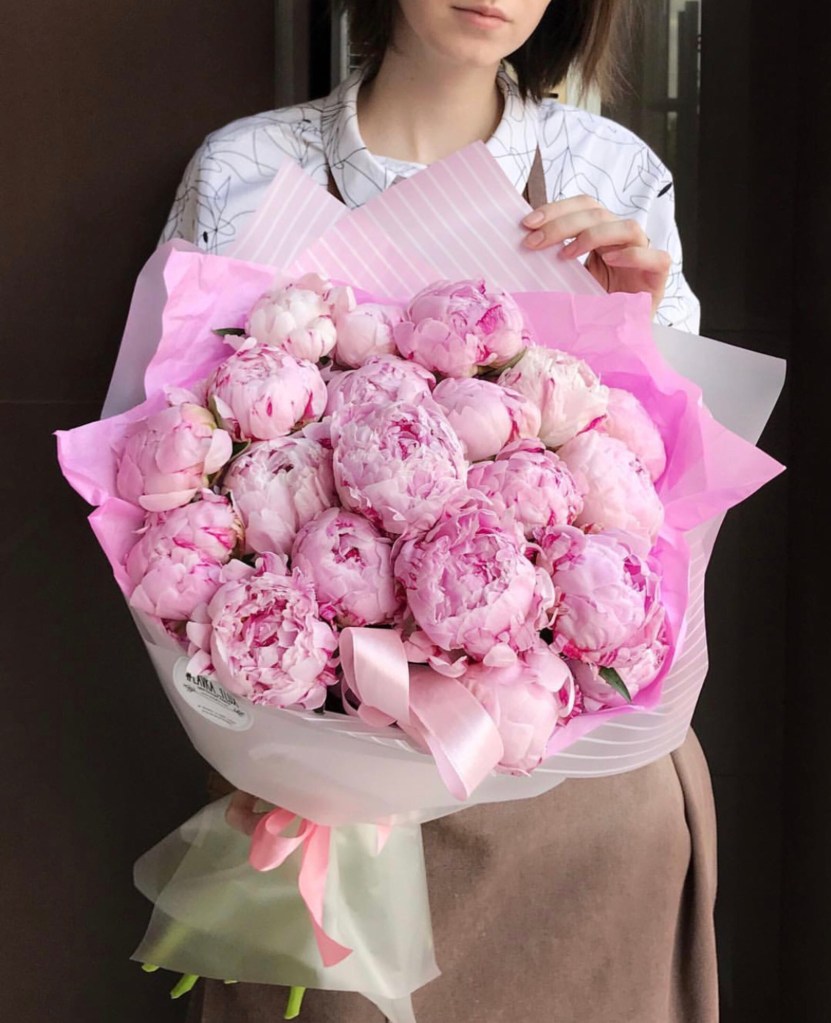
Then there was the late spring afternoon — probably a Saturday or Sunday — when I was out for a stroll in my neighborhood and encountered two young women carrying armloads of my favorite flowers: pink peonies. I stopped and asked them where I could buy some, and they laughed, saying they hadn’t bought them; they had just picked them, and that I could do the same. When I hesitated, one of the women asked where I was from. And when I explained that I was an American living and working in Moscow, she simply handed me half of her flowers, saying, “Please take them. We love Americans!” I wonder whether she would feel the same way today . . . which makes my happy memory somewhat bittersweet. I can still remember the scent of those gorgeous flowers filling my apartment for nearly a week; and the spontaneous generosity of that young woman still fills me with joy.
For a people who are naturally suspicious of authority, Russians can conversely be disarmingly trusting. Like the woman with her little girl in the Moscow Metro station.
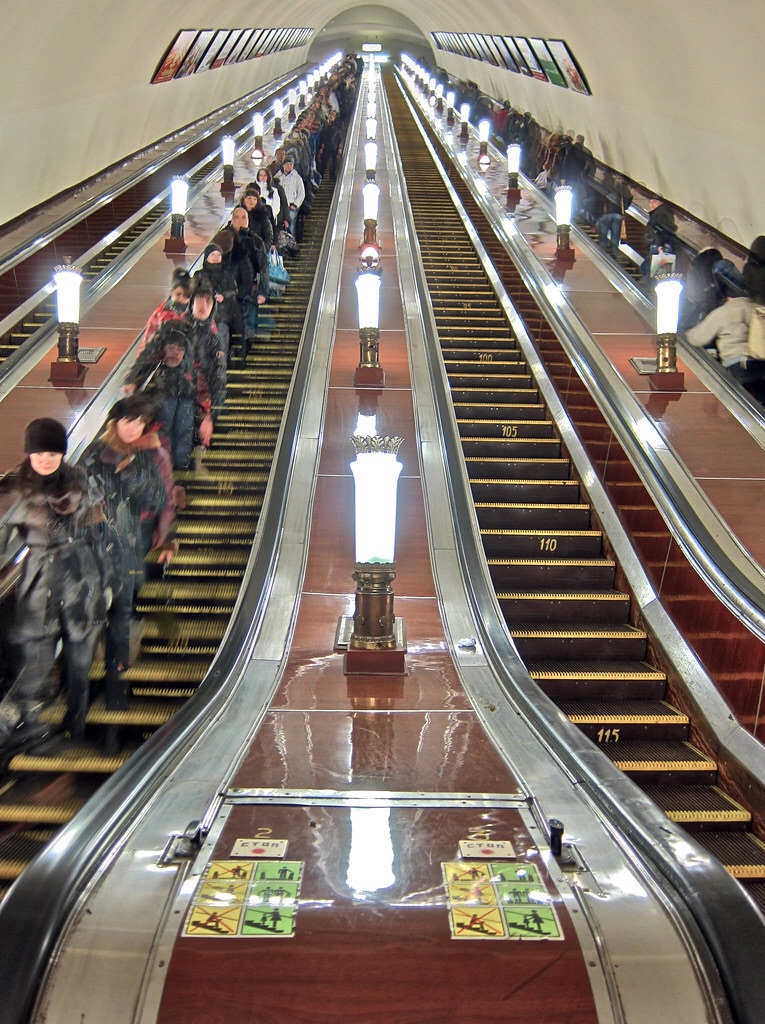
To begin with, you have to understand that many of those stations were originally built just prior to and during World War II, and served a dual purpose as bomb shelters. So they were constructed deep, deep, deeeeep underground; and their escalators are necessarily steep, looking for all the world like stairways to Hell. And incredibly fast! So you have to be pretty agile to jump on without maiming yourself or anyone else.
Which is why I was so startled when the woman, who was carrying two shopping bags filled with groceries, suddenly thrust her little girl toward me, telling (not asking) me, in Russian, to take her hand and help her onto the escalator.
Sometimes you don’t have time to think; you just react. We were at the very top of the moving stairs, with a crowd inching toward us from behind. The child — who was around five or six years old, and apparently a veteran of the Moscow Metro system — gave me her hand, jumped onto the first step with me, and looked back to be sure her mother was right behind us. Which, of course, she was . . . still holding onto her groceries, balancing them and herself, without ever touching the handrail. I don’t know how she did that.
It was a long ride down, so I tried to speak to the girl, telling her my name — Brenda Georgievna, using the formal Russian patronymic* as one should when speaking to a child — and asking hers. But she was shy, remaining mute and staring at her shoes as though she’d never seen them before. And as we jumped off the escalator at the bottom, she let go of my hand, ran to her mother, and the two of them simply walked away without a word of acknowledgment. Clearly, I had done what was expected of any woman, Russian or otherwise: they needed a helping hand (literally), and mine was the nearest one. It’s how the Russian people have always survived: by helping one another — no questions asked, no thanks required.
* Russian middle names — known as patronymics — are derived from the father’s first name, with a masculine or feminine ending tacked on. My father’s name was George, or Georgiy in Russian, so my patronymic would be Georgiyevna. (If I were a man, it would be Georgiyevich.) This is always used in formal situations, with strangers, and with children, as a matter of courtesy. It also helps in distinguishing one “John Smith” from another.
One other encounter that has stuck in my mind occurred late on the night of July 4th in 1993 with a Moscow taxi driver who knew me and my address without asking . . .
Oh, but that was probably not random, so never mind. It was, however, memorable for its spookiness . . . just one of many unusual occurrences during those months of living and working in one of the most fascinating, and sometimes scariest, cities in the world.

I could go on, and on, and on, but that’s enough wandering down Memory Lane for now. My thanks to WordPress.com for the suggestion; it reminded me that an occasional detour into the past can be a pleasant escape from the weight of the present . . . and that was just what I needed today.

Just sayin’ . . .
Brendochka
4/19/26

