In the Russia ruled by Joseph Stalin (from 1924 to his death in 1953), if you were foolish enough, or simply unfortunate enough, to displease him in any way, you could be fairly certain of two things: that your life was about to end, and that all traces of your existence would disappear with you.
Long before the days of artificial intelligence and today’s digital photoshopping, Stalin’s photo technicians were adept at altering pictures to make someone (usually Stalin) look better, to change the background or the wording on signs . . . or to make a person disappear completely, as in the famous photos below. In other words, to rewrite history.
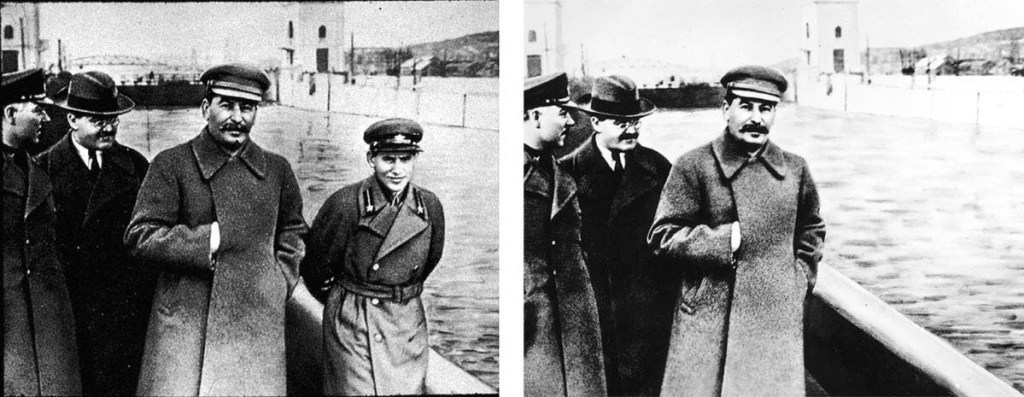
The names and any mention of disgraced individuals would also be deleted from all printed material. I can only imagine how many times the country’s textbooks and encyclopedias had to be reprinted.
In the decades following Stalin’s death, political life in Russia slowly — very slowly — became less terrifying. And in the 1990s, after the breakup of the Soviet Union and the institution of the Gorbachev reforms, the repressions of the Soviet era began to fade into distant memory. But not for everyone.
In 1991, October 30th was officially designated as Russia’s Day of Remembrance of Victims of Political Repression. Since then, each year on that date memorial events — known as “Returning the Names” — are held in cities and towns across Russia to honor the victims of Soviet-era atrocities. A memorial stone, known as the Solovki Stone, has been erected on Moscow’s Lubyanka Square — in front of the notorious headquarters of the former KGB (now the FSB). And each October 30th since 2006, the Memorial Human Rights Center has held an annual ceremony at that spot. [RFE/RL, October 30, 2024.]
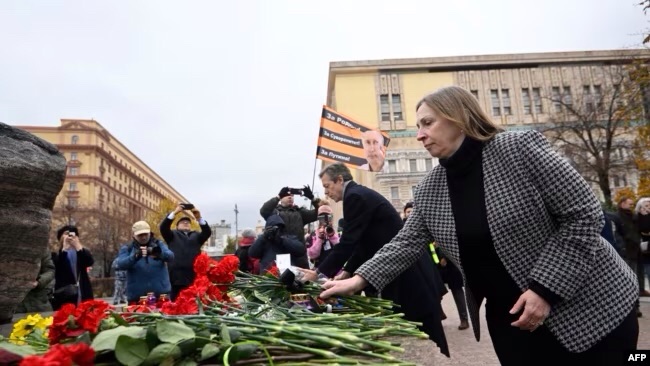
In cities from St. Petersburg to Vladivostok, participants in similar ceremonies have included relatives of the dead and survivors of the Gulag, rights activists, and others who simply want to be a part of the remembrance. The names, ages, occupations, and dates of execution or imprisonment of the victims are read aloud. The past must be remembered in order not to be repeated.
But . . .
Recent actions of the Russian government may be placing the future of these remembrances in question. For example, the Prosecutor-General’s Office “announced plans earlier to review past decisions on the rehabilitation of repression victims, prompting fears that the state may seek to rewrite or diminish the historical narrative surrounding Soviet atrocities.” [Id.]
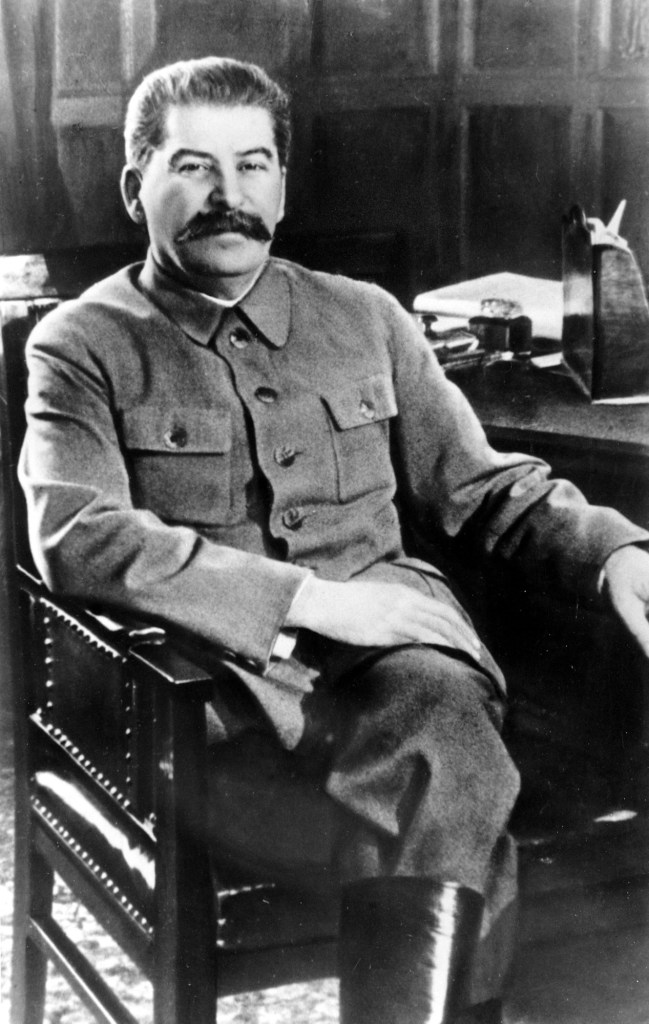
In June, changes were announced to the official Concept on Victims of Political Repressions that “eliminated references to the mass nature of Soviet purges and removed calls to commemorate their victims, effectively sanitizing the historical account of state-sponsored violence.” [Id.]
And this week, the decision to cancel the Returning the Names event in Moscow was blamed on a “sharp increase in COVID cases” [id.] — always a handy excuse, but in reality just one step in a concerted effort by the government to draw attention and discussion away from past Soviet crimes . . . and from the repressive actions of the Putin regime of today.
*. *. *
In the shadow of other world events, these may seem like minor concerns. But they amount to one very major issue: rewriting history. Think of how much easier that will be now, with the advent of artificial intelligence and the government’s exclusive control of mass media.
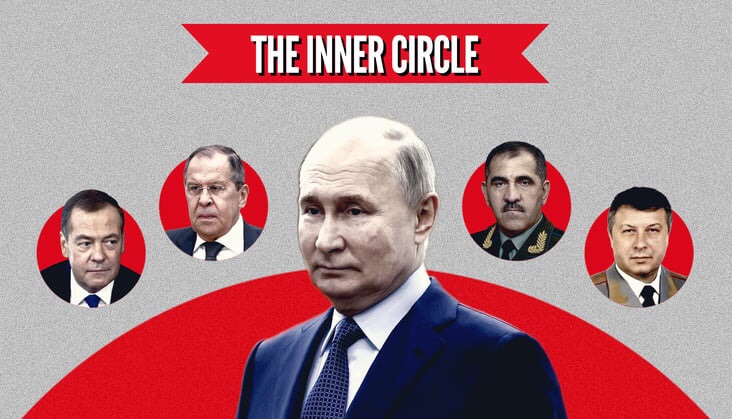
And seen in conjunction with other recent occurrences — the broad use (or misuse) of the new “Foreign Agents” law, the imprisonment of journalists and dissidents, the unexplained deaths of political opponents — well . . .
The calendar may say it’s 2024, but in Russia it’s beginning to feel like 1950 again.
Just sayin’ . . .

Brendochka
11/1/24
 The Blog About Everything … and Sometimes Nothing