The United States and Russia already have their respective — and very different — definitions; now maybe we should ask a Georgian. (That would be a Georgian from the ancient country in the Caucasus Mountains, not the U.S. home state of peaches, peanuts, and Scarlett O’Hara.)
Because there is currently a great hullabaloo being raised in the capital city of Tbilisi over a proposed bill that’s been put forth in the Georgia Parliament that, if passed, would establish a law governing the activities of “Foreign Agents.”
The problem seems to be in defining a “foreign agent,” and then determining what such a creature would and would not legally be allowed to do if he or she wished to avoid penalties . . . and, not incidentally, just what those penalties would be. It’s a sticky wicket all around.

No, this little guy is not the type of “foreign agent” we’re talking about . . . or is he? In the U.S., he (or she) would more likely be referred to as a “secret agent,” or simply . . . well, let’s call a spy a spy, shall we? That is not what we mean when we refer to our Foreign Agents Registration Act (FARA). Not exactly.
FARA was enacted in 1938 primarily to counter Nazi propaganda, with an initial focus on criminal prosecution of subversive activities. Since 1966, though, enforcement has shifted primarily to civil penalties and voluntary compliance. It does not prohibit lobbying for foreign interests, nor does it ban or restrict any specific activities. It does require transparency, with an initial registration and periodic (every six months) filings of updates thereafter. Its explicit purpose is to promote transparency with respect to any possible foreign influence over American public opinion, policy, and laws . . . such as interference in our election process, with which we have become all too familiar in recent years.
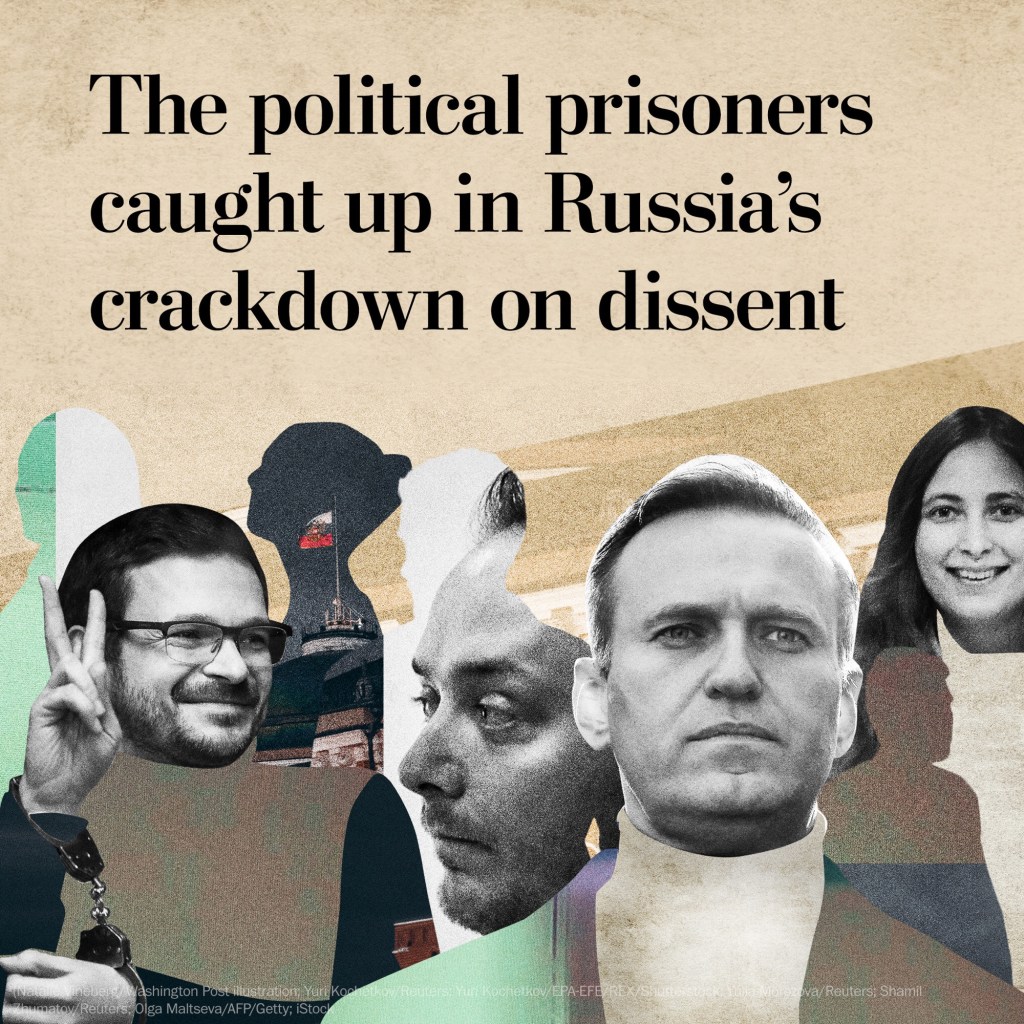
This is not, however, how Russia sees a “foreign agent.” For the Kremlin’s purposes, that would be any individual or organization that allegedly is in the pay of, or under the influence of, or in any way associated with a foreign entity or individual that does not toe the official line, thus being assumed as guilty of “distributing false information,” “insulting the government or the military,” or — in the worst-case scenario — out-and-out treason. And the penalties are not mere fines; rather, they almost invariably involve long-term sentences of incarceration in Russia’s harshest prisons and penal colonies. And there are hundreds of inmates to substantiate it . . . as well as a few who did not, or may not, survive.
*. *. *
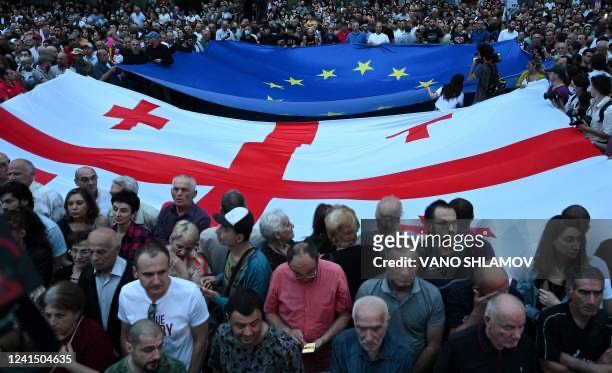
So, why did I say to “ask a Georgian”? Because there is presently a bill before the Georgian Parliament aiming to reintroduce a “Russian-style foreign agents’ law similar to one they were forced to withdraw a year ago.” [VOA News, April 26, 2024.] And the people of Georgia — a former Soviet Republic that has fought so long and so hard since the dissolution of the Soviet Union to establish and maintain a West-leaning, democratic government — have taken to the streets en masse to oppose its passage. Because they know the danger; they have lived it in the past, and refuse to accept it as their future.
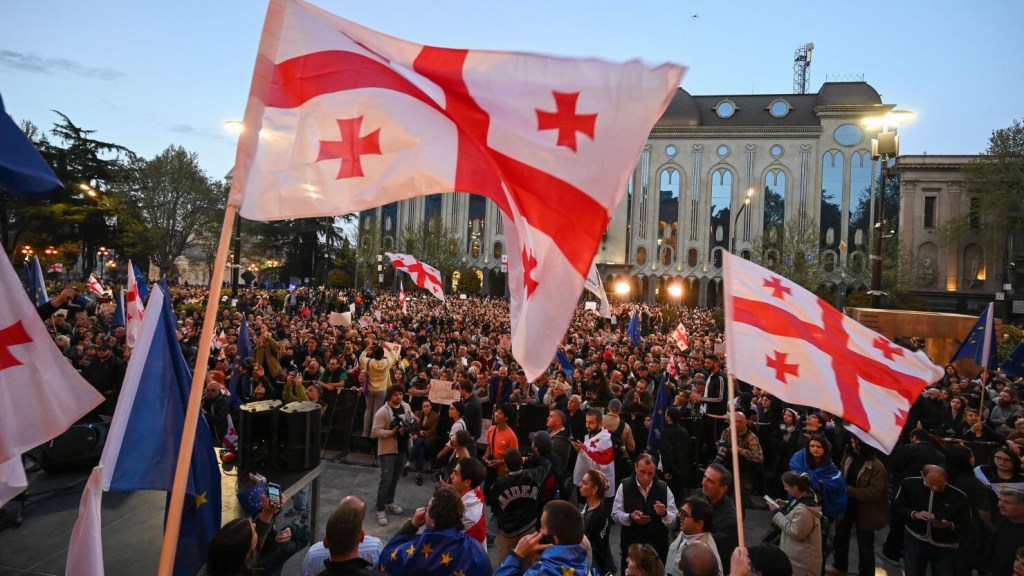
The U.S. has expressed its concern to Georgian Prime Minister Irakli Kobakhidze in the form of a letter from a bipartisan group (unusual enough in itself) of 14 U.S. Senators, warning that passage of the bill could “undermin[e] Georgia’s European future and its relations with the U.S.,” and further that, if the legislation were to become law, “they [the group of 14] would be compelled to encourage a shift in U.S. policy toward Georgia.” [VOA News, id.]
Opponents of the proposed law say that it is designed to stifle the freedom of speech of Georgian individuals and organizations, including the activities of election monitors, by labelling them as “foreign agents” — “which in the post-Soviet context equates them to traitors.” [Id.] The Georgian government’s proponents, however, equate the law to the U.S. Foreign Agents Registration Act. But the Senators’ letter rejected that allegation:
“We must also make it clear that the reintroduced foreign agents’ law does not mirror any U.S. law and would be used to silence the civil society and media that play a significant role in advancing Georgia’s democratic institution.” [Id.]
*. *. *
I do not propose to interpret the language of the Georgian bill. But I have seen the manner in which the Putin government has used their law to stifle any and all dissent. And if the fear of the Georgian people that the same thing would happen in their country is indeed legitimate — and all indications are that it is — then the people must be supported in their opposition, and the government of Georgia discouraged as strongly as possible from imposing any such Soviet-style restrictions upon their freedom-loving citizenry. Make no mistake: the future of their country is at stake.
And to the good people of Georgia, I wish the best of luck and success, now and in the future.
Just sayin’ . . .
Brendochka
5/5/24
 The Blog About Everything … and Sometimes Nothing