To be clear, I love Colin Firth. I loved him in Shakespeare In Love and in Love Actually; I adored him as the reluctant monarch in The King’s Speech; and I found him gayly adorable in Mamma Mia.
That said, would I pay the equivalent of $12,000 for a shirt he wore in the film version of Pride and Prejudice? Or any garment he might have had close to his body at any time?
I don’t think so.
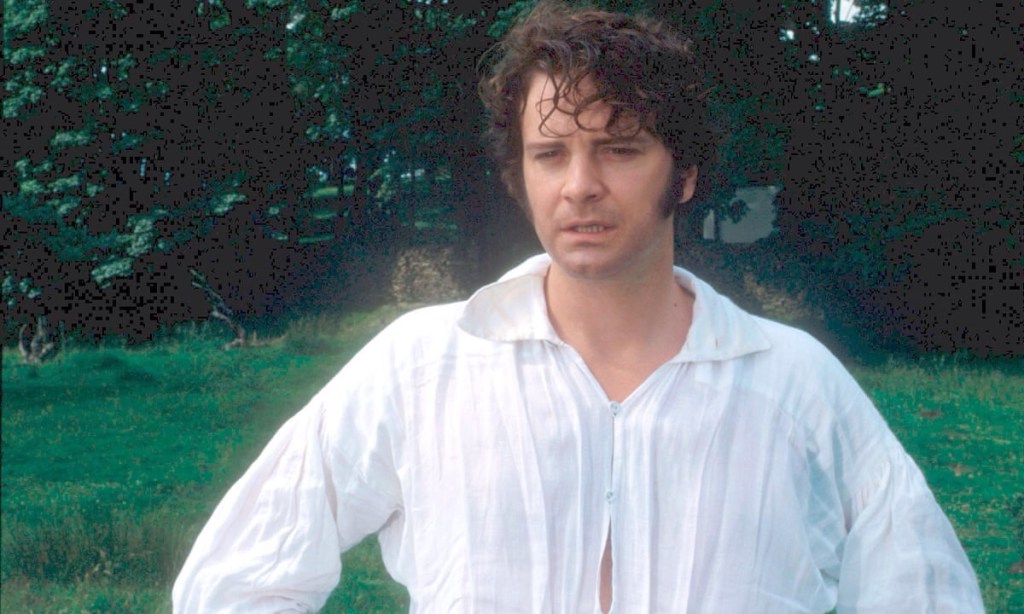
Okay, I admit — he’s pretty damned cute. Even sexy. But if I were truly smitten . . . so smitten that I’d lost all reason and decided to bid my last dime on the shirt from that watery scene in the movie . . . what on earth would I then do with my expensive souvenir? Hang it on the wall? Bring it to school for show-and-tell? Wear it as a night shirt in the hope that it might evoke an erotic dream of the delightful Mr. Darcy?
Well, maybe that. But still . . . $12,000?
Which, of course, started my mind meandering in all sorts of directions about things that people buy, at exorbitant prices, just to say they own them. I’m not talking about items of obvious monetary value — the Hope Diamond, a genuine Faberge Egg, Michelangelo’s David (if you could get it out of the Galleria in Firenze). Or even the unique historic items that people bring to the Antiques Road Show. No, I’m talking about . . . well, for example:
“Do Not Disturb” Signs. Rainer Weichert of Germany holds the world’s record for his collection of 11,570 of these ubiquitous hotel hangtags. Since 1990, he has traveled to 188 countries, bringing home signs in various shapes, designs, and languages. Why? I have no idea; you’ll have to ask him.

*. *. *
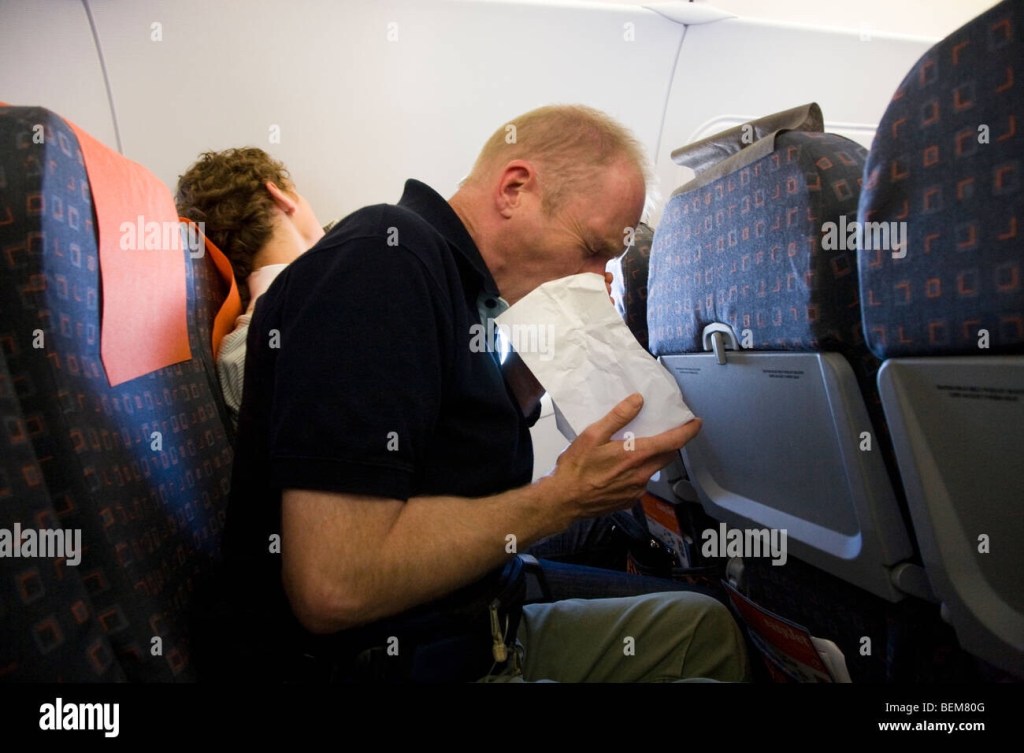
Barf Bags, also known as air sickness bags. A Netherlander by the name of Niek Vermeule made a bet with a friend in 1986 to see who could collect the greater number of these (presumably unused) items. He made it into the Guinness Book of World Records in 2012, defeating his friend, when his collection numbered 6,290 bags from 1,191 airlines in 200 or more countries. I didn’t know there were that many airlines in existence! He even managed to “bag” one that had spent 16 days in space aboard the NASA space shuttle Columbia. I suppose they’ll come in handy if he ever gets a really bad case of airsickness or flu (which I don’t wish on him or anyone); but otherwise . . . well, I just can’t imagine what you’d do with them. Maybe he’s had special book shelves — or bag shelves — built to hold them.
*. *. *
Pizza Boxes. Scott Wiener (no comments on his name, please) from Brooklyn, New York, began collecting pizza boxes in 2008 when, on a trip to Israel, he saw “the most artistic pizza box he’d ever seen.” He enlisted the help of family, friends and fans — yes, he has fans — and by 2013 he achieved the world record when his collection totaled 595 pizza boxes. And here’s the really strange part (as if this weren’t already strange enough): Scott has published a book, “Viva La Pizza! The Art of the Pizza Box,” to share with the world his expanded collection of over 1,500 boxes. He even loans his boxes to museums and other exhibits. What . . . there’s a Museum of Pizza? Where? Or, more to the point: Why?
*. *. *
Celebrity Hair. No, not Goldilocks or Rapunzel, but real live (at one time) celebrities, incuding Elvis Presley, Ludwig von Beethoven, Abraham Lincoln, John F. Kennedy, and Marilyn Monroe. What is this guy — a grave robber? I don’t know, because the article I read doesn’t reveal how John Reznikoff amassed his collection of famous follicles, just that he did, and that it is now insured for $1 milion. He says “they tell important stories about the past,” and several decades ago “was the equivalent of owning an autograph and a true status symbol.” Okay, Mr. Reznikoff. If you’re happy, we’re happy for you.

*. *. *
And finally . . . and clearly my favorite . . .
Fossilized Dinosaur Poop. It seems that when a young freshman named George Frandsen visited a fossil shop in Utah, he came across what is described as “an especially impressive specimen.” This led to his unexpected interest in coprolites (defined as “a stony mass consisting of fossilized fecal matter of animals”), and a collection was born and grew to at least 5,000 specimens ranging from tiny specks to samples weighing over four pounds. As it turns out, though, Mr. Frandsen’s collection does serve an allegedly useful purpose: the specimens provide important information for scientists to determine what the prehistoric animals ate when they roamed the earth. Frankly, I don’t give a s**t what they ate. But he has lent his collection to the South Florida Museum, and the exhibit was so popular that it ran for over a year. For those of you who may continue to be curious about coprolites, Mr. Frandsen also has an online website, Poozeum (cute!), which displays nothing but ancient poop. Be still, my heart.

*. * . *
And FYI, the source of all of this delightful data, and more, was a fascinating article written by David Long (and fact-checked by Rachel Jones) for Weird Stuff, March 27, 2021. Oh, the things you can find on Google!
*. *. *
So, having completed my in-depth research, and given much consideration to the amount of time, effort, and money involved in the amassing of these unique collections, I find that I have discovered something about myself . . . and that is, that I no longer consider it totally weird — comparatively speaking — that one might decide to spend $12,000 on Colin Firth’s shirt. It makes more sense than poop.
Now . . . where did you say that auction was being held?
Just sayin’ . . .
Brendochka
3/6/24
 The Blog About Everything … and Sometimes Nothing