Everyone needs an escape plan, from getting yourself and your family out of the house in case of fire, to getting out of town if the nearby dam breaks or the “damn, I thought it was dormant!” volcano erupts. But what about getting off the Earth when you just can’t take it any longer? When all the ecological, political, and “my-weapons-are-better-than-your-weapons” crap just becomes too much and it’s time to move on . . . then what?
Well, the closest alternative would of course be the moon. A mere 238,900 miles from here, give or take a few miles depending on our relative positions at any given time of year, it has already been proven reachable in a matter of just a few days. But is it habitable?
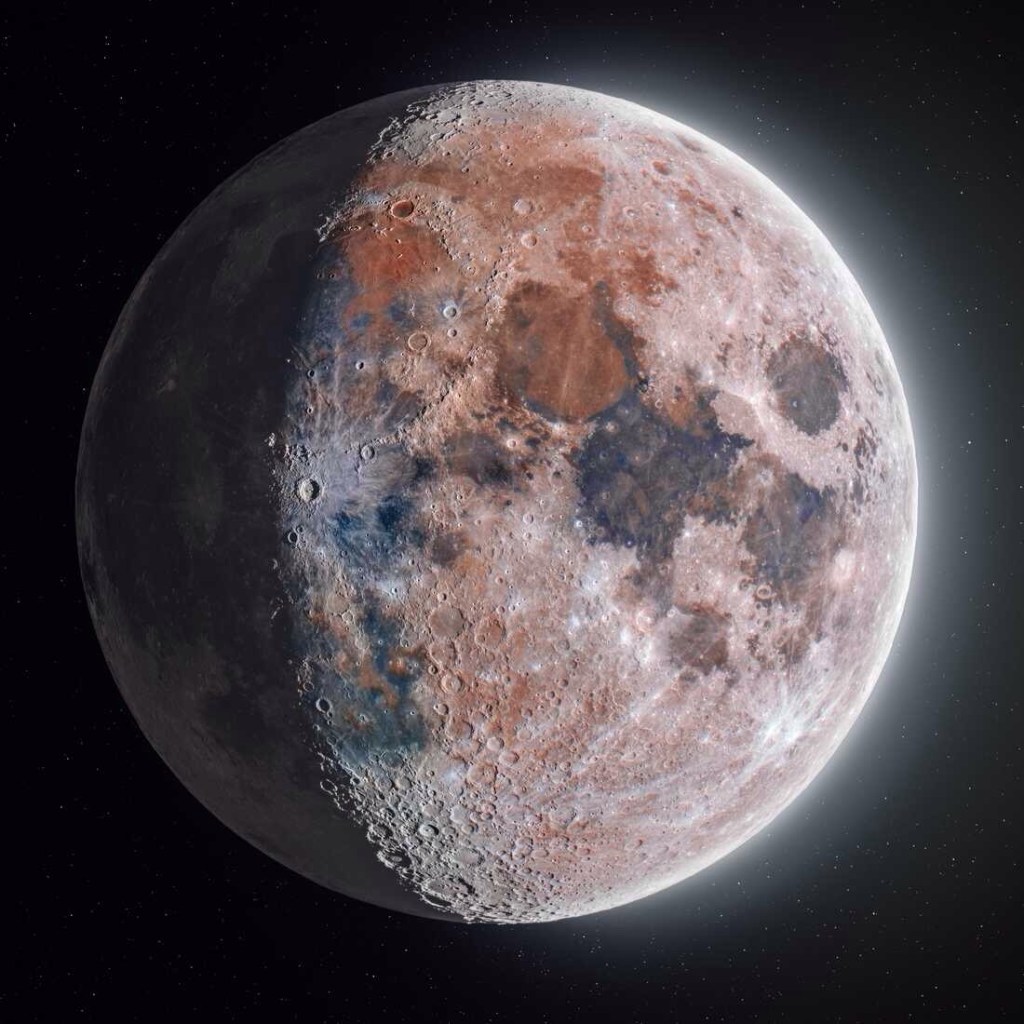
For example, what are those splotches? Are they land masses? Why are they different colors? Different terrains? Are some of them just heaps of noxious gases? Or continents as designated by the already existing clans of moon-people? And if there are moon-people, do they have their own governmental structures? What are their immigration policies? Job opportunities? And how about that dark side . . . how long does it stay dark? Is there electricity, or do we need to bring lots of lanterns and batteries?
Even more concerning is a recent report that the moon is actually shrinking. You see, in the course of the latest international space race, a NASA study has revealed the following:
“As the moon’s core gradually cools and shrinks, its surface develops creases — like a grape shriveling into a raisin — that creates ‘moonquakes’ that can last for hours, as well as landslides. Much like the rest of the natural satellite’s surface, the area of the south pole that is the subject of so much interest is prone to these seismic phenomena, potentially posing a threat to future human settlers and equipment.

“‘This is not to alarm anyone and certainly not to discourage exploration of that part of the south pole of the moon,’ said the study’s lead author, Thomas R. Watters, a senior scientist emeritus in the National Air and Space Museum’s Center for Earth and Planetary Studies, ‘but to raise the caution that the moon is not this benign place where nothing is happening.’” [Jacopo Prisco, CNN, Jan. 31, 2024.] No, of course we’re not alarmed. Not too much. But if it’s earthquakes I’m craving, I can just move to California, or Turkey.
Not having scared us sufficiently, Mr. Prisco goes on to say that despite its benign appearance, “the moon still has a hot interior, which makes it seismically active.” He quotes Thomas Watters: “There is an outer core that’s molten and is cooling off. As it cools, the moon shrinks, the interior volume changes and the crust has to adjust to that change — it’s a global contraction, to which tidal forces on the Earth also contribute. . . . We’ve actually detected landslides that have occurred during the time that the Lunar Reconnaissance Orbiter has been in orbit around the moon.” [Id.]
(So, not content with ravaging our planet, we’re working on the moon too? What the hell is wrong with us?!!)
There have also been moonquakes detected, the strongest of which was the equivalent of magnitude 5.0. “On Earth, that would be considered moderate, but the moon’s lower gravity would make it feel worse,” Mr. Watters said. [Id.]
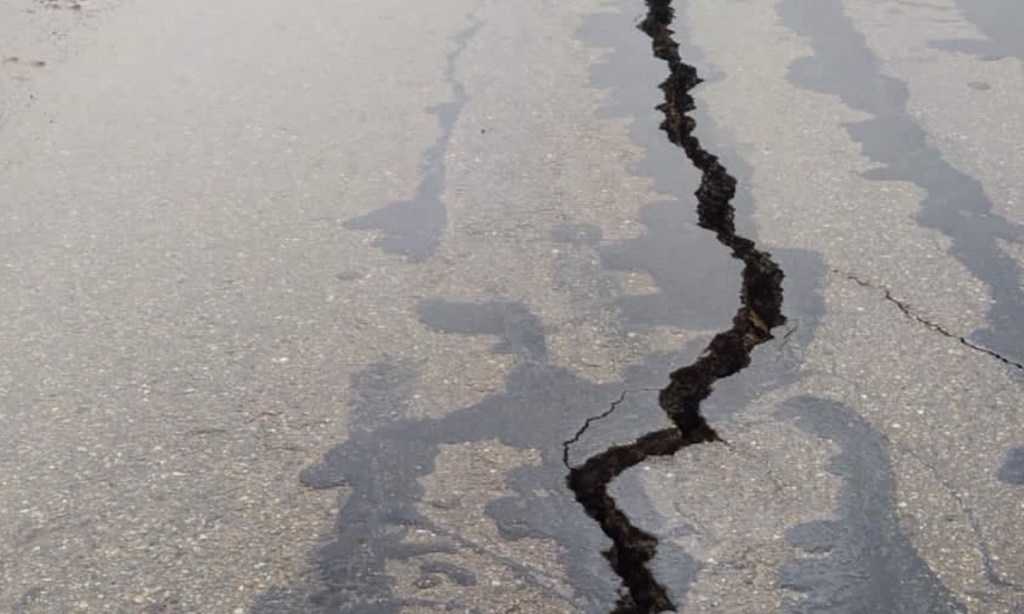
The article goes on to present a good deal of technical jargon that, quite frankly, I did not finish reading because it was scaring the crap out of me. Yes, we have earthquakes here on Earth; but at least we have emergency rescue services, which I don’t think have yet been established on our lunar satellite.
So, not only have I scratched the moon off my list of possible new residences; I’m not even sure I will ever again be able to gaze at it from here on Earth as that beautiful, romantic orb in the star-studded sky.
*. *. *
But assuming I’m still considering relocating, where else is there to search? Well, according to that guy I love to pick on (no, not Donald Trump) — Elon Musk — Mars may be a good bet. But, rather than 238,900 miles away, it’s a commute of anywhere from 140,000,000 to 250,000,000 miles (the longer distance being when Mars and Earth are on opposite sides of the Sun; and no, I don’t understand that either). And the trip is about seven months to arrive at someplace called the Jezero Crater, which is apparently a choice area for development . . . if you don’t mind waiting a while for your house, or igloo, or yurt to be ready, depending on what kind of climate we’ll actually find there. I don’t know about you, but I don’t have enough information about the “red planet” to risk putting down a deposit just yet. And it’s simply too far away to be able to come home for Christmas.
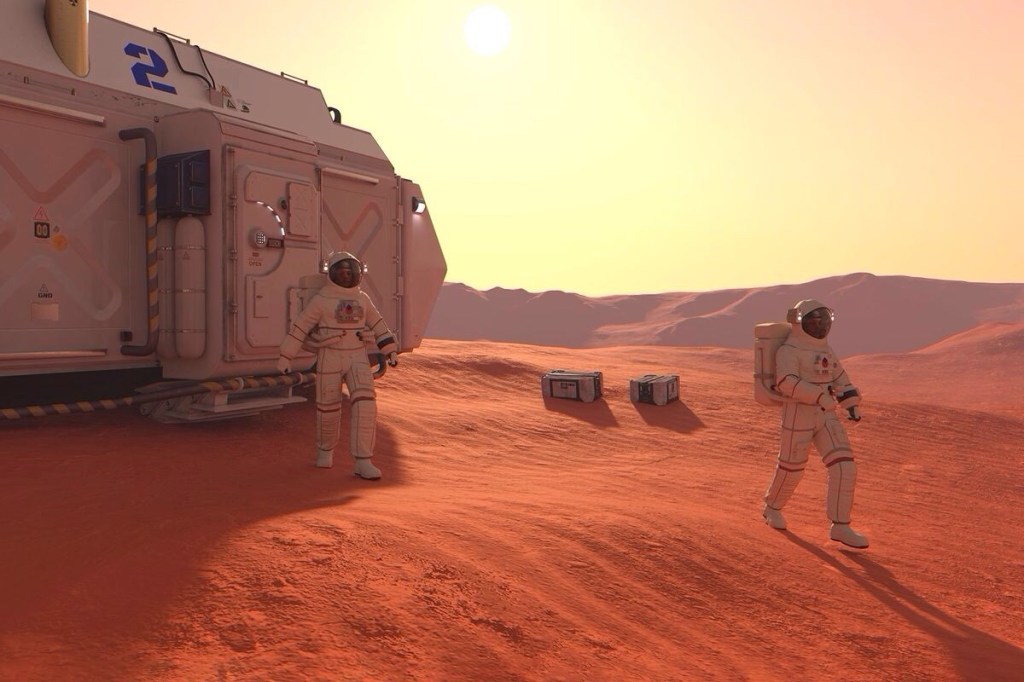
Oh, did I mention that I recently came across the title of an article — “How Living On Mars Would Warp the Human Body”? [Salon.com.] No, I did not read it; my dreams are already nightmarish enough, thank you. Let’s just go on.
*. *. *
Writing has always been a catharsis for me, a form of psychotherapy that costs me absolutely nothing. But sometimes I also find answers during the process . . . answers to questions I didn’t even realize I had been asking myself. And that’s what just happened here. I’ve come to realize that our problems here on Earth — in whatever country you call home — may not be so unmanageable after all. At least they’re the problems we know. Whereas the unknown — unless you’re Elon Musk and you thrive on that kind of mystery — can be pretty terrifying.
Bottom line: I’m staying put, thank you. Maybe I’ll try to make my present environment, here in the good old U.S. of A., just a little bit better, and leave the exploration of other worlds to someone younger, stronger, braver . . . and, to my way of thinking, a whole lot crazier.

Just sayin’ . . .
Brendochka
2/3/24
 The Blog About Everything … and Sometimes Nothing