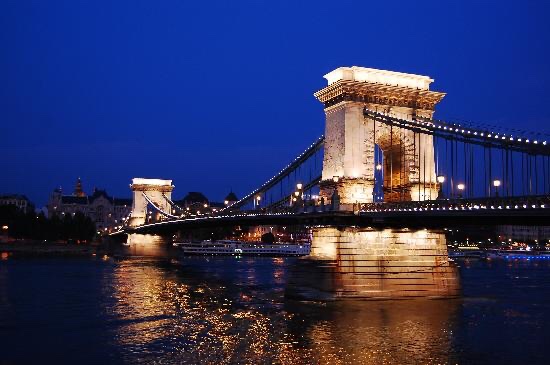
I have such lovely memories of my one visit to Hungary in the early fall of 1990: being granted a private tour of the enormous, sumptuous Parliament with its columns of lapis lazuli and malachite; riding the funicular railway up to the Fisherman’s Bastion overlooking the entire city of Budapest; enjoying some of the best food I’ve ever eaten, in a small Jewish-owned restaurant tucked away in a quiet neighborhood on the Buda side of the river, and pastries at Cafe Gerbaud in the heart of the Pest side of town; cruising along the Duna (Danube) on a bright, sunny day to the artists’ enclave of Szentendre; and sitting by the window of my hotel room to watch the lights on the Lanchid (Chain Bridge) go out each night precisely at midnight.
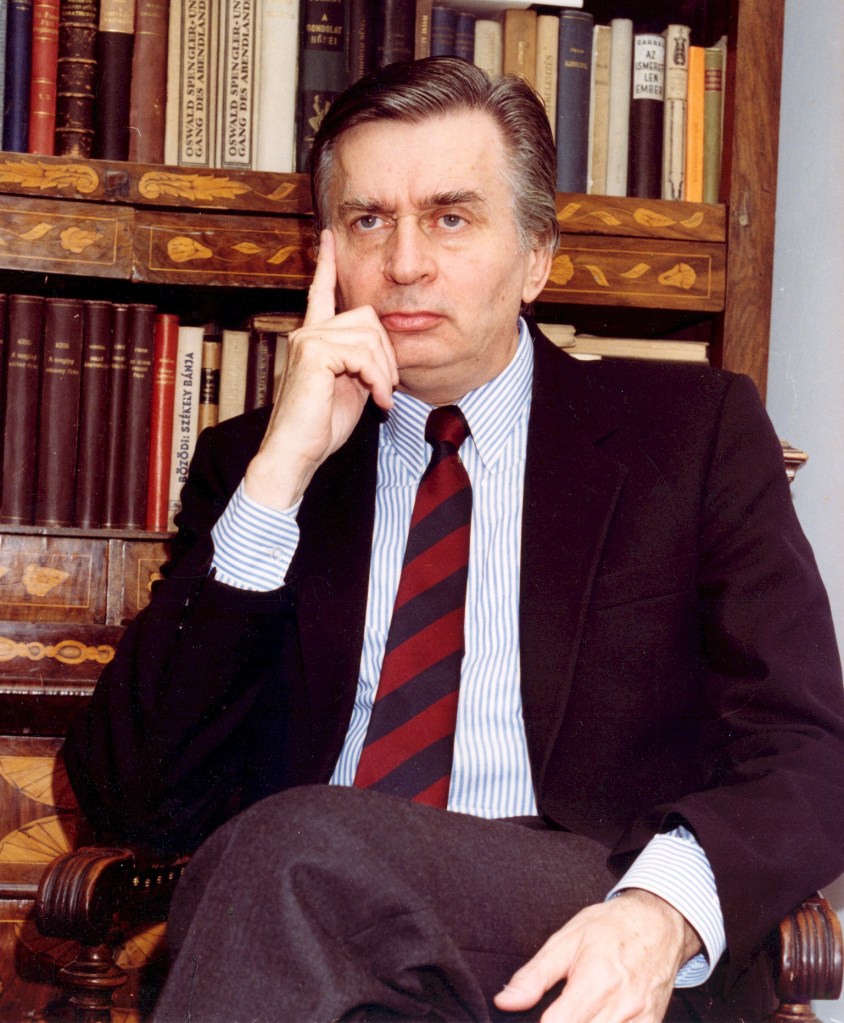
It was a magical time in Hungary then, as it was in all of Eastern Europe, when the Communist regime was breaking apart and the Soviet Bloc nations, one by one, were regaining their independence and forming their new, democratic governments. Prime Minister Jozsef Antall was making that happen in Hungary.
That was thirty-three years ago. The Communist regime in Russia, which controlled the multi-nation Soviet Bloc, had fractured under the more liberal rule of Mikhail Gorbachev. The fifteen republics of the Soviet Union became fifteen separate, independent nations. And as the people of Russia enjoyed greater freedoms and the benefits of a burgeoning capitalist economy under Gorbachev and his successor, Boris Yeltsin, so did the rest of Eastern Europe.
That is, until 1999, when Russia — as Russia always seems to do — suffered a new plague, this one known by the name of Vladimir Vladimirovich Putin. Sadly, science has not yet developed a preventive vaccine or a cure for this particular plague, which exhibits a unique ability to spread without actual physical contact.
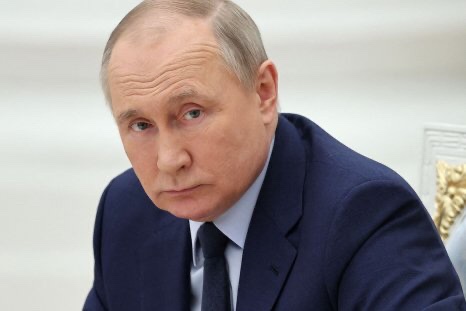
During the past twenty-three years, Putin has not only tightened his grip on Russian society; he has been working tirelessly to bring the leaders of other, far-flung nations under his seemingly benevolent umbrella of protection — nations in Africa, the Middle East, Latin America . . . and, of course, Europe. He has forged alliances with other, still Communist or Communist-leaning, nations such as China, North Korea, and Cuba. And, while most of Europe continues to fight for freedom and democracy, there are exceptions: Belarus, for example, whose self-styled President, Aleksandr Lukashenko, is one of Putin’s most willing lapdogs.
And now, also Hungary — under its current Prime Minister, Viktor Orban — is leaning heavily in Putin’s direction.
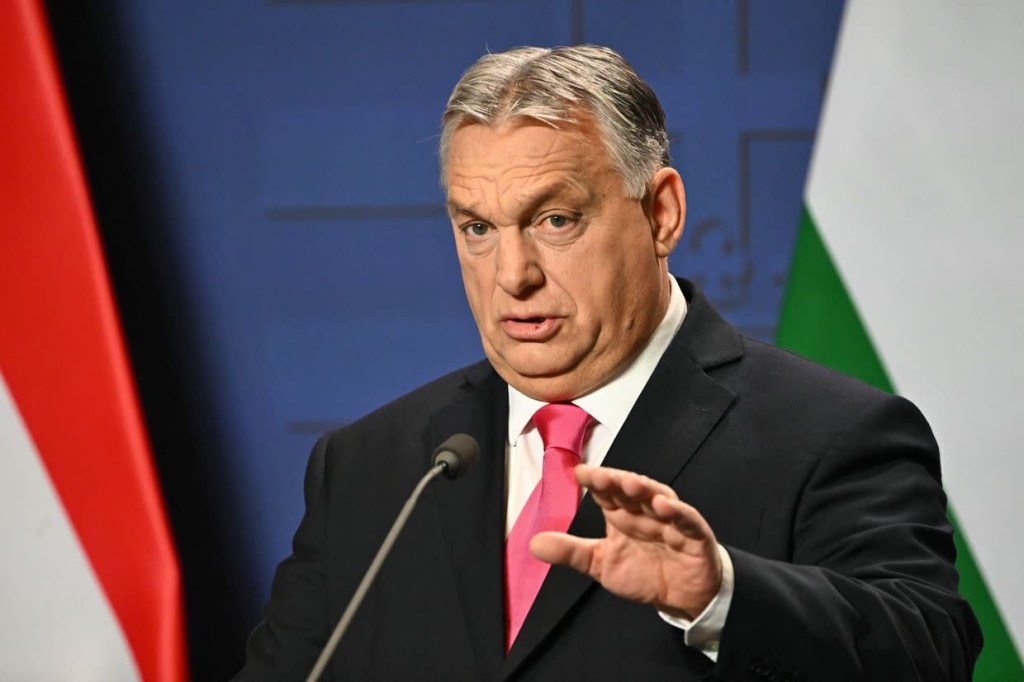
And just who is this Viktor Orban, and how did he become Prime Minister of a country that has been enjoying freedom and prosperity for three decades? I’ve already commented on his background in my blog post of September 1, 2023, “Hungary: Another Wild Card?” and his transition from purported anti-Marxist-Leninist activist to right-wing admirer of Vladimir Putin — to whom he has referred as a “model on which . . . [to build] an ‘illiberal democracy’ that opposes the EU’s multi-cultural values.” I don’t even know what that’s supposed to mean: an “illiberal democracy . . . [opposing] multi-cultural values”? Isn’t that one oxymoron piled on top of another oxymoron, spoken by . . . well . . . a moron?
He has been outspoken — in an interview with Fox News and as published on X — in his belief that “We should make a deal with the Russians on the new security architecture to provide security and sovereignty for Ukraine but not membership in Nato [sic]”; that the return of Crimea to Ukraine is “totally unrealistic”; and that “the best chance for peace [is] for former US President Donald Trump to return to power and for him to end military support to Ukraine.”
And he has maintained close ties with Russia, even since its invasion of Ukraine in February of 2022, repeatedly opposing sanctions against Moscow.
But that was then. What has he done for us lately? Well . . .
At the EU Council Summit in Brussels on December 14th, 2023, he abstained from the vote to open accession talks with Ukraine and Moldova, calling EU membership for Ukraine “a bad decision.” And on December 15th, he blocked a $55 billion EU package for Ukraine. [Elsa Court, The Kyiv Independent, Dec. 21, 2023.]
Also, in his annual press conference in Budapest on December 21st, he declared that the Russian invasion of Ukraine is not a war. “There was no declaration of war between the two countries. When Russia declares war then there will be war,” were his precise words. And continuing: “We should be happy that war was not declared, because then there will be general mobilization in Russia. I don’t wish this on anyone.” Instead, he described the invasion as a “military operation.” [Elsa Court, The Kyiv Independent, Dec. 21, 2023.]
Now, where have we heard that before?
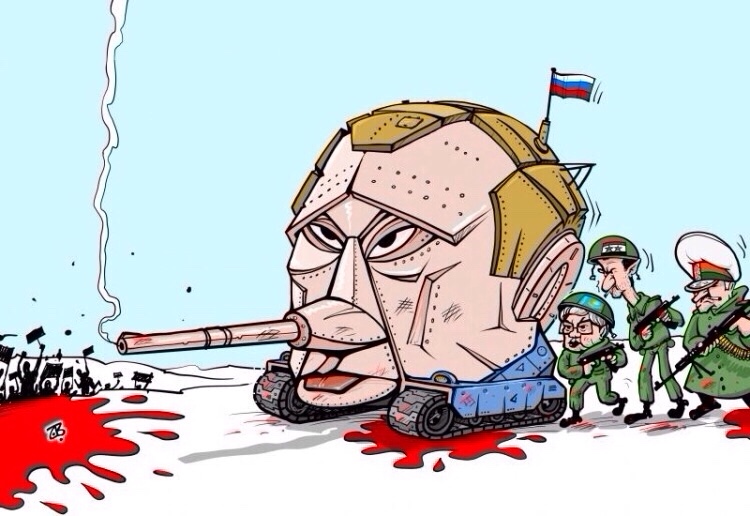
Oh, yes . . . I remember now.
*. *. *
There are other issues as well, such as the EU’s withholding of funds from Hungary due to human rights violations, which Orban has called “blackmail.” And Orban’s alleged cooperation with Turkey’s President Recep Tayyip Erdogan, another of Putin’s admirers, in their opposition to Sweden’s NATO membership.
Taken together, it all spells trouble for Hungary, for Ukraine, for the member nations of the Western alliances (NATO and the EU) . . . and for free peoples everywhere. And the next national election in Hungary isn’t until 2027. Are the people of that country awake to the dangers this man presents?
They need to be.
Just sayin’ . . .
Brendochka
12/29/23
 The Blog About Everything … and Sometimes Nothing