The last goodbyes had been said, the last hugs exchanged, the last promises made to keep in touch. And a couple of days earlier I had made my final pilgrimage to Red Square, which — much like tossing a coin into the Trevi Fountain in Rome — had become my personal superstitious ritual, hopefully ensuring that I would some day return to this place. It had worked so far.
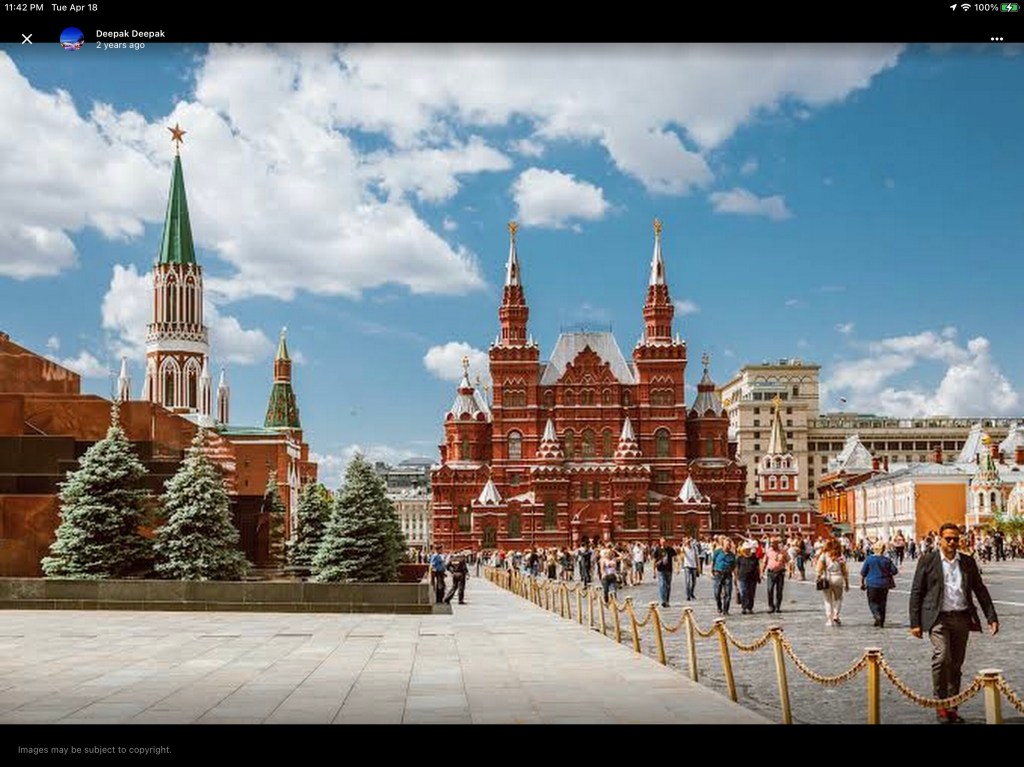
(Lenin’s Tomb, left; History Museum, center)
Last, but far from least, my portrait of Vladimir Lenin, still protected by its rickety wooden frame, had been carefully packed between layers of clothes in my biggest Samsonite suitcase. It just fit, thanks to Mr. Pivovarov’s having found a slightly smaller one for me than the one still hanging on his office wall. Now all I needed was a good cover story for the Customs people at the airport the following day, where the wooden frame would surely be caught on x-ray. It wasn’t an antique; but it was, technically, Russian government property.
Sleep eluded me that night as I lay staring at the ceiling, my mind a hopeless jumble of memories from my time in Russia: evenings at the ballet and opera, train rides to Kyiv, armsful of peonies, lunch at Militia Headquarters, burnt-out cars by the side of the road, caviar and ice cream (no, not eaten together), the KGB, the Russian Mafia, little girls with big hair bows, monasteries, the Fourth of July concert . . . and on and on and on. But most of all, there were the people I would miss: Olga, Lena, Vitold, Tamara, and even Maya. They had become my second family, and I had grown to love them.
On the other hand, I would of course be happy to be back with my first family and lifelong friends, and in my own apartment with all of its comforts and familiar surroundings. Little did I know, however, that life would not be calm and peaceful for some time to come. By inviting Valentin Aksilenko and Yuri Shvets to the U.S. in April, I had inadvertently opened a gigantic Pandora’s box of tsuris (Yiddish for “grief”). But for now, I just had to concentrate on getting back home.

I was dressed, packed and ready in the morning when my very own personal KGB escort, Vladimir Bragin, arrived as promised to whisk me out of town. With him was his sidekick, Militia Officer Kostylev, who apparently was to be the designated driver that day. And parked outside, waiting to transport us to Sheremetyevo Airport, was a late model Jeep Cherokee — a far cry from the broken-down truck that had brought me from the airport to my new home on my arrival in Moscow back in May. I was leaving in style, and for perhaps the hundredth time had to ask myself why. Yes, our little humanitarian aid organization did good work, but we didn’t bring millions of dollars into the Russian treasury. I wasn’t a government official, a movie star, or CEO of a major U.S. corporation. What was it that made us, or me, so special? I didn’t know the answer then, and I don’t know it today — not for certain. But it was great fun while it lasted.
There was one more goodbye to be said: to the lady at the little desk in the lobby. She wished me well, but I had the distinct feeling she was relieved to see me go. With the number and variety of people coming and going over the past months, I’m sure she was convinced I was running more than just a humanitarian aid foundation upstairs. And today, with this uniformed Militia officer and the other quiet guy and their big Jeep Cherokee . . . well, she wouldn’t be likely to miss me. And I couldn’t blame her.
Then there I was at last, seated between the two men in the front seat of the Cherokee, headed . . . in the wrong direction!!! What the hell?!! Why were we going south? The airport was north of the city. Was this my worst nightmare about to come true — the long drive to oblivion?
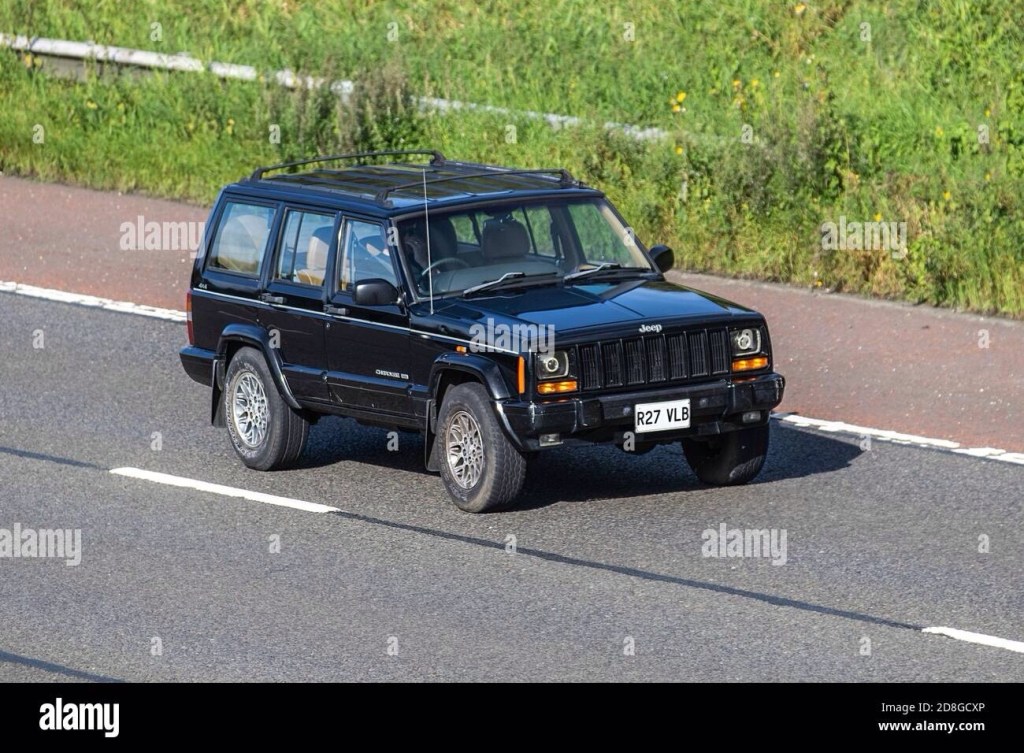
Well, no . . . it wasn’t. These guys had access to the “special lanes” reserved for top government officials, law enforcement, and the like. And they were headed for those lanes on what we would call the beltway, the nearest access road being slightly south of my apartment building. Once they were on the highway’s reserved lanes, where there were apparently no speed limits, they delighted in showing me what their vehicle could do, which — the last time I opened my eyes and looked at the speedometer — was registering 145 kilometers, or about 90 miles an hour. So, since apparently they weren’t going to take me out and shoot me, maybe they were just going to scare me to death instead. I began imagining my obituary in the Moscow Times , , ,
The fact that I am here today, writing this story, tells you that we made it to the airport without bursting into flames, and in plenty of time to get me, and my multiple pieces of luggage, through Customs. And now the suitcase with the Lenin portrait was about to pass through x-ray, and my two guardian angels were still standing behind me, watching over me to the very last. As the picture frame revealed itself, the Customs agent stopped the conveyor belt, studied the x-ray image, and said to me:
Him: “You have picture in suitcase.” (Duh!)
Me: “Yes.” (Brilliant comeback.)
Him: “What is it?”
Me: “It’s a souvenir.” (The absolute truth.)
Him: “Where you get it?”
Me: “The art market across the street from Gorky Park.” (Hmm . . . )
Okay, so that’s where I veered from the truth, just a teensy bit. But there was an art market across from Gorky Park, and I had been there, and maybe — just maybe — there could have been a Lenin portrait there at one time . . .
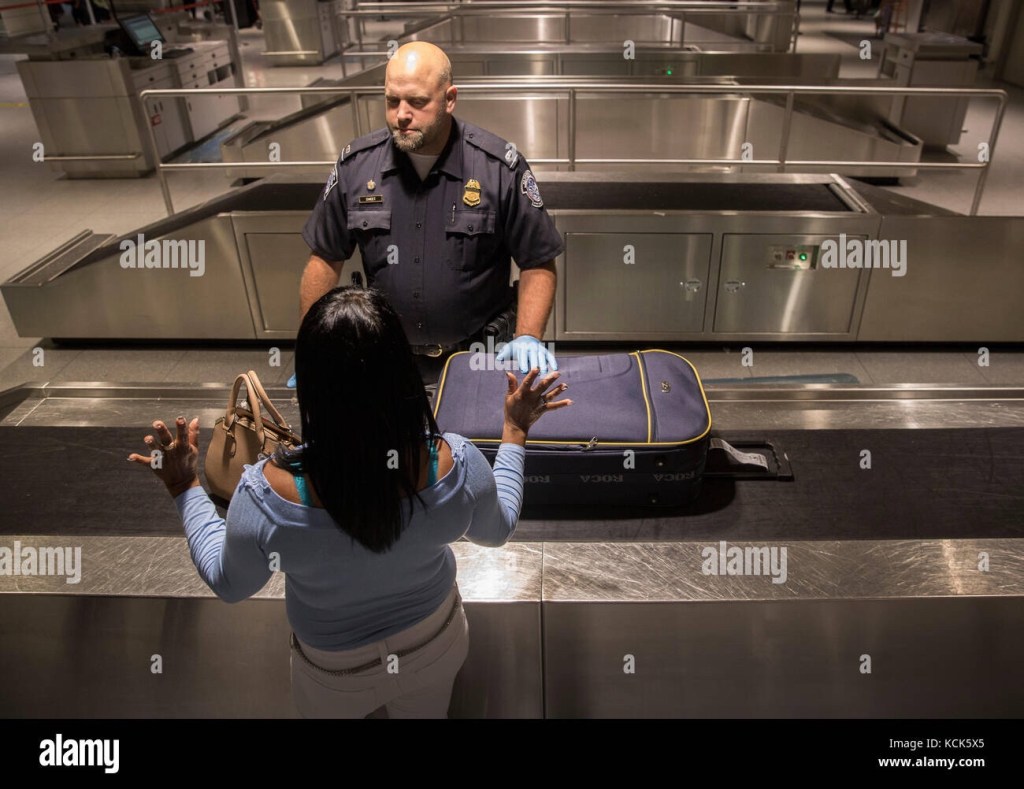
And that was when I observed the Customs agent looking past my shoulder, obviously at Bragin and Kostylev behind me; and I had a clear mental image of them gesturing with their hands to “let her go, let her go.” Or perhaps it was more like “get her the hell out of here already, we’re tired of babysitting her.” In any event, the agent looked at me — did I imagine the expression of respect, or maybe fear, in his eyes? — said “Hokay,” and passed my bags through, stamping my passport and handing it back to me. I turned around, said one more quick goodbye and thanks to my two bodyguards, and headed toward the departure gates.
Once again, I lacked the ability to see into the future; I had no idea that I was not to have seen the last of Vladimir Bragin. But that’s a tale for another time.
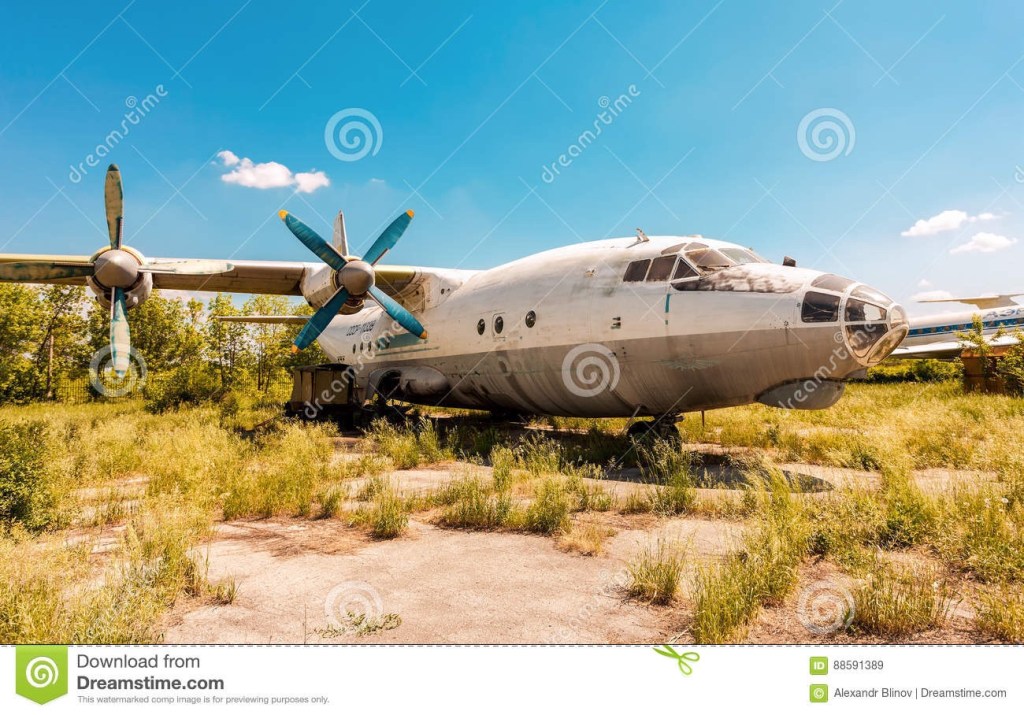
After my elegant transport to the airport, my airline reservation was, to say the very least, disappointing. Trying to save a few more dollars at my expense, Gil Robinson had booked me on Aeroflot all the way from Moscow to Washington, though as a concession I was at least seated in what was laughingly called “first class.” All that meant was more leg room. There was no division between the sections of the plane, and smoking was allowed in coach. It seemed that all Russian men smoked, so the thick gray cloud from the back of the plane easily found its way forward. The seats were incredibly soft, which may sound like a good thing, but they were hardly ergonomic. And when you stood up, the back of the seat flopped forward onto the seat itself. It wasn’t that mine was broken; they were actually designed that way.
As for the luggage rack, it was just that: an overhead rack, with a rope stretched across the front to (hopefully) hold the bags in place — no doors. If we encountered any turbulence, I guess we were just supposed to cover our heads and duck. I found myself wondering which century had given birth to this incredible flying machine, and who had cleared it for today’s flight — Mr. Magoo?

There was one other American passenger aboard, a man in the row ahead of mine, who pointedly ignored me and buried his face in a book or some sort of paper work throughout the flight. Interestingly, the flight attendant correctly spoke to him in English, but when she approached me, she immediately switched to Russian — even though she knew perfectly well I was also American. I felt as though everyone in Moscow knew me and I was always being watched, or watched over — and frankly, it was getting on my nerves.
I hadn’t been feeling particularly well that morning — probably from the excessive amount of food I’d forced down my gullet at Petrovka the previous day, followed by today’s terrifying ride to the airport. So when the attendant asked what I would like to eat, I told her I didn’t want anything because my stomach was a bit upset — which threw her into a frenzy. Her job description required her to take care of the passengers, and she didn’t seem to know what to do when something disrupted her routine. She did seem genuinely concerned, though, and kept trying to find some way she could be of help — offering me medicine, or even a doctor. (I had to wonder where she was going to find one of those at 30,000 feet, but no matter.) So I finally asked for a cup of tea, and she went away happy, returning quickly with an entire pot of a delicious Russian brew. It actually did make me feel a bit better, and she was satisfied that she had done her job.
The rest of the non-stop flight, I am happy to say, was smooth and uneventful. I even managed to catch up on some of the sleep I had missed the night before, and awoke feeling almost normal. When the plane touched down at Dulles Airport outside of Washington, D.C., I heaved a gigantic sigh of relief. I had not, until that moment, realized how stressful living in Russia really had been — my body, and my mind, both constantly on the alert for . . . what? Almost anything, really. I desperately needed a spa day, and as we taxied toward the terminal, I made a mental note to place that at the top of my new to-do list.

Making my way to the baggage claim area, I managed to locate and retrieve all of my bags — though not before reaching for one that was identical to mine but, as it turned out, belonged to a Russian TASS journalist (that’s a real thing, but it’s also frequently used as a cover for KGB officers in foreign countries). When I saw the large ID tag on his suitcase, I immediately pulled my hand back, just in time to see him grab the bag and shoot me a really nasty look. I muttered “sorry” in Russian, which threw him momentarily; then I took the pieces that actually did belong to me and piled them onto two airport luggage carts.
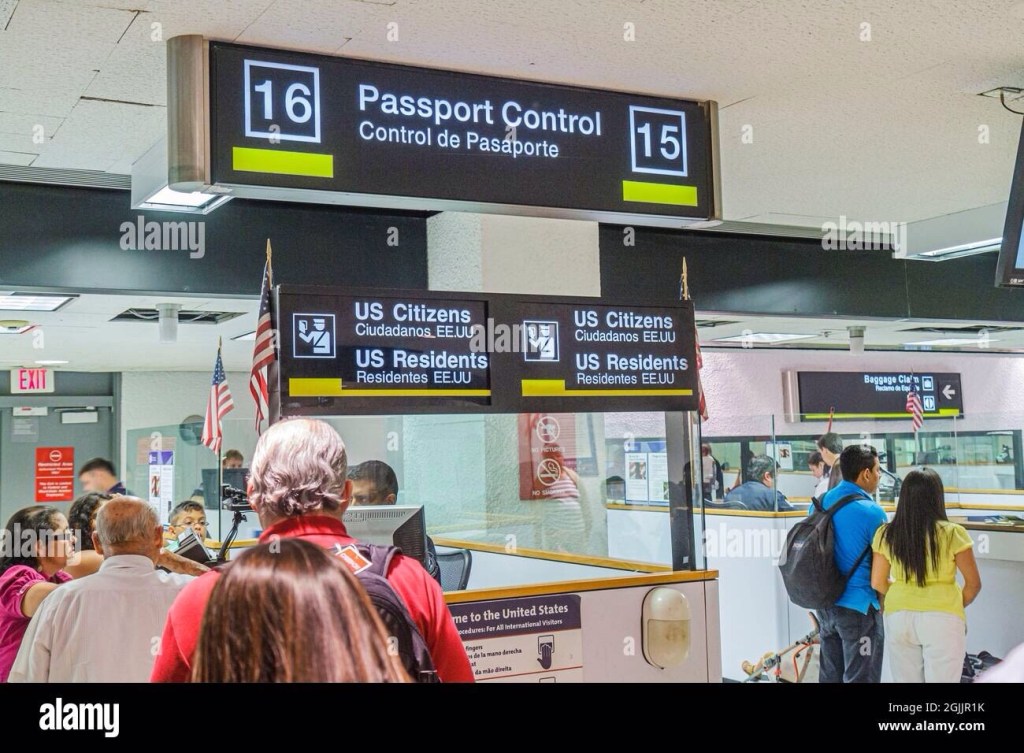
Wheeling one ahead and dragging the other behind — and feeling oddly like Dr. Dolittle’s “Pushmi-Pullyu” — I headed for the Customs area for U.S. citizens and spotted an empty lane. The agent, seeing me with two carts piled high with bags, looked around for another person who should have been accompanying me. Not finding anyone else, he asked, “Are all of those yours?” and when I said they were, he inquired as to where I had been and for how long. I told him “Moscow, for three and a half months,” to which he nodded, smiled sympathetically, said “Welcome home, ma’am,” stamped my passport, and waved me through. I could have been bringing home a Faberge egg from the Kremlin Armory Museum, and no one would have been the wiser. Too bad I didn’t know that in advance!
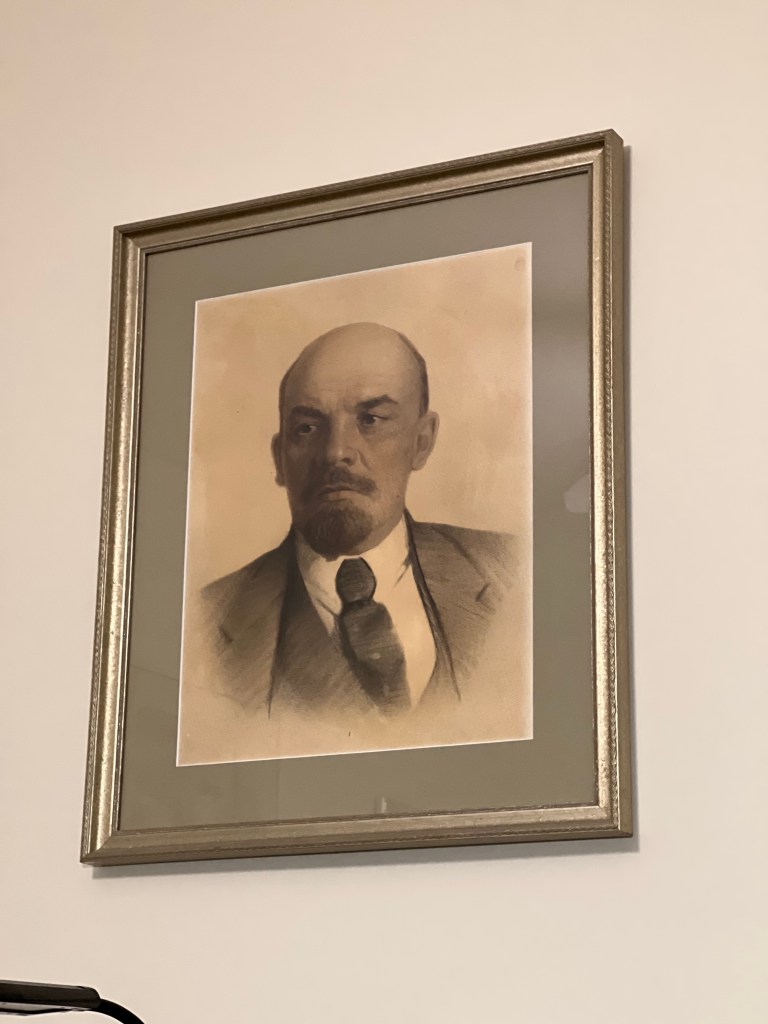
My sister was waiting to greet me on the other side of Customs, and seeing her made me realize I was really at home. When we arrived at my apartment, all I wanted was a shower and my bed. Most of the unpacking could wait until the next day, but I did pull out the gifts I had brought for her and a few others. And for myself there was the proud unveiling of the precious Lenin portrait, which had survived the trip undamaged. He had to be reframed, of course, and I had the perfect spot in which to hang him, directly over my desk in my home office. Within a few days, he had an expensive new frame, and he has resided above my desk for the past thirty years. In fact, as I write these words, he is still glaring down at me from my wall. I was once offered $1,000 for him, but I wouldn’t sell; his grim countenance helps to keep alive the memories of those days . . . and my brief career as a smuggler.
So now it was back to the real world of closing out my relationship with Gil Robinson’s Foundation, continuing my search for financing for my business school project, receiving and dealing with the chapters of Shvets’ book being sent to me from Moscow, and generally regaining some semblance of normalcy in my life. But that’s not so easy to do with the FBI knocking at the door. It all became a juggling act, which I will go into next time. ‘Til then . . .
Do svidaniye,
Brendochka
5/11/23 (re-posted 12/9/23)
 The Blog About Everything … and Sometimes Nothing