August 1993. Petrovka 38 was one of several buildings in Moscow that no sane Muscovite would ever want to see from the inside — right up there with Lubyanka (KGB HQ) and the notorious Lefortovo Prison. They were sure that, once they entered Petrovka, they would never again see the light of day. That may have been an exaggeration in most cases, but there was always that possibility.
Our first meeting with Messrs. Pashkin, Bragin and Kostylev had been held in an auxiliary building around the corner; but our final gathering was to take place in the main building — a sprawling, dark, solid, forbidding structure fronted by sturdy iron gates. This was the headquarters of the Moscow Militia, and it was meant to be taken seriously.
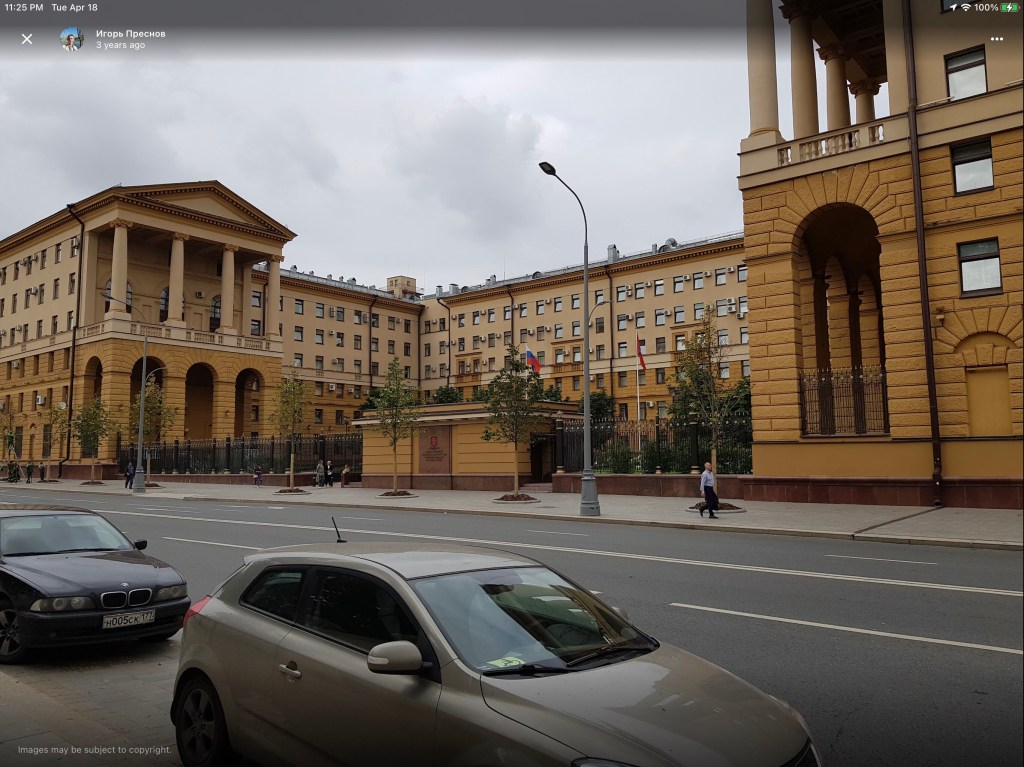
Gil Robinson was not in Moscow at the time, so just Lena and I were on our way with our trusty driver Vitold — who wished us well and said he’d be waiting for us outside . . . when and if we came out. Lena really didn’t need his lame attempt at humor to add to her already obvious nervousness; but to her credit, she screwed up every ounce of courage she had and walked right into that building with me.
Already present, of course, were the Militia representatives, Mikhail Pashkin and Igor Kostylev. And with them stood my KGB watchdog, Vladimir Bragin, who seemed that summer to be everywhere, all the time. An early arrival was our local foodie, Mr. Pivovarov, who I was told was already in the kitchen preparing lunch. Lena and I were given a brief tour of the public parts of the building; thankfully, no one found it necessary to show us the cells or “interrogation” rooms. Pashkin told me I was only the second American ever to have visited Petrovka 38, the first having been a top (unnamed) U.S. Government official; but somehow I felt he might simply have been trying to make me feel important. True or not, though, it sounded good.
Then we were guided into the “dining room”: a large rectangular room, bare except for a very long, well-worn table surrounded by a couple of dozen chairs — obviously the lunch room for the lower-ranking officers. Seated and waiting patiently on one long side, facing us as we entered the room, were twelve of the biggest, scruffiest, meanest-looking, ugliest human beings I have ever seen gathered in one place. They stopped talking amongst themselves as soon as we entered the room, and were collectively introduced by Pashkin as undercover Militia officers (no names). They had obviously been chosen for their jobs based on their toughness and ruthlessness, and trained to deal with the worst of the worst of the Moscow criminal element — to whom they actually bore an uncanny resemblance. These twelve lucky winners had been selected to have lunch with their boss and the clearly crazy — for why else would she have been there? — American lady now taking her seat on the opposite side of the table.
As I looked at my luncheon companions, my first thought was: “Holy Mother of God! What have I ever done to deserve this?” On the one hand, I felt like Daniel in the lion’s den. But on the other hand, here was a truly unique opportunity to meet a radically different type of individuals from any I had ever known — a once-in-a-lifetime experience that I would surely never forget (and obviously never have). Unfortunately, I wouldn’t have been allowed to photograph them even if I had been foolish enough to ask. I still see them in my mind’s eye, though. And they’re still not pretty.
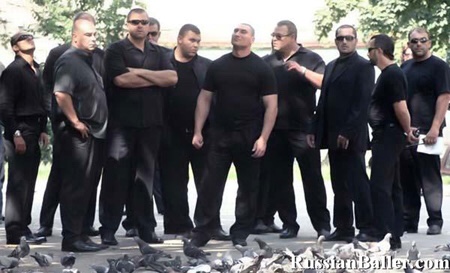
Lunch wasn’t quite ready yet, so it fell to me to try to make some sort of conversation with Moscow’s answer to the Dirty Dozen — none of whom, apparently, spoke English. Lena was there to translate, but what the hell do you say to these guys? “Where did you go to school?” “How’s business?” “Beaten anyone to death lately?” Not cool. So I started by telling them my name, where I was from, and what our Foundation was doing in Moscow, then waited for some sort of response. Nothing. Not a murmur or a spark of interest from any of them. I felt like a stand-up comic who had just bombed at the Comedy Club.
And just then, thankfully, the food arrived. There was Pivovarov, with a couple of conscripts from the kitchen, and a whole lot of veggie burgers and side dishes. The meal was actually quite well-prepared and tasty, and those twelve cops dug in as though they hadn’t been fed for days. Come to think of it, maybe they hadn’t, just to ensure their eager reaction to our food. In any event, they ate quickly, a couple of them belched in apparent satisfaction, and — on a silent signal from Pashkin — they all got up and left, still without a word. Had they been cautioned not to speak? Were they incapable of carrying on a normal conversation? Or had they simply forgotten how to say “thank you”? I considered calling out “you’re welcome” as they left, but decided it would be a waste of breath. Also, I wasn’t sure they’d appreciate the sarcasm — and I really didn’t want to annoy them! Any one of them could have snapped me like a twig.
*. *. *
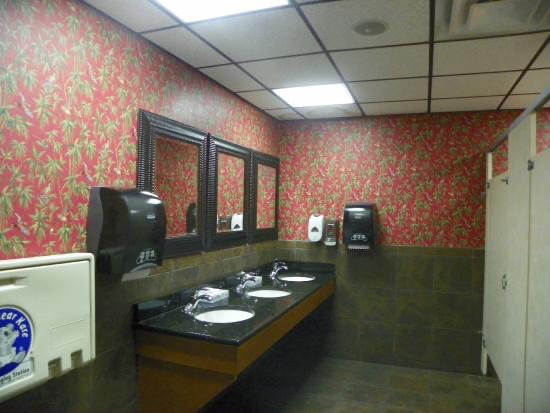
At this point, I realized that I needed to use the ladies’ room, and asked if there was one. Yes, indeed there was . . . down the stairway and at the end of a long hall in the basement. Lena and I were not about to split up, so she came with me, whether she needed to or not. We found our way without difficulty, and were amazed to walk into a sparkling clean rest room in excellent condition. There were individual stalls, with doors and functional locks; and all of the plumbing was in perfect working order. Very impressive, indeed.
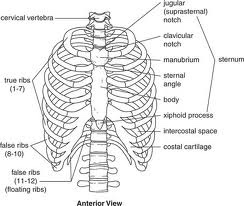
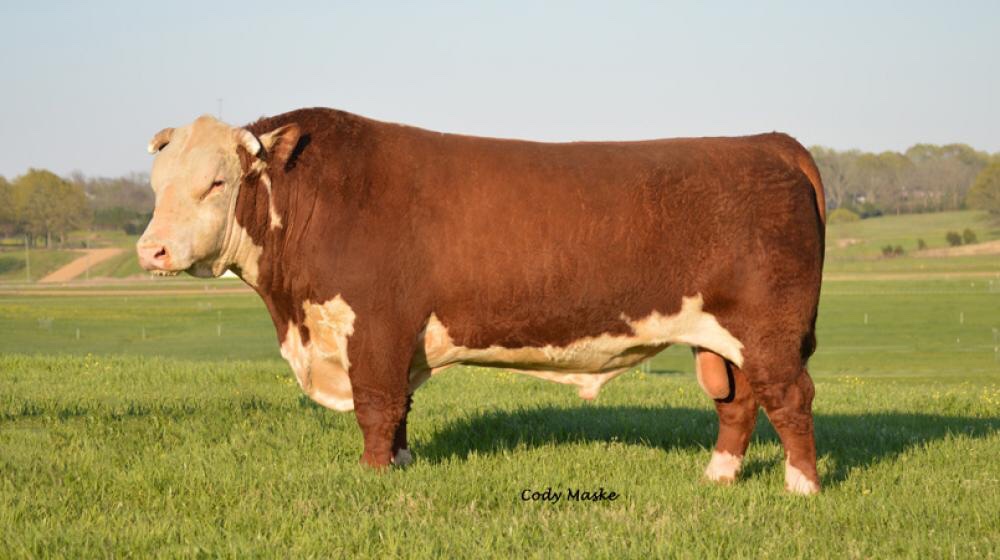
As we left the ladies’ room and retraced our steps along the hallway toward the stairs, I noticed an alcove in the wall that I hadn’t observed from the opposite direction. And in that alcove was something I certainly hadn’t expected: a pile of bones. A gigantic, perfectly cleaned and preserved, stark white . . . rib cage, lying on its back on the floor. I came to a screeching halt, at which point Lena saw what I had been looking at and clapped her hands over her mouth to keep from screaming. What — or who — was this??!!!
But a second look told me those bones couldn’t be human; they were much too large. And then of course I couldn’t resist. Placing the back of my hand dramatically against my forehead, and in my best Shakespearean voice (which admittedly is not very Shakespearean at all), I intoned: “Alas, poor Yorick! I knew him well . . .” And Lena laughed, also realizing by now that these could not possibly be the bones of a human being. Still, what were they, and what on earth were they doing there, in plain sight? But whatever the answer, I couldn’t pass up the opportunity. I had a small camera in my purse, and Lena stood watch while I hurriedly snapped a couple of pictures. Then we headed back upstairs, giggling like a pair of schoolgirls, before someone thought to ask what was taking us so long.
I had wondered why our hosts hadn’t eaten with us, and I got my answer when Pashkin announced that he had a little surprise for us. We were led into what was apparently the “executive” dining room, with a somewhat smaller table nicely set with real china, where we were presented with yet a second repast: huge servings of tender, perfectly-prepared steak with all the trimmings — and of course, vodka. This was indeed an honor. But why, then, had they let Lena and me eat all that other food? It’s not as though either of us looked malnourished. But eat, we did; and this time Messrs. Pashkin, Kostylev, Bragin and Pivovarov happily joined us. I found myself wishing I could ask for a to-go box so I could bring my portion to poor Vitold out in the car, but . . . well, no. That would have been unspeakably rude.
(Hey, wait a minute! Could those bones have been from the steer that gave its life for our steak dinner? Hmmm . . . )
*. *. *
As our second feast was winding down, and we were all basking in a warm, vodka-induced glow, I found a moment to quietly ask Pivovarov about the Lenin portrait. He smiled and inquired whether I had a car and driver with me. When I said I did, he requested that we drive him to his office — he had the portrait ready for me. I was thrilled, and had made sure to bring along enough cash, just in case. It would have been simpler if he’d brought the picture with him; but I understood that he wouldn’t have wanted any witnesses to his little transaction, which was most likely against one or more laws regarding the “liberation” and sale of government property for personal profit — and especially not here, in Militia Headquarters.
Then as we were saying our farewells, Bragin asked what time my flight was scheduled to leave the next day, and said that he would pick me up at my apartment and drive me to the airport. I thanked him for the offer, but told him that Vitold was available to drive me . . . but he insisted that it was no trouble, and told me what time he would be there, around two hours before flight time. It was not a question. And when in Russia, it’s seldom a good idea to try to argue with the KGB. So I thanked him again and said I’d see him in the morning . . . and then spent the rest of the night wondering why I continued to warrant such royal treatment. Again, my mental meanderings led me to question whether it might have anything to do with Valentin Aksilenko, and if so, what was going on that I didn’t know about.
Vitold, of course, was waiting patiently in the car across the street when we left the building, and was clearly relieved to see us. I explained that Pivovarov needed a ride to his office as he had something for me there, and we took off across town once again. Lena and Vitold waited in the car while I went upstairs to the office, where I found the Lenin portrait still hanging on the wall above the desk. But there was another one, slightly smaller, that he had probably scrounged from another office or a dusty basement somewhere and had carefully wrapped in newspaper and twine. He pulled back a corner of the wrapper to show that it was the real thing, and I paid him, thanked him profusely, and headed downstairs with my bounty. When Vitold saw me, he asked how on earth I planned to get that thing home; and I realized I hadn’t figured that out yet. Oops. But I knew I’d manage it somehow; it was just too good to leave behind.
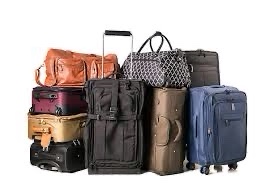
And so we finally headed back to the office. I still had some packing to finish, a framed portrait to deal with, several dear friends to bid farewell, and an early flight to catch. I could make up for the sleep I would miss that night, on the plane tomorrow.
*. *. *
But even leaving Moscow was to prove out of the ordinary — yet another tale for the next chapter. And until then, dear readers, I remain faithfully yours . . .
Brendochka
5/4/23 (re-posted 12/8/23)
 The Blog About Everything … and Sometimes Nothing