While surfing the news headlines the other day, I ran across this little gem: “English speakers, here’s how to pronounce ‘Qatar,’” by the delightful AJ Willingham, a Senior Writer for CNN Digital who “covers internet subcultures, religion, positive news and various obsessions.” [CNN Profiles – AJ Willingham – Senior Writer, Culture] . . . just the sort of oddball stuff I find it impossible to resist. So I knew this was going to be good.
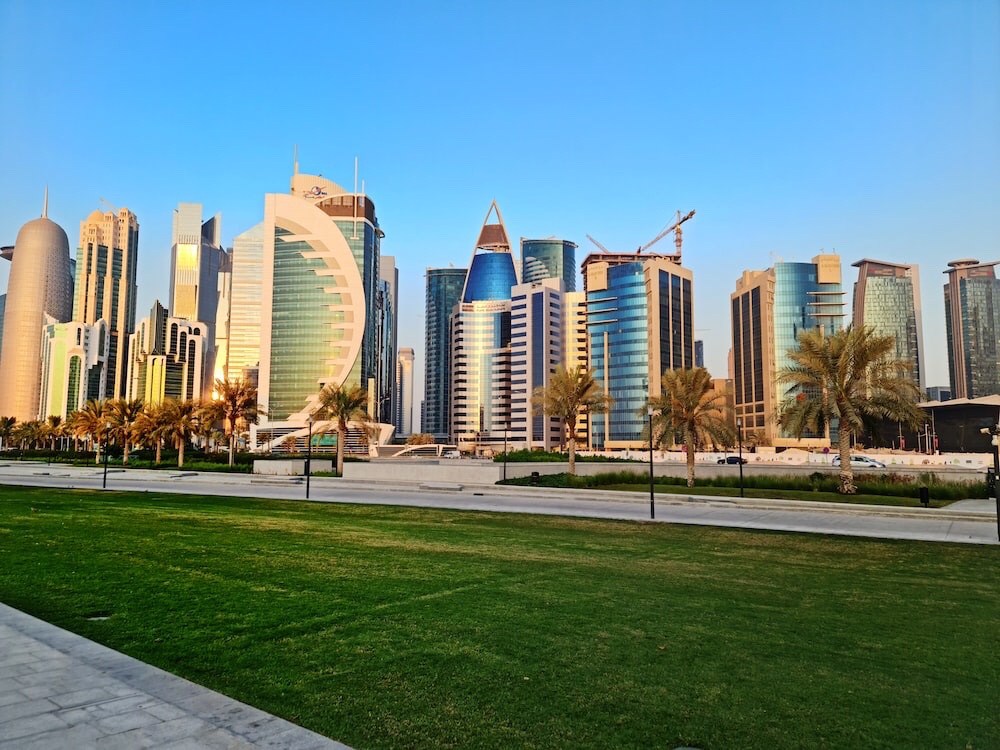
She began by telling me something I already knew, which was that most English speakers will pronounce “Qatar” something like “kuh-TAR.” This, of course, is what I had always done until fairly recently, when I heard from some so-called expert that it should be pronounced more like “cutter.” That never sounded quite right to me, but hey, it’s the Qataris’ name, not mine, so who am I to disrespect them?
But AJ is apparently a stickler for accuracy, and she had dug much deeper. Here is the explanation — or most of it, anyway — that she unearthed (and you never know what treasures you might unearth once you start digging in that ancient part of the world):
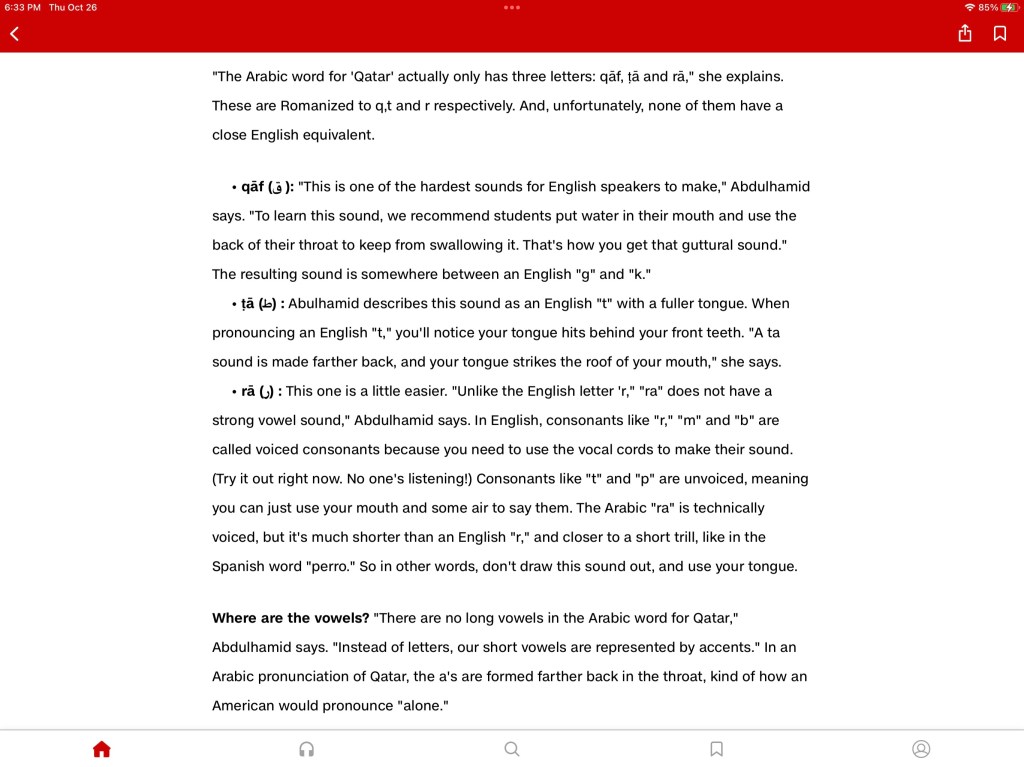
Now, I love languages. I’m not actually a linguist, sadly; but the nuances, the similarities and differences do fascinate me. And I studied Russian, which I believe entitles me at the very least to a medal for bravery. And I can say “yes,” “no,” “please,” “thank you,” and “bathroom” in several languages. Just the essentials.
But I’ve read the foregoing explanation of “Qatar” three times now, and I even tried making that guttural sound with water in my mouth and directed my tongue to touch the roof just behind my teeth. That simply resulted in my choking on the water . . . or the part I didn’t actually spit out all over my iPad. And after all of that, I have come to one conclusion, and one only: I will never study Arabic. That is not in any way a political decision; it’s simply that I know my limitations.
A lot of people are impressed by my ability to have learned the Cyrillic alphabet, and to decipher words like человеконенавистничество. (That’s one word, 10 syllables, 24 Cyrillic letters — 26 in English, but please don’t ask me to explain why the extra two.) It means “misanthropy,” and I’m quite proud of having conquered it, even though it doesn’t come up in conversation very often. So I’ll stick with what I know, and if the Qataris don’t mind, I’ll probably just continue saying “kuh-TARR.” And if they like, they’re welcome to mispronounce “Worcester.” Most Americans do, anyway, except those from Massachusetts and nearby Rhode Island.
*. *. *
All of this has started me thinking of the confusion I encountered when living in Prague back in 1991. I’ve told this story before, but even those who did read about it have probably forgotten it, so I’ll take a risk and repeat myself. If you do happen to recall it, just skip to the end, okay?
I don’t speak Czech. But Russian and Czech are both Slavic languages, so I figured it wouldn’t be that difficult to learn. However, since I was working long days there, and spending my evenings wining and dining, and weekends sightseeing, there wasn’t a lot of time for actual study. I managed to learn to communicate with shopkeepers, waiters, and taxi drivers, at a time when most locals did not speak English yet, and I got along just fine.
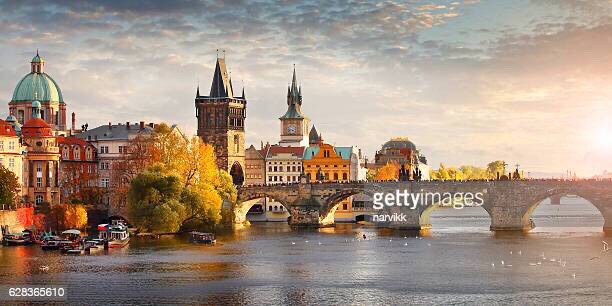
On one of my early days there, I was walking to work when I spotted a sign in the distance that read “OZ.” There didn’t seem to be a yellow brick road in the vicinity, but I was curious and kept walking toward it. And when I got closer, I saw that it was a sign on a produce shop, and that “O” and “Z” were merely the initials for “Ovoce” and “Zelenina.” Now, in Russian, “Ovochi” (roughly the same pronunciation) means “vegetables.” There is no “zelenina” in Russian, but the word “zelyoniy” means “green.” So I reasoned that I was looking at a place that sold . . . vegetables and green things? Uh . . . nah. I knew Prague was quirky, but that was just silly. So when I got to work, I asked one of my local co-workers who did speak English, and she told me that, in Czech, “ovoce” means “fruit,” and “zelenina” are indeed vegetables. So much for the two Slavic languages theory. And so it went, for three lovely months in Zlata Praha (Golden Prague). For the most part, I spoke Russian, they spoke Czech, everybody made a lot of gestures, and we all muddled through.
*. *. *
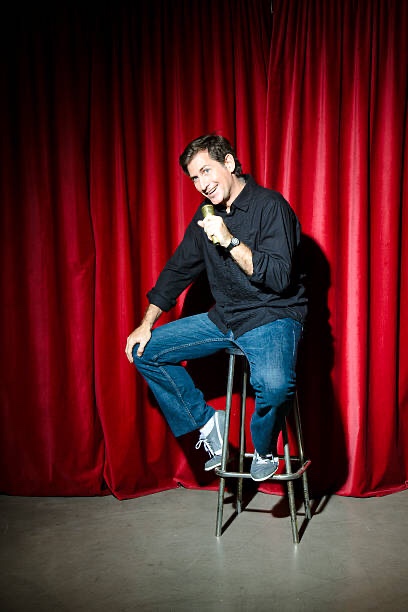
I also had fun with words once at a local theater performance in Virginia, where a young comedian was asking the audience for the first words that came to their minds in different categories. He would select one word and write it down to be used later in his skit when he built a story using the chosen words. I was uncharacteristically quiet, until he asked for a nonsense word. For whatever reason, no one in the audience came up with a response, until I suddenly blurted out into the silence: “supercalifragilisticexpialidocious.” My sister was seated next to me, and did one of those sliding-under-the-seat things she always did when I opened my big mouth in public . . . though the young man on stage did a very funny double-take and pretended to try to write it down. At which point I, of course, proceeded to help him out by spelling it for him, and received a very satisfying laugh, from him and from the audience. That’s 34 letters, by the way — ten more than that Russian monstrosity.
*. *. *
I have had the pleasure, throughout the many decades of my life, of knowing quite a few highly intelligent people, a number of whom spoke several languages. I’ve never understood how they keep them straight. One woman I worked with had even mastered Chinese and Classical Greek. I’m not sure why she did, but it was impressive as hell. I am not one of those people. My English skills are quite good, but I have only studied one additional language, and that is Russian. So when I try to remember how to say something in French, for example, the only thing that comes to mind is the Russian equivalent. Once in Montreal, when I tried to answer “oui” to a question, it came out “da,” and “non” of course became “nyet.” I’m hopeless.

But the fascination is still there, and I appreciate AJ Willingham’s attempt to explain “Qatar” to me. Sorry to disappoint. And thanks for the effort.
So, “do svidaniya” — goodbye, or more accurately, ‘til we meet again,
Брендочка (Brendochka)
10/29/23
 The Blog About Everything … and Sometimes Nothing