When I was in Prague, it was still the capital of a country called Czechoslovakia. And it was a fantasy world, caught up in celebration of the departure of the last of the occupying Soviet troops. There were people partying everywhere; Paul Simon visited and gave a concert, attended by the new President Vaclav Havel, at the Prague football (soccer) stadium; puppeteers gave free shows on the Charles Bridge; and the Pilsner beer flowed like . . . well, like beer, I guess.
I arrived in May of 1991, assigned to work in the new Prague office of an American law firm that had been hired by the Czechoslovak government to aid in the formulation of its new constitution and judicial structure. I made wonderful new friends; tried delicious new foods and beverages; had my own two-room apartment; walked endlessly through the twisted, cobblestoned lanes of the city; and savored every magical moment. It was easily the best three months of my life.
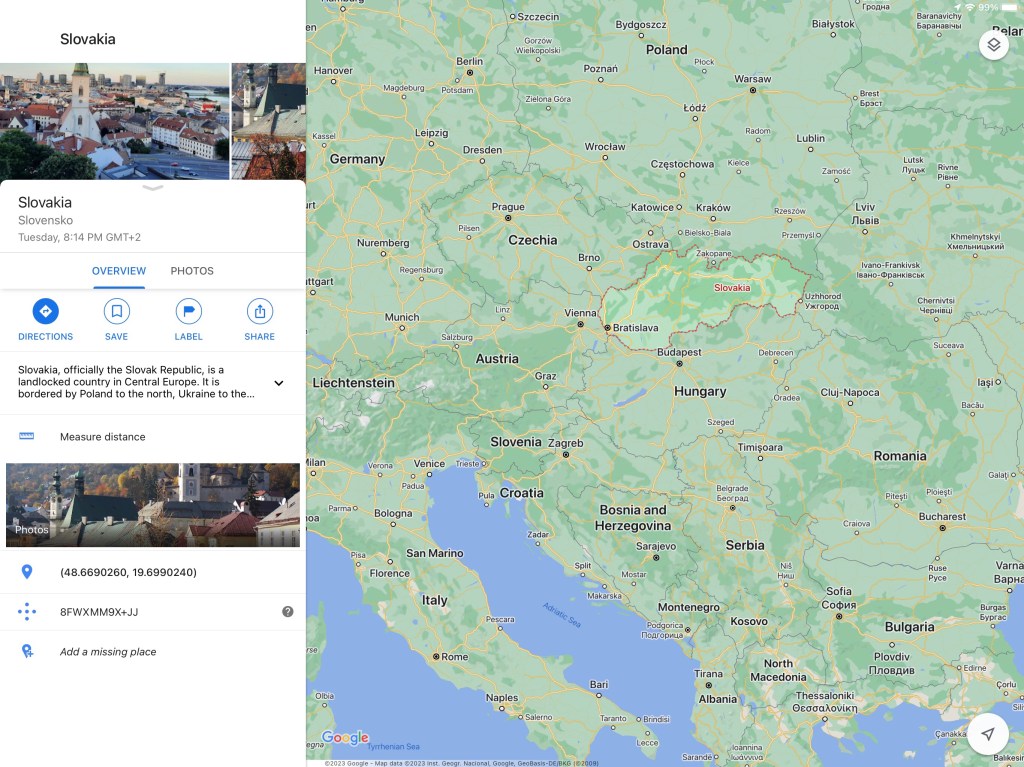
I returned home in mid-August, and before I’d had time to readjust to the different time zone, I was thrown for a loop by the first of three major events that were to occur between then and the end of that year. Just a few days after my return, on August 19th to be exact, shocking news came out of Moscow of an attempted coup against the Gorbachev regime. After three days the coup failed when Boris Yeltsin so famously stood on a tank to calm the angry crowds of demonstrators. But things were noticeably different.
Then, on September 18th, my mother passed away. Not an event of worldwide significance, but one that led to a major redirection in the course of my life.
And finally, on December 25, 1991, Mikhail Gorbachev resigned as President of Russia and was replaced by the bombastic Mr. Yeltsin. Merry Christmas.
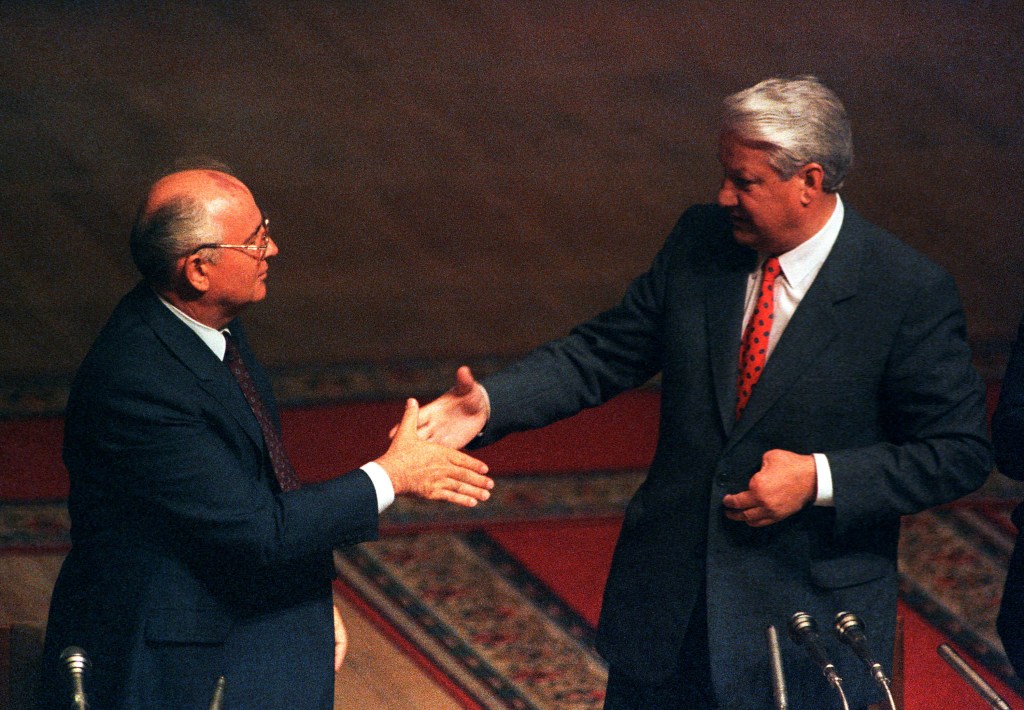
After that last event, the entire world order changed. It had started two years earlier, when the Berlin Wall came tumbling down in late 1989. But by 1991, events had begun to move faster and faster, until no remnants of the former Soviet Bloc were discernible, except perhaps in Russia itself. In place of a single USSR with 15 Soviet Republics, there were 15 internationally-recognized new nations. Russia had shrunk.
And then there were two more new countries on the world map, though outside the borders of the former Soviet Union. In the wake of all of the other changes, on the last day of 1992, Czechoslovakia was split in two, and Slovakia and the Czech Republic (a.k.a. Czechia) officially became two separate, sovereign nations. And they did well for a while, each becoming a member of both NATO and the European Union.
But today, Slovakia seems to be losing its way.
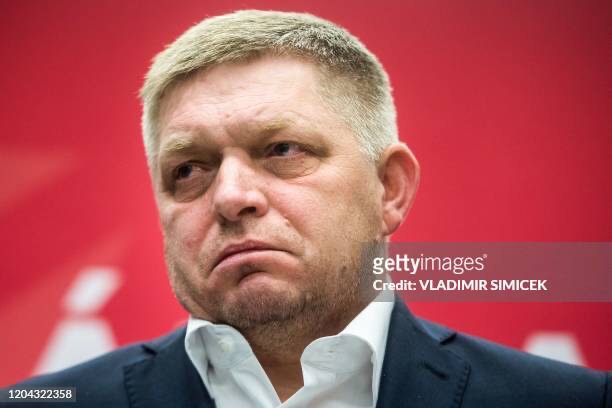
Last Saturday, September 30, 2023, Slovakia’s parliamentary election was won by a party known as “SMER” (or “Social Democracy”) headed by the Moscow-friendly Robert Fico (pronounced “Feetso”). His party received 22.9% — the largest single share — of the total vote among the seven qualifying parties. Although this is not enough of a majority to allow Fico to reclaim his former position as Prime Minister, it does give him the opportunity to form a coalition government and retake the Prime Minister’s office. He has 14 days to accomplish this; and with several other, smaller parties to woo, his odds are considered to be good.
In addition, the current President of Slovakia, the very popular Zuzana Caputova, has announced her decision not to run for reelection at the expiration of her present term in 2024. Under her progressive leadership, Slovakia has been a staunch supporter of Ukraine during its fight against Russia’s onslaught. But, much the same as in Britain’s constitutional monarchy, her role is largely representative and advisory, with only limited authority.
*. *. *
So what happens if Robert Fico once again becomes Prime Minister of Slovakia? First and foremost, he has stated unequivocally that there will be an immediate end to Slovakia’s military support for Ukraine. He also vowed to block Ukraine’s admittance to NATO. In other words . . . screw Ukraine. He has campaigned on a promise to work toward a negotiated settlement of the Russia-Ukraine war, knowing full well that it would have little hope of success in light of the demands of Russia that Ukraine cede some of its territory — a total non-starter in Ukraine’s view.
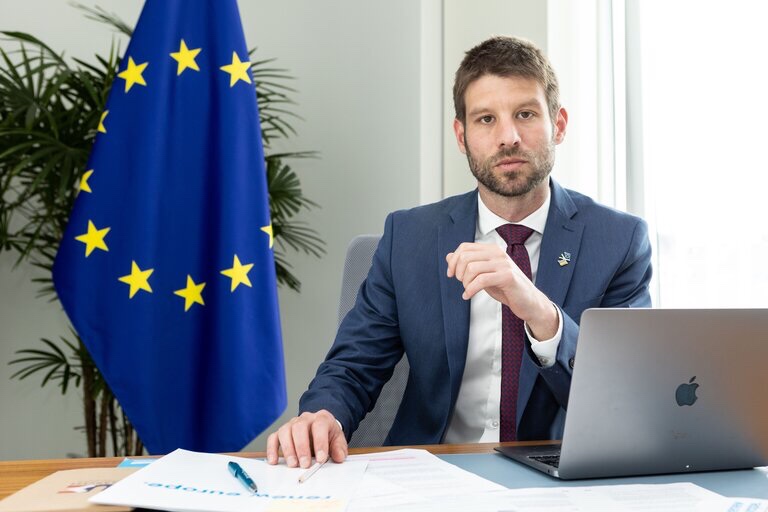
The leader of liberal party “PS” (Progressive Slovakia), Michal Simecka, has said the election result was “bad news” for Slovakia. At a news conference on Sunday, October 1st, Mr. Simecka is quoted as saying:
“The fact of the matter is that SMER is the winner. And we of course respect that although we think it’s bad news for the country. And it will be even worse news if Mr. Fico forms the government.”
Stating that his party would do everything possible to prevent Fico from governing, he continued:
“I will be in touch with other political leaders of parties that were elected to parliament — on an informal basis — to discuss ways of preventing that. We think it will be really bad news for the country, for our democracy, for our rule of law, and for our international standing and for our finances and for our economy if Mr. Fico forms the government.” [CNN, October 2, 2023.]
*. *. *
Fico has also blamed “Ukrainian Nazis and fascists” for provoking Vladimir Putin into launching his invasion of Ukraine — perfectly mimicking Putin’s own ludicrous claims.
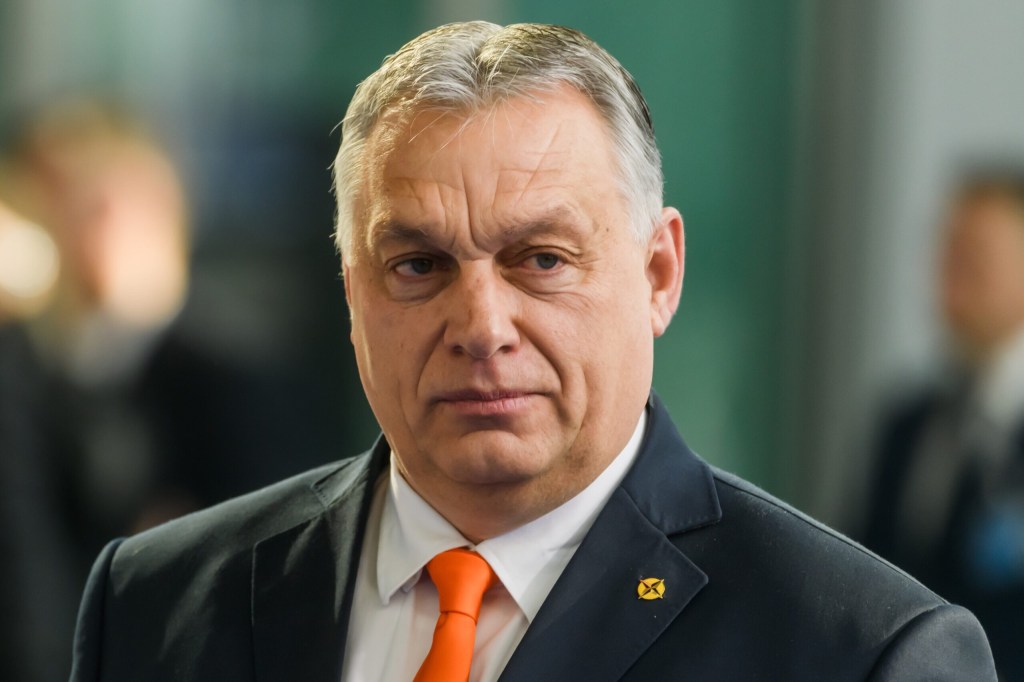
In addition, he has become a close ally of Hungary’s Prime Minister Victor Orban, himself a worrisome Moscow-friendly influence seated on the border of Ukraine. Orban, in congratulating Fico on Saturday’s win, has said, “Always good to work together with a patriot. Looking forward to it!” [CNN, citing X (formerly Twitter), October 2, 2023.]
*. *. *
Then there is Poland, whose government has strayed so far from the heady days of Lech Walesa as to be virtually unrecognizable. Despite its full support of Ukraine until now, its governing Law and Justice party openly opposes “liberal democracy,” and is leaning more toward the current Hungarian model. What the future holds for Poland is anyone’s guess.
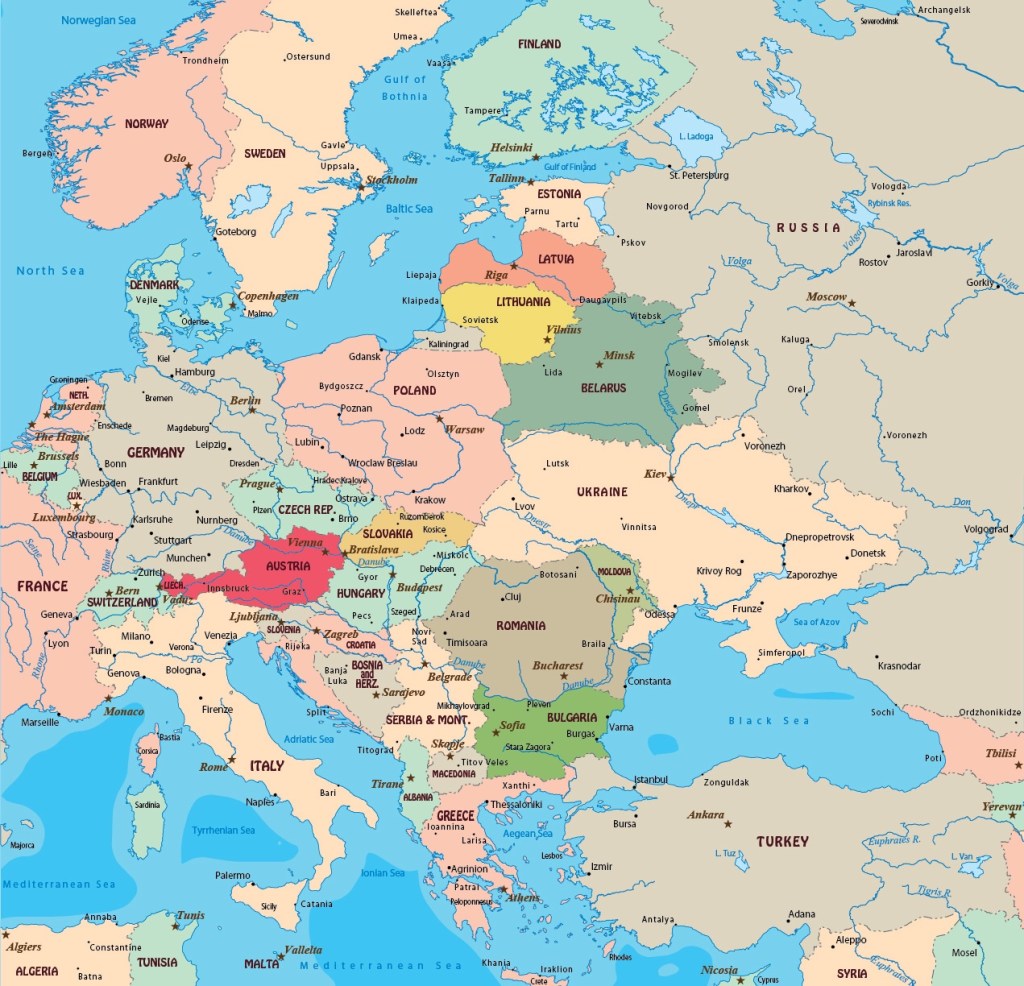
So it’s not just Slovakia that is in peril of falling once more under the sway — and perhaps the tank treads — of authoritarian Russia. But it is the country in this week’s headlines. And, together with Hungary and Poland, they occupy the western border of Ukraine. With Russia’s puppet Belarus to the north and Russia to the east, that leaves only Romania and Moldova to the south. Is it any wonder Ukraine is seriously feeling the pinch?
What I cannot understand is how three countries — Slovakia, Hungary and Poland — who barely three decades ago threw off the shackles of Soviet hegemony — can have such short memories.
Just sayin’ . . .
Brendochka
10/4/23
 The Blog About Everything … and Sometimes Nothing
The Czech Republic is heading down the same path to hell. It was just a coincidence that the last elections turned out well. In two years, it won’t happen again, and the Czech Republic, led by the Slovak STB agent Babiš, will follow the surrounding countries.
LikeLiked by 1 person
Ivo, thank you for your comments. It breaks my heart to think of my beautiful Prague possibly being ruined again. And it terrifies me to see what is happening throughout so much of Europe under people like Putin, Lukashenko, and Babis. It is the worst part of history repeating itself. I pray it will not be another 1968.
LikeLiked by 1 person