And, apparently, unless Donald Trump has it in for you.
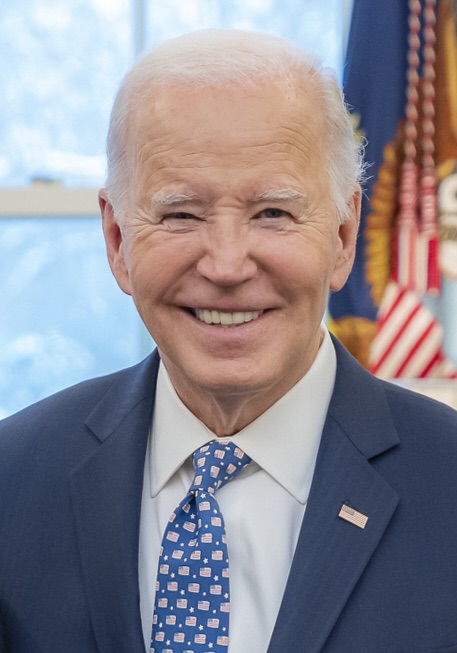
Remember his cruel, vicious jabs at Joe Biden? Not just the blatantly untrue ones about having “stolen” the 2020 election . . . but, even more inexcusable, the personal ones: calling him “Sleepy Joe,” and “cognitively impaired,” and — most horribly — a “decrepit corpse” that had been used as a “frontman” during his term as president.
Former President Joe Biden, Age 82
Yes, Joe Biden had physical conditions consistent with aging: arthritis, GERD (reflux), and non-valvular atrial fibrillation (A-Fib). (Hell, I have all three of those, and with proper medication, I’m just fine, thank you.)
But Biden was completely up-front about his medical conditions, sharing the results of his regular physicals with the American public. He never claimed — as Trump does — to be “the healthiest president this nation has ever seen.” [Ali Velshi, MSNBC, September 8, 2025.]
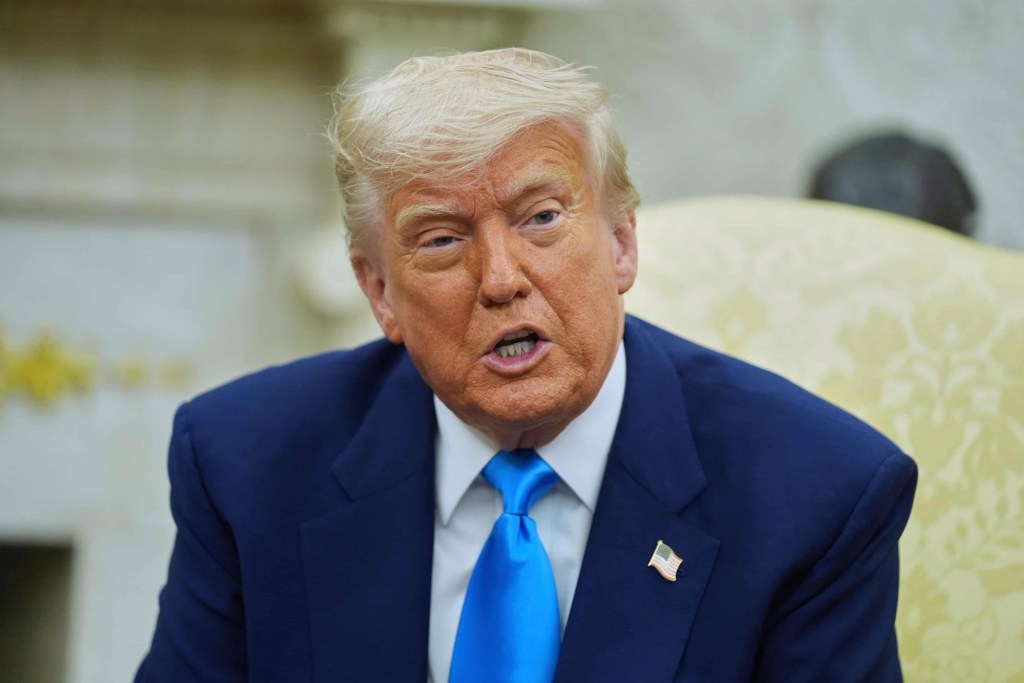
Donald Trump, Age 79
Instead, the cadre of sycophants surrounding Trump — including his own physician — offer only the most opaque, glowing comments, saying that his lab results are “astonishingly excellent” and “his physical strength and stamina is [sic] extraordinary.” [Id.]
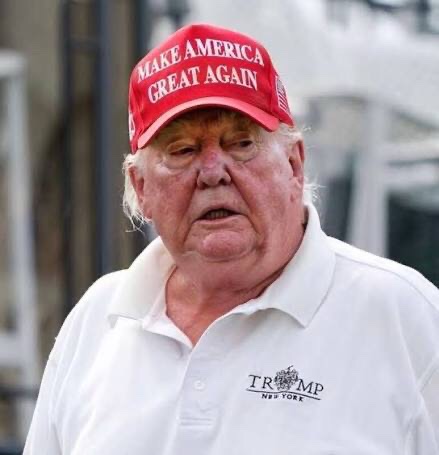
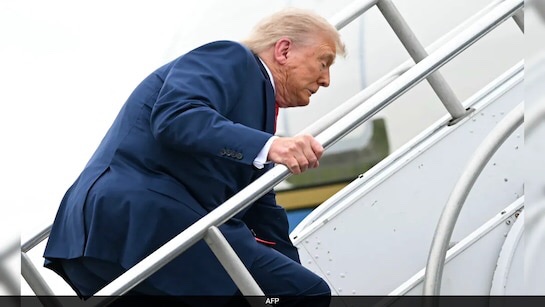
And when questioned about his appearance — the huge bruises that appear sporadically on his hands, his swollen ankles, the excess of facial makeup, or his bent posture and hesitant gait — they make excuses. There is no transparency, and no admission that at 79 — just three years younger than Joe Biden — Trump is understandably not as healthy or as vital as he was just a few years ago.
It’s not only heel spurs anymore. Take a look at these candid shots on the golf course and boarding Air Force One:
And listen to his garbled sentences when he’s not reading from a prepared speech or a teleprompter. He rambles, he wanders off-topic into the most absurd irrelevancies, he forgets names and mispronounces words.
I am not a physician or a psychiatrist. But I have eyes, ears, and a brain, and when I look at Donald Trump, I see a man in decline. How far that decline has progressed, I am not qualified to judge.
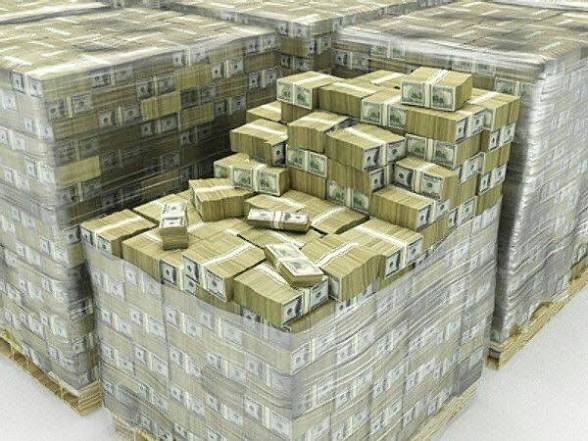
Following Russia’s invasion of Ukraine in 2022, the U.S. and its allies blocked $300-350 billion in sovereign Russian assets, mostly European, U.S., and British government bonds being held in a European securities depository.
Now European Commission (EC) President Ursula von der Leyen has suggested the European Union (EU) use the cash balances associated with the Russian assets frozen in Europe to help finance Ukraine’s defense against Russia’s continuing war. And the EC is considering using Russian cash deposits at the European Central Bank from maturing bonds owned by Russia to fund a “Reparations Loan” for Ukraine. [Guy Faulconbridge, Reuters, September 15, 2025.]
At the end of World War II, no one in the Soviet Union complained when Germany — including both the western Federal Republic of Germany (FRG) and the eastern German Democratic Republic (GDR) — was required to pay reparations to the European allies, including the Soviet Union, that had been decimated by Hitler’s nazi regime.
But in that war, the Soviet Union had fought on the side of the Allied forces when its own country was threatened. This time, it is Vladimir Putin’s Russia that is the aggressor . . . whether they admit it or not. And they’re not happy at the thought of losing all of that beautiful hard currency.
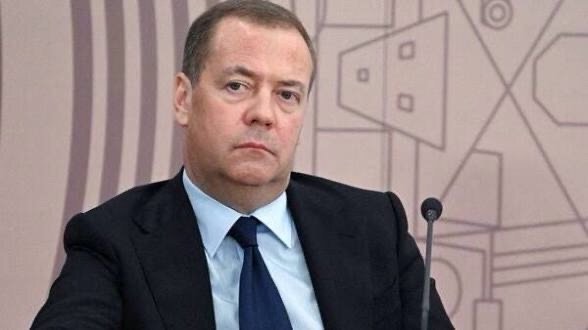
Enter onto the scene Dmitry Anatolyevich Medvedev, Deputy Chairman of the Security Council of the Russian Federation, and all-around bad boy of the Kremlin. I just call him “The Mouth.”
Dmitry Medvedev
Best known for his unrestrained, unfiltered, uncontrolled penchant for lobbing threats at the West, he did not disappoint on this occasion. In response to the EC statements, he had this to offer in a post on Telegram:
“If this happens, Russia will pursue the EU states, as well as European degenerates from Brussels and individual EU countries who try to seize our property, until the end of the century . . . [in] all possible ways . . . [and in] all possible international and national courts . . . [as well as] out of court.” [Id.]
Earlier this month, after the UK said it had spent around $1.3 billion of money raised from frozen Russian assets to purchase weapons for Ukraine, Medvedev warned that Russia would take more Ukrainian territory in retaliation, and added that they would also go after British property around the world.
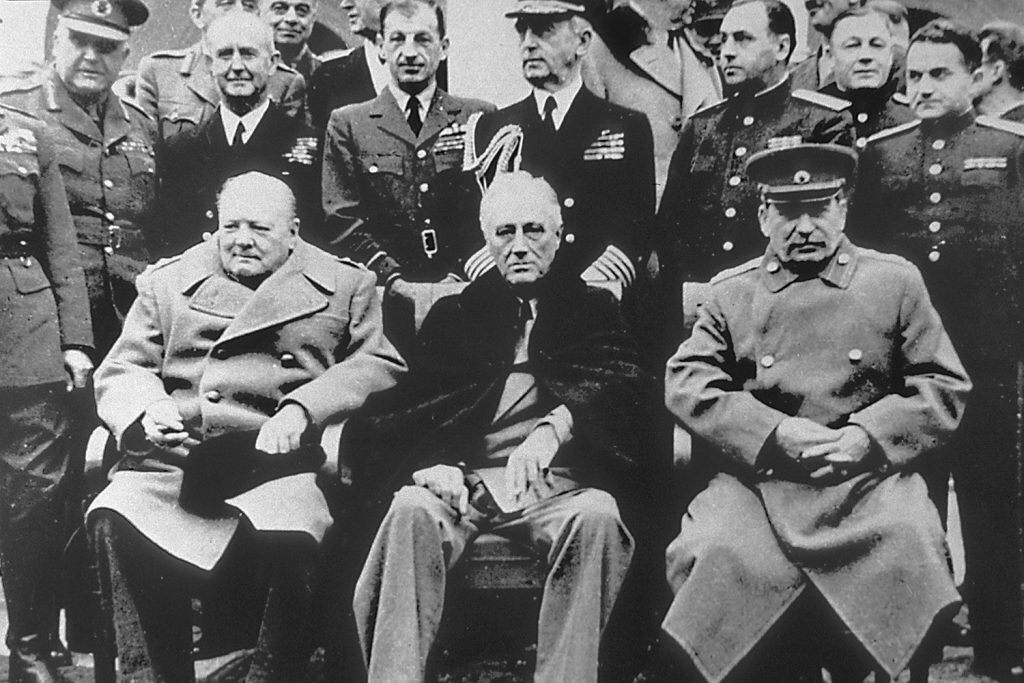
Medvedev was born 20 years after the end of World War II. But surely he has studied the history of that war, and is aware of the reparations paid to his country by Germany, primarily in the form of industrial equipment, goods, raw materials, forced labor, and even scientists. The payments were made in accordance with agreements reached at the Yalta and Potsdam conferences in 1945, and continued until 1953.
Churchill, Roosevelt and Stalin at Yalta – February 1945
But he was very much alive in 2022, when his country staged its unprovoked attack on Ukraine. And he is well aware of the assets left behind in Russia by U.S. and other foreign companies when they withdrew their businesses in protest of that invasion — assets that were then seized, or bought at outrageously devalued prices, by his government.
A Rebranded “McDonald’s” in Moscow
How conveniently Mr. Medvedev overlooks the facts that don’t suit his purpose. But then, his country’s leaders have always excelled at ignoring and rewriting history.
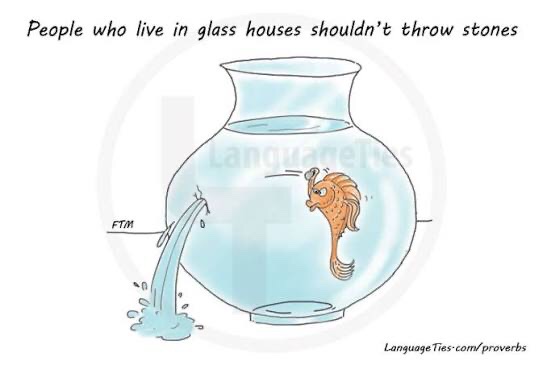
Surely, all of those professed good White Christians in the upper echelons of government in Washington must be familiar with the Gospel of Luke, 4:23. But do they know what it means?
It means that people should take a good, long look at their own flaws and shortcomings before criticizing, condemning, or making demands of others. Or, in today’s lingo:
They preach their version of Christian values, family values, conservative values — conveniently omitting any mention of Jews, Muslims, Hindus, or other non-Christians who apparently don’t possess any decent values — while in reality practicing vengeance and persecution, encouraging racism and sexism, demeaning women, hunting down innocent immigrants, ridiculing people with disabilities, and promoting violence.
I don’t have to name them; you know who they are. But I have to ask them:
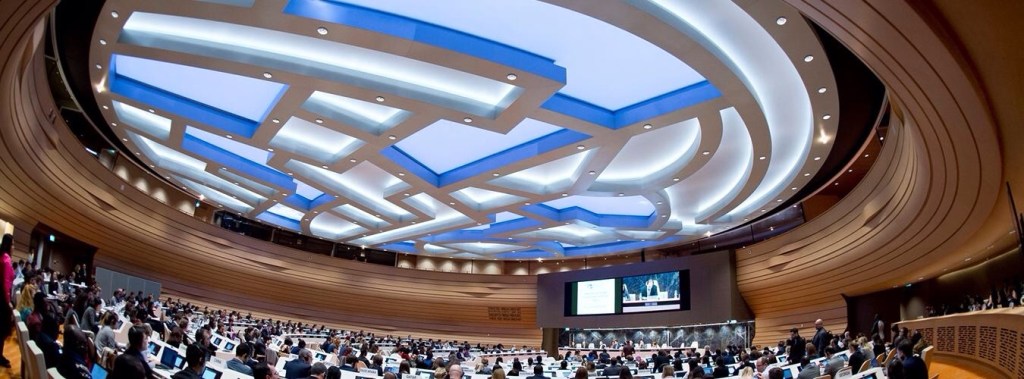
The United Nations did. An event was held at UN headquarters in New York City yesterday to mark the 18th annual International Day of Democracy, highlighting how democratic participation can be transformed “From Voice to Action.” [un.org]
UN photo by Jean Marc Ferre
The UN website described the program as follows:
“In a time of shrinking civic space and rising disinformation, building trust, dialogue, and shared decision-making is more urgent than ever. Rooted in the principle of ‘We the Peoples,’ this event aims to show democracy as a living force for agency, hope, and cooperation.” [Id.]
Noble words in an increasingly ignoble world. But did anyone outside of the UN hear them? Where were the celebrations, the hoopla, the recognition that we give to Valentine’s Day, Mother’s Day, or Eat-an-Extra-Dessert-Day? (That last one was on September 4th — sorry you missed it.)
Most people probably haven’t heard of the International Day of Democracy; I confess that I hadn’t, until I happened to look at my online list of holidays yesterday (calendarr.com). And that is a sad commentary on the state of our world, at a time when democracy itself is at peril of being consigned to the trash heap of history.
It scares me, it angers me, and it makes me indescribably sad. How can we have allowed things to reach this stage?
Although it may sound like an idyllic holiday to you water lovers out there, riding the waves anywhere between the coasts of South America and the United States could get you blown to smithereens.
For the second time in two weeks, the U.S. government — on the orders of Donald Trump and under the direction of Secretary of Defense (or War) Pete Hegseth — has specifically targeted and brutally murdered, in international waters, persons they suspected of being drug dealers smuggling narcotics into the United States. They were not in U.S. territorial waters; there was no attempt made to intercept, arrest and charge them. They were just liquidated.
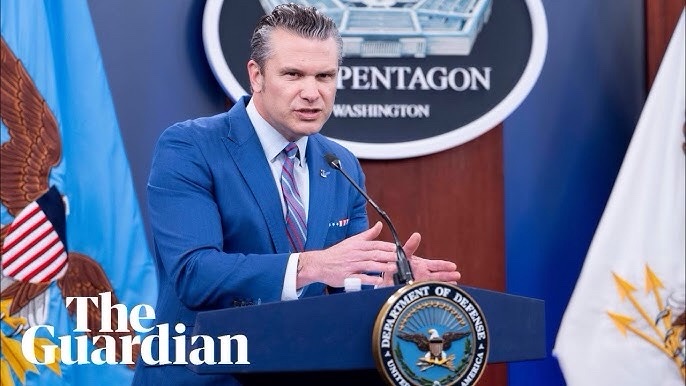
On the first occasion, when eleven people lost their lives, it was later noted that there was no conclusive evidence that they were actually members of the Tren de Aragua criminal organization as suspected, or even that they were indeed headed for the U.S. coast. It was not provably self-defense, as claimed by the Trump administration to justify the offensive military action. When questioned by reporters, Hegseth said:
“We knew exactly who they were, exactly what they were doing, what they represented, and why they were going where they were going.” And when a reporter asked, “How did you know?” Hegseth replied:
“Why would I tell you that?” [Haley Britzky, CNN, September 15, 2025.]
Perhaps the better question is: Why wouldn’t he?
Pete Hegseth Press Conference
This time, the body count was “only” three. And this time, the administration had their explanations ready. In a Truth Social post yesterday morning, Donald Trump offered the following (the all-caps emphasis is, of course, his):
“This morning, on my Orders, US Military Forces conducted a SECOND Kinetic Strike against positively identified, extraordinarily violent drug trafficking cartels and narcoterrorists in the SOUTHCOM area of responsibility. The Strike occurred while these confirmed narcoterrorists from Venezuela were in International Waters transporting illegal narcotics (A DEADLY WEAPON POISONING AMERICANS!) headed to the US.
“These extremely violent drug trafficking cartels POSE A THREAT to U.S. National Security, Foreign Policy, and vital US interests. The Strike resulted in 3 male terrorists killed in action. No US Forces were harmed in this Strike.” [Id.]
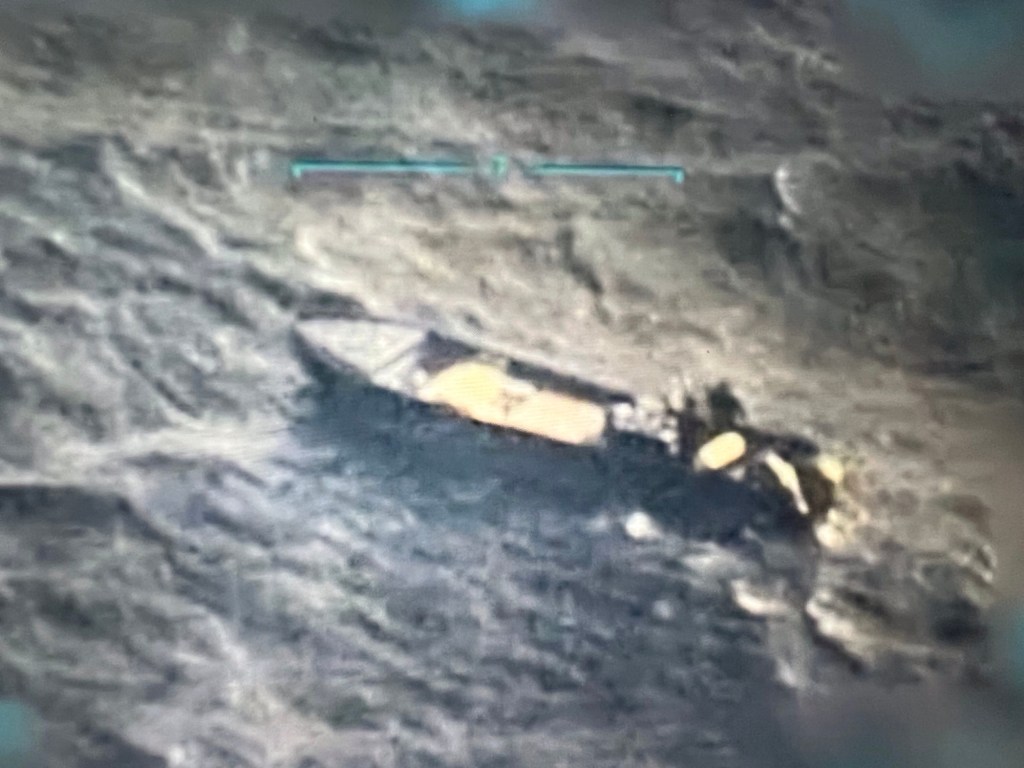
He even posted a video of the boat in the sea before and as it exploded in a ball of orange flame.
Before the Strike . . .
As to whether these actions might be violations of international law, Trump later told reporters in the Oval Office:
“We have proof. All you have to do is look at the cargo that was, like, it’s spattered all over the ocean. Big bags of cocaine and fentanyl all over the place.” [Danny Kemp, Barbara Agelvis and Patrick Fort, AFP, September 15, 2025.”
Either he forgot to mention — or the reporters judiciously chose not to write about — the floating body parts.
*. *. *
All reports indicate that the boats were in international waters, and not within the 12-mile U.S. territorial limit. Were these then acts of war — first strikes against citizens (whether criminals or not) of the sovereign nation of Venezuela? Or was it a case of 14 counts of cold-blooded murder? That is for the international authorities to determine.
But on a simpler and more personal level, let’s think about it this way:
You are at home. Your neighborhood watch just reported the presence of a suspicious-looking individual wandering around, seeming to be scoping out the various houses as he strolls from street to street. You have a family to protect: a spouse, children, pets. So you grab your legally-registered hunting rifle and head outdoors, finally spotting the stranger in the next block, headed in the general direction of your home. You don’t stop him, ask who he is or what he’s doing there. You don’t call the police to check him out. You — the self-appointed judge, jury and executioner — just hunt him down, take aim and pull the trigger, ending his life without a word.
He hadn’t tried to break into your home; he wasn’t anywhere near your property. You didn’t even know who he was . . . whether he was simply visiting a friend or relative in the neighborhood, or perhaps a potential homebuyer. Or even an annoying door-to-door salesman.
Did you have a right to take the law into your own hands and decide that this man was an imminent threat to you and your family?
Hell, no, you didn’t! And you would deserve the life sentence that awaited you after you were legally charged and tried for first-degree murder.
*. *. *
Even in the context of a much-needed war on drugs, there are legal boundaries that must be observed. The United States — my United States — does not go around slaughtering people on a presumption of guilt . . . or for any other reason. We wait until they are within our territorial jurisdiction, arrest them, and let the legal system govern the next steps. It’s called due process. And it is the American way.
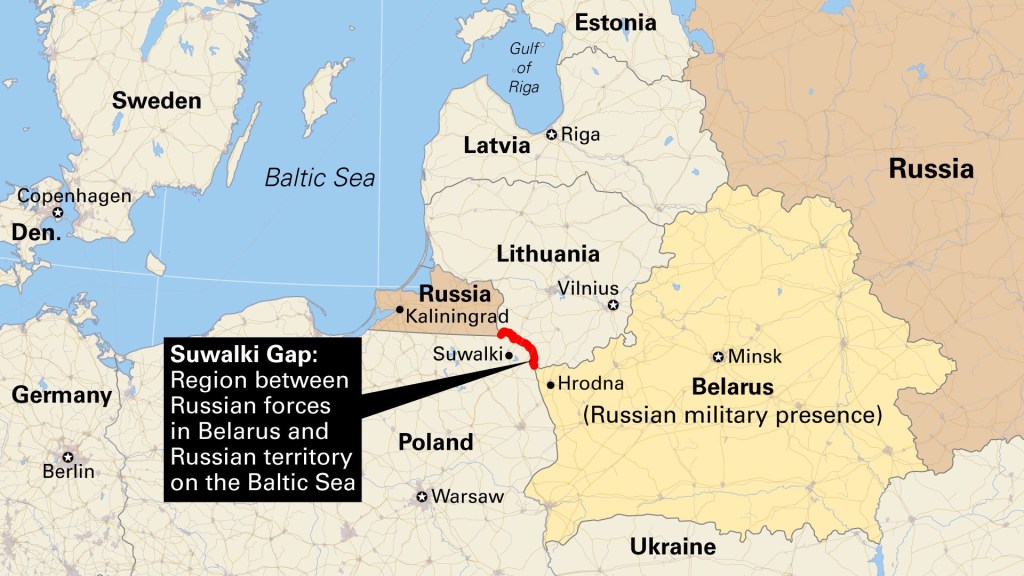
It’s only about 40 miles long, and forms the border between NATO members Poland and Lithuania. It is sparsely populated, and as both countries are also part of Europe’s shared-visa Schengen Zone, has served as a vital connection between the northern Baltic states of Estonia, Latvia and Lithuania and their southern allies.
But the small strip of land known as the Suwalki Gap — after the nearby Polish city of the same name — is a major headache for Vladimir Putin.
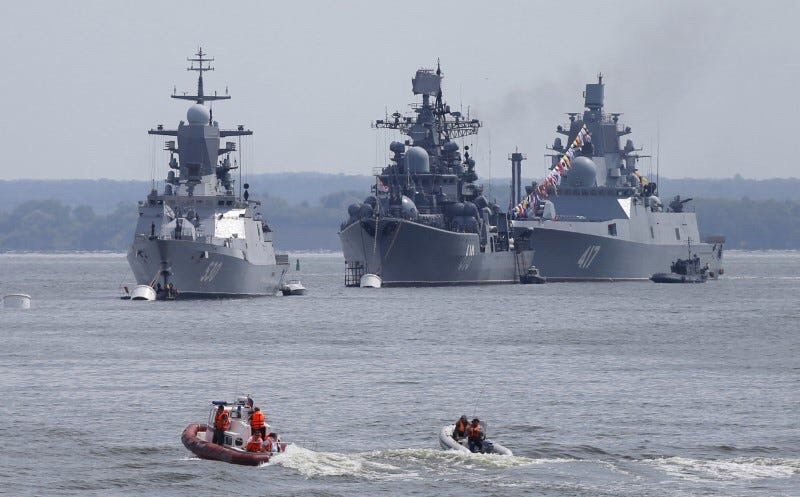
Russia’s strategic military enclave of Kaliningrad on the Baltic Sea coast is separated from the Russian “mainland” by Lithuania (a NATO member state) and Belarus (a Russian ally and host to substantial numbers of Russia’s military forces and armaments) . . . much as Alaska is separated from the U.S. “lower 48” by Canada.
The principal difference is that the U.S. and Canada are staunch allies, whereas Lithuania — in the wake of Russia’s aggression against Ukraine and other Eastern European nations — has closed its borders with both Russia and Belarus, thereby cutting off Russia’s only land access (through Belarus) to Kaliningrad and its vital naval fleet. And Poland has likewise slammed shut its border with Belarus since last week’s Russian drone attack into Polish airspace.
That means that Russia’s only open route to its key territory is by sea . . . a longer and far more difficult journey if one’s purpose is to relocate substantial numbers of ground troops and military resources.
Russian Ships at Kaliningrad
So while it may not be as well known as the Strait of Gibraltar, the Gaza Strip, or Korea’s 38th Parallel, the Suwalki Gap is a point of both connection and division that is of vital importance to Russia in pursuance of its obvious territorial ambitions in Eastern Europe.
Though the Kremlin continues to deny those ambitions — something they manage to do with a straight face — their drone attacks on Poland, and the presence of a Russian drone hovering over Romanian territory for 50 minutes on September 14th, clearly belie their disclaimers.
Kaliningrad is strategically indispensable to supporting Russia’s military might; and both Poland and Lithuania — along with their shared strip of land at Suwalki — stand squarely in its path. I believe Suwalki is a name that will become much more familiar is the not-too-distant future.
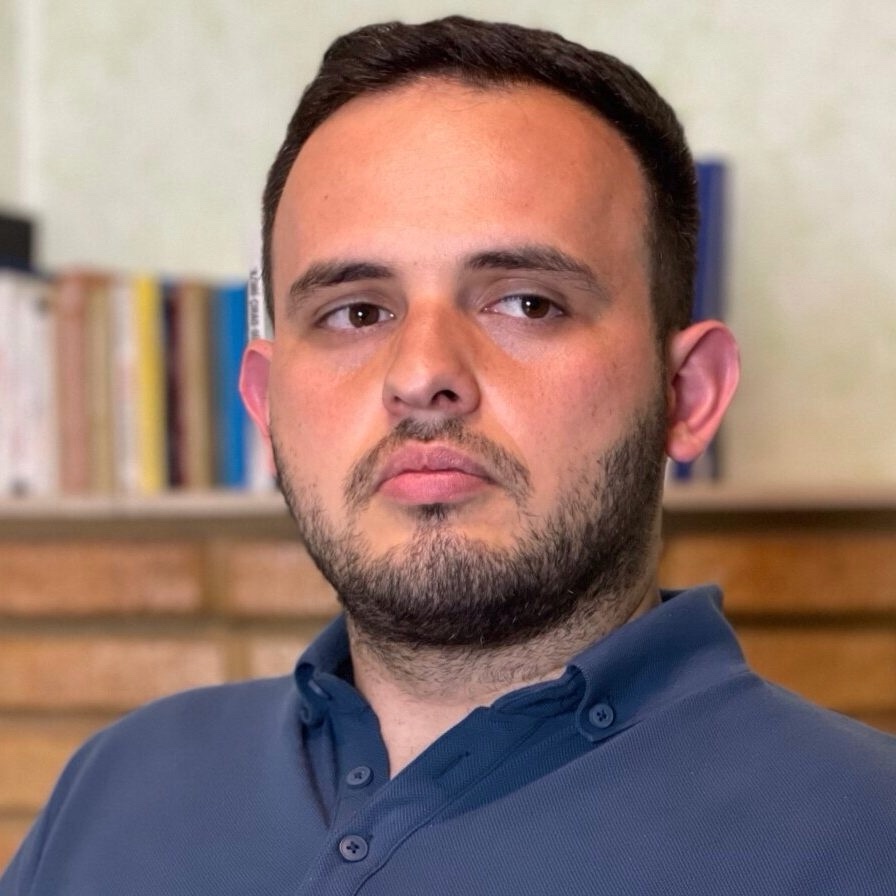
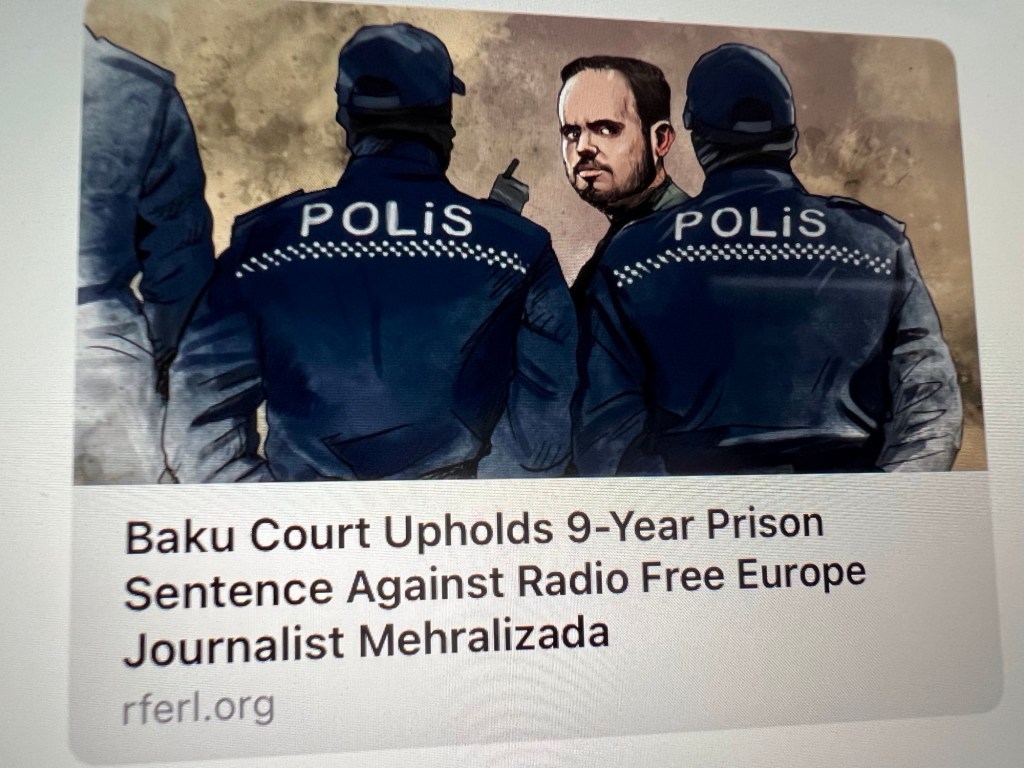
Farid Mehralizada — an Azerbaijani journalist recently released from prison after being falsely charged with “smuggling” — told of the real reason for his arrest in May of 2024. While the security agents jumped him and placed a hood over his head, one of them whispered into his ear: “You talk too much.” [RFE/RL, September 9, 2025.]
Farid Mehralizada
Such arrests and imprisonments have become commonplace in today’s Russia, Belarus, Azerbaijan, and other countries where it is illegal to speak out against the government, or even to discuss or read about subjects that are contrary to government policy. And detaining and imprisoning foreigners on such spurious charges has become de rigueur in those countries, where they are held for ransom to be paid by their governments, usually in the form of prisoner exchanges or return favors.
But in the 1980s, such incidents involving foreigners were unusual in the Soviet Union. In 1986, when American journalist Nicholas Daniloff was detained in retaliation for the arrest of Soviet spy Gennadi Zakharov in New York, the international outcry was unprecedented, and led to a rapid exchange of the two after less than two weeks of diplomatic negotiations.
For the most part, however, Americans were considered to be safe in the Soviet Union, as long as they didn’t do anything stupid. But in 1988, when a friend and I signed up with an organized tour group for a trip to the USSR, my mother — a lifelong champion worrier — was sure I would be kidnapped and held hostage. I never understood why she thought I would be of any value to the Russians; but I’m convinced she neither slept, ate, nor exhaled during the two weeks I was away.
I’m happy to report that she was wrong, and I returned home safely.
Then in 1993, I went to live and work in Moscow for several months — an experience about which I have written at some length. My mother had already passed away by then, so I didn’t have to worry about her worrying about me.
By that time, however, there was much for us Americans and other foreigners to be concerned about. It was the time of what they called “the Great Mafia Wars” in Russia, and people — foreigners included — frequently turned up dead, or disappeared completely.
I was in charge of the Moscow office of a U.S. humanitarian aid program, which was legally registered to operate in Russia and thus was on the radar of both the local Militia and the KGB. And both organizations had introduced themselves to me, making sure I knew they were always around. I tried not to dwell on it, but I was obviously easy prey if they had decided they needed another pawn for their political chess match.
But again, I was lucky. Maybe I had a guardian angel — probably my worry-wart mother — but whatever the reason, and despite taking a few risks (the details of which are best left unexplained), I survived and made it back home in one piece . . . one very exhausted, but exhilarated, piece.
I wouldn’t trade that experience for anything. But when I think back to those months in the context of the recent proliferation of kidnappings and hostage-takings, I realize how easily I might have become one of the victims of a regime that knows no restrictions and places no value on human life.
And that realization, more than anything, has forged my emotional tie to the desperate people languishing in prisons and penal colonies throughout Russia, Belarus, and elsewhere, fighting to survive until the wheels of international diplomacy turn far enough to bring them home.
So, for those of you who may have wondered why I continue to post a weekly tribute to those hostages, it is both from my desire to keep the world focused on their plight, and an immense feeling of gratitude that I was lucky enough to escape the same fate.
Some may call it survivor’s guilt; I call it empathy. Whatever its name, and for what it’s worth, it’s the reason I have kept — and will continue to keep for as long as I am able — my weekly vigil on behalf of those less fortunate.
I hadn’t really thought about it before, but I suppose the United States first became a disposable society once the shortages and rationing of World War II were behind us, and we had plunged headlong into the peace, prosperity and technological advances of the 1950s and ‘60s.
Weary of having to repair and mend everything from automobiles to underwear in order to make them last so that our troops overseas could have tanks and parachutes, we just began throwing things away and replacing them with the latest and greatest innovations.
Living the American Dream – c. 1950s
Refrigerator making a funny noise? Don’t call a repairman; just order a new one . . . with a self-defrosting freezer. Car need a few new parts? Forget the mechanic and check out the latest model Chevy with the extra-long tail fins. Husband getting on your nerves? You might even turn him for a newer model. (Just kidding about that last one.)
And that mindset has taken such firm root in our society, that people now are beginning to think about doing the same thing to our planet: turning it in for a new, fresh, unspoiled land to . . . well . . . spoil.
Two of the world’s richest men — Elon Musk and Jeff Bezos — each with his own commercial space company, and a combined net worth of more than $630 billion, have seemingly never outgrown their adolescent “Flash Gordon” dreams of conquering outer space. And now they have the means to try to make those dreams a reality. Their visions differ only in the details.
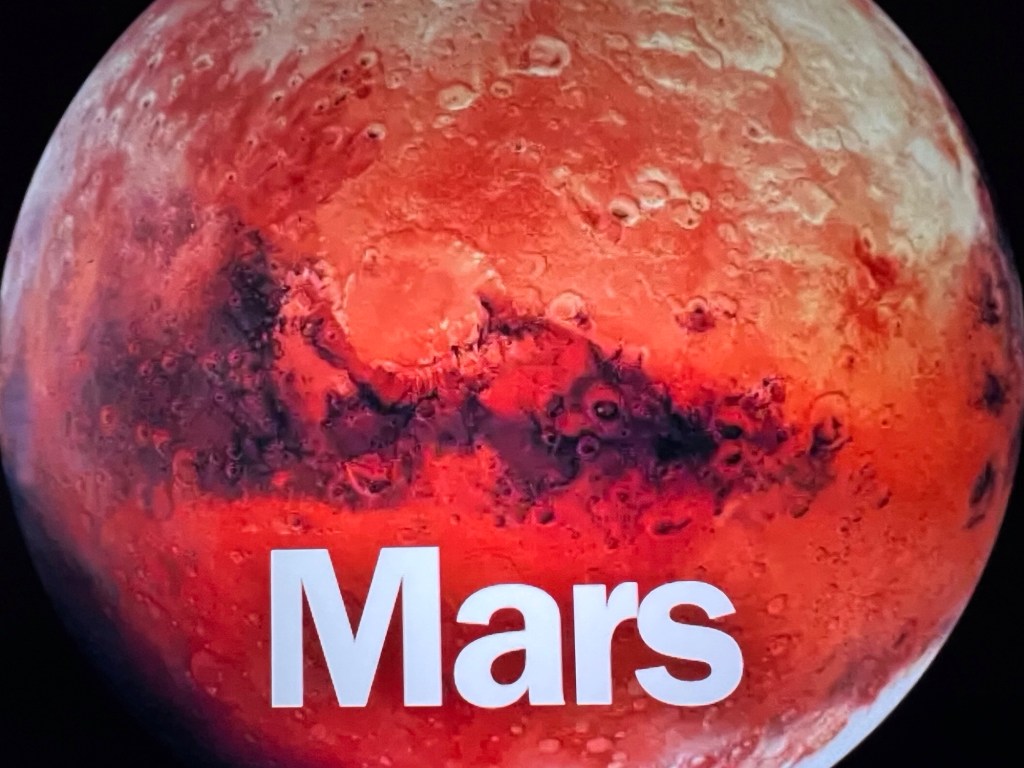
Musk, as we know, is focused on Mars, where his mind’s eye sees actual settlements of people: Earthlings, relocating to become Martians. Actually living on the “Red Planet.” Starting from scratch, in an environment without buildings, or trees, or (as far as we know) potable water sources.
“Muskland“
Bezos, on the other hand, has a somewhat more credible idea. He envisions moving “heavy industry and polluting industry off Earth,” possibly onto spinning spaceborne laboratories where colonies of humans live and work full-time, reserving Earth for living and vacationing in one big, pollution-free national park. [Jackie Wattles, CNN, September 12, 2025.]
“Bezos Industrial Park”
Presumably, we would all have two homes — one near our workplace in space and one for relaxation on Earth — and commute, perhaps on weekends, in our Jetson-style spacemobiles to and from our spinning offices, shops, or factories.
I’m getting dizzy just thinking about it.
I realize these concepts are far from being realized, and that I most likely will not live long enough to see them take shape. But while I’m still among the living (here on Earth), I have a question for Messrs. Musk and Bezos:
What is stopping you from using your phenomenal wealth and technical resources to fix what’s wrong with the beautiful planet we already have?
Before it’s too late, why not work to save our natural resources, our animal life, our air and water and soil? Get rid of the world’s so-called leaders who are destroying everything that is good about this Earth, and elect people who love and respect our planet.
Take some lessons from the Inuit, the Maori, and other indigenous peoples who have retained their innate connections to the land.
Utilize more solar and wind energies, and less of the finite fossil fuels.
Stop manufacturing junk that no one needs, that only ends up in the trash heap of non-biodegradable remains.
Stop worrying about who’s liberal and who’s conservative, or whether your neighbor is gay or straight or trans. Start thinking instead about imposing huge fines against people who pollute our air and litter or damage our parks and beaches and rivers.
Start a new movement — one that inspires love and unity, instead of hate and division. You could call it MELA: Make Earth Livable Again.
Forget about Mars and rotating satellite workplaces. Come back down to Earth, and — like the patriots of the World War II era — fix the good things we already have.
In a good news / bad news week, a joint U.S.-Lithuanian effort brought about the release of 52 political hostages from several different countries being held in Belarusian prisons. As I happily reported three days ago, one of them was on my list of known hostages, Belarusian journalist Ihar Losik, whose name is now crossed out below. Welcome back to freedom, Ihar.
Ihar Losik
But Russia and Belarus are not the only countries holding innocent people hostage. In Azerbaijan last week, seven of the people on my list, who had all appealed their prison sentences, heard their appeals denied by the Baku Court of Serious Crimes.
Farid Mehralizada and six other journalists, whom I had nicknamed “The Azerbaijan 7,” had been sentenced on June 20th of this year to terms ranging from seven and a half to nine years. All had appealed; and — to no one’s surprise — all of their sentences were upheld.
When first detained on May 30, 2024, Mehralizada — a journalist working for Radio Free Europe / Radio Liberty — said that security agents jumped him, placed a hood over his head, and whispered into his ear, “You talk too much.” [RFE/RL, September 9, 2025.]
“Smuggling” was just an excuse for his nine-year sentence.
Photo courtesy of RFE/RL Azerbaijani Service
And so the injustice continues, with thousands of individuals, many of them foreigners, being held as living pawns in a political game of chess playing out among international adversaries. Their fates are being decided in secret negotiations held in far-flung capitals around the world . . . which means, at least, that they are not forgotten.
*. *. *
And yet, again, here are the ones I know of:
Immigrant Detainees in Russia:
Migrants from the Central Asian nations of Kazakhstan, Kyrgyzstan, Tajikistan, Turkmenistan and Uzbekistan
Prisoners of War:
The People of Ukraine The Azov 12
Endangered Exiles:
Mikita Losik Yulia Navalnaya Countless Journalists and Other Dissidents
Ales Bialiatski Andrei Chapiuk Marya Kalesnikava Uladzimir Labkovich Ihar Losik Marfa Rabkova Valiantsin Stafanovic Yuras Zyankovich
In Russia:
David Barnes Gordon Black Antonina Favorskaya Konstantin Gabov Robert Gilman Stephen James Hubbard Sergey Karelin Timur Kishukov Vadim Kobzev Darya Kozyreva Artyom Kriger Michael Travis Leake Aleksei Liptser Grigory Melkonyants Nika Novak Nadezhda Rossinskaya (a.k.a. Nadin Geisler) Igor Sergunin Dmitry Shatresov Robert Shonov Grigory Skvortsov Eugene Spector Laurent Vinatier Robert Romanov Woodland
*. *. *
As always, we wish you strength, courage and patience . . . and a swift return home.
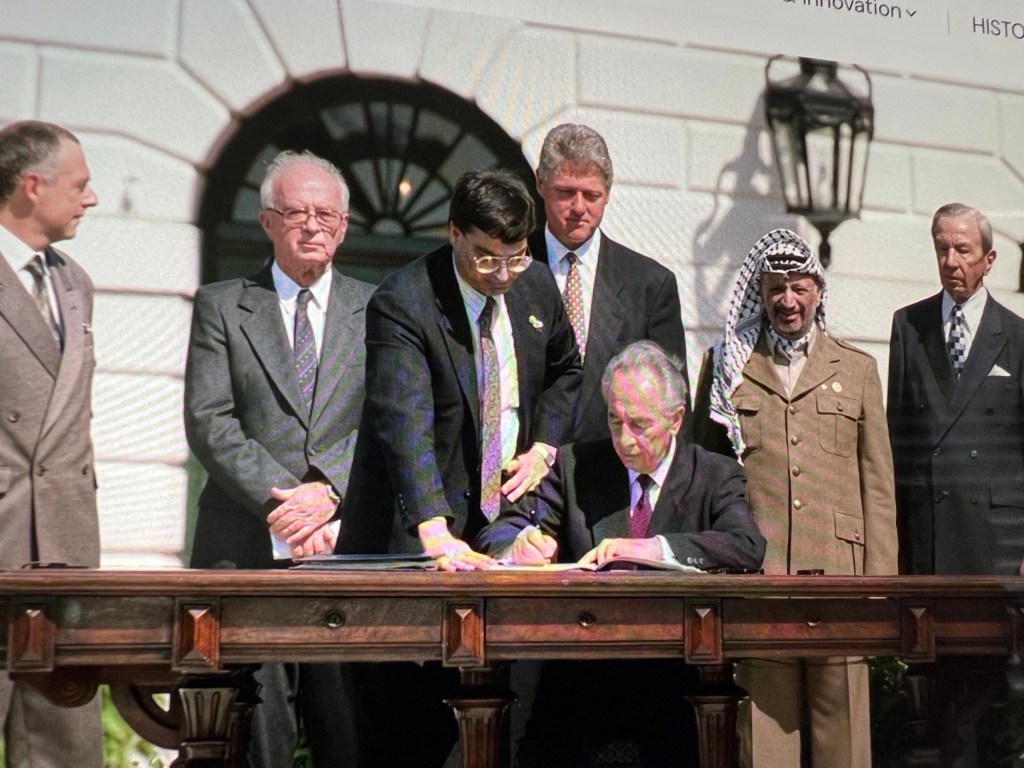
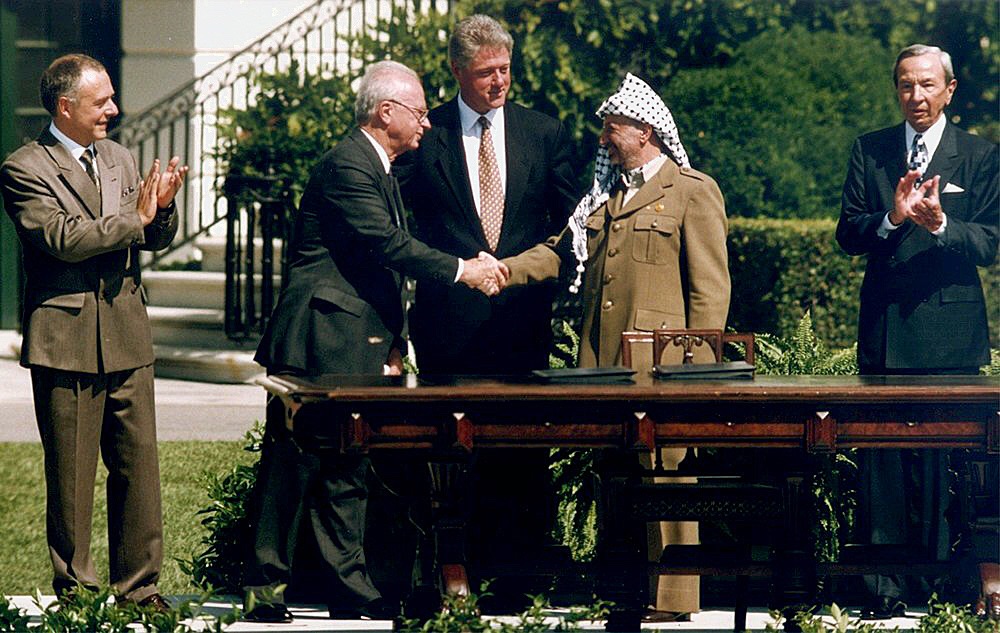
The White House, Washington, D.C. – September 13, 1993
On September 13, 1993, on the South Lawn of the White House in Washington, D.C., then-President Bill Clinton witnessed one of the most historic events of his presidency: the signing of a treaty known as the Declaration of Principles on Interim Self-Government Arrangements.
The accord — signed by Israeli Foreign Minister Shimon Peres and Mahmoud Abbas of the Palestine Liberation Organization (PLO), and sealed by a handshake between Israeli Prime Minister Yitzhak Rabin and PLO leader Yasser Arafat — provided for the withdrawal of Israeli troops from the Gaza Strip and the West Bank town of Jericho, and for the establishment of a Palestinian government to be given authority over much of the West Bank.
Each of the two leaders spoke of peace that day. Rabin, a former army general, told the world:
“We the soldiers who have returned from the battle stained with blood; we who have seen our relatives and friends killed before our eyes; we who have fought against you, the Palestinians; we say to you today in a loud and clear voice: Enough of blood and tears. Enough!”
And Arafat added:
“The battle for peace is the most difficult battle of our lives. It deserves our utmost efforts because the land of peace yearns for a just and comprehensive peace.” [“This Day In History, History.com, September 13, 2025.]
The Handshake
Eloquent, noble words from both sides, intended to put an end to countless years of brutal conflict.

















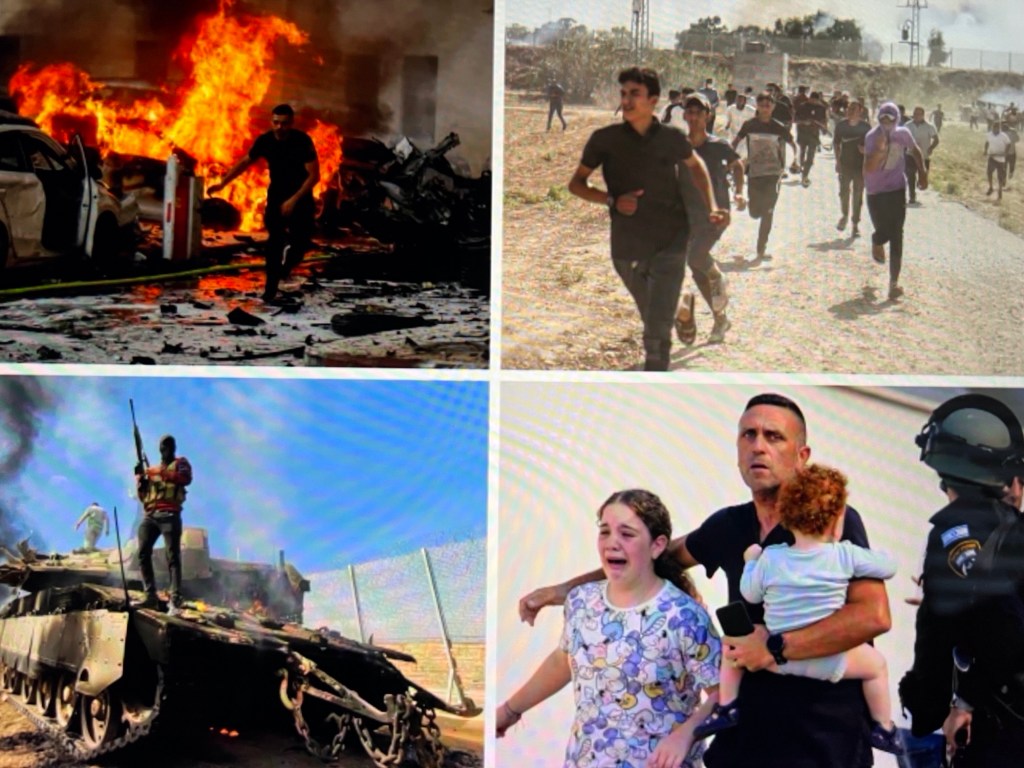
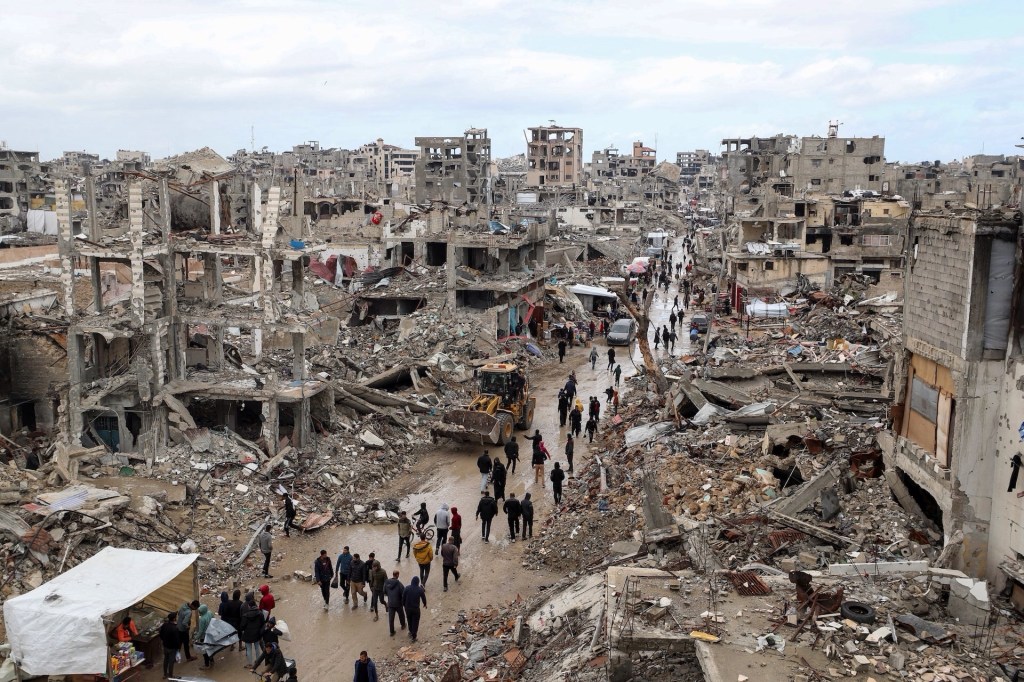
 The Blog About Everything … and Sometimes Nothing