Category Archives: Uncategorized

1/7/26: Aldrich Ames Is Dead

If you’re under the age of 45 or 50, or didn’t pay much attention to the U.S.-Russian spy wars of the 1980s and ‘90s, you’re probably wondering, “Who is — or was — Aldrich Ames?”
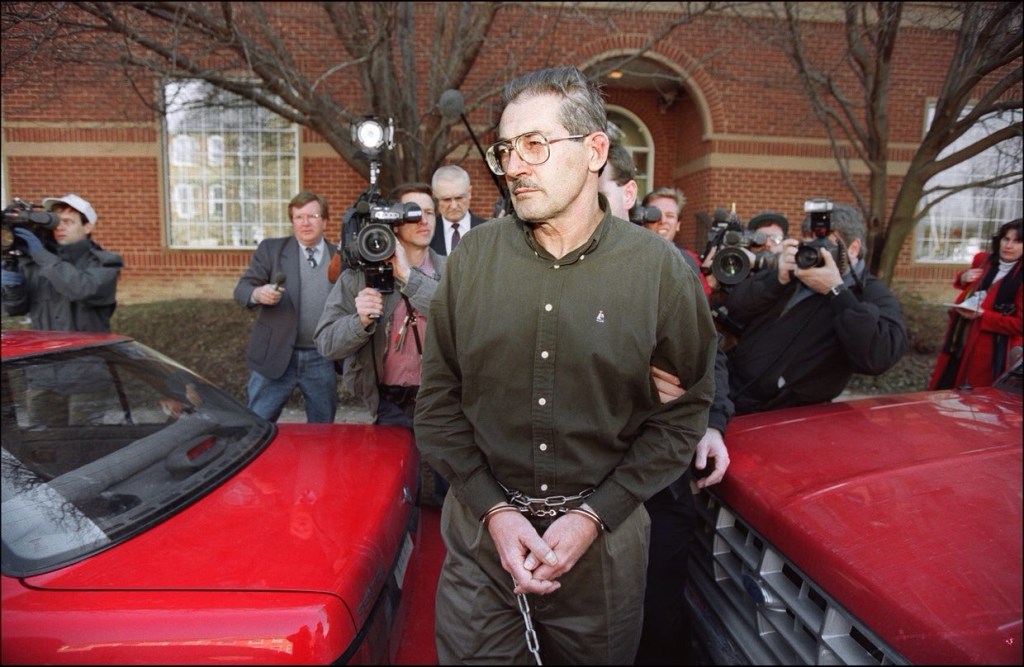
Aldrich Ames – February 1994

Briefly, he was an American CIA counterintelligence officer who spied for the Russians from 1985 to 1994. Described as one of the most damaging spies in U.S. counterintelligence history, he sold the Russians classified information, including the identities of CIA and FBI sources, resulting in the deaths of at least nine valuable agents. Following an extensive internal investigation at the CIA and a joint operation with the FBI, Ames was finally identified . . . with the additional help of information elicited from a Russian KGB defector in 1993.

Ames was ultimately arrested outside his home in the Washington, D.C., suburb of Arlington, Virginia, on February 21, 1994. He pled guilty to charges of espionage and tax evasion (shades of Al Capone!), and was sentenced to life in prison without possibility of parole.

Two days ago, after serving nearly 32 years in the federal prison system, Ames died at the age of 84. No cause of death has yet been announced.

And now you’re wondering: “So what?”

From the reader’s point of view, that would be a reasonable reaction. But my interest in the case was more personal, as shared in some of my earlier posts on this blog. And learning of Ames’ death yesterday led me to look back to that earlier time, and to share a small part of my tale with you once again.

So here we go . . .

*. *. *

LOOKING BACK: A 40-YEAR-OLD SPY STORY

“Life’s a pitch, then you spy.”
– John Alejandro King

On April 16, 1985, an American man walked into the Soviet Embassy on 16th Street in the northwest quadrant of Washington, D.C., and asked the guard at the glass-protected desk if he might speak with an Embassy diplomat, Sergei Chuvakhin. When the guard called Chuvakhin to the front entry, the American man handed him an envelope addressed to Stanislav Androsov, then the KGB rezident (chief of station) at the Embassy. Unknown to Chuvakhin, the envelope contained a few documents and an offer to procure and provide more of the same in exchange for the sum of $50,000. The American then left the Embassy and returned to his office in suburban Langley, Virginia.

Former Russian Embassy, Washington, D.C.

Upon receiving and opening the envelope and reviewing its contents, Androsov summoned his deputy, Viktor Cherkashin, then the head of counterintelligence at the Embassy, to discuss the significance of the unexpected and unconventional communique.

The American waited nervously until a month later, when he finally received a call inviting him to meet again with Sergei Chuvakhin at the Embassy on May 17th. On the American’s arrival, Mr. Chuvakhin greeted him, showed him into a small fourth-floor meeting room, and withdrew as he had been instructed. In a few moments, a different gentleman entered the room and introduced himself as Viktor Cherkashin. Their meeting was brief but productive, culminating in an agreement by the KGB to the payment of $50,000 in exchange for additional documents from the American.

Cherkashin and the American next met on June 13, 1985, at Chadwick’s Restaurant, a popular watering hole in the historic Georgetown neighborhood of Washington. The American brought with him a larger package of classified CIA files, which he exchanged with Cherkashin for the agreed amount of $50,000.

Thus began the career of Aldrich Ames as a mole for the Soviet KGB inside the CIA — a career that lasted for nine years, until his eventual arrest on February 21, 1994. Nine years, during which a troubling number of U.S. human assets in Russia were lost, engendering the beginning of a years-long mole hunt within the CIA’s ranks.

Nine years, during which Ames evaded detection despite internal CIA investigations, lie detector tests, routine vetting, and his own reckless extravagance and general carelessness.

Nine years, until — with Ames already at or near the top of the CIA’s short list of suspects — a recently-arrived former KGB officer talked to the FBI and revealed, either knowingly or inadvertently, a key bit of information that allowed the FBI to make its airtight case of espionage against Aldrich Ames.

Without the CIA task force’s relentless, top-secret internal search for a mole, Ames might never have become a suspect. But the CIA has no law enforcement authority in the United States, and so they finally had no choice but to enlist the help of the FBI. It was the joint effort of the two agencies — a rather exceptional collaboration at the time — that brought down the man who still, more than thirty years later, is described by many as perhaps the most destructive U.S. traitor of the 20th Century.
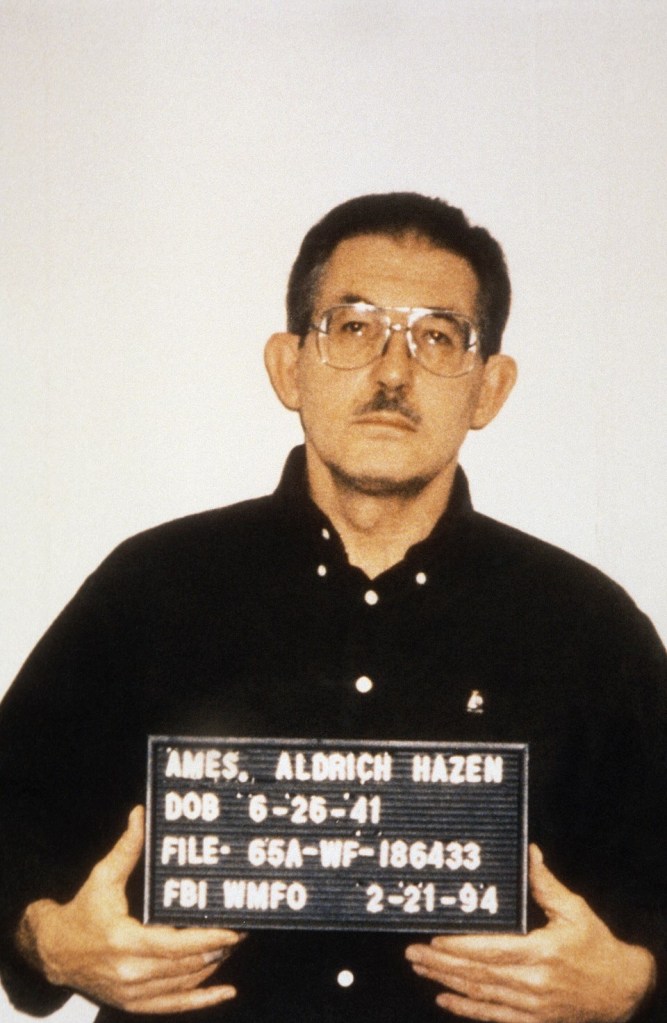
Funny … He doesn’t look like a spy.

Much has since been revealed about the extent of the damage done by Aldrich Ames and the lives lost as a result of his betrayal. But still, more than thirty years later — as he continues to live out his life sentence in the Federal Correctional Institution at Terre Haute, Indiana — Ames claims to have additional information yet to be shared with U.S. intelligence authorities.

And still — three decades after the fact — the identity of the Russian defector who provided that last vital piece of the puzzle also continues to be protected, presumably for his own safety. A few names have been posited by various sources and, not surprisingly, vehemently denied or simply not commented upon.

One was an acquaintance of mine.

*. *. *

The Second Part of the Story

“Though this be madness, yet there is method in’t.”
– William Shakespeare, Hamlet

On April 25, 1993, two former Soviet KGB officers — we’ll call them Comrade X and Comrade Z — arrived at JFK International Airport in New York and spent the night at the Connecticut home of their new literary agent. The following day, they met with book publishers in New York City, one of whom agreed to purchase and publish an as-yet-unfinished book being written by Comrade Z based on his years in Washington as a spy for the KGB. The two men then traveled to the Washington, D.C., area, where they remained until their return to Moscow at the expiration of their visas on May 5th. During that period, they met and spoke with agents of the FBI.

One week later — on May 12, 1993 — the FBI opened its formal investigation of Aldrich Ames, an agent of the Central Intelligence Agency suspected of being a long-time Soviet mole inside the CIA.


I am the person who brought Comrades X and Z to the United States in the spring of 1993 for the purpose of selling that book, thus making it possible for the FBI to interview them at length, and later to pave the way for their defection to the United States.

What followed were two years of madness . . . and two of the more, let’s just say, interesting years of my life. Questions were raised, by journalists and others, as to the identity of the person who provided that final piece of the Ames puzzle needed to form an air-tight case against him. Some suggested it was Comrade X — “my” Comrade X — but that has not, to my knowledge, ever been revealed. It certainly has not been confirmed (or denied) to me.

*. *. *

Over the years, friends have asked why I haven’t tried writing a book about my experiences of those times, and my answer has always been two-fold: First, that I’ve not been sure whether the subject matter, from the U.S. government’s standpoint, might still be sensitive; and second, because it all happened so long ago, it may have ceased to be of much interest during the years of detente between the U.S. and Russia.

But now, after so many years, and with the return of Russia under Putin to the “bad old days” of totalitarian rule . . . not to mention the near-extinction of relations between Russia and the Western allies since Putin’s invasion of Ukraine . . . it seems somehow appropriate to remind people of how long, and how consistently, the spy wars have been going on while we were looking the other way.

“The whole question is: who controls whom.”
– Vladimir Ilyich Lenin

*. *. *

Some things never seem to change.

Just sayin’ . . .

Brendochka
1/7/26
1/6/26: Five Years Ago Today: Another “Day That Will Live in Infamy”

That appellation was originally given by President Franklin Delano Roosevelt to the December 7, 1941, attack on Pearl Harbor. But the horrific event that brought the United States into World War II was planned and executed by an enemy force . . . not by our own citizens, aided, encouraged and supported by our own president.

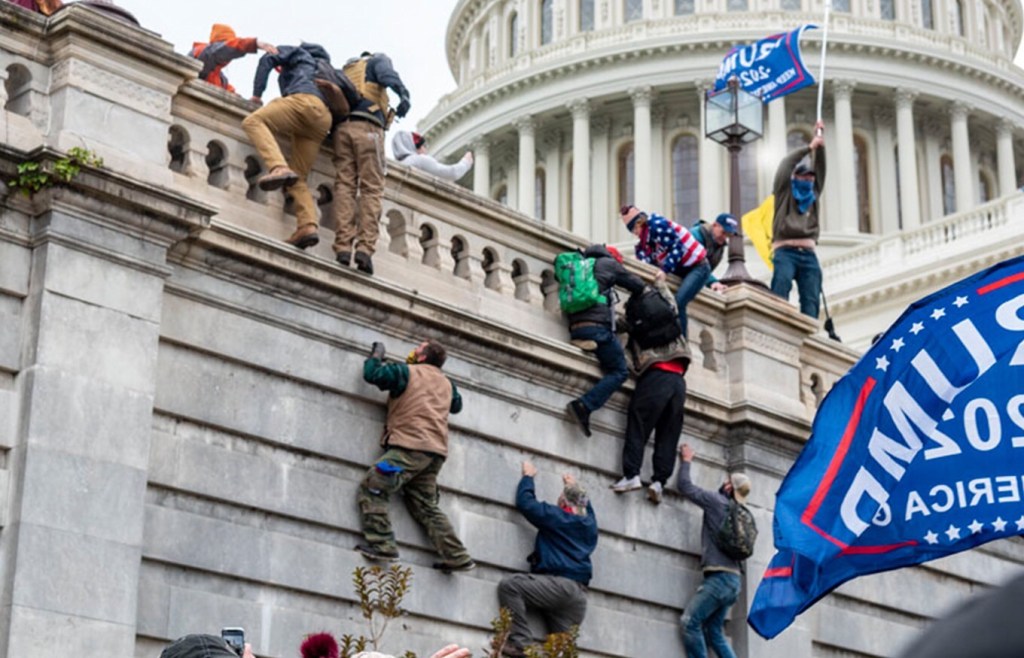
Today is the fifth anniversary of the insurrectionist attack on the United States Capitol by mobs of violent, mindless brutes and thugs seeking to overthrow the 2020 election of Joe Biden to the presidency, in order to continue the authoritarian regime of Donald Trump.

Attack on the U.S. Capitol – January 6, 2021

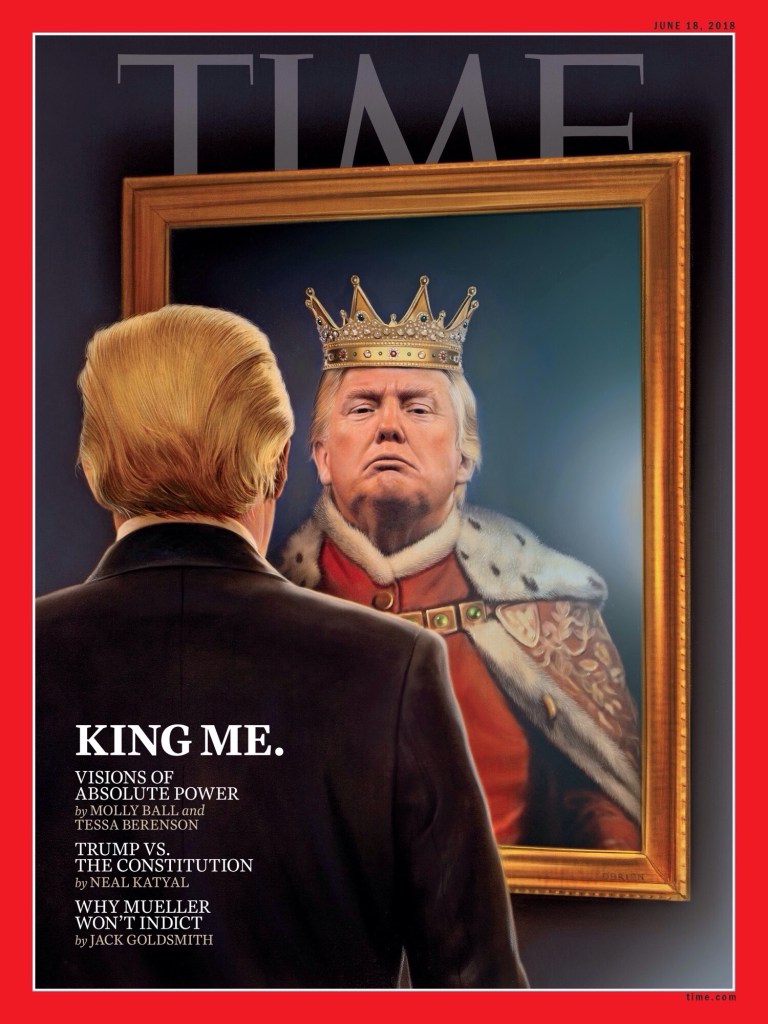
That attempted coup failed. But Trump never acknowledges defeat. Four years later, he slithered his way back into the White House by a slim plurality of the vote, where he has continued — and accelerated — his coordinated assault on our 250-year-old democracy . . . not to mention his personal attacks against anyone and everyone who has ever dared to criticize him.

It is certainly not necessary to detail, yet again, Trump’s criminal acts of the past year, or his increasingly deranged behavior and obvious physical decline; that is being done on a minute-to-minute basis by the news outlets and social media. And the American people are all too aware of the personal effect his administration’s actions are having on their daily lives.

But beyond our individual problems, what is most concerning is the domino effect of his actions: the weakening of our country’s relations with our traditional allies, the reduction of our status in the eyes of the rest of the world, and, most frightening of all, the opportunities he has provided to the world’s most tyrannical governments — Russia, China, North Korea, Iran, etc. — to step in and fill the void.

In the days since Trump’s shocking invasion of Venezuela, the prevailing attitude among those other authoritarians has been, “If the U.S. can do it, why can’t we?” And they have a point. If Donald Trump can send his troops to kidnap the president of another sovereign nation, doesn’t that justify what Russia is doing to Ukraine? Doesn’t it give tacit permission to Xi Jinping to go after Taiwan? Or Netanyahu to fully occupy Gaza and the West Bank?

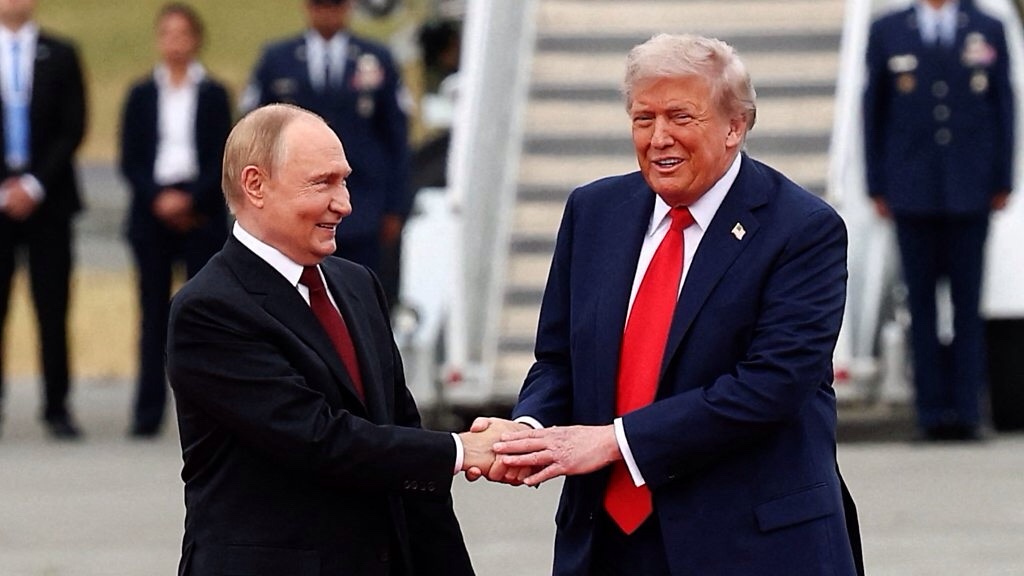
Even before Venezuela, Vladimir Putin had accurately assessed the possibilities presented by Trump’s political stupidity. A week after their meeting in Alaska in August of 2025, which was supposed to have been focused on settling the conflict in Ukraine, this is what Putin had to say in a speech back home in Russia:

“With the arrival of President Trump [in the White House], I think that a light at the end of the tunnel has finally loomed. And now we had a very good, meaningful and frank meeting in Alaska.

“The next steps now depend on the leadership of the United States, but I am confident that the leadership qualities of the current president, President Trump, are a good guarantee that relations will be restored.”
[Reuters, August 22, 2025.]

Meeting in Anchorage, Alaska – August 15, 2025

Under this administration, our country has well and truly been sold out in exchange for the personal power of one man and the enrichment of his evil oligarchy. And it began just two weeks before he was due to leave office, when he addressed that rally on the National Mall and encouraged the crowds to march to the Capitol . . .

Rally on the National Mall – January 6, 2021

. . . and when he called the violent attack on that institution a “peaceful” gathering.

And it has continued since then, as he has pardoned the most violent of the convicted criminals who participated in that attack, and repeatedly declared the 2020 election to have been “stolen.”

So yes . . . January 6, 2021, is a day that lives in infamy within the history of the United States. Only this time — unlike that day in December of 1941 — the rest of the free world is not rushing to our aid; and our own people, rather than uniting in defense of our great nation, are divided as they have not been since the end of the Civil War in 1865.

And I am sore afraid.

Just sayin’ . . .

Brendochka
1/6/26

1/6/26: Big Changes in the Feenstra Family … What’s Going On?

It all seems to have started last August, with the arrival of the Pulley family: a young Australian couple with four small children, who had emigrated to Russia and originally settled in the Altai region — a remote section of southern Siberia that shares borders with Kazakhstan, Mongolia and China.

There had been a few weeks of frenzied activity on the Feenstra farm in Nizhny Novgorod as they hastily built and furnished a small “guest house” on their property, hinting at a forthcoming surprise. But the arrivals were not relatives or friends coming for a visit; they were six strangers, suddenly relocated to the more desirable Nizhny Novgorod region, to “help out” on Countryside Acres. And that was all the explanation we were given. Not why the Pulleys had moved; not how the Feenstras could afford to build the guest house and pay their new helpers; and not how, or by whom, the arrangements had been made.

The Feenstra Clan in 2024

Then, just as suddenly, Arend Feenstra announced in early December that their entire family would be leaving for an extended vacation in Canada and the United States. Again, no explanation, no reason given . . . but a repeated assurance that they would “100% for sure” be returning to their farm in Russia. In the meantime, the Pulleys — not farmers by trade or background — would be in charge of the property and the animals.

After Arend’s emotional farewell to the farm — which sounded more like a Russian “proshchai” (goodbye forever) than a simple “do svidaniya” (‘til we meet again) — we followed the family halfway around the world to a grand reunion, and a joyous Christmas celebration, with their extended family in Canada.

An Emotional Farewell to Russia

Meanwhile, the Pulleys back in Nizhny Novgorod have broadcast on their own site, speaking of daily life on the farm, but never (in any of the videos I’ve seen) mentioning the Feenstras.

And, as if all of that hasn’t been strange enough . . .

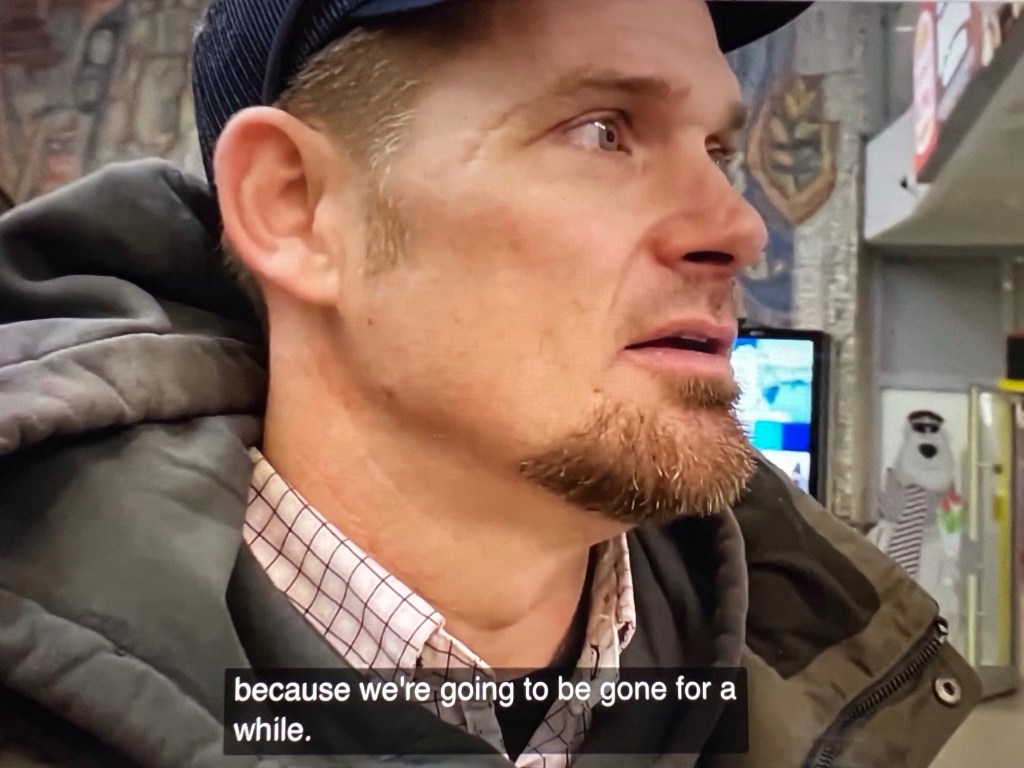
Yesterday, Arend Feenstra posted a video from wintry Ontario, titled “Everything Changed in One Snowy Day,” in which he announced that eldest daughter Cora had taken a job in a nearby restaurant — which she had done “all on her own” — and would be going to live for the next three to four months with “a good Christian family” — not with her grandparents or other relatives — while her parents and seven younger siblings head south to warmer climes.

Announcing Cora’s Rite of Passage

Arriving on the heels of their Christmas broadcast, when I commented on “their devotion to one another” and the “bond [that] gives them the strength to face whatever challenges life may bring,” the news of this split — even if only temporary — comes as quite a shock.

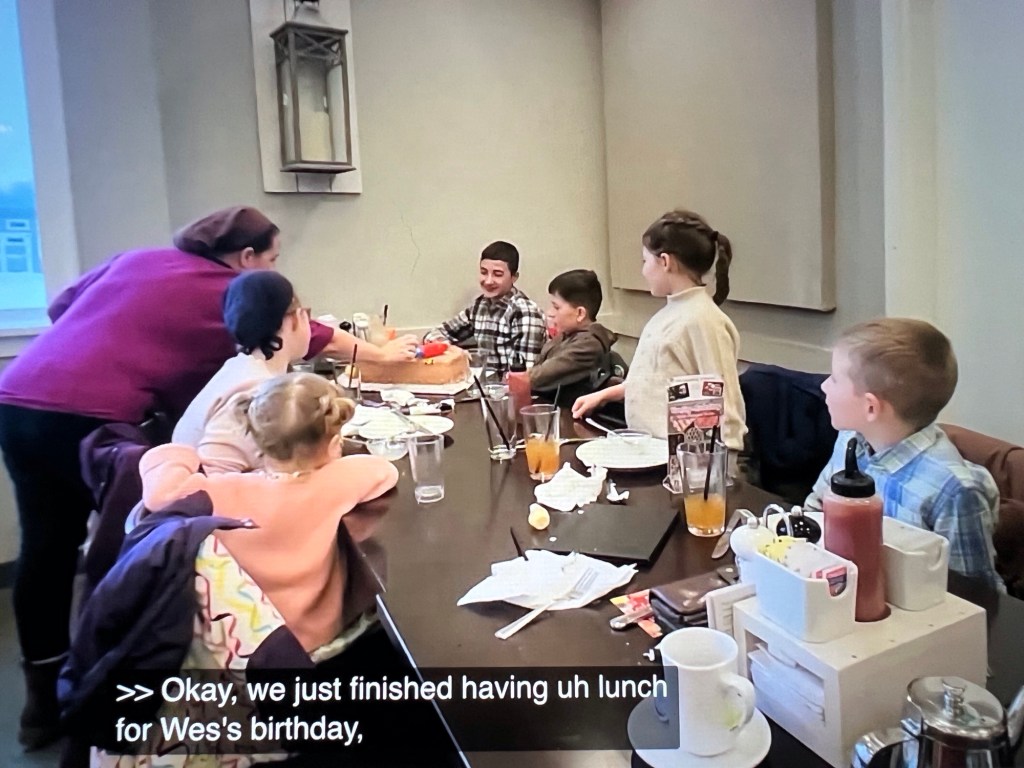
Yes, Cora is growing up. Younger brother Wesley just celebrated his 16th birthday, so she has to be at least 17, and possibly 18. For most 21st-century families, it would not be unexpected for a young woman of her age to want to exercise some degree of independence. But for an ultra-conservative, devoutly Christian family such as theirs — who left Canada two years ago for the explicit purpose of escaping what they call the “wokeness” of the general population — it seems highly unusual.

Not knowing what specific denomination of Christianity the Feenstras adhere to, one possibility does occur to me: perhaps this is something akin to the Amish tradition of Rumspringa — an opportunity for teens to explore the outside world for a short period of time before committing to adult baptism in the church. But that’s just speculation on my part.

Amish Teens on Rumspringa

Whatever the reason for this sudden development, a great many questions arise from the entire sequence of events over the past half-year: the hurried construction of the guest house prior to the August arrival of the Pulley family; the November issuance of Putin’s Decree No. 821 on the new requirement of military service as a prerequisite for Russian citizenship; and the sudden announcement of this very lengthy and expensive trip back home.

On each of those occasions, I wondered whether there might be something we weren’t being told. Taken together, a pattern seems to be emerging, hinting at long-term preparations for . . . well, for something we don’t yet know. Maybe it will turn out to be just a case of over-active imagination on my part. Or not.

But I intend to stay with the Feenstras to see what does happen next.

Wesley’s 16th Birthday Lunch

Just sayin’ . . .

Brendochka
1/6/26

1/5/26: Cleaning Up After the Old Man

Is Donald Trump not speaking to his Secretary of State? Or is he simply — as usual — not listening?

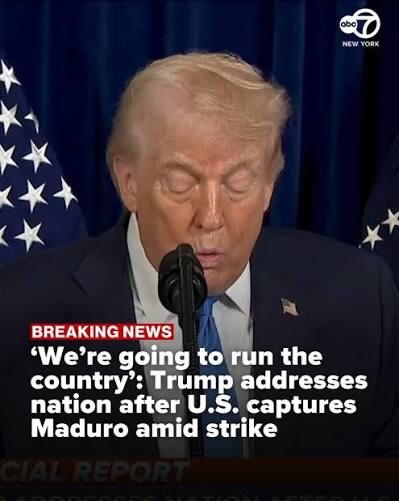
On Saturday, following the brutal invasion of Venezuela and the kidnapping of its tyrannical president and his wife, Trump declared that the U.S. would now “run” Venezuela until a new regime was installed there. (Unfortunately, he did not indicate that he was quitting his present job in order to move to Caracas, but seemed to think he could ruin . . . sorry, run . . . two countries at once.)


But on Sunday, Secretary of State Marco Rubio appeared to be in damage control mode when he suggested that the U.S. would not take over day-to-day governance of Venezuela, other than enforcing an existing “oil quarantine” on the country. On CBS’ “Face the Nation,” he said:

“And so that’s the sort of control the president is pointing to when he says that. We continue with that quarantine, and we expect to see that there will be changes, not just in the way the oil industry is run for the benefit of the people, but also so that they stop the drug trafficking.” [Regina Garcia Cano, et al., Associated Press, January 4, 2026.]

Perhaps his more diplomatic comments were intended to assuage the concerns of other nations — adversaries and allies alike — regarding Trump’s hostile and blatantly illegal actions. Or maybe his apparent contradiction of his boss’ statements indicates a growing problem within the Trump administration: a possible hint that his Cabinet members and other advisers have finally come to the realization that he is a loose cannon who needs to be restrained, for his own sake and for the good of the country.

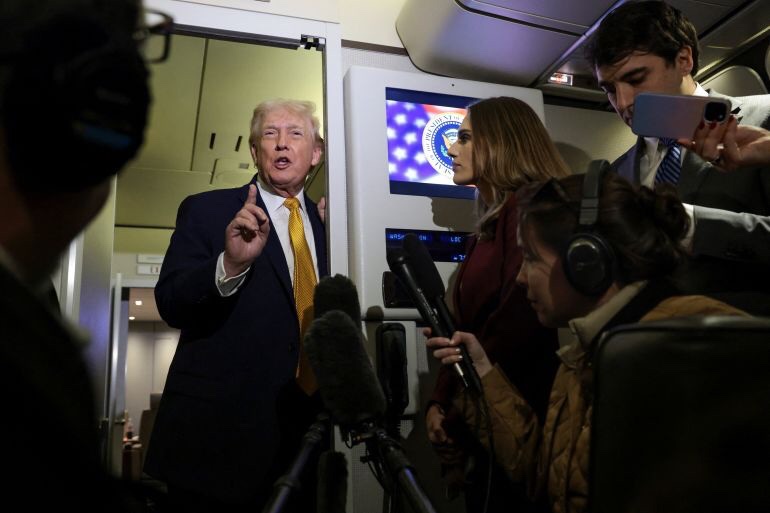
Whatever Rubio’s intent, it doesn’t seem to have done much good. Later on the same day, while returning to Washington aboard Air Force One, Trump reiterated, “We’re going to run it, fix it.” [Id.]

He then threatened the new Venezuelan leader, Delcy Rodriguez, saying that she might “pay a very big price, probably bigger than Maduro . . . [if she] doesn’t do what’s right.” [Grace Eliza Goodwin, BBC, January 5, 2026.]

He also said, “Don’t ask me about who’s in charge [of Venezuela] because it will be controversial. We’re in charge.” And for added emphasis, while saying that he expects the new Venezuelan government to allow the U.S. total access so that American forces can “help rebuild,” he further threatened, “ . . . if they don’t behave, we will do a second strike.” [Sophia Cai, Politico, January 4, 2026.]

Aboard Air Force One – January 4, 2026

And — like a lottery winner on a shopping spree — he moved on to other Latin American countries:

“Cuba looks like it’s ready to fall. I don’t know if they’re going to hold out.” Saying that Venezuela was Cuba’s principal economic backer, he added: “Cuba only survives because of Venezuela.” [Id.]

Then there was his comment on Colombia and its President Gustavo Petro, who has criticized Trump’s operation in Venezuela:

“Colombia is very sick too — run by a sick man who likes making cocaine and sending it to the United States, and he’s not going to be doing it very long.” [Id.]

Finally, he returned to his obsession with Greenland:

“We need Greenland from a national security situation [sic]. The EU needs us to have Greenland.” [Id.]

Clearly, he hasn’t been listening to the Danish Prime Minister or other EU members, either.

Danish Prime Minister Mette Frederiksen

Surely, those closest to Trump — no matter how unqualified they are for their jobs — cannot be oblivious to the dangers of his increasingly deranged behavior. I envision Marco Rubio — like the caretaker of a very expensive race horse — running along behind him, carrying a bucket and shovel to clean up the inevitable droppings.

Only we’re talking, not about a horse race, but about U.S. foreign policy . . . and a potentially inundating pile of poop.

Just sayin’ . . .

Brendochka
1/5/26

1/5/26: Quote of the Day: Forever Young

When you reach a certain age — and that age is different for each of us — it is natural that the turning of the calendar page to a new year brings with it thoughts, not just of new hopes and opportunities, but of one more candle on the next birthday cake.

We know we can’t stay young forever, and a glance at the reflection in the mirror only serves as confirmation. Another couple of laugh lines, a bit more slack in the jaw, the inadvertent “grunt” when we stand up . . . and let’s not even mention the waistline!

Yet in our minds, we’re still 30-something: grown-up, responsible, but with the same irreverent sense of humor, the same longing for adventure, the same joy in sharing a good time or an intense conversation with an old friend, and at least a measure of the same idealistic nature we possessed when we were young and foolish.

This quote — from a book I admittedly have not read — sums it up for me:

“I’m not ready to let the youthful part of myself go yet. If maturity means becoming a cynic, if you have to kill the part of yourself that is naive and romantic and idealistic — the part of you that you treasure most — to claim maturity, is it not better to die young but with your humanity intact?”

– Kenneth Cain, “Emergency Sex (And Other Desperate Measures): True Stories From a War Zone”


Kenneth Cain

I don’t know what emergency measures Cain had to resort to in order to survive in Cambodia and other war zones he visited in the ‘90s; but I do agree with his attitude toward aging with our values intact . . . which is fortunate, since it’s already far too late for me to die young.

Just sayin’ . . .

Brendochka
1/5/26

1/5/26: I Never Thought I’d Miss the Cold War

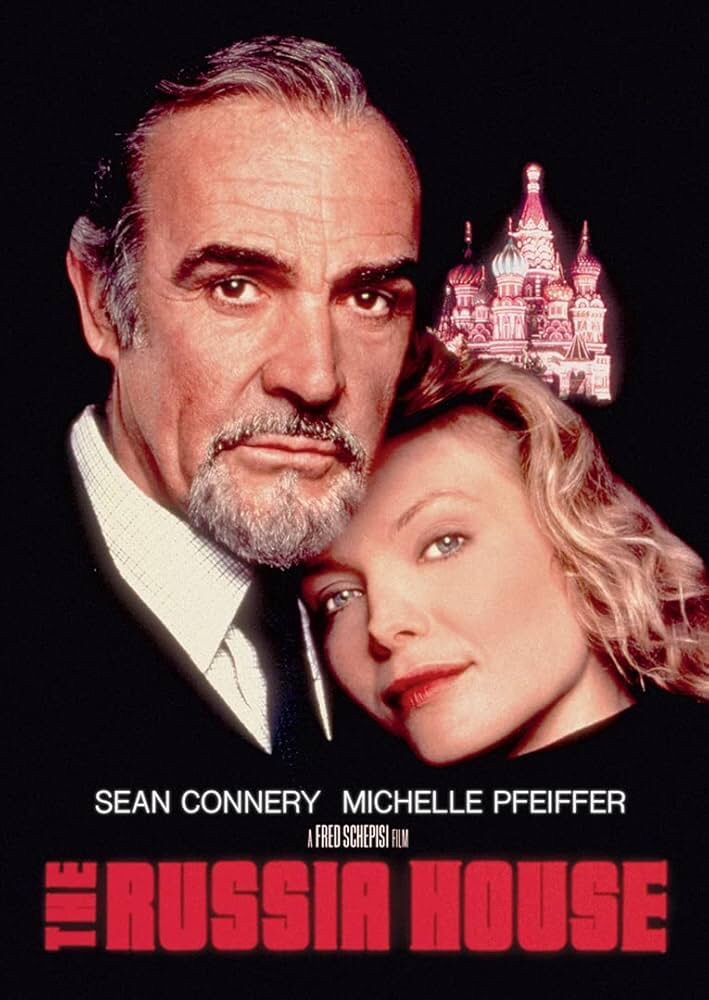
On New Year’s Day 1991, with about eight to twelve inches of fresh snow outside that had fallen during the previous day and night, I was at home, thoroughly bored and wondering how to pass the time. A new Sean Connery film — The Russia House — had just been released and was playing at the nearby multiplex cinema; so I gathered my mother and sister together and we headed out onto the newly-plowed streets, joining a few hundred other locals looking for a way to spend the day.


Two and a half years later, I found myself living in Moscow, in the midst of an adventure oddly reminiscent of the theme of that movie. And I had brought with me a VCR player and a stack of VHS tapes (who remembers those?) of favorite movies — one of which was, of course, The Russia House.

One evening, I invited a few of my English-speaking Russian friends to my apartment for a movie night, complete with vodka, caviar, and all the trimmings. And when our viewing of The Russia House ended, there was unanimous agreement that it was the most realistic foreign depiction they had ever seen of life in Russia just before the fall of the Soviet Union. They loved it as much as I did.

Since that time, it has become my custom to re-watch that movie each year on New Year’s Eve. I know practically every line of dialogue by heart, but it doesn’t matter; it takes me back to a more exciting time of my life, and brings back memories of even earlier times . . . the “good old days” before the supposed fall of communism in Russia and Eastern Europe.


That sounds odd, I know. But it’s not the crazy ‘90s I miss, and certainly not the oppression of the pre-Gorbachev era. It’s the “spy games” of the Cold War years.

Yes, we still spy on each other, perhaps even more than before. But it’s different; it’s so . . . so . . . well, so impersonal now. If you’ve ever watched a spy movie from the 1960s or ‘70s — not the exaggerated James Bond action films, or Maxwell Smart with his shoe phone, but serious movies like The Spy Who Came In From the Cold, or The Day of the Jackal — or read any of John Le Carre’s books, you’ll know what I’m talking about.

Those were the years when you knew who your enemies were, and understood their political ideologies and how they thought and behaved. You studied them, surveilled them, followed them on foot or in a motor vehicle, and — if you were very lucky — infiltrated their ranks. You relied on HUMINT — human intelligence — to gather and analyze the information you needed, recruiting disillusioned members of their own organizations whenever and wherever you could. It was a gentlemen’s game requiring skill and finesse, and it was played by a well-known set of rules. Yes, it was nasty and sometimes deadly, but it was, for lack of a better word, orderly.


Your work was aided by the high-tech equipment of the day: electronic “bugs” discreetly hidden in hotel rooms, taxis, or underneath restaurant tables; miniature cameras to photograph documents “borrowed” from their facilities by your agents; drugs to make your target talk, or, when required, to knock them out.

And when one of the enemy had to be disposed of, you sent in a specialist to do the job, perhaps using a silenced firearm or a blade, a well-executed twist of the neck, or a poison-tipped umbrella.

It was all very time-consuming, extremely risky . . . and very personal.

*. *. *

Today, spying — like nearly everything else — has been taken over by technology. To locate an adversary, to follow them, to know everything there is to know about them, you simply consult your highly specialized computers. You watch and listen to them on a monitor halfway around the world, never having to creep down a dark alley or pick a lock or wear a disguise.

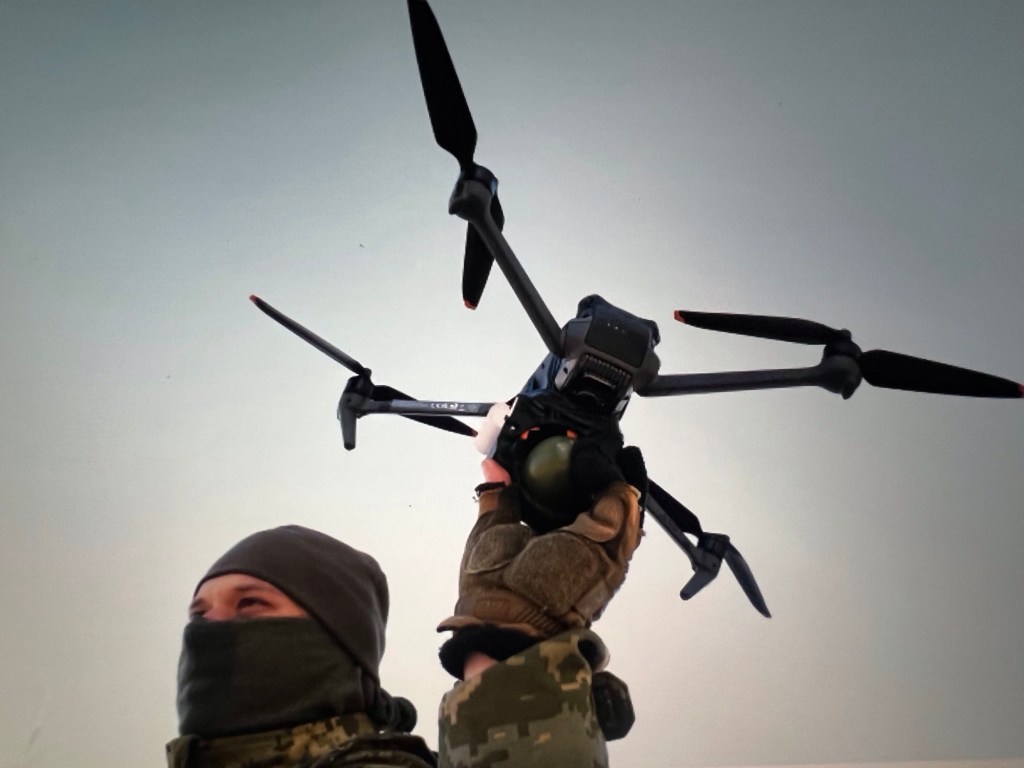
And when it becomes necessary to eliminate them — or, say, a few hundred innocent civilians, because mass murder is so much simpler today — you need only sit in that room a thousand miles away, press a couple of buttons, and . . .


. . . a drone does the rest. Mission accomplished. You’ve never met the targets, never seen the fear in their eyes or smelled their blood as their bodies were blown to pieces. For the cyber spy, it’s just a job, much like that of the customer service operator on the phone in Bangladesh helping you track your package in New Jersey. It’s cold and efficient and impersonal; and you can assuage whatever nagging sense of guilt you may feel by telling yourself that you only pressed a button. In short, it’s dehumanizing, as is much of what takes place in our world today.

This is, of course, an over-simplification. But the changes are real: the patriotic fervor of the last century seems to be gone; and the killing has become quicker, easier, and less shocking. And, as those of us who are old enough to remember the Cold War can attest, the changes have only made things worse.


Just sayin’ . . .

Brendochka
1/5/26

1/4/26: A Tribute and a Reminiscence

It is a quirky habit of mine, every now and then, to Google people from my past — classmates, co-workers, business associates or former neighbors — usually because something has unexpectedly brought them to mind.

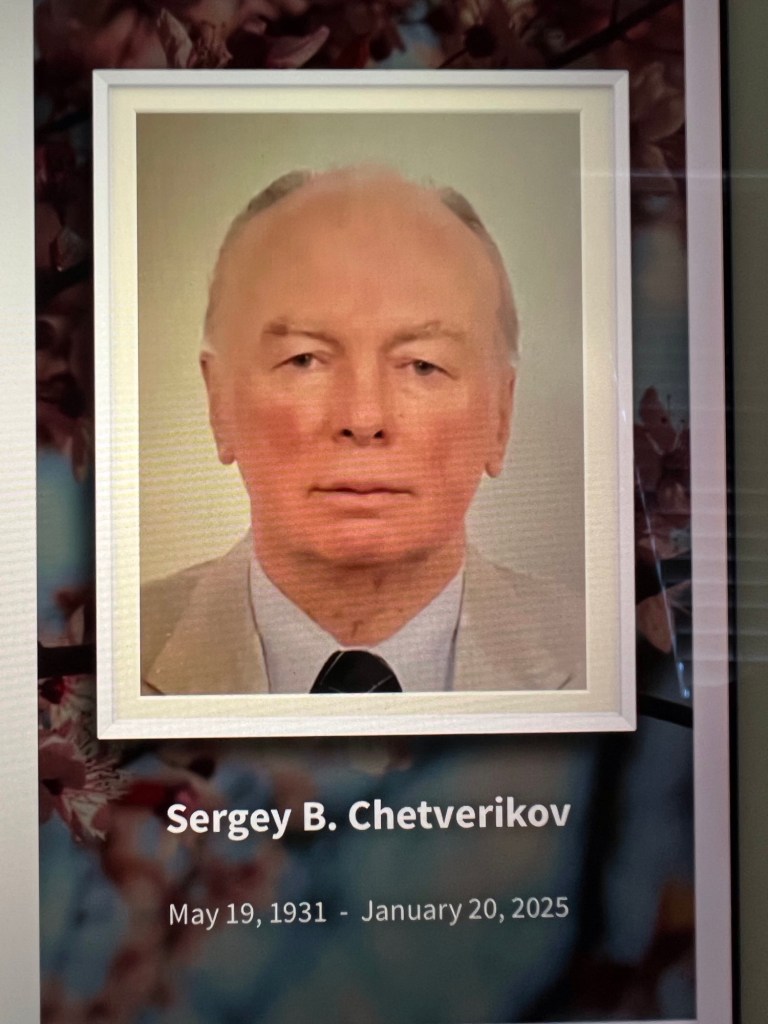
That happened today, when I was reminiscing about an event from 1990 about which I had posted nearly three years ago. The person in question was a Russian gentleman — a former Soviet diplomat, lawyer and author who, after the collapse of the Soviet Union, moved permanently to the United States and joined a prestigious Washington law firm.


Sadly, but not surprisingly, what I found was his obituary from a year ago this month; he had passed away on January 20, 2025, at the age of 93. (I have to wonder whether the stress and shock of the inauguration that day was just too much for him. But I digress.)

We were not what you would call close personal friends, though our brief acquaintance was certainly a pleasant one . . . cut short when I fell into disfavor with his embassy. But that’s a whole other tale.

His name was Sergey Chetverikov, and this is our story, reprinted from February 16, 2023:

*. *. *

Ch. 10 – The Confederate Air Force

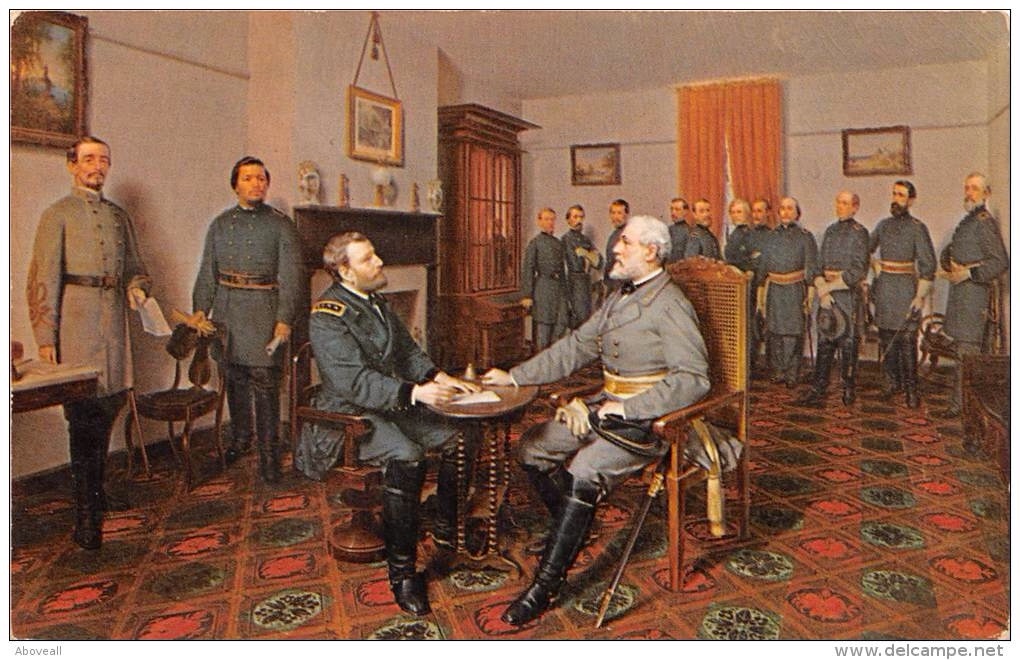
The War Between the States — more popularly known as the Civil War, though there doesn’t seem to have been anything even remotely civil about it — ended just about 158 years ago, on April 9, 1865, at Appomattox, Virginia. But history cannot be erased entirely, despite growing efforts to disclaim parts of it; and the use of “Confederate” still pops up from time to time in the American South.

Surrender at Appomattox

One day in 1990, an attorney friend of mine from Washington, DC, Bill Anawaty, was in his home state of Texas, driving along a highway near Harlingen, when he spotted a sign directing travelers to something called the Confederate Air Force. The imaginative name caught his attention, and on a whim he decided to check it out. What he found was so totally unexpected that it led him to undertake a project that would ultimately involve a group of World War II pilots, diplomats from the Soviet Embassy in Washington, another attorney from DC, and yours truly.

A naturally gregarious individual, Bill went directly to the CAF’s office and began asking questions of some of the people there. What he learned was that the CAF (today known by the more politically correct name of Commemorative Air Force) had begun in 1957 with the purchase and restoration of a single P-51 Mustang by a small group of ex-service pilots, and had since grown to include an example of virtually every aircraft that flew during World War II. [For more information on the fascinating history and mission of the CAF, check out their website at commemorativeairforce.org.]

Timing is everything in life, and the timing of Bill’s impulsive detour could not have been more fortuitous. The 50th anniversary of the start of America’s World War II Lend-Lease program was coming up in 1991, and he had just stumbled upon a group of WWII veterans, with a collection of WWII planes, performing WWII-themed air shows around the country. Why not take the show across the Atlantic to Europe, Bill thought, where the Lend-Lease program had actually taken place half a century earlier? What an amazing hands-across-the-sea celebration that would be!

Poster for Lend-Lease

Never one to let grass grow under his feet, Bill immediately began looking into the possibilities. And as his excitement grew, so did his vision. Along with Great Britain and France, he reasoned that we couldn’t ignore the Soviet Union, which had been one of our staunchest allies in the fight against Nazi Germany. And who better to make the initial contact with the Soviet Embassy than his Russia-obsessed friend: me?

Another attorney friend, former American Enterprise Institute president Bill Baroody, signed on, and the two Bills set about planning and seeking logistical and financial support for the project. At the same time, I contacted my friend at the Soviet Embassy — the aide to the Ambassador mentioned in last week’s Chapter 9 — to determine what the level of interest might be on their end. I never dreamed that the mere mention of WWII planes would have such a dramatic effect. It turned out that my friend — let’s call him Dima — was crazy about planes, and about history in general. And when I told him that we had also discussed inviting the Soviet Ambassador to accompany us on a visit to the CAF in Texas, the deal was as good as sealed. Dima took the plan to the Ambassador, who loved the idea, and dates were chosen for a trip to Texas in July.

But, as we all know, the best-laid plans . . .

As apparently happened all too frequently, the Ambassador’s schedule changed at the 11th hour, and he — accompanied by a terribly disappointed Dima — was needed elsewhere. But interest in the Lend-Lease project was still high, and the then Minister-Counselor/Deputy Ambassador, Sergey Chetverikov, was given the pleasure of taking the Ambassador’s place, with Mrs. Chetverikov to accompany him. Second only in rank to the Ambassador himself, Sergei was no slouch when it came to diplomacy. And he and his wife were a delightful and fascinating couple, who contributed greatly to what turned out to be a memorable few days.

Being the closest thing our trio had to a Russia expert, it fell to me to figure out the legal and diplomatic implications of traveling from state to state with a Soviet diplomat, and then to make the appropriate arrangements. Since diplomats and staff members from the Embassy were not allowed to travel more than twenty-five miles from Washington without special permission, it was necessary to begin my inquiries with the U.S. Department of State. Talk about opening a bureaucratic can of worms! Not only did I have to answer more questions than a new patient in a doctor’s office; I was also told that I was to be the individual responsible for the welfare, safety, and good behavior of the Chetverikovs. So if something were to happen to either of them on this trip . . . Well, I didn’t even want to think about that.


Among the slew of questions asked were several having to do with our means of travel and our actual schedule. Bill Anawaty had made all the travel arrangements, so airline schedules were no problem. But, to cap off the day at the CAF in Harlingen, he had thoughtfully booked a huge duplex apartment for a two-night stay on South Padre Island, in a building directly on the shores of the Gulf of Mexico, with its own private strip of beach. The man at the State Department asked how we were going to get from the airport to Harlingen and then to South Padre, and when I said we would be driving, he wanted to know the make, model, color, and tag number of the car. But I couldn’t answer that one. Bill had reserved a rental car, and we wouldn’t have those details until we picked it up at the airport. So I was instructed to call a certain number at State and report in once we had arrived at Houston Airport and gotten the vehicle.

Sounds good, right? Well, first of all, this was at a time before cell phones were attached to everyone’s hands, and it was anyone’s guess as to whether I would even be able to sneak off to a pay phone. I did manage to find one easily enough, but no one answered at the number I had been given, and there was no voice mail at that number, and no one to take a message. I even tried reaching my contact through the main State Department number, but still no luck. So I shrugged it off and decided to try again later. Their mistake; their problem. But Sergey was very observant and noticed my telephone activity. Irritated at the State Department official’s failure to be where he was supposed to be when he was supposed to be there, I decided to let the team in on the screw-up. Sergey merely rolled his eyes, shook his head, and smiled. He was well acquainted with bureaucratic bull . . . er, nonsense.

In the rush to get to the CAF, that call never did take place. But somehow we were still on someone’s radar, as evidenced by the man and woman — dressed in business suits despite the blistering hot weather — lingering in the CAF hangar, ostensibly eyeing the planes but clearly far more interested in our group as we were given a tour by our new CAF friends. Sergey also spotted the couple, and he and I had a good laugh at their expense. I never did figure out whether they were “our” people or “his,” but my guess is they were ours. Subtle. Really subtle.


That day was spent on an airfield and in the gigantic hangar in what I call 99-square weather: 99 degrees, with 99% humidity. It was brutal. We did take a break from the heat in midday, when we met to discuss our vision for the European tour, and were treated to a lovely lunch (in an air-conditioned dining hall) by the great airmen of the CAF — all World War II veterans, of course — followed by a flight in a plane of our choice. The two Bills and Mrs. Chetverikov passed on the offer, and only Sergey and I opted for a flight — he in a fighter plane, and I in a biplane with the passenger seat in front of the pilot, and just above tree-top level. I felt as though I was piloting the plane, and I could have stayed in the air forever — or until we ran out of fuel — whichever came first. But as exhilarating as it was, I kept wondering how quickly I could get across the border into Mexico in the event Sergey’s plane took a nosedive into the ground and the full force of two governments came looking for me.

World War II Biplane

One other nerve-wracking incident occurred when Sergey decided to go swimming in the Gulf the next morning. I don’t know whether the water there is always that choppy, but again I was plagued by nightmarish mental images of his being carried out to sea on a giant wave. I was beginning to feel like Walter Mitty with a death wish! But Sergey was a strong swimmer and emerged from the sea unscathed and refreshed. We spent the remainder of the day relaxing, playing chess, eating, drinking, and discussing every controversial subject imaginable.

All too soon the two days had passed and it was time to leave for the long drive back to the airport. Sergey asked if it would be possible to see the Mexican border, as he had never been to Mexico. He knew he would not be able to cross the border that day either, but he just wanted to be able to say he had seen it, and perhaps to buy some Mexican souvenirs. Bill Anawaty knew of a place at Brownsville where the Rio Grande River was quite narrow and nearly dry at that time of the year, and there was an actual border crossing, so off we went.

The crossing at that point consisted of a pedestrian bridge, over which Mexican workers would come into the U.S. each morning to their jobs, and return home at the end of the day. There were no souvenir shops — or shops of any kind — within sight, so I approached the lone Border Patrol officer and asked if he knew of any on this side of the river. He said there were none, but that we would find plenty if we just walked across the bridge into Mexico. I explained to him that we couldn’t do that, as two of our party were a Soviet diplomat and his wife from Washington, and that they did not have clearance to leave the country.

Now, our modern-day problems along the U.S.-Mexican border are legion and well-known, but nothing I’ve heard lately can compare with the response I received from that officer. He simply shrugged nonchalantly and said, “Oh, that’s all right — they can go across. No problem.”

NO PROBLEM??????? What the hell had he been smoking??!!!


I gave him my best “mother-who-just-caught-her-child-sneaking-a joint” look, and said, “Well, it may not be a problem for you, but it damn well would be a problem for the Soviet Embassy, and it would be a problem for your bosses, and it would be a problem for the State Department — and it would be a gigantic problem for me!” Sure, this was long before 9-11, so things were somewhat more relaxed, but still . . . I tried to explain the legal and diplomatic implications to him, but he just didn’t get it. So we turned around, got back into our rental car, and continued on our way to the airport. I have no idea whether we were still under surveillance at that point, but if we were — and whoever they were — I can just imagine the nail-biting that went on in their vehicle when the Chetverikovs walked right up to that border crossing!

Luckily, we found a Mexican restaurant along the highway with a nice little gift shop. It was between lunch and dinner hours and they were officially closed; but when we introduced ourselves, they happily invited us in, went back to the kitchen, and prepared a wonderful, authentic Mexican lunch for us. So we were able to satisfy our appetites for food and souvenirs, and to meet some lovely, generous people, before continuing on our way.

We made it to the airport with plenty of time to spare, and also in time to witness the very swift, well-executed arrest of a young man, on charges unknown. Drugs? Smuggling? Mass murder? It’s always something, isn’t it?

Our flight home was smooth, except for the mother with the crying baby seated next to me, whom I did manage to calm down for a while by making funny faces and letting him play with my keys. Oh . . . and there was the encounter with the Stealth aircraft. At some point during the flight, the pilot announced that if we hurried and looked out the left side of the plane, we might catch a glimpse of a Stealth fighter passing in the opposite direction. Being seated on the right side, and with a baby on my lap, I didn’t even try. But Sergey did, and was disappointed to have missed it. Then he said to me that of course there was no way we could have seen it anyway, since it was a Stealth and thus invisible.


Excuse me? Did I hear that correctly? I have to assume he was joking, right?

Well, we finally landed safely at National Airport, and I was able to return the baby to his mother and Mr. and Mrs. Chetverikov back into the hands of their Soviet keepers. I also reported in to the State Department the following morning. They never asked why they hadn’t heard from me earlier, and I wasn’t about to bring it up.

The disappointing end to this story, though, is that, despite our continuing efforts and the enthusiastic backing of all of the countries involved, the financing for the project never came through. It turned out to be horrifically expensive to try to transport all of those planes and people over to Europe and from country to country, with no guarantee that the shows would earn enough to cover the costs. Which is why you never heard anything about it, of course. But it was a wonderful idea, and would have been a grand adventure.

It wasn’t a total loss, however. New friendships were forged, with the wonderful airmen of the CAF, and with the Chetverikovs (who later chose to stay in the United States, where Sergey — an accredited attorney — joined the renowned law firm of Hogan Lovells in Washington).

Of course, I had no idea at that point that a different sort of adventure awaited me a year later, in the summer of 1991. So tune in again next week, please, for my tale of castles, water shutdowns, German tourists, power failures, beer halls, gypsies, dogs, Paul Simon, and the Czech President. And arguably the most beautiful, magical city in the world: Prague.

TTFN,
Brendochka
2/16/23

*. *. *

And so today, with fond memories, I bid a final farewell to Sergey . . . now, I presume, enjoying his eternal flight above the clouds.


Just sayin’ . . .

Brendochka
1/4/26

1/4/26: To the People of Iran: Be Careful What You Wish For

It was just a matter of time: the worsening economic and human rights conditions in Iran finally drove the citizens to end 2025 and begin 2026 with mass protests demanding change, during which at least eight people are reported to have been killed.


And Donald Trump — ever on the lookout for an opportunity to stick his nose in where it doesn’t belong, but where he smells money to be made — has warned the Iranian authorities against killing peaceful protesters, saying that Washington “will come to their rescue,” and that “We are locked and loaded and ready to go.” [Jaroslav Lukiv, BBC, January 2, 2026.]

Two days ago, that may have sounded like just another of his manic midnight tweets. But yesterday changed all that, when he made good on his threats to invade Venezuela . . . even going so far as to kidnap President Maduro and his wife.

Though his rationale is that his action against Venezuela is part of his war on illegal drugs and the need to bring down a murderous regime, everyone knows what it’s really about: it’s about the massive oil reserves that Trump and his cronies will now “invest” in — and profit hugely from — while Trump “runs” Venezuela “until such time as we can do a safe, proper and judicious transition.” [BBC, January 3, 2026.]


Like Venezuela, Iran also sits on huge crude oil reserves — reportedly the fourth largest in the world — as well as substantial supplies of natural gas. And that is a temptation that would be difficult, if not impossible, for him to resist. On Friday, January 2nd, he posted on Truth Social:

“If Iran shots [sic] and violently kills peaceful protesters, which is their custom, the United States of America will come to their rescue.” [Id.]

But Iran is not Venezuela. Supreme Leader Ayatollah Ali Khamenei responded that Trump should “be careful” of potentially causing chaos throughout the Middle East. And his adviser, Ali Larijani, issued this additional warning:

“Trump should know that US interference in this internal matter would mean destabilising the entire region and destroying America’s interests.” [Id.]

Ayatollah Ali Khamenei

Still, in an eerie echo of the 1979 protests that expanded into a full-fledged revolution and overthrew the last Shah, the Iranian protesters have not been silenced. One protester, speaking anonymously, told the BBC that they have been asking for US support for years, because the security forces “. . . are afraid and they shake to the bones when Mr Trump says something . . . [They] believe that if Mr Trump says something, he will do it . . . [and they] know if anything happens, they would have to take the consequences.” [Id.]

But those idealistic young protesters may be pinning their hopes on an America that used to bring freedom and democracy to the oppressed peoples of the world . . . not the bastardized version of America that has emerged under Trump’s regime.

I’m not suggesting the Iranian people should give up the fight for reforms; but they may want to rethink the best way to achieve their goals. And inviting Donald Trump into their home . . . well, let’s just say it might not be the answer to their prayers.


Consider what he’s already done to his own country.

Just sayin’ . . .

Brendochka
1/4/26

1/4/26: Quote of the Day: On Villainy and Deception

When it comes to commentary on the most vile instincts of mankind, there is no better source than The Bard.


In the wake of yesterday’s headlines concerning the shocking events in Venezuela, I doubt that today’s quotation requires any explanation:


“And thus I clothe my naked villainy
With odd old ends, stolen out of Holy Writ,
And seem a saint when most I play the devil.”

– William Shakespeare, Richard III, Act I, Scene 3

And the “naked villain” of the day likewise needs no introduction.


Happy New Year, world!

Just sayin’ . . .

Brendochka
1/4/26