Yesterday I wrote about the sad passing of Sphen, the gay Australian penguin, and his surviving life companion, Magic. I was so taken with the story of their romance and the family they had fostered together, and I was sure it must have been a rare event — if not actually unique — in the avian world.
Sphen and Magic
And then today I was amazed to read about a similar case . . . only these two are not penguins, but a pair of beautiful pink flamingos.
Seriously.
This couple call the Paignton Zoo in southwest England their home. There is reportedly a thriving gay flamingo community there, but one pair — Arthur and Curtis — are indeed unique in that they are the first known to have adopted and hatched an abandoned egg, thus becoming proud parents of a little flaminglet. [AJ Willingham, CNN’s Good Stuff, August 24, 2024.]
And yes, that is what baby flamingos are called. They’re also sometimes called chicklets, but that just reminds me of my favorite chewing gum when I was a kid, so I’ll go with flaminglet.
Anyway, I’m sure Arthur and Curtis will make fine parents to little what’s-its-name. And their story, along with that of Sphen and Magic, has taught me something I did not know — quite probably because I never had a reason to give it any thought: and that is, that humans are not the only animal species of which some members are homosexual.
And that is an exciting discovery, because it led me to conclude that the answer to the age-old argument of “nature vs. nurture” turns out to be — at least where birds are concerned — nature. Right? You can dress your little girl penguin in a tuxedo, and your little boy flamingo in a pink tutu, and they will still turn out to be as Mother Nature — not you — intended them to be.
Which is a good thing. They’re gorgeous creatures, they’re happy, they’re living the good life, free of hang-ups or prejudices, doing no harm to anyone.
We humans could learn a lot from our feathered friends.
This is the second episode of my adventures in Moscow in 1993 (the first one — Chapter 14 — was re-posted on 8/20/24). This one will make much more sense if you read the earlier one first. Enjoy.
*. *. *
February 21, 1993 – Eight time zones away in Moscow, Valentin Aksilenko answered the ringing telephone: “Allo?”
“Valentin, what in hell is going on over there?!!” I was clearly in no mood for preliminaries.
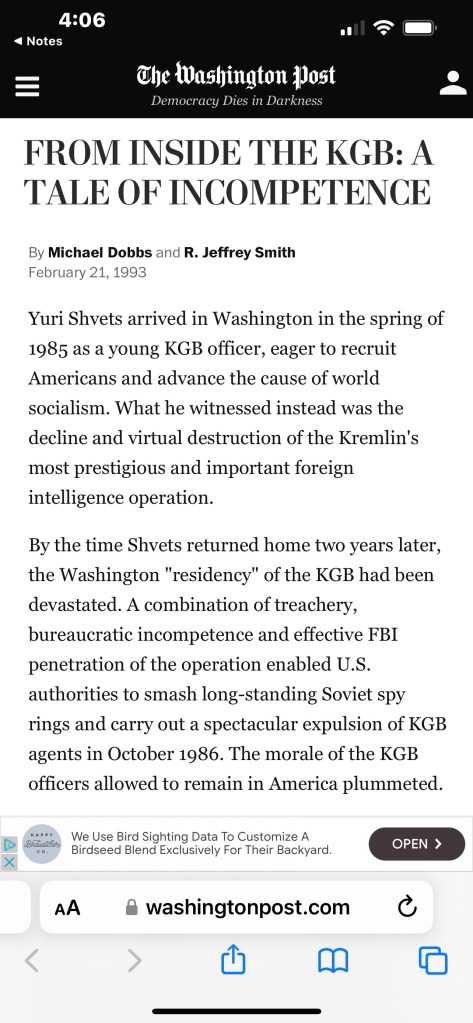
Valentin chuckled, not at all surprised to have heard from me. “Oh, you saw the Washington Post?”
So this Yuri Shvets quoted in the article was the friend he had told me about in Moscow. The entire scenario had obviously been carefully planned, by both of them, well in advance. And Shvets’ last interview had taken place while I was still in Moscow — perhaps at the very moment that I had been sitting and talking with Valentin in the Radisson’s business center. What kind of dangerous game were they playing? And how had I managed to be dragged into it? Was my being in Moscow at that exact time just the worst kind of serendipity?
The Front-Page Headline
In disbelief, I responded: “Is he crazy? Does he know what he’s doing?’
I was clearly upset, yet Valentin remained perfectly calm. He assured me that everything was fine, that there was no cause for concern, and that his friend had things well under control. Seriously?? This Shvets guy was advertising the fact that he was about to blow the whistle on the KGB, and everything was “under control”? How was that even possible? But I somehow managed to restrain myself, and not ask any further questions. I reminded myself that we were, after all, on an unsecured phone line between Moscow and the United States. Valentin’s calm demeanor, at first puzzling, was actually smart; he had been well trained. I should have realized that in the first place, but this was unfamiliar territory for me.
Valentin further confirmed that our business arrangement was still in place; they would draft an agreement to be signed by the three of us, granting me a percentage of any income from the “transaction”; and I should please go ahead with the search for a publisher. That was the least of my worries at the moment, but I took my cue and thanked him, told him I looked forward to receiving the agreement, and we said our goodbyes. Then I started pacing from room to room.
I never did get breakfast that day, and I’m not all that sure about lunch either. I kept rereading the newspaper article and trying to imagine a scenario in which Shvets’ book could be published without creating a firestorm in Moscow; but I wasn’t having any luck. First, however, I decided I had to protect myself on this end — not just financially, but legally. I needed to be sure that a commercial transaction of this type would not be in violation of any U.S. laws, regulations, or existing sanctions against Russia. As for the controversial content of the book, that would be the publisher’s problem, not mine. It was Sunday, so I couldn’t make any phone calls that day, but I knew whom I had to call on Monday: a friend in the Justice Department.
I woke early Monday morning and made the call. My friend asked a few questions, then assured me that there was no legal restriction against the type of business arrangement I had described, and no reason why a book by a Russian author couldn’t be published in the U.S. One of his questions concerned the identities of the two men.
The next day, the FBI came to call.
FBI Headquarters, Washington, DC
One or both of the names had apparently sent up a red flag in the Justice Department’s database, and my inquiry had immediately been referred to the Department’s investigative arm, the FBI. My first thought was that they were going to suggest that I back off and not get involved with anyone, former or current, from the KGB — which, of course, would have been sound advice. But that’s not what happened. In fact, they said they saw no problem, but asked that I keep them informed of my progress.
If you’ve never been in this type of situation, let me assure you that it’s really hard to say no to the FBI. They’re the good guys, right? — no threats, no strong-arm tactics, polite and friendly, bravely protecting our country’s interests. If you’ve done nothing wrong, not broken any laws, then you naturally want to help, to give something back to the country that has given you so much. It’s a no-brainer . . . or so it seemed. So I said fine, I’ll keep in touch.
Without going into the boring details, I was able, through a mutual acquaintance, to arouse the interest of a leading literary agent in New York, John Brockman. John was taken with the story of the would-be author Shvets and his colleague Aksilenko, but said that he could not consider representing an author he had never met or spoken to. He urged me to send an invitation to the two men to visit the U.S. for a brief period, during which he could assess the validity of their story and the likely value of Shvets’ manuscript.
Oh, okay, sure . . . no problem. Two (allegedly) retired, high-ranking KGB officers — Colonel Aksilenko and Major Shvets — would certainly be allowed to leave Russia for the United States, and thereafter be permitted by our State Department to enter the U.S., unquestioned and unrestrained at both ends. Just a little ten-day business jaunt — a piece of cake.
What it really was, was insane.
But I told myself I had to try. Regardless of who they were, or had been, I was representing them in a legitimate commercial transaction, and had a contractual obligation to them as my clients. I also, of course, had made a promise to the FBI, and I dutifully reported this development to them. I issued the requisite official letter of invitation to each of the men for a ten-day business-related visit in the spring, and sat back to wait for the State Department’s inevitable (I assumed) denial of their visa applications.
But what actually occurred was mind-boggling. With lightning speed, the visas were approved by State and issued by our embassy in Moscow; the two men managed to make airline reservations on the Russian airline, Aeroflot; and Aksilenko advised me that they would be arriving at JFK International Airport in New York on April 25, 1993, for a ten-day stay. Someone obviously wanted them here — but who? And why? And how had they managed their departure from Moscow so easily? These were just the first of scores of questions yet to be encountered . . . and never answered. Regardless of how or why, the Russians were coming.
*. *. *
I was to go to New York to meet them on their arrival. John Brockman had invited all three of us to stay overnight at his country home in Connecticut, and was sending a car and driver to transport us there from JFK Airport. We would drive back into New York City the following morning for meetings with prospective publishers. It was VIP treatment, and all very efficiently arranged. But a funny thing happened on the way to the airport . . .
I had opted to travel to New York by Amtrak’s express train. On arrival at New York’s Penn Station, I took a taxi to JFK Airport, instructing the driver to drop me at the international arrivals terminal for incoming Aeroflot flights. Whether he didn’t understand me, or simply didn’t know his way around the airport, I don’t know; but I was delivered to the wrong terminal. And by the time I got inside and realized it, my taxi was gone and there were no others around. And no shuttle bus in sight. I had no idea of how to get where I was supposed to be; I’m a Washingtonian, not a New Yorker.
And just then the clouds parted, the hand of God descended and delivered to this lost lamb an angel from Heaven.
No, no! Not so dramatic!
Or, more likely, the FBI had reached out and sent me an agent. A very respectable-looking man approached me, said I appeared to be lost, and asked if he could help. I explained my problem, and he said — miracle of miracles! — that he was also going to international arrivals and would be happy to give me a lift. His car just happened to be parked nearby.
Now, I’m not a stupid person, and under normal circumstances I do not get into vehicles with strangers. But this was not a normal circumstance, and he was not your average stranger. Plus, I was running late and becoming desperate. So with some trepidation and a silent prayer, I accepted the Good Samaritan’s offer. He knew exactly where to go, dropped me off in front of the correct terminal, said goodbye and good luck, and drove off. I never saw him again; apparently he had no business in international arrivals after all.
Hopelessly Lost at JFK
But there was no time to think about that. I ran into the terminal, looked around near baggage claims, and found Valentin Aksilenko standing next to a man, obviously our driver, who was holding a card with my name written on it. What a relief! But where was Yuri Shvets?
As I greeted Valentin and the driver, apologizing for my tardiness, a man came inching out of a nearby corner, where he had been partially hidden in the shadows. He was of average height, slight build, with luxuriant dark hair that was styled in what could only be described as a pompadour (you younger readers can look that up), and conspicuously well dressed and unwrinkled for a long-distance traveler. Was this the mysterious author, whistle-blower, and spy extraordinaire? Really?
After a quick introduction, we grabbed our respective suitcases and headed for the car to take us to Connecticut. I sat in the front seat with the driver, giving the two visitors a bit of privacy in the rear. In addition to jet lag, they must surely have been stressed beyond belief. We chatted a bit about their flight, the lovely countryside, and other nonsense, and then I left them alone to talk softly between themselves — in Russian, of course. I couldn’t catch a word of their conversation, nor did I try.
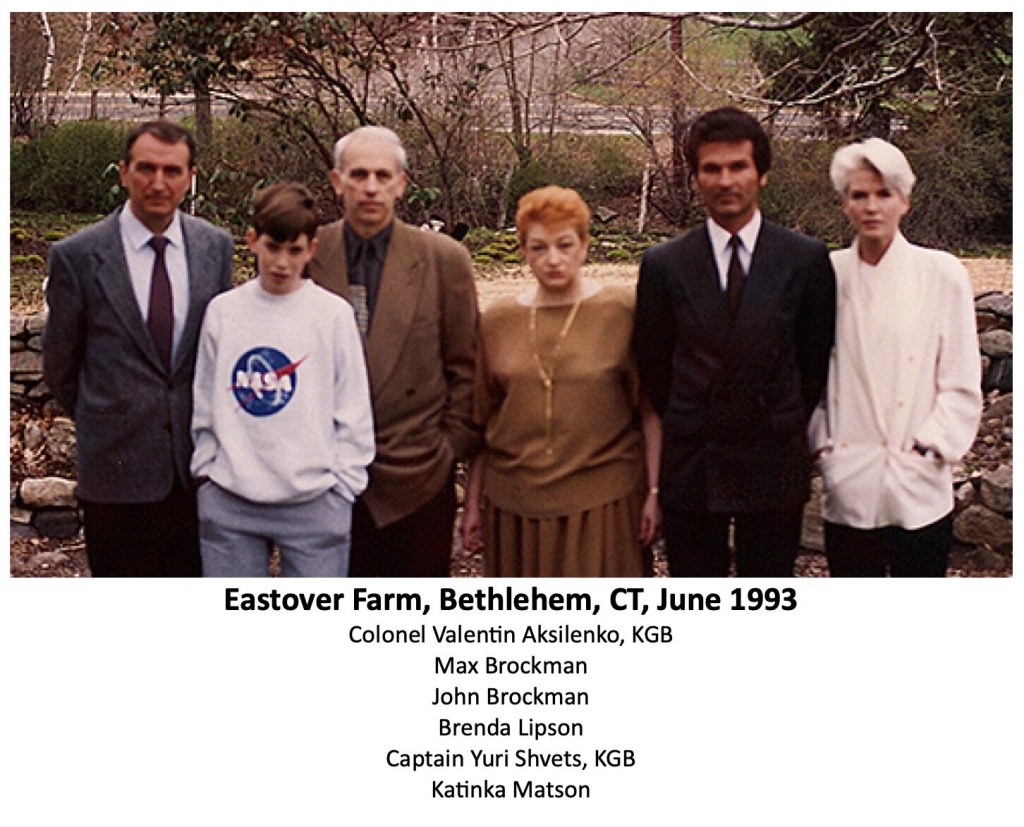
The Brockmans were the perfect hosts, and we all spent a delightful evening, with drinks on the enclosed porch, a stroll through the historic farm property, a lovely dinner, and endless conversation. The following morning, we rode into the city, met with three prospective publishers, and Shvets’ book was quickly bought for publication by Simon & Schuster. After a brief meeting back at the offices of Brockman, Inc., we enjoyed a celebratory lunch (again, compliments of John Brockman) in a restaurant with a beautiful view of Rockefeller Plaza, and three of us — the two exhausted Russians and I — hopped a train back to Washington, where I had left my car parked in the Union Station garage. I drove across the Potomac River via the 14th Street Bridge, checked them into their previously-reserved rooms in a suburban Virginia hotel, and took myself home to collapse. They weren’t the only ones feeling the stress.
(Corrections: Date was April, not June; and Shvets was by that time a Major, not Captain)
It later became public knowledge that, during their stay in Washington, they met with the FBI. How many times they met, or for how long, or what was discussed, I do not know — and I’m sure it’s better that I don’t.
*. *. *
I have to backtrack a bit here. Following my February trip to Moscow with Kate Williams, I had received an offer from Gil Robinson to join his Foundation as their Moscow office manager for an estimated three to six months. Needless to say, I jumped at the opportunity. I spent a couple of weeks part-time in the Foundation’s Washington office, and was scheduled to leave for Moscow on May 10th. Valentin’s and Yuri’s visas were due to expire on May 5th. I was cutting it close, with only five days between their departure and my own in which to get ready for the move. And all the while I was spending time with them, with the FBI (whose presence had increased dramatically since the arrival of the two visitors), with my family and friends, on the phone with Brockman, suspending home deliveries and services, cleaning out my refrigerator, and packing half my wardrobe and an entire pharmacy. Today, just thinking about it is exhausting.
So when they took off as scheduled on May 5th, I was relieved, to say the least. And on May 10th, I left on an Air France flight from Dulles International Airport with 16 pieces of baggage — seven or eight of my own, the remainder being office supplies and equipment belonging to the Foundation. The overweight charges were enormous, but luckily a very sympathetic Air France supervisor, on hearing that we were doing humanitarian aid work for children, cut the costs in half. Also fortunately, I had the Foundation’s American Express corporate card to cover the still hefty charges.
Heading Into the Unknown
And off I went, leaving everyone and everything behind, heading into . . . what? I had no idea, but I was sure it wouldn’t be dull. And I was so right.
Join me next time, as I arrive in Moscow to get settled, meet my new “family,” visit Kyiv at last, and become much too well acquainted with the Russian authorities.
*. *. *
Re-posting these chapters is almost like reliving those events in 1993, and I find myself wondering where I found the courage to take off into the unknown, by myself, in those days when Russia was being referred to as “The Wild East,” and all business was being conducted through the new “mafia” gangs. But I’m so glad I did, while I had the chance.
It seems as though Viktor Orban is determined to become a total pariah amongst his fellow EU members . . . and all in order to find favor with Vladimir Putin.
So what has he done now? Oh, not much — just invited Russia, Belarus, Moldova, Bosnia-Herzegovina, Montenegro, and North Macedonia to traipse freely throughout all the countries of Europe’s Schengen zone, basically unimpeded.
Let’s see now . . . What’s wrong with this picture?
“Hmmm . . .”
A little background: Hungary’s existing “national card” program makes it easier for people from other countries to come to Hungary to live and work than if they were to apply for traditional work permits or business visas. The holder of a national card is allowed to work in Hungary without any special security clearance, and can bring their family with them. [Reuters, August 21.] After three years, it may even lead to permanent residency. [RadioFreeEurope/RadioLiberty, August 13, 2024.]
But now, the extension of the program to include Russia, Belarus, and the others named above has raised more than a few eyebrows — not surprisingly, as it is contrary to EU policy toward Russia and Belarus, in light of the existing EU visa bans and asset freezes on more than 2,000 citizens from both countries, imposed since Russia’s invasion of Ukraine. [Id.]
“But isn’t that Hungary’s problem?” — you may ask.
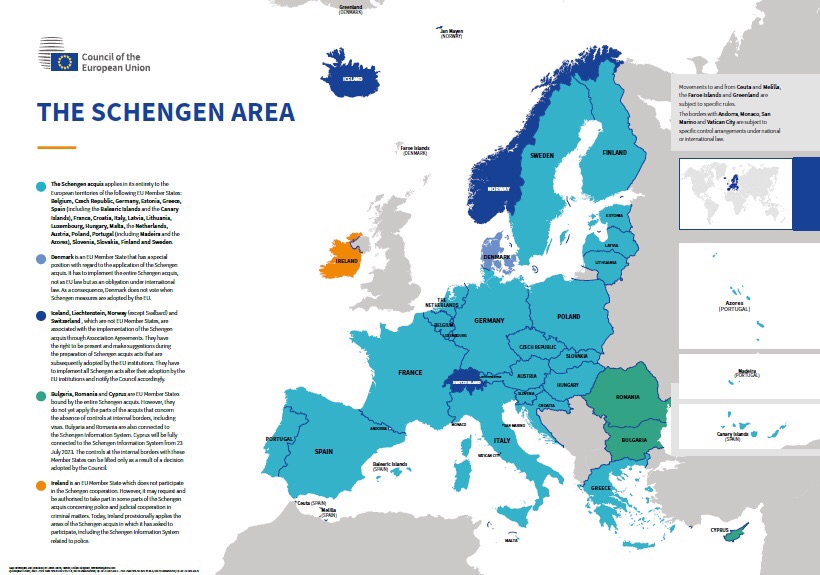
Actually, no . . . because of the aforesaid European Schengen zone, which allows free travel, without the necessity for border checks, among the 29 member countries. This includes virtually all EU countries, with the exception of Ireland and Cyprus.
So, that covers most of Europe . . . including Hungary. Which means that anyone holding a national card from Hungary can also travel freely from there throughout Austria, Bulgaria, Belgium, the Czech Republic, Croatia, Denmark, Estonia, Finland, France, Germany, Greece, Iceland, Italy, Latvia, Liechtenstein, Lithuania, Luxembourg, Malta, Netherlands, Norway, Poland, Portugal, Romania, Slovakia, Slovenia, Spain, Sweden, and Switzerland.
The EU — which has already been at odds with Orban over his continuing close relationship with Vladimir Putin, his “Patriots for Europe” coalition, and his unauthorized visits to Moscow and Kyiv — is quite naturally worried about the likelihood of some (or possibly a lot) of those un-vetted Russians and Belarusians galavanting at will through the Schengen zone.
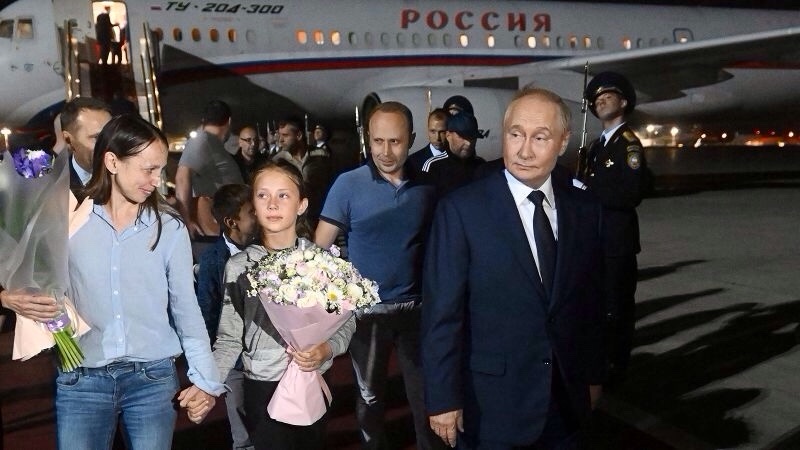
And considering the recent spate of revelations involving Russian illegals, assassins, and other ne’er-do-wells now back home in Mother Russia thanks to the prisoner swap of August 1st . . . who wouldn’t be worried?
Welcoming the Illegals Back Home – 8/1/24
Sandor Pinter, Hungary’s Minister of the Interior, wrote in a letter to the EU that “The National Card will be issued in accordance with the relevant EU framework and with due consideration of the possible security risks involved. In this respect, the Hungarian legislation and practice, which the Commission has not objected to so far, has not changed.” [Anita Komuves, Reuters, August 21, 2024.]
Well, of course the EU hasn’t objected to it before — it didn’t previously include Russia or Belarus.
Earlier this month, EU internal affairs chief Ylva Johansson warned Hungary that “its decision to ease visa restrictions for Russians and Belarusians posed a potential security threat and [that] she would take action if her concerns were not addressed.” Apparently, Johansson also posed specific questions to Pinter; he has said, in an annex to his letter, that he would provide detailed answers. [Id.]
This is beginning to feel like tryouts for the lead in the high school senior play. First we heard from Ushakov . . . then Chemezov . . . and now it’s Antonov. Who’s up next — is there a Popov in the wings, waiting to deliver the next Putin Proclamation?
And seriously . . . Where on earth is the actual Kremlin spokesman, Dmitry Peskov??!!!
Today’s broadcast of “The Daily Threat From Moscow” was brought to us by the current Russian Ambassador to the United States, Anatoly Antonov. Referring to the Ukrainian counter-offensive (Russian version: “incursion”) in the Kursk region, Antonov said:
“I tell you sincerely that the president has made a decision. I am firmly convinced that everyone will be severely punished for what has happened in Kursk region.”
Ambassador Antonov
Well, I’m sure we’re all glad that he was speaking “sincerely.” We certainly wouldn’t want him to lie to us, would we?
Unfortunately, that was all he had to say about that — no details, despite Putin’s having just met with the governors of border regions and other senior officials. They’re playing this one close to the chest.
He did, however, go on to offer his assessment of the United States, complete with a prediction that it would at some point remove all restrictions on the use of weapons supplied to Ukraine:
“The current administration behaves like a person who extends one hand and holds a dagger behind their back with another one. They are, essentially, laying ground [for a decision] to simply remove all the existing restrictions at a certain point, without much thought.” [Lucy Papachristou, Reuters, August 23, 2024.]
I suppose times have changed; but there was a day when a diplomat was supposed to remain . . . well . . . diplomatic.
Ben Franklin: The Diplomat’s Diplomat
But back to my original point: this round of musical spokesmen being offered us from Moscow this week. It’s an odd assortment, including — so far — an “aide,” an industrialist, and a diplomat. But where is the actual Kremlin press secretary? Where is that adorable Dmitry Peskov? Have there been any sightings of him this week, perhaps on a Crimean beach, or at a casino on the French Riviera?
Dmitry Peskov
Wherever you are, Dima, do enjoy yourself. But come back to us soon, well rested and raring to go, because we miss your unique brand of sarcasm.
– Bodies recovered from yacht sunk by water spout off coast of Sicily . . .
– Volcano erupts in Iceland for sixth time in eight months . . .
– Putin has plan of action to counter Kursk attack . . .
– Trump loses it — again . . .
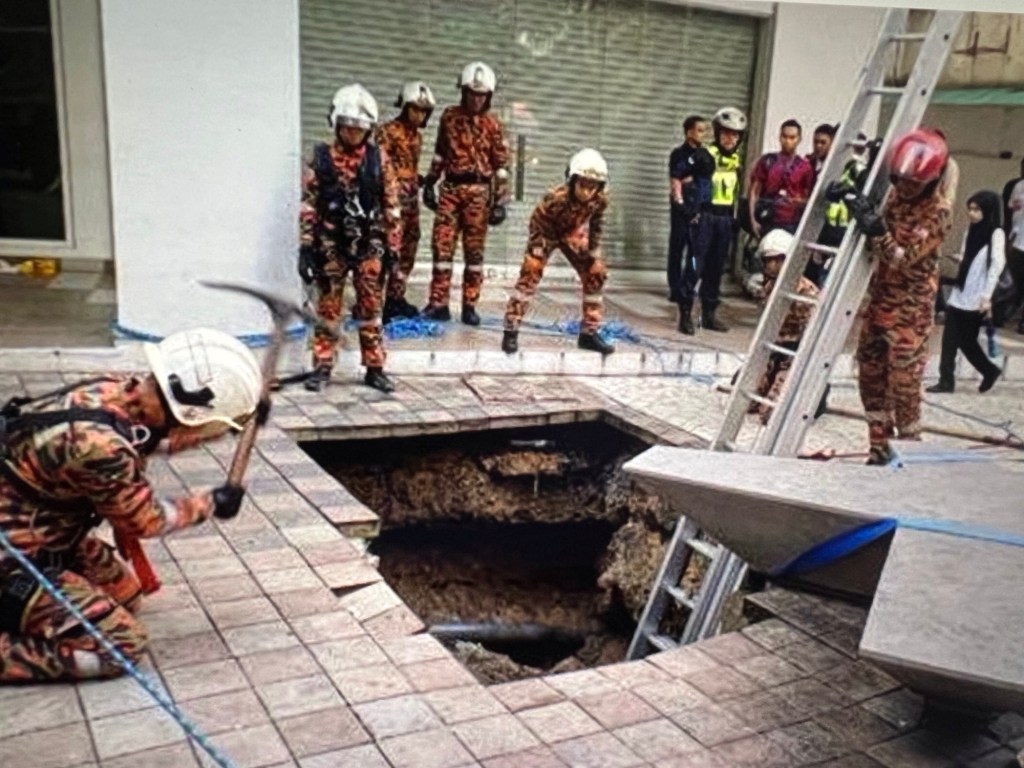
– Woman is swallowed by sinkhole in Kuala Lumpur . . .
“Holy Sinkholes, Batman!”
And that’s just part of this morning’s news.
I’m going back to bed now. Wake me when we reach the next millennium . . . if we reach the next millennium. Or when there’s actually some good news to report . . . whichever comes first.
The loss of a loved one is incredibly sad. And for a monogamous animal — say, for example, a penguin — it is a terrible tragedy, though we humans don’t know just how much they understand or feel. But under ordinary circumstances, a penguin’s loss can be overcome when he or she finds another mate from their large community, and is able to continue breeding and increasing the herd . . . which, for penguins at least, is the real purpose of mating in the first place.
But what happens when one member of a gay penguin couple dies?
Sphen and Magic
So you didn’t know that was a possibility? Never heard of Sphen and Magic, the Australian gentoo penguins who fell in love at the Sea Life Sydney Aquarium in 2018, and later adopted and raised two chicks together? Neither had I, until this week when I read about the loss of Sphen; and considering that they were world-famous, I must have been living under a rock not to have known about them. But I do now; and being a lover of penguins anyway (if you’ve ever seen Happy Feet, you’ll understand), I found the couple’s story particularly touching.
Magic and Sphen had been together for six years, Sphen being older by three years. The staff at the Aquarium noticed them bowing to each other one day, which is a gentoo way of flirting. And in the years since then, they had become a symbol of equality around the world, even inspiring a Mardi Gras float, being referenced in Australia’s education syllabus, and featured in the Netflix series Atypical. [Tiffanie Turnbull, BBC News, August 21, 2024.] Nobody was bothered by the fact that they were gay.
Gentoo penguins have an average life expectancy of 12 to 13 years. Sphen was 11 when his health began to deteriorate, and the decision was made to euthanize him to end his suffering. Magic, who is just eight years old, was taken to see Sphen’s body so that he would understand his partner would not be returning. It was reported that Magic immediately began singing, and was joined by others in the penguin colony. [Id.]
It seems they understand quite a lot.
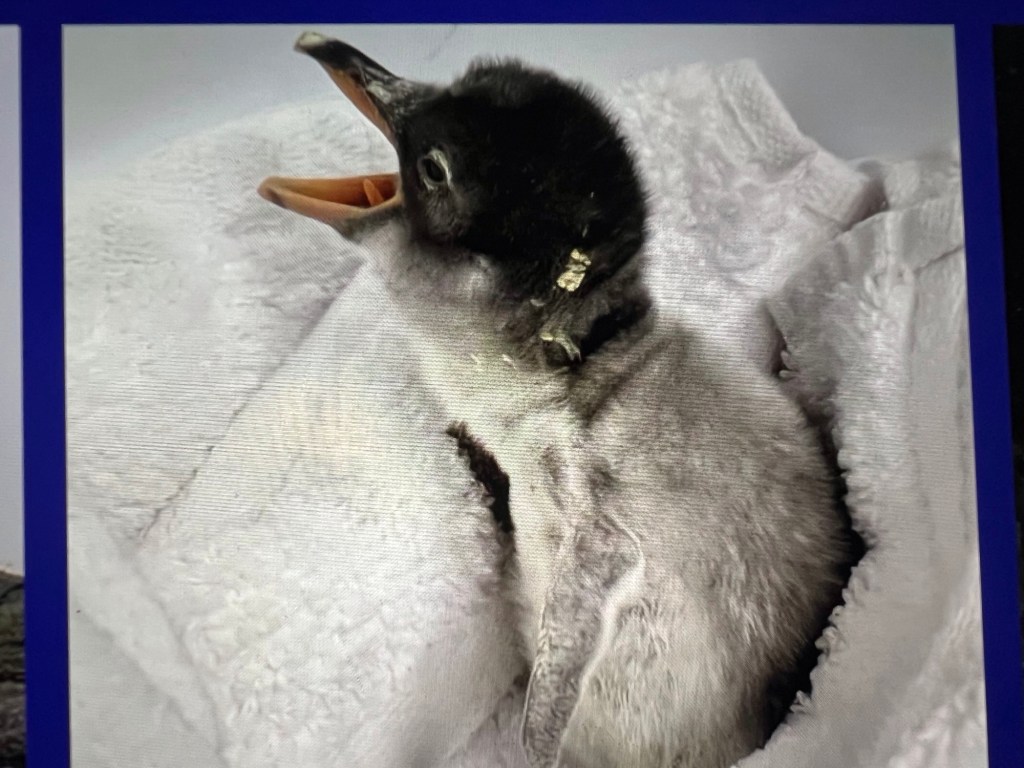
His obituary noted that he is also survived by Sphengic and Clancy, their two fostered chicks.
From Sphengic’s Baby Album
You may have thought in the beginning that this was going to be a humorous piece; but it isn’t. I am heartbroken for Magic, and concerned that he may never find another partner to share the rest of his life. But I will try to follow his story from now on, and rest assured — I will share my findings with you.
In the meantime, my condolences to all of the good people at the Sea Life Sydney Aquarium who are in mourning for Sphen, and who I know are taking the best possible care of Magic, Sphengic, Clancy, and the rest of the colony.
I repeat: Where is Dmitri Peskov? And why are we suddenly hearing Kremlin policy from the mouths of people we didn’t even know existed until this week?
On Monday it was former Ambassador to the United States — now aide to Vladimir Putin — Yuri Ushakov, telling us to forget about peace negotiations with Ukraine as long as their “venture” — i.e., counter-offensive — into Russia continues.
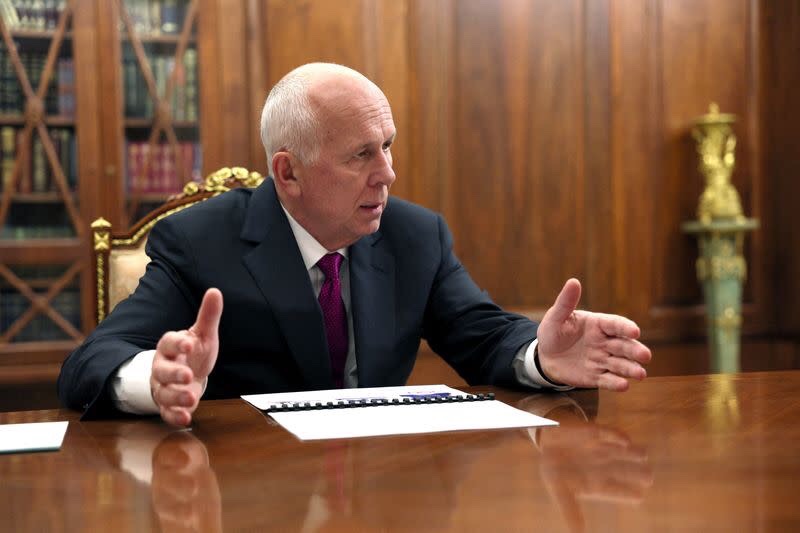
And on Wednesday we were introduced to Sergei Chemezov — not even a government official, but CEO of major arms manufacturer Rostec . . . and, not incidentally, a close friend of Putin from their days in the service of the KGB in then East Germany.
Who’s next . . . Aleksandr Dugin??!!!
Sergei Chemezov
At any rate, General (his former KGB rank) Chemezov had a strong warning for the United States and its Western allies, saying that we “risk triggering a global war if Washington continues to ‘provoke’ the conflict in Ukraine and allow Kyiv to attack Russian territory.” [Guy Faulconbridge and Gleb Stolyarov, Reuters, August 21, 2024.]
Reiterating the Kremlin line that the conflict is a battle between the West and Russia, he further stated:
“In a situation where the West, led by the United States, provokes war, we must be ready. The third year of the special operation is under way — Russia feels confident.” [Id.]
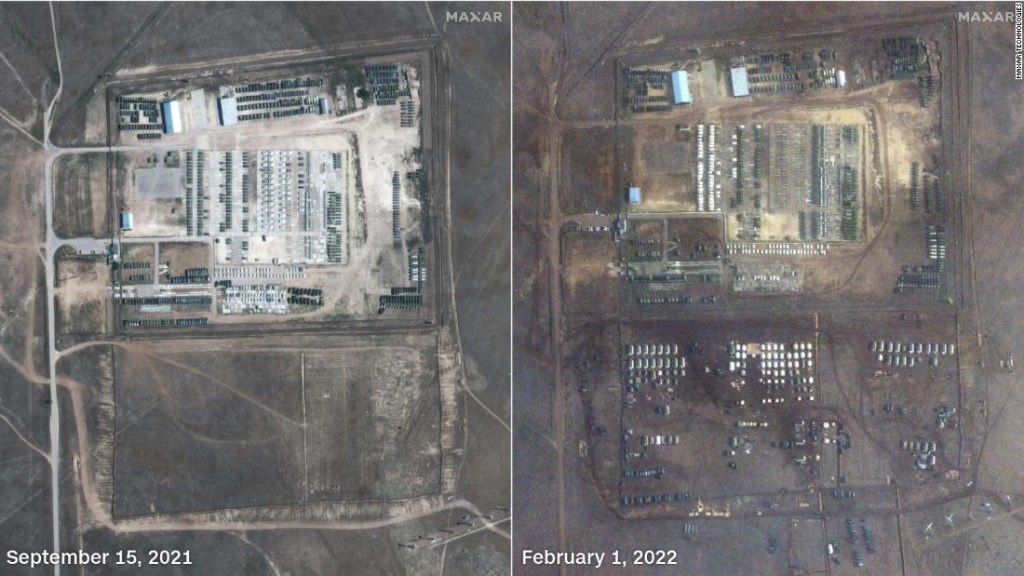
This really is nothing new — we hear it almost daily from Putin, Medvedev, Peskov and others. What strikes me, though, is the consistent use of the word “provoke” in laying the blame at the feet of the Western nations. And they repeat it, and repeat it, and repeat it, without so much as a blink or a blush, as though it were true . . . when they know damned well who it was that lined their troops up at the border and invaded Ukraine on February 24, 2022.
Russian Troop Deployment at Ukraine Border (CNN)
It was not the United States. It was not any NATO or EU member country.
IT WAS RUSSIA!
And no matter how many times they say otherwise, the facts do not, and will not, change.
IT WAS RUSSIA who started this war. And it is a war — not a “special military operation.”
How do we get this across to Putin & Company? That is the $64,000 question (or $64 billion, in today’s money). It’s like trying to get a recalcitrant child to understand that, no matter what he says, pigs cannot fly. Saying it — no matter how many times — doesn’t make it so.
“Not listening.”
Putin put in his two cents’ worth last week when he predicted Ukrainian troops would be beaten back from Russian territory; but they’re still there. He also said in June that he could deploy conventional missiles within striking distance of the U.S. and its European allies if they allowed Ukraine to use long-range Western missiles in Russia. [Id.]
Vladimir Putin is a man who has never gotten over the breakup of the Soviet Union, which he considers “the greatest geopolitical disaster of the [20th] century.” He took that event as a personal humiliation; and now he has been further mortified by his inability to defeat Ukraine — as he originally bragged — in a matter of days or weeks.
And now, is there some special meaning behind the sudden appearance of Ambassador Ushakov and General Chemezov? Or are they just filling in temporarily for Kremlin spokesman Dmitry Peskov?
*. *. *
Which leads me back to my original question: Dima . . . where are you? And why are they sending in these second-stringers?
Come back, Dima
They’re saying basically the same things you would be saying. It’s just that you’re that familiar, relatable face we’ve come to know and . . . well, look forward to.
* [From History.com, This Day In History, August 22, 2024.]
1776: The British Are Coming! The British Are Coming! On this date in the year of my country’s birth, British General William Howe came to Long Island, New York, with a reported “near twenty four thousand men ready to land in a moment,” hoping to capture New York City and gain control of the Hudson River. At Brooklyn Heights, the British Redcoats overcame the Americans and outflanked the entire Continental Army. The Americans suffered 1,000 casualties; the British only 400.
Battle of Long Island (Britannica)
The British missed a couple of opportunities to finish the job, and finally, on September 11th, Benjamin Franklin, John Adams, and other congressional representatives reopened negotiations with General Howe and his brother, Admiral Richard Howe. But the British refused to accept the condition of American independence, and negotiations fell through.
Fighting resumed, and on September 15th, the British captured New York City, which remained in British hands for the duration of the war.
*. *. *
1968: The Russians Are Coming! The Russians Are Coming!
Same date, different country, nearly 200 years later.
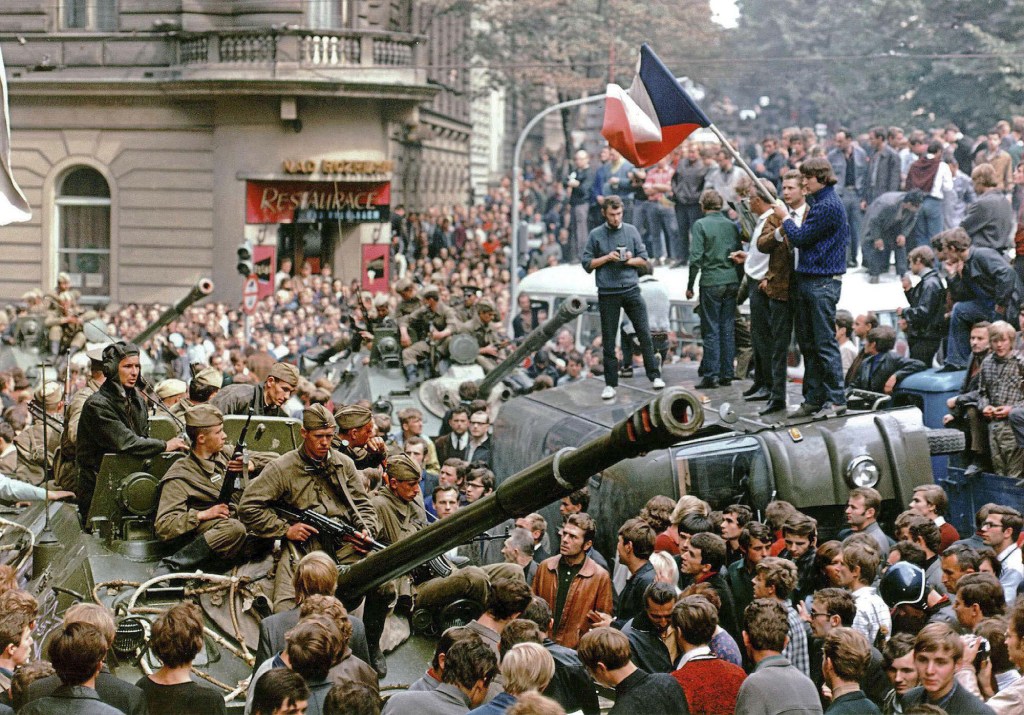
Moscow was annoyed (to say the least) at reforms instituted by Czech Communist Party General Secretary Alexander Dubcek. When Dubcek refused to back down, Russia did what Russia always does: they invaded Czechoslovakia on August 20th with more than 200,000 troops. On August 22nd, thousands of Czechs gathered in and around Vaclav Namesti (Wenceslas Square) in the capital city of Prague in protest against the Soviet invasion. What began as a peaceful demonstration erupted in violence at times, and several protesters were killed that day and during the days that followed.
Soviet Tanks and Czech Protesters, Wenceslas Square, Prague – 1968
Despite international condemnation, the Soviet Union pushed Dubcek from power and replaced him with a hardliner. Czechoslovakia remained under the control of the Soviet Union until its “Velvet Revolution” of 1989 — a time when Eastern European nations were breaking free of communist control, the Berlin Wall came down in Germany (November 9th), and as a result — some two years later — the Soviet Union itself splintered and ceased to exist.
All in all, a big day for invasions. It would be best if history did not repeat itself this way again — at least not for another 200 years.
On the one hand, I’m sure Yevgeny Prigozhin would be happy to know that his Wagner Group lives on, a year after his own death in a fiery plane crash on August 23, 2023. But on the other hand, I’m not so sure he’d like what it’s been turned into.
To begin with, the former Wagner Group is now under the aegis of the GRU — Russia’s military intelligence directorate. It has been renamed, and is now known as the Africa Corps (AC).
If that sounds familiar, it should. The name was stolen directly from Germany’s World War II Afrika Korps, headed by the infamous “Desert Fox,” Field Marshal Erwin Rommel. Why Putin, or the GRU, or whoever chose the name couldn’t come up with something original — and more puzzlingly, why they would choose to adopt the Nazi reference — I can’t imagine; but there it is.
Germany’s Afrika Korps Symbol – World War II
Some things haven’t changed. The war in Ukraine remains the AC’s first priority; but its heavy involvement in African political, industrial and economic affairs has floundered somewhat since the loss of its leader. Prigozhin was the founder of, and the brains and muscle behind, the Wagner Group; and he fiercely maintained its independence. His troops were loyal to him, and his sudden death created a void that has yet to be filled. Not all members remained with what is now the GRUs Africa Corps; some joined the Russian National Guard, while others are now part of a Chechen militia force. [RadioFreeEurope/RadioLiberty, August 21, 2024.]
Wagner Mercenaries in Mali
Political analyst Mark Galeotti, speaking at Washington’s Brookings Institution on August 20th, said that those Wagner personnel who were blended into the GRU are “trying to run a blended diplomatic, commercial, and military structure, while they only have the skill set to run the latter.” [Id.]
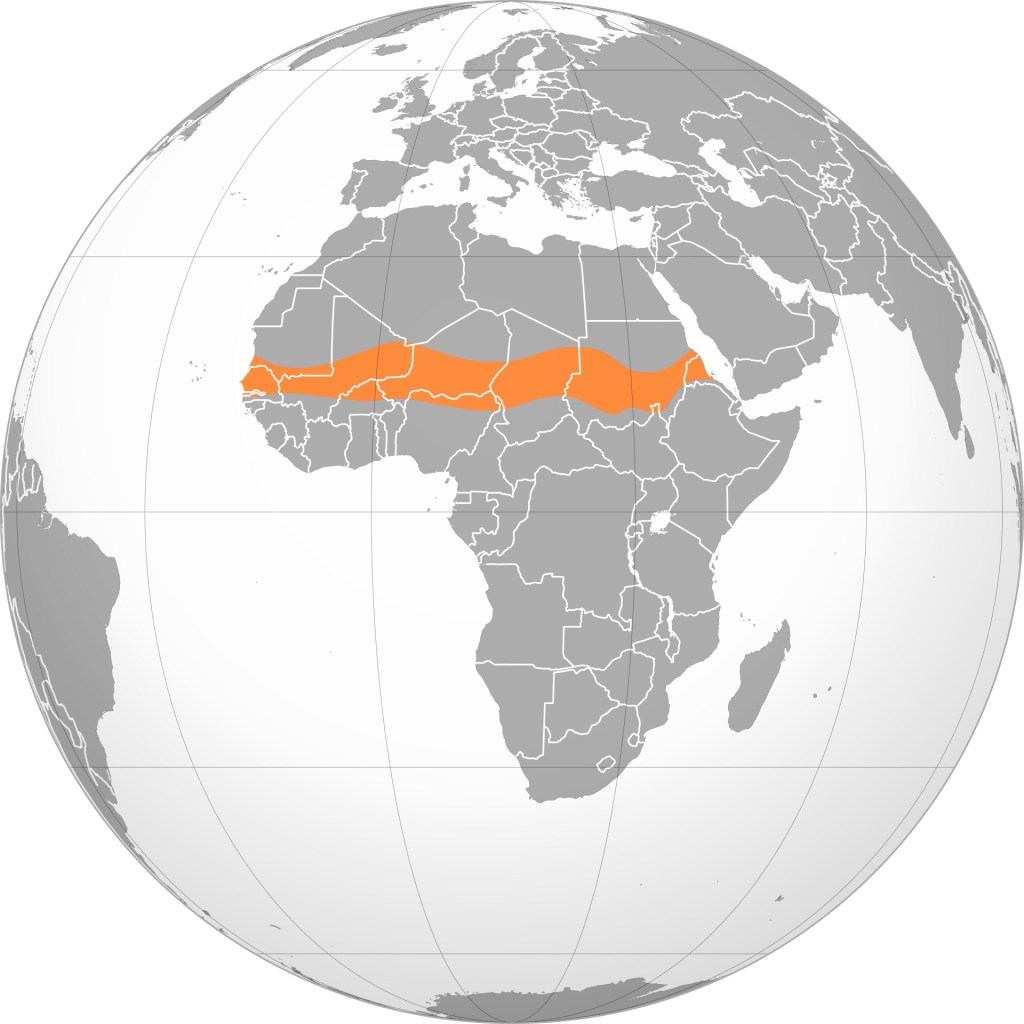
The AC remains active in Libya, Mali, and the Central African Republic, and has begun making inroads into Burkina Faso and Niger. Even the government of the little island nation of Sao Tome and Principe, off of Africa’s west coast, has indicated that it would like to send its forces to a Russian training academy in Chechnya. [Id.]
Main Intelligence Directorate
And Russia is buying off Guinea Bissau by canceling and restructuring large portions of its debt, which would give Russia access to that country’s substantial cocaine trade and a link to the organized crime groups from both Africa and Latin America that convene there. [Id.]
That’s how they operate, and always have done: Like any successful Mafia-style group, they play on your weaknesses until they own you. Violence is an adjunct tool, to be used freely as needed.
According to Professor Christopher Faulkner of the U.S. Naval War College, “Africa Corps is still in its elementary phase . . . We’re just waiting to see what’s going to transpire and whether or not Moscow will actually invest in real genuine security in those states.” [Id.]
Sahel Region of Africa
Security? Is that what they’re calling it now? What a great name for sending armed goons into a desperately poor, politically unstable country; promising miracles in return for the only type of payment the country can offer, and its only real asset: its rich natural resources; and installing your own chosen people at the head of the government, thus creating yet another Russian vassal state.
So it’s business as usual in Africa, but without Prigozhin to keep his troops operating efficiently. And the ultimate goal? Well, as Professor Faulkner said, we simply have to wait and see. But it does seem to have some of the earmarks of another Cold War-era Eastern Europe . . . only without having to acknowledge it as an invasion.
I don’t mean when the government or your employer tells you that you are, by reminding you that you now qualify for retirement benefits that will never be enough for you to live on. Nor is it when AARP (American Association of Retired Persons) starts sending you solicitations for membership — because they start that crap when you turn 50, which (trust me) isn’t old. And it’s not when you have to take a special eye test to get your driver’s license renewed.
No! Not Brooke Shields!
No, it’s none of those “official” milestones. Aging is different for each individual, of course. But there are many signs that you’re perilously close to becoming a senior citizen, or an octogenarian, if only you know what they are . . . and have the guts to face up to them. For example:
Remember when your dentist hinted that you might want to consider whitening your teeth? How old were you then — 40? 45? Uh-huh. That might have been a sign.
And when you discovered that those expensive body lotions and creams were sinking into your skin with an audible “slurp” but no longer keeping you moist and velvety?
Or when your beautician or barber began pulling a handful of hair out of the brush after using it on you, and you heard their quiet “Oh-oh”?
Remember the first time the kid behind the ticket counter in the movie box office assumed you qualified for a senior ticket? Didn’t you just want to smack him, even though he was right?
All signs. But just little ones. They became more noticeable over time, like when you couldn’t make it up the hill from your house without stopping halfway to catch your breath. Or the first time you grunted when you pushed yourself out of the easy chair.
Has your partner — or your next-door neighbor — begun complaining about your snoring? Good luck with that one!
Do people get annoyed when they have to repeat everything because you keep telling them they’re mumbling when they’re not? Well, that’s tough. If they don’t like it, let them pay for the hearing aids, because Medicare won’t.
And wait until the first time your bladder wakes you — or, worse, doesn’t wake you — in the middle of the night. You will never have an uninterrupted night’s sleep after that for the rest of your life.
But that’s okay, because you have to get up anyway, for another shot of Pepto Bismol after daring to have a slice of pizza for dinner.
By the way, it won’t be long after that when even mashed potatoes have the same effect. Welcome to the wonderful world of not eating much of anything.
Oh, and this would be a good time to start practicing tightening those butt cheeks, because the gas from the pizza — or even the mashed potatoes — will escape at the most inopportune times. Of course, if it can’t come out that way, it will likely find another exit, in the form of a very satisfying belch that you might not be able to stifle in time. Either way, I recommend looking innocently around the room as if trying to identify the culprit. It only works occasionally, but it’s worth a try. Otherwise, just laugh it off; everyone else will be.
Do your bottles of prescription medicines now outnumber the real teeth you have left in your mouth? If so, you’re well on your way, baby.
Oh, by the way, about that waistline . . . where did that go? And when? Well, it expanded, and it’s now hiding behind those boobs that no longer look proudly forward when you stand up. (And that goes for you men, too, you know.)
Shall we talk about the feet now? You probably never even heard of toenail fungus until a couple of years ago! But don’t despair; there’s stuff to treat that, too.
And let’s see . . . there are those prominent veins on your hands . . . the chicken neck . . . a bunch of little brown spots where you never had freckles before, and . . .
Ah, forget it! The list is too long. I’ve come to the conclusion that trying to battle the inevitable will only lead to clinical depression, which is the last thing you need. So try to overlook your aching back, your reflux, and your cataracts, and be grateful for the fact that you still have your mental . . . your mental . . . your . . .































 The Blog About Everything … and Sometimes Nothing