May you have . . .


and . . .

Brendochka
12/25/24
May you have . . .
and . . .
Brendochka
12/25/24
In 1991, Czechoslovakia finally saw the departure of the last of the Russian military occupiers following the breakup of the Soviet Union.
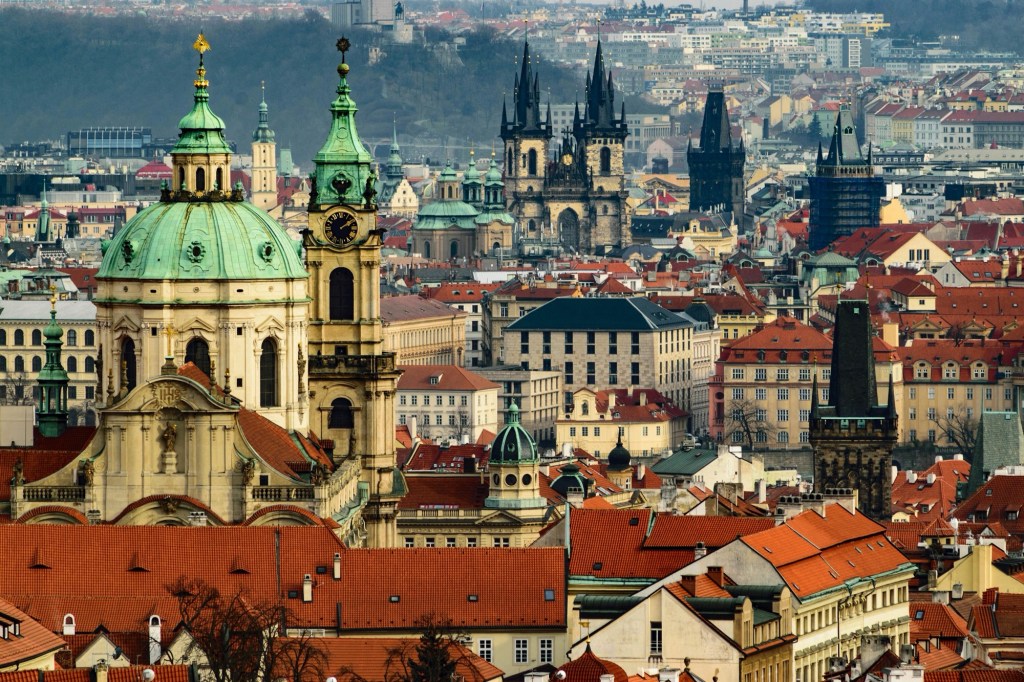
Scarcely had the celebrations died down when the newly independent nation did its impression of an amoeba and split into two distinctly separate entities — the Czech Republic (or Czechia) and Slovakia — and the principal concern became the rebuilding of their respective economies.
Politically, they each seemed to be on the right track. Both countries have since become members of NATO and the European Union (EU). But disturbing signs have recently been emanating from Slovakia as the result of its Prime Minister Robert Fico’s inexplicably friendly relationship with Russian President Vladimir Putin . . . despite Russia’s war of attrition against Ukraine, and in violation of Slovakia’s obligations to NATO and the EU.
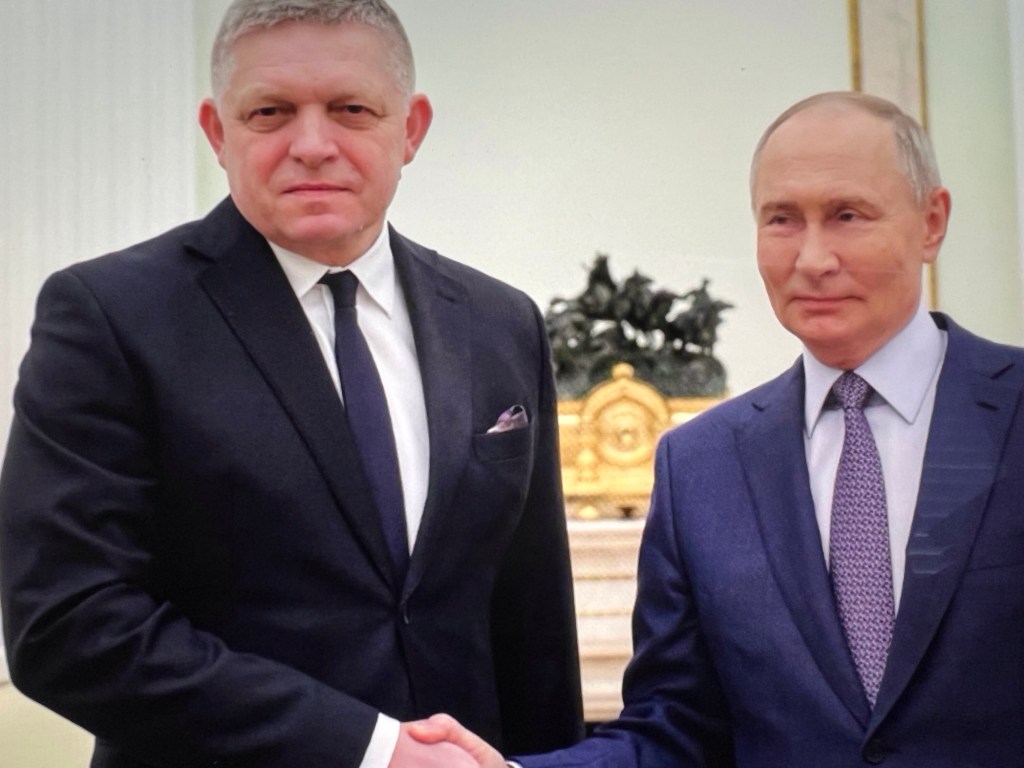
Following in the footsteps of Hungarian Prime Minister Viktor Orban and Austrian Chancellor Karl Nehammer, Fico made a surprise visit to Moscow this week to meet personally with Putin . . . in direct conflict with the EU’s Common Security and Defence Policy and its sanctions against Russia since the invasion of Ukraine in February of 2022. [Thomas Mackintosh, BBC News, December 23, 2024.]
The purpose, according to Fico, was to discuss supplies of Russian gas to Slovakia, now that Ukraine has refused to renew its gas transit agreement. In anticipation of the expiration of that deal, most European countries have established other means of obtaining the needed gas supplies; but Fico maintains that his country still needs the supply from Russia.
And he is more than happy to continue doing business with Vladimir Putin, frequently criticizing the EU’s support for Ukraine and saying that Putin has been “wrongly demonised” by the West. [Id.]
Much of Europe has been understandably critical of Fico’s actions and his continuing friendship with Russia’s tyrannical leader. Jan Lipavsky, Foreign Minister of Slovakia’s “fraternal twin” — the Czech Republic — has said that his government had managed to become independent of Russia for its energy needs.

And in Fico’s own back yard, Michal Simecka, Deputy Speaker of the Slovak National Council, has said that “Fico had made his country a tool for the Russian leader’s propaganda and his trip was a ‘shame for Slovakia and a betrayal of national interests.’” [Id.]
He added in a statement on X that: “If the prime minister actually cared about gas transit, he should have negotiated with Ukraine rather than turning Slovakia into a tool of Putin’s propaganda.” [RFE/RL’s Russian Service, December 22, 2024.]
*. *. *
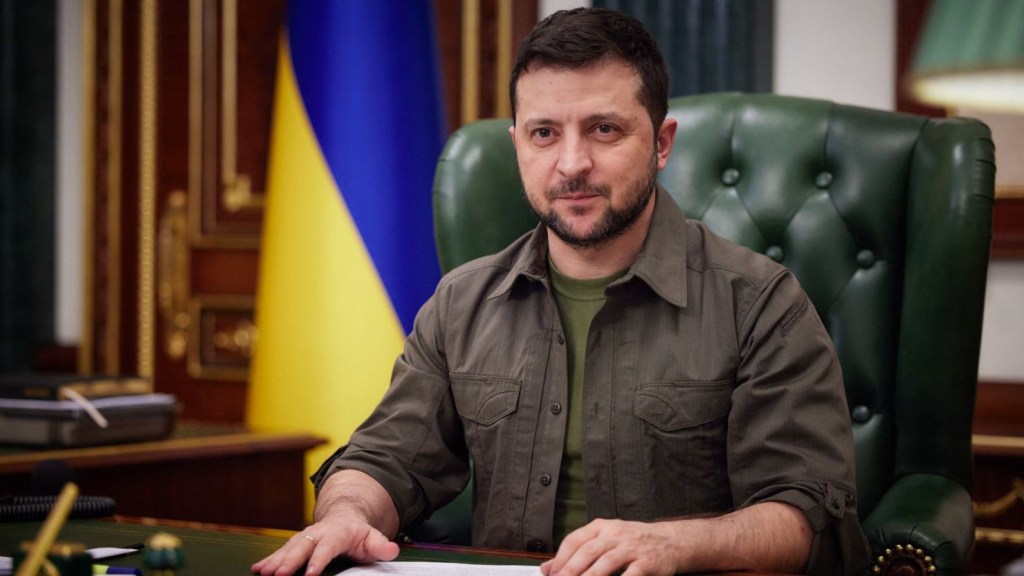
Not satisfied with backing Putin, Fico has taken jabs directly at Ukraine’s President Volodymyr Zelensky, complaining that Zelensky’s favoring of sanctions against the Russian nuclear program was “unacceptable,” and that it would financially damage and endanger Slovakia’s production of electricity in its nuclear power plants.
To which Zelensky responded:
“To be honest, during war, it’s a bit shameful to talk about money, because we are losing people.” [Id.]
Since I could not possibly have said it better, I will leave it here.
*. *. *
In countries that just three decades ago fought to throw off the yoke of Russian rule, now seeing people like Slovakia’s Robert Fico and Hungary’s Viktor Orban being elected to leadership positions is beyond disturbing . . . it is a terrifying sign of the continuing power of authoritarian propaganda in a world hungry for peace and prosperity.
But at what price?
Just sayin’ . . .
Brendochka
12/24/24
Christmas Eve, 1941. The Japanese had bombed Pearl Harbor just seventeen days earlier, and the United States had responded by declaring war on Japan . . . and, a few days later, on Germany as well, thus bringing the U.S. firmly into the throes of World War II.
On that day, a top-secret meeting was afoot at the White House, where even the First Lady, Eleanor Roosevelt, had not been told who her house guest was to be. Only when his ship, the HMS Duke of York, was safely docked at a Virginia port was Mrs. Roosevelt told to expect the British Prime Minister, Sir Winston Churchill, for dinner. [Stephen Collinson, Caitlin Hu and Shelby Rose, CNN, Meanwhile in America, December 24, 2024.]
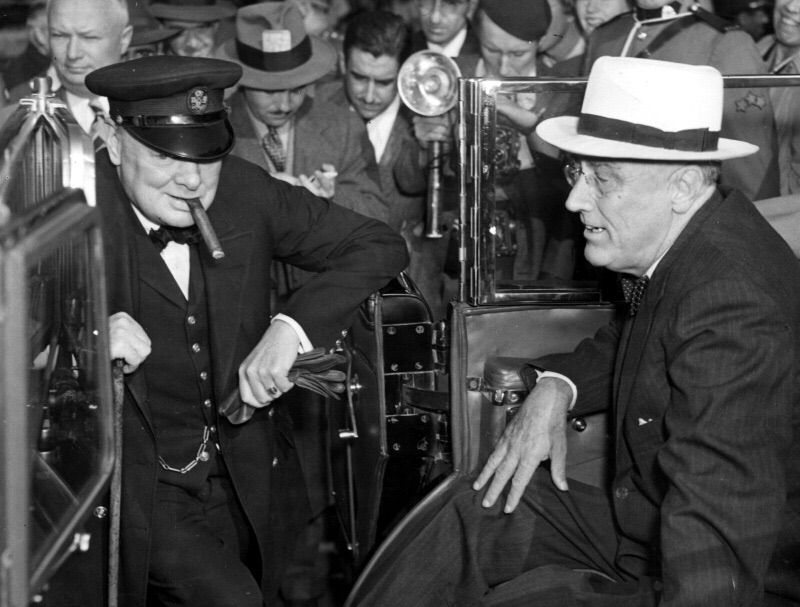
The tale of that two-week summit in Washington — Churchill’s hazardous crossing of the Atlantic by ship, his idiosyncrasies, his preferences in cigars and various alcoholic beverages, and the differences in personality of the two world leaders — is beautifully told by CNN’s reporters, and I will not attempt to recreate it here.
But it’s the result of that period during which the two found common ground that is most significant. Because by the end of a fortnight, they had “forge[d] a bond and create[d] the blueprint to win the war: Roosevelt and Churchill eventually linked a Europe-first strategy to defeat the Nazis before imperial Japan and a joint move on North Africa.” [Id.]
They also managed to agree on the United Nations Declaration, which would be created “. . . to spare future generations from the horror of war and to unite the West with institutions and a common transatlantic mission . . .” [Id.]
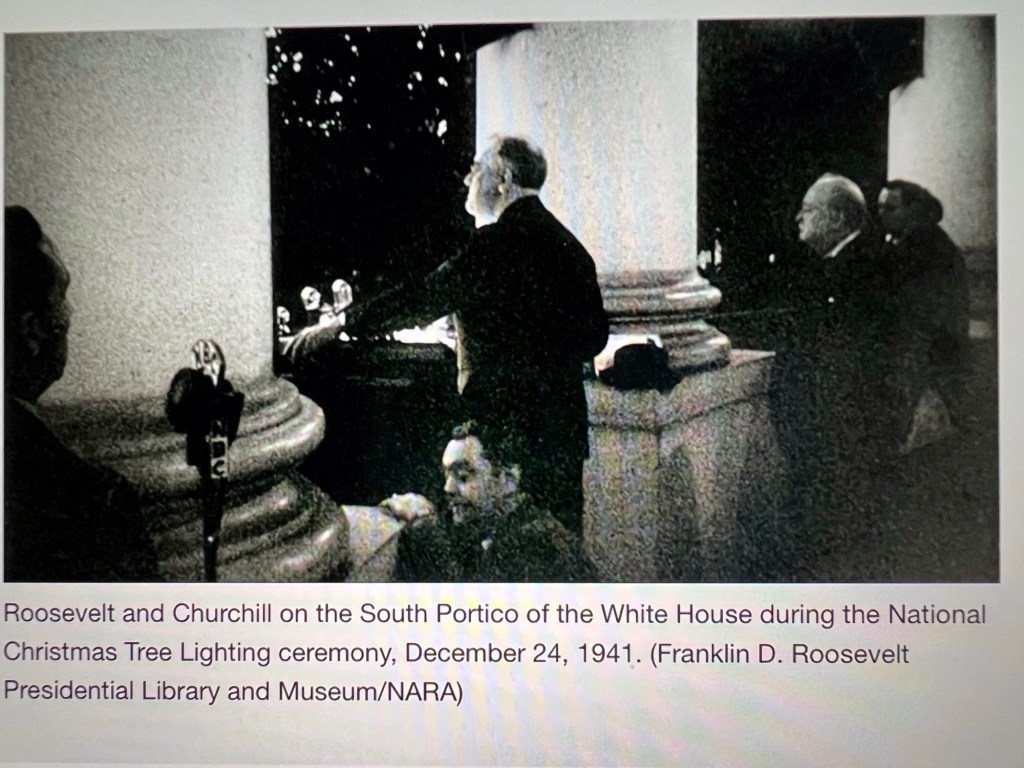
And on that Christmas Eve, Churchill stood by on the South Portico of the White House as Roosevelt flipped the switch that lit the national Christmas tree on the nearby Ellipse. Speaking by radio to the nation, Roosevelt asked:
“How can we give our gifts? How can we meet and worship with love and with uplifted spirit and heart in a world at war, a world of fighting and suffering and death?” He then urged Americans to gird for the fight ahead with “the arming of our hearts. And when we make ready our hearts for the labor and the suffering and the ultimate victory which lie ahead, then we observe Christmas Day — with all of its memories and all of its meanings — as we should.” [Id.]
It would take another three and a half years, but that joining of Allies did ultimately bring about the victory over the Axis formed by Hitler, Mussolini and Hirohito. And, in October of 1945, the United Nations was born, and the world — while far from perfect — has at least not seen another world war in nearly 80 years.
Even so, during those eight decades the world has endured a Cold War, “hot” wars in Korea and Vietnam, and far too many Middle Eastern conflicts. We are currently embroiled in Russia’s war against Ukraine, Israel’s continuing battle against several of its neighboring countries and terrorist organizations, and the saber-rattling of China and North Korea, to name but a few of our problems.
What we desperately need now — with the advanced technologies and weaponries of the modern world — are statesmen like Churchill and Roosevelt, who are willing and able to put aside their meaningless differences in order to lead the fight for the creation of a safer and better world for all of its citizens.
But do such leaders even exist any longer? And if so, where are they hiding?

Just sayin’ . . .
Brendochka
12/24/24
Yesterday, December 22nd, at a conservative convention known as “AmericaFest 2024” in Phoenix, Arizona, President-elect Donald Trump said that Russian President Vladimir Putin “wants to meet with me as soon as possible.” [RFE/RL’s Russian Service, December 23, 2024.]

Okay, great. Let’s get the ball rolling on an equitable solution to that horrendous, dragged-out war in Ukraine, shall we?
But . . .
It’s never that simple with the Russians, is it? And it’s not just the well-known sticking points of this particular negotiation process, wherein Russia wants to keep parts of Ukraine and prevent it from ever joining NATO, but Ukraine somehow prefers to remain an independent, sovereign nation free of Russian control.
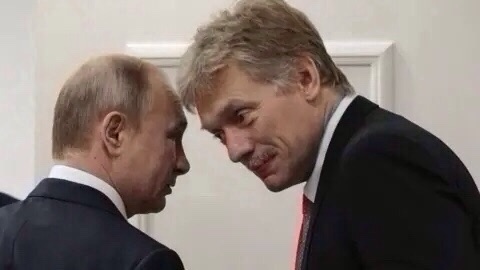
No, this time it’s a bit more than that. It’s a flat-out contradiction by the Kremlin of Trump’s statement. The very day after the Phoenix gathering (this morning, Moscow time), our old friend Dmitry Peskov — the spokesman for Putin himself — told Russian news agency TASS that “so far, there have been no real impulses” for a meeting with Trump prior to his inauguration on January 20th. [Id.]
Not that the timing matters that much as far as the diplomatic process is concerned; it’s only a month, after all. Of course, it does mean another month in hell for the people of Ukraine . . . but politicians are far too focused on the “big picture” to give much thought to such mundane matters as death and destruction.
So while they play their game of one-upmanship, the rest of the world is left to decide whom to believe: Trump or Putin.
Heads or tails?

Just sayin’ . . .
Brendochka
12/23/24
For those of you who are reading my blog for the first time, allow me to introduce myself. I am an American woman, retired, long since divorced, with two terrific middle-aged children, a grown grandson, two step-granddaughters, and even a step-great-granddaughter born just last month.
And I’m over 80. That’s years, not pounds . . . though I’m also well over 80 pounds, fortunately.

I had an excellent career in the legal field for most of my working life, and also branched out in later years into the international business arena, doing a couple of brief stints as an expatriate, first in Prague (1991) and then in Moscow (1993).
I’m fairly well educated, though I don’t have a string of initials after my name. I don’t need those; I have a sweatshirt that announces to the world: “That’s What I Do. I Read. And I Know Things.” And another that says: “I Am Silently Correcting Your Grammar.” I’m good with those.
I do have a couple of physical issues fairly typical of people in my age group. But, while I tend to take a few seconds longer to remember someone’s name or come up with the right . . . oh, what’s that word again? . . . yeah, despite whatever that is, my mental synapses are still firing pretty well for the most part.
So, what I’m saying is that I believe I’m quite capable of managing my own day-to-day activities. I must have been doing something right to have made it this far.
But, according to the internet, I’m f*cking stupid.

I keep running across these articles telling me that everything I’ve been doing for my entire life has been wrong. However, I beg to differ. You see, I really do read a lot. A whole lot. Not just books, but quite a few online news reports every day. And mixed in with the news is a boatload of other stuff — overblown ads, outright scams, and . . . my particular pet peeve . . . advice I never asked for, from people I don’t know, on subjects I was brought up to believe you shouldn’t discuss in polite company.
Yes, I know . . . times have changed. Things that were verboten a generation ago are perfectly acceptable now. But do I really need some self-appointed “expert” who is probably one-third my age telling me how many times a day I should go to the bathroom? Seriously — there are articles on how often I should pee, poop, bathe, brush my teeth, and wash my hair, and that I shouldn’t stick Q-Tips way into my inner ears. I think I’ve lived long enough to have figured that out by now. I’m not dehydrated, I’m not constipated, and I don’t smell bad. I’ve got this.

I saw an article yesterday — just the headline, actually, because I didn’t bother reading the whole thing — that professed to know how often I should change my bedsheets. Again, I’m over 80 and single; there’s nothing going on in there besides sleeping. I don’t perspire a lot. I don’t allow the dog or cat on my bed. I don’t eat in bed. I know when my sheets need to be changed: Not daily. Okay?
And do I really need some so-called “influencer” telling me what I should be wearing? I’ve lived with this body all my life. I know how tall or short I am, how slim or “curvy” I am, what my figure type is. I also know — after all of these decades of dressing myself — what looks good on me, what’s comfortable, and what suits my current lifestyle. I have a mirror; I can see myself, whereas you have never seen me. You have zero influence over me, so butt out.
And for God’s sake, don’t tell me how to arrange my closets, dresser drawers, or kitchen cabinets. Have you ever been to my house? Do you know how much space I have, or how much stuff has to be crammed into that space, or how high the shelves are? No, you don’t, because you and I have never met. And as for that woman — I forget her name now — who made a splash a few years ago by trying to sell people on the joys of decluttering and minimalism, I just want to say this: I like my stuff. I paid a lot of money for it. Much of it has sentimental value. My kids can get rid of it after I’m dead if they want to, but for now . . . hands off, lady.

By the way, to you health nuts out there . . . you diet diehards and exercise exponents . . . you can scratch me off your mailing lists too, please. I know there’s legitimate science behind some of your advice. But I didn’t get this old by living on fiber and probiotics. (Exactly what is a probiotic, by the way?) I grew up eating my grandmother’s and my mother’s old-fashioned, meat-and-potatoes, swimming-in-gravy cooking. And I have an incurable sweet tooth. At this stage of my life, if I want to eat pot roast with gravy and potato latkes with sour cream, and cap that off with half a pint of Haagen-Dazs, I’m going to do it. If I want an extra glass of wine or a shot of vodka, I’m not going to research this week’s wisdom on whether or not it’s good for my heart; I’m just going to have it. And all of your well-intentioned preaching isn’t gonna stop me. So I’ll only live for 94 years instead of 95. Big deal.

Now, I do know people who are totally into healthy eating, regular exercise, and even letting a “life coach” teach them how to be happier and more fulfilled. And they tell me they do feel better for all of that. To them, I say “Bravo! Good for you. I am genuinely thrilled for you.” And I mean it sincerely.
But it doesn’t work for me. I’m going to eat when I’m hungry, sleep when I’m sleepy, and go to the bathroom when Mother Nature tells me it’s time. So you exercise your right to free speech and keep publishing your articles if you wish; just know that I’ll be exercising my right to ignore you.
And now, that Haagen-Dazs in the freezer is calling my name.

Just sayin’ . . .
Brendochka
12/23/24
If you were to ask me to name my favorite work of fiction, it wouldn’t be a classic such as Gone With the Wind, or To Kill a Mockingbird, or War and Peace . . . although I’ve loved each and every one of them, and many more. But at the top of my list is a spy thriller by American writer Nelson DeMille, titled The Charm School, in which the protagonist — a young American man who foolishly takes a solo road trip in the Russia of the 1980s — loses his way as night falls, and stumbles upon an escapee from a village that is actually a top-secret training ground for Soviet sleeper agents.
And one of my top three multi-season TV series — along with Downton Abbey and The West Wing — is The Americans . . . about two such Russian sleeper agents living as an average American couple who own a small travel agency business, and have two children who know nothing of their parents’ double lives. [Warning: Lots of violence, lots of sex . . . and lots of violent sex.]

And yes, both are pure fiction. But the premise on which each is based is pure fact. And it’s not just a distant memory from the Cold War of the last century. The truth is, HUMINT — human intelligence — is still very much a part of the spy business.
And a recent news report was a stark reminder of that truth.
*. *. *
The report involves a number of so-called “sleeper agents” or “illegals,” known in the Kremlin as Vladimir Putin’s “invisible front” — a cadre of agents with false names and passports, fluently speaking second languages, and living fake lives in numerous countries around the world. In this particular case, the countries in which the soon-to-be-outed spies had been operating were as diverse as Slovenia, Argentina, Norway, Greece, Poland, Ukraine, the U.K., Canada, and the United States. [Drew Hinshaw and Joe Parkinson, “The Global Hunt for Putin’s ‘Sleeper Agents,’” Wall Street Journal, December 20, 2024.]
The Wall Street Journal’s investigative reporters interviewed more than 30 former and current officials on three continents to piece together a fascinating tale of the sort of espionage activity of which most of us remain blissfully unaware in the course of our daily lives. It is the stuff of which great movies are made, and well worth taking the time to read . . . because every word of it is real.
My particular interest in it derives from the well-publicized swap that took place on an airfield in Turkey on August 1st of this year, when sixteen political hostages of different nationalities were handed over by Russian authorities in exchange for eight of their citizens — hardened criminals and spies who had been arrested and imprisoned in various countries.

At the time, I had been following — and still do follow — the fates of a number of Americans and others being held hostage on specious charges in Russian prisons and penal colonies. And as I read the news of the historic trade taking place last summer, I was particularly drawn to the story of a couple being returned to Russia who had been living abroad for years, first in Argentina and later in Slovenia. When they received their orders from Moscow of reassignment to Slovenia in 2017, they told people they had decided to move in order to protect their children from the increasing crime rate in Argentina. They called themselves Maria (of Mexican heritage) and Ludwig (allegedly Argentinian), and their children knew no differently.
In fact, the husband and wife — who had indeed been married since 2004 — were Anna and Artyom Dultsev. It was a tiny slip-up in some immigration paperwork necessitated by their move to Slovenia that led to their ultimate discovery, the details of which are covered by the WSJ article.
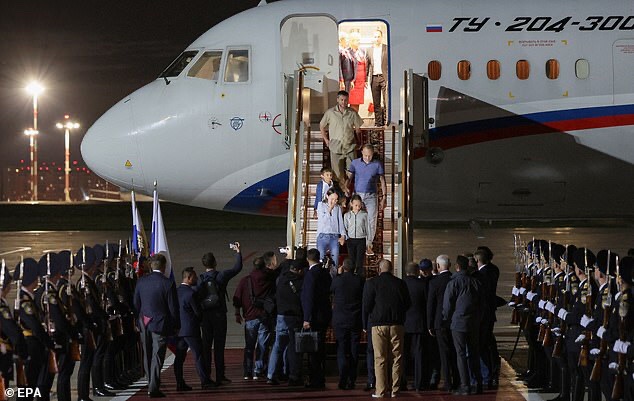
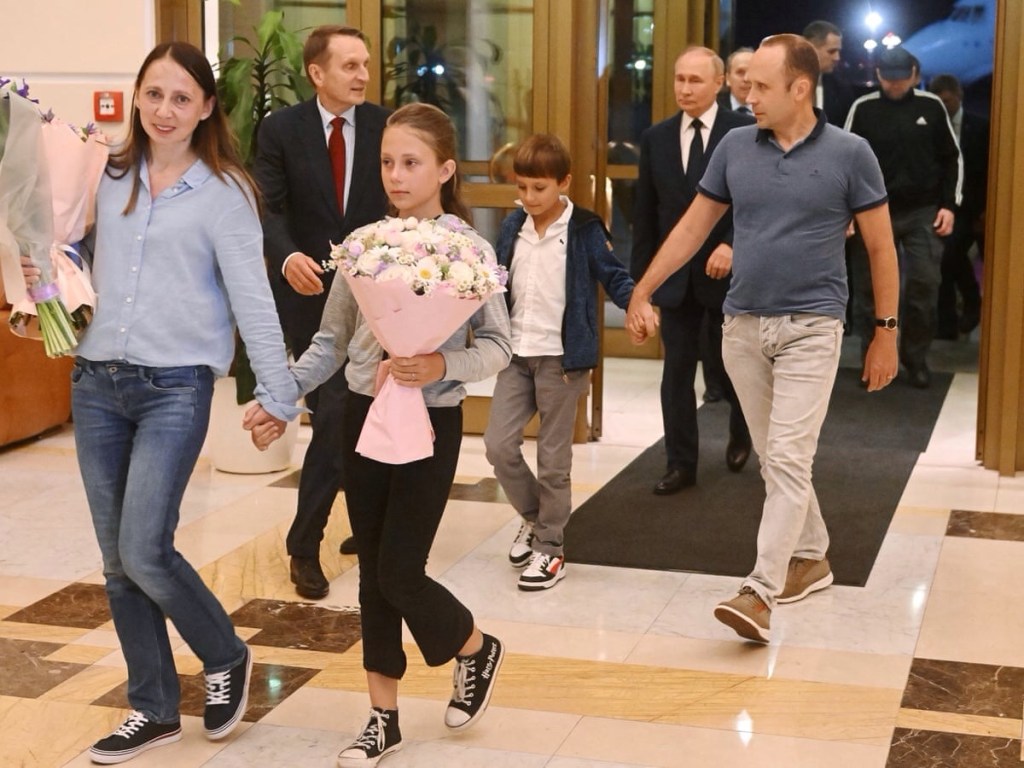
But what isn’t covered — possibly because the information is being closely guarded in Russia — is how the two children, Sofia (11) and Daniel (8), are faring today. Just consider what they have been put through in the past two years:
In December of 2022, their parents are suddenly arrested at home in Ljubljana, Slovenia, while they — then just ages 9 and 6 — are sent to live with a foster family and are told only that there are immigration problems. They are allowed occasional visits to their parents, who they still believe are called Maria and Ludwig.
Finally, after more than a year and a half, they are suddenly put on a plane to Ankara, Turkey, where they are magically reunited with their parents. They next — along with a number of strangers — board an Aeroflot flight, where they are finally told by their parents that they are not Argentinian, but are in fact Russian; that they will now be living in Russia, where they must in effect begin their lives again; and that their parents are not even who they have always said they were.
In fact, Sofia and Daniel are being told that their entire lives have been one gigantic lie.

*. *. *
That’s more than just a minor disillusionment, or a burst balloon. That is the total destruction of two young lives — two bright, happy, trusting children who will never again know whom to trust, or what to believe. And who are too young to have had any say in the matter.
But such is the result of the decisions made years earlier by two adults who chose to “serve” their country as so-called sleeper spies. The kids are just collateral damage.
And on a secondary level, what of the couple’s betrayal of others: friends, neighbors, co-workers, who never suspected that Maria and Ludwig were anything other than the loving, hard-working parents of two well-behaved children? How has their perception of the world — and of their small section of the world — been altered?
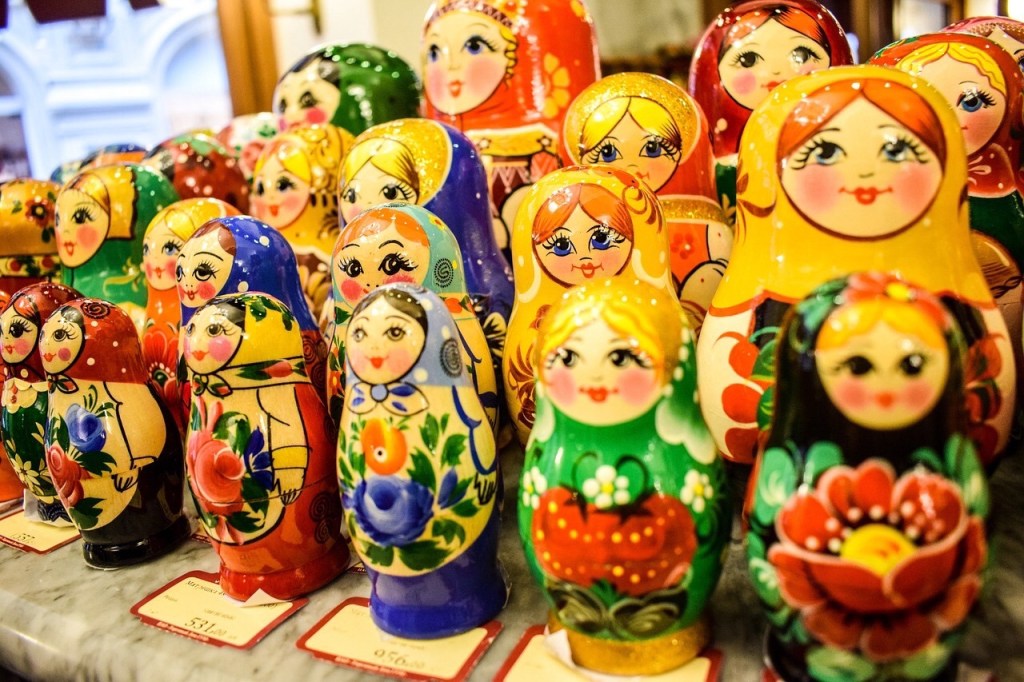
The odds of anyone you know being a foreign spy are slight. But having spent my entire working life in Washington D.C., I quickly learned not to discuss confidential matters in restaurants, taxis, or anywhere that someone might be listening. Sadly, I also came to realize that many people — like those adorable Russian nesting dolls — have multiple layers to their personalities, some of which they may never reveal.
And my mantra became: “A little paranoia can be a healthy thing.”
Just sayin’ . . .
Brendochka
12/22/24
For the second straight week, there have been no new Russian/Belarusian/Eastern European political arrests in the press. Perhaps they’ve just been knocked out of the headlines by the suspicious deaths of two high-ranking Russian military officers, and the continuing war in Ukraine. The better reason, of course, would be that there were none to report.
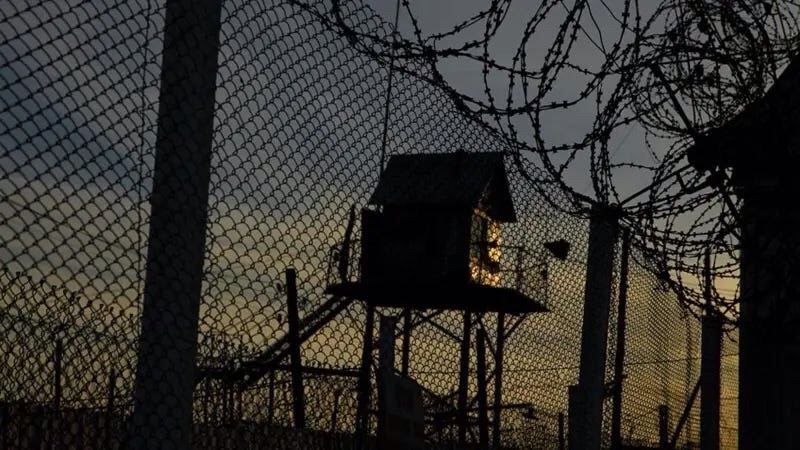
But I continue to honor the remaining political hostages in Vladimir Putin’s prisons and penal colonies, and will do so each week until not one remains locked up. And so, once again, here they are . . . at least, those whose names are known to me:
David Barnes
Gordon Black
Marc Fogle
Robert Gilman
Stephen James Hubbard
Ksenia Karelina
Andrey Kuznechyk (in Belarus)
Michael Travis Leake
Ihar Losik (in Belarus)
Daniel Martindale
Farid Mehralizada (in Azerbaijan)
Robert Shonov
Eugene Spector
Laurent Vinatier
Robert Romanov Woodland
Vladislav Yesypenko (in Crimea)
And yet again, to the incoming Trump administration, I respectfully urge you to place the release of these hostages at the top of your immediate to-do list in January. The negotiations by the Biden administration and several of our allies that were so successful in August must be carried on.
No excuses, please.
Just sayin’ . . .
Brendochka
12/22/24
Not even at the eleventh hour, but shortly after midnight today, the U.S. Senate approved a budget bill passed only hours before by the House of Representatives, thereby narrowly averting a shutdown of the Government of the United States.
Don’t get too excited, though; it’s only another stopgap bill, funding the government into March of 2025, by which time a new president will have taken over occupancy of the Oval Office. So who knows what will happen then? But at least the Grinch will not have ruined this holiday season for those of us who live paycheck-to-paycheck.

I’ve already said my piece (yesterday) concerning the budget approval process, so I won’t belabor the point. Suffice it to say, I join in the collective sigh of relief to be heard across the nation this morning.
So Merry Christmas, Happy Chanukah, Happy Kwanza, and — in the words of someone from that Seinfeld show that I never watched but friends of mine loved — Happy Festivus to the rest of us.
Just sayin’ . . .
Brendochka
12/21/24
No, it’s not the Winter Solstice that has me excited. In fact, I’ll be glad when the daylight hours become noticeably longer. But there is more to this date than just the “honor” of being the shortest day of the year.

For example, it’s National Crossword Puzzle Day. I do enjoy exercising my brain with a puzzle or two — they say it helps to ward off dementia, and . . . at the risk of jinxing myself . . . so far, so good. But that’s not it either.
It’s also National Coquito Day — honoring a yummy-sounding drink sometimes referred to as a Puerto Rican eggnog, but with condensed milk, coconut milk and rum, among other ingredients. I could easily get into that . . . but it’s not the big day, either.

National French Fried Shrimp Day sounds tempting as well . . . especially if accompanied by one or two of those coquito concoctions.
But I’ll get to the point. (“At last,” I hear you sigh.)
It’s National Short Girl Appreciation Day.
Did someone just say “So what?”
“SO WHAT??!!!” I’ll tell you so what!
So this: If you had topped off at 5 ft. 2-1/2 in. around age 18; if you had developed arthritis in your neck from always having to look up at people in order to speak to them; if you had always been stuck sitting in the front row in school, right where the teacher could keep an eye on you; if you always had to buy theater tickets in the first row of the first balcony so you didn’t get stuck behind a tall person in the orchestra seats; if you had spent your entire life apologizing to strangers because you had to ask for help reaching items on the top shelf at the super market; if you had to climb onto a step stool to put away the dishes anywhere above the first shelf in your kitchen cupboards; and if you had watched yourself for the past 20 years becoming even shorter as your intervertebral spaces shrank naturally with age . . .
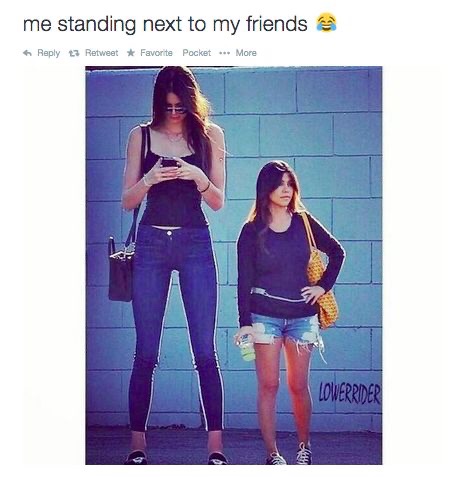
. . . well, then, you might not be smirking now. Because being described as “petite” or “cute” just isn’t enough. Short women aren’t taken as seriously as our taller sisters. It’s hard to project an air of confidence or authority when everyone else is looking down at you, or when yo/u’re barely visible in a crowd.
And it’s a pain in the ass to have to take every item of clothing to a tailor to be shortened. Seriously . . . when did a 28-inch inseam classify as “petite”? I’ll tell you when: never! Not when your legs only measure 25 inches.
There are a few exceptions, of course. Like my idol, the late Supreme Court Justice Ruth Bader Ginsberg, who never made it past 5’1”. But she was unique — a force truly to be reckoned with, by reason of her intellect, her personality, and her determination. There aren’t many like her in this world, unfortunately.
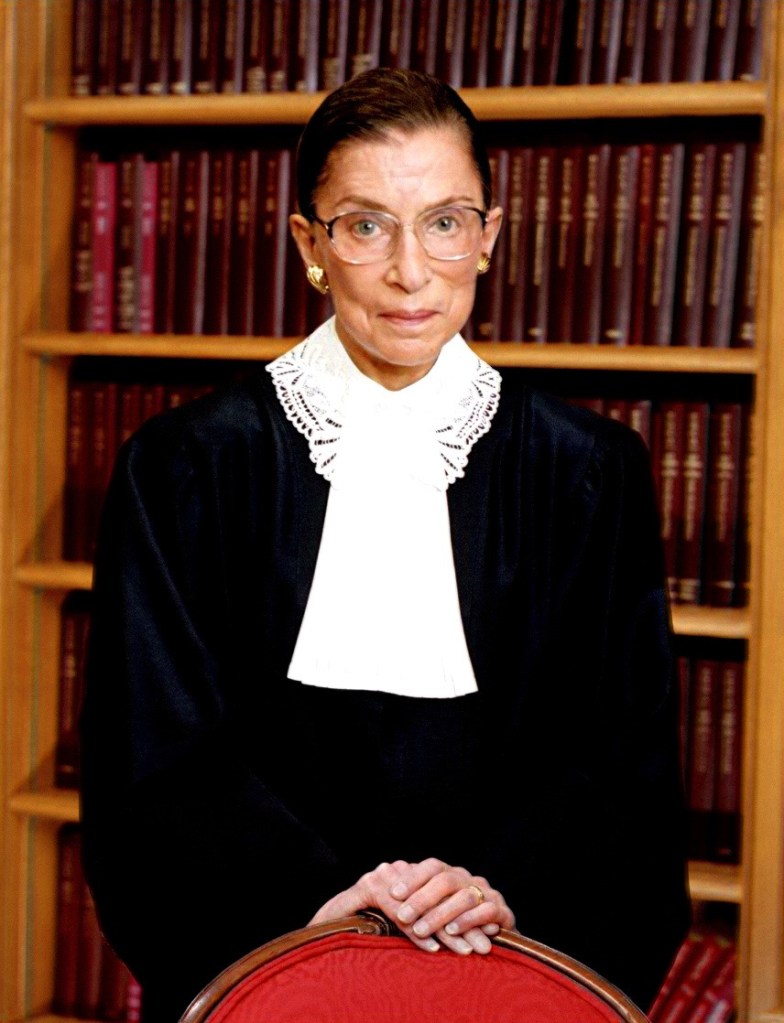
So I will celebrate my day today, and wish a very happy National Short Girl Appreciation Day to all of my fellow “shorties.” We’ll take all the appreciation we can get. Right, ladies?
*. *. *
Oh, and before I forget: For all of you vertically-challenged guys out there, don’t fret. Tomorrow is National Short Person Day.
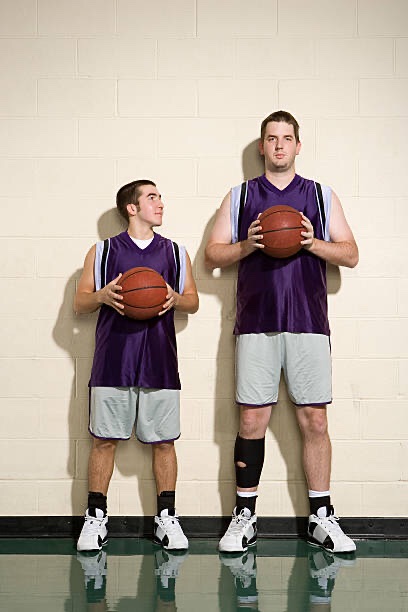
Welcome to the club.
Just sayin’ . . .
Brendochka
12/21/24
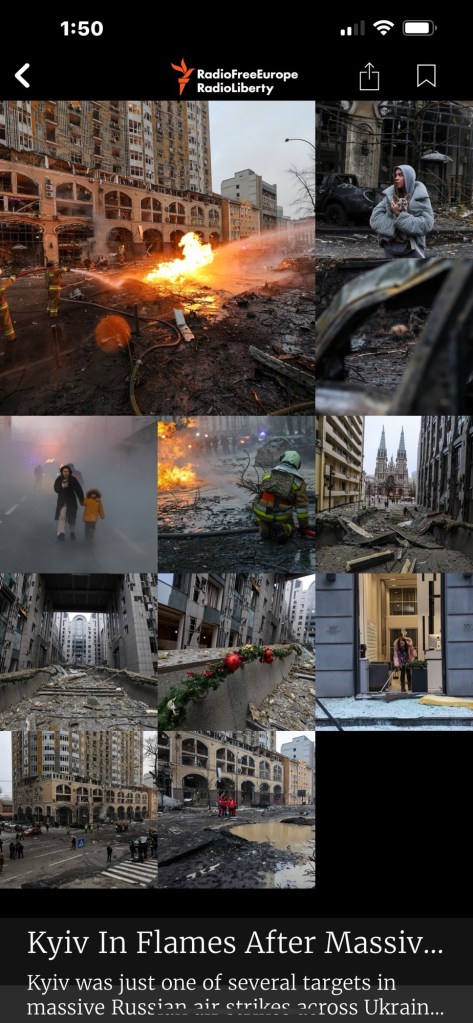
Kyiv — the capital of Ukraine, and the historic center of ancient Kievan Rus’ — was set afire early this morning by Russian ballistic missiles and drones.
Russia’s Defense Ministry said it had launched the attack at Ukrainian military targets, writing on Telegram:
“In response to the actions of the Kyiv regime, supported by Western curators, this morning a group strike with long-range precision weapons was launched against the SBU [Ukrainian Security Services] command post, the Kyiv Luch design bureau, which designs and manufactures Neptune missile systems, Olkha ground-based cruise missiles, and the positions of the Patriot anti-aircraft missile system. The strike targets were achieved. All objects were hit.” [Maria Kostenko and Sophie Tano, CNN, December 20, 2024.]
Reality check:
— “In response to the actions of the Kyiv regime . . .”?!! Vladimir Putin just can’t seem to get it through his thick skull that he started this . . . not Ukraine. Someone really needs to impress upon him the fact that Ukraine’s strikes against Russia are responsive, not offensive. But the only people in Russia with the courage to speak the truth are dead or in prison.
— The “strike targets” were not achieved, and “all objects” were not hit. What were hit — and not by the missiles and drones directly, which in fact were shot down, causing damage from the falling debris — were several foreign embassies, an office building, gas pipes, an historic church, and a building under construction, among other civilian structures. One fatality and numerous injuries were reported. [Id.]
The whole of Ukraine was under general air-raid alert for several hours. Included in the attacks on Kyiv, Kherson, and several other regions around the country were hypersonic Kinzhal missiles and Iskander/KN-23 ballistic missiles.
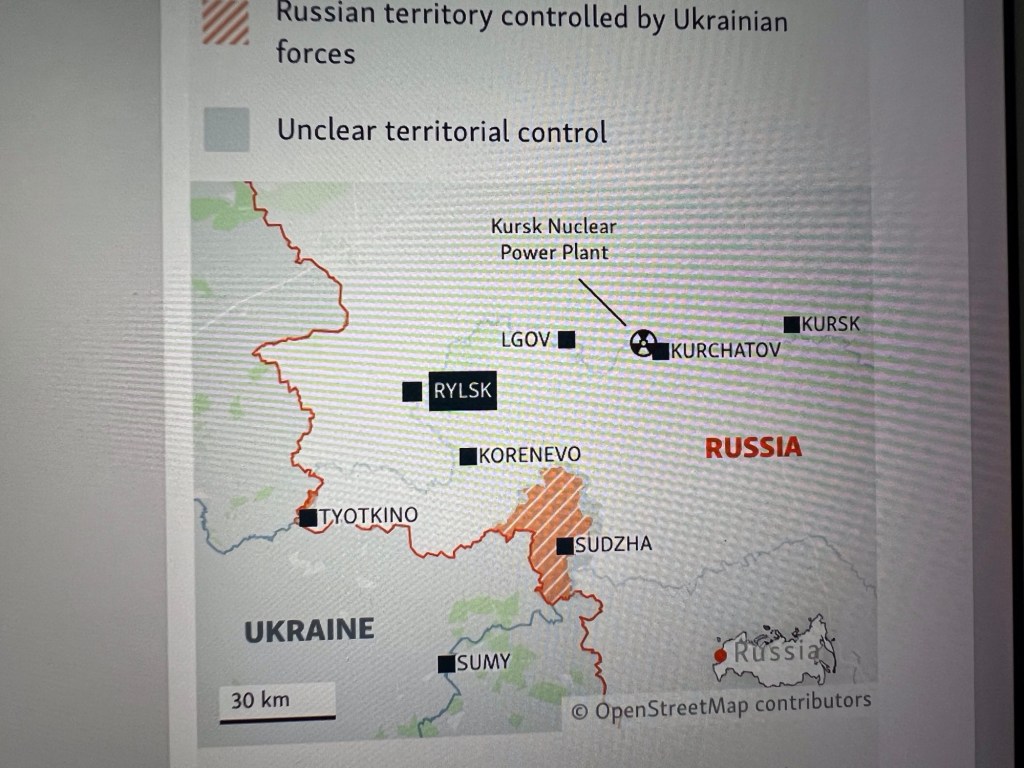
Hours later, Ukraine responded with a missile attack on the Kursk region of Russia, where at least five people have been reportedly killed and 26 others injured. [Id.]
* *. *
All of this comes just one day after Putin held his annual, tightly-controlled press conference, at which he suggested a “high-tech duel” over Kyiv, “to prove that Russia’s new hypersonic ballistic missile, dubbed Oreshnik, cannot be shot down by Western-supplied air defenses.” [as reported by RFE/RL, December 20, 2024.]
“It would be interesting for us . . . Let’s conduct this experiment, this technological duel, and see the results. I think it would be useful for both us and the Americans,” Putin said. [Id.]
To which Ukraine’s President Volodymyr Zelensky responded that, if Putin thinks Ukraine will negotiate with him under the current circumstances, he is “an old pipe dreamer,” living “in a different world,” “in his own bubble.”
“People are dying,” Zelensky continued, “and he thinks it’s ‘interesting’ … Dumbass.” [Id.]

*. *. *
Well, that about sums it up for me.
Just sayin’ . . .
Brendochka
12/20/24
 The Blog About Everything … and Sometimes Nothing