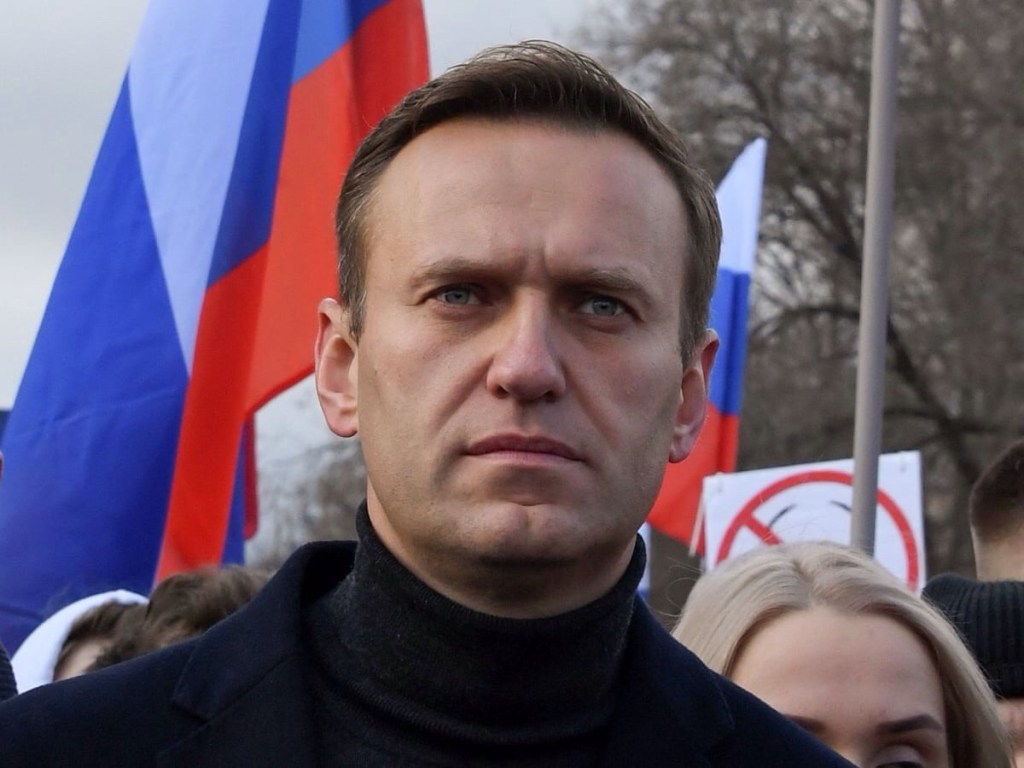
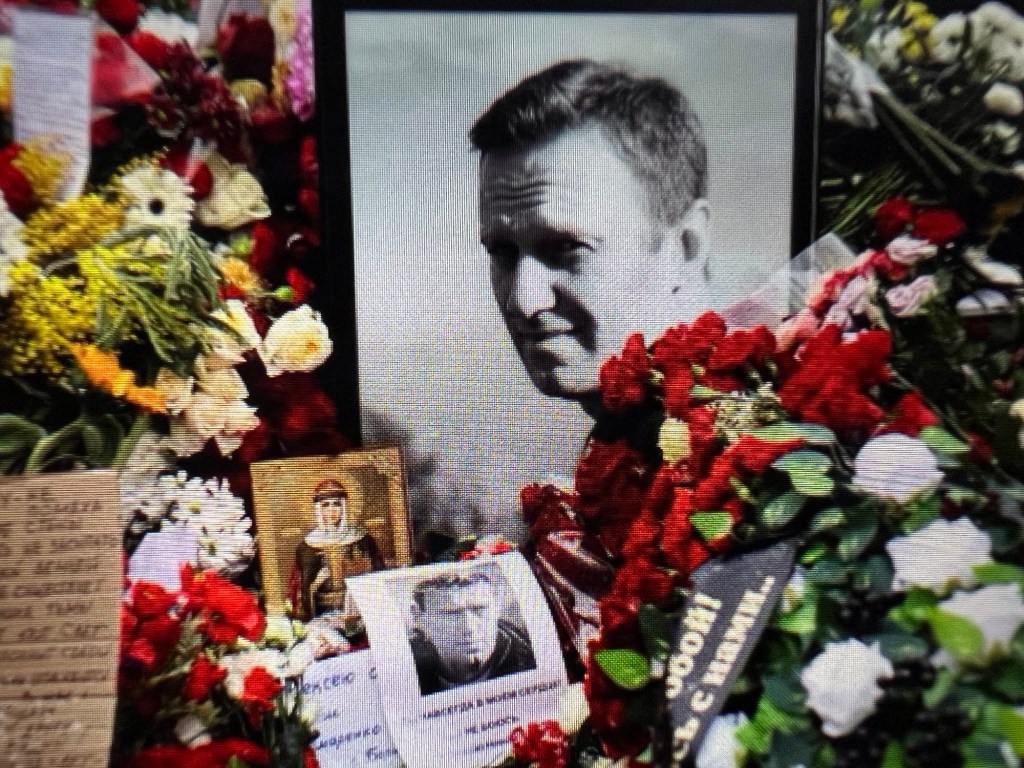
Two years ago today, Russian dissident and anti-corruption leader Aleksei Navalny died under mysterious circumstances in a Siberian penal colony known as Polar Wolf. Officially, his death was ruled to have been of “natural causes” — allegedly a heart condition. But the world knew better.
Aleksei Navalny (1976-2024)
On Saturday — just two days before the second anniversary of his death, the true cause — poisoning by means of a rare toxin from a South American poison dart frog — was revealed by a team of European experts who had spent the last two years analyzing biological matter from Navalny’s body that was smuggled out of Russia at the time of his burial.
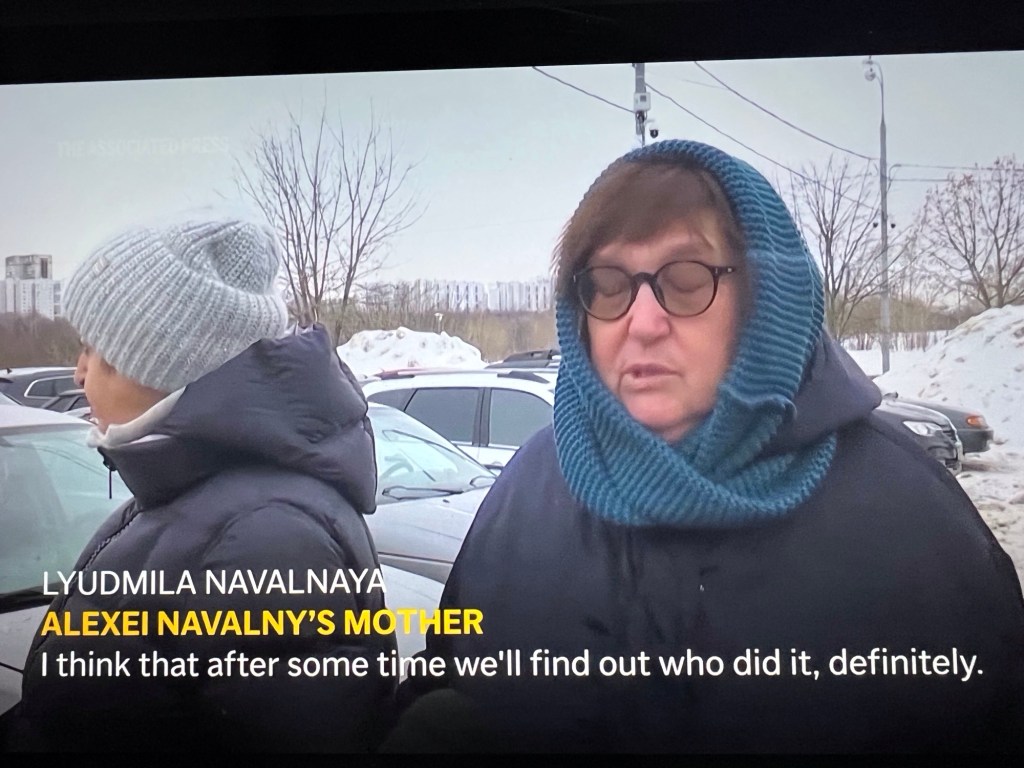
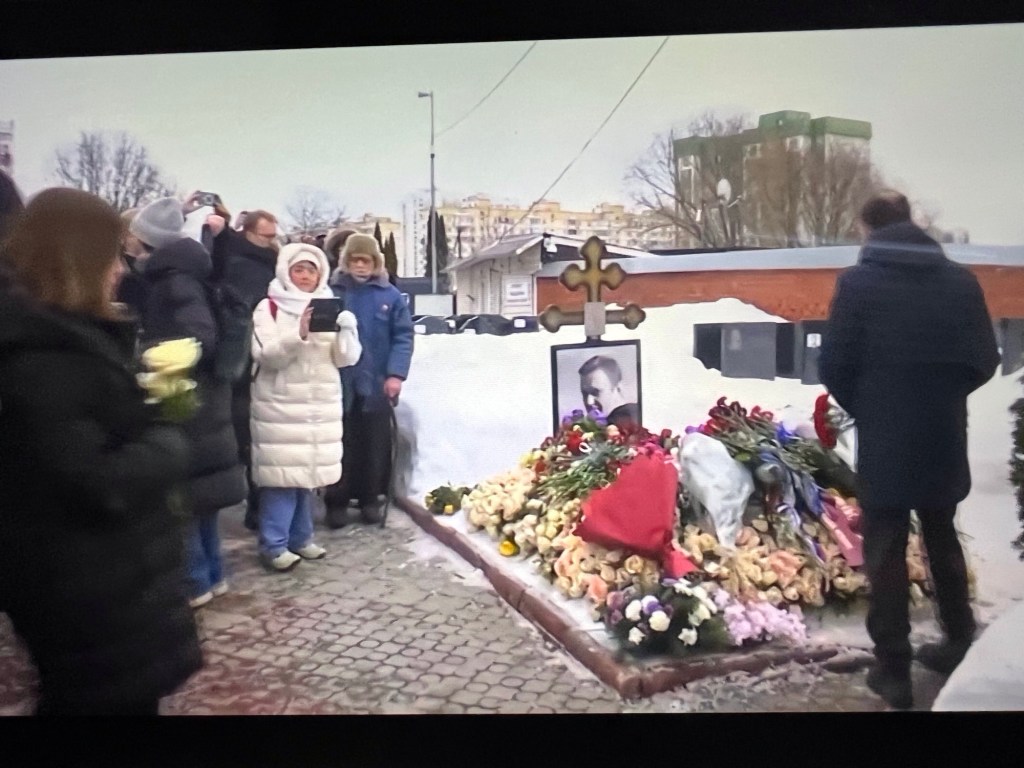
And today, at a memorial service held in his honor at the Borisovskoye Cemetery in Moscow, his mother, Lyudmila Navalnaya, spoke to a crowd of his still-devoted friends and followers.
Demanding justice for her son, she said that the findings confirmed “what we knew from the beginning . . . He was murdered.” [RFE/RL, February 16, 2026.]
Lyudmila Navalnaya
And in an interview, Ksenia Fadeyeva — a former associate of Navalny who was herself imprisoned and released in a prisoner exchange later in 2024 — told reporters:
“We can’t afford to become apathetic and believe that our country has no future. If we do believe that it’s all over and that evil has prevailed, it really will prevail.” [Id.]
Good advice, not only for Russians living under Vladimir Putin’s authoritarian rule, but for all of us.
*. *. *
So Aleksei Navalny’s fight against corruption and totalitarianism continues. And as long as it does, his spirit will be kept alive.
R.I.P., Aleksei Navalny – Moscow, February 16, 2026
Earlier today I wrote about my concerns for the future of the various Smithsonian and other museums in Washington, D.C., that are in peril from the current administration’s determination to wipe out symbols of, and references to, any and all subjects that they find inconvenient or contrary to their vision of what America should be.
I was steered along that train of thought by a quotation from one of my favorite authors, who needs no introduction, and who foresaw many of today’s events more than 75 years ago when he wrote:
“Who controls the past controls the future. Who controls the present controls the past.”
– George Orwell, “1984”
George Orwell (1903-50)
Think about that for a minute . . . and then tell me it doesn’t scare the hell out of you.
He has decimated the John F. Kennedy Center for the Performing Arts. He has threatened universities that do not comply with his anti-DEI and anti-LGBTQ+ mandates. And he is going after the venerable Smithsonian Institution to alter its honest, unbiased, heretofore unfettered presentation of history, science and the arts.
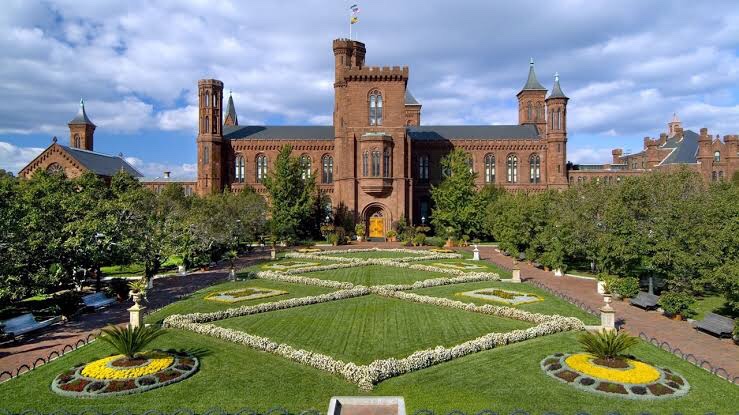
Smithsonian “Castle” and Gardens
Having lived most of my life in the Washington, D.C., metropolitan area, I have spent countless hours in its vast complex of museums, absorbing history and culture in ways that even the best textbooks could not fully impart. And now I fear that the current generation of children may be deprived of an enormous segment of the true history of our great nation because of the changes being wrought as a result of an irrational fear of the truth that eats away at one man in the Oval Office.
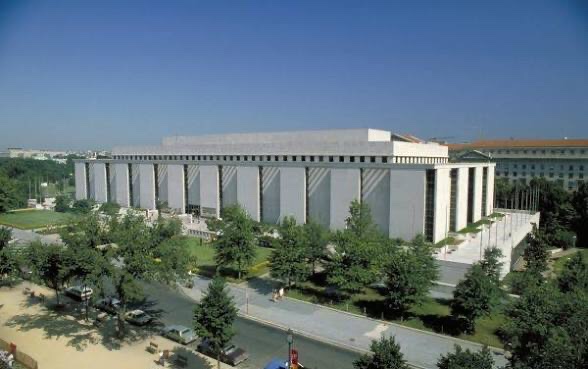
My greatest fears revolve around the Museum of American History:
*. *. *
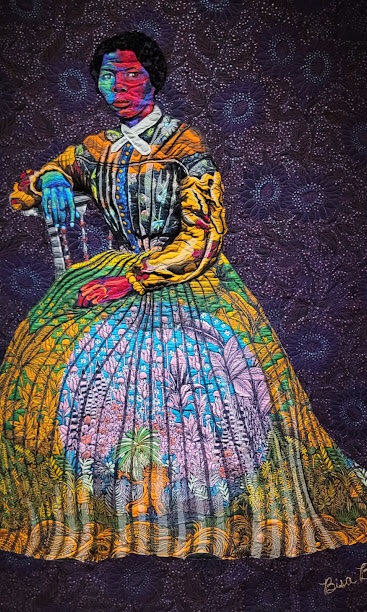
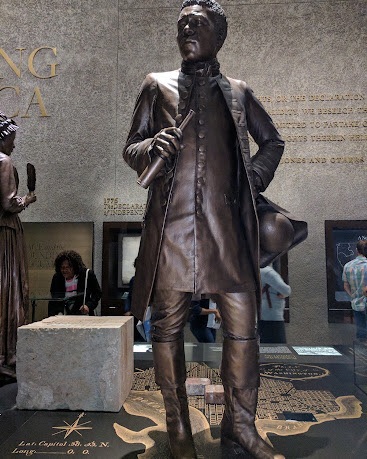
the Museum of African American History:
*. *. *
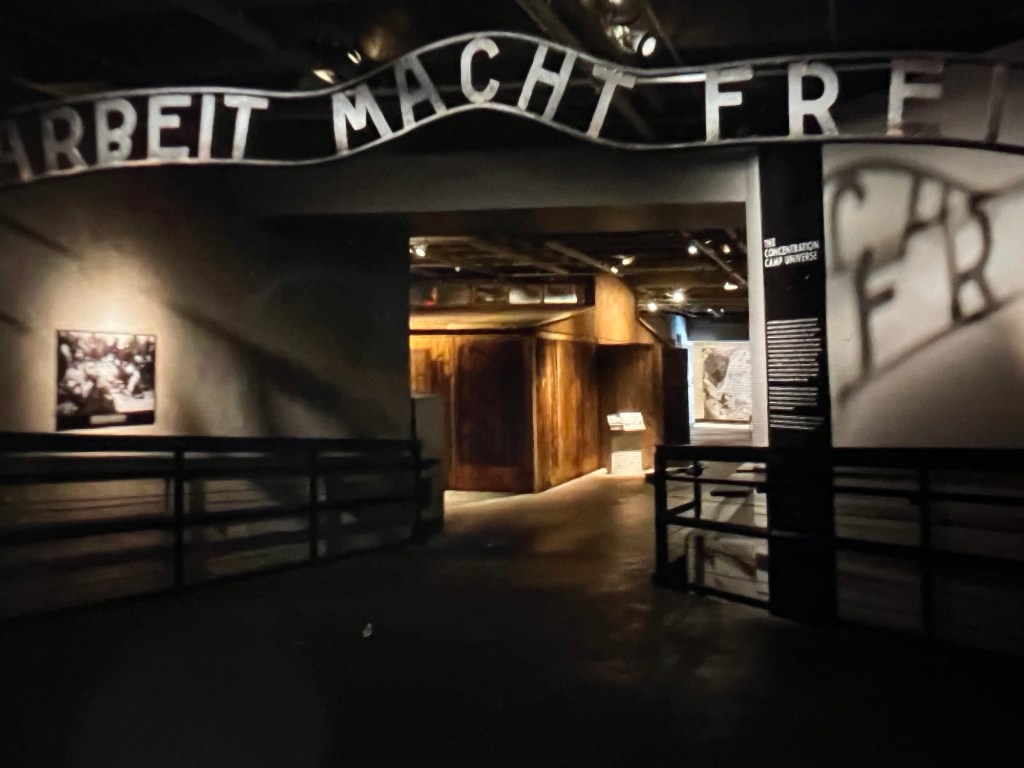
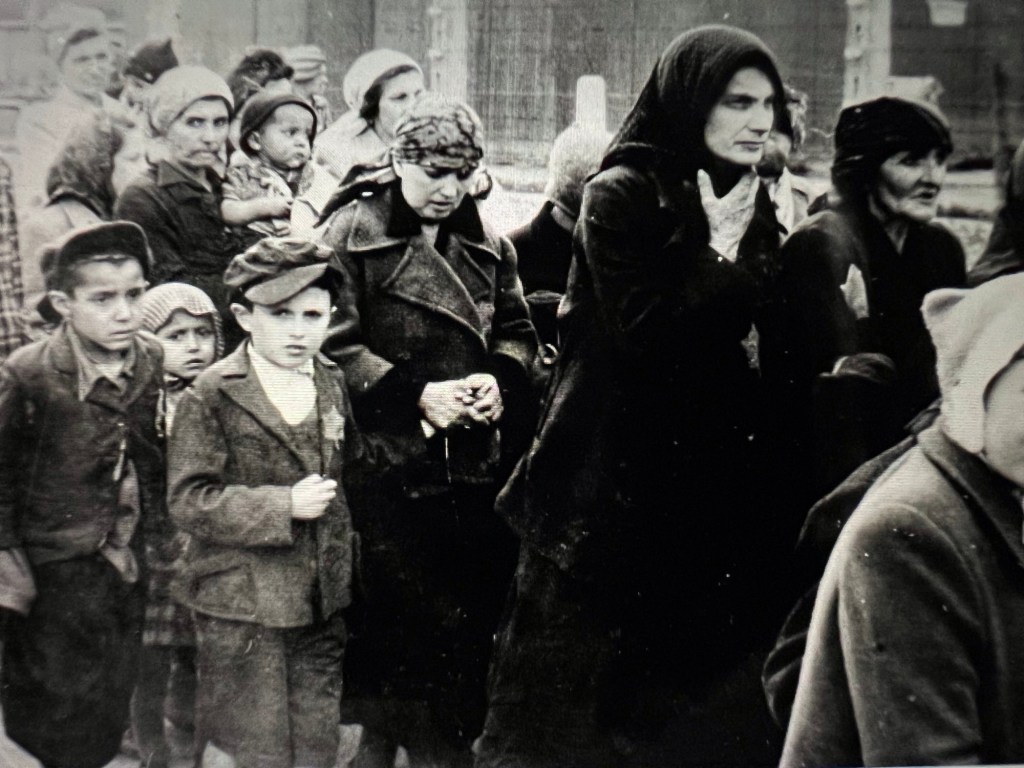
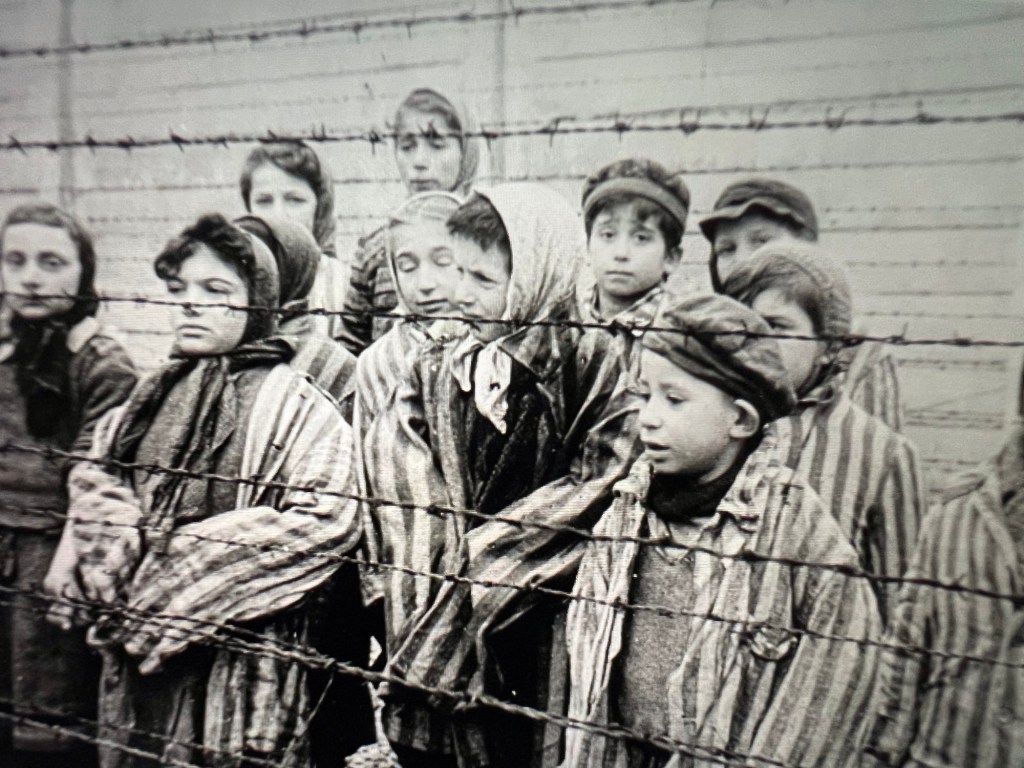
and the National Holocaust Museum, which — while not part of the Smithsonian complex — was created and is funded by an Act of Congress, and is therefore vulnerable:
*. *. *
As with any country, there are parts of our history that are difficult for us to face: the years of government-endorsed slavery, denial of equal rights to minorities, the “Red Scare” of the 1950s, and participation in international conflicts that we should have stayed out of, to name just a few. But they happened; and they tell the story of who we are as a people, and of how we have struggled and the progress we have made toward overcoming and correcting our mistakes.
They happened. And you do not change history by pretending otherwise; instead, that pretense opens the door to the likelihood of making the same mistakes again.
We must fight to retain the honesty and inviolability of these objective institutions of learning. They are among the finest in the world, and to lose them — or to see them bastardized by one who would erase history to suit his preferences — would be unbearable and unforgivable.
So if you are, or plan to be, in the D.C. area, please be sure to visit as many of the museums as possible . . . before someone finds an excuse to take a wrecking ball to them.
Is anyone out there old enough to recall the original “Cheaper By the Dozen,” or TV series like “Father Knows Best” and “The Danny Thomas Show”?
“Cheaper By the Dozen” – 1950
Well, let me tell you right now that those families in no way resembled my childhood. My father was not the all-knowing font of wisdom and patience, or the parent to whom my sister and I would take our problems in the certainty that he would always have the perfect solution.
He was not an evil man — far from it. He just wasn’t father material. Long before people talked about empathy, it was clear that he lacked it. He and my mother separated when I was 13, and divorced a few years later. After the divorce, I never saw him again.
Today would have been his 116th birthday, and though he passed away some 40 years ago, I found myself reminiscing last night about some of the good times we did share during those 13 years that he was a daily part of my life.
I was his favorite child, probably because I was the younger of the two, and the “baby” is often the spoiled one. So I got a bit more attention, which included being taken on father-daughter outings on a Saturday or Sunday . . . although it was usually to something that he particularly enjoyed, like fishing at Lake Massabesic, or placing bets at the trotters or jalopy races. I wasn’t crazy about the fishing, but those races were exciting to a little kid — especially the jalopies, when there was usually at least one multi-car crash to liven things up.
1950s Jalopy Races
From time to time, he would take my sister and me skating at the roller rink. And sometimes, when there was extra money in the budget, the whole family would go out on a summer evening to a local clam shack for fried clams, followed by homemade ice cream at a nearby mom-and-pop stand. They were simpler times, and it didn’t take a lot to make a memory.
But as I took my little stroll through my childhood last night, I suddenly hit upon what is probably my favorite memory concerning my father . . . though it actually happened after the divorce.
My mother, sister and I had long since moved from New Hampshire to the Washington, D.C. area. I was headed out to the nearby market for a couple of items one day, and asked the others if they needed anything. They initially said no thanks, but then my mother changed her mind and asked me to bring back some hard candies.
No problem. But could she be a little more specific: Lemon drops? “No.” Root beer? “Uh-uh.” Butterscotch? “Nope.” Sour balls? . . .
At which point, she suddenly went ballistic — jumping back, face contorted in horror as though I’d pointed a gun at her, shouting, “No! No sour balls! I hate sour balls!”
Well, that was a surprise, to say the least — on so many levels. First, of course, was the insane visceral reaction. Also, I distinctly recalled that in earlier years back in New Hampshire, we had always had a tin of sour balls in the house. Why did she suddenly despise them? So, of course, I asked her — quite reasonably, I thought — “What’s wrong with sour balls?”
And without hesitation, she blurted out:
“They remind me of your father.”
Well, by the time my sister and I finally picked ourselves up from the floor, clutching our stomachs in pain and wiping tears of laughter from our cheeks, she had realized what she’d said and was trying her best to recover some semblance of dignity, protesting, “That’s not what I meant! They were your father’s favorite.”
But it was too late. Instantly, “sour balls” had become a euphemism for dear old dad . . . and a meme for the rest of our lives. And to me, now the last surviving member of our little family, it still is.
So, to the man my sister charmingly referred to as “the sperm donor” . . . happy 116th birthday, you old reprobate. Wherever you are, I hope you and your sour balls are happy.
In deciding which of my favorite quotes to share with you each day, I look for words that inspire, encourage, bring hope, comfort, a bit of humor, pearls of wisdom, or thoughts on combatting the negative aspects of life.
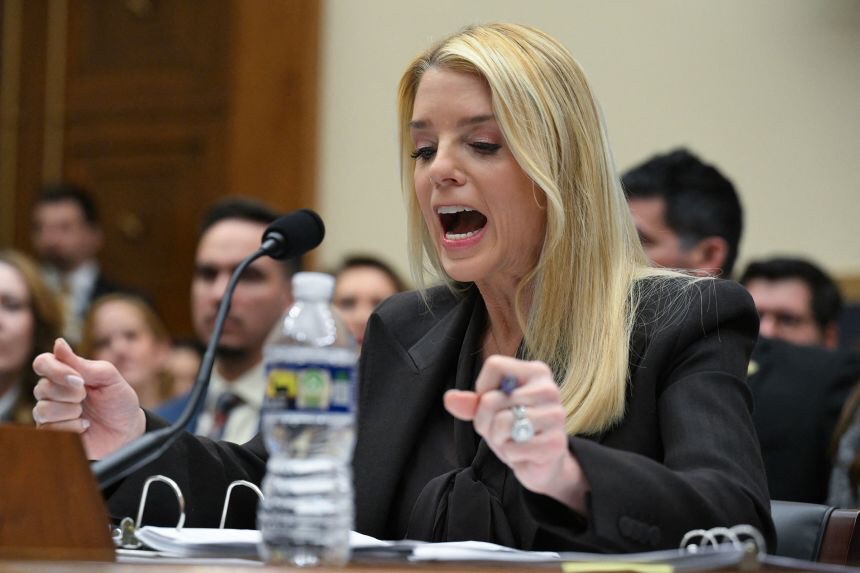
Today is not one of those days. Because this very brief quotation demands attention if for no other reason than to point out what we are up against. It was uttered — no, spewed — last week by someone whose ignorance is only exceeded by her innate cruelty. And, by what I can only assume is a diabolical joke being played on the world by some unseen cosmic force, she is the current Attorney General of the United States: Pam Bondi.
Pam Bondi – Reading from her “Burn Book” of Lies and Insults
We’ve all read about her complete meltdown before the House Judiciary Committee on Wednesday while dodging serious questions concerning the notorious Epstein Files. But, amongst all of the vile insults and outright lies that she screamed out at the Committee members — while simultaneously refusing to acknowledge the group of Epstein’s victims seated directly behind her — one comment stood out for me.
As she deflected yet another question — this one from California Congresswoman Zoe Lofgren concerning the redactions of some of the files — she actually said this:
“I find it interesting that she [Lofgren] keeps going after President Trump, the greatest president in American history.”
And she said it with a straight face.
Now, I have to assume that her definition of “American history” only encompasses the last 25 years or so, when in fact — as any American with even a third-grade education knows — the history of this country dates back 250 years.
Because — forgetting about the last 25, or even 50 years, and looking further back — she has, in one brief, twisted, demented sentence, dismissed the likes of Washington, Jefferson, Madison, Lincoln, two Roosevelts, Truman, Kennedy . . .
On February 13th, five Ukrainian children, ages 4 to 15, were returned home from captivity in Russia and Russian-occupied Ukrainian territories.
(Screen shot from video)
Among them were:
> A seven-year-old boy who had been deported from a children’s home in Kherson during the occupation of the city;
> A six-year-old girl and her four-year-old brother, also kidnapped from the children’s home as infants, whom their mother has not seen for four years; and
> A nine-year-old boy who was taken to Russia with his mother. The mother died of illness in Russia, and the boy has been returned home to his uncle. [Interfax Ukraine, February 13, 2026.]
According to the Verkhovna Rada Human Rights Commission, a total of 1,985 children have been returned home to Ukraine since the Russian invasion on February 24, 2022. [Id.]
That is indeed cause for celebration. But that is still fewer than 10% of the total number of children — estimated at 20,000 — abducted from Russian-occupied territories and taken to Russia or held in Russian-controlled regions over the past four years.
And so the fight to retrieve Ukraine’s children continues, along with the efforts to win the release of all of the political prisoners throughout the world, including those on my list:
*. *. *
Victims of Greed:
The President, First Lady, and citizens of Venezuela
Europeans Under Threat:
The Nation and the People of Greenland The people of NATO and EU member states
Prisoners of War:
The 19,500 Kidnapped Ukrainian Children The People of Ukraine
Immigrant Detainees in Russia:
Migrants from the Central Asian nations of Kazakhstan, Kyrgyzstan, Tajikistan, Turkmenistan and Uzbekistan
Endangered Exiles:
Mikita Losik Yulia Navalnaya Countless Journalists and Other Dissidents
Andrei Chapiuk Uladzimir Labkovich Andrzej Poczobut Marfa Rabkova Valiantsin Stafanovic Yuras Zyankovich
In Georgia:
Mzia Amaglobeli
In Russia:
The “Crimea 8”: — Oleg Antipov — Artyom Azatyan — Georgy Azatyan — Aleksandr Bylin — Roman Solomko — Artur Terchanyan — Dmitry Tyazhelykh — Vladimir Zloba
James Scott Rhys Anderson (British) David Barnes (American) Gordon Black (American) Hayden Davies (British) Antonina Favorskaya Konstantin Gabov Robert Gilman (American) Stephen James Hubbard (American) Sergey Karelin Timur Kishukov Vadim Kobzev Darya Kozyreva Artyom Kriger Michael Travis Leake (American) Aleksei Liptser Grigory Melkonyants Nika Novak Leonid Pshenychnov (in Russian-occupied Crimea) Nadezhda Rossinskaya (a.k.a. Nadin Geisler) Sofiane Sehili (French) Igor Sergunin Dmitry Shatresov Robert Shonov Grigory Skvortsov Eugene Spector (American) Joseph Tater (American, disappeared) Laurent Vinatier Robert Romanov Woodland (American)
* William Shakespeare, “The Merchant of Venice,” Act II, Scene 2.
It may take a while. But if honest people persevere, Shakespeare’s prediction nearly always reestablishes its wisdom.
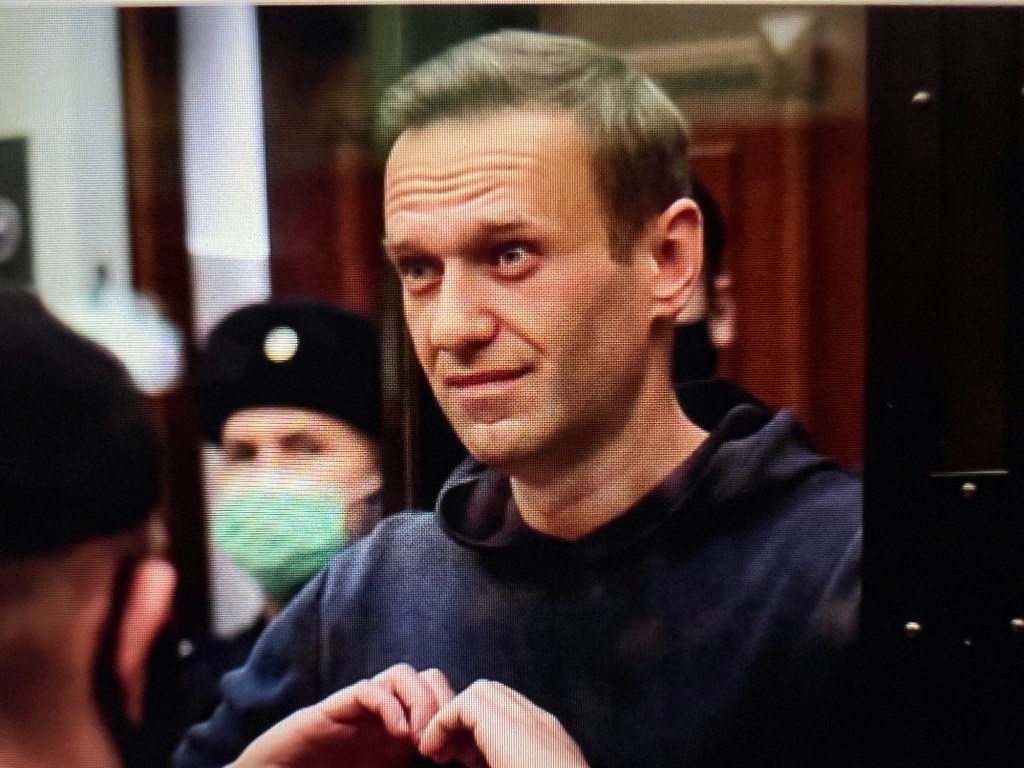
Aleksei Navalny at his trial
In this case, the true circumstances surrounding the sudden and mysterious death of Russian anti-corruption dissident Aleksei Navalny in February of 2024 have finally been established.
Following his death, Russia authorities delayed the return of Navalny’s body to his parents (his wife and children already then living in exile). But when the family was finally able to bury him, they also managed to smuggle biological samples out of Russia. And for two years, that critical evidence has been the subject of intense analysis by experts from five European countries: the UK, Sweden, France, Germany, and the Netherlands.
Their finding — that the cause of Navalny’s death was poisoning by means of a toxin known as epibatidine, derived from poison dart frogs native to South America and considered one of the deadliest on earth — was announced today by his widow, Yulia Navalnaya, who posted on social media:
“I was certain from the first day that my husband had been poisoned, but now there is proof: Putin killed Aleksei with a chemical weapon. I am grateful to the European states for the meticulous work they carried out over two years and for uncovering the truth. Vladimir Putin is a murderer. He must be held accountable for all his crimes.” [Rikard Jozwiak, RFE/RL, February 14, 2026.]
Yulia Navalnaya
The official Russian autopsy report stated that hypertension and other diseases had caused a heartbeat disorder leading to Navalny’s death. But Aleksandr Polupan, an anesthesiologist-resuscitator, said in an interview with Current Time that it had been clear even before the European study that “Navalny had been murdered and that he did not die [a] natural death.” Polupan added:
“All that we know about [Navalny’s] abdominal pain, vomiting, and seizures, I don’t see any contradictions in [how the poison works]. Given that independent laboratories confirmed [the presence] of the same molecule, I’d say there’s no need to guess much further.” [Id.]
Following the announcement on the sidelines of the Munich Security Conference, Dutch Prime Minister Dick Schoof said that “there is a high possibility that Russia killed Navalny by poison. I think it’s a serious offense, and I hope that it will [show] the world that Russia is playing a dirty game.” [Id.]
And the joint statement by the five nations concluded:
“Russia claimed that Navalny died of natural causes. But given the toxicity of epibatidine and reported symptoms, poisoning was highly likely the cause of his death. Navalny died while held in prison, meaning Russia had the means, motive, and opportunity to administer this poison to him.” [Id.]
Ecuadorian Dart Frog
*. *. *
Any court or jury would be likely to consider the preponderance of evidence in Navalny’s case sufficient to warrant a conviction. But what is this likely to mean for Vladimir Putin?
Tragically, nothing. The Kremlin, which has not yet commented on the finding, will ultimately issue a standard denial. Perhaps the International Criminal Court will see fit to consider charging Putin; but the ICC already has an outstanding warrant against him for war crimes in connection with the kidnapping of thousands of Ukrainian children, which has only served to limit his international travel to friendly countries that agree not to arrest him. In Putin’s world, it is nothing more than a slight inconvenience.
Monday will mark the second anniversary of Navalny’s death in a Siberian prison camp. What, if anything, Yulia Navalnaya will choose to do with this new information is not yet known. But the verification of her suspicions might at least provide a measure of closure for the family and friends of a good man taken too soon.
It’s Valentine’s Day, so today’s theme presented itself without any effort on my part.
But, as we all know, there are many types of love besides the romantic: love of family, friends, our fur babies, nature, and — perhaps the most difficult to maintain — love of mankind as a whole.
On that note, today seems like an appropriate time to recall these words of the late Martin Luther King, Jr., which need no embellishment:
“Darkness cannot drive out darkness: only light can do that. Hate cannot drive out hate: only love can do that.”
– Martin Luther King, Jr., “A Testament of Hope: The Essential Writings and Speeches”
Martin Luther King, Jr. (1929-68)
*. *. *
Happy Valentine’s Day to one and all. I wish each of us a life of peace, love, and brotherhood.
Only 50-somethings and older will understand the reference when I say that the world has become like a 33 r.p.m. record being played at 78 r.p.m. speed. For the younger generations, suffice it to say that keeping up with the daily news from every corner of the globe (yes, I know: globes don’t have corners) has become exhausting.
So today I decided to ease off a bit, and catch up with my favorite Canadian residents of Russia, now RV-ing their way through the southeastern quadrant of the United States.
Anneesa with Maddie, the littlest Feenstra
Dad Arend
I’m afraid I’ve been neglecting the Feenstras lately; but as it turns out, there isn’t much to report. They and six of their nine children took off as planned from Ontario about three weeks ago and have been RV-ing south-southeast through the United States in their old motor home.
Having watched just portions of their travel videos, it appears that they’ve all adjusted nicely to living in close quarters and spending hours on the road each day. I don’t know what sort of magic Arend and Anneesa work on their children, but those kids are troupers. During the long hours of driving, they find plenty to keep themselves busy — school work, games, even crocheting.
Keeping Busy
The trip itself, while well planned, has also allowed for flexibility. When they see something of interest — a nature conservancy, a beach, or a museum — they stop to check it out. One day, when Arend had a headache and needed a rest, Anneesa took the older children to the beach while the youngest ones napped with Dad. And when the state of Georgia got hit by a surprise snowstorm, they postponed a visit to friends there and revised their route accordingly.
I caught up with them as they were headed through Alabama toward Florida, Arend mentioning that he was particularly impressed with the U.S. interstate highway system and the ease of travel. Score one for the USA!
They breezed through Tampa and finally arrived in St. Petersburg, where they found a Russian Orthodox church and attended Sunday services — something they had not yet done in Russia because of the language difficulty. This church, however, offered a service conducted half in Russian and half (including the sermon) in English.
Russian Orthodox Church, St. Petersburg, Florida
Meanwhile, teens Cora and Wesley are back in Ontario, working at their summer jobs and becoming young adults. More on them another time. For now, it’s good to know that everyone — including the old motor home — is doing well.
*. *. *
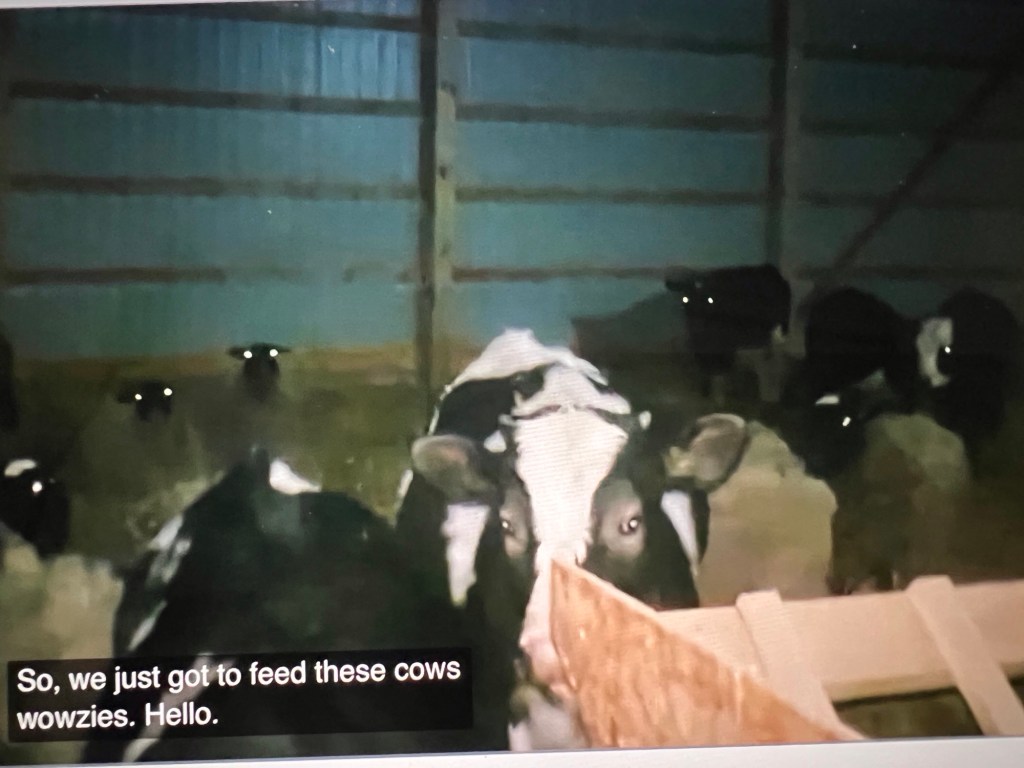
At this point, I switched to a video from the tenants, Justin and Anita Pulley, keeping things running back on the farm in Nizhny Novgorod. I found them buried in snow — another foot had fallen just the day before — where most of their time, when they’re not tending to the animals, is being spent shoveling paths, clearing doorways, and trying to keep the batteries in the farm equipment from freezing in the minus-22 (C) weather.
It’s Fun for the Kids
The Root Cellar
Carrying Water for the Animals
Justin and Anita keep trying to smile through it all, though it occurs to me that their faces may just have frozen that way. I’m sure they’d much rather be in Florida for the rest of the winter . . . and so would the cows, from the look of things.
Outdoor Chores
Indoor Sewing
Indoor Mooing
So there you have it. The Canadian Feenstras are in the U.S., while the Australian Pulleys take care of business in Russia. I don’t know when they’ll be back together again, but I do know one thing: They’ll all be happier when spring arrives.
Not surprisingly, Shakespeare said it first — or his ill-fated King Hamlet did . . .
The Ghost of Hamlet’s Father
. . . though most of us probably associate the phrase with the much more recent Agatha Christie’s beloved crime-solving character, Miss Marple.
Margaret Rutherford as “Miss Marple”
To me, however, those three little words perfectly describe what has happened to the English language during my lifetime.
From the time I entered the first grade at the age of five, we were taught the basic “three Rs” — reading, (w)riting, and (a)rithmetic. And I mean, we were really taught. We learned addition and subtraction tables in a time before hand-held calculators; and to this day, people of my generation can add and subtract in our heads, without benefit of so much as paper and pencil.
As for English, it was almost a religion: grammar, spelling and punctuation were the Holy Trinity, and a misspelled word or a misplaced comma could cost you that coveted “A” on a test paper.
We knew the difference between subjects and objects, verbs and adverbs, plurals and possessives. Quite simply, by the time we were in the third or fourth grade, we were literate.
So what happened? It would be easy to blame the internet, progenitor of email and texting, with its entirely new dictionary of abbreviations and acronyms. IDK who first thought of it, but IMHO, it’s the work of the devil.
Yet the whole decline into gibberish began long before the advent of the internet. In watching reruns of my favorite TV sitcoms from the 1980s and ‘90s, I have detected such slips as, “Her and I were just good friends,” and, “Me and him had a real fun time.”
Maybe we should look back to the ‘60s — that happy, slappy decade of sex, drugs and rock-and-roll — when the long-cherished standards of interpersonal behavior were swept aside by a sudden urge to be free of all restraints, and a generation of stoned teenagers decided they knew more about life than their parents did.
Groovin’ in the ‘60s
“If it feels good, do it” became a meme, which also meant that if it didn’t feel good, you could ignore it. Schools that had once been refuges of order and safety became battlegrounds. Teachers who had previously earned absolute respect suddenly found themselves in defensive positions, hoping just to get through the day without anyone being killed. Entire curricula were tossed out and replaced with free-thinking discussion groups. Grammar was of little importance.
By the time the internet came along, the world was ready for all of its wonderful new shortcuts, like spellcheck and autocorrect — two banes of my existence, because half of the time they don’t know what the hell they’re talking about. I have actually found myself screaming at my laptop or iPad:
“DON’T YOU DARE TELL ME WHAT I’M THINKING!!!!”
I have a sweatshirt that reads, “I Am Silently Correcting Your Grammar.” And most of the time, I am doing just that. But, like many people of my generation, I have learned to keep my mouth shut when I hear an otherwise intelligent adult say, “I already seen that movie,” or, “It was so fun, we decided to do it again.” Life in general has become more casual, and in many ways, that is not an entirely bad thing.
But what I find unacceptable — indeed, unforgivable — is the massacre of the written word. Forget about the internet — it is a viper’s nest of misinformation, disinformation, and flat-out bullshit.
Books, magazines and newspapers, on the other hand, are supposed to be sources of accurate information, designed to enlighten, educate and inspire us. But we can no longer rely on them, because the editors of those publications have become dependent upon computers and — God help us! — AI, to ensure their accuracy.
As we all know, “AI” stands for “artificial intelligence.” And “artificial” has many synonyms: “synthetic,” “unnatural,” “counterfeit,” “ersatz,” “factitious,” “manufactured,” “faked,” “false,” “imitation,” “mock,” “not genuine,” “plastic,” “simulated,” “substituted,” and so on.
It doesn’t exactly inspire confidence, does it?
Language is a beautiful thing, inexorably connecting us to our personal histories and national identities. It is meant to be descriptive, informative, enlightening, inspiring, moving. Think of the works of Shakespeare, Byron, Hemingway, Flaubert, Dostoyevsky. Think of the people who compiled the first dictionaries in all of the world’s various languages.
And then think about what impression our descendants will have of us, say 100 years from now, when they open a time capsule containing printouts of today’s emails and Facebook postings.
Come to think of it, things may have gotten even worse by then . . . though I’m really rather glad I won’t be around to find out.




























 The Blog About Everything … and Sometimes Nothing