It’s the day of the year when everyone is a little bit Irish.

May you find your pot of gold today.
Just sayin’ . . .
O’Brendochka
It’s the day of the year when everyone is a little bit Irish.

May you find your pot of gold today.
Just sayin’ . . .
O’Brendochka
No one actually speaks Shakespeare; in fact, only a small percentage of people truly understand it. Perhaps, in Elizabethan England, people went around rhapsodizing in sentences such as, “But soft, what light through yonder window breaks?” (“Romeo and Juliet”). But I doubt that line would get you many dates today . . . unless you’re looking for a quick trip to the funny farm.

However, if you know me at all, you’ve probably noticed that I have a tendency to quote other, far more eloquent personages than myself. And one of my favorites is old Will Shakespeare, who has provided us with such bits of wisdom as “This above all: to thine own self be true,” and “It [life] is a tale told by an idiot, full of sound and fury, signifying nothing.” I particularly like that last one.
So when I happened upon an article referencing other of the Bard’s original phrases — most of which I had heard, but had no idea of their origins — I immediately clicked on the link (shakespeare.org.uk) and was fascinated to learn just how much of today’s conversational English dates back to the late 16th and early 17th centuries, and to Mr. Shakespeare himself.
For example, how many times have you cleaned out a closet and discarded something that has “seen better days”? That one is from “As You Like It.”
And in the same play, we learn that there can be “too much of a good thing.” (Although, in the case of my favorite guilty pleasure — Haagen Dazs ice cream — I’m not sure that’s true.)

Have you ever thought there was “neither rhyme nor reason” (“The Comedy of Errors,”) why you “have not slept one wink” (“Cymbeline”). I certainly have — although there usually is a reason, like too much of that Haagen Dazs late at night.
“Hamlet” is just loaded with pearls of wisdom. In Act 3, Scene 4, Shakespeare talks about something we now call tough love . . . but he calls it being “cruel to be kind.” Perhaps he was criticizing someone’s apparel, because earlier, in Act 1, Scene 3, he commented that “People are judged by the way they dress.” I used to believe that; though seeing the way most people dress these days, “in my heart of hearts” (Act 3, Scene 2), I’m not so sure. I even wonder whether “my own flesh and blood” (Act 1, Scene 5) would agree with me.
Shakespeare was really on a roll when he gave birth to Hamlet!

*. *. *
Now we come to “Henry IV,” which I confess I’ve never even tried to read. It introduces characters with names like Falstaff, Hotspur, Mistress Quickly (the less said about that, the better), Nym, Bardolph, Pistol, and someone called Doll Tearsheet . . . which makes me wonder what Shakespeare had been smoking during that period of his life. But he did come up with one lasting phrase when one of his characters complained that someone “hath eaten me out of house and home.”
To me, the highlight of “Julius Ceasar” is Marc Antony’s soliloquy at Caesar’s funeral, which is just dripping with sarcasm worthy of the harshest of today’s political commentators. But there are a few others that have stood the test of time, such as “a dish fit for the Gods,” “It’s Greek to me,” and being made of “sterner stuff.”
And my personal favorite — “Macbeth” — brings us such immortal phrases as “the be-all and the end-all,” and “What’s done cannot be undone” (when Lady Macbeth goes completely off her trolley).

“Othello” is certainly worth reading, as it talks of “Jealousy is the green-eyed monster,” “[a] foregone conclusion,” and someone who “wear[s] my heart upon my sleeve.” And in “The Merchant of Venice,” we learn that “All that glitters isn’t gold,” and how to recognize “a blinking idiot” (by the blinking, I should think).
The list goes on and on, so I’ll just close with a few more and leave it to the more curious of you to check out others for yourselves:
“The world is my oyster” (“The Merry Wives of Windsor”)
”Short shrift” (“Richard III”)
“A tower of strength” (“Richard III”)
”Star-crossed lovers” (“Romeo and Juliet”)
”Wild-goose chase” (“Romeo and Juliet”)
”Break the ice” (“Taming of the Shrew”)
”Brave new world” (“The Tempest”)
”Melted into thin air” (“The Tempest”)

*. *. *
Whew! I’m exhausted just from reading all of this; I can’t imagine how much effort must have gone into coming up with that much original thought and wisdom.
And I am gobsmacked (British slang, mid-20th century) at how many of our most common colloquialisms date back 400 years — and all to one man with ink-stained fingers, who really knew how to turn a phrase.
And so, with that, “I shall say good night till it be morrow.”

(“Romeo and Juliet,” of course.)
Just sayin’ . . .
Brendochka
3/17/25
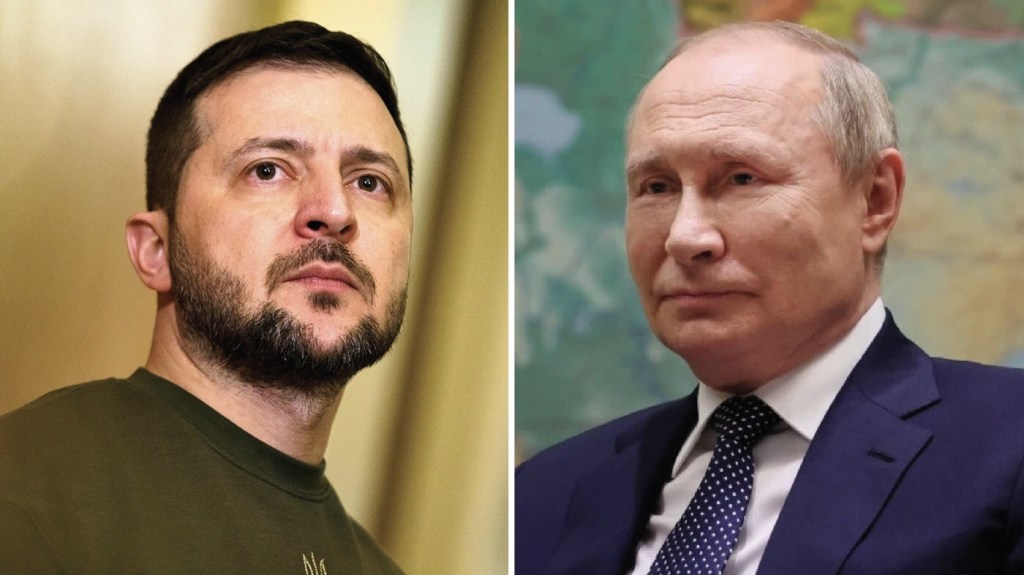
There are probably no more unpredictable individuals on the international scene these days than Donald Trump and Vladimir Putin. While one speaks and acts spontaneously — from the gut, as it were — the other schemes and plots quietly before making his move, much like a chess player thinking a dozen moves ahead.

Either way, trying to prepare for what will come next is nearly impossible. But I’m going to give it a try anyway.
It is anticipated that the two will have a conversation this week on the subject of Russia’s “special military operation” in Ukraine, and how to end it with a minimum of further death and destruction and a maximum of face-saving for both Putin and Trump . . . Ukraine’s “face” seeming to be of minimal concern to either of them.
Based on the three-year history of the war thus far, and the recent preliminary meetings in Saudi Arabia and Moscow, I am going to go out on a limb and predict the following rough scenario. While this may seem foolish and even a bit risky, I figure I have as much chance of being at least partially right as anyone else at this point. So here goes nothing . . .

Setting the scene: A time for the call will have been established — taking into account the seven-hour time difference — when Trump will not be on the golf course and Putin will be in the mood to talk. Interpreters will be in position, and aides will have made the phone connection.
Vying for dominance: Both Trump and Putin will try to delay long enough to force the other one to pick up the phone first. (I’ve seen this done by lawyers trying to negotiate a settlement on behalf of their respective clients, and it’s really quite comical.) To avoid this awkwardness, I would suggest that the aides do a countdown — three, two, one, now — and hand their respective bosses the phones at the same instant.
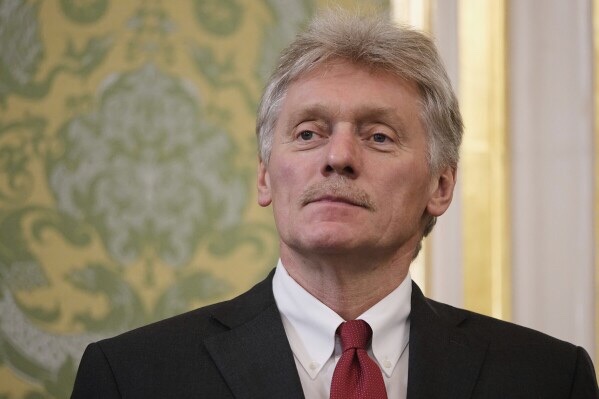
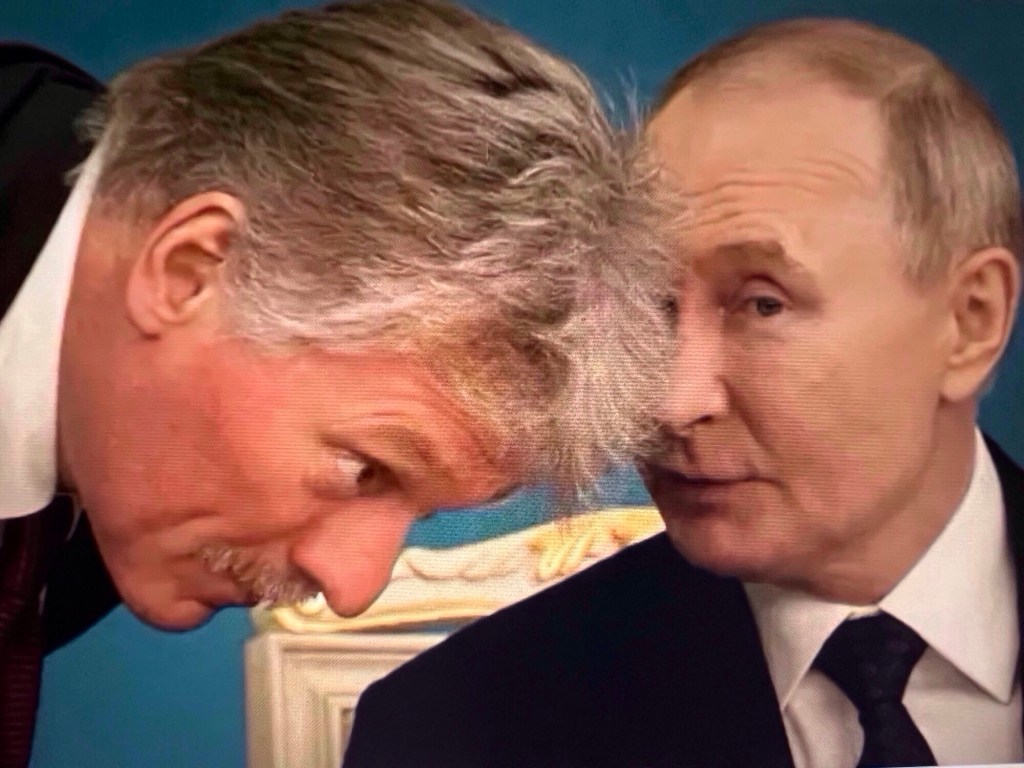
Behind the scenes: In the Kremlin, seated at the far end of a long table with Putin but distant enough to avoid breathing any germs in his direction, will be the likes of Foreign Minister Sergei Lavrov, a couple of security gurus, and the ever-present (and ever-charming) Kremlin spokesman, Dmitry Peskov.
In the White House, standing next to Trump’s desk and wearing his signature tee shirt and baseball cap (which apparently have been deemed dignified enough for the Oval Office), will be the ubiquitous expert-on-everything Elon Musk, most likely with four-year-old son “X” on his shoulders or hanging onto his leg.

Substance: Now, here is where it gets a big murky because, as I said, you never know what to expect from these two. But Vlad will no doubt reiterate — for perhaps the hundredth time — his preposterous demands that Ukraine give up everything, while insisting that he really does want peace . . . but on his terms. Donnie will then repeat — I’ve lost count of the number of times — his half-hearted threats of sanctions . . . although assuring Vlad that he really doesn’t want to resort to such drastic measures.
Duration: Unknown. It all depends on who gets pissed off and slams down the phone first.
Outcome: Statements will immediately be issued from both sides of the Atlantic. Trump will say something like, “We had a really good, really productive call. I am really very optimistic . . . really.” And Putin — or possibly his mouthpiece Peskov — will say that Ukraine doesn’t want peace, they want the death and destruction to continue, as evidenced by their refusal to simply hand their country over to Russia. And then Putin will order up another missile launch on Kyiv to show the world what a peace-loving s.o.b. he really is.
Prognosis: Turkish President Erdogan and China’s Xi Jinping will each step in with an offer to negotiate a truce between Putin and Trump, because . . . from their positions as Guinness-Book champion fence-sitters . . . they’re the only ones who can truly bring peace to the world.
And Ukraine will continue to fight for its life.

*. *. *
I repeat . . . this is all just a wild guess. But somehow, it almost sounds plausible, doesn’t it?
Just sayin’ . . .
Brendochka
3/16/25
A gloomy Sunday down here in the Southland, and I’m feeling like this:

Gonna let the world spin without me for a while, watch a movie or two, and maybe come up for air and check the news a bit later.
It’s not an indulgence; it’s more of a survival technique that I highly recommend to everyone now and then.
Just sayin’ . . .
Brendochka
P.S. In case you’re wondering about the picture, I do not have six toes on one foot and four on the other. The magic of AI. 😂
While there has been more than enough news out of Moscow this week on a variety of issues, none of it has concerned the political prisoners being held hostage throughout Russia, which is a mixed blessing: While there is no word of new arrests, neither is there news of any further releases.
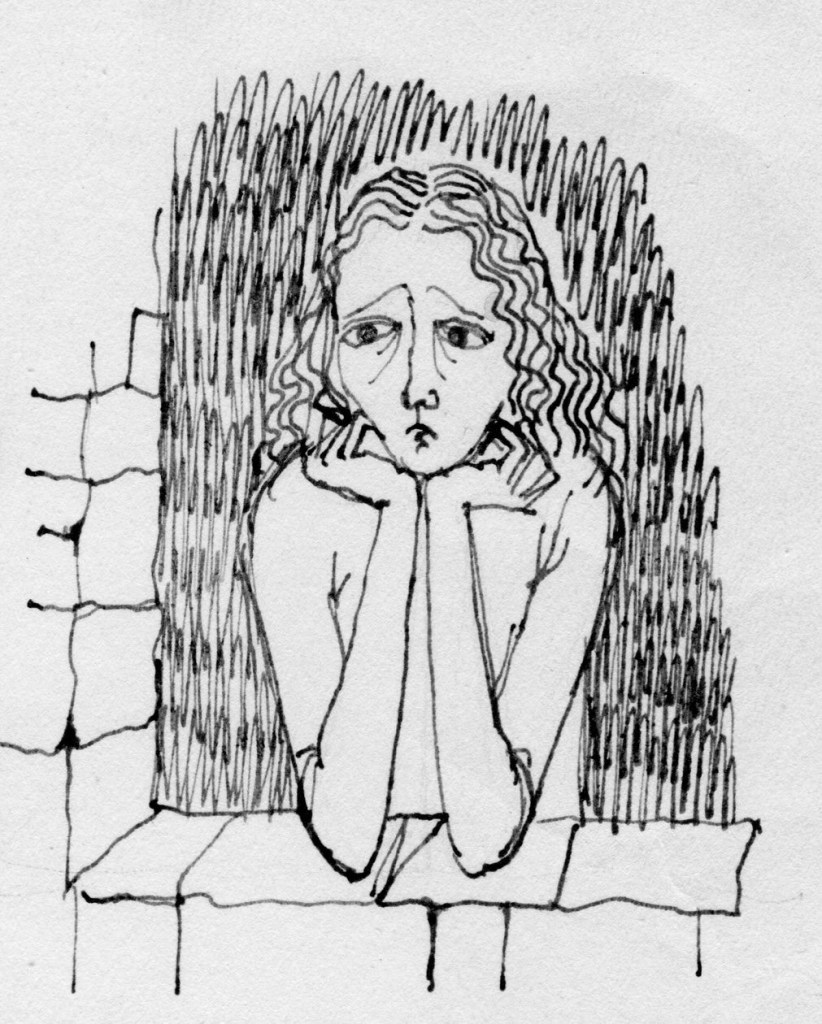
So I will use this quiet moment to mention once again Nika Novak, a Russian journalist who has been held for more than a year on bogus charges of “confidential cooperation with a foreign state, international or foreign organization.”

Last week I reported that she had been transferred to a prison in Novosibirsk, which was described as worse than any of the other facilities she has been held in to date. Since that latest transfer, she has been sharing a noisy and chaotic cell with ten other inmates facing a variety of criminal charges, and has stopped eating as a result of stress and fear . . . despite having been recognized by Russian human rights group Memorial as a political prisoner.
Novak’s lawyers have filed a motion to have her moved to a different cell, on the basis of provisions of Russian law stating that prisoners like Novak should be kept separate from others accused of serious, non-political, often violent crimes including murder.

The appeal of her sentence is scheduled to be heard in Novosibirsk on March 24th. In the meantime, she is packed in with hardened criminals pending a decision on her attorneys’ motion.
I have seen no updates on her situation during the past week, but will be watching closely for word of the result of her appeal eight days from now.
*. *. *
In the meantime, we remember all of those on our list of unjustly held hostages in Vladimir Putin’s GULAG of penal colonies:
David Barnes
Ales Bialiatski (in Belarus)
Gordon Black
Andrei Chapiuk (in Belarus)
Robert Gilman
Stephen James Hubbard
Ksenia Karelina
Ihar Karney (in Belarus)
Vadim Kobzev
Uladzimir Labkovich (in Belarus)
Michael Travis Leake
Aleksei Liptser
Ihar Losik (in Belarus)
Daniel Martindale
Farid Mehralizada (in Azerbaijan)
Nika Novak
Marfa Rabkova (in Belarus)
Igor Sergunin
Dmitry Shatresov
Robert Shonov
Eugene Spector
Valiantsin Stafanovic (in Belarus)
Siarhei Tsikhanouski (in Belarus)
Laurent Vinatier
Robert Romanov Woodland
Vladislav Yesypenko (in Crimea)
Yuras Zyankovich (in Belarus)
*. *. *
And — like a broken record — I again offer this plea to Donald Trump in the White House . . . though I fear it will likely continue to fall on deaf ears, as it has thus far:
“Amidst all of the hubbub of your new administration, it is imperative that these innocent men and women not be forgotten. Negotiations for their safe release have been underway for some time. President Joe Biden succeeded in bringing home 16 innocent people on August 1st of last year, and you have added two others to that list. But you should be trying to do even more. Whatever else you do, this should be high on your list of priorities. The people you promised to represent are counting on you.
“Perhaps this would be an appropriate time to remind you also of the oath you swore on January 20th:
“‘I do solemnly swear (or affirm) that I will faithfully execute the Office of President of the United States, and will to the best of my ability, preserve, protect and defend the Constitution of the United States.’
“I’m sure there’s a copy of that Constitution lying around the White House. If not, you can Google it. This is what it looks like, in case you’ve forgotten.”

Just sayin’ . . .
Brendochka
3/16/25

For one thing, it is the 108th anniversary of the day on which Tsar Nicholas II of Russia abdicated, leaving the largest country in the world in the hands of a provisional government that had no idea what it was doing.

But according to the records of 1917, that actually occurred on March 2nd. And they should know . . . right?
So what happened to those other 13 days? Was there some sort of time warp? Did extraterrestrials take over Earth and change things around? Did the whole world do a two-week Rip Van Winkle thing?
Nope — it was none of the above. It was just Russia being behind the rest of the world, as usual. While everyone else had long since caught up with the Gregorian calendar (introduced in 1582 by Pope Gregory XIII), Russia in 1917 was still using the old Julian calendar.
Thus, what we now refer to as the Russian February Revolution actually took place — according to the people who actually lived through it — from March 8th through the 12th.
Of course, those events led up to the ultimately successful Bolshevik Revolution of November (October?) 1917, ushering in the 70-plus years of hell known as the Communist era of the USSR (Union of Soviet Socialist Republics).

*. *. *
But what about the two-calendar issue . . . what was that about?
Well, the Julian calendar was introduced by — who else? — Julius Caesar in 45 B.C.E., and was based on the solar cycle, rather than the former lunar cycle calendar. And for some 1,600 years, it served its purpose . . . until some learned advisors of Pope Gregory XIII discovered an error regarding the leap years, plus an 11-minute glitch in the current year, adding ten extra days more than they needed by that time. [“Julian & Gregorian Calendar Systems,” Study.com.]
Considering that the Russians continued to use the Julian calendar for another 300-plus years, that probably accounts for the extra three-day difference. It was actually the Bolsheviks — finally doing something useful — who instituted the use of the Gregorian calendar in 1918.
I have to wonder, though: What happened to all those Russians whose birthdays fell during that 13-day gap? Did they lose out on the gifts and cakes? Did they celebrate twice? Or did they simply remain the same age for another year? My guess — based on the way the Bolsheviks did things — is that they were all issued new documents with revised birth dates . . . a process that undoubtedly took at least a couple of years, further complicating their family celebrations in the interim.

*. *. *
If you’re wondering precisely what the difference is between the two calendars that caused all of the hubbub, it’s two-fold:
Julian Calendar: The leap year occurred every four years, without exception; and the average year length was approximately 365.25 days.
Gregorian Calendar: The leap year rule was a bit more complicated. The years divisible by 4 are leap years, except for years divisible by 100 unless also divisible by 400. And the average year length is approximately 365.2425 days.
Now, aren’t you glad you asked?

Just sayin’ . . .
Brendochka
3/15/25
So sayeth the soothsayer in Shakespeare’s play Julius Caesar.
It was a play based on an actual historical event: the murder of Caesar at a meeting of the Roman Senate in the Forum on 15 March 44 B.C. He was stabbed to death by a mob of as many as 60 conspirators, led by his supposed BFFs, Brutus and Cassius.

The story goes that he had been warned by a seer that harm would come to him on the Ides (midpoint) of March. On the 15th, on his way to the meeting at the Theatre of Pompey, he passed the seer in the street and joked, “Well, the Ides of March are come” . . . to which the seer replied, “Aye, they are come, but they are not gone.”
At that point, if Caesar had been at all superstitious, he would have turned around and headed back home. But he didn’t, and he met an untimely — and extraordinarily grisly — end that day.
As is always the case with major political events, this one changed the course of history, opening the final chapter in the crisis of the Roman Republic. It also, of course, gave William Shakespeare — some 1,600 years later — a heck of a plot for one of his greatest plays.

What is fascinating — to me, at least — is how a catchphrase from two millennia ago can still be in popular use today. While a great many people may not recall its origin, nearly everyone has heard about the Ides of March at one time or another.
And of course, there are those three famous words — reputedly the last words spoken by Caesar as he lay dying — that continue to be repeated when someone is accused of duplicity: “Et tu, Brute?” (“You too, Brutus?”)

In fact, I’ll bet those three little words are heard a great deal in the halls of the U.S. Congress these days.
But that’s a whole other story. For now, just remember — on this 2069th anniversary of that fateful day in Rome — to choose your friends carefully.

Just sayin’ . . .
Brendochka
3/15/25
We’ve all heard of the five stages of grief. These are not they. These are, rather, what I call the Nine Steps to Triumph, or The Gospel According To Vladimir Putin.

First, you Deploy . . . a gradually increasing number of troops on the Russia-Ukraine border, calling it a “Special Military Operation” — as though it were some sort of routine exercise.
Second, you Deny . . . when the world accuses you of planning an invasion of Ukraine, stating unequivocally that you have no intention of invading anyone.
Third, in the face of those accusations, you Dissemble . . . calling Ukraine “historically Russian lands,” and claiming that there is “no historical basis [for the] idea of Ukrainian people as a nation separate from the Russians.” You even go so far as to aver that Ukraine never had “real statehood,” and that the creation of modern Ukraine was a mistake. [Vladimir Putin, “On the Historical Unity of Russians and Ukrainians,” July 12, 2021.]

Fourth, you Declare . . . in this case, war . . . against the sovereign nation of Ukraine. Only you still call it your “Special Military Operation” — as though that’s going to fool anyone when the tanks begin rolling across the border and people start dying.
Fifth, you Disclaim any and all accusations of aggression, offering a fairy-tale version of events to depict yourself as the savior of the Ukrainian people.
Sixth, you Denounce the legally-elected President of Ukraine, Volodymyr Zelensky — who happens to be Jewish — as a Nazi. That one isn’t even worth dignifying with a response.

Seventh, you Destroy huge swaths of the country you claim to be rescuing, in the process killing and maiming hundreds of thousands of people — both civilians and military . . . including your own Russian soldiers.
Eighth, you Demand that, in order to achieve a peaceful solution to the war that you yourself started, Ukraine will have to hand over to you some 20% of its territory; relinquish the right to any security guarantees; and elect a new president . . . one satisfactory to you.
And finally, when it appears as though you may have been backed into a corner by the rest of the world who really do want to negotiate a just peace, you Delay . . . again blaming Ukraine for wanting to use a proposed ceasefire in order to regroup and rearm . . . all the while continuing to Deny, Dissemble, Disclaim, Denounce and Demand.

The worst part of this whole wretched scenario is that, at least to some extent, it actually works for you. Not that anyone believes a single word that you say; you simply wear them down.
In all likelihood, you will have to compromise on some of the details; but you will end up winning more than Ukraine will be allowed to salvage. And the rest of Europe will continue to tremble, wondering who will be next in your sights.
Which is what you wanted all along . . . isn’t it?

Just sayin’ . . .
Brendochka
3/15/25
Gather ‘round, boys and girls, for a class in sex education that I guarantee will leave you feeling thrilled that you are Homo sapiens, and not octopi (or octopuses — it’s optional).
And for all of you equal rights enthusiasts out there, this lesson should also open up some interesting debates about the whole male-female dominance thing. So let’s get at it, and peek in on some octopi . . . well . . . getting at it.

Please do not ask me whether this is a picture of a male or female octopus, or which end is which. Or, for that matter, whether there even is an end, or if it’s just a big blob. I don’t know, and — not being a member of its species — I frankly don’t care. It is, however, important to other octopi.
What I have learned is that — like the praying mantis and some spiders — the female octopus, after mating, devours the male, thus getting even with him for disturbing her sleep, and putting an end to his further philandering.
Score one for the female of the species.

But it turns out that, over however-many years or centuries, Mother Nature stepped in and helped the hapless males of some species of octopi by giving them longer mating arms, so as to keep a safer distance from the females while still being close enough to . . . well, you know.
Now, for reasons unknown, the male blue-lined octopi (BLOs) have not been included in that lucky group, and still have to live with shorter mating arms. They do, however, have another, even more diabolical, built-in weapon: an extremely powerful venom known as tetrodotoxin (TTX), which — while dangerous, and sometimes even deadly, to humans — merely knocks out another BLO for a sufficiently long period of time to allow . . . well, you know.
Sort of an undersea Rohypnol.
So — being male and therefore inclined at times to think more with their reproductive organs than their brains — at some point one of them discovered that, if he first snuck up behind the lady of his choice and bit her in a specific area, thus injecting her heart with some of that venom, she would be temporarily immobilized . . . allowing him to have his way with her and escape without becoming her next meal.
And the word spread among his male colleagues, giving new meaning — at least in the world of blue-lined octopi — to the term “date rape.”
Score one for the guys.

*. *. *
How do I know all of this? Quite simply, through someone else’s hard work. An animal neurobiologist at the University of Queensland, Australia, Wen-Sung Chung, wrote of his team’s study of the mating ritual of the blue-lined octopus, during which they found — for the first time ever — evidence of a neurotoxin being used in mating, rather than for hunting or defense. [Jack Guy, CNN, March 13, 2025.]
I’m not sure how scientists decide that it’s important enough to raise a great deal of money to study some of the things they do, but I have confidence that somehow this golfball-sized mollusk is vital to the world’s ecosystem. In any event, Chung’s report made far more enjoyable reading than any of the political horror stories of the day.
And as for his conclusions, allow me to quote Chung himself:
“They have very strange mating behavior.” He further described the process as “an arms race between the sexes,” and added that “It’s a kind of survival skill.” [Id.]
Well, yeah . . . it would be, wouldn’t it?

*. *. *
All of which left me wondering which member of the copulating couple I should side with: the cannibalistic female, or the predatory male. And my conclusion is that they pretty much deserve each other.
If science has taught us nothing else, it is that Mother Nature usually knows what she’s doing . . . with the possible exception of us humans.

Just sayin’ . . .
Brendochka
3/14/25

I’ve never cared for beets personally . . . to me, they taste like the dirt in which they’re grown. But a great many people love them — particularly my Russian/Ukrainian ancestors, who might not have survived without pots full of borshch (yes, that is the correctly transliterated spelling — it’s not “borscht”).
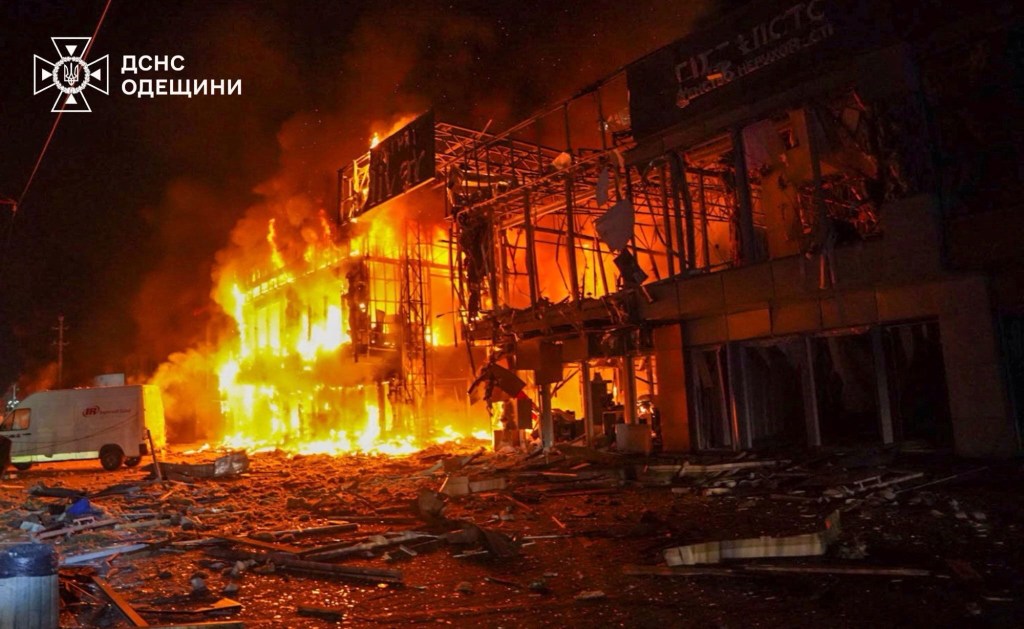
But this article isn’t about the noble root vegetable; it’s about the ignoble war that has been underway in Ukraine for more than three years . . . and the new usage of the word “beetroot” that I came across in an article about that war, that made me feel sick to my stomach.
It is apparently not a new term at all . . . but it was new to me: “Beetroot mulch.”
It was contained in a CNN analysis on the subject of the United States’ attempt to open negotiations with Moscow and hopefully to bring an end to the carnage in Ukraine. A key point of the U.S. proposal presented in Jeddah on Tuesday was to start with a 30-day ceasefire to allow time to enter into substantive discussions . . . which was not at all to Vladimir Putin’s liking. He predicted that Ukraine would simply use that time to regroup and rearm.
The article read, in part:
“Putin cannot refuse a ceasefire, without losing the fictitious moral high ground. But it is what comes next — or during any pause in hostilities — that will define the outcome of the war.
“Firstly, it is a complete ceasefire, across all front lines, for an entire month. This is, in and of itself, a very big ask. Across hundreds of miles, both sides have for years used armor, then artillery, then drones to hunt each other viciously, amid what is now called ‘beetroot’ — the horrific mulch of corpses discarded in combat — on the zero line.” [Nick Paton Walsh, CNN, March 11, 2025.] [Bold emphasis is mine.]

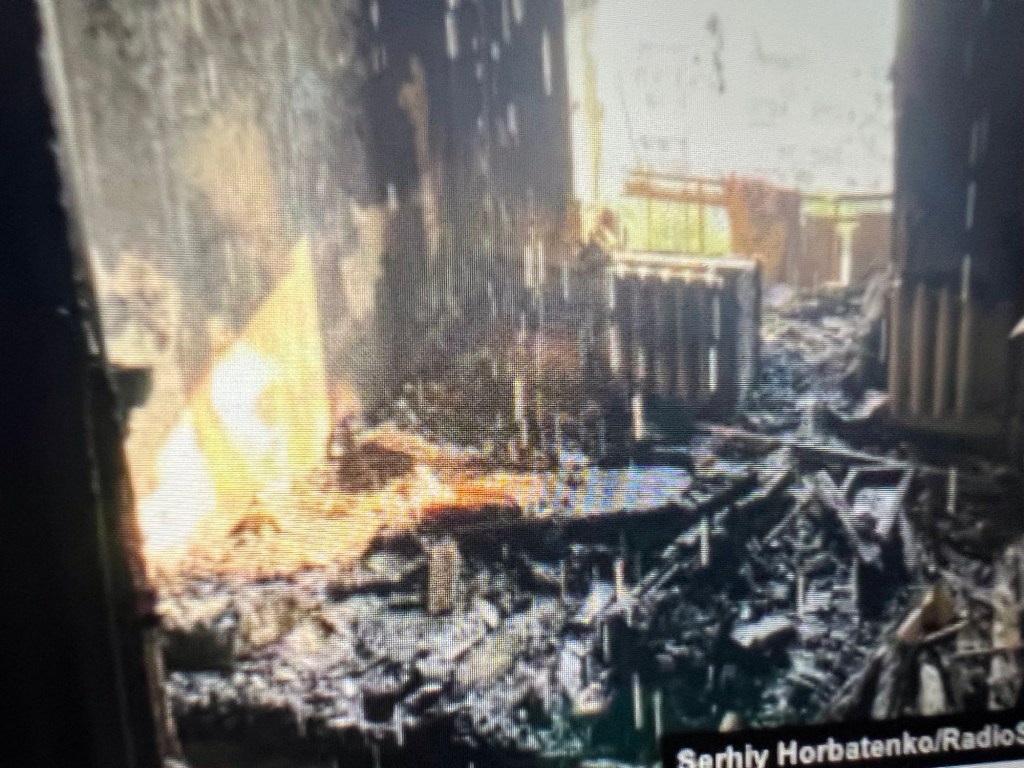
“Beetroot — the horrific mulch of corpses.” The mental image conjured up by that phrase is almost too much to bear. More than any previous pictures of death and devastation from World Wars I and II, the Korean War, the decades of Middle East conflicts — even the aftermath of the bombing of Hiroshima and Nagasaki — this one description most graphically summed up for me the unspeakable horror, and the waste of human life, of war.
And if Vladimir Putin continues to delay putting an immediate end to it . . . and, worse, if Donald Trump continues to make excuses for him . . . then there can be no question that the world’s future is in the hands of two of the most despicable individuals who ever lived.
And Heaven help us all.

Just sayin’ . . .
Brendochka
3/14/25