Category Archives: History, Travel, Memoirs

4/14/25: Chernobyl, 39 Years Later

In 1988, I took my very first overseas trip. My children were grown and independent, and I was ready for a fling. I wanted to travel, but not to anywhere predictable; no boring Caribbean cruise for me. Instead, one of my Russian language classmates and I decided to join a tour group to the Soviet Union.

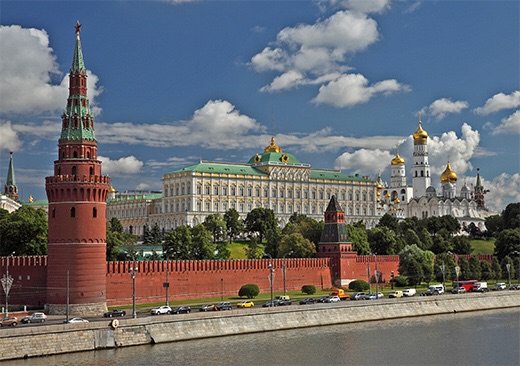
Moscow Kremlin

I remember my mother asking why — of all the countries on earth I could have chosen — I would want to go to that God-forsaken place (her description). And I told her that it was for the same reason I had decided to study the language: it was my heritage.

So off we went, my friend Gisela and I, with a group of about 20 strangers and a young, rather inexperienced tour guide, on a two-week trip that was supposed to have included Moscow, Leningrad (now St. Petersburg), Tbilisi (Georgia), and Kiev (Ukraine). But at the last minute, Kiev (Ukrainian spelling: Kyiv) was scrubbed, and instead we were treated to a stay in the beautiful Black Sea resort of Sochi.

The reason for the change in itinerary: the still dangerous level of contamination in Ukraine from the nuclear disaster at Chernobyl two years earlier.

Unit Four Reactor at Chernobyl – April 26, 1986

*. *. *

Fast forward to May of 1993, when I was living in Moscow as manager of the local office of an American humanitarian aid foundation that was providing healthy food for children in orphanages and in hospitals for chronically ill children — including victims of Chernobyl. That job required that I travel to meet with our partners and government officials, not only in Moscow, but also in St. Petersburg and Kyiv.

I’ve already written at some length about one of the rather hilarious overnight train rides to Kyiv, but not much about the other details of those trips.

To begin with, there was the visit to the hospital for the child victims of that horrific nuclear meltdown, which left embedded in my brain pictures that will never, ever go away. To this day, I am haunted by the visages of those innocent little ones: their emaciated bodies, the pain written on their faces, and the uniform expression of hopelessness in their eyes.

News photo … I was not permitted to take pictures

I still remember longing to sit down with them, to speak to them, and most of all to hug each and every one of them. But it was not allowed. They were physically contaminated, and psychologically — permanently — scarred.

And as I went from meeting to meeting during those few days, I noticed something else: a sore throat that started around the second day, and would not respond to medication. Our Ukrainian partner in Kyiv — who became my good friend over the years — told me not to worry; it was “only” the Chernobyl effect.

And so it was. Because no sooner had I returned to Moscow than that sore throat disappeared, only resurfacing on my second visit to Kyiv. It took just a couple of days each time to feel the lingering effect of that nuclear fallout, some seven years after the event. Imagine what it did to the people who had to live with it.

*. *. *

This month marks the 39th anniversary of that calamitous event. And still the surrounding area — including the abandoned, highly radioactive city of Pripyat — is designated as an exclusion zone, with only limited, controlled visitation allowed. The sarcophagus that was built around the reactor to contain the radiation is in place and holding . . . but it is not impermeable to wear over time, or to damage from external forces.

Pripyat, Before (lower left) and After

And those forces exist today, in the form of Russian missiles, drones, and on-the-ground troops. One such drone, packed with explosives, struck the container in February, opening a gash that took weeks to repair.

Although no leaks have been detected, there is lingering radioactive dust around the area. An agency director at the site has said that, if an attack triggered an explosion, that dust “would fly with the wind.” [Jake Epstein, Business Insider, April 12, 2025.]

And that dust has recently been stirred up by the bombardments and the armored vehicles involved in Russia’s attempted advance toward Kyiv. That assault was successfully blocked by Ukraine’s forces, and the Russian troops have withdrawn from the area. [Id.]

But what damage was already done . . . and what more might have been done had they been successful in claiming that region as their own?

In fact, what effect will those Russian troops who marched through the so-called Red Forest suffer in the years to come? That, of course, remains to be seen . . . and was clearly not considered by the Russian authorities who ordered those men into the radioactive exclusion zone.

Red Forest in the Exclusion Zone

*. *. *

When we speak of the horrors of war, we tend to think in historic terms: the two World Wars, the civil wars of numerous countries, or as far back as the Peloponnesian Wars some 400 years B.C. But how can we overlook the exponentially more cataclysmic effects of war in the nuclear age? The oldest members of my generation remember the bombings of Hiroshima and Nagasaki that ended World War II in Japan . . . and took the lives of more than 200,000 people in those two cities alone.

Are we again headed to a nuclear holocaust — even an accidental one — if this unconscionable war in Ukraine isn’t soon finished?

“Those who forget history . . .”

Just sayin’ . . .

Brendochka
4/14/25

4/13/25: The 21st Century Machiavelli


I recently considered using the descriptor “Machiavellian” in an article about . . . well, you can probably guess about whom . . . and it occurred to me that I really knew very little about the person — Niccolo Machiavelli — who unintentionally inspired the creation of the eponymous adjective.

To be fair, Machiavelli lived long before the invention of the camera, so images of him are unreliable, at best. They range from this:

Definitely Not By Van Gogh

. . . to this:

Much Better

. . . to this:

Oh, dear!

However, I was less concerned with his appearance than his political philosophies. So I did what any so-called normal person would do: I first Googled his name for general information, then immediately ordered a copy of “The Prince” from Amazon, which was delivered almost before I had hit “Place Order” on my iPad.

And while I waited a whole 18 hours for the book to arrive on my doorstep, I learned a few things by following some online links.

This much I already knew; but for the uninitiated (or the simply uninterested), Oxford Languages defines “Machiavellian” as “cunning, scheming, and unscrupulous, especially in politics.” So it seemed the perfect word to describe you-know-whom.

[For the die-hard grammarians out there, note Oxford’s use of the Oxford comma after the word “scheming” — a personal favorite of mine.]

And then I discovered that, despite popular belief that Machiavelli truly subscribed to the philosophies with which his name is unfortunately now associated, he was actually quite the liberal for his time, and a passionate defender of the republican form of government and the rule of law.

It turns out that the poor guy was seriously misunderstood.

The Machiavellian Sneer

The next thing I found was an article by one Luke Hallam on the persuasion.community site dated March 3, 2025, expressing the very same train of thought I had been following . . . and presenting it in a much more erudite manner. So, not wishing to appear to be piggy-backing on (or, heaven forbid, plagiarizing) another person’s good work, I scrapped my proposed article.

But then The Prince arrived, and I began reading. And, while still in the first few pages, I found several bits of advice that some of today’s so-called world leaders would do well to heed.

I won’t burden you with a slew of samples; but there is one that I particularly focused on, because it applies both to the autocratic leader and to the people who voted him into office. If I may . . .

“ . . . for men change their rulers willingly, hoping to better themselves, and this hope induces them to take up arms against him who rules: wherein they are deceived, because they afterwards find by experience they have gone from bad to worse. . . .

“In this way you have enemies in all those whom you have injured in seizing that principality [or, in modern terms, that presidency], and you are not able to keep those friends who put you there because of your not being able to satisfy them in the way they expected, and you cannot take strong measures against them, feeling bound to them. For, although one may be very strong in armed forces, yet in entering a province one has always need of the goodwill of the natives.” [The Prince, Niccolo Machiavelli, Fingerprint Classics, Prakash Books, 2024.]

In short, to the autocratic ruler (of any country) I would offer this reminder: “Be careful how you treat people on your way up, because you’re likely to meet them again on the way back down.”

And to the voters who put the tyrant in office: “Next time, get your heads out of your asses, and use the brains God gave you.”

I call it “Machiavellian Philosophy for Dummies.”


Just sayin’ . . .

Brendochka
4/13/25

4/13/25: Putin’s Hostages: Bring Them Home, Week 66 – A Happy Ending for Ksenia Karelina

Yes, she is back at home in the U.S., after serving over a year of a 12-year prison sentence in Russia for allegedly having committed treason. Her actual “offense”? Having made — two years earlier, in the U.S. — a $51 donation to a pro-Ukraine fund. The transaction was found in her cell phone records when she was detained by authorities while on a visit to her family in Yekaterinburg, Russia, in early 2024.

Leaving Russia
With UAE Ambassador to the United States, in Abu Dhabi

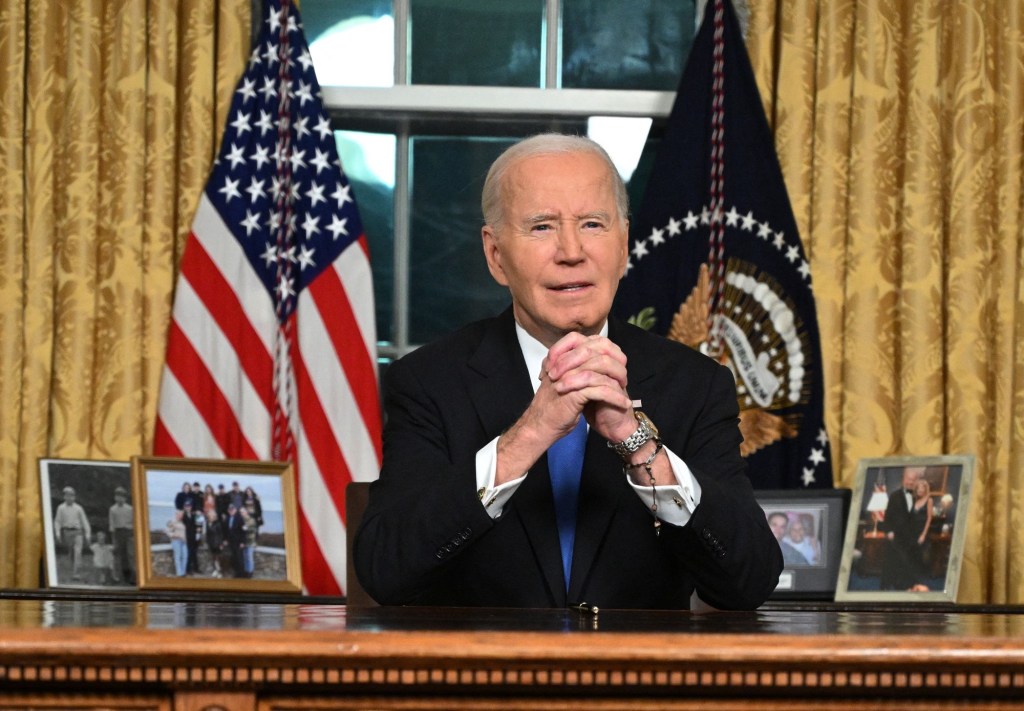
Negotiations for her release are said to have been underway for some time (presumably begun during the Biden administration), and were finally concluded during a meeting in Washington between presidential envoy Steve Witkoff and Putin adviser Kirill Dmitriev.

In return, the U.S. released dual Russian-German citizen Arthur Petrov, who had been charged with export control violations, smuggling, wire fraud, and money laundering. Clearly, America got the better end of that trade.

And so we welcome home Ksenia Karelina, whose nightmare is finally over. That’s one more name crossed off of our list.

On the way home
With her fiance, at Andrews AFB, Washington

*. *. *

And never forgetting those left behind . . .

The Azov 12
David Barnes
Ales Bialiatski (in Belarus)
Gordon Black
Andrei Chapiuk (in Belarus)
Antonina Favorskaya
Konstantin Gabov
Robert Gilman
Stephen James Hubbard
Sergey Karelin
Ksenia Karelina
Ihar Karney (in Belarus)
Vadim Kobzev
Artyom Kriger
Uladzimir Labkovich (in Belarus)
Michael Travis Leake
Aleksei Liptser
Ihar Losik (in Belarus)
Daniel Martindale
Farid Mehralizada (in Azerbaijan)
Nika Novak
Marfa Rabkova (in Belarus)
Igor Sergunin
Dmitry Shatresov
Robert Shonov
Eugene Spector
Valiantsin Stafanovic (in Belarus)
Siarhei Tsikhanouski (in Belarus)
Laurent Vinatier
Robert Romanov Woodland
Vladislav Yesypenko (in Crimea)
Yuras Zyankovich (in Belarus)

. . . while looking forward to the day they’re all at home again.

“Yes, please.”

Just sayin’ . . .

Brendochka
4/13/25

4/12/25: Keep Those Babies Coming, Part Two

I suppose, if you’ve planned ahead to have a very large family, you could simply start naming them Alpha, Bravo, Charlie, Delta, Echo, Foxtrot, and so on, through the entire phonetic alphabet. (I’m not sure what numbers 21 and 23 would think about being called Uniform and Whiskey; and number 16 — Papa — might be a big confusing; but they’ll just have to deal with it, the same way they deal with being among the last ones in the hand-me-down-clothes hierarchy.


But seriously, I wrote last week about a U.S. movement referred to as pronatalism, which not only favors large families in order to grow the country’s population, but suggests — not so subtly — that those of us who choose not to follow their example are somehow un-American.

As sort of poster children for this movement are the Collinses of Pennsylvania: Malcolm and Simone, and their four (soon to be five) little ones, with plans for as many as half a dozen more.

The Collins Family

Now, I am not inherently opposed to large families. In fact, I think they’re great, as long as the parents truly love children, and have the wherewithal to care for them properly, to give them the individual attention they need, and to provide them with a good start toward happy and productive lives. But it’s not a suitable lifestyle for everyone. And this is what most avid pronatalists seem to overlook. Much like extremists of all stripes, they are convinced that what is right for them is right . . . period.

And this one-size-fits-all lifestyle is a real movement that shows signs of spreading. In late March, a group of roughly 200 advocates met in Texas for the second annual Natal Conference — a weekend-long event costing around $1,000 to attend. The attendees come from two very different branches of the American right: conservative Christians, as well as members of the so-called “tech right” — a growing group sprouting from the libertarian culture of Silicon Valley. [Stephanie Hegarty, BBC, April 1, 2025.]

At this point, you may be wondering: “Well, so what? If they want to form a congregation of like-minded families, what’s wrong with that?”


And the answer is: On its face, absolutely nothing. They can form any sort of organization they choose; they can incorporate if they like, or even call it a religion. That is their inalienable right as U.S. citizens.

That is, unless and until they try to bring the government into it, which is what Malcolm Collins says they have been trying to do. They view some members of the Trump administration as potential allies, and are attempting to capitalize on what they see as possibilities.

For example, they point to:

— Elon Musk — the father of some 12 or more children — who has called fertility decline “the biggest danger civilisation faces, by far,” and who is said to have donated $10 million to a Texas organization known as the Population Wellbeing Initiative, which conducts research into fertility, parenting, and the future of population growth.

Vice President JD Vance — who has been outspoken in his support of increased procreation, and said at an anti-abortion rally in January: “I want more babies in the United States.”

— Donald Trump — who, though not yet having spoken out in support of wholesale baby-making, did sign an executive order on February 18th to improve access for IVF that recognized “the importance of family formation and that our nation’s public policy must make it easier for loving and longing mothers and fathers to have children.” [Id.]

Triple Threat

*. *. *

But why am I so bothered by this? For one simple reason: the Feenstra family, late of Saskatchewan, Canada, and now on track to citizenship in Russia. I’ve written enough about them in the past year that I almost feel as though I know them personally. They sold their farm and left Canada with eight of their nine children (the eldest son chose to stay behind) on the promise of being able to buy a farm in Russia, where they could escape the liberal, “woke” politics of their native Canada.

And, after a somewhat rocky start, they have found what they wanted: a couple of hundred acres (which they don’t really own because foreigners are not allowed to own land in Russia), on which they have built a house and other farm buildings, and are on their way to becoming a thriving, profit-making enterprise.

And, more importantly, they say they are able to live their chosen ultra-conservative lives, worshiping as they choose despite the absence of any church they can attend; associating with other conservative families; and proselytizing for Vladimir Putin’s program of . . . wait for it . . .

Population growth.

And there you have it. Last year — 2024 — was Russia’s “Year of the Family,” with celebrations and prizes given to those families who best exemplified Putin’s ideal . . . which included the Feenstras.

The Feenstra Family

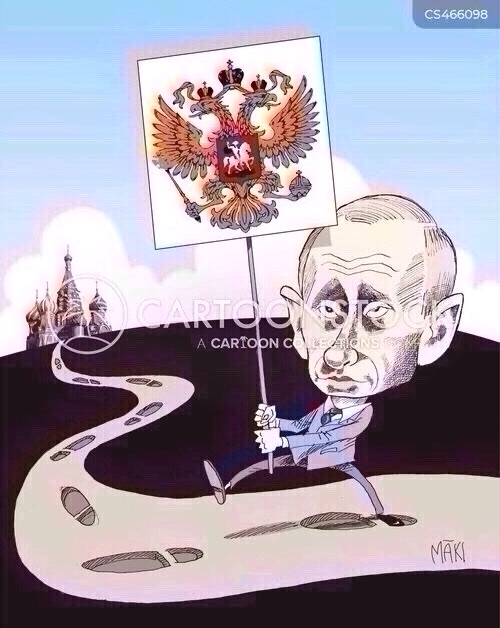
Putin’s Procreation Party was a big, splashy, year-long push for a baby boom to offset the years of population decline caused by a combination of factors: the flight of those who opposed his regime and knew they were in danger of arrest, or simply couldn’t live with it any longer; and the loss of tens — perhaps hundreds — of thousands of young men to Putin’s “special military operation” in Ukraine.

It was taken so seriously, there were even punishments meted out to those — such as teachers and doctors — who dared express a different view.

And it is the echoes of those events in Russia that haunt me as I see Trump trying to rid the United States of immigrants he considers “undesirable,” while offering $5 million “gold card” visas to wealthy foreigners more to his liking.

In other words, cull the herd of the weakest and least productive, while breeding — and even importing — a “superior” strain. Might it lead to selective breeding . . . or eugenics? That much is not yet clear.

Old Pro-Eugenics Poster – Unknown Date

*. *. *

And is this movement really finding its way into government circles?

In the interest of brevity . . . though I fear I’ve already passed that point . . . I’ll stop here for the moment, and address that further issue in a separate chapter.

As if we don’t already have enough to keep us awake at night.


Just sayin’ . . .

Brendochka
4/12/25

4/12/25: Romancing the Kremlin


First there were three years of increasingly stringent sanctions following Russia’s invasion of Ukraine, hitting hard at the aggressor’s economic and political standing, pushing them gradually into a corner from which they would only be able to emerge by making concessions to end their so-called “special military operation.”

And it was working . . . until Donald Trump re-entered the White House; began turning our long-time, proven allies against us; and made the first overtures toward a reconciliation with his old pal, Vladimir Putin. . . .

. . . thereby, in a matter of just weeks, knocking the entire world onto its collective ass.


While people throughout the world have been struggling to cope with the fallout from Trump’s insane tariffs, his immigration obsession, his mass firings of the people who actually keep the U.S. government running, and his psychotic revenge actions against everyone who has ever pissed him off throughout his lifetime . . .

. . . while we’ve been too distracted by all of this to pay as much attention as we should to the man in the Kremlin, Trump has managed to bring him out of his corner and back into a position of world power.

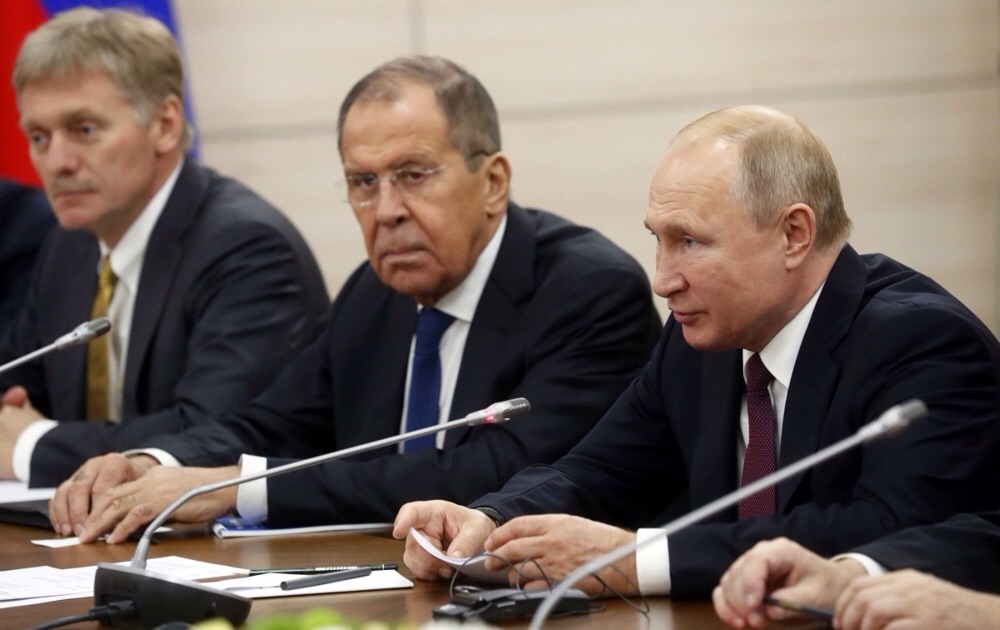
And who has been Trump’s most helpful aide in his discussions with Putin? Secretary of State Marco Rubio? Only moderately. Secretary of Defense Pete Hegseth? I know I heard snickering at that one. (Oh, sorry . . . that was me.)

No, it has been Trump’s envoy to just about everywhere . . . the billionaire with zero experience in foreign affairs, diplomacy, or any branch of government operations: real estate developer Steve Witkoff.

Steve Witkoff

Witkoff claims bragging rights for our having gotten a couple of hostages back from Russia recently, which unquestionably is a very good thing. But if he and Trump believe that it was due to our side’s superior negotiating skills, they are delusional.

Because Vladimir Putin does nothing without a reason, and that reason is always . . . ALWAYS . . . whatever will be of the greatest benefit to him. He is a master of “palace intrigue” — a fact that Donald Trump has never understood or acknowledged, as it would diminish his image of himself as the world’s greatest deal-maker.

Witkoff and Putin in St. Petersburg – April 11, 2025

There are those with proven expertise who understand, and are alarmed by, the extent to which both Trump and Witkoff are outclassed by Putin. David Kramer, who formerly held a senior position at the State Department during the George W. Bush administration, had this to say about Witkoff:

“The fact that he lacks the context and history of how Russians negotiate and deal with the American side is, I think, a problem. Putin says nice things to him, gives him a portrait of the president, talks about going to church and praying for his friend (Trump). Those are pretty old KGB tactics. And Witkoff, I don’t think, has the awareness to understand what is going on there.” [Ray Furlong, RFE/RL, April 11, 2025.]

According to his biography, Steve Witkoff’s paternal grandparents came to this country from Russia. So did all four of my grandparents . . . but that doesn’t qualify me to negotiate peace terms — or anything else — with Vladimir Putin. The difference is that I know my limitations.

But our government is currently being run by people who don’t even believe they have limitations . . . and that is beyond terrifying.

Just sayin’ . . .

Brendochka
4/12/25
4/11/25: A Bad Day for Hostages in Russia

On October 2, 2024, I reported on the start of a trial in Moscow of four Russian journalists accused of working with an “extremist organization” — Aleksei Navalny’s Anti-Corruption Foundation (FBK) — some three years earlier. The four — Konstantin Gabov, Antonina Favorskaya, Artyom Kriger, and Sergey Karelin — have been on my hostage list since their closed trial, with no further news of them.

(L-R): Gabov, Favorskaya, Kriger and Karelin

Yesterday it was reported that their closed-door trial has finally been concluded, though it is unclear why it has taken six months to reach this point. The “crime” with which they are charged carries a penalty of up to six years in prison; prosecutors have asked for prison terms of five years and eleven months for each of the defendants, alleging that they created materials for the FBK’s YouTube channel.

Two of the accused — Gabov and Karelin — are freelancers who have worked for various news organizations, including Reuters and The Associated Press (AP), respectively.

A Reuters spokesman has said that “Konstantin Gabov is a freelance journalist who between 2022 and 2024 occasionally contributed to Reuters as a desk producer, editing video and scripting stories assigned to him. We have no evidence that shows the charges against him relate to his freelance work at Reuters. Reuters is deeply committed to freedom of the press and opposes the imprisonment of any journalist for doing their job. Journalists must be free to report the news in the public interest without fear of harassment or harm, wherever they are.” [Mark Trevelyan and Lucy Papachristou, Reuters, April 10, 2025.]

Both Favorskaya and Kriger work for SOTAvision, an independent news outlet that has also been designated by the Russian government as a “foreign agent.” Favorskaya recorded the last video of Navalny in a court hearing the day before his death.

Aleksei Navalny

SOTAvision’s founder, Aleksandra Ageeva — also listed in Russia as a foreign agent — said:

“Why are the court hearings closed? The judge came today escorted by men carrying automatic weapons. Who are they afraid of? Or is it a gesture of intimidation? It is absurd.” [Id.]

*. *. *

These four journalists are not Americans; but not all of the hostages on our list are. They are, however, all believers in freedom and justice, and daily put their lives on the line to fight for those principles.

Justice is blind; it is the birthright of every individual, regardless of nationality or ethnicity. And so we continue to honor Putin’s hostages, and to fight for their release.


Just sayin’ . . .

Brendochka
4/11/25

4/11/25: Lessons From History

We’ve all heard the aphorism that those who forget history are doomed to repeat it. Conversely, remembering historic events should help us to avoid repeating the mistakes of the past . . . shouldn’t it?

In the hope that there is some truth in that, I’ve taken another little voyage in my online time machine and found a few items from previous April 11ths that might be worth noting as examples for these turbulent political times.

1814: Despite having instituted many much-needed political and social reforms during his reign, Napoleon Bonaparte blew it when he misread Russia’s intentions and staged a preemptive invasion of that inhospitable country in the summer of 1812 . . . resulting in the notorious forced retreat of the French troops as the fighting dragged on and the brutal Russian winter finished off the majority of what was left of them. As a result, Napoleon was forced to abdicate, and was exiled to the Island of Elba. [“This Day In History,” History.com, April 11, 2025.]

Napoleon Bonaparte

Shockingly, however, the cunning Napoleon managed to escape his exile, returned to Paris, regrouped, and regained his position as Emperor. But his second term in office proved more disastrous than the first, when he was again defeated — this time by a coalition army led by Britain’s Duke of Wellington at the Battle of Waterloo.

Result: Another forced abdication and exile, but farther away to the remote South Atlantic island of Saint Helena . . . where he remained until his death in 1821.

And to this day, there are leaders who haven’t learned not to mess with Russia. Astonishing!

*. *. *

1951: General Douglas MacArthur was a brilliant military leader who, in the early days of the Korean conflict, had devised strategies and maneuvers that helped save South Korea from falling to the North Korean invaders. But as the war pressed on into its second year, he convinced then President Harry Truman to take offensive action against communist North Korea. Truman feared — quite rightly — that the People’s Republic of China would then jump to the defense of its North Korean ally, and refused to escalate the war further; but MacArthur argued that there was little chance of that happening. [Id.]

Douglas MacArthur

Well, he was wrong, and at the end of December 1950, hundreds of thousands of Chinese troops crossed into North Korea . . . and the rest, as they say, is well-known history.

On April 11, 1951, President Truman fired MacArthur, replacing him with General Matthew Ridgway.

MacArthur had let his ego and his blustering nature overtake reason, and led the country in a direction that brought the Korean people — and the United States — two more years of horrific war. For that, he lost his job, and his legacy was forever tarnished.

*. *. *

1979: Ugandan dictator Idi Amin is well known as one of the most violent dictators of modern times. As head of the Uganda army and air force, he seized control of the government in 1971, where he undertook a reign of terror that lasted for eight years. Finally, on April 11, 1979, he was overthrown by the Uganda National Liberation Front and fled the country.

Idi Amin

No other country wanted him, but he was finally allowed to settle in Saudi Arabia. However, once a tyrant, always a tyrant; and in an effort to regain his position in Uganda, he left his place of exile via Zaire, where he was arrested and offered back to the Saudi government, which had no further use for him. He was then sent to Senegal, but he was not welcome there either, and the Senegalese government attempted to return him to Zaire, who likewise refused him admittance. It was the Saudi government that finally relented and allowed him to live out his remaining years there, until he finally died of kidney failure in 2003. [Id.]

*. *. *

And that, dear students, is what ultimately happens to brutal, egomaniacal, narcissistic, psychopathic dictators.

Just sayin’ . . .

Brendochka
4/11/25
4/11/25: Score One For the Supreme Court


On April 8th, I expressed my disbelief and horror at the deportation of Kilmar Armando Abrego Garcia, a Salvadoran national married to a U.S. citizen, who was wrongly shipped off to a mega-prison in El Salvador on the erroneous accusation of being a gang member . . . when in fact he had been granted asylum here when his life was threatened by those very gangs in his home country.


Despite a District Court’s order that he be brought back to the U.S. by last Monday night, the Trump administration refused to do so and filed a motion with the Supreme Court to overrule the order.

In response to that motion, Chief Justice Roberts extended the Monday deadline for Abrego Garcia’s return in what initially appeared to be a possible reversal of the District Court’s ruling. But yesterday, the Supreme Court did its job, and meted out justice. In a brief order, it said that the Court:

“ . . . properly requires the Government to ‘facilitate’ Abrego Garcia’s release from custody in El Salvador and to ensure that his case is handled as it would have been had he not been improperly sent to El Salvador.” [Justin Jouvenal and Ann E. Marimow, Washington Post, April 10, 2025.]

The order further stated that the Trump administration should be prepared to “share what it can concerning the steps it has taken and the prospect of further steps.” [Id.]

There were no dissents noted to the ruling; and in fact, the Court’s three liberal justices — Sonia Sotomayor, Elena Kagan and Ketanji Brown Jackson — chastised the Trump administration, stating that its argument “implies that it could deport and incarcerate any person, including U.S. citizens, without legal consequence, so long as it does so before a court can intervene.” [Id.]

And that, dear readers, is how you run a democracy!

The Real “Supremes” – (L-R) Justices Sotomayor, Jackson and Kagan

Now we await the return of Mr. Abrego Garcia to his home and family. Let’s see how quickly the administration moves to correct their mistake — just one of the . . . oh, hell! I’ve lost count, and it hasn’t even been three months yet.

Just sayin’ . . .

Brendochka
4/11/25

4/10/25: Oh, Happy Day!


Ksenia Karelina is free!

Ksenia Karelina in Los Angeles, pre-imprisonment in Russia

One of our hostages is returning home following a quiet exchange that took place earlier today in Abu Dhabi, UAE.

More details to follow in my weekly hostage status report on Sunday . . . but for now, I just wanted to share the good news and to celebrate Ksenia’s return to freedom.

And to say thank you to all who made it possible.

Just sayin’ . . .

Brendochka
4/10/25