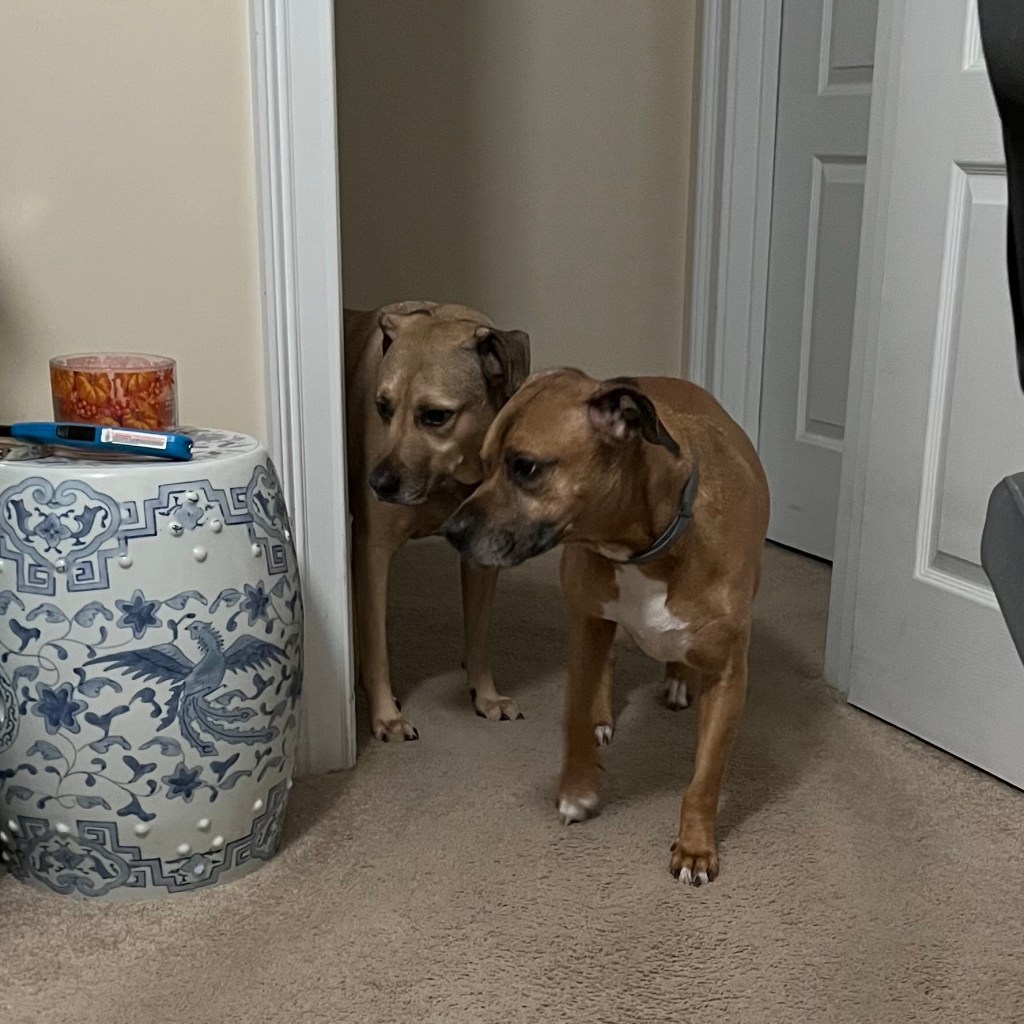
Then you look up from your book, and you see this:
Like Carl Sandburg’s “Fog,” they crept in on little cat — er, dog — feet.
I never did determine what they were looking at, or hearing, or smelling — and they weren’t talking. But it wasn’t the cat, or any other living thing, so I didn’t give it much thought.
And neither did they, apparently, because they gave up a few seconds later and — again like Sandburg’s fog — moved on as quietly as they had arrived.
The cousins — to each other, not to me — are Dixie (on the left) and Spunky (just visiting), on the prowl last week. They were always good for a laugh, which is more than I can say for the daily news; so tonight I thought I’d ditch the doom and gloom for a few hours and share a little light-hearted observation with my readers for a change of pace.
And now “to sleep, perchance to dream.” (You know I can never resist a bit of Shakespeare.)
Catch you later, most likely with my comments on some real news.
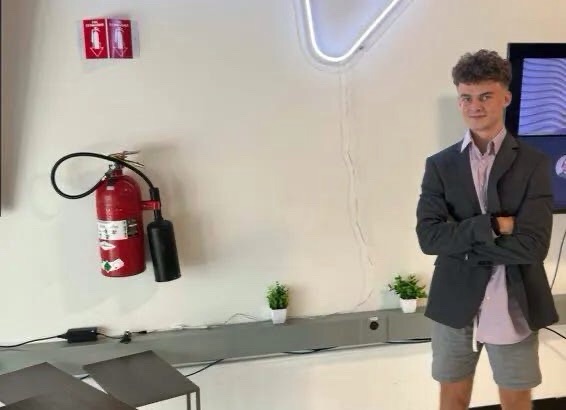
. . . or so says the U.S. government. Consider, for example, DOGE — the ironically-named Department of Government Efficiency, initially led by Trump buddy and noted rich guy Elon Musk — and its coterie of young, eager, inexperienced, tech-savvy but otherwise unemployable, right-wing extremist nut jobs. Like this kid:
DOGE Agent Edward “Big Balls” Coristine
At 19 years of age, with his high school education a whole year behind him, he has an impressive Wikipedia biography. He is described as being “known for his association with Elon Musk and DOGE, his youth and inexperience relative to his responsibilities with DOGE, and his vulgar nickname.” [Wikipedia, as of October 20, 2025.]
His list of “employers” — all in 2025 — includes DHS, FEMA, USAID, GSA, SSA — a sizable chunk of the Washington alphabet-soup bureaucracy. If true, then he has just taken job-hopping to an entirely new level.
He lists his political affiliation as — big surprise! — Republican.
Though he enrolled at Northeastern University in 2024, he is described as a “computer programmer and former engineering student.” He has also registered a number of startups in Connecticut, Delaware, and the U.K., one of which offers an artificial intelligence Discord bot (whatever that is) for the Russian market.
In 2022, he was fired from his internship at Path Network for allegedly leaking internal company information to a competitor. Yet he has been given access to the most confidential taxpayer information at the Social Security Administration and elsewhere.
He has an online content delivery network, called DiamondCDN, that reportedly facilitated the work of a cybercriminal group known as EGodly. In 2023, EGodly — which has proudly claimed involvement in email hacking, theft of cryptocurrency, and the harassment of a former FBI agent — thanked Coristine’s network, saying:
“We extend our gratitude to our valued partners DiamondCDN for generously providing us with their amazing DDoS protection and caching systems, which allow us to securely host and safeguard our website.” [Wikipedia, id.]
For someone not yet 20, “Big Balls” has been a busy boy.
And one other note: Under “Relatives” in his Wikipedia bio, he names just one: his maternal grandfather, Valery Martinov.
Wait . . . WHAT??!!!
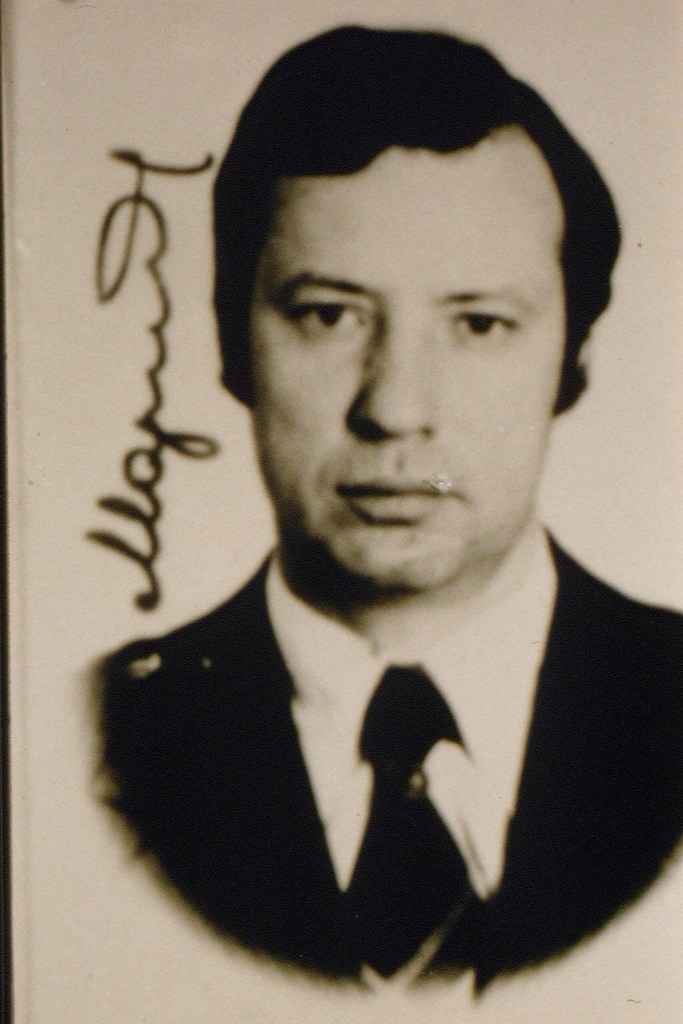
Surely, not this Valery Martinov:
KGB Lieutenant Colonel Valery Martynov(1946-87)
But yes, young Ed Coristine is the grandson of a former KGB officer who, while stationed under the guise of a third secretary in the Soviet Embassy in Washington beginning in 1980, was actually an intelligence agent for the KGB’s First Chief Directorate. In 1982, he was recruited by the FBI as a double agent — not for reasons of political ideology, but simply because he wanted the money in order to enjoy the material benefits of living in America.
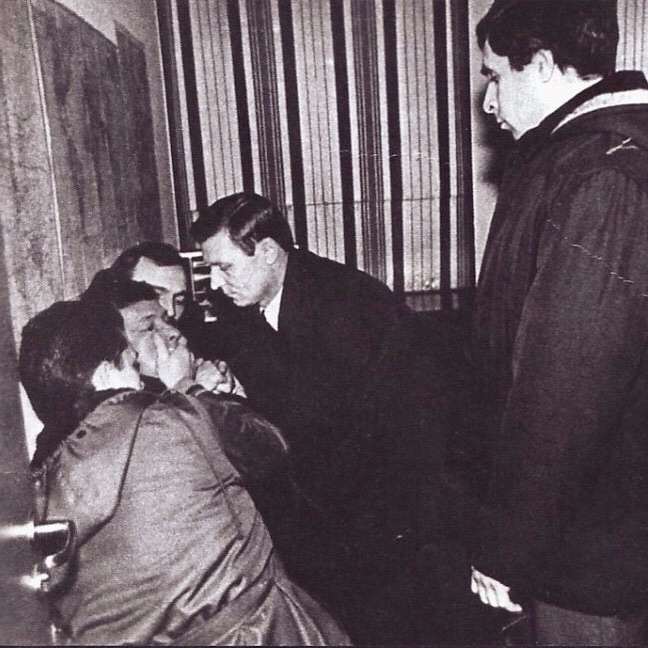
In 1985, he was betrayed to the KGB by CIA agent Aldrich Ames — who, as Martynov’s mirror image, had sold himself to the KGB — and was brought back to Moscow on a pretext and arrested upon arrival at the airport in Moscow. He was convicted of treason, and executed in 1987.
Arrest of Martynov at Sheremetyevo Airport, Moscow – 1985
(Note: Aldrich Ames was luckier. His spying spree continued for nine years, until he in turn was arrested in 1994 by the FBI in the U.S., where he is serving a life sentence in a federal prison.)
Following Martynov’s execution, his wife Natalia and their daughter Anna managed to return to the United States. How Natalia Martynova engineered their escape remains a mystery. I can only suppose that she was exfiltrated by the CIA to save her life and her daughter’s; but that is just conjecture.
In any event, young Anna Martynova grew up in the United States, and eventually married Charles Coristine, who is CEO of LesserEvil Snacks, purveyors of healthier popcorn, granola, and other snack foods. And young Ed — the DOGE wonder boy — is their son.
Charles Coristine
*. *. *
Whew! I know that’s a lot to follow; but it’s important because it points out how the so-called Department of Government Efficiency — charged with reorganizing practically the entire U.S. government — acquired its staff of chainsaw-wielding “experts.” They were tech-savvy, they were eager, and they wanted jobs that offered them a semblance of power and influence. No experience necessary . . . and clearly no vetting.
I do not believe the sins of the fathers (or grandfathers) should be visited upon the children. But surely, this young man’s unusual (to say the least) family background, combined with his own brief but checkered history, should have raised some red flags . . . that is, if anyone actually checked.
If I were the person in charge of hiring for DOGE, Ed would have been shown the door as a potential security risk. Instead, he got the job and came to Washington.
And in August of this year, he was badly beaten in an attempted carjacking in D.C., inspiring Trump in his militarization of the nation’s capital as a supposed hotbed of crime.
Coristine, though no longer with the greatly reduced DOGE, is said to still be working for the U.S. government. And it has even been suggested by a MAGA leader that he should receive the esteemed Presidential Medal of Freedom for his “bravery” — though that honor, which is the highest civilian award a citizen of the United States can receive, is reserved for people who have made “an especially meritorious contribution to 1) the security or national interests of the United States, or 2) world peace, or 3) cultural or other significant public or private endeavors.”
Now, if someone would please tell me what Ed Coristine’s contribution has been . . .
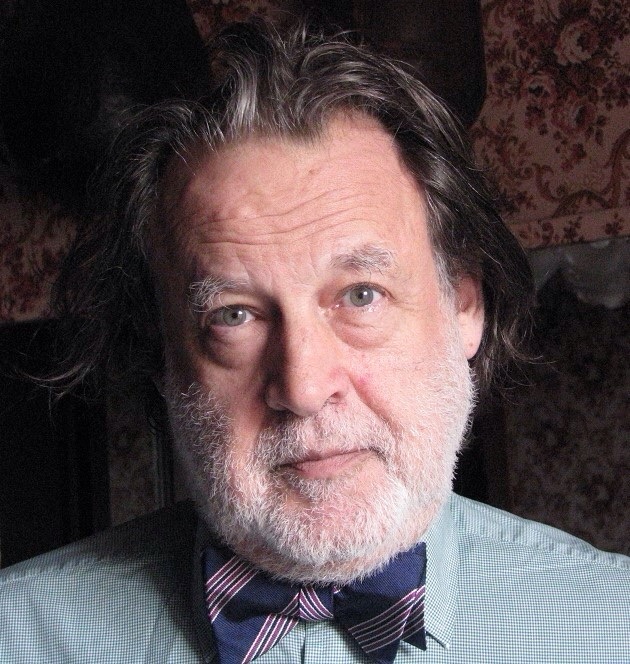
I received one of those pop-up “courtesy” messages from Amazon the other day — you know, the ones that start: “We’ve found something you might like . . .” This one was about an author whose books I’ve bought before, though not because he’s a literary giant; they were for research. This author is someone to whom I have a personal, though indirect, connection. His name is John Helmer, he is an Australian journalist, and he has lived and worked in Russia since 1989.
John Helmer
Never heard of him? I’m not surprised. He’s no John Grisham or J.K. Rowling; his books are non-fiction (more or less) on a variety of scholarly subjects, including quite a bit about Russia. But when I read that email from Amazon, it started me on a voyage of reminiscence, which led to some still unanswered questions, which in turn . . .
But I’m getting ahead of myself. So relax, dear reader, because this one may take a while.
No, no, no . . . not that relaxed!
Okay, that’s better. Now here we go:
Before relocating to Russia, Helmer didn’t just hang around Down Under. Having graduated from the University of Melbourne, he came to the United States and earned Masters and Ph.D. degrees in political science from Harvard. During his career, he bounced around the globe, and is said to have served at various times as an adviser to then President Jimmy Carter, and to Greek Prime Minister Andreas Papandreou.
And, according to retired KGB Major Yuri Shvets, Helmer was recruited by the KGB in the late 1980s, and allegedly passed classified information to the Soviets on the Iran-Contra affair, an upcoming bombing raid on Libya, and other sensitive matters. Shvets refers to him in his own book by the invented code name “Socrates.”
And that’s where I came in. While I had never met — or even heard of the existence of — John Helmer in 1993, I was all too-well acquainted with the aforesaid Yuri Shvets. That year, I was responsible for bringing Shvets and his colleague, retired KGB Colonel Valentin Aksilenko, to the U.S. to sell the book Shvets was writing about his years as a Soviet spy in the United States. Both men met with the FBI, and — with their wives and Shvets’ two sons — subsequently defected, and have lived in the U.S. ever since.
Yuri Shvets
But this isn’t about me; it’s about John Helmer.
Naturally, Helmer — having been outed as the alleged “Socrates” by Shvets in a “60 Minutes” interview in 1995 — denies the allegation of spying for the KGB. And his denial was backed up by one Viktor Cherkashin, who — as head of counterintelligence at the Soviet Embassy in Washington and the handler of one of the CIA’s most notorious turncoats, Aldrich Ames, in the mid-1980s — is hardly the most credible of witnesses. So whom should we believe: Shvets or Cherkashin . . . two men who spent most of their lives lying for a living? It’s a tough call.
But back to the present time.
As you may know if you’ve followed my writing — or if you simply read the news on a regular basis — Vladimir Putin is a man who does not take kindly to criticism of himself or his style of governing Russia. Thousands of dissidents — including vast numbers of journalists, broadcasters and bloggers — have been rounded up and imprisoned on specious criminal charges. Those opponents who have become too popular have simply been eliminated: Boris Nemtsov, Anna Politkovskaya, and Aleksei Navalny, to name just a few.
So how — I ask myself — has John Helmer survived for some 36 years as a foreign correspondent in Russia? Is it because he sweet-talks Putin, and toes the political line?
Possibly. But . . .
While his earlier journalistic output included articles on such disparate subjects as urban decay, illegal drug trade, and the Vietnam War; and as a reporter he specializes in coverage of Russian business for media in London, New York, Hong Kong, Toronto and Johannesburg; his recent books have taken an entirely different direction. Consider, for example:
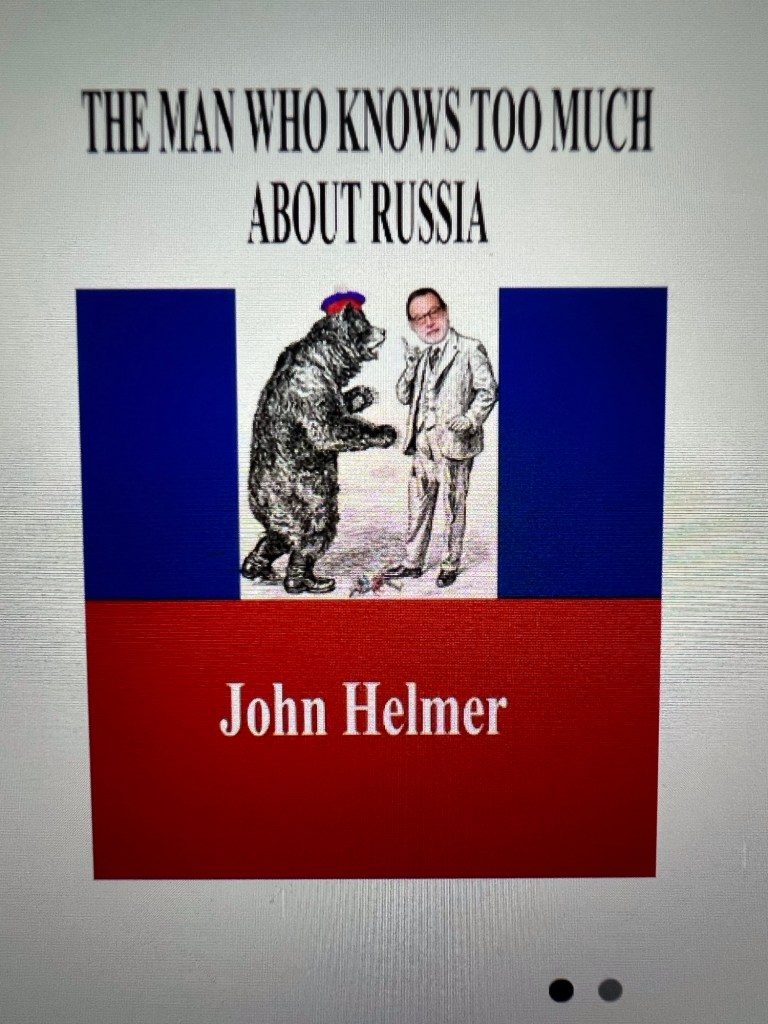
> The Man Who Knows Too Much About Russia(2018) — about his own alleged attempted poisoning by the KGB;
The Lie That Shot Down MH17(2020) — about the Malaysia Airlines flight shot down by Russian forces over Ukraine in 2014, though of course denied by the Kremlin;
> Sovcomplot: How Kremlin Pirates Tried to Capture the Treasure of the Russian Seas, and Were Caught Out(2020) — another tell-all about Russian government corruption and cover-ups;
> Skripal in Prison(2020) — about the poisoning of former Soviet/Russian GRU (military intelligence) agent Sergei Skripal and his daughter following his defection to the UK;
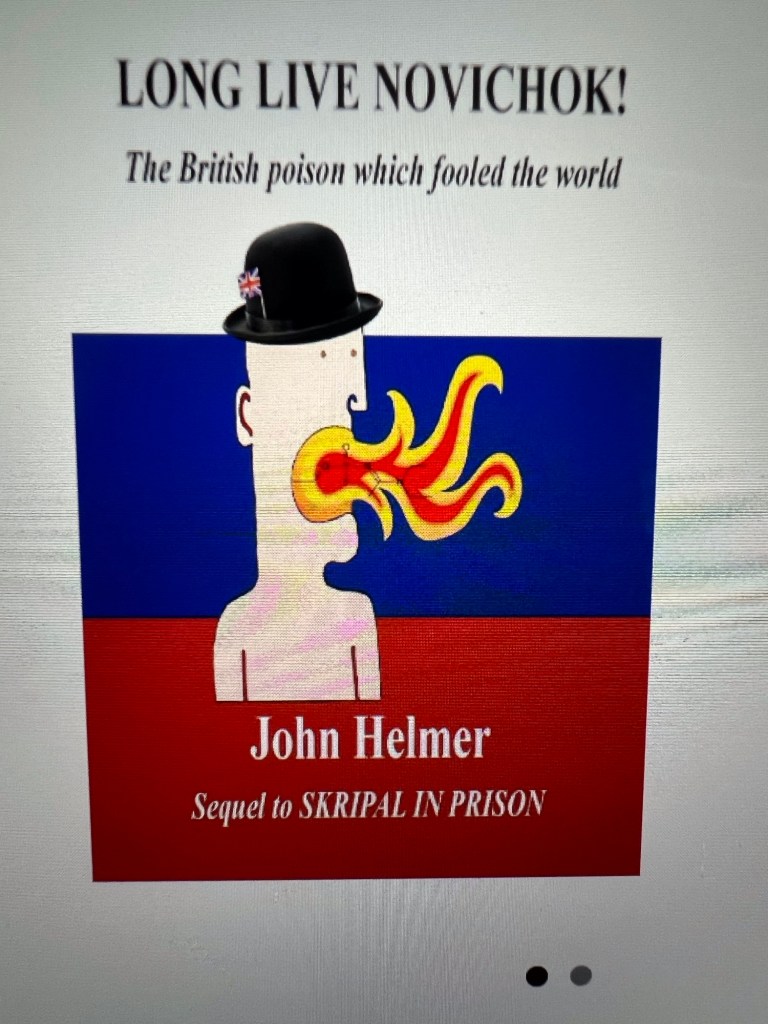
> Long Live Novichok! The British Poison Which Fooled the World(2025) — about the proprietary Russian nerve agent used to poison Sergei Skripal, Aleksei Navalny, and who-knows-how-many others.
I have not followed Helmer’s day-to-day work, and do not know whether he is routinely critical of Putin or the war — excuse me, the “special military operation” — in Ukraine. But those five books alone should, according to Putin’s normal standards, have landed him in a Siberian penal colony years ago. Yet, now approaching 80 years of age, he lives on in Moscow.
His Wikipedia biography describes him as “the longest-serving western correspondent in Moscow . . . specializing in the coverage of Russian business for media in London, New York, Hong Kong, Toronto, and Johannesburg.”
I have no axe to grind with John Helmer; as I said, we have never met. But there are just two degrees of separation between us (Yuri Shvets being the common denominator). And my curious nature — plus my background in Russian and Eastern European history, culture and politics — have led me to wonder about the reason for his longevity as a foreign correspondent in Russia.
Is it his marriage to his second wife, a Russian woman named Tatiana Vasilievna Turitsyna (about whom there is no readily-available online information)? Or does he have some simple secret to maneuvering within the system?
Whatever the answer, I imagine there are quite a few journalists in Russia who would like to know.
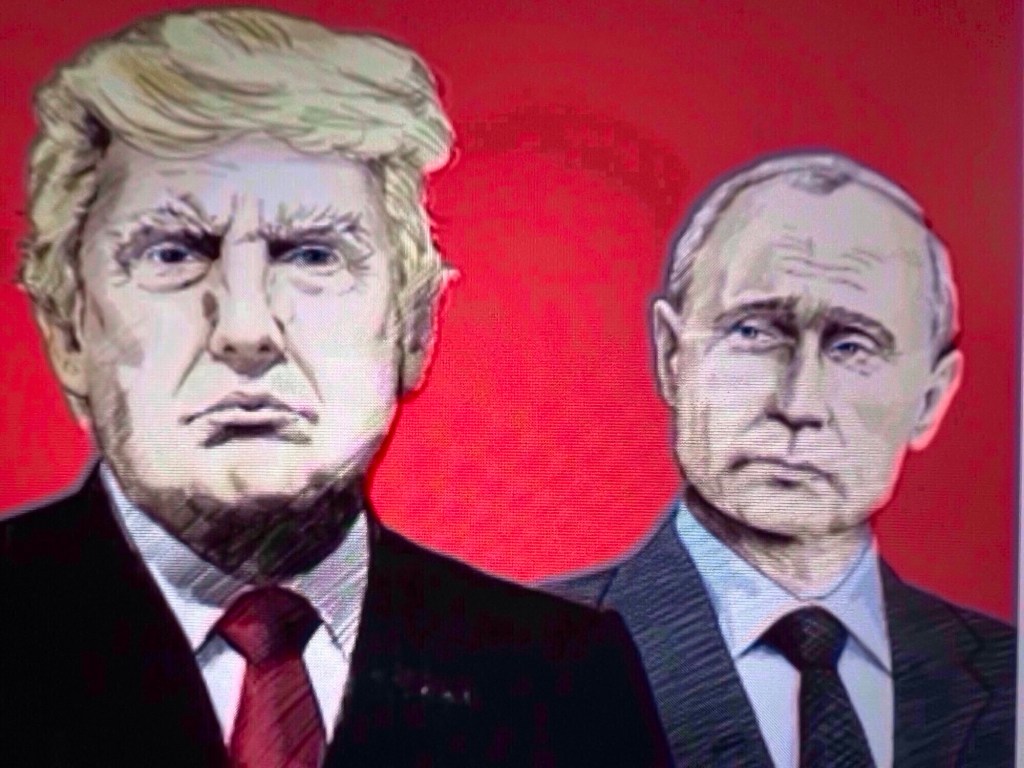
As we await word, either from the White House or the Kremlin, of an agreed date and place for the next meeting between Donald Trump and Vladimir Putin, bits and pieces of additional information emerge in various news items.
Yesterday, the Washington Post reported that, in the Putin-Trump phone conversation on October 16th, Putin — who instigated the call — reiterated his demand that Ukraine surrender full control of the Donetsk region as a condition for ending the war that Russia began with its invasion of February 24, 2022.
No compromise, no option, no discussion. Just a repetitious insistence that he be awarded something that is not his, in exchange for ceasing to do what he should never have done in the first place . . . and with no guarantee that he will never do it again.
While Trump has not publicly commented on the demand, neither has he categorically rebuffed it. Instead, he wrote on social media on October 17th:
“They [Russia and Ukraine] should stop where they are. Let both claim Victory, let History decide!” [RFE/RL, October 19, 2025.]
Am I mistaken, or does that sound like a man stepping back, finally acknowledging that he has failed to bring about the peace he promised within 24 hours of returning to the White House?
Someone needs to tell Trump that “History” doesn’t decide; it merely records what people have decided, and the after-effects of those decisions.
Stopping “where they are” now would mean giving Putin exactly what he wants: a chunk of Ukrainian territory, and free rein to continue his westward march through Europe.
In 2006, when Sarah Palin was Governor of Alaska, she backed a proposal to build a bridge to replace the ferry connecting the town of Ketchikan with Gravina Island — the location of Ketchikan International Airport and some 50 full-time residents. The cost of the bridge was projected at $398 million, exclusive of the requisite improvements to the surrounding infrastructure at both ends. The structure — nicknamed the “Bridge to Nowhere” — was never completed.
The Bridge to Nowhere
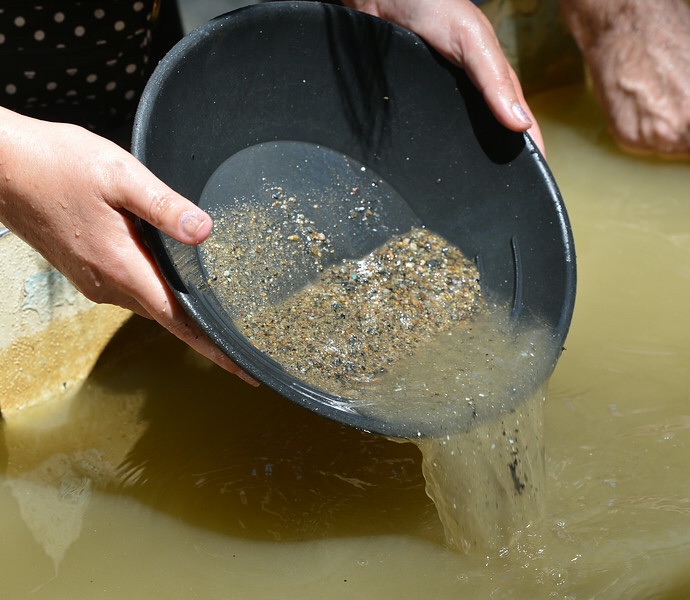
In the same year (just a coincidence), on a cruise along Alaska’s Inland Passage, one of our shore excursions included panning for gold in a stream near the site of a 19th-century prospectors’ camp. We knew the stream had probably been seeded with bits of gold to keep the tourists happy; but when I did find a couple of small flakes of the shiny yellow ore — even though it was worthless — I felt a little thrill of success.
Hope Springs Eternal
The same can sometimes happen as I read through the mountain of news articles each day: once in a while, amid all the repetition, there will be a nugget of detail that jumps out because it is different, and doesn’t seem to belong in that particular story . . . which is what happened to me yesterday.
I was reading an analysis of the current state of U.S.-Russia negotiations concerning the war in Ukraine, and what to expect from a proposed meeting to be scheduled between Vladimir Putin and Donald Trump, when my attention began to wane. But for some unknown reason, I continued reading to the end . . . and this is what I saw:
“Russian officials also appear to be preparing their own offerings to present to the US side in talks.
“Kirill Dmitriev, the head of Russia’s sovereign wealth fund, revived the idea of building a tunnel under the Bering Sea to connect Russia and the United States though [sic] Alaska and suggested that Elon Musk’s Boring Company build it.” [Zoriana Stepanenko and Reid Standish, RFE/RL, October 18, 2025.]
And I’m thinking:
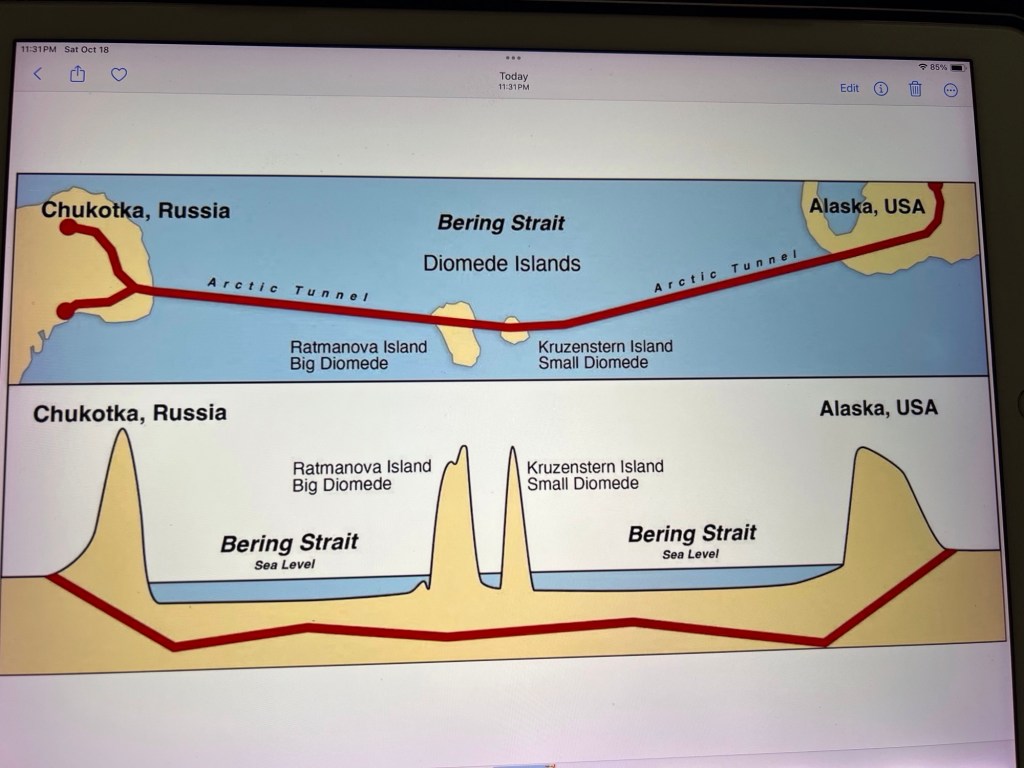
So I followed a link to another article, which told me that I was not losing my mind; a tunnel connecting Russia and America’s 49th state is a real proposal, masterminded by the head of Russia’s RDIF sovereign wealth fund, Kirill Dmitriev.
Dmitriev proposes that the two countries build a “Putin-Trump” rail tunnel under the Bering Strait to link their territories, open up joint exploration of natural resources, and “symbolise unity,” according to a Kremlin official. The 70-mile-long tunnel would cost an estimated $8 billion, to be funded by Moscow andunspecified “international partners,” and would be completed within eight years. [Andrew Osborn, Reuters, October 17, 2025.]
Graphic of Proposed Putin-Trump Tunnel
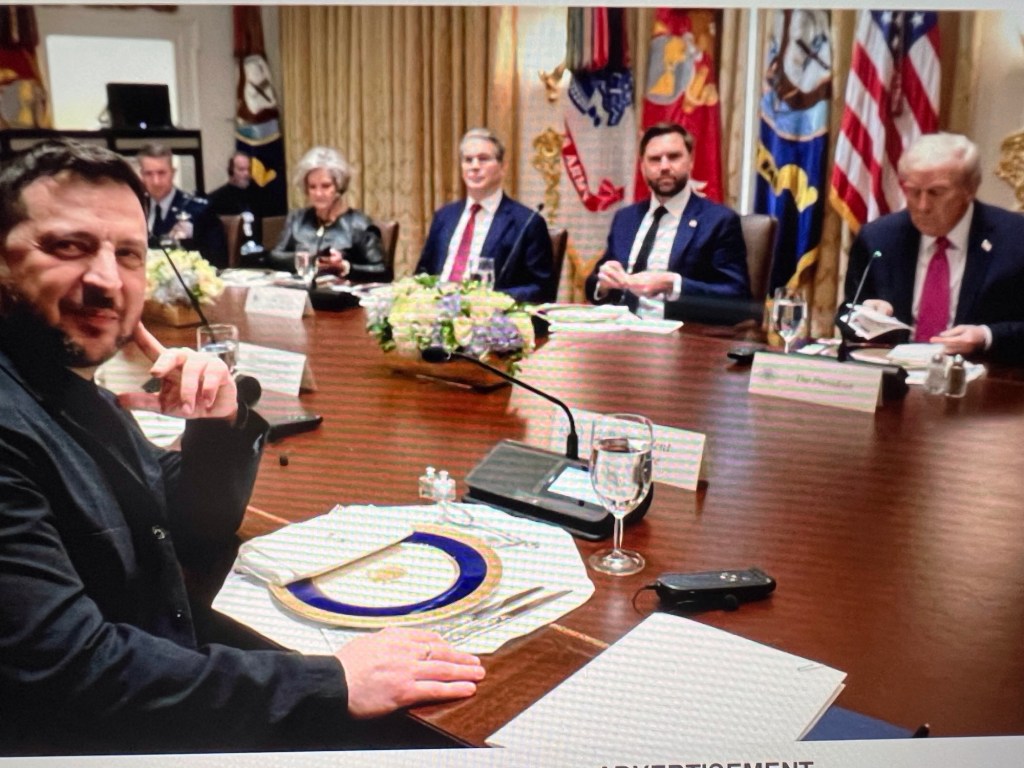
During the White House meeting with Ukrainian President Volodymyr Zelensky on Friday, October 17th, a reporter asked Donald Trump what he thought of the idea. He called it “interesting,” and asked Zelensky what he had to say about it. Zelensky’s response:
“I’m not happy with this idea.” [Id.]
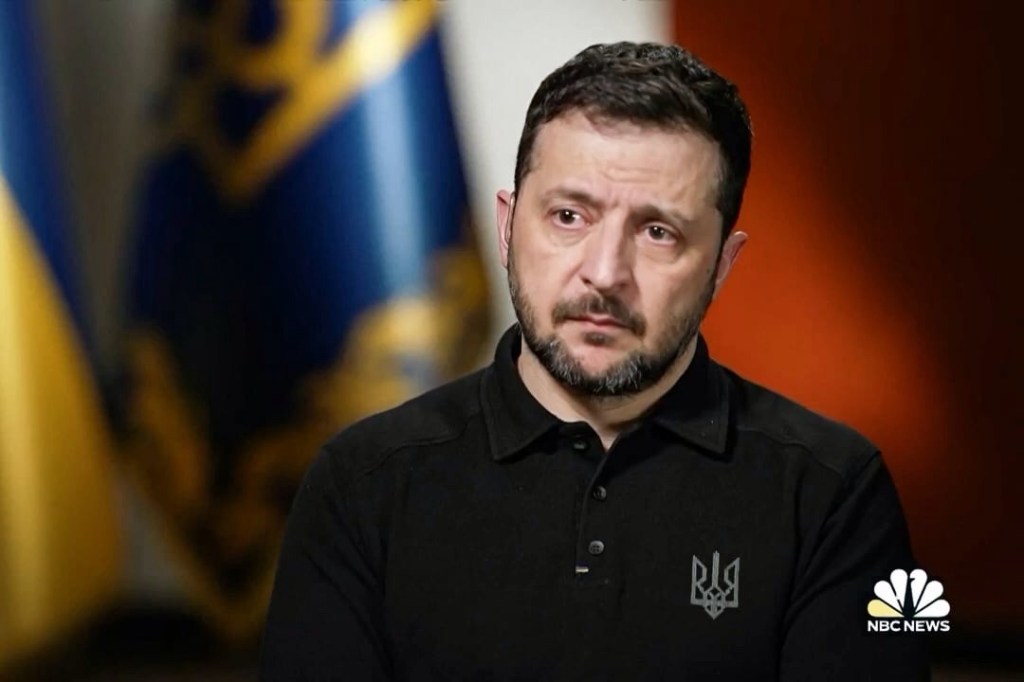
Apparently, this prompted a few chuckles from the U.S. side of the table. But somehow I don’t think Zelensky was trying to be funny. He was, after all, in Washington to plead for further help to save Ukraine from Russia’s onslaught — not to talk about building bridges (or tunnels) between his supposed ally and the very enemy that was trying to destroy his country.
Volodymyr Zelensky: Not In a Joking Mood
Seriously . . . what the hell was Trump thinking?!! With all of his alleged concerns about national security — already being carried to previously unheard-of extremes — could he seriously be considering giving Russia free access to our sovereign territory? Did he even notice the mention of financing from unnamed “international partners”? Or of his onetime BFF, Elon Musk?
But the foremost question in my mind is whether he simply hasn’t focused on the details as yet, or whether this has been part of his “trade” discussions with Putin all along.
Either way, it’s a truly frightening prospect . . . right up there with the Qatari Air Force training facility in Idaho.
But why stop there? Why don’t we just hand out keys to the Pentagon to all of our adversaries while we’re at it?
With the focus being on the good news of the Israel-Gaza hostage/prisoner exchange, the past week has brought no news of changes in the status of those political hostages still being held by Vladimir Putin and his allies.
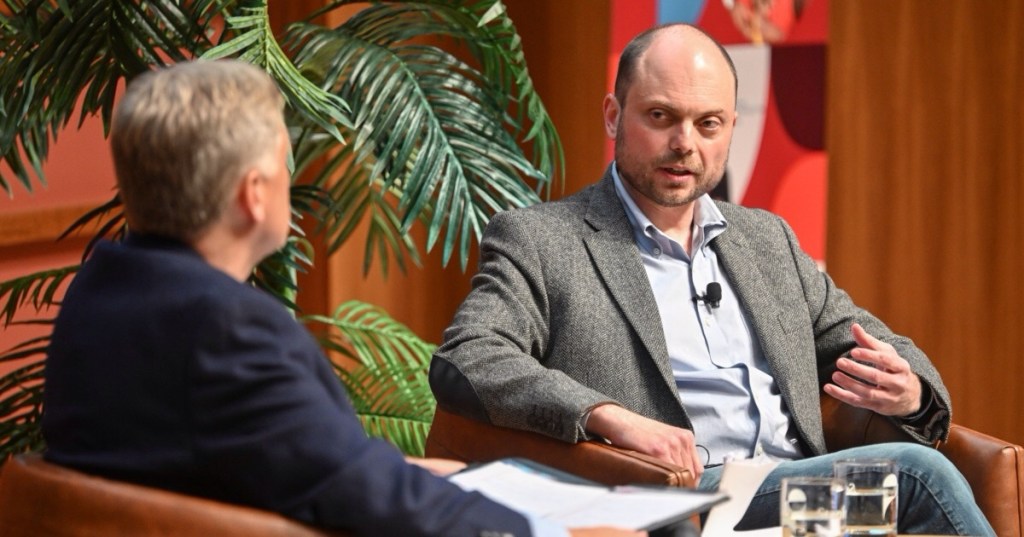
But there has been word from some of Putin’s former prisoners, including Vladimir Kara-Murza, who returned home as part of the multinational swap in August of 2024.
Vladimir Kara-Murza
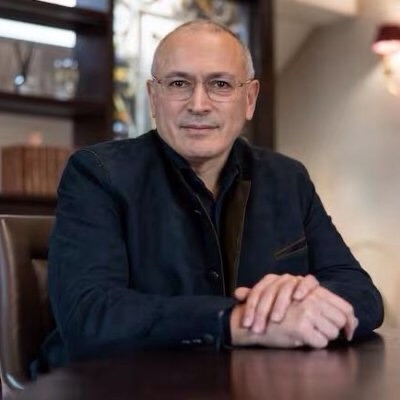
Kara-Murza and another former prisoner — Mikhail Khodorkovsky, who has been living in exile in London since his 2013 release following ten years in a Russian prison — have, along with others, formed the Anti-War Committee of Russia, whose manifesto states that its goals are to stop the war in Ukraine and to oppose Putin’s dictatorial regime. And as such, they are being investigated by Russia’s Federal Security Service (FSB, successor to the KGB), accused of having created a “terrorist organization” and plotting to seize power. These include former world chess champion Garry Kasparov, ex-Prime Minister Mikhail Kasyanov, and leading economists Sergei Aleksashenko and Sergei Guriev. [RFE/RL, October 14, 2025.]
Mikhail Khodorkovsky
In addition, the surviving members of deceased prisoner Aleksei Navalny’s Anti-Corruption Foundation (FBK), also in exile, continue to be a major thorn in Putin’s side. Led by Navalny’s widow, Yulia Navalnaya, they continue the fight for which her husband gave his life.
The Navalny Family – In Happier Times
*. *. *
Hopefully, the political prisoners still languishing in Putin’s prisons are aware that these groups, among others, are continuing the fight on their behalf.
And once again, here are the names of those prisoners known to me:
Immigrant Detainees in Russia:
Migrants from the Central Asian nations of Kazakhstan, Kyrgyzstan, Tajikistan, Turkmenistan and Uzbekistan
Prisoners of War:
The 19,500 Kidnapped Ukrainian Children The People of Ukraine
Endangered Exiles:
Mikita Losik Yulia Navalnaya Countless Journalists and Other Dissidents
Ales Bialiatski Andrei Chapiuk Marya Kalesnikava Uladzimir Labkovich Marfa Rabkova Valiantsin Stafanovic Yuras Zyankovich
In China:
Chenyue Mao (American)
In Russia:
David Barnes (American) Gordon Black (American) Antonina Favorskaya Konstantin Gabov Robert Gilman (American) Stephen James Hubbard (American) Sergey Karelin Timur Kishukov Vadim Kobzev Darya Kozyreva Artyom Kriger Michael Travis Leake (American) Aleksei Liptser Grigory Melkonyants Nika Novak Nadezhda Rossinskaya (a.k.a. Nadin Geisler) Sofiane Sehili (French) Igor Sergunin Dmitry Shatresov Robert Shonov Grigory Skvortsov Eugene Spector (American) Laurent Vinatier Robert Romanov Woodland (American)
Stay strong, and stay hopeful. You are not forgotten.
So . . . Donald Trump and Vladimir Putin are talking about getting together again, this time in Budapest. How nice!
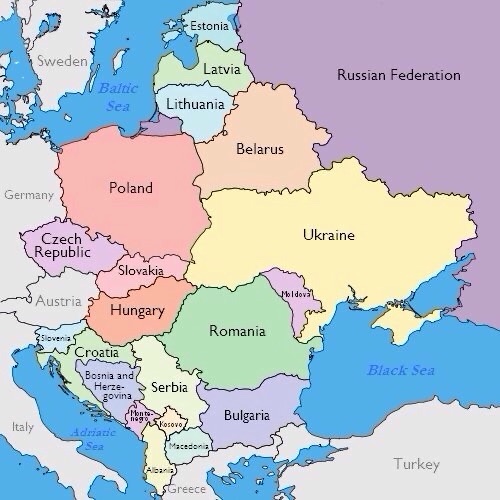
But political issues aside, there seems to be an even thornier problem for Putin: logistics. While the straight-line distance from Moscow to Budapest is far shorter than it was to Alaska, he obviously can’t fly across the entire east-west length of Ukraine without the risk of being shot down as an enemy aircraft.
Alternatively, his plane could fly across Belarus (no problem), but then through NATO airspace above Poland and Slovakia. And that is currently verboten.
Even the longer southern Black Sea route, through Bulgaria and/or Romania — both EU members — involves restricted airspace. So any way you look at it, special dispensation would be required from the involved EU states to temporarily lift the existing ban against Russian aircraft.
Clearly, all of these countries want the war against Ukraine to end, and the threat of Russian expansionism to be reduced. So it is likely that a solution will be found and permission granted for Putin’s “Flying Kremlin” to cross EU airspace at some point in order to expedite the plans for the meeting. But getting everyone onto the same page has to look something like the proverbial Chinese fire drill.
It’s amusing, really — but not to Putin. The situation points out the extent of his isolation from a large part of the rest of the world, which in itself should be an incentive for him to finally offer some concessions and end his bid to reabsorb Ukraine into Russia.
But for nearly four years, nothing has worked — not isolation, not tariffs, not freezing of Russian assets. Let’s see what happens this time in Budapest, or perhaps some other location . . .
. . . or, for that matter, whether there will be a meeting at all. This was, after all, Putin’s idea — including the choice of Budapest as the venue — and might be just another stalling tactic.
Well, I was wrong. But so were the experts this time.
The White House – October 17, 2025
Most people anticipated that Donald Trump would follow up on yesterday’s White House meeting with Ukrainian President Volodymyr Zelensky by calling Russian President Vladimir Putin immediately afterward. We did not imagine his talking to Putin first, ahead of the meeting.
In fact, however, that is what transpired. Trump wrote on Truth Social on October 16th that the phone conversation had already taken place — at Putin’s instigation — and said:
“We agreed that there will be a meeting of our High Level Advisors, next week . . . President Putin and I will then meet in an agreed upon location, Budapest, Hungary. . . . to see if we can bring this ‘inglorious’ War, between Russia and Ukraine, to an end.” [RFE/RL, October 16, 2025.]
Was I surprised at this? Actually, no . . . not surprised. I was flabbergasted!
We may never know precisely what was discussed between Trump and Putin, since neither of their versions is likely to be complete or reliable. But we do know, after the fact, that Trump is no longer hedging as to whether the U.S. will be supplying Ukraine with long-range Tomahawk missiles. The answer is a flat-out nyet — at least for now.
But the possibility has been left open for the future, likely as a cudgel to be held over Putin’s head pending the proposed bilateral summit in Budapest. According to Ilan Berman, Senior Vice President of the American Foreign Policy Council, leaving the issue open-ended is significant:
“The question now is whether it’s possible for the White House to put together a package of sticks that Russia will really respond to in a way that it hasn’t before. And I think that’s where the Tomahawks come in. My sense is that’s sort of what is animating the thinking. But I think both the president and his advisers are far less optimistic about Vladimir Putin being a constructive actor than they were six months ago.” [Ray Furlong, RFE/RL, October 18, 2025 CET.]
We are talking about the same Vladimir Putin, aren’t we?
Because it’s going to take some mighty big sticks to convince this Putin to give up any of his demands.
And there is this post from Trump on social media following his talk with Putin, in which — for perhaps the hundredth time — he said he believes “great progress was made with today’s telephone conversation,” and added:
“President Putin congratulated me and the United States on the Great Accomplishment of Peace in the Middle East, something that, he said, has been dreamed of for centuries. I actually believe that the Success in the Middle East will help in our negotiation in attaining an end to the War with Russia/Ukraine.” [Samantha Waldenberg, CNN, October 16, 2025.]
And when he had stopped patting himself on the back, he went on:
“We also spent a great deal of time talking about Trade between Russia and the United States when the War with Ukraine is over.”[Id.] [Bold emphasis is mine.]
And there it is — one big, fat, bright orange carrot on a stick for Vlad: Money.
In addition, Putin has — by means of a single phone call — once again bought himself a bit of time. We now await word as to the final arrangements for a bilateral meeting in Budapest . . . or anywhere. Even Trump indicated some uncertainty as to whether Putin was simply delaying again, though he didn’t say how long he will wait this time before once more losing patience.
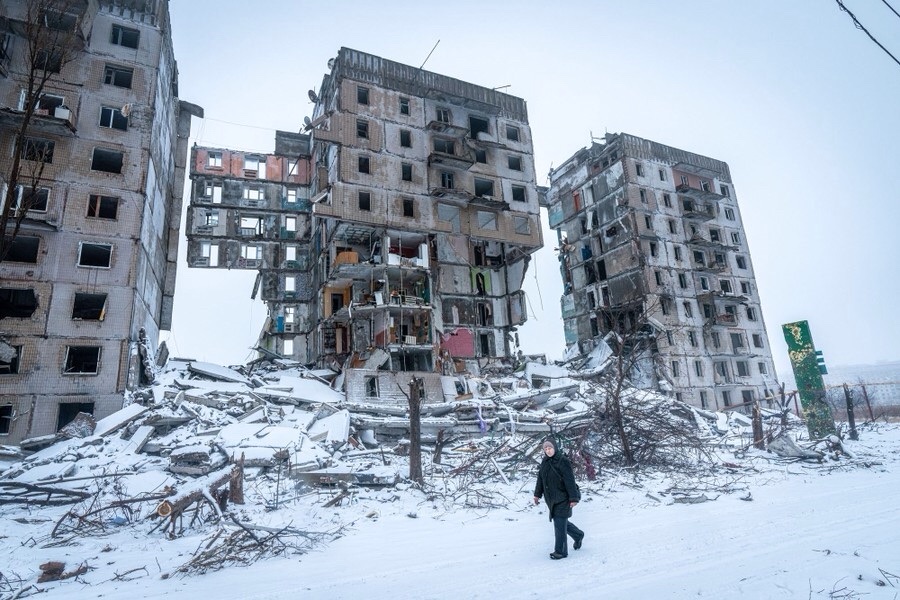
And in the meantime, Ukraine prepares for another long, cold, desperate winter.
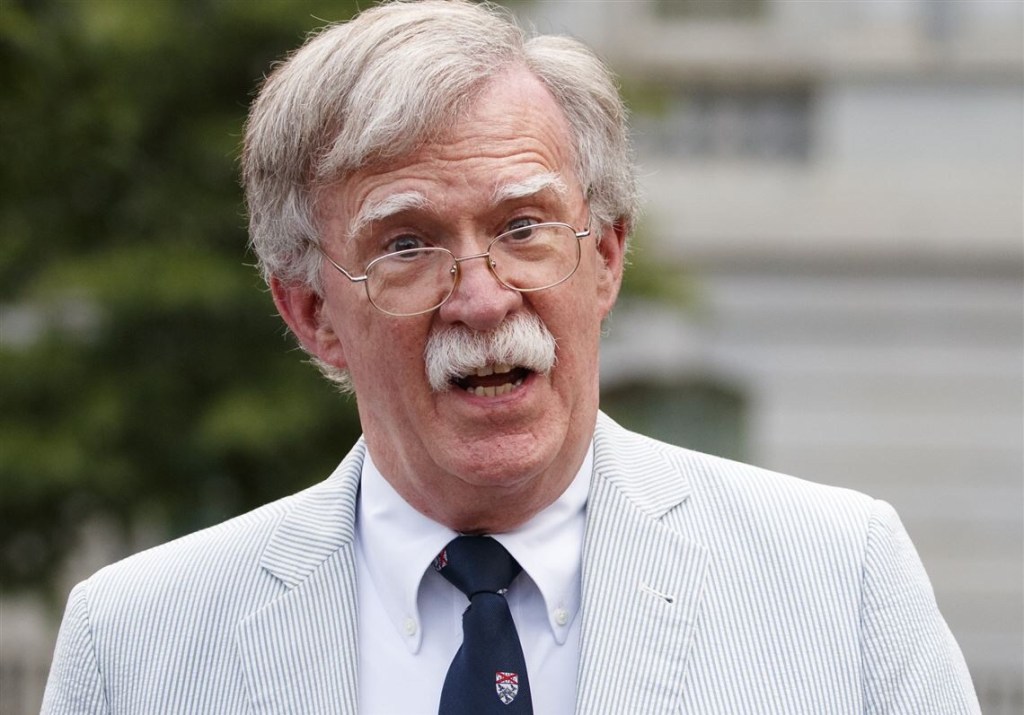
John Bolton, former national security adviser during Donald Trump’s first administration, has been criminally indicted on federal charges of allegedly mishandling classified information. The charges include eight counts of transmission of national defense information (NDI) and ten counts of unlawful retention of NDI.
John Bolton
Bolton is accused of illegally transmitting top secret U.S. defense information via his personal email and other messaging apps — charges that Bolton vehemently denies, and which eerily echo Trump’s past accusations against Hillary Clinton — that could result in a sentence of decades in prison if he were to be convicted on all charges. At his age, that would be tantamount to a life sentence.
Specifically, the indictment states:
“These documents revealed intelligence about future attacks, foreign adversaries, and foreign-policy relations.” [Ana Faguy and Aoife Walsh, BBC, October 16, 2025.]
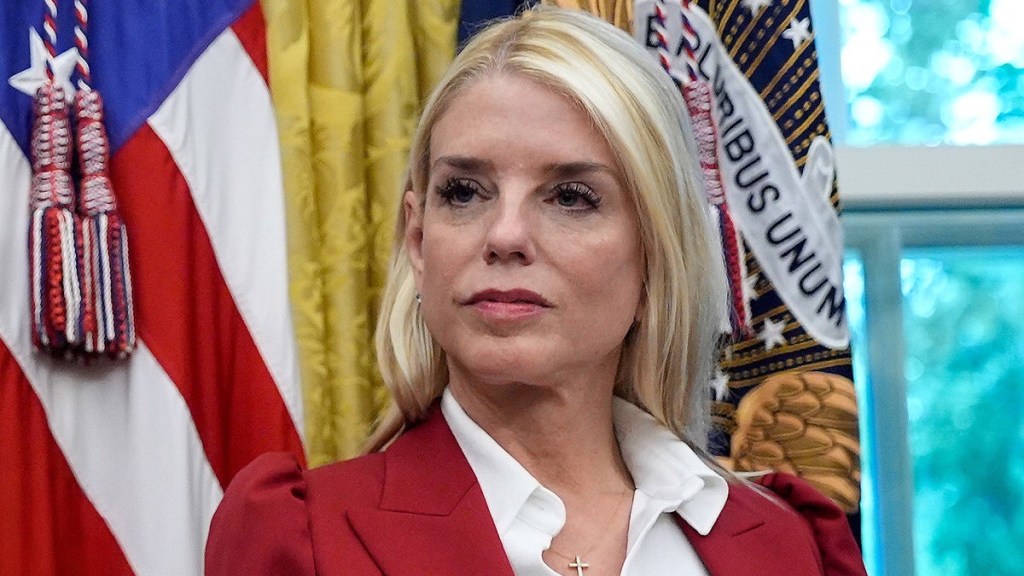
U.S. Attorney General Pam Bondi — Trump’s willing enforcer of his relentless attacks on his critics and perceived enemies — said in a statement that “No one is above the law.” [Id.]
Pam Bondi
What I find most difficult to comprehend is how the Trump team can possibly fail to see the irony — indeed, the completely transparent hypocrisy — in their every move and every word.
Do they really think we have forgotten the 40 counts of the indictment against Trump after he left office in January of 2021 with boxes of classified government documents that were later found at his Florida residence? He was charged separately under the Espionage Act for each of 32 documents; eight additional charges included making false statements and engaging in a conspiracy to obstruct justice.
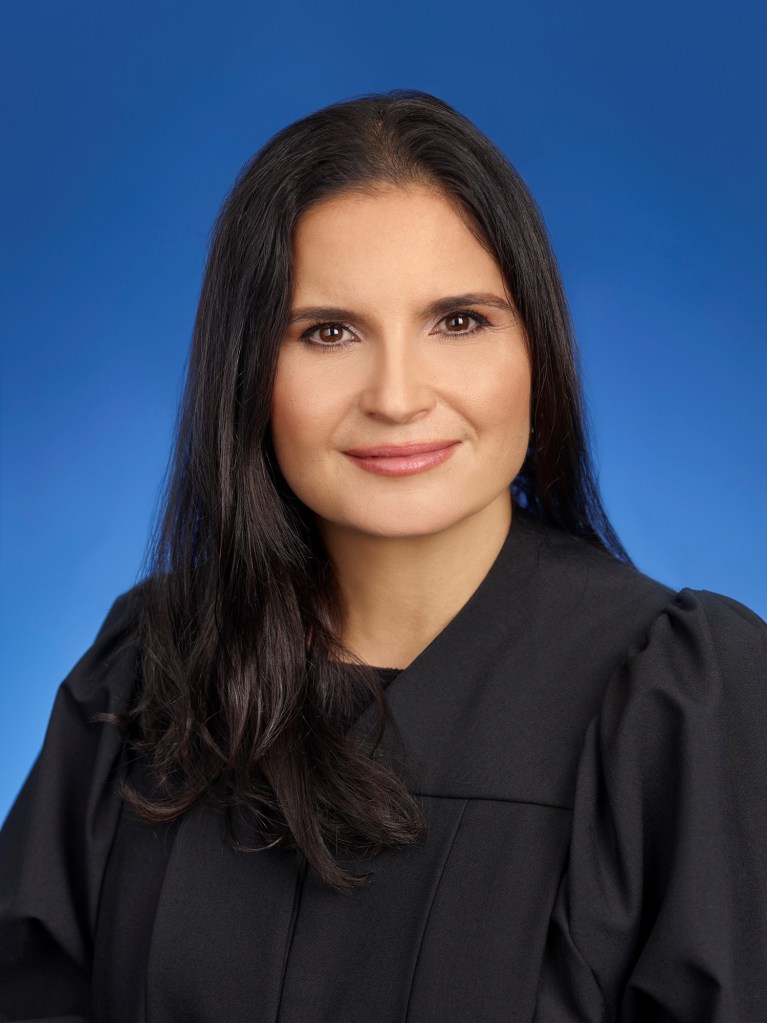
Despite special counsel Jack Smith’s prosecution of the case, it was dismissed in 2024 by Judge Aileen Cannon — a Trump appointee — who ruled that Smith’s appointment had been unconstitutional.
Trump — the original Mr. Teflon — walked. But “no one is above the law.”
Aileen Cannon
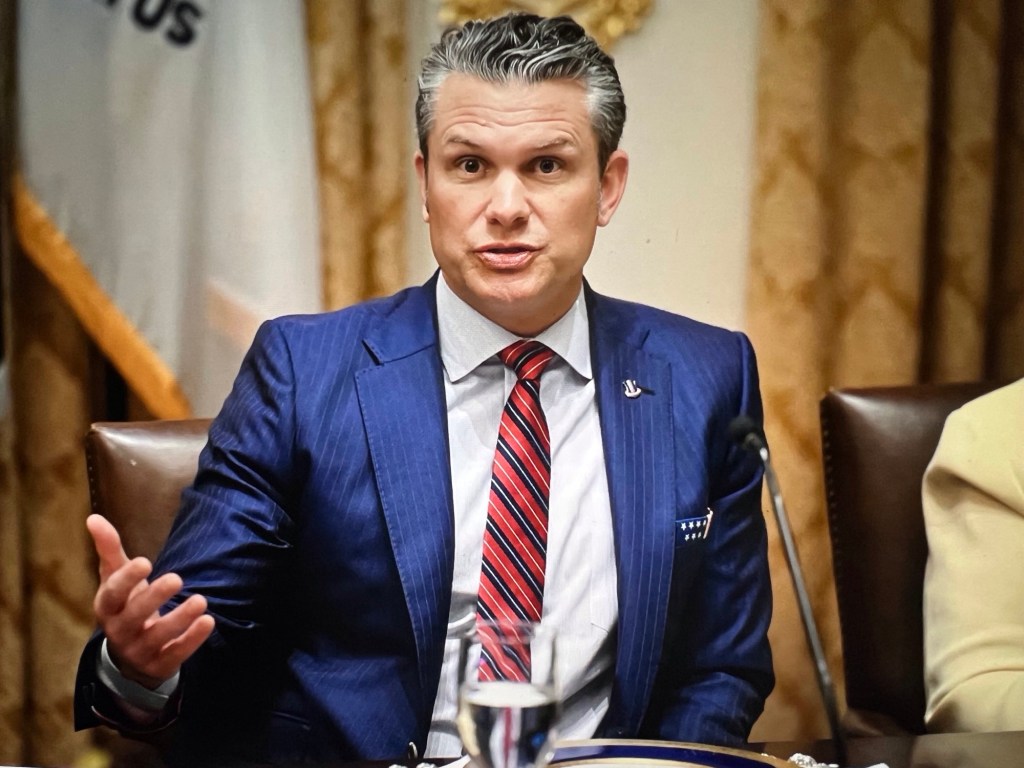
He and his minions also conveniently ignore the events of this past March, when The Atlantic’s editor-in-chief, Jeffrey Goldberg, was mistakenly included in a classified Signal group chat regarding detailed preparations for military operations against Houthi forces in Yemen. The call included, among other top members of the administration, Secretary of Defense Pete Hegseth and National Security Advisor Michael Waltz — Waltz being the person named as the coordinator of the call.
In fact, it happened twice. Was anyone charged, fired, or even reprimanded? No, they were not . . . because they were Trump’s people. But again, “no one is above the law.”
In fact, Hegseth’s comments to the press included this:
“Nobody was texting war plans, and that’s all I have to say about that.” He called Jeffrey Goldberg “a deceitful and highly discredited, so-called journalist who’s made a profession of peddling hoaxes time and time again. . . . This is the guy that pedals [sic] in garbage. This is what he does.” [Megan Forrester, ABC News, April 22, 2025.]
That, of course, would be in contrast to Hegseth’s own illustrious career at Fox News.
Pete Hegseth
*. *. *
“No one is above the law.” At least, that’s how it’s supposed to be, and how it always has been in this country . . . until recently. But it seems that now “the law” is whatever the guy at the top of the ladder says it is. And “no one” means anyone but him and his chosen few.
I had a routine doctor’s appointment in town today, and while I waited for my ride to arrive to take me home, I sat outside to enjoy the sunny, low-humidity fall day.
Normally, I might have pulled out my phone to check my emails or scan through Facebook. But today my eye was drawn to some nearby bushes that still had late flowers — small purple things, rather nondescript, with spiky leaves. I had no idea what they were; but a swarm of small yellow butterflies obviously did.
My ride was running late; but I was so enthralled by the simple sight of the dozens of yellow-winged creatures flitting from flower to flower, barely alighting on one before moving on to the next, that I lost track of time and forgot to be impatient. I watched their pollination ritual, as I came to think of it; gazed up at the blue, nearly cloudless sky; listened to the sounds of nearby traffic; and smiled in greeting at the people entering and leaving the medical building.
And — miracle of miracles — for a half hour I forgot about the world’s problems: the wars, the political infighting, and the natural disasters about which I normally spend far too much time thinking and writing. I was so lost in the moment, and so relaxed, that I was actually rather disappointed when my ride finally did arrive.
Later in the day, I looked for some information on my little butterfly friends, and found that they are indeed among the most common species native to this area. Symbolically, they represent joy, hope, good luck, and new life. And who doesn’t need more of that?
I have a feeling my dreams will be a little sweeter tonight.