In a world spinning out of control, it’s necessary now and then to yell “STOP!” . . . and focus instead on those occasional moments that make us smile, whether in appreciation of an act of human kindness, the sight of a child playing with a puppy, or someone doing something so incredibly crazy you just have to laugh.
And I found one of those hilarious moments in a short news item yesterday about an 81-year-old man who tried to drive his car down the famous Spanish Steps in Rome.
On the way down . . .
Luckily, no one was injured, but his car did get hung up on the lower end of the steep staircase.
Getting stuck . . .
The report didn’t say whether he was charged with a traffic violation, but his car had to be removed with the help of a crane. The elderly gentleman, who tested negative for alcohol, told officers that he was on his way to work . . . as though no further explanation was needed. Maybe that’s the way it is in Rome.
La fine(The End)
There’s no indication of why he chose to travel down the historic, pedestrian-only steps; maybe he was late for work and this was his idea of a shortcut. I have to give him props for still having a job and driving a car at his age, though his apparent lack of judgment makes me wonder whether he shouldn’t consider retiring soon.
In any event, I’m glad he’s okay.
[Story and screen shots from BBC.com, June 19, 2025.]
*. *. *
Then there’s the “weird but kinda cute” category of news story, about something called a “Labubu” — an elf-like little doll from China with a vinyl face and plush body, pointy ears, big eyes, and “a mischievous grin showing exactly nine teeth.” The name doesn’t mean anything, but refers to one of the characters in “The Monsters” toy series created by Hong Kong-born artist Kasing Lung. [BBC.com, June 19, 2025.]
A Litter of Labubus
For some reason, they seem to be all the rage now — and not just with children. Celebrities including Rihanna, Kim Kardashian, and some others I’ve never heard of are said to be collecting them.
I was going to say something snarky here about there being no accounting for taste; but then I remembered when I collected Beanie Babies . . . not for my children, but for myself. (I wish I’d saved them; they’d probably be worth a fortune now.)
A Bunch o’ Beanie Babies
And how many of you are old enough to recall those bright blue Smurfs, the incredibly ugly Cabbage Patch Dolls, and the spooky little Gremlins?
Smurf-o-Rama
Cabbage Patch KidsOne of the cuter Gremlins
Every generation has its silly obsessions, whether it be Hula Hoops, Barbie dolls, or Hot Wheels. They may seem like nothing but expensive clutter; but if they bring us or our kids a little joy, then doesn’t that make them worth something?
Remembering them certainly brought a smile to my face today. And we can all use a lot more of that.
According to his Wikipedia bio, Sergio Gor is Director of the White House Presidential Personnel Office. Reportedly born in 1986 in the Mediterranean island nation of Malta (though the Maltese government “cannot confirm” his birthplace), he emigrated with his family to the United States in 1999, attended high school in Los Angeles and George Washington University in Washington, DC.
Sergio Gor
Since college, he has worked for the Republican National Committee; served as a staff member for Congressional Representatives Randy Forbes, Michele Bachmann and Steve King; worked as an associate producer for Fox News, and as Deputy Chief of Staff for Senator Rand Paul. He was a top fundraising official for Donald Trump’s 2020 reelection campaign, and founded the pro-Trump super-PAC known as Right for America, which spent nearly $72 million during Trump’s 2024 campaign.
And now, as head of the White House Personnel Office, he holds enormous power. His position charges him with the vetting and hiring of around 4,000 Executive-branch staff members . . . which he accomplishes, in part, by “poring over old tweets, political donations and remarks to ensure loyalty to the president.” [Steven Nelson and Diana Glebova, New York Post, June 17, 2025.]
But doubt has arisen as to whether Gor himself has been properly vetted for his own security clearance. According to the New York Post, three administration insiders have said that Gor has not submitted his Standard Form 86, a document containing more than 100 pages of questions required for clearance. Among the bits of information to be provided are statements of where the applicant was born and whether they have any foreign connections. [Id.]
An inquiry to the Maltese government as to Gor’s birth date was responded to as follows:
“No acts are registered with the provided details.” [Id.]
White House counsel David Warrington of course claims that “Mr. Gor is fully compliant with all applicable ethical and legal obligations. His security clearance is active, any insinuation he doesn’t maintain a clearance is false.” [Giselle Ruhiyyih Ewing, Politico, June 19, 2025.]
Perhaps so. But where there are questions, there should be answers — answers supported by evidence. A copy of his completed application would suffice nicely, along with a copy of his birth certificate or U.S. naturalization documentation. That would certainly put the rumors to rest.
Sample SF-86
What is most intriguing, though, is that no one outside the White House seems to know who Mr. Gor really is . . . other than the inestimable Elon Musk, who knows him all too well. In fact, it appears that Mr. Gor may have been largely responsible for Musk’s sudden and hasty departure from the Washington political scene.
Musk reportedly refused to work with Gor after a Cabinet meeting in March, where Musk’s criticism of some Cabinet members’ agency cuts prompted Donald Trump to remind Musk that the agency heads — and not Musk or his DOGE cutthroats — had authority over their own departments. [Id.]
And the final blow for Musk may have come when Trump — at Gor’s urging — terminated the nomination of Musk’s pick of Jared Isaacman to head NASA. It was around that time that Musk packed up and left town, and the now-infamous name-calling marathon between Trump and Musk began.
That is a clear indication of the level of influence Gor has with Trump, and all the more reason that his legitimacy should be verified.
Now — while the former BFFs have called a truce of sorts — Musk has turned his attention (and his venom) to Gor, calling him a “snake” in a post on X, and raising the question of whether Gor has indeed been properly vetted for security clearance purposes.
So, are we in for another round of “boys will be boys” insults? Are Musk’s accusations of security breaches in the White House true, or merely guesswork fueled by spite? And does any of it really matter?
Well, yes, unfortunately it does matter . . . and especially if the absence of a proper security clearance turns out to be true. Because then a slew of other questions would arise, such as where Sergio Gor was actually born. If not Malta, then where? (Russia has been suggested by some, but without adequate substantiation.) Is that his real name? Is he actually a U.S. citizen? And if it turns out that he has been improperly acting in his position in the White House, then what about all of those persons he has been responsible for hiring? Are they all to be re-investigated, or even fired?
This could turn out to be a tempest in a teapot . . . or it could be a major headache for the Trump administration. Either way, let’s hope it gets cleared up, and not swept under an expensive White House oriental carpet.
War is hell. There doesn’t seem to be much doubt about that.
In today’s more “civilized” societies, however, even war has its rules, such as the humane treatment of civilians and prisoners of war.
But as we all know, there are those nations’ leaders who refuse to be bound by any constraints, or who simply deny that they are guilty of any infractions and continue on their merry way . . . intentionally targeting hospitals, schools, homes, and places of business; raping, torturing and killing civilians; and kidnapping children for “rehoming” and “reeducation.”
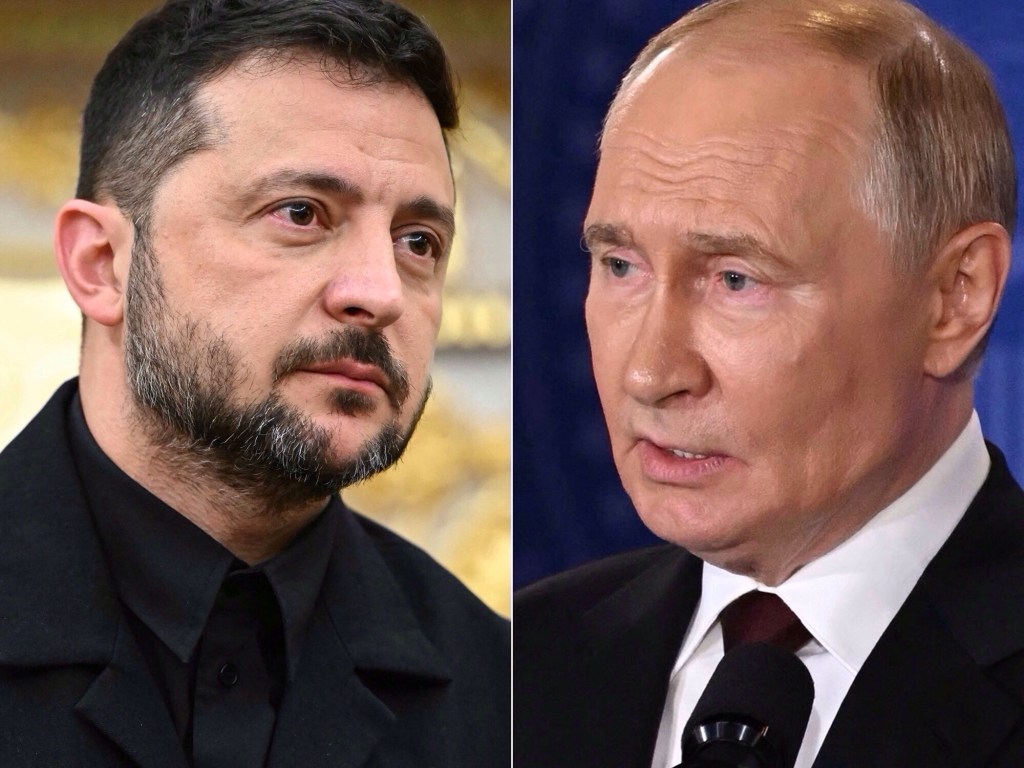
And just when we think humanity has sunk as low as it can possibly go, Vladimir Putin has come up with yet another horror to inflict on the victims of his war against Ukraine. In the course of an agreed-upon exchange of the remains of Russian and Ukrainian casualties, he has been sending back to Ukraine the mutilated and mixed-up body parts of their loved ones . . . and some that don’t even belong to them.
Bringing Them Home
Two peace talks in Istanbul on May 16 and June 2 failed to result in the hoped-for ceasefire or a path to peace. But one positive outcome was an agreement on repatriations and prisoner exchanges, which have been underway since then. The last stage of a deal to return the remains of more than 6,000 Ukrainian soldiers was completed on June 16th, when Russia sent the final 1,245 bodies (or 1,248, according to Moscow’s figures) back to their homeland.
But Ukrainian Interior Minister Ihor Klymenko has reported in a post on Telegram that it was discovered during the complex process of identifying the remains —which involves autopsies, DNA testing, and other procedures — that:
“. . . Russia is also deliberately making the identification process difficult for us. Bodies are returned in an extremely mutilated state, parts of [the same] bodies in different bags. There are cases when the remains of one person are returned even during different stages of repatriation. In addition, during the latest repatriations, the bodies of Russian soldiers were also transferred to us — mixed with the bodies of Ukrainians.” [RFE/RL, June 16, 2025.]
A request by RadioFreeEurope/RadioLiberty for comment from Russian officials has gone unanswered. [Id.]
Klymenko added that Ukrainian specialists “are working at the limit of what is possible” to identify the remains, and that “the biggest challenge is time. We understand the pain and the expectations of families. We are accelerating the identification process as much as possible. But with each large repatriation, it becomes more difficult to do this, and perhaps this is precisely Russia’s goal.” [Id.]
Searching for Answers
Imagine, if you dare, that you are a Ukrainian parent, spouse, sibling, or lifelong friend of a missing soldier, and that you have just learned that your loved one may have been returned home in pieces, lost in a jumble of mixed-up body parts. Or that you are a Russian citizen, also awaiting the identification of a family member, and you think there is a possibility that his remains may have been sent to Ukraine by your own government.
One would hope that, at best, this new horror is the result of overwork, inefficiency, and stupidity on the part of the Russian officials in charge of their side of the repatriation operation. But, as Minister Klymenko suggested, it might just as easily have been intentional.
If it was, it is unforgivably cruel, malicious, and ghoulish. It may also be a violation of the Geneva Conventions . . . although for Putin, that would be just one more war crime on his record.
“What . . . me worry?”
And to a person with no conscience, that’s not even worth thinking about.
A friend told me the other day that she is becoming physically ill from the stress and depression caused by the deluge of cataclysmic world events . . . a deluge that seems to go on, and on, and on, with no end in sight.
And a family member said yesterday that her way of dealing with it is to push it to the back of her mind and — even though she sees the headlines and is aware of what’s happening — she tries not to dwell on it by immersing herself in other things: her work, her children, her community.
Lying in bed last night, thinking about both of those women, I realized that I fall somewhere between the two: I feel the stress and the emotional debilitation, but I can’t turn away. In fact, I am that person who, when confronted with the most horrific sight — a train falling off the track, or a loved one breathing their last breath — cannot look away. I am unable to evade the truth, or to choose ignorance.
But neither will I allow reality, no matter how terrible, to get the better of me. I may be unable to change the situation; but neither will I let it destroy me. And since I no longer have the distractions of a job or small children to occupy me, I have found my own way of dealing with the ill effects of the world’s events: I write about them.
And it helps. That is why you see me here, endlessly expounding on subjects ranging from wars in foreign lands, to the disastrous excesses of the current U.S. administration, to natural disasters, to personal reminiscences, and sometimes even detouring into the odd bit of humor or whimsy. And each time another person reads one of my articles, I feel a little less alone in a world I can’t control.
So thank you, dear reader, for being there. You are my unseen support system.
Happily, Bob Woodward and Carl Bernstein are still around. But they’re older now, as we all are . . . no longer the two young, eager, junior investigative journalists who worked for the Washington Post in the 1970s.
And more’s the pity.
Woodward and Bernstein: Then . . .. . . and Now
Because this country has never been more desperately in need of the sort of fearless investigation and reporting we saw from the likes of that pair when they exposed the break-in at Democratic National Committee (DNC) headquarters in the Watergate complex on June 17, 1972 — 53 years ago yesterday.
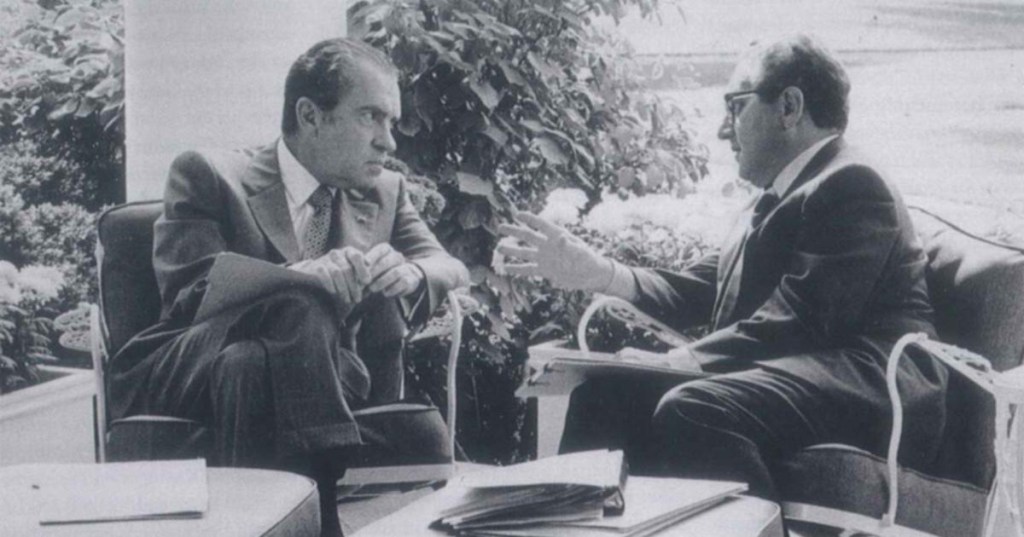
Their subsequent reporting, followed by their 1974 book titled “All the President’s Men”, broke open a web of corruption, lies and cover-ups that led to the downfall of the Nixon administration . . . proving to the world that in the United States, no one — not even the President himself — was above the law.
Former President Richard M. Nixon, leaving Washington for the final time
But that was then, when the media, the courts and Congress were free to do their jobs without fear of intervention, threats, or retribution.
Leaving the G7 summit in the western Canadian province of Alberta yesterday, Donald Trump said that his early departure was necessitated by an urgent meeting of the National Security Council in Washington concerning the rapidly escalating Israel-Iran conflict.
Leaders (L-R) of Japan, Italy, France, Canada, U.S., U.K., Germany Alberta Province, Canada – June 16, 2025
In his typically belligerent, “I am the boss” style, he wrote on social media that “Our patience is wearing thin,” and that
“He [Ayatollah Ali Khamenei] is an easy target, but is safe there [in hiding] – We are not going to take him out (kill!), at least not for now.”
“At least not for now” . . . ??!!!
Later, aboard Air Force One — he added, “I’m not looking for a ceasefire, we’re looking at something better than a ceasefire.” [RFE/RL, June 17, 2025.]
He also warned on his Truth Social site: “Iran should have signed the ‘deal.’ I told them to sign. What a shame, and waste of human life. Simply stated, IRAN CAN NOT [sic] HAVE A NUCLEAR WEAPON. I said it over and over again. Everyone should immediately evacuate Tehran!” [Id.]
Attempted Evacuation of Tehran – RFE/RL photo – June 17, 2025
A serious threat, for sure. But in a region — just in terms of modern times, and leaving out its ancient history — that has been in conflict since the creation of the State of Israel in 1948, is it really likely to be enough?
*. *. *
Unfortunately, Trump’s hasty return home caused him to miss the arrival of Ukrainian President Volodymyr Zelensky . . . although popular opinion is that it would not likely have been a happy meeting, in view of Trump’s recent statement that the former G8 had been wrong in ejecting Russia following its 2014 annexation of Crimea. Trump called it a “big mistake,” and said he believes Vladimir Putin’s 2022 invasion of Ukraine would never have occurred had the G8 not taken that action eight years earlier.
Trump then added:
“Putin speaks to me. He doesn’t speak to anybody else. . . . He’s not a happy person about it. I can tell you that he basically doesn’t even speak to the people that threw him out, and I agree with him.” [Id.]
Well, of course he agrees that Putin shouldn’t be speaking to the other G7 members. That positions Trump as the sole interlocutor between Putin and the others, affording him the sort of control he thrives on.
Clearly, the newest Middle East conflict hasn’t made the Russia-Ukraine war go away . . . and with Putin’s continued stalling, and his increasingly devastating attacks on Kharkiv, Kyiv and elsewhere, that’s not going to happen in the immediate future either.
*. *. *
It all makes me wonder, not for the first time, why anyone would ever want to be president. But then, I’m not a power-crazed tyrant.
In the hilarious 1981 film, History of the World, Mel Brooks famously boasted, “It’s good to be the king.”
Mel Brooks in “History of the World” – 1981
But I’m thinking that today, in 2025, it must be lonely as hell . . . unless, of course, standing by yourself on top of a rubbish heap is your idea of happiness.
One hundred forty years ago today, on June 17, 1885, the Statue of Liberty arrived in New York Harbor. A gift of friendship from the people of France, her 350 sculpted pieces of copper and iron had been packed in more than 200 cases, to be reassembled and dedicated the following year.
And there she has stood, for nearly a century and a half, proudly proclaiming the freedom and hope she has offered to the millions of people throughout the world seeking a better life for themselves and their future generations.
She has been a symbol of the greatness of a nation that was built by the hands of refugees from every continent except Antarctica . . . immigrants without whom there would be no America of today.
Let us pray that she will still be there, proud and tall and welcoming, four years from now . . . and not bowed down in the shame and despair of failure.
The “big, beautiful parade” in Washington on Saturday was sufficiently horrifying to remind me of my one and only encounter with a military deployment in that city, more than five decades ago. (I realize I’m giving away my age here, but what the hell . . . there’s no denying it any longer.)
It was early April, 1968. Martin Luther King, Jr., had been assassinated in Memphis, Tennessee, on April 4th, sparking race riots and other civil disturbances in more than 100 cities across the United States. The most violent of these occurred in Chicago, Baltimore . . . and Washington.
7th ad O Streets, N.W., Washington, DC – April 1968
For four days, predominantly Black neighborhoods in the city were subjected to rampages of arson, looting, and general destruction — far too widespread for the D.C. police to handle on their own. President Lyndon Johnson had no choice but to call in the National Guard to assist in the defense of the federal jurisdiction. When it was over, 13 people were dead, around 1,000 more injured, and over 6,000 had been arrested.
On that Friday evening, April 5th, I sat in the top-floor apartment of friends across the Potomac River in Arlington, Virginia, with the most morose group of people I had ever encountered outside a funeral parlor. For hours, we sat, barely speaking . . . just getting quietly drunk as we watched the glow of the burning areas of the capital city on the other side of the river.
I lived in a Virginia suburb, and was safely removed from the danger as long as I didn’t go back to work in D.C. But it was the weekend, and we were all certain the worst would be over by Monday. I just hadn’t counted on my sister’s problem.
She was living in an apartment in D.C., in a “safe” neighborhood. But there was one part of her routine that she was adamant about not breaking, and that was her regular Saturday appointment with her hairdresser . . . whose shop was in Alexandria, Virginia. She didn’t own a car — in fact, she didn’t drive at all — so she regularly rode the bus back and forth. But a curfew had been instituted, as I recall, for 5:00 p.m., so she expected to be home in plenty of time, and off she went. Then, at nearly 2:00 p.m., the D.C. authorities moved the curfew back to 3:00 p.m., and the buses stopped running into the city.
And now you’re thinking: No problem. She could just stay with me . . . right? Ordinarily, that is exactly what we would have done. But, on that weekend of all weekends, she had a friend from California staying with her, who was now alone in the apartment in D.C. My sister had to get home.
So of course, she called the one person she knew who was crazy enough to say yes. At 2:00 p.m., I jumped into my Chevy Corvair — a cute little car that got great mileage but wasn’t built for speed — and headed for the Capital Beltway, the fastest way to get from one part of suburban Virginia to another without worrying about stop lights. As I drove, I was listening to the news on the radio, thinking only of how long it would take for each segment of the trip, and calculating how much time I would need to get back over one of the bridges into Virginia before curfew.
You see, I had left my two children, then ages 4 and 2, with my mother, and couldn’t get stuck in D.C.
When I noticed that all the other cars on the highway seemed to be standing still, I took my eyes off the road for a second to glance at the speedometer and saw that — holy crap! — I was doing 90 m.p.h. In a little Corvair. On a 60-m.p.h. road. What a great little car she turned out to be.
I slowed down a little, but not much, until I reached my exit from the highway. When I got to the beauty salon in Old Town Alexandria, my sister was waiting. But there was another problem: I was low on gas. There was also a curfew in place on the sale of gas, presumably to prevent the rioters from stocking up for their Molotov cocktails, so I had to find a station on the Virginia side. That done, we headed for town.
Traffic going into the city was understandably light, so I got her home safely, watched while she went inside, and looked at my watch. It was 2:35 p.m., so I had 25 minutes to make it to the closest river crossing, which was the Memorial Bridge. No problem.
I headed south on New Hampshire Avenue, which would take me to Washington Circle, where I would then pick up 23rd Street directly to the Lincoln Memorial and Memorial Bridge. So far, so good. And then, suddenly, there they were.
Headed north on New Hampshire Avenue, coming toward me, was something I had never seen before: a convoy of military vehicles — no tanks, but a half dozen or so heavy-duty trucks and jeeps. It was like a scene from an old war movie . . . something that would have seemed in place in a European city, but not here. And as I continued to move slowly forward, the lead jeep suddenly made a sharp left turn directly into my path . . . and stopped dead, blocking my southbound lane.
What the hell? It was now 2:40 p.m., and I was immobilized. I saw a young soldier, carrying a rifle with fixed bayonet, leave the jeep and begin walking toward my car. He couldn’t have been more than 19 or 20 years old, and he looked scared to death. But he followed orders, walked over to my car as I rolled down my window, and said, “Excuse me, ma’am. Do you know there’s a 3:00 curfew?”
“Ma’am”? Did he just call me “Ma’am”??!!! I wasn’t much older than he was.
Putting aside the fact that this boy had just aged me ten years, I looked at him and saw that he had absolutely no idea what he was supposed to do. So I took mercy on him, and answered as gently as possible: “Yes, I know that. That’s why I’m trying to get back to Virginia before then. That’s where I’m headed now.”
Silence. He didn’t know what to do next, and the clock was ticking. Then I noticed movement to my left, and saw a D.C. police officer walking toward the car. He appeared to be around 40 years old, experienced, and calm. He asked what the problem was, and since the young soldier had obviously been struck dumb at some point, I answered, explaining that I had just driven my sister home and was headed back to Virginia before curfew.
The nice officer turned to the soldier — who, of course, was still clinging to his rifle, apparently for support — and said, “Son, you’re supposed to stop people coming into the city, not leaving it. Now, why don’t you move that jeep and let her get home.”
And that seemed to snap the younger man back into consciousness. The jeep was inched back just far enough for me to squeeze through, I thanked the police officer (my guardian angel) profusely, and made a beeline for the border. It was now 2:45 p.m.
Bottom line: I was not only out of D.C., but all the way home, by 3:00 p.m. I didn’t bother to check the speedometer along the way.
Chevy Corvair: Small But Mighty
*. *. *
That was a time of legitimate need for National Guard reinforcements: massive, violent riots in the federal city of Washington, D.C., the nation’s capital. Not localized, contained demonstrations in Los Angeles; and not the wholesale roundup of peaceful foreigners from their homes, schools, and workplaces around the country.
And not a Red Square-style display of military might tearing up the surface of Pennsylvania Avenue for a little boy who always wanted a parade for his birthday.
Comparing the situations does rather put things into perspective, doesn’t it?