Suppose, for a moment, that Kim Jong Un were to begin blasting American boats out of international waters because he suspected they were trying to smuggle narcotics into North Korea.
Kim Jong Un
Or that Xi Jinping decided that Memphis, Tennessee, which currently has the highest rate of violent crime in the United States, should be bombed off the map in order to get rid of its Hamas-style criminal gangs . . . and then declared that China would take over the territory and turn it into a Riviera-style resort.
Xi Jinping
Or that, say, Canadian Prime Minister Mark Carney decided that his country needed to take possession of the United States for security reasons.
Mark Carney
Or that Vladimir Putin sent undercover agents to the U.S. to interfere with our elections and destabilize our government because . . .
Oh, wait . . . that’s not hypothetical; that actually has happened. Never mind.
But you get my point, which is that Trump would never sit back and let another country’s leader attack our citizens or appropriate our territory without staging one hell of a retaliation — just as Ukraine has defended itself for nearly four years against Russia’s invasion of its land.
So what in the name of all that’s holy makes Trump believe that he has the right to commit those very crimes against others?
. . . to blast boats from Venezuela or Colombia out of international waters because they may be smuggling drugs into the U.S.?
. . . to allow Israel to continue demolishing Gaza for two years in retaliation for an attack by the terrorist Hamas group . . . and then to tell the Palestinians that it is no longer their land?
. . . or to tell Canada, or Greenland, or any other country that they should hand over their property to him because he wants it?
Well, all right — that’s a slight exaggeration. There’s still Mar-a-Lago, an equally gaudy penthouse in New York, and who-knows-what-other residences she may share with that guy she married all those years ago when she was a young emigre in search of U.S. citizenship.
But First Lady of the United States Melania Trump is, officially and quite literally, without office space for herself and her staff of five. The East Wing of the White House — a portion of it first used as a base of operations by Eleanor Roosevelt, and later officially designated as the Office of the First Lady by Rossalyn Carter — has been demolished.
What’s left of the East Wing
In most marriages, taking away the wife’s private domain — be it an office, a sewing room, or the kitchen — would be grounds for divorce. But a First Lady doesn’t just pack a bag and walk out the front door . . . or, better yet, throw hubby’s clothes out the window and change the locks. And if hubby also happens to be an all-powerful megalomaniac and pathologically vindictive . . . well, you can see her problem.
Thus far, Mrs. Trump has remained silent on this startling new development. Some have said it’s because — as also evidenced by her recent absences from the public eye — she doesn’t really care what her husband does, or how this particular action will affect future U.S. First Ladies. But I’m not so sure about that.
From 1937 to 1954, there was a radio program eponymously called “The Shadow,” about a crime-fighting vigilante whose identity was never revealed. The opening line of each program — initiated by the great Orson Welles — was this:
“Who knows what evil lurks in the hearts of men? The Shadow knows!”
. . . followed by a rather ominous, deep-throated laugh.
In the present-day White House, Melania Trump would be the most likely person to know the answer to that question . . . and many others. And maybe it’s not that she doesn’t care. Maybe she’s just smart enough to keep her mouth shut.
Ninety-six years ago today, and over the following three days, the Dow Jones Industrial Average dropped a total of 25 percent, from 305.85 to 230.07 points, ushering in the decade of the Great Depression. Thousands of major investors lost billions of dollars, due — in the simplest of terms — to a combination of rampant speculation, excessive debt, and an overvalued market. (If they thought that was overvalued, I wonder what their reaction would be to today’s numbers!)
The Great Depression
The Depression lasted for ten years, from 1929 to 1939. In what we would today call a perfect storm, it coincided with the Dust Bowl of the 1930s — a disastrous, prolonged drought in America’s agricultural heartland that wiped out thousands of farms and farm families.
The U.S. economy was finally revived by President Franklin Delano Roosevelt’s New Deal, and by the industrial upsurge necessitated by the onset of World War II.
Franklin Delano Roosevelt
One of the few memorable things to come out of that era was a popular song called “Brother, Can You Spare a Dime?” For those who have never heard of it, here is just the first verse:
Once I built a railroad, made it run, Made it race against time. Once I built a railroad, now it’s done. Brother, can you spare a dime?
There are a lot of Americans scrounging for coins now, nearly a century later . . . but for different reasons. And it’s not the wealthy who have lost their fortunes. The stock market is high; individual industry and business leaders are raking in billions; and the White House is getting a new 300 million dollar ballroom and a “free” Qatari Boeing 747-8 jet plane that will cost an estimated 500 million to a billion dollars to retrofit for use as Air Force One.
Rather, it is this century’s everyman who is suffering: losing jobs, insurance benefits, educational opportunities, access to proper health care — all of the basic necessities of life that have always been the reward for years of honest work and paying their fair share of taxes.
There is no Depression to blame today. There is, instead, an oligarchy; a theft on a scale so monumental it defies description; a redistribution of the wealth from the millions of honest workers into the hands of the greedy few . . . the “Robber Barons” of today.
People are angry, frightened . . . and depressed. And this depression is different from the Great Depression. In the 1930s, people pulled through the difficult times by working together and helping each other. But our 21st-century society is already so divided, so fragmented, so distrustful, and so politically contentious that it’s impossible to envision our ever replicating the sort of unity that brought this country out of those earlier times of trouble. And there is no Franklin Delano Roosevelt to pull us out of this one.
To top things off, just when we could all use the services of a good psychiatrist to help us deal with the pain, we can’t afford one because our insurance — if we still have insurance — won’t cover it.
I was not alive during the Great Depression. But from what I’ve read, and stories that I heard from my parents, I think — given a choice — I would prefer that one to what we are seeing now. Because our country was united then, and it was still a democracy — led by a man who, though himself wealthy, cared more about his country and its people than himself.
FDR led us out of the Great Depression, and safely through the horrors of World War II. Who is there to guide us through this one?
Tonight I will light a candle for you: my big sister, the one who taught me to read when I was just three years old, with whom I fought incessantly as we were growing up, and who became my best friend when finally we were older and wiser.
I can’t believe it’s been eight years . . . eight years since I sat next to your bed in hospice, when most of the time you didn’t even know I was there, or who I was. And eight years since the day you struggled to get out of that bed, saying, “I have to get up now, I have to go.” As I gently eased you back against the pillows and asked, “Where do you want to go?” you frowned and said, “I don’t know. But it’s time. It’s time to go.”
And you were right; somehow, you knew. The next day, as I was getting ready to visit you again, I received the call. It had indeed been time for you to go.
Wherever you are, know that there will be a candle burning for you for 24 hours, as there has been every year.
My blog site sends its members a daily question or challenge, which can range from naming your favorite author to asking what you would do if you had a million dollars to spare. They’re always fun, usually thought-provoking, and often give rise to serious introspection.
Yesterday’s question, though, was simply one that required me to search my memory:
“What major historical events do you remember?”
Well, for someone who has lived as long as I have, that can be a long list: the Korean War, the Cold War, the Vietnam War, the Kennedy assassination, 9/11 . . . a plethora of mostly horrific events. But there were also some good ones: the collapse of the Berlin Wall, the breakup of the Soviet Union, and the end of “Keeping Up With the Kardashians,” for example.
But coincidentally, History.com also reminded me yesterday of an event that occurred 63 years ago that I remember in excruciating detail: the announcement by then President John F. Kennedy of the discovery of Soviet missile bases in Cuba, ushering in a week in hell that felt like a year and became known as the Cuban Missile Crisis.
Dismantling of the Cuban Launch Sites
On October 22, 1962, I was living in Washington, D.C. — ground zero for any first strike by the “main enemy”: the Soviet Union. And on October 14th, U.S. spy planes had spotted missile sites under construction and nearing completion on an island less than 100 miles from Florida, and within easy striking distance of the nation’s capital. But it wasn’t announced to the public until the 22nd.
For the next six days, the world held its breath while President Kennedy stood toe-to-toe with Soviet Premier Nikita Khrushchev, first setting up a “quarantine” (in reality a blockade) of Cuba to prevent more Soviet ships from transporting additional weapons to the island, and demanding that the bases be dismantled and the existing missiles removed.
As U.S. military forces went to DEFCON 2 — the highest military alert ever declared in the postwar era — U.N. Secretary General U Thant sent private messages to Kennedy and Khrushchev, urging them to “refrain from any action that may aggravate the situation and bring with it the risk of war.” [“This Day In History, History.com, October 22, 2025.]
U.N. Secretary General U Thant
Then Khrushchev called for the U.S. to dismantle its missile bases in Turkey (now Turkiye).
In order to bring the world back from the brink of a nuclear holocaust, Kennedy and his advisers ultimately agreed to that demand in exchange for Khrushchev’s doing the same in Cuba.
In the end, cooler heads prevailed, all-out war was prevented, and people around the world slept peacefully for the first time in a week. Wisdom had won out over politics, hostility, spite, greed and ego.
Nikita Khrushchev and John F. Kennedy
Those were the years when statesmen governed the United States: John Kennedy, Secretary of State Dean Rusk, and Secretary of Defense Robert McNamara. They weren’t safer times, and people were no more perfect than they are today. The difference was that the decision-makers were possessed of intellect and patriotism. They loved their country; they knew what was best for it; and they did their utmost to ensure its survival.
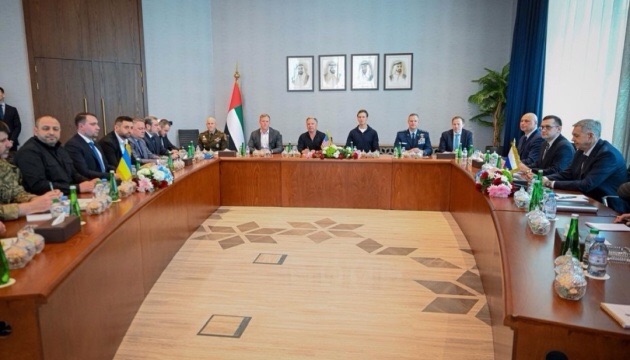
After being played yet again by Vladimir Putin’s stalling techniques, Donald Trump has finally taken that further action he’s been promising for so long: he has issued sanctions against Russia’s two largest oil companies, Rosneft and Lukoil.
Hallelujah!
Following the announcement that Trump would meet with Ukrainian President Zelensky in Washington on October 17th, Putin jumped the gun and called Trump on the 16th, offering to meet with him, possibly in Budapest. Trump happily agreed, and announced that a meeting would take place within the next couple of weeks. There was even a follow-up discussion between Russian Foreign Minister Lavrov and U.S. Secretary of State Rubio.
But something went wrong, and Trump announced that he had cancelled the meeting with Putin because he “didn’t feel like we were going to get to the place we have to get.” [Jennifer Hansler, Kit Maher and Kaitlan Collins, CNN, October 22, 2025.]
Yes, something went wrong, all right. In the Lavrov-Rubio call, Lavrov made it clear that Putin’s demand that Russia be given Ukraine’s Donbas region as a non-negotiable part of any ceasefire arrangement had not changed. And for Ukraine, that has always been a non-starter.
Marco Rubio and Sergey Lavrov
In the Oval Office today, Trump explained that he “felt it was time” to impose the sanctions, and that he had “waited a long time” to do so. He added that he still hoped “they won’t be on for long,” remaining optimistic that the war would soon come to an end. [Id.]
And Treasury Secretary Scott Bessent issued a statement saying that it was “time to stop the killing and for an immediate ceasefire. Given President Putin’s refusal to end this senseless war, Treasury is sanctioning Russia’s two largest oil companies that fund the Kremlin’s war machine. Treasury is prepared to take further action if necessary to support President Trump’s effort to end yet another war. We encourage our allies to join us in and adhere to these sanctions.” [Id.]
Scott Bessent
Eddie Fishman, a senior fellow at the Atlantic Council, told CNN:
“So far what’s come out is these primary sanctions on Rosneft and Lukoil, but the key then will be if there’s a threat of secondary sanctions on banks, oil refineries and traders in third countries who are dealing with Rosneft and Lukoil.” [Id.]
Let’s hope the U.S. follows through with the complete package of sanctions. As Russia continues to blast away at multiple regions of Ukraine, killing and maiming its innocent civilians and destroying its infrastructure in order to inflict maximum suffering during the coming winter, let Putin see how his people like living with the effects of fuel shortages.
I’ve been in Russia in February, and it’s no picnic. To compensate for the minus-20-degree temperatures, the buildings were overheated. How will the people react when their domestic fuel supplies are cut short in order to keep Putin’s “special military operation” supplied?
I don’t often have an opportunity to give props to the current U.S. administration, but today’s action deserves praise. My fingers are crossed that Trump doesn’t back off again.
During my years of travel to the Soviet Union (1988) and to the downsized Russian Federation (1992-94), I was privileged to experience many of that ancient country’s wonders: the White Nights of Leningrad (now St. Petersburg),; the lush Black Sea resort of Sochi; the Winter Palace (now the Hermitage Museum); the Summer Palace at Petrodvorets (or Peterhof); the writers’ colony at Peredelkino; the inside of Petrovka 38, better known as Moscow’s Militia Headquarters; performances at the illustrious Bolshoi and Mariinsky (Kirov) Theaters; countless museums, cemeteries, galleries, and ethnic restaurants . . . and of course, the Kremlin and adjoining Red Square.
But I was never able to tour the inside of St. Basil’s Cathedral; it was always “na remontе” — under repair.
St. Basil’s Cathedral – Red Square, Moscow, Russia
But this week, I was at last able to see what the remont had been leading up to when I took a vicarious tour, via the wonders of YouTube, with Canadian transplants Arend and Anneesa Feenstra.
For whatever reason, the charming couple from Saskatchewan left their farm in Nizhny Novgorod, Russia, and their eight children, in order to spend a couple of days by themselves in the big city. They traveled by train and Metro — a total of four and a half hours each way — to Moscow, where they had booked a small rental apartment for the overnight stay.
But instead of a tour of the city, they walked along a high-end shopping street, past the Bolshoi Theater, and directly onto Red Square. Although Arend said that they were in the Kremlin, he was mistaken; they never entered the Kremlin grounds, but instead strolled along the entire perimeter of the massive fortress, outside its red brick walls — a distance of some 8,200 feet. (A mile is 5,280 feet long.)
Red Square, as seen from the front of St. Basil’s Cathedral: at the far end (upper left in the photo) is the State Historical Museum; at the right, outlined in lights, is the famous GUM shopping mall.
Entering Red Square, they ignored the Historical Museum and Lenin’s Tomb; briefly pointed out, but didn’t enter, GUM Department Store; and headed directly for St. Basil’s, which is now open to the public. And I was thrilled to find that they were able to photograph the interior, which is now a world-class museum of Russian history and magnificent 16th-century architecture.
It may have taken the better part of 30 years, and unknown amounts of money, but the end result was clearly worth it.
As they filmed their way through the labyrinth of rooms and hallways, Arend refrained from offering his usual running commentary, instead focusing on the architectural and religious wonders before his eyes. While he spent a good deal of time reading the explanatory signs alongside the glass-enclosed exhibits — which, to my surprise, were printed in both Russian and English — I was more taken with the architecture.
Arend Feenstra in St. Basil’s Cathedral
The history of St. Basil’s is fascinating. Briefly, it was commissioned by Tsar Ivan IV — more popularly referred to as Ivan the Terrible — in the mid-1500s, to celebrate a military victory. It is said, though not proven, that when the cathedral had been completed, he ordered the architect blinded so that it might never be replicated. That may be no more than an urban legend . . . but knowing Ivan’s history, anything is possible.
As I watched — and envied — the Feenstras on their walk through history, I took some screen shots of their video, a few of which I will share with you now.
Up a Winding Staircase
View of the Kremlin Wall from the Top of St. Basil’s
I never cease to be amazed by the dichotomy of a people who are so inherently capable of unspeakable acts of brutality, yet are also able to produce such a vast legacy of architectural, artistic, musical and literary splendor.
And now, I believe this calls for a shot of Stolichnaya vodka and an hour or so of Tchaikovsky.
*. *. *
They can’t hear me, but I thank the Feenstras for the unexpected tour that I was never able to take in person.
As for a description of St. Basil’s Cathedral itself, I can only offer a phrase recalled from my many years spent working in the legal profession: Res ipsa loquitur.
One day Donald Trump is saying he thinks Ukraine has a good chance of recovering all of its Russian-occupied territory.
Then Ukrainian President Volodymyr Zelensky comes to Washington hoping to obtain long-range Tomahawk missiles and returns home empty-handed, but with a promise that Trump will be meeting with Russian President Vladimir Putin, probably in the next couple of weeks.
At the White House – October 17, 2025
Then word leaks out that Putin has told Trump that he still won’t agree to a ceasefire unless he is awarded all of Ukraine’s Donbas region.
Oh, and incidentally, let’s build a tunnel connecting Russia’s far east with . . . wait for it . . . Alaska. At Russia’s expense. Except for some contributions by unidentified “international partners.” Which Trump calls “interesting.”
Who’s Kidding Whom?
Furthermore, the Financial Times has reported, citing people “familiar with the matter,” that during the White House meeting Trump had advised Zelensky to accept Russia’s terms for ending the war, including ceding the Donetsk region . . . and warned that Putin would “destroy” Ukraine if Zelensky didn’t agree to Russia’s terms. [RFE/RL, October 21, 2025 CET.]
Thereafter, Trump denied that he had discussed Ukraine’s sacrificing Donetsk. But in a Fox News interview, when asked whether Putin was likely to accept a peace deal without winning the Donbas, Trump said:
“Well, he’s gonna take something.” [Id.]
Then he tried — in his usual clumsy manner — to cover his obvious blunder by saying yesterday:
“I never said they would win it. I said they could win. Anything could happen. You know, war is a very strange thing. A lot of bad things happen. A lot of good things happen.” [Kevin Liptak, CNN, October 20, 2025.]
“A lot of good things happen in war”? What does that even mean? Does he ever listen to himself?
Apparently not, because he also wrote on social media, shortly after the White House meeting, that Russia and Ukraine “should stop where they are . . . Let both claim Victory, let History decide!” [John Sudworth and Maia Davies, BBC, October 20, 2025.]
In the meantime, U.S. Secretary of State Marco Rubio has spoken with Russian Foreign Minister Sergey Lavrov in preparation for a summit between the two leaders, possibly in Budapest — a call that Rubio described as “constructive.” [Id.]
And Europe’s Coalition of the Willing — a group of 33 nations united in support of Ukraine — have scheduled a meeting in London on October 24th, to include President Zelensky.
*. *. *
But what a difference a few hours can make. Because, as of this writing (2:15 p.m. EDT), the White House has announced that:
“Secretary Rubio and Foreign Minister Lavrov had a productive call. Therefore, an additional in-person meeting between the Secretary and Foreign Minister is not necessary, and there are no plans for President Trump to meet with President Putin in the immediate future.” [Kristen Holmes, Jennifer Hansler and. Kylie Atwood, CNN, October 21, 2025.]
A “source familiar with the matter” — a journalistic euphemism for someone who wishes to remain anonymous — also told CNN that, following the Rubio-Lavrov call, it was determined by Washington officials that the Russian position had not sufficiently evolved beyond its original demands, but that the two might speak again this week. [Id.]
Marco Rubio and Sergey Lavrov – July 2025
So at this point I have just one question: As long as Vladimir Putin continues to stall, and Donald Trump keeps seesawing between support for Ukraine and his Danse Macabre with Putin, does anyone really know what the hell is happening?
Then you look up from your book, and you see this:
Like Carl Sandburg’s “Fog,” they crept in on little cat — er, dog — feet.
I never did determine what they were looking at, or hearing, or smelling — and they weren’t talking. But it wasn’t the cat, or any other living thing, so I didn’t give it much thought.
And neither did they, apparently, because they gave up a few seconds later and — again like Sandburg’s fog — moved on as quietly as they had arrived.
The cousins — to each other, not to me — are Dixie (on the left) and Spunky (just visiting), on the prowl last week. They were always good for a laugh, which is more than I can say for the daily news; so tonight I thought I’d ditch the doom and gloom for a few hours and share a little light-hearted observation with my readers for a change of pace.
And now “to sleep, perchance to dream.” (You know I can never resist a bit of Shakespeare.)
Catch you later, most likely with my comments on some real news.
. . . or so says the U.S. government. Consider, for example, DOGE — the ironically-named Department of Government Efficiency, initially led by Trump buddy and noted rich guy Elon Musk — and its coterie of young, eager, inexperienced, tech-savvy but otherwise unemployable, right-wing extremist nut jobs. Like this kid:
DOGE Agent Edward “Big Balls” Coristine
At 19 years of age, with his high school education a whole year behind him, he has an impressive Wikipedia biography. He is described as being “known for his association with Elon Musk and DOGE, his youth and inexperience relative to his responsibilities with DOGE, and his vulgar nickname.” [Wikipedia, as of October 20, 2025.]
His list of “employers” — all in 2025 — includes DHS, FEMA, USAID, GSA, SSA — a sizable chunk of the Washington alphabet-soup bureaucracy. If true, then he has just taken job-hopping to an entirely new level.
He lists his political affiliation as — big surprise! — Republican.
Though he enrolled at Northeastern University in 2024, he is described as a “computer programmer and former engineering student.” He has also registered a number of startups in Connecticut, Delaware, and the U.K., one of which offers an artificial intelligence Discord bot (whatever that is) for the Russian market.
In 2022, he was fired from his internship at Path Network for allegedly leaking internal company information to a competitor. Yet he has been given access to the most confidential taxpayer information at the Social Security Administration and elsewhere.
He has an online content delivery network, called DiamondCDN, that reportedly facilitated the work of a cybercriminal group known as EGodly. In 2023, EGodly — which has proudly claimed involvement in email hacking, theft of cryptocurrency, and the harassment of a former FBI agent — thanked Coristine’s network, saying:
“We extend our gratitude to our valued partners DiamondCDN for generously providing us with their amazing DDoS protection and caching systems, which allow us to securely host and safeguard our website.” [Wikipedia, id.]
For someone not yet 20, “Big Balls” has been a busy boy.
And one other note: Under “Relatives” in his Wikipedia bio, he names just one: his maternal grandfather, Valery Martinov.
Wait . . . WHAT??!!!
Surely, not this Valery Martinov:
KGB Lieutenant Colonel Valery Martynov(1946-87)
But yes, young Ed Coristine is the grandson of a former KGB officer who, while stationed under the guise of a third secretary in the Soviet Embassy in Washington beginning in 1980, was actually an intelligence agent for the KGB’s First Chief Directorate. In 1982, he was recruited by the FBI as a double agent — not for reasons of political ideology, but simply because he wanted the money in order to enjoy the material benefits of living in America.
In 1985, he was betrayed to the KGB by CIA agent Aldrich Ames — who, as Martynov’s mirror image, had sold himself to the KGB — and was brought back to Moscow on a pretext and arrested upon arrival at the airport in Moscow. He was convicted of treason, and executed in 1987.
Arrest of Martynov at Sheremetyevo Airport, Moscow – 1985
(Note: Aldrich Ames was luckier. His spying spree continued for nine years, until he in turn was arrested in 1994 by the FBI in the U.S., where he is serving a life sentence in a federal prison.)
Following Martynov’s execution, his wife Natalia and their daughter Anna managed to return to the United States. How Natalia Martynova engineered their escape remains a mystery. I can only suppose that she was exfiltrated by the CIA to save her life and her daughter’s; but that is just conjecture.
In any event, young Anna Martynova grew up in the United States, and eventually married Charles Coristine, who is CEO of LesserEvil Snacks, purveyors of healthier popcorn, granola, and other snack foods. And young Ed — the DOGE wonder boy — is their son.
Charles Coristine
*. *. *
Whew! I know that’s a lot to follow; but it’s important because it points out how the so-called Department of Government Efficiency — charged with reorganizing practically the entire U.S. government — acquired its staff of chainsaw-wielding “experts.” They were tech-savvy, they were eager, and they wanted jobs that offered them a semblance of power and influence. No experience necessary . . . and clearly no vetting.
I do not believe the sins of the fathers (or grandfathers) should be visited upon the children. But surely, this young man’s unusual (to say the least) family background, combined with his own brief but checkered history, should have raised some red flags . . . that is, if anyone actually checked.
If I were the person in charge of hiring for DOGE, Ed would have been shown the door as a potential security risk. Instead, he got the job and came to Washington.
And in August of this year, he was badly beaten in an attempted carjacking in D.C., inspiring Trump in his militarization of the nation’s capital as a supposed hotbed of crime.
Coristine, though no longer with the greatly reduced DOGE, is said to still be working for the U.S. government. And it has even been suggested by a MAGA leader that he should receive the esteemed Presidential Medal of Freedom for his “bravery” — though that honor, which is the highest civilian award a citizen of the United States can receive, is reserved for people who have made “an especially meritorious contribution to 1) the security or national interests of the United States, or 2) world peace, or 3) cultural or other significant public or private endeavors.”
Now, if someone would please tell me what Ed Coristine’s contribution has been . . .