Category Archives: History, Travel, Memoirs

Reflections #8: “On D.C. in the ‘60s”

“It was the best of times, it was the worst of times . . .”

Oh, sorry — that’s already been done, thanks to Mr. Dickens. But it’s such a great opener, and descriptive of so many periods in history, including the 1960s, that I couldn’t resist borrowing it. And there I was: a young, single woman in Washington, an eyewitness to history in the making. It was indeed the best of times . . . for a while.

Jack and Jackie

I was on the bus on my way to work one morning shortly before Christmas in 1960, stopped at a red light on Wisconsin Avenue in Georgetown. I happened to look up from my book to glance out the window at an open convertible sitting next to us, which seemed rather odd since it was the middle of December. And there, hatless and smiling in the front passenger seat of the convertible, sat the newly-elected — but not-yet-inaugurated — 35th President of the United States: John Fitzgerald Kennedy. Young, handsome, spirited, full of hope for the future, he exemplified the era in which we were living; and I was staring straight at him, live and in person. How could you not love Washington, where such things were possible?!! Then the light changed, the convertible and my bus moved forward at different speeds, and the moment was broken. But I had seen the new President — the one I had voted for just a month earlier. It was a great day.

In fact, it had been a good year as a whole: a good job, lots of parties, dates, shows, shopping — a typical single girl’s life. Well, except for that one fainting incident . . . It was quite funny, actually. We — still the three of us, mother, sister and self — were now living in a nice eight-story apartment building in an excellent neighborhood known as Glover Park, just north of Georgetown in D.C. On the roof of the building was a sundeck where I enjoyed lounging from time to time. One summer afternoon, I had been suffering from a case of that bane of women everywhere — cramps — and decided the best cure was a shaker of whiskey sours and a little sunshine. So I mixed up my beverage of choice, grabbed a good book and some suntan lotion, and headed for the roof, where I stretched out on a chaise lounge and proceeded to bury myself in the latest John le Carre novel and lose track of time. After a couple of hours, when I finally realized how hot it was up there, I packed up my things and headed back to my air-conditioned apartment.

Of course, I was damp with sweat and suntan lotion, so I went directly to the bathroom for a nice cooling shower. As I stepped out of the shower a few minutes later, I began to feel dizzy and nauseous, so I put on my cotton robe and made a beeline for my bedroom to lie down. But I never made it to the bedroom. I did lie down, though — hard. Passed out cold, hitting the hardwood floor chin-first and splitting it (my chin, not the floor) wide open.

Now, as it happened, my sister Merna and I had had one of our classic arguments that morning and weren’t currently on speaking terms. When I took my swan dive into the hardwood, she was downstairs in the laundry room. My mother was in the living room with a friend, who happened to be legally blind and was therefore of no use whatsoever in an emergency. When my mother heard me crash, she came running. I regained consciousness after just a minute or so, and found her kneeling next to me, rocking back and forth on her heels and wailing, “Oh, my God! Oh, my God! She’s got a hole in her chin! Oh, my God!” How that woman ever managed to raise two children is still beyond my comprehension.

Just then Merna returned, took in the sight of her passed-out sister and her freaked-out mother and the blind lady in the living room calling out “What’s happening? What’s happening?” and, forgetting about our earlier tiff, instantly dove into action. She put a pillow under my head, got a cold compress for my chin, and called for an ambulance. And off we went to the Emergency Room at Georgetown Hospital, where I was given a tetanus shot and a local anesthetic, stitched up, and sent on my way, by now feeling just fine.

But how to get home? I was barefoot and wearing a light cotton robe over . . . well . . . nothing. So we called for a taxi, and when we walked into the lobby of our building — where a few people were still buzzing around the desk trying to find out who had been taken out in the ambulance — I held my head high, pointed to the big white dressing on my chin, and said, “You should see the other guy,” as I sashayed toward the elevator leaving them still wondering why I was barefoot and barely covered. I might have a scar on my chin for the rest of my life; but I saw no reason to sacrifice my dignity . . . or my sense of humor.

A Little Drama

But enough about me. Washington in the ‘60s was a visually wondrous place: a city of monuments, museums, restored Colonial townhomes, mansions, parks, tree-lined streets, and wide avenues. And it still is.

But about those avenues . . .

When French engineer Pierre Charles L’Enfant created the plan for the layout of the City of Washington, he designed the streets in a grid pattern, with north-south streets being numbered and east-west streets named alphabetically. So far, so good. But then he criss-crossed those squares with diagonal avenues, and further added circles where all of those streets and avenues intersected, thus creating spaces for his vision of park-like areas for the enjoyment of the city’s residents. Sounds lovely, doesn’t it? Sort of a miniature Paris. But Monsieur L’Enfant could not, in the late 18th Century, have foreseen the invention of the motor vehicle, or the volume of 20th Century traffic that would follow.

And I haven’t yet mentioned the fact that he divided the city into four quadrants: Northwest, Northeast, Southwest, Southeast, each with its own grid of numbered and lettered streets . . . and its share of those diagonal avenues. So that the same address can appear in four different parts of the city, and when giving someone an address, you have to remember to specify which quadrant you’re talking about. So there might be, for example, a 300 K Street, N.W., N.E., S.W. and S.E. The eastern and western halves of the city are divided by the U.S. Capitol Building complex, as are the northern and southern halves; so to the east of the Capitol are First Street, N.E. and First Street, S.E.; to the north are “A” Street, N.E. and “A” Street, N.W.; to the west of the Capitol . . . Oh, what the hell! Just look at a map.

And lest I forget: some of the longer of those avenues — which, by the way, are named after the 50 U.S. states — extend from one quadrant into another, such as Pennsylvania Avenue, N.W. and Pennsylvania Avenue, S.E., which just seems to skip right over the Capitol along the way. Now, add to all of this confusion the amount of rush-hour traffic on a normal weekday, and what have you got? I’ll tell you what you’ve got . . . you’ve got
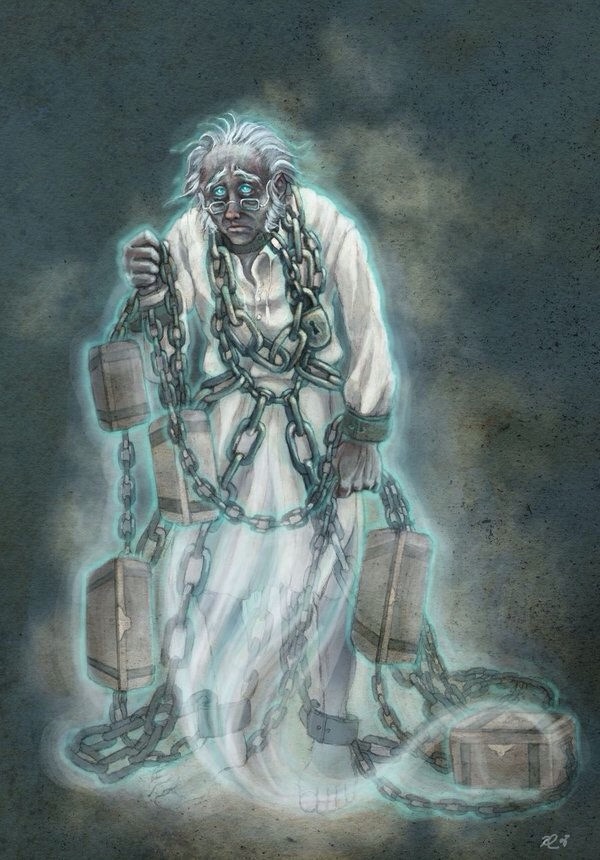
TOTAL FREAKIN’ CHAOS!!!

L’Enfant’s Folly

The invention of the traffic light was supposed to have mitigated the problem of the circles, and in most cases it did. But there are exceptions, due in large part to the fact that the D.C. Department of Transportation (DDOT ) is solely comprised of human beings — who by their very nature are fallible, and sometimes apparently also a little bit crazy. My favorite example is the light located where northbound 23rd Street, N.W. is stopped short by Washington Circle, N.W., which is also the meeting place of K Street, N.W., New Hampshire Avenue, N.W., and the infamous Pennsylvania Avenue — also N.W. at this point. That particular light mostly stays red for 23rd Street, and only turns to a flashing green right-turn arrow when — now here’s the fun part — the traffic on the circle, which always has the right of way, also has a green light at that point; so the 23rd Street traffic is trying to feed into the onrush of cars from the left, while at the same time trying to ease into the proper lane for their right turns onto Pennsylvania Avenue, or K Street, or New Hampshire Avenue, or the other half of 23rd Street northbound, or all the way around to the other side of K Street, or 23rd Street southbound, or . . .

Whew! Get my point?

But wait — I’m not finished. Take that mental image of the city streets as a whole, and superimpose on it a snow storm — not a little storm, but a nor’easter of biblical proportions. And have that storm hit the city on January 19, 1961 — the day before the scheduled Inauguration of John F. Kennedy, when half of the political, social, industrial, and financial elite of America are set to converge upon the city en masse to attend that inaugural event and the formal balls and parties that go with it. Now picture people trying to get home from work in that mess, with thousands — literally, thousands — of them having to abandon their cars when they couldn’t make it up an icy hill, or had managed to slide into a telephone pole, or each other. Can you say “total gridlock”? I can — because I was stuck in it, along with those thousands of others.

“Move It or Lose It”

The usual ride from my office to my apartment building was about 15 to 20 minutes. My boss — my very first boss, Alvin — lived in the same direction but a little farther out, and my mother’s office was just a block from ours. So when the snow started to pile up, he offered to drive both of us home. We could have walked faster — and I actually knew someone in our apartment building who did. We left the parking garage around 5:00 p.m. By 8:00 p.m., we had made it roughly halfway home and were sitting at a dead stop in a lovely residential area (in the Northwest quadrant, if you’re interested), when Alvin suddenly realized that we were just around the corner from the home of some friends of his. Never one to be hindered by rules, he pulled out of the line of traffic onto the wrong side of the road where there were no cars, drove up the street and around the next corner and into his friends’ freshly cleared driveway. There were no cell phones in those days, so we couldn’t call ahead; instead, we simply rang the doorbell and invited ourselves in, where we spent a very pleasant couple of hours eating, drinking, laughing, and using the facilities, not necessarily in that order. When the traffic had finally cleared, we headed home, arriving around 10:30 p.m. — just 5-1/2 hours after we’d started out. And we were among the lucky ones.

*. *. *

As for the Inauguration, it took 1,000 D.C. employees, together with a contingent from the U.S. Army Corps of Engineers, working through the night to clear the inaugural parade route — first having towed more than 1,400 abandoned cars. But the job had to be done in order for the Constitutionally-mandated passing of the proverbial torch to take place as scheduled on the morning of January 20th, when John Fitzgerald Kennedy — the youngest person ever to have been elected to the Presidency of the United States, and the first Catholic in that office — did famously swear that oath . . . standing, once again hatless, outside the U.S. Capitol on that bitter cold January day. God bless America!

“Ask not what your country can do for you . . .”

And thus began three years of exhilarating highs and demoralizing lows: the continuing fight for equal rights; the space race; the Bay of Pigs disaster; the Cuban Missile Crisis when Nikita Khrushchev finally “blinked”; Jackie Kennedy’s pillbox hats; little Caroline and John-John playing at their father’s feet in the Oval Office; a brother who became Attorney General and stood up to organized crime; a brother-in-law who founded the Peace Corps; Marilyn Monroe singing “Happy birthday, Mister President” in the White House (I’m still not sure whether that was a high or a low); a wall going up across Berlin . . .

*. *. *

And, on November 22, 1963, the assassination that brought an end to Camelot.

A Time to Mourn

And for a moment the world joined hands, and wept . . .

Brendochka
6/22/23

Reflections #7: “On Becoming a City Girl in the ‘50s”

For that whole month of July in 1952, we stayed with my aunt and uncle and their two sons: a six-year-old and a toddler. The boys had separate bedrooms, but during our stay they were moved in together, and we — all three of us — shared the other small room with a twin bed and a rented rollaway cot. We took turns sleeping on the cot, which was the prime spot because it was by the window and you got to sleep alone, while the other two had to share the twin bed against the opposite wall. I’ve already mentioned the record heat wave that hit D.C. that summer, but I haven’t yet described my aunt and uncle’s house. It was a duplex, or semi-detached, brick two-story, with a flat roof and no air-conditioning. In short, the second floor was a virtual sauna. And we were from up north. The D.C. climate was hell on earth.

Pennsylvania Avenue, Washington, D.C. – c.1950s

But the company and the food were good, and somehow we survived the heat. Within a week, both my mother and sister had jobs, and I had made friends with some of the kids my age in the neighborhood. They had a great deal more freedom than my New Hampshire friends and I had ever had. One day we were able to take the bus downtown, where they showed me the wondrous sights of our nation’s capital: the White House, Capitol Hill, the Lincoln and Jefferson Memorials . . . and the Washington Monument, where we rode the elevator up to the top, but made the gigantic mistake of walking down. All the way down — all 500 feet, all 896 steps down — because the elevator doesn’t make stops along the way so once you start walking, you’re in for the long haul. Our legs were rubbery by the time we hit bottom, and we had to find a park bench and literally hit bottom, sitting for a while before we could continue on our way home. Lesson learned: never do that again! (Also don’t do it in cute shoes.)

But I had seen my future from the top of that monument. Though I couldn’t then have predicted it, Washington was destined to become my city: the core of my universe, where I would spend most of the rest of my life reveling in the political, diplomatic, and economic activity at the axis of the world. I was on the verge of becoming a city girl. In reality, Washington in 1952 — although it seemed huge and sophisticated to me — was still a smallish city, with only a limited variety of cultural and social options unless you were a political insider. But it too was on the brink of a growth spurt, and the city and I were due to mature in tandem. My timing could not have been better.

The rest of the ‘50s sped past as we moved into our own apartment, I entered high school, hated it, graduated in 1955 at the age of 16 years and 3 months with the requisite straight A’s (except for PhysEd, at which I really stink) and a couple of awards . . .

Hallelujah!!!

. . . and made a deal with my mother. My sister had had to cut short her education in order to help support us, and I was feeling conflicted as to whether I should go to college when she hadn’t been able to, or to look for a job as she had done. So I said I’d postpone the decision for a couple of months and see whether I could find a job I liked over the summer. And that is when Fate took over: I interviewed for the perfect job in a small law firm. The lady at the employment agency told them I was 17; the junior partner in the firm was desperate for help; and they gave me a chance, on a three-month trial basis. I was there for seven years, learning about legal practice and procedure, and growing up the rest of the way. On my 19th birthday, I finally admitted to my real age, and no one cared.

*. *. *

The world was not idle during the decade of the ‘50s. The Korean War ended in 1953 after three bloody years in which hundreds of thousands of combatants on both sides were killed or wounded, in addition to the loss of an estimated total of two to three million civilians. To this day, there are still two Koreas — North and South — with a Demilitarized Zone separating them at the 38th Parallel. Communism continues to refuse to die.

Collateral Damage

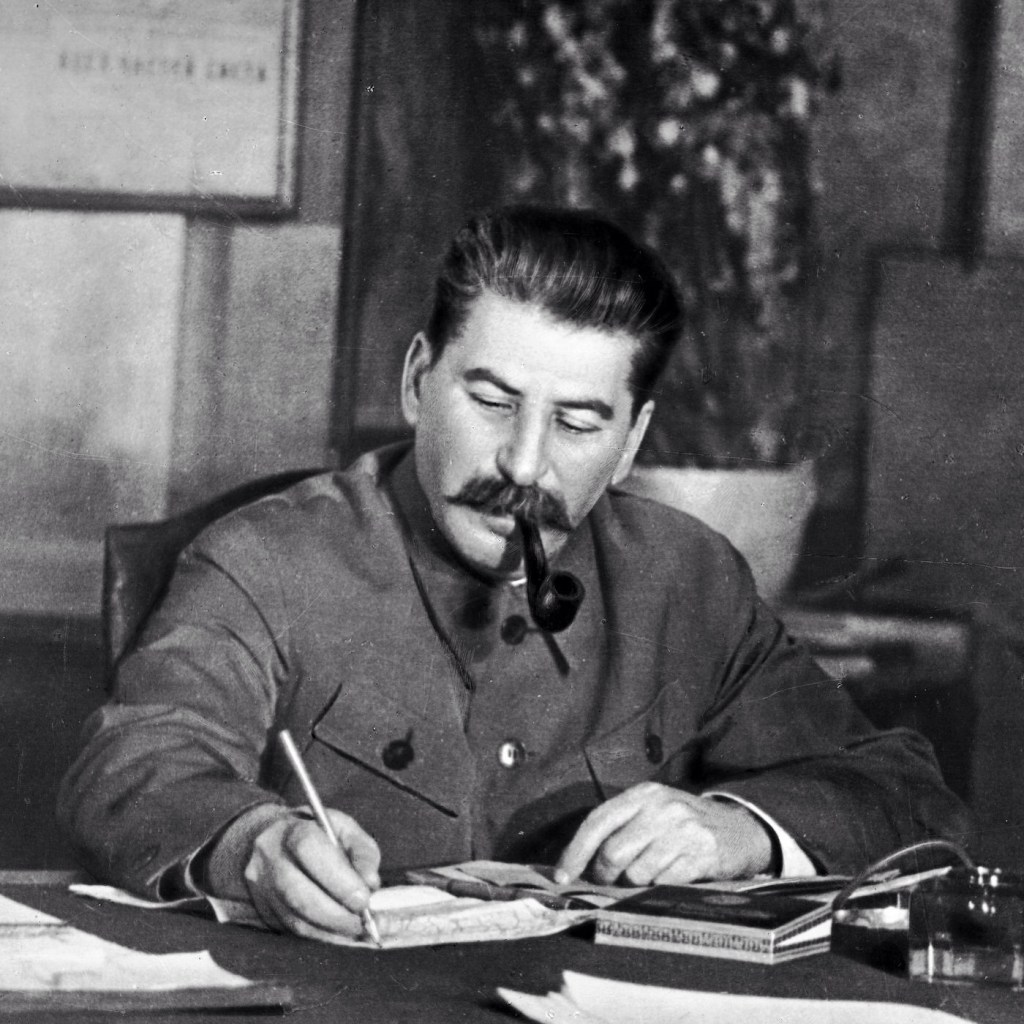
On March 5, 1953, Iosif Vissarionovich Djugashvili — better known as Joseph Stalin, the despot who had ruled the Soviet Union with an iron fist since 1924 — breathed his last. But, despite a brief period of “glasnost” under Mikhail Gorbachev and Boris Yeltsin in the later part of the century, totalitarian rule in Russia has returned — and continues to refuse to die.
Joseph Stalin

In 1957, the Soviet Union launched the first man-made satellite — named Sputnik 1 — into orbit, and the Space Race between the United States and the USSR began. To this day, the adversarial relationship between Russia and the United States continues to refuse to die.

Sputnik I

In 1954, the case of Brown v. The Board of Education was decided by the U.S. Supreme Court, which ruled that segregation of schools was unconstitutional. Yet to this day, bigotry and racism also continue to refuse to die.

Some things just don’t want to go away; or perhaps it’s simply that we humans continue to refuse to learn.

The Many Faces of Hatred … and One of Courage

And in 1952, King George VI of England died and the Crown passed to his elder daughter, affectionately known to her family as Lilibet. At just 26 years of age, she was officially inaugurated as Queen Elizabeth II, and reigned for a record 70 years, passing away at the age of 96 in the year 2022. “Long live the Queen,” indeed.

The Long Life of a Queen

Inevitably, the ‘50s rolled toward the ‘60s. This was the age of Bill Haley and his Comets, the Everly Brothers, and Elvis; Alvin and the Chipmunks; JFK and Jackie; the jitterbug, the twist, and slow dancing; the T-bird and hot rods; Nikita Khrushchev banging his shoe on a desk at the United Nations; James Dean and Natalie Wood; drag racing; shirtwaist dresses with full skirts and layers of petticoats; and two-martini lunches. And for me, it was a new world of grown-up dating and a little bit of illegal drinking — they didn’t check IDs as carefully in those days. I learned to drive and my mother bought a car. And I gave up my thoughts of full-time college studies, but took night classes instead. Except for something called the Cold War, life was good, just the way it was.

“Go, man, go!”

In November of 1960, John Fitzgerald Kennedy was elected the 35th President of the United States. And the world began to change faster than it ever had before . . .

‘Til next time,
Brendochka
6/19/23

Reflections #6: “On Being the New Kid in Town”

Do you remember when every car trip, no matter how short, was an adventure? Just the fifteen miles from our house in Woonsocket to my other grandparents’ house in Providence seemed like an endless journey. My sister and I snuggled into our respective corners of the back seat (I was always on the right side, she on the left, with a DMZ in the middle), and played counting games: who could count the most gas stations or BurmaShave signs or whatever on her side of the road. And in December, on the way home after dark, we counted lighted Christmas trees, both indoors and out, and argued over whether wreaths were included.

When we made the move to be nearer my father’s brothers and sisters in Manchester, New Hampshire — a full eighty-seven miles away! — it felt like we were crossing the entire country. Of course, there was no I-495 interstate then, so it wasn’t the quick trip it is today. But it was better, because we got to go through all the little towns along the way and count the houses with red shutters, or the schools . . . or whatever.

The house my father had rented for us was cute but tiny, and we didn’t stay there long before finding the perfect place and settling in. And here it still is, looking the same except for the paint color and the landscaping — and the SUV in front (bad timing, Google Maps). There were no SUVs in 1948; we had a dark blue Chevy, our first new car since the War. It was bullet-shaped and beautiful, with a manual transmission and windows that had to be rolled down by hand, and a cigarette lighter where now we have cell phone chargers. It was perfect, except for the infernal cigarette thing.

424 Concord Street, Manchester, NH

The summer was mostly spent making a few friends in the new neighborhood, and — miracle of miracles! — getting my first bicycle: a red Columbia two-wheeler with a bell and a basket. Soon I was tearing around the neighborhood and investigating the hot spots, such as they were. My favorite was Chris and Harry’s — the little neighborhood market, where the owners would let me hang out and read the comic books for free because I always snacked on ice cream (coffee, with chocolate sprinkles), candy, or potato chips and a Coke while I was reading, so they actually made more money than they would have if I had just bought the comic books. Years later, when I went back with my own son and daughter to visit, Chris was still there and he remembered me: I was “the smart-mouthed kid who always got straight A’s.” What a reputation! He also remembered my family, and who all of my best friends had been. You have to love a small town.

The Freedom of Childhood

I don’t remember being nervous about moving to a new city, a new school, and all new friends. I was just nine, and it was exciting. And in September, I was enrolled as a sixth-grade student at Chandler Elementary School, just two and a half blocks down the street from our house. The New Hampshire schools had eight grades of elementary school (nine, counting kindergarten) and four of high school — no middle school at all — so while my sixth-grade classmates were only eleven or twelve years old, I was also side-by-side with upper-classmen as old as fourteen. And I hadn’t gotten much taller over the summer. But so what? I just stood as straight and tall as I could and marched right into the fray. Of course, we didn’t tolerate bullying in those days . . . so school was better then.

Chandler Elementary School, Manchester, NH

There was a bit of a glitch that first day, when the principal told my mother she thought a nine-year-old didn’t belong in the sixth grade with the older kids, and that the more advanced courses might also present a problem. But you didn’t mess with my mother when it came to her daughters — she was prepared. Remember that fifth-grade report card with all the “A’s” and the single “B” with the circle around it? She whipped that out of her purse, along with the official document showing that I had been promoted to sixth grade, and asked what possible benefit there could be in having me repeat a grade I had already aced. The principal finally conceded and said we’d give it a try, but no promises.

Long story short: I stayed with my class — the youngest, the shortest, but perfectly assimilated; in fact, I had even managed to be accepted into the “in” crowd. Not the pot-smoking, sex-crazed teenagers of the later part of the century, but the clean-cut, fun-loving, poodle-skirt-wearing, jitterbugging kids of the early 1950s.

Poodle Skirts: Too Cool for Words

We hung out at each other’s houses, went to the movies at the Palace every Saturday, and joined the YWCA (the boys were at the YMCA), where we had swimming lessons, craft classes, monthly co-ed dances, and put on shows where I first learned that I loved playing the comic roles. And we all walked home together after the dances at night, because there was no reason not to. It was safer then.

And all too soon, we graduated. Most of us went on to Central High, though a few enrolled at St. Anselm’s, the Catholic high school on the other side of town. And we took different courses, and we lost touch. I still remember them all, though: Sandy (no, not John Travolta’s “Sandy”), Patty, Mary Alice, Diana and Shirley, and the boys, David G., David H., Terry, Robert and Bobby. But I made new high school friends, and three of us — Marlene, Carolyn and I — have remained close over all these years, though we live in different parts of the country now.

Central High School, Manchester, NH

*. *. *

My sister had graduated from Central High just three months before I entered as a freshman. She had an outstanding reputation among the faculty members: straight-A student (that old family requirement), active in a couple of clubs, worked in the school library . . . and pretty much an all-around teacher’s pet, or “brown-nose.” And I wasted no time ripping her hard-earned reputation to shreds.

I met my new BFFs in English class, first period, first day of high school. Marlene and Carolyn had gone to a different elementary school than I had, and were already friends. I’m not sure why they particularly noticed me . . . oh, wait — yes, I do! It seems my dear sister, Merna, had been in the same English class, and had made her mark as one of the teacher’s favorites. So as Miss Hoben was taking the roll and came to my name, she recognized the last name and exclaimed, for all the world to hear, “Not Merna’s sister??!!!” I nodded a silent “yes.”

Teacher: “No!”
Me: “Yes.”
Teacher (louder): “No!”
Me (quieter): “Yes.”
Teacher (even louder): “NO!!”
Me (losing patience now): “Yesssss!”

I was doomed. But Marlene and Carolyn were curious, and after class they asked me what that had been about. So I told them, and made it quite clear that I was nothing like my big sister. After that, we were inseparable: the fearsome threesome, who also had another memorable class together later in the day: General Science.

Mr. Tate, our science teacher, was a quiet, serious, professorial type, easily taken advantage of. As a newly-formed triumvirate, we of course chose seats next to each other, about three rows from the front: Marlene on the left, Carolyn on the right, and yours truly dead center, where I could do the most damage, and also be the one to pass the notes back and forth.

Now, I love Marlene dearly. She’s kind, fun-loving, decent, and smart. But, let’s face it — we all have our weak points, and science was hers. So when Mr. Tate would finish explaining a process or a concept to the class, and asked if anyone had any questions, invariably Marlene’s hand would be the first one in the air. He would then ask what part she didn’t understand, and she would usually reply, “All of it.” The poor man would then begin again at the beginning, pausing periodically to ask whether she understood that part, and she would always reply, “Yes.” So he would go on, item by item, until he reached the end. Then: “Do you understand now?”

And here’s where it got to be interesting. Marlene — who, I swear to you, was not being intentionally funny — would reply, “Well, not quite.” And he never learned. The next question, of course, was, “Well, what part don’t you understand?” And her answer? Anybody? Now, let’s not always see the same hands.

“All of it.” (Collective “groan” from the class.) Poor Mr. Tate.

That science class was on the ground level of the older of the two buildings that comprised Central High at that time, and of course was not air-conditioned. There were also no screens on the windows, and one warm spring day, a pigeon dropped by to see what was going on. Mr. Tate’s favorite seat was a stool located at the end of his lab bench, and as he sat there on that mild afternoon, our winged visitor perched at the end of the bench, made itself comfortable, cocked its head to one side, and stared that teacher dead in the eye. Neither moved for fully a minute as Mr. Tate also tilted his head and met that pigeon’s gaze. No one in the class made a sound . . . until I couldn’t stand it any longer. Unable to resist, I broke the silence:

“Birds of a feather . . .”

Staredown

The resulting roar of laughter from the class scared the poop out of that poor pigeon — literally. Thus having relieved itself, it somehow then found its way back out the window as Mr. Tate was left to clean up the mess. For whatever reason, I was never reprimanded; I guess he had a sense of humor after all. And I still got my “A” for the semester, which was a very good thing because it would have been really difficult to explain to my mother that I’d gotten a “B” because of a peripatetic pigeon.

*. *. *

We regularly ate lunch in a booth at Marshall’s Drug Store around the corner from the school, pored over movie magazines like Photoplay and Modern Screen, collected a very young Tony Bennett’s recordings, and swooned over Marlon Brando and Kirk Douglas. We were the teens of the ‘50s, loving life.

How Wholesome Can You Get?

And the school year passed all too quickly. Because that summer, my parents separated and my world fell completely apart.

Before I knew what had hit me, we were packing up — my mother, my sister and I — and moving to Washington, D.C., where my mother’s younger brother and his family lived and could help us find a new life . . . and, most importantly, jobs for my mother and sister. On July 3, 1952, we made the long train ride into the unknown, leaving behind the home, the school and the friends I loved. I was no longer that nine-year-old heading into a new adventure four years earlier; I was 13 now, and I was grief-stricken.

I sometimes wonder what my life would have been like if we had stayed in New Hampshire. On the one hand, I look at the good, more conventional lives my friends from Manchester have had, and there’s much to envy. But on the other hand — although I could not have foreseen it — Washington had a different set of opportunities and temptations and complications waiting for me when we stepped off that train . . . and into the hottest, steamiest, muggiest, most unbearable summer Washington had experienced in years. What the hell had we done??!!! Only time would tell.

To be continued . . .

Brendochka
6/15/23

Reflections #5: “On Killers and Other Strangers”

Ted Kaczynski – infamously known as the Unabomber — died in prison this week at the age of 81, apparently at a time and in a manner of his own choosing. Diabolically brilliant, he seems to have found a way to commit suicide in prison. He had spent the last 27 years paying for the lives he had destroyed — three killed and 23 others seriously injured — between the years of 1978-‘95. He will not be missed.

Thinking back to those years, when people in universities, Congressional offices, and even their own homes were afraid to open packages delivered by mail, I am reminded of some of the other long-term periods of fear through which we have lived, and how those experiences have changed our collective perceptions of safety, and of what it means to live in a free society.

For those of us who can remember back to the ‘60s, there was the rash of 159 commercial plane hijackings — 85 to Cuba alone — between 1961 and 1973. These were mostly politically motivated, and not done for the purpose of taking lives. But they did have the effect of making people think twice about getting onto a plane to anywhere. I recall taking my sister to the airport to board a flight to the Bahamas via Miami. As she handed her ticket to the airline agent and walked toward the gate, I called out her name. She looked back and I waved at her, shouting, “Say hello to Fidel [Castro] for me.” Me and my big mouth! Today, of course, we both would immediately be taken into custody; but at the time, those hijackings were so commonplace and security generally so lax, hardly anyone paid attention. A couple of people did laugh. Not really funny, though.

“Say hello to Fidel”

On a more local level, there were a couple of cases that made London’s Jack the Ripper look like an amateur. One was Albert DeSalvo, charmingly dubbed the Boston Strangler. Between 1962 and ‘64, he killed 13 women in the Boston area. Though he had confessed, the evidence could not definitively tie him to the murders, and he was sentenced in 1967 to life in prison for multiple rapes; and the women of Boston could finally sleep peacefully. He had only served six years before being stabbed to death in the prison infirmary in 1973. His guilt was at last established beyond doubt by DNA evidence when his body was exhumed 40 years later, in 2013. So long, Albert.

And who can forget Jeffrey Dahmer, the “Milwaukee Cannibal,” who terrorized that area between 1978 and 1991, during which time he killed and dismembered 13 male victims. Yecchhh . . . and good riddance.

*. *. *

But when we entered the 21st Century, things really amped up. I need hardly mention the terrorist attacks of September 11, 2001. Even those who weren’t yet born or were very young at the time are familiar with the details of that day. But it’s the personal stories that make it real.

World Trade Center, 9-11-2001

I was on my way to work on that bright, crisp, early fall morning, heading toward the ramp that would take me from Virginia’s Arlington Boulevard to the Key Bridge and into the District of Columbia. As usual, I was listening to an all-music radio station, when the programming was interrupted by a news flash announcing that a plane had flown into one of the twin towers of the World Trade Center in New York City. How on earth could that happen on such a clear day? Had the pilot fallen asleep, or been taken ill? Was it mechanical failure? Whatever the reason, it was a calamity. And then the second announcement: the other tower had been hit by yet another plane. This, then, was clearly no accident. This was terrorism on American soil.

I had just reached the place where I could either continue on into the city and my office, or take the road that would lead me back home. I did not want to be alone, and decided to go to work — a decision for which I would always be grateful. For, had I decided to head home, that road would have taken me directly past the Pentagon and into the path of the next plane to come crashing to earth.

When I arrived at the office, the scene was as I had expected — no one was working. As we stood together, talking about the possible meaning of what had just happened, my phone rang. It was a friend who was at home on maternity leave; she was watching the news unfold on TV, and needed someone to talk to. Suddenly, she screamed into the phone, “Oh, my God! Another one just hit the Pentagon!” Our offices were located on the banks of the Potomac River, facing toward Virginia. I ran to the nearest window, looked out across the river in the direction of the Pentagon on the other side, and saw a gigantic plume of smoke rising toward the sky. Time — and my heart — seemed to stop. Was this war?

The Pentagon – 9-11-2001

Another phone line rang; it was my boss, who was still at home and calling to tell me to go home. That was unnecessary; I had already decided to do just that. But first I had to call my family to let them know I was all right. But the phone lines — both landlines and cell towers — were now jammed. I finally decided to just leave, head back to Virginia to try to get to my sister, and get us both home. She worked in suburban Arlington for the Association of the U.S. Army (not located near the Pentagon). In the meantime, I would keep trying to call from the car.

And on the way, I noticed a strange phenomenon: although the streets were gridlocked by people in their cars trying to get out of the city, there was no sense of panic or hostility. Drivers were actually yielding the right of way to other drivers, and no one was leaning on their horn or yelling. We were all in this together, and that sense of unity only grew stronger in the days, weeks and months ahead.

My son, who lived in Georgia, had been trying to call me to find out about my sister. He knew who she worked for, but didn’t know her location and feared that she might have been in the Pentagon. He somehow got through to me, and I reassured him as I continued my slow drive toward her office. When I finally got there, I found a vacant metered parking space in front of her building, and automatically pulled out change to feed the meter. But the slot was jammed by a coin, which explained why the space was vacant, and for a moment I worried that I might get a ticket if I parked there. Then I came to my senses. What police officer was going to be checking parking violations today? Didn’t they have better things to do? Duh! (Final note: I did not get a ticket.)

Expired!

I found my sister in her office, relieved to see me as she too had been unable to get an open phone line. We headed home in the still jammed traffic, and finally made it — normally a ten-minute drive — in about an hour. And then began the period of disbelief and mourning.

There were so many other stories: a co-worker who was in New York and had to run for her life; another who was in her car on the road alongside the Pentagon, where I might have been, when that plane flew right above her; and some who lost family members, friends, or business associates on that day. I am grateful that no one I knew was killed. But in some sense, we all lost so much on 9-11; and on each anniversary, when the films are once more shown on news programs and documentaries, we relive the pain and disbelief as though seeing and feeling it again for the first time.

It happened that we had two family birthdays that September in 2001 — my sister’s on the 18th and my granddaughter’s on the 23rd — so my sister and I drove the 100 miles to my daughter’s home for a quiet celebration of both. As I walked into the house, my three-year-old grandson came running toward me, yelling, “Nana! Nana! Did you hear? Some bad guys blowed up a building!” And once again, my heart seemed to stop. What could I say to him? And what do you say to those innocent children who had just lost a parent? How do you ever make them feel safe again?

*. *. *

Before we even had time to begin to heal, along came the Anthrax killer one week later, on 9-18, beginning a string of mailings containing the deadly powder to U.S. Senators, members of the news media and others, killing five and infecting 17 others. We even received a suspicious letter in my office — an envelope that was leaking a powdery white substance. A nationwide protocol had been established for this type of situation. The mail room was immediately evacuated and closed off; the police were called; the mailroom employees were sent to the nearest hospital for testing; the HAZMAT team arrived, looking oddly like those guys in the white suits and masks from “E.T.”; and everyone was sent outside until we received the all-clear. It took a while, so some of us who had not been exposed went to lunch while we waited. It was ultimately determined that it was not Anthrax, but they never did tell us what it actually was.

The investigation of the crimes eventually focused on one Bruce Edward Ivins, though nothing was resolved for years. He committed suicide in 2008 — the same year that DNA evidence finally connected him to the crimes — without ever actually having been charged. The FBI case was at last closed in 2010.

*. *. *

And just five months after the 9-11 attacks, along came John Allen Muhammad and Lee Boyd Malvo, now and forever memorialized as the D.C. Snipers, to embark on a shooting spree that would terrorize the District of Columbia and surrounding areas of Maryland and Virginia into October of 2002. Their targets were chosen so randomly and were so widespread, you never knew where a bullet with your name on it might come from. I can still see myself stooping down behind my car to pump gas or put groceries into the trunk, looking in all directions at possible places where a sniper might be hiding. People stayed home a lot more for a while.

D.C. Snipers

*. *. *

So why have I suddenly veered from my tiptoe through the tulips of the 1940s and ‘50s, to focus on the macabre and frightening crimes of more recent decades? I have no idea, but I’m inclined to blame it all on Ted Kaczynski for having made the news again and brought all of this to my mind. It’s an uncertain world out there — but then again, it always has been. There is no consensus on a possible solution to our problems at this point in time, though there is no shortage of opinions. But the beauty of living in America is that we are free to differ in our opinions, and to continue seeking reasonable, humane answers to the questions that plague us.

Long may she wave

And as we wait for those solutions, I offer you the advice of a long-ago friend of mine — who did not, however, guarantee the accuracy of the Latin version: “Illegitimi non carborundum est.” Loosely translated: “Don’t let the bastards wear you down.”

And on that note, I remain

Faithfully yours,
Brendochka
6-12-23

Reflections #4: “Anything Less Than an ‘A’ Was a Crime”

I have surprisingly clear memories of my earliest school years, which, unlike most kids, I actually loved. Maybe because the principal, Margaret Thompson, was my mother’s best friend so I got away with a lot of stuff.

Pothier Elementary School, Woonsocket, R.I.

And there it is, still standing: my elementary school until we moved away when I was nine. It’s been enlarged, with a more modern addition to the front, and I’m not sure it is still used as a school, but it’s basically the same red brick building I remember.

Our classes, by today’s standards, were, quite literally, elementary. We had Arithmetic — math was for high school and college; English — which included grammar, spelling, vocabulary, and sentence structure, as a result of which I still can’t split an infinitive or end a sentence with a preposition without experiencing major guilt; American History — when Native Americans were still referred to as Indians; Geography — we knew all 48 state capitals (Alaska and Hawaii hadn’t made it onto the flag yet); Science — mostly plants, as I recall, and we did learn the difference between an insect and an arachnid, but nothing about reproduction; and a separate course for Penmanship. Yes, I can write cursive. I can also read a non-digital clock, but that’s a whole other matter.

There were also weekly classes in Art and Music, neither of which I had any talent for (there’s one of those sneaky prepositions again!), but they were just for fun. And every day started with a recitation of the “Pledge of Allegiance” to the American flag, and the Lord’s Prayer. I guess there were no atheists then — or if there were, they didn’t talk about it. And no one paid much attention to that little Constitutional thing about separation of church and state.

Penmanship Lesson

Also, we didn’t have “winter break” — we had Christmas vacation. And we sang Christmas carols in music class, and drew pictures of Santa Claus and Christmas trees and the baby Jesus in art class. No one cared that I was the only Jewish kid in my class . . . least of all me. We couldn’t have a tree at home because of my grandparents, so I got my Christmas fix at school.

We didn’t have school buses in our town back then; we had neighborhood schools, and we walked. My sister was four years ahead of me in school, so until I finished second grade, she was able to walk with me; but after that, she was in junior high halfway across town. So at that point I decided I could walk to school and back by myself. Picture this little bitty six-year-old, strutting my stuff for nearly a half mile along a couple of our neighborhood’s busier streets, crossing at an intersection with no traffic lights, and refusing to let my mother come with me because I was not a baby, thank you very much. And as I rounded the last corner by the Catholic church, there she was, halfway down the block, anxiously waiting to see my little head with its curly blond hair come into view. I can’t believe she actually let me get away with doing that. But those were different times.

I clearly remember my first day of school, when my mother had to accompany me for registration. She was so sure I was going to be traumatized — what we now call having “separation anxiety” — and I’m sure she was terribly disappointed when I told her she could leave now. There was one little girl, Norma something, who was crying her eyes out, and I recall thinking how silly she was because there was nothing to be afraid of. It was just school. I have to wonder: if I hadn’t had a big sister, would I have been so brave?

*. *. *

Did you know that our female teachers — and all our elementary school teachers were women in those days — could not be married? That was the case in my school district, at least. If a teacher should happen to want a family of her own, she had to quit teaching. I guess it was because a married female teacher might become pregnant, and that would raise that whole reproduction question, and we certainly couldn’t have that, could we? As a result, most of the women teachers were — sorry to say — middle-aged and unattractive. And frequently cranky. Except for my second-grade teacher, Miss Fitzgerald, who was young and pretty and sweet. She quit teaching while I was still at that school, so I assume she had met Mr. Right and had a fairy-tale life as a housewife and mother of six screaming . . . oops, sorry . . . lived happily ever after.

Teacher or Mother . . . your choice!

*. *. *

Do we want to talk about report cards? Every child’s worst nightmare. And that was especially true for my sister and me, because — as you’ve probably gathered from the title of this chapter — anything less than an “A” was considered a criminal offense, or at the very least a family tragedy. “Bs” were fine for other people’s kids, but not for us, because anything below an “A” — even an A-minus — meant we just weren’t trying hard enough. I got a “B” once in fifth grade — in history, I think — and I can still see the disappointment on my mother’s face as she drew a big circle around that “B,” in ink so that it would never disappear. You’d have thought I had told her I was pregnant! They didn’t worry about our little psyches in those days; just applied the pressure and watched those grades come rolling in. And of course in my house it wasn’t just our parents — it was a family affair for the aunts, the uncles, and the grandparents we wouldn’t want to disappoint, not ever. But we knew, because they told us over and over again, that it was all because they loved us and just wanted us to “succeed” — whatever that meant.

As for the stuff I got away with, it was never anything major, even by the standards of the ‘40s. But I was mischievous and kept my teachers and the principal on their toes, and apparently pretty well entertained. The one episode that sticks in my mind happened when I was in second grade. Once a year, each school was visited by a dentist so that all the children could have a regular checkup — free of charge. I think there must have been a lot of poor (sorry — economically challenged) families in the town, but grownups never discussed those things in front of us kids so I don’t really know; but it was nice that the schools tried to fill the gap. (Ouch, sorry again — bad pun.)

“Say a-a-ahhh!”

Anyway, the dentist had come to our school and set up shop in a small office just up the hall from my classroom. It happened that our teacher — the lovely Miss Fitzgerald — was called away for some reason and left us on our honor for a few minutes. Bad move, Teach! While all the other students just giggled and threw paper wads at each other, I decided to sneak up the hall to see what was going on with the dentist in the torture chamber. My little friends tried to stop me, but I was obstinate even then, and off I went, tiptoeing as though that would make me invisible. But I had to tiptoe past the first grade classroom, and that teacher — the perpetually cranky Miss Allen — had eyes and ears like bat radar. So of course I was caught and sent to the principal’s office. That’s right: my mother’s best friend, Principal Thompson. Naturally she had to do her duty and call my mother to report my misdeed; but as I was sent back to my class with a stern reprimand, I distinctly heard the two women laughing together on the phone. If the school had given grades for sneakiness, I most certainly would have flunked — I was book-smart, not street-smart. But I worked on it, and I did get a little more proficient over time.

I remember getting an allowance to cover the cost of the little cartons of milk that we bought each day to go with our free school lunches, and the stamps we purchased at school and saved in little paper books to exchange for “war bonds” — government savings bonds given a patriotic name during The War. All of our supplies — books, paper, pencils, erasers — were provided by the school. Free education really was free, except for the milk.

War Bond Stamp Book

*. *. *

When I was nine and my sister fourteen, our parents told us we were moving to New Hampshire. Although it meant leaving our Bubbe and the aunts and uncles behind, we were both thrilled — she, because she hated her junior high school for some reason; and I, because it was a new adventure. So off we went, heading toward the 1950s and a whole new world of friends, dances, bicycles, piano lessons, swimming classes at the “Y” . . . and puberty. But that last one’s a big one, so let’s save it for another time, shall we? Or maybe never.

Just sayin’ . . .

TTFN,
Brendochka
6/12/23

Reflections #3: “On Sisters and Memories”

I am compelled today to interrupt my recent meanderings through the years of my youth in order to reflect upon something that’s been occupying my mind for the past several days: death.

No, this is not going to be a doleful declaration of depression. But I have recently received bad news about several old friends, friends of friends, and spouses of friends, and I’m reminded that this is one of the downsides of living long — you start losing people. And when I think of the people I’ve lost, I always think about my sister Merna, who — despite a lot of years of sibling rivalry and arguments — for the last quarter century of her life became my closest confidante, travel buddy, and all-around best friend. So it’s really a tribute to her that I offer you today.

“The R-r-r-ribit Pact: Together ‘til we croak”

We were exactly 5-1/2 years apart in age (she was older), so in the beginning we didn’t have much in common. But once I was able to walk and talk, she decided it was her job to be — not my babysitter — but my teacher. I’ve mentioned before how she taught me to read, write and do simple arithmetic by the time I was three. From that point on, I guess she considered me more of an equal, and we spent a lot of time together . . . much of it fighting and driving our parents crazy. But, that’s sisters for you.

Merna was always the more serious sister: well-behaved at home and in school, focused on her studies and becoming a grownup as quickly as possible. (Except for that sitting-on-the-cat episode . . . but maybe I should finally let that go.) I, on the other hand, was always the mischief-maker, determined to make Merna’s life as miserable as I could without actually causing physical damage.

But there were times we worked together. I remember when she was in 8th or 9th grade, maybe 12 or 13 years old (I would have been 7 or 8), and her class was reading Shakespeare’s Julius Caesar, of all things. She had to learn Mark Antony’s soliloquy at Caesar’s funeral — a long, complicated piece of work. I was enlisted to hold the script and prompt her as she tried to memorize and recite it — over, and over, and over again. And by the time she finally had it down pat . . . so did I. And I would gleefully get on her last nerve by reciting it from memory along with her, until one day she finally threw down the script and stormed out of the room. We didn’t speak for a couple of days; but she aced that speech when the time came, just to prove to me that she could.

By the way, I still remember the first half of it: “Friends, Romans, countrymen, lend me your ears . . .” Okay, that’s enough.

“Et tu, Brute?”

Skipping over the rest of our school years, it’s the adult years I remember best. As young, single women in the ‘50s, we dutifully lived at home with our parents (in our case, just our mother) until we married, or until we became “fallen women,” whichever came first. Those were the days! And because our mother — who, I assure you, did have many fine qualities, was also controlling, prying, jealous, and about as puritanical as anyone I’ve ever known — Merna and I had at some point in our development decided that we needed to band together in order to remain even marginally sane. So we went shopping together, restaurant-hopping together, partying together, and exchanging typical sister-secrets behind the closed door of our shared bedroom.

Fast forward about 30 years. Merna has embarked on a successful career in human resources, while I have gone into the legal field, gotten married, had one baby, moved to California, had a second baby, awakened to the fact that the marriage was a mistake, and moved back east and — out of financial necessity — into the old homestead. Which is when Merna got smart and became that “fallen” — a.k.a. independent — woman our mother always talked about. She moved out. And over all those years, even long distance, we fought, made up, fought, made up . . . And today, I can’t for the life of me remember what we found important enough to fight about — but I do know who was to blame.

“Did so!” “Did not!” “Did so!” “Did not!”

One more fast forward, this time to 1991. We’ve matured, and are now well settled. We’ve had great jobs, my son and daughter are grown, and we’ve each traveled to different parts of the world. And on September 18th — Merna’s birthday, by the way — our mother passes away after a brief illness. And as we begin to make the necessary funeral preparations, we also begin — as people in these situations often do — to reminisce. And it suddenly dawns on both of us . . . AHA! She was the cause of it all. Our own mother, wanting and needing to be the center of attention, had caused most of the rifts between us by planting the seeds of discord. And the fog lifted; we became BFFs.

Both being single, we thought about moving in together — and quickly came to our senses. You see, as much as we had in common, in so many ways we were total opposites, as is the case with many siblings. Besides the basic serious-vs.-mischievous personality difference, there were other things — each small on its own, but cumulatively deadly to potential roommates. I’m a night person; she was an early bird. I love classical music; she preferred the “golden oldies.” I’m obsessed with all things Russian; her preferences were the histories of the U.S. Civil War and the kings and queens of England. I adore ballet and opera; she was hooked on Sinatra and Streisand. I lived for a while in Prague and Moscow; she lived in Bangkok and Saigon. So we wisely continued to live separately, but just a block apart, and there was peace. We dined out together, and found common ground in the joys of the musical theater (six times to Les Miz alone). And then, we began to travel together.

Now, I’ve mentioned that I liked to yank her chain every now and then, and I saw no reason to stop doing that as we got older. Because our birthdays were exactly six months — well, five years and six months — apart, we always took each other out to dinner on our respective birthdays, celebrating both the birthday and the half-birthday. There was the year I had had a bit too much of the bubbly on an empty stomach and proceeded to pass out on my way to the ladies’ room in our favorite five-star restaurant, coming to as a waiter lifted me off the floor and onto a chair . . . at a table with two men who had been enjoying a quiet business dinner. You can imagine Merna’s reaction to that one!

And the shopping excursion to one of our favorite clothing stores, when we squeezed onto the packed elevator (there was only one), and I was the last person on, with no room to turn around. As the door slowly closed behind me, I found myself facing a squished crowd of people, all completely silent. I looked around at the uncomfortable faces, took a deep breath, and said, “You’re probably wondering why I’ve called you all here today.” As the silence dissolved into surprised laughter, Merna tried — unsuccessfully, because there was no room — to sink to the floor in embarrassment. Heh, heh, heh. Gotcha!

But the travels were the best. It all started on the first anniversary of our mother’s funeral. She was laid to rest near her family members in a cemetery in Rhode Island, so as long as we were traveling up there for that memorial, we decided also to spend a little relaxing time at “the Cape” — Cape Cod, Massachusetts — or, as I think of it, Heaven on Earth.

A Little Slice of Heaven

Rather surprisingly for two people who really didn’t care for the beach, we both immediately fell in love with this perfect peninsula of surf and sand, picturesque towns with their sea-washed shingled cottages, delightful specialty shops, incredible seafood, and super-friendly people. We found our favorite inn and returned year after year, with some interruptions for other, business-related travel and the occasional surgery for one or the other of us. And then we discovered cruising.

Wanting something different, in 2005 Merna suggested a cruise. I was hesitant because I thought I’d be bored just lounging around on the ship’s deck, but I agreed to try a one-week excursion along the Canadian east coast. And we found one more thing we had in common — a love of life at sea aboard Holland America’s “Dam” ships: the Maasdam, the Zeuderdam, and the Eurodam. Each cruise was longer and more wonderful than the last. I even managed to get up early each morning for the day’s shore excursion, and Merna stayed up late for the after-dinner shows and a bit of gambling in the ship’s casino. It’s called compromise, and we had finally figured out how to do it. Our mother would have been so pissed!

We chose our excursions in advance, agreeing on each one; shopped ‘til we dropped (another mutual passion); and ate until we could eat no more. We signed up for the spa delights (massages, beauty treatments, and foot reflexology), and played — and won — musical trivia games in the piano bar. And we toured the Canadian east coast (from Boston to Montreal, via Bar Harbor, Nova Scotia, Prince Edward Island, and down the St. Lawrence Seaway to Quebec City). In one of our stops ashore, we ate lunch at a seaside seafood restaurant, where I gave lessons to a family from the U.S. midwest on how to disassemble and eat a boiled Maine lobster, as melted butter and lobster juice ran from my wrists to my elbows, and Merna silently thought, “Oh, my God, there she goes again.” And in Montreal, following a ride through the streets of that lovely city in a horse-drawn carriage, she cringed as I fed apples (provided by our hotel doorman) to the horse named Nagano, who showed his appreciation by slobbering all over me. And when we got home after that cruise, we agreed that it had been too short and immediately began searching for the next one.

Those “Dam” Ships

That turned out to be Alaska, the very next year — cold, rainy, outdoorsy, and absolutely wonderful. And in 2009, the final — and easily the best — cruise was along the Baltic Sea coast, from Copenhagen, Denmark to Tallinn, Estonia; Helsinki, Finland; St. Petersburg, Russia; Warnemunde (and a long train ride to Berlin), Germany; Stockholm, Sweden; and back to Copenhagen. The details don’t really matter; just suffice it to say, it too was fabulous. And then, as we were trying to decide how we would ever find something to top it, Merna began a downhill slide that took her through a series of surgeries and a final, devastating, two-year battle for her life that she ultimately lost in October of 2017. And I had lost my best friend.

That was nearly six years ago. Whenever something interesting happens — good or not so good — I still reach for the phone to call her. We used to call each other a dozen times a day, until one of us would finally declare a halt; and that’s a tough habit to break. When I can’t think of a name or other detail from the dim, distant past, I know she’ll be able to remember . . . but she’s not there to ask. And when I want to share a bit of trivia, a peeve, or a recipe, she’s the first one I think to call. But her number has been disconnected.

Sister relationships are hard to define, and impossible to replace. So I try to stay focused on the happy memories, the funny incidents, and the old family photos. Like this one, taken 20+ years ago, with my two beautiful grandbabies:

Merna, with Emily and Nate

And they always make me smile.

‘Til next time,
Brendochka
6/10/23

Reflections #2: “On Growing Up in the ‘40s”

Yes, younger readers, there are still people alive who remember the 1940s and are lucid enough to write about them. I was an infant/toddler in the earliest years of that decade, but I do remember the later half, and even parts of World War II, referred to simply as “The War.” There was no other war then, as far as I knew — or at least none that mattered because no one talked about them.

Keep in mind, as I flash back to those times, that my viewpoint was that of a little kid, so everything seemed so much bigger. Our street, for example, was considered a main thoroughfare. Returning for a visit years later as an adult, I was shocked to see that it’s just a two-lane street. And our huge front and back yards are merely little patches of green. Different perspective, now. And through the miracle of Google Maps, there it is, pictured below:

280 Rathbun St., Woonsocket, R.I. – My actual childhood home

Looking at it today, it actually seems to be in better shape than it was then, and appears to have had all of the old asbestos siding shingles removed. I’m also glad to see they’ve added fire escapes, because the one narrow inside stairway made this place a death trap in case of fire. Gone are the shrubs along the front, and the lilac bushes I loved for their fragrance in the spring. My grandparents owned it, and raised their five children in the big apartment on the first floor. Later, we — my parents, older sister and I — occupied the second floor front, with an aunt and uncle in each of the rear r man who was quiet, respectful, and who we hardly knew was there most of the time. He paid his rent on time every week, minded his own business, and didn’t burn the place down; and that was all that mattered.

I remember the bedroom I shared with my sister Merna: twin beds, a night stand between them, one closet, one dresser, and flowered curtains on the window. There was one tiny bathroom for the four of us. We mostly hung out in the big kitchen with its ice box and oil stove and the table where we ate all our meals. The parlor (not grand enough to be called a living room) was for “company,” or for evenings spent around the radio listening to Jack Benny, Fibber McGee and Molly, Duffy’s Tavern, or President Roosevelt’s fireside chats. And of course, in the summer, the Boston Red Sox baseball games from Fenway Park.

Family Time

My sister and I sometimes played on the floor of the parlor, which was the only room with a carpet — but only on rainy days or after dark; the rest of the time we were outside, even in the coldest of New England winters, where we were sent to “get some fresh air,” but more likely just to get us out of the way. Indoor play included Checkers, Tiddly Winks, and paper dolls, or reading our Superman or Archie comic books. I remember Merna teaching me to read, write and do simple arithmetic at a time when I was considered by the adults to be too young to learn those things. Thanks to my big sister, I was reading newspapers by the time I was three. My parents used to make me read for all of their friends, like some sort of carnival act, and everyone thought I was a genius. I’m not. I just had a big sister who didn’t know she was doing the “impossible.”

And I remember some things about The War: the flag with three stars in my grandparents’ front window, for their two sons and one son-in-law fighting overseas; the ration coupons for certain scarce food items like sugar and butter; the blackout curtains on the windows to be drawn shut during air raid drills; and the scary war newsreels in the movie theater every Saturday. And my father, rejected for military service as “4-F” because of his flat feet, doing his part for the War effort by working in the shipyard in Providence, actually helping to build the warships like the ones that landed at Normandy on D-Day. And everybody saving things— scrap metal, rubber, even newspapers — to contribute to the War Drive.

And who could forget the day The War ended in Europe? My sister and I were outside in the front yard as usual, when my mother hollered out the window, “The War is over!” I didn’t fully comprehend, but Merna did, and she let out a “Yippee!” and began dancing around the apple tree, chanting “The War is over! The War is over!” So of course I had to join in, because . . . well, because she was my big sister and if she was happy, then so was I. And the whole family was happy because all the uncles were coming home, alive. No one knew about PTSD in those days; the veterans and their families simply reunited and re-adapted, some better than others. We were lucky.

It’s Over, Over There

*. *. *

I remember digging a round hole in the dirt with the heel of my shoe to play marbles in the back yard. And sitting on the grass, searching for four-leaf clovers. Or playing “Red Rover, Red Rover” and “Simon Says” with our neighborhood friends. Roller skating down the sidewalk and knowing where every crack in the concrete was that we had to avoid. And sending away for our favorite movie stars’ autographed pictures, then waiting breathlessly for the mail to arrive every day. And in the winter, sledding down the same little hill where we roller-skated in the summer. Happy times indeed.

I also remember nearly every adult smoking, we kids living in a perpetual blue-gray haze of second-hand smoke, and ashtrays everywhere filled to the brim with stale cigarette butts. And being given a quarter to run to the store for a pack of Camels or Chesterfields or Lucky Strikes for one member of the family or another. There was no legal age requirement for buying carcinogens in those days, because no one knew what a carcinogen was.

*. *. *

My grandfather was a baker, with his own bakery just down the street; rye bread, challah, yeast rolls and bagels were his specialties, and Bubbe contributed her incredible “babka” coffee cakes redolent with cinnamon and raisins. Saturday was the only day Zayde didn’t work — it was the Sabbath, when he would walk to the Synagogue and spend the day in prayer. After sundown he would walk back, with a stop at the neighborhood bar to knock down a couple of whiskeys with his friends before coming home to a late supper with the entire family at the big dining room table. Sometimes he would lose track of time and linger at the bar; then my sister would be sent to fetch him and they would stroll home together, hand-in-hand. No one worried about a 12-year-old girl walking into a saloon full of men; not one of them would have dreamt of saying or doing anything improper — they were our neighbors and friends. Then, after dinner, Zayde would go back to the bakery to prepare the dough and heat the big brick oven for the next day.

Sunday was his biggest work day. Every Sunday, after he had made his usual customer deliveries in his old, beat-up truck, he would come home with two miniature, hot-from-the-oven, round rye breads — one for my sister and one for me. He would stop his truck at the front of the driveway where she and I would be waiting for him. We would jump onto the running boards on each side, hold on tight, and ride with him to the garage in the back of the house; then we would grab our very own loaves of bread and head to our grandparents’ kitchen. There, with real butter for the warm bread, and a bowl of my Bubbe’s homemade vegetable soup, we ate our Sunday lunch. When I close my eyes, I can still smell it and almost taste it. Nothing since has ever been that good. And after lunch, we would sit with him at the kitchen table and help him sort the coins he had been paid by his customers that day.

Sunday’s Lunch

We were far from rich, but we always ate well. I remember our un-homogenized milk being delivered to the back door in glass bottles, with the cream floating at the top; my mother used to spoon it out into a glass jar to be sparingly added to her coffee. And — carrying the most practical traditions with them from the old country — my grandparents had built a chicken coop in the back yard, with one very happy rooster and a bunch of hens that kept us supplied with eggs and were destined eventually to become Sunday dinners. I even remember Baba (my great-grandmother), on some of her better days, out there gathering eggs, or scattering chicken feed on the ground.

But one day, that rooster was gone, soon to be replaced by another from a nearby farm. When I was a little older, my mother finally told me why: It seems that pompous piece of poultry hated my Baba (the feeling was apparently mutual); and one day when she happened to trip and fall while feeding the chickens, he took advantage of the opportunity, attacked her mercilessly, and was pecking away at her face and arms until my grandfather rescued her. Exacting revenge without benefit of due process, he wrung that damned rooster’s neck, right there on the spot. Apparently, Zayde had also brought with him from the old country an unequivocally Russian sense of justice!

We also had Bubbe’s vegetable garden — labeled a “victory garden” during the War years — with everything from tomatoes and cucumbers to potatoes, carrots, corn, and of course the beets for her homemade borshch. She even grew fresh dill and pickling spices for the cucumbers and green tomatoes she would put up in canning jars and stow away in the cellar until they turned so sour it hurt to bite into them.

Who Needed Store-Bought?

*. *. *

When we were sick — and we did get all the childhood diseases, like mumps, measles, chicken pox, and the annual case of the “grippe,” now known as the flu — our family doctor came to the house. Everyone knew you didn’t take a sick child out to the doctor’s office to infect other kids and get sicker themselves! “What are you . . . crazy??!!!” Depending on the ailment, we were given doses of Milk of Magnesia, cough syrup, or a regular aspirin crushed and mixed with a spoonful of orange juice to try to disguise the horrible taste; and — for practically everything — Bubbe’s homemade chicken soup, otherwise known as Jewish penicillin. And there was the dreaded thermometer that didn’t go under your tongue, but got dipped in Vaseline and inserted . . . well, you know where. Oh, the indignity of it all!

You may have noticed all the references to homemade soups — vegetable, chicken, and borshch. (And by the way, that is the correctly transliterated spelling; there is no “t” at the end, and don’t ask me why we English speakers insist on adding it — possibly because we don’t have a letter pronounced “shch” in our alphabet. Spellcheck hates it, by the way, but that’s too bad.) Anyway, soup is another wonderful old-world tradition they brought with them, served at the start of every meal except breakfast, and often as a meal on its own. It’s a delicious, nutritious, filling, and economical way of feeding a crowd, and I learned to appreciate it all over again, decades later, when I spent those months living and working in Russia. (Seriously, folks — just read the first 28 chapters, okay?)

Borshch

*. *. *

There are also things I don’t remember about those days, because we didn’t have them. We didn’t have central heating; the only warmth was provided by that oil stove in the kitchen, so the parlor door was kept shut in the winter, and the bedrooms were always freezing cold at night when the stove was turned way down to conserve the oil. We didn’t have a second bathroom, a second car, a second phone, or a guest bedroom. We also didn’t have a washer or dryer. I clearly recall my 98-pound mother every Monday, down on her knees, leaning over the bathtub and scrubbing our clothes, towels, sheets, everything, on a washboard; then rinsing and rinsing, and wringing it all out by hand — she had some strong hands! — then finally hanging it all on an outside clothesline to dry. In the winter, everything would freeze to the texture of cardboard, and the sheets stood up by themselves and smelled so clean and fresh. And then, of course, it all had to be ironed.

Laundry Day

We didn’t have TV yet — not until 1950 — and the home computer was decades in the future, still the stuff of science fiction. So where did we get our information? At the library, of course — that wondrous repository of thousands of old, well-worn, musty-smelling volumes filled with knowledge and inspiration. And our news was broadcast every hour on the hour over the radio, and delivered to our little neighborhood store every morning printed on cheap paper with ink that rubbed off on our fingers. But what more could you expect for three cents?

And where did we shop? Well, there was no Amazon — no “online” at all. But we did have the neighborhood grocery, the neighborhood pharmacy, the neighborhood ice cream shop, the neighborhood hardware store, bakery, butcher shop . . . you get the picture. Stores where the proprietors greeted us by our first names, and kept us up-to-date on all the neighborhood gossip. And for those special purchases, like clothes and shoes . . . well, that required an excursion downtown to the department store; but luckily that wasn’t necessary too often because clothes got mended by Bubbe on her treadle sewing machine and handed down from generation to generation, or recycled to the younger siblings and cousins.

Neighborhood Grocery

We also didn’t have a problem with boredom — there wasn’t time, what with all the laundry, cooking, cleaning and egg-gathering to help with, and homework to be done. And you didn’t “sass” your parents, teachers, or other adults, because if you even tried, you got smacked — hard — by all of them! And no parents went into debt to be sure their children had the latest and greatest electronic gadgets, because those things didn’t exist yet so we didn’t miss them. We learned early on to think for ourselves; there was no Siri to do it for us. We kids didn’t have house keys either, because we didn’t need them; there was always a grownup there when we got home from school. The “latchkey kid” hadn’t been conceived of yet, so there was little opportunity for us to get into serious trouble.

What we did have, though, were things like respect — for others, and for ourselves — and quality family time, and fun. And most of all, we had hope. Even during the War years, there was a certainty that it would one day end, that the good guys would win (we did), and that all would be well again (it was). Sure, there were problems — every age has its share of those. But we didn’t whine or angrily “tweet” about them; we dealt with them and worked together to solve them.

And we grew up good.

Just sayin’ . . .

Brendochka
6/8/23

Reflections #1: “It’s In Your Blood”

Welcome back. For those of you who have been following me for the past six months through my long-ago travels around the western hemisphere, and especially my Russian adventures, this new series will prove quite a departure. And for those who are brand new to my blog: welcome to my wonderfully weird world of wit, wisdom and winsomeness — or at least, that’s what I’m aiming for as we start out along this new road.

But as I sat down at my keyboard to begin this chapter, I realized that I was showing clear signs of withdrawal, and that I’m one of those people who probably needs to taper off gradually, like when I tried to give up sugar. So, rather than attempting to make too clean a break from all that Russian stuff at once, I thought I’d start things rolling with a little bit of Russian-related nostalgia. Just a touch — you know, so I don’t crash and burn. And here we go . . .

*. *. *

Ekaterina Alekseyevna (Katya, for short) was a delightful little lady from Moscow, who was teaching Russian at Northern Virginia Community College in 1985, when I decided that studying an impossible language might be a relaxing way to spend my evenings and weekends after working 40-plus hours a week at a super-stressful job in a high-powered Washington law firm. So now you know something about me: I am a glutton for punishment.

Roomful of Hopefuls

Our Russian 101 class started off with, as I recall, 27 students, only one of whom had ever studied the language before but needed a refresher course because he had met a Russian woman on one of his trips there and wanted to marry her. (Talk about gluttons for punishment? Sad to say, that did not work out well for him.) The rest of us were total neophytes; I, for example, knew how to say exactly three words in Russian: “yes,” “no,” and “goodbye,” which actually placed me well ahead of the rest of the class. As for the Cyrillic alphabet . . . well, judge that for yourselves:

Clear as mud . . . right?

But I am as stubborn as I am masochistic, so I dug right in, and at the end of the first semester, I was one of the 12 remaining students in our class. The high attrition rate was no surprise — just look at the freakin’ alphabet! And don’t even get me started on the grammar, or how to pronounce a word that begins with four consecutive consonants. As it turned out, though, I had something of a knack for the language, even though other, simpler languages had always eluded me. In fact, after one of our evening classes, as several of us were walking together toward the parking lot, Katya asked me if I had ever studied Russian before. I said I had not, and she asked, “Well, why do you suppose you’re so good at it?” I told her I thought it might be genetic, because all four of my grandparents had come from Russia — the part that is now Ukraine. She stopped in her tracks, pointed a finger at me (no, not that finger, silly!) and declared, “Aha! It’s in your blood.” And thus, I swear, she put a curse on me. I’ve had this Russian obsession ever since — the language, the history, the culture, even (God help me) the politics — and that was almost 40 years ago. Let me tell you, that’s a long time to be obsessed with anything!

Oy!

*. *. *

Relax . . . I don’t really believe in curses. But the part about the Russian grandparents was real, and particularly my maternal grandmother, to whom I was most attached. My Bubbe was an amazing lady: sweet, warm, loving, hard-working, nurturing . . . and tough as nails when she needed to be. She came here in 1905 from the old country — a town called Zhitomir, not far from Kyiv — as a young wife with one baby. She and my Zayde (grandfather) spoke no English when they arrived in America; but they were multi-lingual, speaking Russian, Polish and Yiddish, and quickly learned to speak English without ever being able to read or write it.

They settled in Woonsocket, Rhode Island — God knows why! — and had four more children, all five finishing high school with top grades, which was quite an accomplishment in those days. By the time their first grandchildren — my sister and I — came along, my grandfather had a thriving bakery business; they owned a multi-unit house, fully paid-for, where we and two of my aunts and uncles lived and paid rent; and they were the darlings of the surrounding, predominantly French-Canadian-Catholic neighborhood.

Downtown Woonsocket, R.I. – c.1940s

But back then I wasn’t really interested in my heritage, though now I wish I had been. They were just my loving grandparents, and were as much of an influence on my childhood as my own parents were. So what was it like, growing up with an ever-present Russian-Ukrainian-Jewish grandmother hanging over you — watching, listening, feeding, touching, hovering, feeding, scrubbing, scolding, feeding, hugging, fussing, and — did I mention? — feeding you every hour of every day for the first nine years of your life? Sound awful? Well, you’re wrong. It was wonderful, and not only because of the food. We were cared for, looked after, taught right from wrong (and almost everything was wrong . . . right?). We were loved, and we were safe.

And we grew up good.

And God help us when we misbehaved! If a grandparent or an aunt or uncle caught us doing something we shouldn’t, they didn’t conspire with us to hide it from our parents — they ratted us out, big time. And, depending on the severity of the crime, either we were sent to our room without supper, or . . . for the worst offenses, like lying, or killing the neighbor’s cat by sitting on it (my sister actually did that)* . . . we were spanked. Bare-bottom spanked. Usually with a strap. Did anybody report our parents to Social Services? Ha! What Social Services? — they didn’t exist. Did we hate our parents? Well, yeah . . . at the moment, we did. But not for long, because then we’d get supper in bed and a big hug along with the inevitable lecture, which usually ended with the best lesson of all . . .

“Because I said so, that’s why!”

And we grew up good.

* Note: I was too little to remember the dead cat episode, but I’ve been told she didn’t mean to kill it; she just wanted to go for a ride. You know: “Gidyap, Kitty!” I guess it was a really big cat. I’m thinking maybe Maine Coon size.

There were dozens of pearls of wisdom that my Bubbe had brought with her from the old country, mostly cautionary, like “Stay away from that girl; she’s a kurva.” (You can probably figure that one out.) Or, “Don’t sit on the stone steps; you’ll get piles.” (I think that meant hemorrhoids). Or, “Don’t touch that frog! You’ll get warts.” And my personal favorite: “If you keep frowning, your face will freeze like that.” Well, between the “piles” and the warts, how could I not be frowning?!!

But there were no warnings about playing in the dirt; or about stuffing ourselves with huge meals made with solid Crisco or schmaltz (chicken fat) and unlimited amounts of salt; drinking from each other’s soda bottles; climbing trees; roller skating without a helmet (who had helmets?); or reading comic books filled with bad guys blasting the good guys with their deadly ray guns.

“Blam!” “Zap!” “Gotcha!”

And still we grew up good.

There was one other member of my grandparents’ household: my great-grandmother (Bubbe’s mother), who was called “Baba.” She was ancient — probably not much older than I am now, though I’m not a great-grand yet. She must not have been well, because I remember her spending most of her time in her room. Or maybe it was because we were all speaking English and she had never learned how and felt left out. But there were times when she was up and about, shuffling around in a housedress, an apron, and floppy bed slippers. She always had hard candies in her apron pockets along with — for whatever reason — mothballs. (Don’t ask me why; I really don’t know.) The candies weren’t individually wrapped in those days, so when she would sneak some to my sister and me, they tasted a little like . . . what else? . . . mothballs. There was also usually a little pocket lint stuck to the candy, but we didn’t care; candy was candy. Unless it was a mothball.

And we grew up good — though sometimes I wonder how we grew up at all.

It was a household crawling with relatives — parents, aunts, uncles, cousins, second and third cousins from out of town, and of course, the ever-present old folks — all talking at once, arguing (they called it “discussing”) about anything and everything, and sharing each and every minuscule detail of their lives. It would probably drive me crazy today, but at the time it was normal, and I loved each and every one of those people — my people — with all my heart.

“So you think you know everything?”

My Zayde and Baba both passed away when I was just eight, and my Bubbe lived another thirteen years after that. I miss them still, and when I finally get to that great shtetl in the sky, they’re the first people I want to see. Because of them, I got sucked into what my sister later dubbed “that whole Russian thing.”

And because of them, I think I grew up pretty good.

Just sayin’ . . .

Brendochka
6/5/23

Ch. 28 – Starting Over

It was done. I had chosen my own way, and that path had led me to places I never dreamt I would be. Now that it was over, there were decisions to be made, a new course to be plotted. And I was totally unprepared.

I had always known, of course, that once Yuri Shvets’ book was published, that part of my life would be behind me. What I hadn’t foreseen was the resultant unraveling of my long relationship with Russia: my business, my travels, and — most painful of all — my Russian friendships.

The KGB had kicked me to the curb; the FBI no longer needed my help; and my friends in Moscow were afraid to talk to me. My business plan was defunct, and my bank account was in desperate need of an infusion of cash. It was as though it had all been a long, weird dream, and I had awakened still groggy and not quite sure of what was real and what wasn’t.

So what do you do when you reach the dead end of a road? As I see it, you have two choices: you can fall apart, or you can look for a new road. I momentarily considered the first option; but then I gave myself a good lecture, pulled myself together, updated my resume, and went searching for a job. It wasn’t that difficult in Washington in those days; we used to say D.C. was recession-proof. In a matter of days I found my place — a good one — and I stayed for 21 years.

The law firm was Foley & Lardner LLP; I was assistant to one of the firm’s top corporate partners, Steve Chameides, whose extensive background included work for Russian and Ukrainian shipping and cruise lines. I was hired in part for my Russian language skills and knowledge of the country, so there was still some attachment. On the downside, there was no opportunity for travel, and I was no longer my own boss; but the work was interesting, the people were great, the location on the Potomac Riverfront in D.C.’s Georgetown neighborhood was ideal, and the pay was good. Was it exciting? For the most part, no. But it had its moments . . .

Foley & Lardner Offices, Washington, D.C.

I had only been with the firm for a couple of weeks, and was still finding my solid footing, when Steve was asked by another partner to join a meeting with some potential new clients, one of whom was from Russia. At one point, Steve rang and asked me if I could get someone from our copy center to pick up some documents to be duplicated right away. Rather than waste time delegating, I decided it would be quicker to take care of it myself and went directly to the nearby conference room. Looking only at Steve, I took the documents, left the room, and headed for the copy center. On the way, I happened to glance down at the top page of the sheaf of papers in my hand, and saw a familiar name: the name of Valentin Aksilenko’s brother-in-law from Riga, Latvia, who had been the conduit for the exchange of messages between myself and Aksilenko for a while in 1993.

“Holy Shit!”

I stopped walking and began leafing through the papers. And there was the other name I was looking for: Valentin Aksilenko himself. By one of the most bizarre of coincidences, he and his brother-in-law were partnering with a former client of Steve’s, an American man, in some sort of commercial transaction. Aksilenko had to have been in that room! Of all the law firms, in all the cities, in all the world, he walks into mine . . . (Oh, sorry — just couldn’t resist channeling Casablanca.)

So now what should I do? First I took the papers to be copied, and instead of leaving them for someone else to bring back to Steve, I decided to wait for them and return them to the conference room myself. I just had to know. And when I walked back into that room, there was Aksilenko — seated across the table, facing me as I entered, and looking as though he wanted to slide under the table and disappear. His face was flushed, and he clearly did not know what to expect. Was this too much of a coincidence to actually be one? Was I going to say something? He was in as great a state of disbelief as I was.

But I had had time to compose myself. I handed the documents back to Steve and left the room as I had entered: without a word — but not before looking directly at Aksilenko to let him know I had seen him. I went back to my office, sat down, and waited for the shaking to stop — it seemed I wasn’t quite as composed as I’d thought. And then I called Eric at the FBI. But he was strangely unconcerned, and simply asked me to keep him advised of the outcome of the meeting. I was clearly an outsider now, and this encounter was no more than a little glitch to him. But to me, it was a disturbing indication of how small a world this really is. What’s that old saying? — “You can run, but you cannot hide.” Believe it.

Later, when the meeting broke up, I did what I had to do: I told Steve the story of my history with Aksilenko, and assured him that I would recuse myself from all work on any projects the firm might undertake for him and his colleagues in order to avoid even an appearance of any conflict of interest. As it turned out, though, that wasn’t necessary; it had already been decided that their proposal was not of interest to the firm and they were not going to be taken on as clients. But Steve was fascinated by my story, and we developed a great working relationship over the next two decades, and a friendship that continues to this day.

*. *. *

That was early in 1995. I have not seen, spoken to, heard from, or in any way communicated with either Valentin Aksilenko or Yuri Shvets in the ensuing 28 years. But they have never been far from my mind, and a little over two years ago — by then in retirement, with plenty of time on my hands — I decided to give voice to my memories. I began writing: not this blog, but a book. I have a nearly completed draft manuscript and a book proposal now, and I’m on a search for a publisher or literary agent. My magnum opus may never see the light of day, but writing it has been truly healing. If nothing else, it will be a legacy for my children.

And from that book was born this blog. It’s been a great way of sharing parts of my story with friends and others around the world who may be interested. And I’ve found writing a blog to be much more relaxing than writing a book: no research, no pressure, no need for grammatical perfection. No money either, but that’s beside the point.

As for all of that research, I had to do a lot of reading before I could even begin writing. And in the course of that reading, my name popped up in some unexpected places, the most fascinating being a book titled “One Nation Under Blackmail – Vol. 2,” by one Whitney Webb. It is largely about the late (and not so great) Jeffrey Epstein. In Chapter 20, the author writes about Epstein’s connection with the Edge Group, “an exclusive organization of intellectuals . . . created by John Brockman.” Yes, the same literary agent John Brockman who sold Shvets’ book to Simon & Schuster all those years ago.

Ms. Webb goes on to write more about him, including his involvement with Shvets and Aksilenko in 1993-94 . . . which is where my name shows up, mostly in quotes from that old New York Times article. Nothing negative about me, but who would ever have thought I’d be mentioned, even marginally, in a book about a notorious, convicted, and now dead sex trafficker? My name is even included in the Index! My grandmother would have been horrified — she used to preach that you’re judged by the company you keep. She was right, of course; but at my age, I figure any publicity is good publicity and can only enhance what’s left of my reputation. So, all in all, I’m fine with it.

*. *. *

And there we are (pictured above) at the beginning: Valentin Aksilenko, far left; Yuri Shvets, second from right; John Brockman; his wife and business partner Katinka Matson, far right; their son Max; and — in the middle of things as usual — yours truly, with the red hair and an inexplicably odd facial expression. The red hair was an accident of birth; I can’t explain the expression except to say that it was early in the morning, just prior to leaving for the city to meet with publishers, and I hadn’t slept well the night before. And judging from everyone else’s somber expressions, neither had they. Or perhaps the photographer just forgot to say “Smile.”

[NOTE: The photo is from John Brockman’s archives. Two corrections: the date was April, not June, 1993; and Yuri Shvets was a Major in the KGB, not a Captain, at the time of his retirement.]

And here I am today, retired and living in the great state of Georgia, navigating a quieter path, and still missing the excitement of Washington, Moscow, and all the other world capitals I’ve been privileged to visit . . . but grateful to be able to write about them. In my view, a life devoid of tales worth telling would be a life only half-lived.

A Quieter Road

And what about the other characters in this story? Where are they now? Also in the course of my research, I inevitably ran across articles on Aksilenko and Shvets. It appears they’ve long since become U.S. citizens, enjoying the benefits of living here rather than in Vladimir Putin’s Russia. Aksilenko, true to his nature, has kept a lower profile, reportedly running a business, writing a book of his own, and speaking from time to time before various private and governmental organizations.

Shvets, on the other hand — always the more flamboyant of the two — has maintained a somewhat more public persona. Despite his allegations that he continues to live in fear of retribution from certain forces in Russia and thus must keep his exact whereabouts secret, he has appeared frequently in print and on TV. He also has his own YouTube channel, wherein he expounds on matters of international political importance — in Russian, without English subtitles. I wonder: to whom is he speaking?

In any event, they both seem to have enjoyed the rewards of living in the land of the free. Good for them.

As for the self-proclaimed superspy Aldrich Ames, now 82, he continues to live out his life sentence, without possibility of parole, in Federal prison. Has the identity of the person or persons who blew the whistle on him ever been made public? Not to my knowledge. There were those, nearly three decades ago, who suggested it was none other than Valentin Aksilenko; but others said no, and offered a few different possibilities. I doubt we’ll ever know for sure. But, if it should happen that Aksilenko — or even Yuri Shvets — was that person, then I would take great pleasure and pride in knowing that, in some very small and indirect way, I helped to make it happen. And if not, then at least it was . . . well, not fun, exactly . . . but undeniably interesting. Not everyone can say they spent two years hanging out with the FBI, the KGB, the CIA, the Russian Mafia, the Moscow Militia, two Russian defectors, and an extraordinary assortment of bit players. But I can.

And if I could turn the clock back to that cold February day in 1993, would I choose the same road again?

Would you?

FINIS

Inspiration . . . or regret?

*. *. *

And thus concludes this series of blog chapters. But I am not saying goodbye; blogging is too much fun. I initially dreaded reaching the end of this saga, once more unsure of what direction I should take next. I have finally decided on a series of random “Reflections: A Life Before and After Russia,” focusing on the more humorous, sometimes reminiscent, sometimes bizarre aspects of this amazing world of ours and the many years I have lived in it. I hope you’ll join me, and bring your friends, as I walk along this new road.

So, until next week, I am still . . .
Brendochka
6/1/23

Ch. 27 – Aftermath – Part II

Storm Warning

Washington, first week of March 1994: Things were not going well. With word out that Shvets’ book was about to be released, the press was expected to engage in one of its usual feeding frenzies, and I knew I had to take preemptive action; I couldn’t let my Russian contacts find out from a news release about my involvement. So I went to see Natalya at the Embassy. She was expecting to hear about the conference in Malta; what she heard instead appeared to send her into shock.

Natalya Semenikhina was an exceptional woman: smart, efficient, attractive, with a natural charm and warmth that made her perfect for her position in the Cultural Section of the Embassy. And she had been extremely helpful to me in working toward the creation of my U.S. training program and establishment of a business school in Moscow. I genuinely liked and respected her, and had enjoyed working with her. And now I had to try to salvage our relationship — and all of my hard work and dreams — without betraying the two people to whom I owed a professional responsibility . . . whether they deserved it or not.

She and I sat facing one another over tea in one of the Embassy’s formal meeting rooms, talking first about Malta, the people I had met there, the business opportunities, etc. Then I said I had something else to discuss with her . . . something quite serious. And as I related the story of my meeting the year before with Aksilenko in Moscow, his revelation as to his friend’s tell-all book, their subsequent “relocation” to the United States, and the imminent publication of the book, her face paled and her expression turned to one of total horror. Although I stressed the strictly commercial nature of my relationship with them, I could see clearly that she knew exactly who they were and what was at stake. And, for the first time in all the months I had known her, she was speechless.

Finally composing herself, she said that this was completely outside her purview, and that she would have to discuss it with someone else. At that point, I’m not sure she even knew whom to go to, but she did know she couldn’t deal with it alone. She said she would call me to set up another meeting, and I left the Embassy with a sinking feeling that my work in Russia was about to come to an end. My one hope might be to cut short my working relationship with Aksilenko and Shvets, and perhaps even to forfeit my financial interest in the book. I would have to give that some thought while I waited to hear from her, but I wasn’t optimistic — you can’t unring a bell.

She called the very next day and asked me to come to the Embassy on the day after that. Her voice left no doubt that she was under serious stress. As concerned as I was for my own situation, I also felt regret that it had become necessary for her to be involved — she had had nothing to do with any of it.

The next morning I arrived at the Embassy to be greeted by a very somber Natalya. There was no tea service in the meeting room that day — a bad sign from the normally hospitable Russians. Her speech was hesitant, and had obviously been carefully rehearsed. All of the public rooms in the Embassy were assumed to be bugged, probably even wired with cameras; so I was sure she was being careful to say everything she’d been instructed to say, and nothing more. I, on the other hand, had no idea of what to expect. For me, this was going to be like amateur night at the Improv.

Natalya told me she would normally have arranged for me to meet with a Mr. Lysenko — the name was unfamiliar to me — but that he had returned to Moscow just a few days earlier. So she had talked with someone else in his department, and that person had suggested that I should prepare and submit to them — now check this out — a written statement detailing the history of my relationship with Aksilenko and Shvets, from beginning to end, leaving nothing out: everything I knew about them, everything they had ever told me, everything about the contents of the book, my business arrangement with them, and presumably where they were and what they were doing now. Then, and only then, could my own situation be reevaluated and given careful consideration.

Momentary silence . . . deep breath . . . then . . .

“You’re kidding . . . right??!!!”

Okay, so I didn’t actually laugh. But oh, how I wanted to! Did they really believe for one moment that I would even consider delivering to the government of any country — let alone an adversarial one — any information that could conceivably be used against American interests? Did they think I was personally low enough to sell out another human being (or two)? Or that I was stupid enough not to realize that anything I might give them would go directly to the Russian Foreign Ministry as well as KGB Headquarters, and could potentially reach all the way to the Kremlin itself? And did they also believe I was weak enough or greedy enough to simply break down and submit to their transparent attempt at coercion?

Yes, I suppose that is what they thought. Well, then . . . they clearly had no idea what kind of person they were dealing with!

Of course, I kept all those thoughts to myself, and somehow managed to remain calm. I briefly considered keeping them hanging for a couple of days by telling Natalya I’d think it over and get back to her. But no . . . there was nothing to think over, and I wanted them to know that. So what I did say was that — for better or worse — Aksilenko and Shvets were my clients in a publishing venture, and that it would be professionally unethical and personally reprehensible (my exact words) for me to betray them in the manner her people were suggesting. Bottom line: a flat-out “Nyet!” Or, in today’s parlance: “Sorry; not sorry.”

As I spoke, Natalya almost seemed physically to deflate. She had failed, and she looked worried, even frightened. Then she stood up, whispered something that sounded vaguely apologetic . . . and I was politely shown the door.

Walking down 16th Street away from the Embassy, I knew that I, too, had failed in my efforts to guide some of Russia’s middle class into the approaching 21st Century. But they would manage without me; the Russian people always did, somehow. In a different sense, though, I knew I had succeeded. I had stood my ground, refused to be intimidated, and had not sacrificed my ingrained principles of honor and decency. I was, in human terms, the clear winner.

“Ta-da!!”

When I reported all of this to Eric later that day, he told me that the man I was supposed to have met — Aleksandr Lysenko — was well known to the FBI: he had been the rezident, or chief of station, at the Russian Embassy for several months. In other words, the top KGB guy in Washington. He had been expelled from the U.S. just days earlier for his role in running the CIA turncoat Aldrich Ames. The fact that I was intended to have met with a person of Lysenko’s rank clearly indicated how seriously the Russians were treating this whole situation. On the one hand, I was obviously relieved that a meeting with him had been averted; but on the other hand, I thought it might have been an interesting experience . . . in a rather perverse way. But that’s one more thing I’ll never know.

Aldrich Ames and Aleksandr Lysenko — two men I didn’t know, and had never even heard of before they made the news just a few days earlier — had somehow, indirectly, invaded my life and changed it forever. Unbelievable!

*. *. *

In April of 1994, Shvets’ book, Washington Station, was finally released.

The Root of the Trouble

On April 9th, an article by John Markoff and David Johnston appeared in the New York Times about the book, about Yuri Shvets himself, and about my role — not entirely accurately presented — in having brought Shvets and his colleague, Valentin Aksilenko, to the United States the previous year. But the article didn’t stop there. It went on to suggest a possible connection between the arrival of the two men in the U.S. for ten days in April-May of 1993 and the opening of the FBI’s official case against Aldrich Ames just one week after their departure.

And as I read that article, a comic-strip lightbulb lit up over my head. It all began to make sense, in a totally convoluted, nonsensical way. All of the attention from the FBI at home and the KGB and Militia in Moscow; the “watchers” and “Good Samaritans” repeatedly showing up during my travels; the ease with which the two former KGB spies had gotten back into the U.S. — it hadn’t been my imagination at all.

No . . . I was just a person who had been in the right place at the wrong time — not really involved, but ultimately the one who had been used to tie the various strings together. Metaphorically speaking, I had become a pawn in someone else’s political chess game, and now, at the end of that game . . . well, now I was simply collateral damage.

You just can’t make this stuff up!

There’s more — lots more — that I really don’t need to go into here. But there is an interesting footnote. Because of the brouhaha surrounding Aldrich Ames’ arrest and eventual conviction and sentencing on charges of espionage, Yuri Shvets’ book could not have hit the stands at a worse time. It was totally overshadowed by the bigger story. The first — and only — printing was smaller than originally planned, and didn’t do well. It was gone before most of the world even knew it was there. Other than my small percentage of their advance payment, my only royalty check arrived in the mail a full five years later, in June of 1999, in the amount of . . . drumroll, please. . . seventy-seven cents ($0.77). As I stood by the wall of mailboxes in the lobby of my apartment building and opened the unexpected envelope from Brockman, Inc., I burst out laughing — so hard, and so loudly, that several passing neighbors thought I’d lost my marbles. I managed to choke out “I’m okay,” and continued laughing all the way to the elevator, up to the third floor, and down the long hallway to my apartment.

I still have that check, and it still tickles me to look at it.

Don’t spend it all at once!

*. *. *

So how does it all end? Am I going to leave you hanging after dragging you around Europe with me for half a year, wondering why I’ve bothered writing all of this stuff? No . . . of course I wouldn’t do that to my loyal readers. So, see you Thursday for the grand finale.

Brendochka
5/29/23