Category Archives: History, Travel, Memoirs

8/26/24: If You’re A Polyglot, You’ll Love America

Of course, I think you’ll love it no matter what language you speak. But then, I’m a bit biased: I was born here.

One of the great things about America is its diversity . . . of scenery, of cultures, of climates, of food, and — something I didn’t fully realize until a few days ago — of languages. Oh, of course I know we are considered the world’s “melting pot”; we are, after all a nation that was built by peoples from many lands. My own grandparents emigrated from Ukraine (which was then still part of the Russian Empire) in 1905. But I had no idea how many languages are spoken here.

Bienvenue en Amerique.
Willkommen in Amerika.
Amerika’ya hos geldiniz.
Witamy w Ameryce.
Добро пожаловать в Америку
.

That’s just five ways of saying “Welcome to America” (French, German, Turkish, Polish and Russian — and thanks to Google Translate for the first four). But according to WordFinderX, there are as many as 350 to 430 different languages being used throughout the U.S. today. Nearly 80% of people reported in the last national census that they speak only English at home; yet this country has no de facto official language. Not surprisingly, Spanish is the second most-widely spoken language here.

But what about the other 348 to 428 languages? Where will you find someone to converse with in, say, Tagalog, Korean, Arabic, or Hmong? (No, that is not a typo; Hmong is a dialect found in parts of China, Vietnam, Thailand and Laos. I just learned that.)

Luckily, someone has taken the time to figure it out for us. They took household population data to determine the most spoken language — exclusive of English and Spanish — across the country. They then broke it down by regions, states, major cities, and even individual districts and neighborhoods. [Paul Anthony Jones, Mental Floss, August 21, 2024.]

And they made a color-coded map for us:


And boy! were there some surprises there! For example, who would have thought to look for a substantial Portuguese population in Utah? Or Philippine (Tagalog) in Nevada? Vietnamese in Texas? Korean in Georgia? Arabic in Iowa?

And there were some interesting tidbits in the regional breakdowns as well. For example, Virginia shows a large Korean-speaking population; but in its capital city, Richmond, the breakout language is Russian.

Keep in mind that in every case, these are third, after English and Spanish. And nationwide, the language that comes in overall third is . . . German. All those terra-cotta-red areas on the map are heavy with Deutsch speakers, largely where German immigration was once high, but in a couple of other places as well, including — oddly enough — Alabama. So if you’re ever in Montgomery or Tuscaloosa, and you find yourself tempted to argue with someone, I’d think twice before calling them a dummkopf — because they might just understand.

Not a good idea

Most countries don’t have that problem . . . or is it a privilege? . . . to contend with. For example, when I lived in Prague in 1991, I didn’t speak Czech. But my second language is Russian, and I knew that most of the people there had had to learn some Russian during the recent Soviet occupation. Plus, they’re both Slavic languages and there are some similarities. So I would start out with a cab driver, or a store clerk, or a waiter like this:

Me (in English): “Hello. Do you speak English?”

Them (in Czech): “No. Do you speak German?”

Me (in Russian): “No, sorry. Do you speak Russian?”

Them (in Czech, and offended because they really didn’t like the Russians, though they had forgiven the Germans for World War II): “No!”

Me (again in Russian): “Sorry. I’m American, and I only speak English and a little Russian. I think you understand me, yes?”

Them (nicer now, but still in Czech): “Oh, American! Okay. I understand.”


And thus we would continue — me in my not-so-good Russian and them in Czech. And somehow, with a lot of hand gestures and funny facial expressions, we would understand each other. I did eventually learn some essential phrases in Czech, such as “Bottom of the hill on the left” for the cab drivers taking me home at night, and “Not two oranges — two kilos of oranges” for the lady in the produce shop who never did catch on that I wanted to make my own orange juice.

Languages are tremendous fun, and I wish I had a greater facility for them. I used to work with a brilliant woman (American) who was fluent in Russian, Chinese, and Classical Greek. What she ever did with that last one is beyond me, but I was so jealous of her ability!


I spent most of my life in the Washington, D.C. area, where you can walk down the street and hear any number of languages being spoken in the space of a city block. One day, while waiting for the light to change so I could cross the street, I overheard a young couple arguing in Russian, thinking no one could understand them. I said nothing, until the light changed. As I stepped off the curb, I turned, looked at the man and said — in Russian — “She’s right, you know.” Great fun, indeed.

Welcome to America.

Just sayin’ . . .

Brendochka
8/26/24

8/25/24: What Is the Russian Word for “Hypocrisy”?

That’s an easy one: it’s “лицемерие” — or “litsemeriye” in the more familiar Latin alphabet. Broken down, it’s a blend of two words: “face” and “measure,” which makes perfect sense.


But allow me to go off course for a moment before coming back to the subject. On August 19th I posted an article titled “Protection . . . or Censorship?” expressing my concern over Facebook’s having removed one of my posts because they didn’t like something (unspecified) about some part of it. Bottom line: I changed the title, removed a picture, and re-posted the article with the main text unchanged — and it cleared the FB “censors.” But that’s just small stuff.

This week there has been a big to-do in the news about a man named Pavel Durov being arrested in France. Durov was born in Russia 39 years ago, but is now a citizen of both the UAE and France, living in Dubai but traveling widely throughout the world on his private jet. He is a billionaire entrepreneur, the originator of “VKontakte” (“In Contact”) — the Russian equivalent of Facebook — and now CEO of the very successful, and very controversial, messaging app known as “Telegram.”

Pavel Durov

Telegram’s success is largely due to the fact that it provides custom security settings, including “secret chats,” and does not require the use of a phone number. It has been widely used by the Russian and Ukrainian governments as a platform for a second war — a war of words — and by other governments and individuals throughout the world for even more nefarious purposes.

And here is where Pavel Durov ran into trouble: As CEO of Telegram, he unconditionally refuses to furnish confidential user information to governments — including France — attempting to investigate criminal activity being conducted on Telegram. (He similarly refused the same “requests” from the Russian government, which was why he left Russia in 2014. He was considered a hero then.)

It’s the old “protection vs. censorship” conundrum, which even the so-called experts have been unable to resolve, and I certainly wouldn’t presume to try to untangle.


*. *. *

So this is where I make a U-turn, and go back to my original subject: Hypocrisy.

You will recall that Pavel Durov was born and raised in Russia. It is unclear whether or not he has renounced his Russian citizenship since acquiring others; but whatever the case, the Russian government has predictably stuck its nose into Durov’s present problem — not to protect one of their native sons, but to turn it into yet another sticky legal and political issue.

You see, Durov is also in trouble in Russia since his refusal to comply with a court order that would have given the Kremlin access to private Telegram messages. As a result, Telegram has been blocked in Russia since 2018 (except, apparently, when the Kremlin chooses to access it for its own purposes). So yeah, you can bet they want “access” to him!

And here’s where it gets funny. It seems that Russia’s “representative to international organisations in Vienna,” one Mikhail Ulyanov, has now said about France’s arrest of Durov that:

“Some naive persons still don’t understand that if they play more or less visible role in international information space it is not safe for them to visit countries which move towards much more totalitarian societies.” [Al Jazaeera, August 25, 2024.]


And that’s not all. The Russian Embassy in Paris has requested consular access to Durov, and demanded that French authorities — you’re going to love this one — “ensure the protection of his rights.” The embassy further said — in a statement posted on Telegram, no less! — that “As of today, the French side has so far avoided cooperation on this issue.” [Mary Ilyushina and Rachel Pannett, The Washington Post, August 25, 2024.]

Who are these people? Ulyanov in Vienna, and some unnamed embassy official in Paris, preaching about “totalitarian societies” and “protection of rights”?!! Are they freakin’ serious??!!!

*. *. *

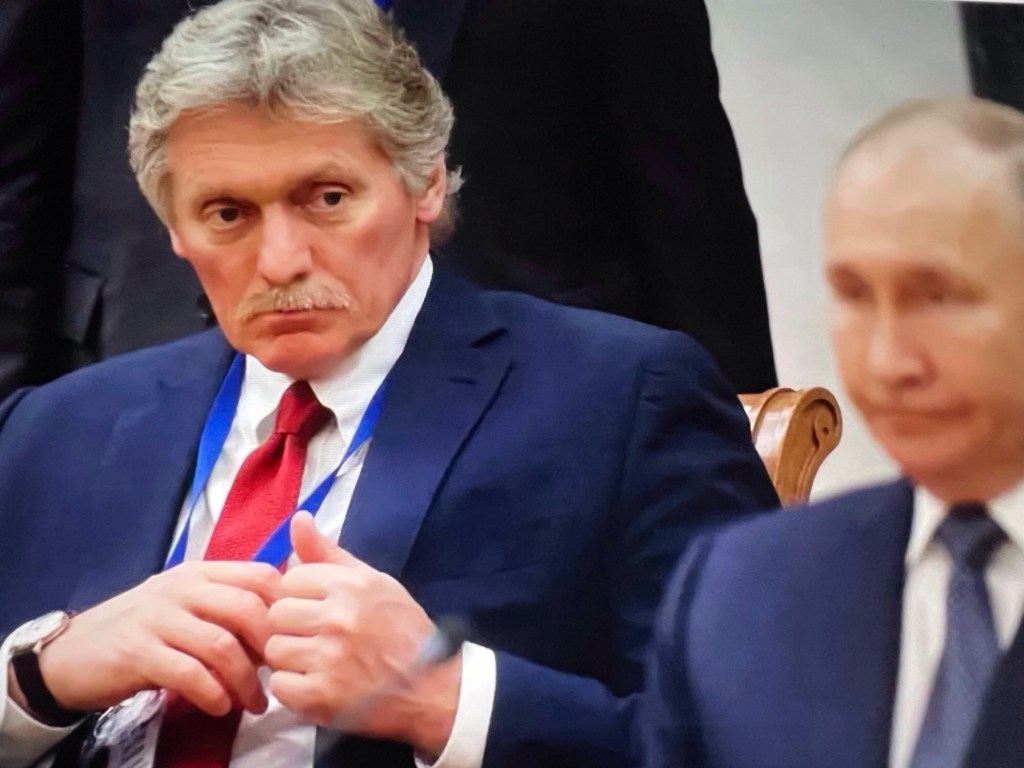
I don’t believe any further comment on my part is necessary at this point. I just wish my public source of all Russian wisdom, Dmitry Peskov, would come back from wherever he’s been this past week, and straighten things out for us. You are sorely missed, Dima.

Dmitry Peskov, Kremlin Spokesman

Just sayin’ . . .

Brendochka
8/25/24

8/25/24: Who Was Pavel Kushnir?

Born in Tambov, central Russia, Pavel Kushnir was by all accounts a musical prodigy, doubtless inheriting his talent from his musician parents. He began playing the piano at age two, and at 17, performed a 2-1/2-hour concert of the 24 preludes and fugues of Russian composer Dmitri Shostakovich. Later that year, he was admitted to the Moscow Conservatory. [Elizaveta Fokht, BBC News Russian, August 24, 2024.]

Pavel Kushnir

A classmate at the Conservatory, Julia Wertman, describes Kushir as having “cultivated a ‘dissident image,’ often wearing a shabby coat and black clothes, with a half-litre bottle of vodka sticking out of a pocket.” [Id.]

Another friend, Olga Shkrygunova, described him as “a cog that didn’t fit any machine, and it had been that way since his childhood.” [Id.]

After graduation, he moved around, taking jobs in smaller cities, where he believed he would have more musical and personal freedom than in Moscow — Yekaterinburg, then Kursk, followed by three years in Kurgan on the Asian side of the Ural Mountains, where he lost his job at the philharmonic orchestra in 2022, for reasons unknown. He finally wound up in Birobidzhan, playing with the Philharmonic there.

Birobidzhan, Russia

He began spending his free time protesting the war in Ukraine. He told friends he would go out at night to stick posters around the city, bearing slogans denouncing the draft and describing Vladimir Putin as a fascist.

He published four anti-war videos on YouTube, which had only five subscribers; the final one described the Russian massacre at Bucha, Ukraine, in 2022.

In 2023, he began staging hunger strikes. He felt the need to protest, and didn’t know how else to do it. His friends tried to convince him to leave Russia, but they never managed to arrange the trip. In late March of 2023, he told his friend Shkrygunova that he felt as though he was being watched, and that he “kept seeing the same person.” [Id.]

He was a man with a mission; he knew the dangers; yet he kept going . . . always alone.

*. *. *

A few months after his last YouTube broadcast, a video was shown on a Telegram channel friendly to Russia’s secret services wherein Kushnir was seen being led by masked men into a white minivan. The report stated that a criminal case had been opened against him, charging him with “making a public call to engage in terrorist activity” — a crime punishable by up to seven years in jail.

And then there was nothing more until August 2nd, when his friend Olga Shkrygunova and human rights activist Olga Romanova published news of his death in an article on the Vot Tak online news report. [Id.]

*. *. *

Oddly, there is no record in the Birobidzhan City Court of a criminal case against Kushnir, though there is a non-criminal charge of “petty hooliganism” filed on June 20th. On July 19th, he was fined an unknown amount; the copy of the verdict sent to him was returned on July 30th, marked “not possible to deliver.”

Pavel Kushner, age 39, had already died in pretrial custody — officially of “dilated cardiomyopathy and congestive heart failure.”

And in so doing, he accomplished what he had wanted to do all along: he became known for the cause he had undertaken. A book he wrote in 2014 has been republished in Germany. Tributes to him have been written by 22 leading classical musicians and others.

And his YouTube channel, which had only five subscribers in his lifetime, has now been viewed more than 22,000 times.

Pavel Kushner — a man with a conscience who chose his own form of imprisonment in order to protest the despotic regime of Vladimir Putin and the invasion of Ukraine — is no longer alone and unknown.

Requiescat in pace, Pavel Kushner.

In his own way, he was another of Putin’s hostages.

Just sayin’ . . .

Brendochka
8/25/24

8/25/24: All I Want For Christmas . . .

. . . is this:

Just 2,492 Carats of Compressed Coal

In truth, I have no special affinity for diamonds. They’re beautiful, but not really a necessity in my life.

But this diamond — well, that’s a whole different ball game. Found in Botswana — the world’s second-largest producer of natural diamonds (behind, of all places, Russia) — it is the largest one found in more than a century, and the second largest ever discovered in a mine.

As yet unnamed, it weighs in at about half a kilogram (a little over a pound), and is described as “fist-sized,” “exceptional,” “overwhelming,” and . . . by Botswana’s President Mokgweetsi Masisi . . . simply “Wow!” [Sello Motseta, Associated Press, August 22, 2024.]

It is, of course, too soon to place a value on the stone. I’m not a gemologist — not even an amateur — but I would guess that the value will depend on the usual “cut, clarity and color,” the absence or number of imperfections, as well as how it is to be divided into individual gemstones. To put it in perspective, a smaller diamond from the same mine was sold for a record $63 million in 2016. [Id.]

I do know that I would not want to be the lapidary chosen to make that first cut.

And if it were mine? Well, I don’t really enjoy a lifestyle that calls for the Crown jewels.


And I’m fairly small, so no Liz Taylor-size gems for me.


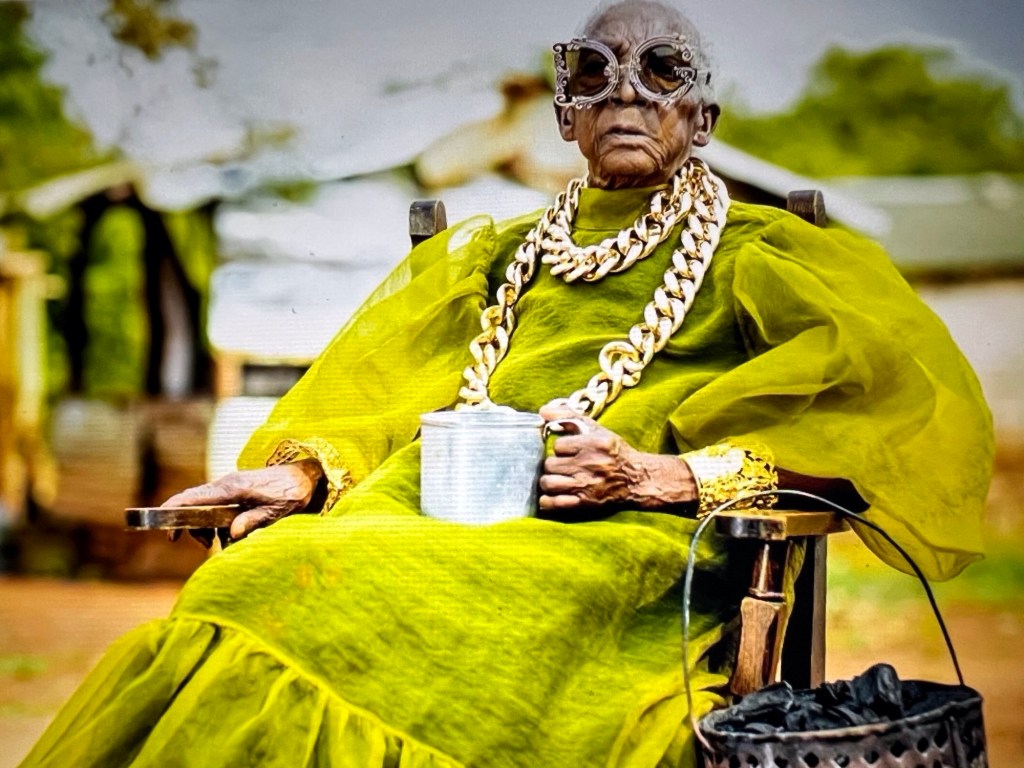
Nor do I crave jewel-encrusted costumes.


On second thought, maybe if I looked like that . . .

But more realistically, don’t you agree that it might make a nice:


Well, that can be decided later. For now, just add it to my Christmas wish list . . . somewhere between the new Jaguar XJ and that little estate in The Hamptons I saw listed on Zillow. And thanks in advance.

Just sayin’ . . .

Brendochka
8/25/24

8/25/24: Putin’s Hostages: Bring Them Home, Week 34

We continue to celebrate the homecoming of the sixteen hostages on August 1st, and wish them renewed health and success in their return to families, friends, and their real lives.

But there are still eight Americans — and hundreds of Russian dissidents — who remain locked up in Russia. So we also continue to remember them each week, and pledge to do so until each and every one has been returned home.

Sadly, but not surprisingly, this week saw the Russian court’s denial of the appeal of one of those eight Americans, Gordon Black, and his return to prison to serve out the remainder of his sentence.

U.S. Army Staff Sergeant Gordon Black was stationed in South Korea when he fell into a Russian “honey trap.” He was on his way back to his home in Texas, on two weeks’ leave, when he was lured to Vladivostok by the Russian girlfriend he had met in Korea. He was arrested in May of 2024 on charges of alleged larceny and murder threat, and sentenced the following month to a prison term of three years and nine months.

Staff Sergeant Gordon Black – “Hostage of the Week”

*. *. *

Ksenia Karelina, dual U.S.-Russian citizen, recently convicted of espionage and sentenced to 12 years in prison for contributing $51.80 to an American charity providing aid to Ukraine.

Ksenia Karelina

*. *. *

Marc Fogel, a schoolteacher from Pennsylvania, was arrested in August of 2021 for possession of 0.6 ounce of legally-prescribed (in the U.S.) medical marijuana. In June of 2022 he was sentenced to 14 years in prison.

Marc Fogel

*. *. *

Robert Romanov Woodland, a dual US-Russian citizen, was teaching English in Russia when he was arrested in January of 2024 for allegedly attempting to sell drugs. In July, he was sentenced to 12-1/2 years in a maximum security prison.

Robert Romanov Woodland

*. *. *

Robert Gilman, already in jail in Russia serving a 4-1/2-year sentence (later reduced to 3-1/2 years on appeal) for kicking a police officer in 2022, found himself facing added charges in 2023 of punching prison staff in the head, and later also attacking a criminal investigator and another prison guard.

Robert Gilman

*. *. *

David Barnes, an American citizen and resident of Texas, was arrested in January of 2022 while visiting his children, who had been taken to Russia from Texas by his Russian wife. He was charged and sentenced in the fall of that year to 21 years in prison for child abuse (allegedly occurring while in Texas), on his wife’s accusation. I really wish I knew more of this story!

David Barnes

*. *. *

Eugene Spector, a dual US-Russian citizen already serving a four-year sentence handed down in June of 2021 on a bribery conviction, received additional charges of suspicion of espionage in August of 2023. No other details have been found, as the evidence is labelled “classified.”

Eugene Spector

*. *. *

Michael Travis Leake, a rock musician and former paratrooper, was sentenced in July of this year to 13 years in prison on drug charges — specifically, suspicion of selling mephedrone, and organizing a drug trafficking business “involving young people.”

Michael Travis Leake

*. *. *

Are any of these prisoners actually guilty of the charges leveled against them? I don’t know. But I do know that the recent timing of a number of the arrests, and the speed with which they were brought to trial, is a clear indication of Russia’s intentional roundup of American citizens to be used as (what I call) Putin’s Pawns.

What they are, quite simply, are HOSTAGES. And they will not — MUST not — be forgotten. Let’s shorten this list to zero.

Just sayin’ . . .

Brendochka
8/25/24

8/24/24: If You’re Not Safe In Prison, Where Are You Safe?

Having recently heard the descriptions of the Russian prison systems from the sixteen newly released (i.e., traded) political prisoners, it is difficult to imagine a situation in which four prisoners convicted of actual violent crimes could manage to overwhelm and take hostage twelve people — eight officers and four inmates — killing four of the officers before themselves being shot and killed by special forces snipers.

But it happened this week in maximum security prison IK-19 in Surovikino, near Volgograd, Russia.

Russian Federal Penitentiary Service Vehicles at Surovikino

What we have learned from American journalist Evan Gershkovich and the others of their experiences has been horrifying: innocent civilians, guilty of no more than having criticized the Russian government or the war against Ukraine, being locked for months in punishment cells, deprived of basic necessities, and never seeing another human being other than the prison guards and occasionally their attorneys.

Yet in a supposed “maximum security” prison, we now have four ISIS-affiliated convicts — charged with violent crimes — being in a position to grab and kill prison officers and other inmates during a meeting of the prison system’s disciplinary commission. [Radina Gigova and Sergey Gudkov, CNN, August 23, 2024.]

There is a scarcity of detail thus far; but such meetings are said to be held “where cases of malicious violators are considered, among other things.” It does seem that there must have been a sizable group of people present; but there is no information given as to whether the prisoners were involved in the meeting, whether they were in any way restrained, whether the prison guards were armed . . . or much of anything else to indicate exactly how the scenario evolved, other than the fact that the assailants did have knives. Where they got those knives, we don’t yet know.

One of the ISIS-Affiliated Hostage-Takers

There is a description of one of the hostage-takers “displaying a flag emblematic of the Islamic State” — likely the photo above — and an indication that one of the suspects said the strike was “revenge” for the militants presently being held elsewhere on charges of having committed the attack on a concert venue near Moscow earlier this year in which more than 130 people were killed. [Id.]

This week’s siege ended when “Snipers from the special forces of the Russian National Guard in the Volgograd Region neutralized four prisoners who had taken prisoner [sic] employees hostage with four precise shots; the hostages were freed.” [Id.]

Well, except the three who had been killed earlier (the fourth victim died later).

Further information (though unconfirmed) identified the four perpetrators as being two men from Uzbekistan and two from Tajikistan. Three were serving terms for illegal drug charges, and one for “inflicting serious damage to a person’s health.” [RadioFreeEurope/RadioLiberty, August 23, 2024.]

This was an incident that never should have occurred in the first place. But once it did start, the “special forces” knew exactly how to end it. They’re good at “neutralizing.”

Special Forces at IK-19 Prison

*. *. *

On reading these articles, I couldn’t help making the mental leap from prison IK-19 to other prisons — those penal colonies where American and other Western political prisoners have been (and some still are) held hostage on false charges built out of thin air — and some questions come immediately to my mind. First and foremost: Why are non-violent political prisoners — those men and women like Gershkovich, Paul Whelan, Alsu Kurmasheva, and Vladimir Kara-Murza — so closely confined and guarded, when they are obviously not a physical threat to anyone? Whereas in prisons for violent criminals . . . well, we’ve just seen what can happen there.

There are still eight American hostages locked away in Russian penal colonies on strictly political grounds, falsely convicted of espionage and similarly ludicrous charges. They’re never going to riot, to try to take hostages, to cause any sort of trouble. They deserve humane treatment, but they won’t receive it as long as Vladimir Putin is allowed to use them as pawns for a future trade . . . because he knows that the worse they are treated, the more incentive there is for us to bring them home.


And the grand-prize question — the one I keep asking, over and over again — is this: How long is Vladimir Putin going to be allowed to continue flouting international law, invading sovereign countries, and committing his crimes against humanity? Surely, the Russian people deserve better.

First of all, they deserve the truth.

Just sayin’ . . .

Brendochka
8/24/24

8/24/24: Birds of a Feather . . .

Yesterday I wrote about the sad passing of Sphen, the gay Australian penguin, and his surviving life companion, Magic. I was so taken with the story of their romance and the family they had fostered together, and I was sure it must have been a rare event — if not actually unique — in the avian world.

Sphen and Magic

And then today I was amazed to read about a similar case . . . only these two are not penguins, but a pair of beautiful pink flamingos.

Seriously.


This couple call the Paignton Zoo in southwest England their home. There is reportedly a thriving gay flamingo community there, but one pair — Arthur and Curtis — are indeed unique in that they are the first known to have adopted and hatched an abandoned egg, thus becoming proud parents of a little flaminglet. [AJ Willingham, CNN’s Good Stuff, August 24, 2024.]

And yes, that is what baby flamingos are called. They’re also sometimes called chicklets, but that just reminds me of my favorite chewing gum when I was a kid, so I’ll go with flaminglet.

Anyway, I’m sure Arthur and Curtis will make fine parents to little what’s-its-name. And their story, along with that of Sphen and Magic, has taught me something I did not know — quite probably because I never had a reason to give it any thought: and that is, that humans are not the only animal species of which some members are homosexual.

And that is an exciting discovery, because it led me to conclude that the answer to the age-old argument of “nature vs. nurture” turns out to be — at least where birds are concerned — nature. Right? You can dress your little girl penguin in a tuxedo, and your little boy flamingo in a pink tutu, and they will still turn out to be as Mother Nature — not you — intended them to be.

Which is a good thing. They’re gorgeous creatures, they’re happy, they’re living the good life, free of hang-ups or prejudices, doing no harm to anyone.

We humans could learn a lot from our feathered friends.

Just sayin’ . . .

Brendochka
8/24/24

8/24/24: Hungary Is At It Again

It seems as though Viktor Orban is determined to become a total pariah amongst his fellow EU members . . . and all in order to find favor with Vladimir Putin.

So what has he done now? Oh, not much — just invited Russia, Belarus, Moldova, Bosnia-Herzegovina, Montenegro, and North Macedonia to traipse freely throughout all the countries of Europe’s Schengen zone, basically unimpeded.

Let’s see now . . . What’s wrong with this picture?

“Hmmm . . .”

A little background: Hungary’s existing “national card” program makes it easier for people from other countries to come to Hungary to live and work than if they were to apply for traditional work permits or business visas. The holder of a national card is allowed to work in Hungary without any special security clearance, and can bring their family with them. [Reuters, August 21.] After three years, it may even lead to permanent residency. [RadioFreeEurope/RadioLiberty, August 13, 2024.]

But now, the extension of the program to include Russia, Belarus, and the others named above has raised more than a few eyebrows — not surprisingly, as it is contrary to EU policy toward Russia and Belarus, in light of the existing EU visa bans and asset freezes on more than 2,000 citizens from both countries, imposed since Russia’s invasion of Ukraine. [Id.]

“But isn’t that Hungary’s problem?” — you may ask.

Actually, no . . . because of the aforesaid European Schengen zone, which allows free travel, without the necessity for border checks, among the 29 member countries. This includes virtually all EU countries, with the exception of Ireland and Cyprus.


So, that covers most of Europe . . . including Hungary. Which means that anyone holding a national card from Hungary can also travel freely from there throughout Austria, Bulgaria, Belgium, the Czech Republic, Croatia, Denmark, Estonia, Finland, France, Germany, Greece, Iceland, Italy, Latvia, Liechtenstein, Lithuania, Luxembourg, Malta, Netherlands, Norway, Poland, Portugal, Romania, Slovakia, Slovenia, Spain, Sweden, and Switzerland.

The EU — which has already been at odds with Orban over his continuing close relationship with Vladimir Putin, his “Patriots for Europe” coalition, and his unauthorized visits to Moscow and Kyiv — is quite naturally worried about the likelihood of some (or possibly a lot) of those un-vetted Russians and Belarusians galavanting at will through the Schengen zone.

And considering the recent spate of revelations involving Russian illegals, assassins, and other ne’er-do-wells now back home in Mother Russia thanks to the prisoner swap of August 1st . . . who wouldn’t be worried?

Welcoming the Illegals Back Home – 8/1/24

Sandor Pinter, Hungary’s Minister of the Interior, wrote in a letter to the EU that “The National Card will be issued in accordance with the relevant EU framework and with due consideration of the possible security risks involved. In this respect, the Hungarian legislation and practice, which the Commission has not objected to so far, has not changed.” [Anita Komuves, Reuters, August 21, 2024.]

Well, of course the EU hasn’t objected to it before — it didn’t previously include Russia or Belarus.

Earlier this month, EU internal affairs chief Ylva Johansson warned Hungary that “its decision to ease visa restrictions for Russians and Belarusians posed a potential security threat and [that] she would take action if her concerns were not addressed.” Apparently, Johansson also posed specific questions to Pinter; he has said, in an annex to his letter, that he would provide detailed answers. [Id.]

Let’s see how that goes.

Waiting . . .

Just sayin’ . . .

Brendochka
8/24/24

8/23/24: And Antonov Makes Three . . .

This is beginning to feel like tryouts for the lead in the high school senior play. First we heard from Ushakov . . . then Chemezov . . . and now it’s Antonov. Who’s up next — is there a Popov in the wings, waiting to deliver the next Putin Proclamation?

And seriously . . . Where on earth is the actual Kremlin spokesman, Dmitry Peskov??!!!

Today’s broadcast of “The Daily Threat From Moscow” was brought to us by the current Russian Ambassador to the United States, Anatoly Antonov. Referring to the Ukrainian counter-offensive (Russian version: “incursion”) in the Kursk region, Antonov said:

“I tell you sincerely that the president has made a decision. I am firmly convinced that everyone will be severely punished for what has happened in Kursk region.”

Ambassador Antonov

Well, I’m sure we’re all glad that he was speaking “sincerely.” We certainly wouldn’t want him to lie to us, would we?

Unfortunately, that was all he had to say about that — no details, despite Putin’s having just met with the governors of border regions and other senior officials. They’re playing this one close to the chest.

He did, however, go on to offer his assessment of the United States, complete with a prediction that it would at some point remove all restrictions on the use of weapons supplied to Ukraine:

“The current administration behaves like a person who extends one hand and holds a dagger behind their back with another one. They are, essentially, laying ground [for a decision] to simply remove all the existing restrictions at a certain point, without much thought.” [Lucy Papachristou, Reuters, August 23, 2024.]

I suppose times have changed; but there was a day when a diplomat was supposed to remain . . . well . . . diplomatic.

Ben Franklin: The Diplomat’s Diplomat

But back to my original point: this round of musical spokesmen being offered us from Moscow this week. It’s an odd assortment, including — so far — an “aide,” an industrialist, and a diplomat. But where is the actual Kremlin press secretary? Where is that adorable Dmitry Peskov? Have there been any sightings of him this week, perhaps on a Crimean beach, or at a casino on the French Riviera?

Dmitry Peskov

Wherever you are, Dima, do enjoy yourself. But come back to us soon, well rested and raring to go, because we miss your unique brand of sarcasm.

Just sayin’ . . .

Brendochka
8/23/24

8/23/24: Just Another Friday


– Bodies recovered from yacht sunk by water spout off coast of Sicily . . .

– Volcano erupts in Iceland for sixth time in eight months . . .

– Putin has plan of action to counter Kursk attack . . .

– Trump loses it — again . . .

– Woman is swallowed by sinkhole in Kuala Lumpur . . .

“Holy Sinkholes, Batman!”

And that’s just part of this morning’s news.

I’m going back to bed now. Wake me when we reach the next millennium . . . if we reach the next millennium. Or when there’s actually some good news to report . . . whichever comes first.

Just sayin’ . . .

Brendochka
8/23/24