While preparing my regular Sunday report (posted earlier today) on the status of the political prisoners being held hostage in Russia’s prisons and penal colonies, a news flash popped up on my phone with — miracle of miracles! — some incredibly happy news for the Easter and Passover holidays.
While Vladimir Putin’s promised 30-hour Easter ceasefire in Ukraine remains tenuous, on Saturday the two warring countries did manage to carry out their largest prisoner-of-war swap since the Russian invasion of Ukraine in February of 2022.
Coming Home to Ukraine
With each side welcoming home between 200 and 300 POWs, it was indeed a cause for celebration.
There is, of course, still a long way to go before the two countries reach a final accord. But for now, we’ll take every moment of joy we can get.
On April 10th, the trial of journalists Sergei Karelin, Konstantin Gabov, Antonina Favorskaya, and Artem Kriger was concluded behind closed doors in a Moscow court. They had been charged with belonging to an “extremist” group, which they deny. Their actual “crime”: having previously reported favorably about famed dissident — and Putin nemesis — Aleksei Navalny.
The trial had been in progress since last October. Finally, on April 15th, sentencing was handed down, condemning each of the four defendants to five and one-half years in a penal colony. The charges against them carried a maximum penalty of imprisonment for six years.
This is more than just a tragedy for four innocent individuals; it is a continuation of Vladimir Putin’s obsessive drive — in the words of Human Rights Watch (HRW) — to “erase Navalny’s political legacy [through their] extensive arsenal of repressive tools.” In February, on the first anniversary of Navalny’s death in a Siberian penal colony, dozens of people who gathered to pay homage to his memory were detained by authorities. HRW has called those arrests “just the tip of the iceberg in the Kremlin’s continued crackdown on his supporters.” [Sana Noor Haq and Anna Chernova, CNN, April 16, 2025.]
But we can continue to remember him, his supporters, and all of the victims of Putin’s war against freedom.
In Memoriam: Aleksei Navalny
*. *. *
And on Friday, a St. Petersburg court sentenced a 19-year-old woman, Darya Kozyreva, to two years and eight months in prison for repeatedly “discrediting” the Russian army — a charge used by the Putin regime to cover any number of actions deemed to signify opposition to the war in Ukraine. She had been arrested more than a year earlier, on February 24, 2024.
Darya Kozyreva
There is a monument in St. Petersburg to Ukrainian poet Taras Shevchenko (which in itself is surprising), onto which Kozyreva had glued a verse from his poem “My Testament,” reading:
“Oh bury me, then rise ye up / And break your heavy chains / And water with the tyrants’ blood / The freedom you have gained.” [Mariya Knight and Caitlin Danaher, CNN, April 18, 2025.]
At a hearing on that charge, Kozyreva, of course, maintained that she was merely quoting an existing poem.
A second case was brought against her in August of 2024, following an interview with Radio Free Europe in which she called the war “monstrous” and “criminal.” And, dating back to her high school days in 2022, she has spoken out as an anti-war activist. She has been fined in the past for “discreditation,” and expelled from university for posting on Russian social media her views on the “imperialist nature of the war.” [Id.]
All of the above, of course, served to bring her to the attention of the Russian authorities to whom speaking against Putin’s “special military operation” in Ukraine is tantamount to committing treason.
Thus, sadly, we add one more name to our honor roll of political hostages today.
*. *. *
And never forgetting the others left behind . . .
The Azov 12 David Barnes Ales Bialiatski (in Belarus) Gordon Black Andrei Chapiuk (in Belarus) Antonina Favorskaya Konstantin Gabov Robert Gilman Stephen James Hubbard Sergey Karelin Ihar Karney (in Belarus) Vadim Kobzev Darya Kozyreva Artyom Kriger Uladzimir Labkovich (in Belarus) Michael Travis Leake Aleksei Liptser Ihar Losik (in Belarus) Daniel Martindale Farid Mehralizada (in Azerbaijan) Nika Novak Marfa Rabkova (in Belarus) Igor Sergunin Dmitry Shatresov Robert Shonov Eugene Spector Valiantsin Stafanovic (in Belarus) Siarhei Tsikhanouski (in Belarus) Laurent Vinatier Robert Romanov Woodland Vladislav Yesypenko (in Crimea) Yuras Zyankovich (in Belarus)
. . . while looking forward to the day they’re all at home again.
Earlier today, Vladimir Putin declared an “Easter truce” in the war on Ukraine, stating that Russia would cease “all hostilities” from 6:00 p.m. Moscow time Saturday night to midnight Monday, April 21st, and that “We assume that the Ukrainian side will follow our example.” [Kosta Gak, et al., CNN, April 19, 2025.]
Ukrainian President Volodymyr Zelensky posted to X that Russia’s announcement was “yet another attempt by Putin to play with human lives. At this moment, air raid alerts are spreading across Ukraine. At 17:15 [5:15 p.m.], Russian attack drones were detected in our skies. Shahed drones in our skies reveal Putin’s true attitude toward Easter and toward human life.”
Reports from Ukraine were that, as of 7:00 p.m., sirens were sounding in Kyiv and several other regions, and that “the Russians continue to fire in all directions.” Ukrainian troops at three separate locations on the front lines said there was no sign of a cessation in fighting. [Id.]
But that shouldn’t surprise anyone. Putin’s seemingly magnanimous offer — likely a knee-jerk reaction to yesterday’s U.S. threat to withdraw from negotiations if both sides failed to step up — would hardly be expected to filter down to the troops, already engaged in combat at the front lines, in time to effect a total ceasefire by a 6:00 p.m. deadline.
It was a grand gesture, an “отвлекающий маневр”(diversionary tactic), intended both to lend credence to his protestations of wanting to end the war, and to give him time to stall negotiations just a little longer.
Like the little boy who cried wolf, he has used up all of his chances. Why should anyone ever take him seriously again?
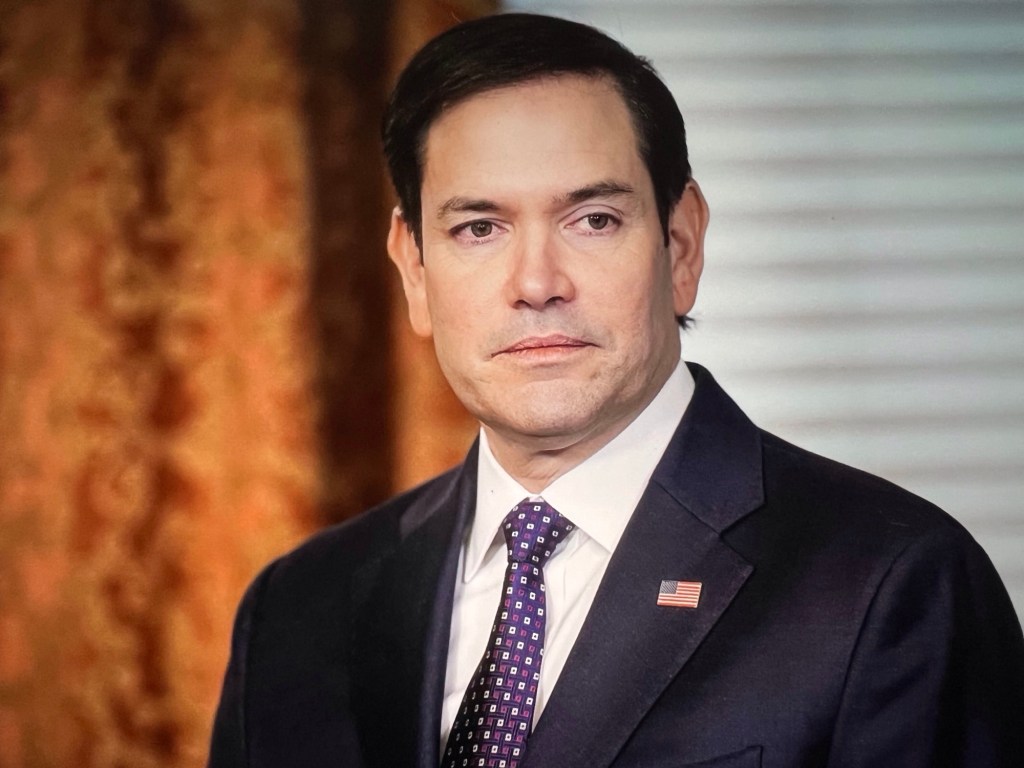
If anyone — obviously someone with more time and greater fortitude than I have remaining — ever decides to compile a list of “Greatest Quotations From the Second Trump Administration,” this will surely be at the top of the Marco Rubio chapter:
“If it is not possible to end the war in Ukraine, we need to move on.”
And he followed with:
“We need to determine very quickly now, and I’m talking about a matter of days, whether or not this is doable.”
That’s it, then? Just wash our hands of the whole thing and walk away . . . leaving an entire nation at the mercy of Vladimir Putin’s army of conscripts, mercenaries and criminals, and the rest of Europe preparing to be next?
Well, yes . . . that is what the U.S. Secretary of State said on Friday in Paris, following high-level talks with European and Ukrainian officials. And his comments were quickly confirmed by Donald Trump to reporters in the Oval Office, when he said that Rubio was “right . . . [n]o specific number of days, but quickly, we want to get it done.” [Alex Stambaugh, Max Saltman, et al., CNN, April 18, 2025.]
Asked by CNN’s Pamela Brown what was meant by “moving on,” an unnamed U.S. official said that Rubio was “communicating the president’s views,” and that Trump “doesn’t have limitless patience for people to posture and play games.” [Id.]
In other words, Trump’s grand promise to end the three-year-old war within 24 hours of taking office hasn’t exactly worked out according to plan, and he’s losing patience . . . not to mention, credibility. It wasn’t clear whom he was blaming for the failure of negotiations — that seems to change on an almost daily basis — but doubtless it will be someone other than himself. He did say:
“If, for some reason, one of the two parties makes it very difficult, we’re just going to say, ‘You’re foolish, you’re foolish. You’re horrible people,’ and we’re just going to take a pass — but hopefully we won’t have to do that.” [Id.]
I do so love Trump’s Churchillian eloquence . . . don’t you?
When asked what progress he would be looking for in order to continue negotiations, he said he would “have to see an enthusiasm to want to end it [from both sides] soon.” [Id.]
And from Moscow, also on Friday, Kremlin spokesman Dmitry Peskov said that Russia was “striving to settle this conflict. The contacts are quite complicated because the topic of Ukrainian settlement is also not simple. . . . Certain developments already exist, but of course there are still many difficult discussions ahead.” [Id.]
Ah, Dima, my man . . . as always, the master of understatement and obfuscation. Thanks for your input.
Kremlin Spokesman Dmitry “Dima” Peskov
On the same day, the city of Kharkiv, Ukraine, was hit by a massive Russian missile attack.
*. *. *
And thus ends another week of high-level international diplomacy. Henry Kissinger would have been so proud.
In the first two installments of this three-part series, I introduced you to Malcolm and Simone Collins, a Pennsylvania couple who identify as “pronatalists” — part of a growing movement to encourage, and hoping one day perhaps to mandate, larger families and to instill in their multiple children their ultra-conservative, right-wing, anti-liberal, anti-“woke” standards.
And I alluded to the fact that they, and their fellow travelers, were seeking government support for their movement from like-minded individuals at the top of the Washington hierarchy . . . including Donald Trump, JD Vance, and none other than the king of sperm donors himself: Elon Musk — each of whom has spoken in favor of population growth and a resurgence of their idea of “traditional” family values.
As I stated previously, what these folks choose to do with their lives is their business . . . big families can be great in the right conditions. But Malcolm Collins has described their movement as follows:
“We are a coalition of people who are incredibly different in our philosophies, our theological beliefs, our family structures. But the one thing we agree on is that our core enemy is the urban monoculture; the leftist unifying culture.”
From that, I infer that a “rightist unifying culture” would, on the other hand, be just dandy with them. Hmmm . . .
The Collins Family (so far)
It does sound as though there is disunity within the movement’s own ranks. At their second annual Natal Conference in March, two very different branches of the American right were brought together: conservative Christians, and members of the so-called “tech right” — an outgrowth of the libertarian, start-up culture of Silicon Valley. [Stephanie Hegarty, BBC, April 1, 2025].
One of last year’s speakers was Michael Anton, recently appointed by Trump as the State Department’s Director of Policy Planning. And one of this year’s speakers — economist Catherine Pakaluk, herself the mother of eight and stepmother of six — hesitates to call herself a pronatalist. “It’s like an unholy alliance,” she says. “It’s a complicated movement and includes people with very different positions.” [Id.]
Malcolm Collins has said: “[If you ask me] do we have pronatalists in the White House right now who are pushing policy, my response to this would be, ‘I mean, duh, like Elon and JD Vance.’”
Pronatalist Role Models
As he said . . . “Duh”!
*. *. *
Which brings us back to Washington’s best-known baby daddy, Elon Musk. Father of an estimated 14 children (and counting) by at least four women (of questionable judgment), he has caused millions of people around the world to ask themselves one simple question regarding his proclivity for procreation: “WHY??”
And now there may be an answer to that.
He wants to populate Mars.
The Red Planet
Well, no . . . not immediately. I’m not suggesting he plans to pack all of his kids onto one of his experimental space ships and send them soaring off into space. But his “more-is-better” philosophy of family planning and his aspiration to colonize Mars are connected.
According to Ashley St. Clair — a right-wing social media influencer and the chosen mother of one of Musk’s children — he is creating a “legion” of children to prepare for the apocalypse. [Shannon Carroll, Quartz, April 16, 2025.]
That’s “legion” as in:
A Legion of Ancient Rome
No, no, sorry . . . more like this:
The “Legion” of Musk
Are you still with me? Good, because there’s more.
St. Clair is said to have shown the Wall Street Journal texts she received from Musk while she was pregnant with their child, suggesting they enlist other women to join them in creating this medley of Musks more quickly. One such message read, in part:
“To reach legion-level before the apocalypse, we will need to use surrogates.” [Id.]
He has written on X that he believes “becoming multiplanetary is critical to ensuring the long-term survival of humanity and all life as we know it.” [Id.]
He also believes that civilization is under threat because of a declining population. At a conference in Saudi Arabia last year, he flatly stated:
“I think for most countries, they should view the birthrate as the single biggest problem they need to solve.” [Id.]
Not wars; not environmental decay; not pandemics; and not Donald Trump’s tariffs. Just crank out the babies, ship them off to Mars, and let Earth destroy itself.
But this was not a universal recommendation to every part of the world. On the contrary, others familiar with Musk have said he is concerned that third-world countries have higher birth rates than the U.S. and Europe, and that he sees his role as “helping seed the earth with more human beings of high intelligence.” [Id.]
Oh! My! God! He thinks he’s frickin’ Johnny Appleseed! “Seed the earth”??!!!
But wait. He also said, people of “high intelligence.” So I take it back — he’s not Johnny Appleseed . . .
. . . he’s this century’s Adolph Hitler, hell-bent on creating the Master Race.
And he is the idol of the pronatalist movement.
*. *. *
As usual, I have questions:
— Wouldn’t it make more sense to try to fix the problems we’ve created here on Earth than to begin making the same stupid mistakes elsewhere?
— When should we expect the apocalypse? Should we begin planning now?
— How soon does he expect Mars to be habitable?
— Has he heard about all of the elements on Mars that are toxic to humans?
— Does he even know that his rockets keep failing?
— What makes him think his progeny will be intelligent? For that matter, how does he define “intelligent”? It’s different from merely being “educated,” you know.
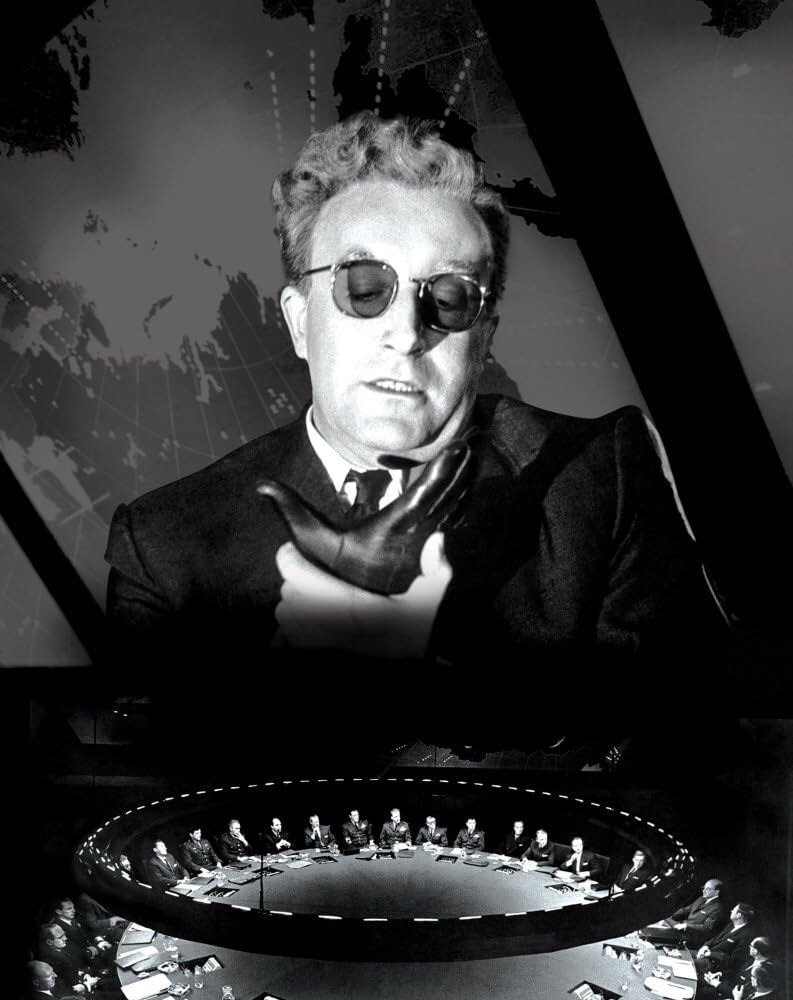
— How sure is he that his children, grandchildren, etc., will choose to go along with his Dr. Strangelove-ish scheme?
Peter Sellers as “Dr. Strangelove” – 1964 Film
— And finally . . . strictly from my own point of view . . . who wants to survive the apocalypse in any event? Have you seen those movies about the last people on earth?!!
*. *. *
There is no longer any doubt in my mind: the inmates are, in fact, running the asylum. And my first and foremost thought — to borrow the title of a show by the late, great Anthony Newley — is:
It’s noon, and I’m still lying in bed, trying to decide whether it’s worth getting up today. I just glanced at the headlines in the hope of finding something positive to write about, and instead I found more of the old SSDD: Same Shit, Different Day.
And now I’m feeling brain dead . . . or maybe it’s just wishful thinking.
To put things in perspective, the high point of my day yesterday was when my doctor’s office called to reschedule next week’s appointment because my doctor has broken his leg in a skiing accident.
In my favor, my first thought was how terrible that was for him . . . though that was immediately followed by relief that I wouldn’t have to go out on Monday. It was just a routine checkup, but it felt like too much effort. And his misfortune turned out to be the best part of my day.
That is not a good thing!
*. *. *
Okay, it’s now 1:30 p.m. I’m out of bed, dressed, and have read past the headlines to the guts of the news reports. And I feel myself getting fired up once more as I read about the people out there fighting for “truth, justice, and the American way” (remember that?).
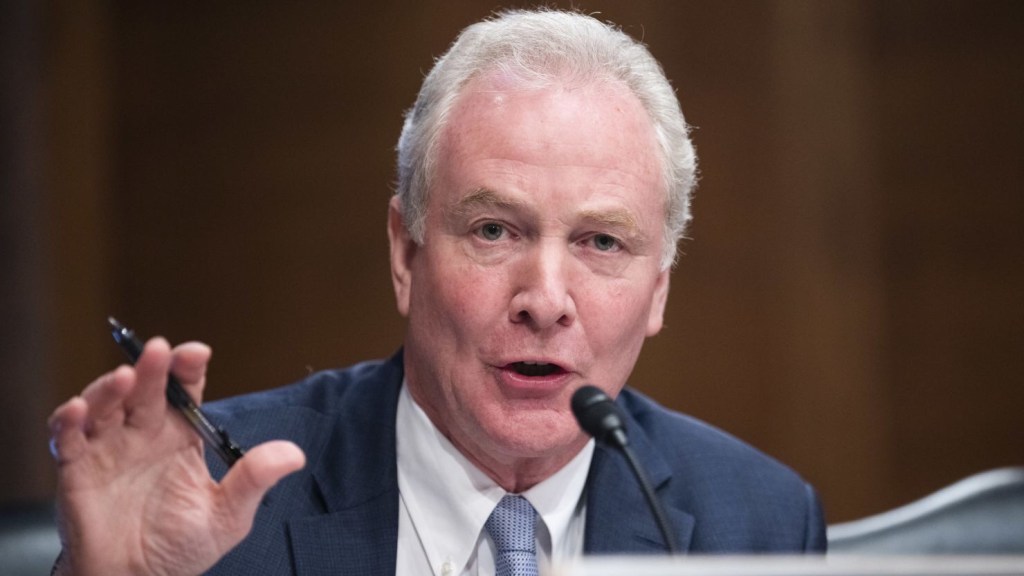
People like Senator Chris Van Hollen (D-Md.), who has quite literally risked his own neck to travel to El Salvador, where he has met with the tyrannical president of that country, as well as with deportee Kilmar Abrego Garcia, in an attempt to have Abrego Garcia returned to the U.S. after his wrongful deportation by the Trump administration.
Senator Chris Van Hollen
And people like the honest journalists who continue to report — whether from actual war zones, or from political “war zones” such as Washington, D.C., and Moscow — in order to disseminate facts that allow us to distinguish between the truth and the politicians’ lies.
And I know that I can’t keep quiet for long. My words may not reach more than a handful of people; but the mere act of speaking out (or writing) about the injustices we are witnessing in today’s world acts as a catharsis for me . . . and, quite frankly, as a sop for my conscience, because — like most of us — I feel helpless to actually effect any meaningful change in the course of world events.
But my fingers can still find the right letters on the keyboard. So here I am — back at it, doing what I can, and hoping you’ll stay tuned and join in. Because it’s only by shouting out that we will ultimately be heard.
And because doing nothing is simply not an option, when this is what we’re fighting for:
It’s also Patriots’ Day — the 250th anniversary of Paul Revere’s ride — an event in American history that was drummed into the heads of every child in New England in the good old days . . . the days when love of country was celebrated and patriotism trumped tyranny, not the other way around. (Yes, that was a play on words — glad you noticed.)
“The British are coming! The British are coming!”
We were made to read Henry Wadsworth Longfellow’s famous poem each year on the 18th of April to be sure we didn’t forget the origins of our hard-won freedoms . . . and I can still recite the first verse from memory.
But we are living in far different times, when expressions of patriotism have come to be considered trite, maudlin, unfashionable . . . and now, tragically, sometimes even dangerous.
But other types of poetry are still around, including haiku, which — while deceptively simple-looking — is devilishly tricky to accomplish. But, this being both National Haiku Poetry Day and Patriots’ Day, I thought I’d try my hand at it. I call this:
Haiku for Washington, D.C.
Cherry blossoms bloom, New people in the White House. Cancel spring this year.
I know, I know . . . haiku are supposed to be lovely and uplifting, celebrating the beauty of life and of nature. But it’s hard to see the beauty today through the cloud of doom hanging over everything.
. . . and this little piggy may save a human life.
If you’re at all squeamish, have a problem with the thought of blood or internal organs, are a lifetime member of PETA, or are strictly vegetarian, you may want to skip this next paragraph. But I find it medically fascinating.
I’ve just read about a potentially history-making procedure, still in the research stage, that would enable a person with sudden liver failure to be temporarily kept functioning by being attached to a genetically-edited pig’s liver in a dialysis-like treatment, while awaiting a suitable transplant. The process would filter the person’s blood, doing the work of their own liver so the organ could rest and possibly heal itself. [Lauran Neergaard, ABC News, April 15, 2025.]
(Livers are famously very good at repairing and regenerating themselves. Too bad more of our organs can’t do that.)
Okay, enough detail. Those of you with sensitive natures may resume reading now.
*. *. *
Aside from the exciting medical implications of such a procedure, the article caught my attention because of my own past experience with pig parts.
No, not pork chops or BLTs. I’m talking about surgical tissue. To clarify:
Some 25 or 30 years ago, I was experiencing pain in my right shoulder, which my orthopedic surgeon diagnosed as a torn rotator cuff. It was disabling enough that I agreed to schedule surgery, and I came through it without complication.
After a couple of days in the hospital, and several more days of recuperating at home, I had an appointment for a follow-up with my surgeon at his office. Being one of Washington, D.C.’s leading orthopedists, he also taught at a local medical school, and frequently had students in his office to observe as part of their studies. On the occasion of my visit, there was a young male student present who appeared very much in awe of his professor.
I, on the other hand, knew my doctor very well . . . which meant that I was aware, not only of his surgical skills, but also of his wicked sense of humor, and I was prepared to hear just about anything from him at any time.
As he checked the results of his artistry on my shoulder, he simultaneously explained the procedure to his student, and described how — once he had cut into my arm — he had found the rotator cuff to be so badly torn as to be beyond repair without the use of extraneous tissue. And at the time, there was a new procedure — approved, but still considered somewhat experimental — using porcine tissue: the tissue of a pig. And there just happened to be some available at that hospital at that precise time.
Listening to him, I thought, “What fun! I’m a medical guinea pig.” (Pun intended.)
But then the doctor segued into a tale of dinner at his home the very night following my surgery . . . which happened to have been the first night of Passover. His family were gathered for the Seder, and somehow the conversation turned to the unusual procedure that he had just performed. As he spoke, he noticed his college-student son frowning in puzzlement, and asked what was wrong . . . whereupon the son said:
“Dad, I have an ethical question. Please explain to me how you could transplant the tissue of a pig into the body of a Jewish woman without her permission — and on the eve of Passover, no less??!!!”
At that point in the story, I happened to glance at the young medical student, whose eyes had widened in what appeared to be abject fear. He was obviously expecting me to explode in anger . . . or collapse in distress, at the very least.
Young Medical Student
He clearly had never met me, and made the mistake of assuming I was a “normal” person. So he stared in disbelief as I calmly asked my doctor what he had said to his son, and received the following reply:
“I told him that I couldn’t very well wake you in the middle of surgery to ask your permission. And besides, I said, you don’t know this woman. She would have told me that that was my job, not hers, and to just get on with it.”
And he was right. But the student was sure I was some sort of madwoman when, instead of going postal on the doctor, I burst out laughing and announced that hereafter my right shoulder would have its own name — “Babe” — in honor of one of my daughter’s favorite childhood story books.
And so it came to be. I immediately went on a search for the perfect little pig pin, which I proudly wore on the right shoulder of my jackets for many years thereafter . . . and, of course, whenever I had occasion to visit my orthopedist.
*. *. *
So, while some of you may think of pigs as dirty, messy, grunty, swill-eating creatures, I will always have a special place for them in my heart . . . and my right shoulder.
A few months ago, there was much ado in the news about multiple sightings of what appeared to be drones in the skies near military facilities in various parts of the world, including the U.K. and the eastern U.S. It was beginning to feel like a replay of Orson Welles’ “War of the Worlds,” but with visuals.
And then . . . nothing.
Lots of far-fetched theories, and some attempts by various governments to assure us that there was nothing to worry about even though they claimed to have no idea what was going on . . . but no real explanation.
And now we are learning that the U.S. Federal Aviation Administration (FAA) is testing systems to detect drones in New Jersey — where hundreds of drone sightings were originally reported. Not that there’s anything to be concerned about . . .
The FAA’s Center of Excellence for UAS Research is using off-the-shelf drones (officially known as Unmanned Aerial Systems) of various sizes and shapes to determine whether their presence can be picked up by a combination of systems including Remote ID, Acoustic Array, and X-Band radar, and to determine whether they might interfere with FAA or aircraft navigation systems. [Pete Muntean, CNN, April 15, 2025.]
As for those earlier sightings in November and December, Transportation Secretary Sean Duffy has labelled it the New Jersey “drone fiasco under the last administration,” and assured the public:
“This administration has taken a completely different approach, radical transparency. The FAA is doing this to ensure we can properly detect drones in our airspace and make sure they don’t interfere with airplane navigation systems . . . This is about protecting our national security and American safety.” [Id.]
(Sure . . . it’s all Joe Biden’s fault. The world is obviously much safer under Donald Trump’s inspired guidance.)
Looking at Duffy’s statement, two things leap out at me:
First, that “radical transparency” — on any topic — most assuredly would be a “completely different approach” for this administration; and
Second, we still don’t know what those earlier sightings were. The FAA says that more than 100 drones are sighted near airports each month. Maybe so . . . but whose are they, and why aren’t they being destroyed? Aren’t they violating protected air space?
In fact, congressional reports have said that U.S. Navy and Secret Service tests of anti-drone systems in Washington, D.C., last month caused collision alerts to go off in several planes preparing to land at Reagan National Airport. [Id.]
So is the anti-drone technology as great a danger to aviation as the drones themselves? Presumably, that’s the purpose of the tests in New Jersey.
But it’s okay, because “Officials have urged calm and emphasized there is no evidence suggesting the sightings posed a security threat.” [Id.]
I can see it’s going to be another one of those nights.
Although it’s difficult to quantify the various items on Donald Trump’s ever-growing bucket list for his second administration, I would have to rank his desire to make Canada the 51st state of the United States in the top ten of his “most bizarre” pipe dreams.
Canada, of course, is a country rich in natural resources, including those rare earth minerals he has been so focused on lately (even demanding them in payment from Ukraine for having helped defend them for the past three years), and thus understandably desirable.
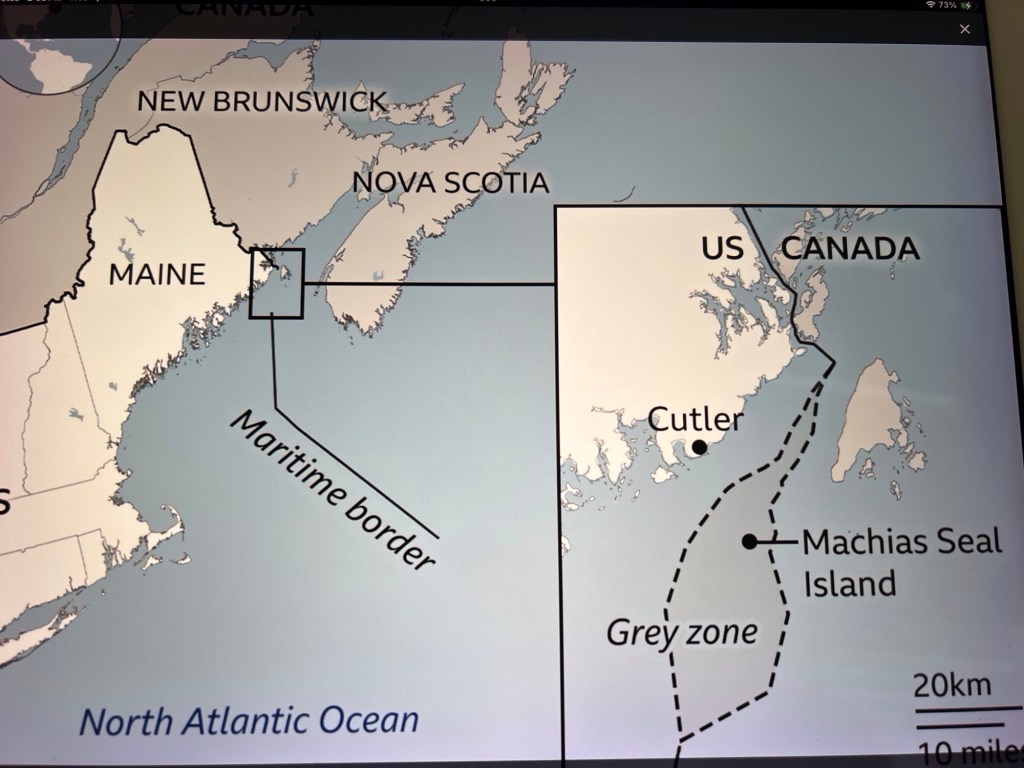
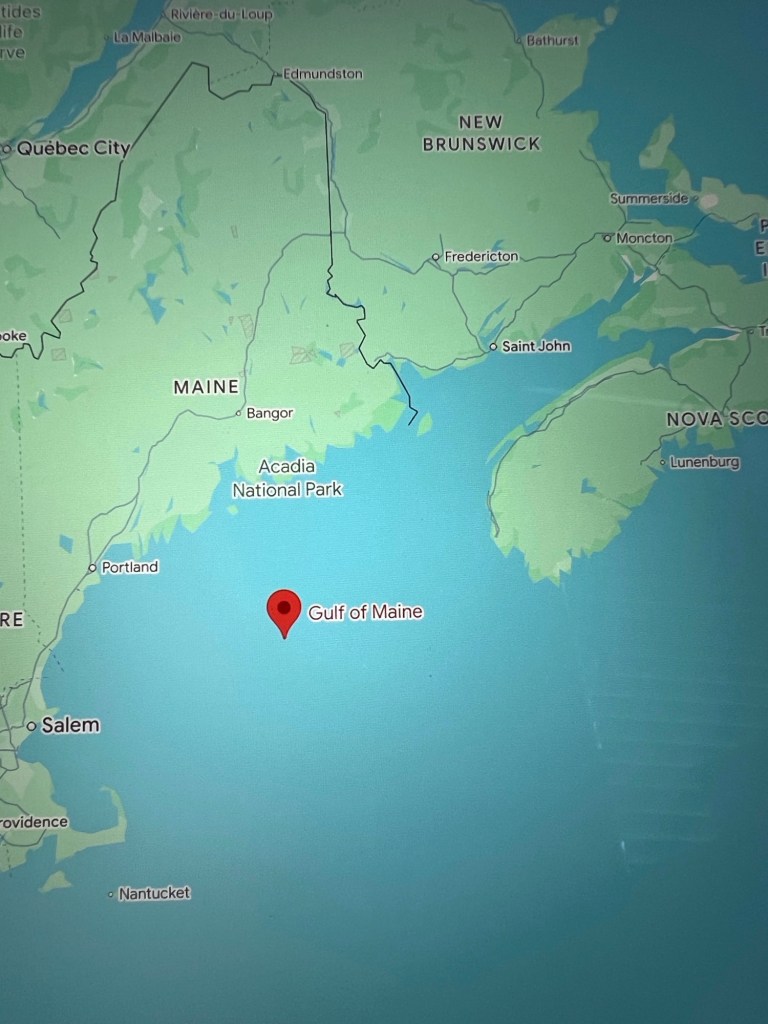
And it now turns out that there is another resource — one associated with a tiny, sparsely-inhabited island in the waters off the coast of both the U.S. state of Maine and the Canadian province of New Brunswick — that could be of great interest to Trump. It is known as Machias Seal Island; and the 277 square miles of sea surrounding it, known as the Grey Zone, has been the subject of dispute since the late 1700s. In 1984, an international court ruling awarded both countries fishing rights to the area. [Anthony Zurcher, BBC, April 14, 2025.]
The priceless resource in which those icy waters abound is the incomparably ugly — and incomparably delicious — Maine lobster.
Or Canadian lobster — depending on where you live.
The two countries have each laid claim to the island and the surrounding waters, which would include the resident lobsters. And, despite the long history of friendly relations between Canada and the U.S., it has remained something of a bone of contention . . . to say the least. John Drouin, a U.S. lobsterman in the Grey Zone for some 30 years, has described the ongoing battle between Canadians and Americans each summer season to be first to place their lobster traps:
“People have literally lost parts of their bodies, have had concussions, [their] head smashed and everything.” [Id.]
Ouch! And this, of course, has now been magnified by Trump’s acquisitive designs on Canada, Greenland, and whatever piece of property he sets his sights on next.
I’ve been to both the far eastern and far western parts of Canada, and have wonderful memories of both trips . . . particularly the genuine friendliness of the people I met. The first trip involved a cruise from Boston to Portland to Nova Scotia and Prince Edward Island, then down the St. Lawrence Seaway to Quebec City and Montreal. One of our shore excursions included a memorable boiled lobster lunch at a seafood shack by the shore, during which I had to instruct a family of U.S. midwesterners in the fine art of dissecting the beasts and locating the edible parts. As a native New Englander, I’ve also eaten many another Maine lobster in my lifetime. And believe me, they are worth fighting over.
I’m not here to arbitrate the territorial dispute over Machias Seal Island and its aquatic crustaceans. But, looking at the above map, I can’t help wondering what Donald Trump would think if the Canadian government suddenly decided to take a cue from his own methodology and change its maps, declaring that area — now known as the Gulf of Maine — to be the “Gulf of Canada.”






































 The Blog About Everything … and Sometimes Nothing