Author Archives: brendochka39

Unknown's avatar

About brendochka39

Having a wonderful time reminiscing about all my past travel (and other) adventures. Hope you’ll share them with me in my blog, “All Roads Led to Russia.”

12/4/25: The Feenstras Talk Politics … Russian Style

For nearly two years, I have been following the journey of the Feenstra family — Arend, Anneesa and their eight children from Saskatchewan, Canada — as they carve out a new life in Nizhny Novgorod, Russia.

Receiving Temporary Residency – 2024

Following a very rough start, they quickly became the darlings of Russian social media. Their bank account, initially frozen upon arrival, was suddenly released; they were able to acquire a large piece of fertile farmland, where they built — with all of the materials, equipment, and part-time labor they could possibly have wanted — a large house, barn, shop, guest house, root cellar, and more; they have planted crops, acquired tenants in their guest house, and begun gathering flocks and herds of chickens, geese, cows, goats, and pigs; and they have faithfully televised nearly every day of their lives, from the most mundane activities to the trips they have somehow managed to take to Moscow, to Georgia, and even one visit back home to Canada for Anneesa and the eldest son, Wesley.

They have been Putin’s perfect propagandists, extolling in each video the alleged advantages and joys of living in Russia, where they say they are free to live and worship without what they perceive as the evil influences of LGBTQ+ and other liberal “movements,” and where the opportunities to build a bright future for their children are unlimited.

And they made their choice despite knowing that Russia was at war with Ukraine.


To anyone with the slightest understanding of the workings of the Russian government, it has been painfully obvious that the Feenstras have become tools of the Putin regime, proselytizing to families — large, conservative families, from predominantly White countries (notably Canada, the U.S., and Australia) — urging them to join the great migration to Russia.

Because of the casualties sustained since Putin’s invasion of Ukraine nearly four years ago, the westward flight of those seeking to avoid military conscription, and the declining birth rate in the country, Russia’s population has been shrinking at an alarming rate. The “Year of the Family” in 2024 showcased Putin’s desperation to reverse the trend, and the Feenstra family — while certainly not the only ones to have chosen to immigrate there — have been the poster children for the program.

But one thing has bothered me from the beginning: how a good, Christian couple like Arend and Anneesa Feenstra could rationalize the horrific war of attrition being waged by their adopted country on the innocent civilians of Ukraine. And this week I happened upon a YouTube interview with the Feenstras about their time in Russia that partially addressed that issue.

Anneesa and Arend Feenstra

Following the usual background questions as to their settlement in their new home, the subject of the war inevitably arose . . . though briefly. And Arend — with apparent sincerity — parroted the official Kremlin line, saying that there were a lot of people in eastern Ukraine being “terrorized by their own people,” no longer allowed to speak their own (Russian) language; and that, if that were to happen in Canada, their American neighbors would surely “come to the border to help us out as well.”

In other words, he was touting Putin as a rescuer, rather than an invader.

Clearly, he is unaware of Russia’s targeting of civilians, hospitals, schools and critical infrastructure across Ukraine, or the kidnapping and “re-homing” of nearly 20,000 Ukrainian children.

Arend was then asked whether they had initially considered moving to any conservative countries other than Russia, or perhaps even one of the more conservative states in the U.S., and his reply was as shockingly un-Christian as any I have ever heard. He said that he had eliminated those other places because of their continuing pressure to conform to so-called “human rights.”

As though human rights were a bad thing!

The video then segued to a shot of the family sitting in a group as dad Arend read to them from the Holy Bible (Old Testament) of Lot’s disastrous decision to settle in the prosperous but wicked land of Sodom, rather than living a life of spirituality and morality in a poorer place.

Bible Study on the Feenstra Farm

But Arend seems to have overlooked a different book of the Bible, this one in the New Testament, where it is written:

“The King will reply, ‘Truly I tell you, whatever you did for one of the least of these brothers and sisters of mine, you did for me.’” [Matthew 25:40.]

*. *. *

Still, personal prejudices aside, the Feenstras appear to have sincerely believed they were choosing the more spiritual and moral path for their children to follow when they left the “evils of wokeness” behind in Canada. But I am still haunted by the question of whether they truly believe the Kremlin’s lies about the “root causes” of the “special military operation” in Ukraine . . . or have simply had to accept the unpleasant reality of life in their Russian paradise.

Either way, I fear for the futures of the eight children who had no say in the matter.

Just sayin’ . . .

Brendochka
12/4/25

12/4/25: Quotation of the Day: A Linear Point of View

G.K. Chesterton was a multi-tasker a century before the term entered the English lexicon. He was “an English author, philosopher, Christian apologist, poet, journalist, magazine editor, and literary and art critic.” He was, among other things, the creator of the fictional character Father Brown — still the subject of the popular BBC-TV series of the same name. [Wikipedia biography.]

G.K. Chesterton (1874-1936)

Known for his wit, he has been referred to as the “prince of paradox.” It was said of his writing style that:

“Whenever possible, Chesterton made his points with popular sayings, proverbs, allegories — first carefully turning them inside out.” [Time, “Orthodoxologist,” October 11, 1943.]

In the 21st-century world, where people in power push the envelope as far as possible, never accepting the possibility that legal or moral limits might apply to them, one of Chesterton’s observations on the human condition is particularly relevant:


“Art, like morality, consists of drawing the line somewhere.”

-G.K. Chesterton, Orthodoxy


The question remains, however: Exactly where is “somewhere”? And how do we know when we’ve arrived?


Just sayin’ . . .

Brendochka
12/4/25

12/3/25: A Little Levity for Wednesday

My daughter used to live just a few miles from Ashland, Virginia, so I know it well — an historic, mostly residential town of around 8,000 people, and home to Randolph-Macon College, the Henry Clay Inn, our favorite Iron Horse Restaurant (which my grandkids called the “Choo-Choo Restaurant” for its location next to the railroad tracks) . . . and the Ashland ABC liquor store.

Verandah of the Henry Clay Inn, Ashland, Virginia

On Saturday, the normally quiet routine of this lovely little college town was enlivened by a break-in at the ABC store . . . not by masked men looking for money, but by a little four-legged masked bandit with a big thirst.

The audacious heist has even made the world news. As reported today by Emma Rossiter of the BBC, it seems that a raccoon we’ll call Rocky (for lack of a better name), while the store was closed for the Thanksgiving holiday, had fallen through a ceiling tile into the store. Following his natural, mischievous raccoon instincts, he began rummaging through the merchandise, broke a few bottles of scotch, and found it much to his liking.

The After-Party

Upon searching the premises, the employees of the store found Rocky in the bathroom, where he had done a classic face-plant between the toilet and the trash bin. Happily, he was very much alive, but completely wasted.

“Rocky” . . . down for the count

The Hanover County animal control folks were called to the rescue, and Rocky was given time to sober up and safely released back into the wild — probably more than a little confused and embarrassed, but none the worse for his adventure.

I can only imagine the chatter around the local raccoon community when Rocky reported to his friends on how he had spent the Thanksgiving weekend.

And how surprised he’ll be when he gets the bill for the damage.

“Sorry, folks.”

Just sayin’ . . .

Brendochka
12/3/25

12/3/25: Quotation of the Day: A Bit of Old-Fashioned Wisdom

To those who are not old enough to remember the days of real journalism — the mid-20th-century reporting of Walter Cronkite, Chet Huntley, David Brinkley, Peter Jennings, Eric Sevareid, Edward R. Murrow, and their contemporaries — I can only offer my condolences. You missed so much.

Edward R. Murrow (1908-65)

Murrow first became known as a war correspondent during World War II, when he broadcast live from Europe for CBS News. Later, his investigative news reports helped to end the mad witch-hunt instigated by Senator Joseph McCarthy who, during the “Red Scare” years following the war, imagined a communist in every closet and under every bed.

Ed Murrow was one of the greatest in an era of great journalism — honest, objective, straightforward reporting, free of political or personal bias. His career has been memorialized in several films, including the outstanding “Good Night, and Good Luck” — the signature sign-off phrase for his wartime broadcasts.

He left this world much too soon, literally smoking himself to death — reportedly on three packs of Camel cigarettes a day — at the age of just 57. But he left behind a legacy that today’s journalists could only dream of matching.

And included among Murrow’s bits of timeless wisdom, so meaningful today, is this:


“We cannot defend freedom abroad by deserting it at home.”


You know what — and who — I mean. And so, on that thought, as Murrow would have said, I bid you . . .

“Good night, and good luck.”

Just sayin’ . . .

Brendochka
12/3/25

12/3/25: Another Day, Another Meeting, Another Failure

I said it on Friday, when it was announced that White House envoy Steve Witkoff and Trump son-in-law Jared Kushner would be flying off to Moscow this week for a sixth meeting with Vladimir Putin in a supposed effort to end the war in Ukraine. What I said was:

“ . . . it seems like a total waste of time, effort, and jet fuel. Because nothing is going to happen until Ukraine has no alternative but to acknowledge that it has been well and truly screwed.”

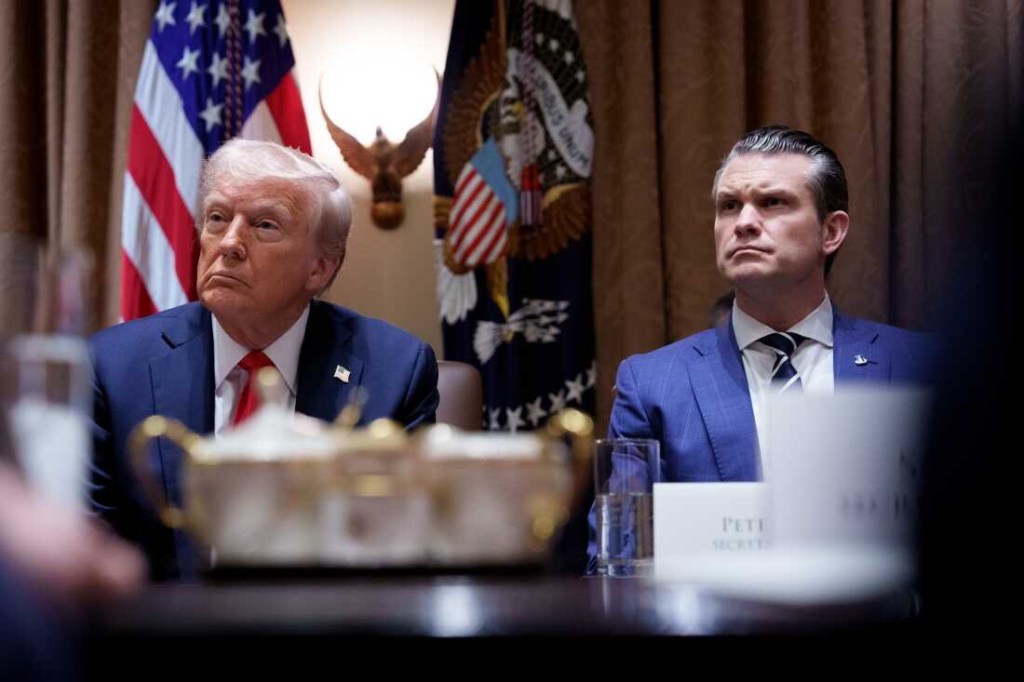
Meeting at the Kremlin – December 2, 2025 (RFE/RL photo)

It didn’t take a rocket scientist to figure it out. Trump’s original behind-the-scenes, 28-point peace proposal had been warmly welcomed by Putin. And why wouldn’t it be? It contained everything that’s been on his list of demands for nearly four years.

But when the leaders of Ukraine and its European allies sounded alarms about the obvious sellout, a new proposal was quickly rolled out in Geneva: a refined and pared-down 19 points, aimed at preventing Russia’s illegal land grab and protecting the future sovereignty and security of Ukraine, with some concessions from both sides. And Putin was no longer happy.

In fact, prior to yesterday’s meeting, Putin said:

“We have no intention of fighting Europe, I’ve said that 100 times. But if Europe wants to fight again and starts, then we are ready for that immediately.” [RFE/RL, December 2, 2025.]

But despite the not-so-veiled threat, the meeting took place at the Kremlin as scheduled. And after five hours — once more utilizing only a Kremlin-provided interpreter and none from the U.S. Embassy — it appeared that Russia had conceded nothing; the U.S. had failed to toughen its stance; and Ukraine and the rest of Europe had once again been sidelined. [Laura Gozzi, BBC, December 2, 2025.]

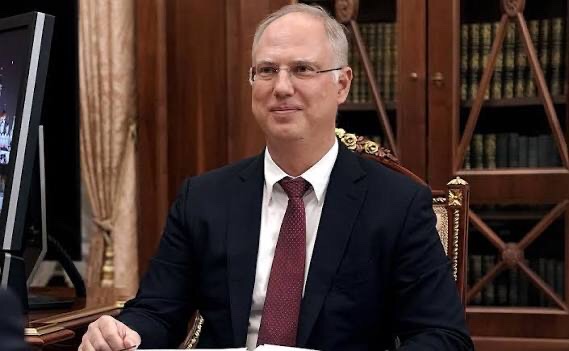
Kirill Dmitriev guiding Jared Kushner and Steve Witkoff through Moscow
December 2, 2025

Yuri Ushakov, Putin’s right-hand advisor on foreign policy matters, said after the meeting that the talks were “useful” but that a “lot of work” still lay ahead. He added:

“We did not discuss particular wordings the Americans prepared, but the essence of the message. Some things suit us. Some things were met with our criticism. We do not see a chance to resolve the Ukraine crisis without territorial issues. To really move forward it is time both for Moscow and Washington to seriously get to work.” [RFE/RL, December 2, 2025.]

None of that was particularly surprising. But an additional comment by Ushakov was unexpected . . . and, to my mind, more than a little alarming. He indicated that, in addition to the 28-point proposal, Russia had received four other documents, and that Russia and the U.S. had agreed not to disclose further details of the talks. [BBC, December 2, 2025.]

What four documents? What further details? What else did Russia and the U.S. agree to behind everyone else’s backs?

What the hell is going on?

Witkoff and Kushner left the Kremlin without comment, and headed directly to the U.S. Embassy. There had earlier been talk of a meeting to be scheduled with Ukrainian President Zelensky in Kyiv (or perhaps elsewhere) following the Moscow session, but as of this writing (midnight EST), I haven’t seen any follow-up on that. At the moment, I’m not feeling optimistic.

As always, though, stay tuned. In this unscripted serial, anything can happen.


Just sayin’ . . .

Brendochka
12/3/25

12/2/25: Quotation of the Day: On Being An American

I only remember two things that Ronald Reagan said while serving as President of the United States. Both were addressed to then Soviet leader Mikhail Gorbachev, the first being, in Russian: “Doveryai no proveryai” — “trust but verify.” The second, delivered at the Brandenburg Gate in Berlin in 1987, was: “Mr. Gorbachev, tear down this wall.”

Ronald Reagan – Berlin, Germany – June 12, 1987

Just over two years later, on November 9, 1989, the Berlin Wall actually was breached, foreshadowing the end of the Soviet Union’s hegemony over much of Eastern Europe . . . and ultimately, its own demise in 1991.

In a recent article by former U.S. Secretary of Labor Robert Reich, he mentioned that he did not recall ever having quoted Reagan before. But he did reproduce a portion of a 1988 speech in which Reagan talked about the meaning of being an American. And I found it so compellingly relevant to today’s political climate (as, obviously, did Mr. Reich), that I’ve taken the liberty of repeating it here as a reminder, in these troubled times, of what we ordinary Americans have always known, but so may of those in power today have chosen to forget:


“I received a letter not long ago from a man who said, ‘You can go to Japan to live, but you cannot become Japanese. You can go to France to live and not become a Frenchman. You can go to live in Germany or Turkey, and you won’t become a German or a Turk.’ But then he added, ‘Anybody from any corner of the world can come to America to live and become an American.’

“A person becomes an American by adopting America’s principles, especially those principles summarized in the ‘self-evident truths’ of the Declaration of Independence, such as ‘life, liberty, and the pursuit of happiness.’ . . .

“As an immigrant friend once put it to me: ‘I was always an American. I was just born in the wrong country.’”

Americans

*. *. *

We Americans who were born here — unless we are full-blooded members of one of the many tribes of Indigenous People — are descendants of immigrants. It is we who are the foreigners, the invaders who took their sacred lands, changed their laws, and consigned them to a way of life for which they were not suited.

Yet now, while we claim the right to call ourselves Americans, our government seeks to deny that right to others — the right, inscribed in our Declaration of Independence and our Constitution, to become Americans as have so many generations before.

The man who wrote to President Reagan knew what it means to be an American; and Reagan’s immigrant friend also knew what it means. We need to listen to them, in order that we never forget.

“Give me your tired, your poor . . .”

Just sayin’ . . .

Brendochka
12/2/25

12/2/25: The Disappearance of Nika Novak

I first reported on the plight of Russian journalist Nika Novak on March 9th of this year. She had been found guilty the previous year of “confidential cooperation with a foreign state, international or foreign organization.” [RFE/RL, March 4, 2025.]


Novak was charged under Article 275.1 of the Russian Criminal Code, which had been adopted in 2022 specifically to deal with persons and organizations expressing opposition to Vladimir Putin’s invasion of Ukraine in February of that year. She was the first journalist to be sentenced under that specific article, which Human Rights Watch has called “reminiscent of the Soviet-era ban on contacts with foreigners.” [Id.]

Arrested in the middle of the night at her home in the Siberian city of Chita on Christmas day of 2023, Novak was flown to Moscow to be placed in pretrial detention. Nearly a year later, on November 26, 2024, she was convicted following a closed-door trial and sentenced to four years in prison. She was later moved to prisons in other locations, including Irkutsk. Finally, it was determined that she had been transferred on March 1st to a penal colony in Novosibirsk, described by some of her relatives as being worse than any of the other facilities in which she had been held.

At that location, she was forced to share a cell with ten other inmates — women convicted of a variety of criminal (not political) charges. Her attorneys filed a motion to have her moved to a different cell, and had also filed an appeal of her sentence, which was denied on March 31st of this year.

On May 25th, Novak was transferred once again, this time to women’s Penal Colony No. 11 in Irkutsk, Siberia, known as one of the harshest in the region. Reports from former inmates have told of regular beatings, psychological pressure, blackmail, and prolonged detention in punishment cells. In August, Novak was placed in solitary confinement for five days for refusing to to lie about the conditions under which she was being held.

Russian Women’s Penal Colony

Now her lawyer, Yulia Kuznetsova, has posted on social media that it appears Novak is being transferred once again from Irkutsk, though her destination is unknown. Kuznetsova wrote:

“This week, a lawyer colleague of mine tried to visit Nika, but was denied entry. He noticed a loud noise and a large number of Investigative Committee officers in the colony. The prison staff are not explaining what exactly happened.” [Current Time and RFE/RL’s Russian Service, December 1, 2025.]

Kuznetsova called the colony in Irkutsk on November 30th for information, but was told only to submit a request, which she has done.

In Putin’s prison system, unannounced and unexplained transfers of this sort are not uncommon. There can be any number of reasons: punishment by transfer to an even worse facility than the last; a medical condition requiring hospitalization; or even — in the case of a miracle — preparation for release as part of a prisoner swap. They always show up eventually; but in the meantime, the prisoner’s family and friends wait, and fear the worst.

In Nika Novak’s case, I worry about the unidentified “loud noise” and the presence of “a large number of Investigative Committee officers” reported by the lawyer.


Just sayin’ . . .

Brendochka
12/2/25

12/1/25: Quotation of the Day: ‘Tis the Season of Giving

The ancient Romans — before the Christian Era — used to stage a week-long Festival of Saturnalia in mid-December in honor of the Roman god Saturn, during which they exchanged, not just gifts, food and wine, but much more intimate pleasures as well. It was one gigantic, week-long debauch that undoubtedly produced some monumental hangovers . . . and — if this depiction is even close to the real thing — the arrival of more than a few unplanned offspring before the Autumnal Equinox.

Festival of Saturnalia

It would be many years before Christians began celebrating the birth of Christ in any way resembling our current traditions. But the 1st-century Roman philosopher Lucius Annaeus Seneca — a man intellectually ahead of his time — had the right idea when it came to the subject of gift-giving. Today we say that “it’s not the gift, but the thought that counts” . . . paraphrasing his words of some two millennia ago:

“A gift consists not in what is done or given,
but in the intention of the giver or doer.”

– Seneca, Moral Essays: Volume III

Lucius Annaeus Seneca (Died 65 A.D.)

*. *. *

As I sat here yesterday, beginning this year’s search for the perfect Christmas and Chanukah gifts for my family, Seneca’s words echoed through my mind. We live in uncertain economic times, and many of us are doing the best we can to make the holidays merry on a budget. So we should keep in mind that a pared-down holiday can be even more meaningful than an elaborate one because of the extra thought and care that has gone into it.

In Simpler Times

On the other hand, I’m not sure how Seneca would explain that to the ten-year-old nephew who was counting on his very own iPhone this year . . .


Just sayin’ . . .

Brendochka
12/1/25

12/1/25: A Gentle Reminder for the Holidays

I first posted this nearly two years ago, and then re-posted about a year later. I was reminded of it again recently by a Facebook article that so precisely mirrored my own thoughts, I might have written it myself.
Reading that other article, and seeing that I am clearly not alone in my perceptions, I feel it might be worth presenting my thoughts once more — particularly during this holiday season — for those with parents, grandparents, aunts and uncles, or older friends who might be experiencing the lonely feeling of invisibility that often comes with old age.
So here it is, for the third time:

*. *. *

4/22/24: THE INEVITABILITY OF INVISIBILITY: ARE YOU READY FOR IT?

Your Future

I was bingeing the other day — not on chocolates, but on reruns of my favorite British TV series, Midsomer Murders — when I saw again the episode wherein Tom Barnaby’s aunt is in short-term post-surgical rehab at a senior nursing home where several of the regular residents have died under mysterious circumstances. Well, Tom Barnaby being the local DCI (Detective Chief Inspector), naturally there had to be deaths to investigate.

But it was the living characters that interested me, and the depiction of the sad emptiness of their daily lives, even though it was quite a lovely nursing home. And what one still-vibrant gentleman resident said to a young visitor struck me as particularly poignant. I don’t recall his words verbatim, but in essence he said that when you’re young, you have presence: you’re tall or short, handsome or ugly, perhaps smart, funny, sexy, etc. You’re interesting. But when you’re old, you become extraneous. You’re excluded from everything; you are no longer relevant. People look right past you as though you’re not even there. For all intents and purposes, you are invisible . . . or so said the elderly gentleman.

I see her. Do you?

And it occurred to me — from my own experience and observations — that he was right. Absolutely, completely, tragically right. Oh, not in the eyes of my own generation of friends . . . the few who are left alive. (I seem to be the one designated to survive all the others.) But to the younger ones, the people who have inherited the responsibility of running the world that my generation created (for which, please forgive us, by the way). At social events, or dining out with a group — if they’re mostly younger people, they’re so engaged with one another, they forget you’re there. They’re not being intentionally disrespectful; it’s just that you’ve become irrelevant.

I wonder: Is this a typically American thing? Or is it true in other countries as well? I know there are societies that revere their elders — Asian nations, for example. Why do we think we only need to make sure the old folks are “taken care of”? Don’t they realize we miss our social lives? Or that painting pottery in some senior center isn’t enough to satisfy our intellectual needs? Or even that we still have intellectual needs?

Now, I do know that I’m not actually some amorphous bit of ectoplasm floating in the air; I have a body (tired as it may be), and substance. People don’t bump into me in the market; I’ve never been run over on the street or in a parking lot. I am visible, in the corporeal sense. It’s just that younger people don’t seem to care.

Ectoplasms Я Us

But I have things to say. I have experience. I’ve had a long, interesting life. I keep up with the world news, politics, show biz gossip. I know who Volodymyr Zelensky, and Elon Musk, and Taylor Swift are. I have opinions, viewpoints based on all those years of experience. I even have a sense of humor. I have a blog, for Heaven’s sake!

And the same is true of most of my contemporaries . . . the ones who haven’t gone around the bend, at any rate. I can understand if the 20-somethings, who think they possess all the wisdom of the world (and are they in for some surprises!), believe we seniors have become obsolete. But those of you in your 50s, 60s . . . even your 30s and 40s . . . well, you should know better.

And one day you will.

Because your day is coming, kids . . . sooner than you think. I’m glad I won’t be around to see your reactions when you realize that you, too, have faded from sight.

Because by then it will be too late to make amends.

Inevitability

Just sayin’ . . .

Brendochka
12/1/25

11/30/25: Quotation of the Day: A Lesson From the Gulag

I write a lot about Russia, the land from which my grandparents emigrated in the early 1900s — about its millenium-old history; the natural wonders of its vast expanses; the beauty of its art, music, literature and architecture; the generosity and soulfulness of its people . . . and the evil of its rulers.

No one understood that evil better than one of its victims: Russian author and dissident Aleksandr Solzhenitsyn.

Aleksandr Solzhenitsyn (1918-2008)

Solzhenitsyn survived eight years in a prison camp (1945-53) for criticizing the Soviet regime while serving in the Red Army, followed by internal exile in Kazakhstan; a long-undiagnosed, metastasized cancer that ultimately received treatment and went into remission; political rehabilitation in 1956 by the more liberal Nikita Khrushchev; and renewed persecution by subsequent, hardline regimes.

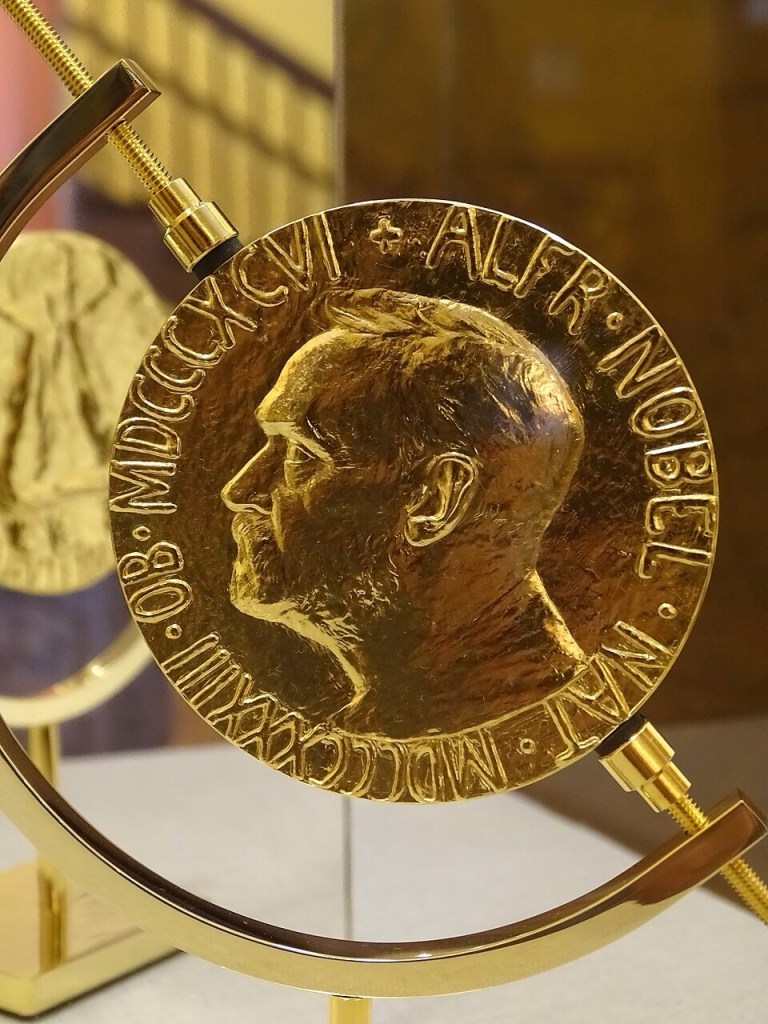
During the post-Khrushchev years, Solzhenitsyn wrote his masterwork, The Gulag Archipelago, for which he received the 1970 Nobel Prize for Literature . . . and expulsion from his homeland in 1974. He lived in exile for 20 years until, in 1994, his Russian citizenship was restored and he was able at last to return home.

The Gulag Archipelago is difficult reading, excruciating in its detailing of the horrors of the Soviet/Russian penal colony system. And the author’s observations as to the mentality of the people who created and operated the system, and the effect on its victims and the country’s population in general, are terrifyingly relevant to the present day — and not exclusively in Russia.

And so I offer you this quote from a man who spoke from firsthand experience. Take from it what you will:

“In keeping silent about evil, in burying it so deep within us that no sign of it appears on the surface, we are implanting it, and it will rise up a thousand fold in the future. When we neither punish nor reproach evildoers, we are not simply protecting their trivial old age, we are thereby ripping the foundations of justice from beneath new generations.”

– Aleksandr I. Solzhenitsyn, “The Gulag Archipelago 1918-1956”

*. *. *

“My country ‘tis of thee, sweet land of liberty . . .”
– Samuel Francis Smith, “America”


Just sayin’ . . .

Brendochka
11/30/25