Having a wonderful time reminiscing about all my past travel (and other) adventures. Hope you’ll share them with me in my blog, “All Roads Led to Russia.”
Is Donald Trump not speaking to his Secretary of State? Or is he simply — as usual — not listening?
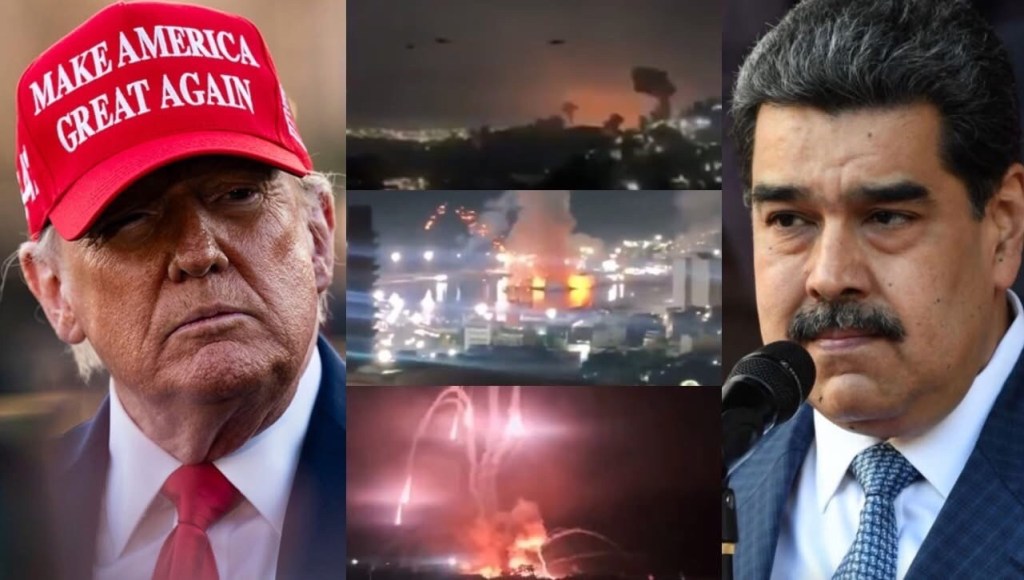
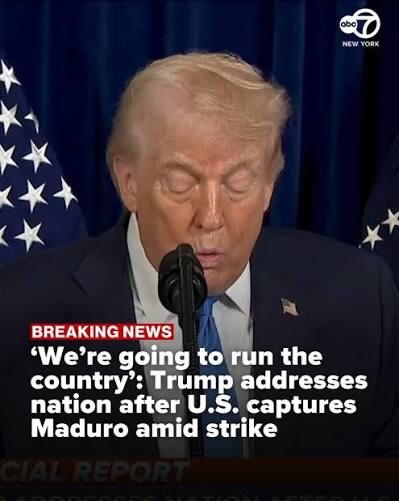
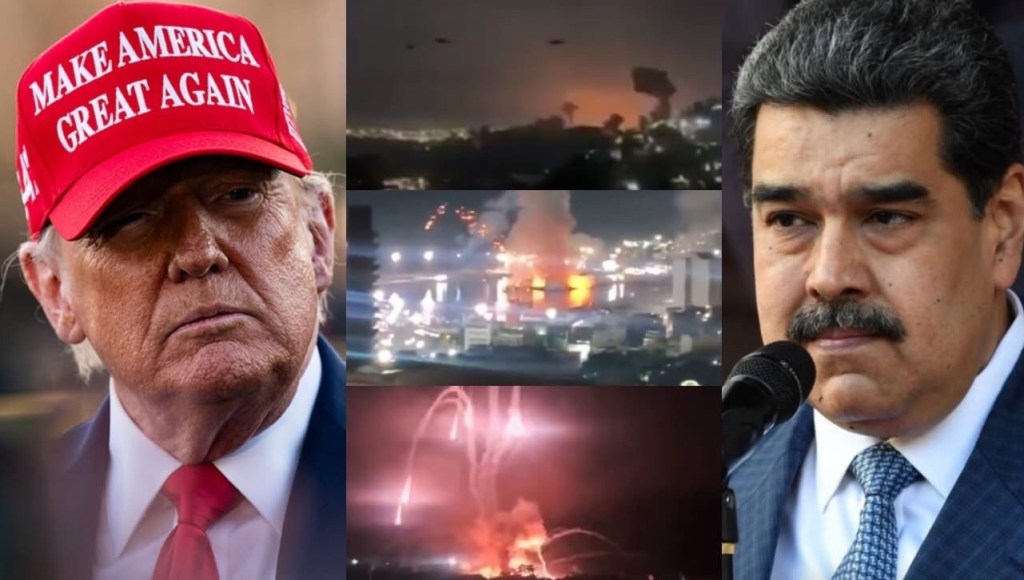
On Saturday, following the brutal invasion of Venezuela and the kidnapping of its tyrannical president and his wife, Trump declared that the U.S. would now “run” Venezuela until a new regime was installed there. (Unfortunately, he did not indicate that he was quitting his present job in order to move to Caracas, but seemed to think he could ruin . . . sorry, run . . . two countries at once.)
But on Sunday, Secretary of State Marco Rubio appeared to be in damage control mode when he suggested that the U.S. would not take over day-to-day governance of Venezuela, other than enforcing an existing “oil quarantine”on the country. On CBS’ “Face the Nation,” he said:
“And so that’s the sort of control the president is pointing to when he says that. We continue with that quarantine, and we expect to see that there will be changes, not just in the way the oil industry is run for the benefit of the people, but also so that they stop the drug trafficking.” [Regina Garcia Cano, et al., Associated Press, January 4, 2026.]
Perhaps his more diplomatic comments were intended to assuage the concerns of other nations — adversaries and allies alike — regarding Trump’s hostile and blatantly illegal actions. Or maybe his apparent contradiction of his boss’ statements indicates a growing problem within the Trump administration: a possible hint that his Cabinet members and other advisers have finally come to the realization that he is a loose cannon who needs to be restrained, for his own sake and for the good of the country.
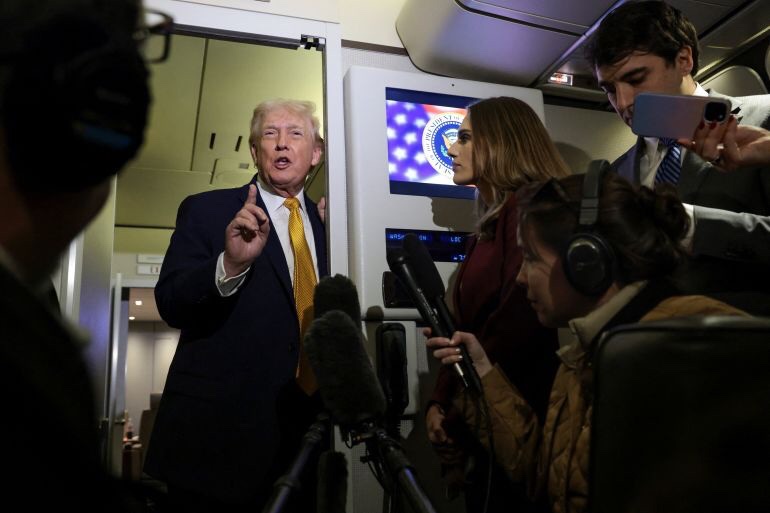
Whatever Rubio’s intent, it doesn’t seem to have done much good. Later on the same day, while returning to Washington aboard Air Force One, Trump reiterated, “We’re going to run it, fix it.” [Id.]
He then threatened the new Venezuelan leader, Delcy Rodriguez, saying that she might “pay a very big price, probably bigger than Maduro . . . [if she] doesn’t do what’s right.” [Grace Eliza Goodwin, BBC, January 5, 2026.]
He also said, “Don’t ask me about who’s in charge [of Venezuela] because it will be controversial. We’re in charge.” And for added emphasis, while saying that he expects the new Venezuelan government to allow the U.S. total access so that American forces can “help rebuild,” he further threatened, “ . . . if they don’t behave, we will do a second strike.” [Sophia Cai, Politico, January 4, 2026.]
Aboard Air Force One – January 4, 2026
And — like a lottery winner on a shopping spree — he moved on to other Latin American countries:
“Cuba looks like it’s ready to fall. I don’t know if they’re going to hold out.” Saying that Venezuela was Cuba’s principal economic backer, he added: “Cuba only survives because of Venezuela.”[Id.]
Then there was his comment on Colombia and its President Gustavo Petro, who has criticized Trump’s operation in Venezuela:
“Colombia is very sick too — run by a sick man who likes making cocaine and sending it to the United States, and he’s not going to be doing it very long.” [Id.]
Finally, he returned to his obsession with Greenland:
“We need Greenland from a national security situation [sic]. The EU needs us to have Greenland.”[Id.]
Clearly, he hasn’t been listening to the Danish Prime Minister or other EU members, either.
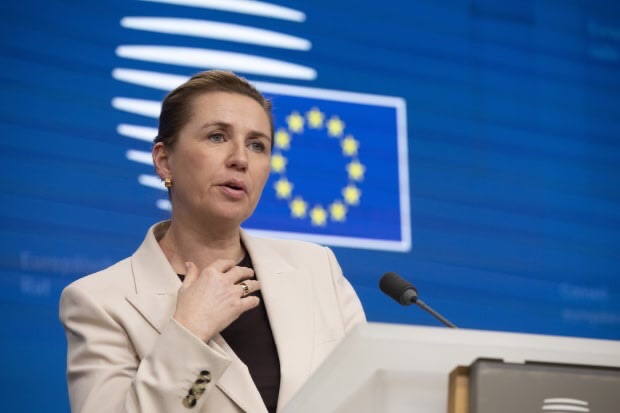
Danish Prime Minister Mette Frederiksen
Surely, those closest to Trump — no matter how unqualified they are for their jobs — cannot be oblivious to the dangers of his increasingly deranged behavior. I envision Marco Rubio — like the caretaker of a very expensive race horse — running along behind him, carrying a bucket and shovel to clean up the inevitable droppings.
Only we’re talking, not about a horse race, but about U.S. foreign policy . . . and a potentially inundating pile of poop.
When you reach a certain age — and that age is different for each of us — it is natural that the turning of the calendar page to a new year brings with it thoughts, not just of new hopes and opportunities, but of one more candle on the next birthday cake.
We know we can’t stay young forever, and a glance at the reflection in the mirror only serves as confirmation. Another couple of laugh lines, a bit more slack in the jaw, the inadvertent “grunt” when we stand up . . . and let’s not even mention the waistline!
Yet in our minds, we’re still 30-something: grown-up, responsible, but with the same irreverent sense of humor, the same longing for adventure, the same joy in sharing a good time or an intense conversation with an old friend, and at least a measure of the same idealistic nature we possessed when we were young and foolish.
This quote — from a book I admittedly have not read — sums it up for me:
“I’m not ready to let the youthful part of myself go yet. If maturity means becoming a cynic, if you have to kill the part of yourself that is naive and romantic and idealistic — the part of you that you treasure most — to claim maturity, is it not better to die young but with your humanity intact?”
– Kenneth Cain, “Emergency Sex (And Other Desperate Measures): True Stories From a War Zone”
Kenneth Cain
I don’t know what emergency measures Cain had to resort to in order to survive in Cambodia and other war zones he visited in the ‘90s; but I do agree with his attitude toward aging with our values intact . . . which is fortunate, since it’s already far too late for me to die young.
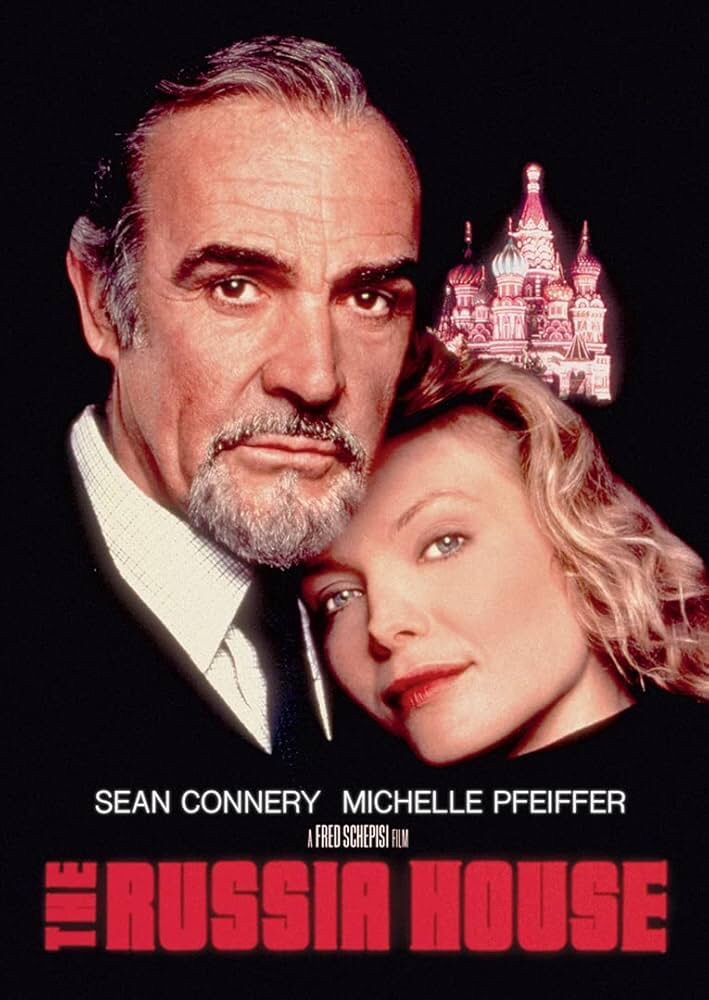
On New Year’s Day 1991, with about eight to twelve inches of fresh snow outside that had fallen during the previous day and night, I was at home, thoroughly bored and wondering how to pass the time. A new Sean Connery film — The Russia House — had just been released and was playing at the nearby multiplex cinema; so I gathered my mother and sister together and we headed out onto the newly-plowed streets, joining a few hundred other locals looking for a way to spend the day.
Two and a half years later, I found myself living in Moscow, in the midst of an adventure oddly reminiscent of the theme of that movie. And I had brought with me a VCR player and a stack of VHS tapes (who remembers those?) of favorite movies — one of which was, of course, The Russia House.
One evening, I invited a few of my English-speaking Russian friends to my apartment for a movie night, complete with vodka, caviar, and all the trimmings. And when our viewing of The Russia House ended, there was unanimous agreement that it was the most realistic foreign depiction they had ever seen of life in Russia just before the fall of the Soviet Union. They loved it as much as I did.
Since that time, it has become my custom to re-watch that movie each year on New Year’s Eve. I know practically every line of dialogue by heart, but it doesn’t matter; it takes me back to a more exciting time of my life, and brings back memories of even earlier times . . . the “good old days” before the supposed fall of communism in Russia and Eastern Europe.
That sounds odd, I know. But it’s not the crazy ‘90s I miss, and certainly not the oppression of the pre-Gorbachev era. It’s the “spy games” of the Cold War years.
Yes, we still spy on each other, perhaps even more than before. But it’s different; it’s so . . . so . . . well, so impersonal now. If you’ve ever watched a spy movie from the 1960s or ‘70s — not the exaggerated James Bond action films, or Maxwell Smart with his shoe phone, but serious movies like The Spy Who Came In From the Cold, or The Day of the Jackal — or read any of John Le Carre’s books, you’ll know what I’m talking about.
Those were the years when you knew who your enemies were, and understood their political ideologies and how they thought and behaved. You studied them, surveilled them, followed them on foot or in a motor vehicle, and — if you were very lucky — infiltrated their ranks. You relied on HUMINT — human intelligence — to gather and analyze the information you needed, recruiting disillusioned members of their own organizations whenever and wherever you could. It was a gentlemen’s game requiring skill and finesse, and it was played by a well-known set of rules. Yes, it was nasty and sometimes deadly, but it was, for lack of a better word, orderly.
Your work was aided by the high-tech equipment of the day: electronic “bugs” discreetly hidden in hotel rooms, taxis, or underneath restaurant tables; miniature cameras to photograph documents “borrowed” from their facilities by your agents; drugs to make your target talk, or, when required, to knock them out.
And when one of the enemy had to be disposed of, you sent in a specialist to do the job, perhaps using a silenced firearm or a blade, a well-executed twist of the neck, or a poison-tipped umbrella.
It was all very time-consuming, extremely risky . . . and very personal.
*. *. *
Today, spying — like nearly everything else — has been taken over by technology. To locate an adversary, to follow them, to know everything there is to know about them, you simply consult your highly specialized computers. You watch and listen to them on a monitor halfway around the world, never having to creep down a dark alley or pick a lock or wear a disguise.
And when it becomes necessary to eliminate them — or, say, a few hundred innocent civilians, because mass murder is so much simpler today — you need only sit in that room a thousand miles away, press a couple of buttons, and . . .
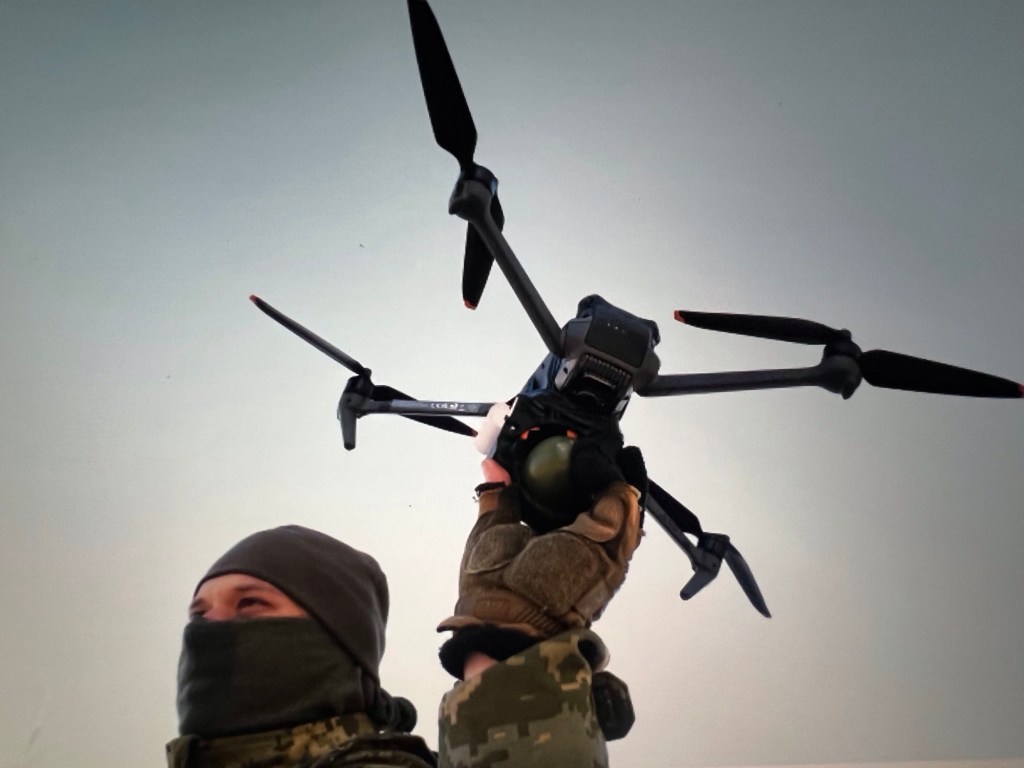
. . . a drone does the rest. Mission accomplished. You’ve never met the targets, never seen the fear in their eyes or smelled their blood as their bodies were blown to pieces. For the cyber spy, it’s just a job, much like that of the customer service operator on the phone in Bangladesh helping you track your package in New Jersey. It’s cold and efficient and impersonal; and you can assuage whatever nagging sense of guilt you may feel by telling yourself that you only pressed a button. In short, it’s dehumanizing, as is much of what takes place in our world today.
This is, of course, an over-simplification. But the changes are real: the patriotic fervor of the last century seems to be gone; and the killing has become quicker, easier, and less shocking. And, as those of us who are old enough to remember the Cold War can attest, the changes have only made things worse.
It is a quirky habit of mine, every now and then, to Google people from my past — classmates, co-workers, business associates or former neighbors — usually because something has unexpectedly brought them to mind.
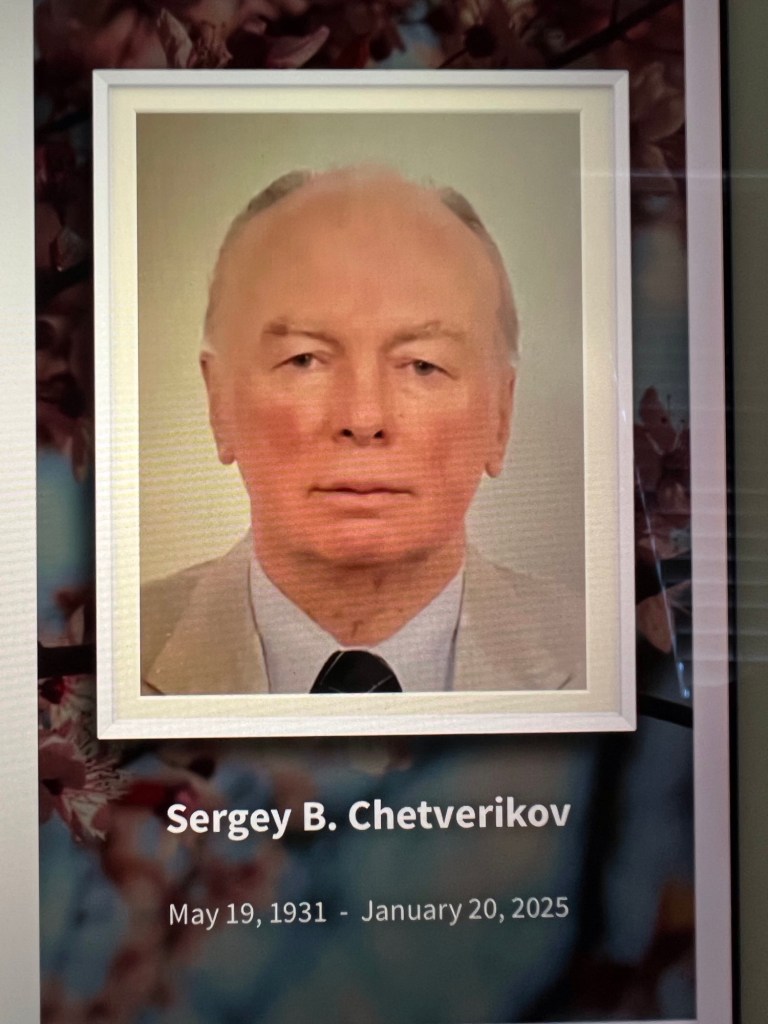
That happened today, when I was reminiscing about an event from 1990 about which I had posted nearly three years ago. The person in question was a Russian gentleman — a former Soviet diplomat, lawyer and author who, after the collapse of the Soviet Union, moved permanently to the United States and joined a prestigious Washington law firm.
Sadly, but not surprisingly, what I found was his obituary from a year ago this month; he had passed away on January 20, 2025, at the age of 93. (I have to wonder whether the stress and shock of the inauguration that day was just too much for him. But I digress.)
We were not what you would call close personal friends, though our brief acquaintance was certainly a pleasant one . . . cut short when I fell into disfavor with his embassy. But that’s a whole other tale.
His name was Sergey Chetverikov, and this is our story, reprinted from February 16, 2023:
*. *. *
Ch. 10 – The Confederate Air Force
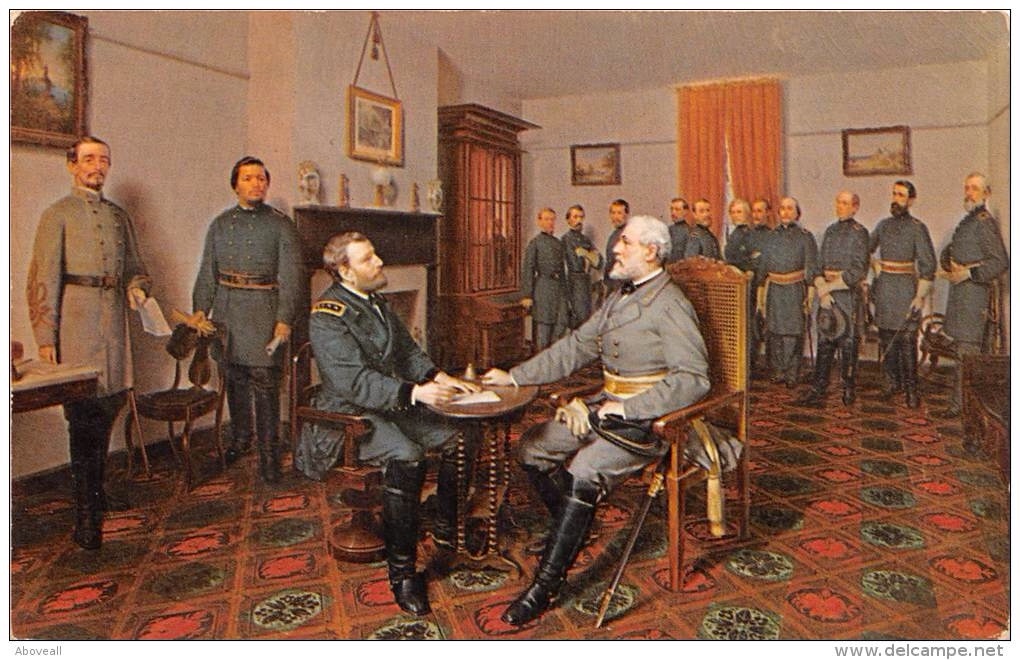
The War Between the States — more popularly known as the Civil War, though there doesn’t seem to have been anything even remotely civil about it — ended just about 158 years ago, on April 9, 1865, at Appomattox, Virginia. But history cannot be erased entirely, despite growing efforts to disclaim parts of it; and the use of “Confederate” still pops up from time to time in the American South.
Surrender at Appomattox
One day in 1990, an attorney friend of mine from Washington, DC, Bill Anawaty, was in his home state of Texas, driving along a highway near Harlingen, when he spotted a sign directing travelers to something called the Confederate Air Force. The imaginative name caught his attention, and on a whim he decided to check it out. What he found was so totally unexpected that it led him to undertake a project that would ultimately involve a group of World War II pilots, diplomats from the Soviet Embassy in Washington, another attorney from DC, and yours truly.
A naturally gregarious individual, Bill went directly to the CAF’s office and began asking questions of some of the people there. What he learned was that the CAF (today known by the more politically correct name of Commemorative Air Force) had begun in 1957 with the purchase and restoration of a single P-51 Mustang by a small group of ex-service pilots, and had since grown to include an example of virtually every aircraft that flew during World War II. [For more information on the fascinating history and mission of the CAF, check out their website at commemorativeairforce.org.]
Timing is everything in life, and the timing of Bill’s impulsive detour could not have been more fortuitous. The 50th anniversary of the start of America’s World War II Lend-Lease program was coming up in 1991, and he had just stumbled upon a group of WWII veterans, with a collection of WWII planes, performing WWII-themed air shows around the country. Why not take the show across the Atlantic to Europe, Bill thought, where the Lend-Lease program had actually taken place half a century earlier? What an amazing hands-across-the-sea celebration that would be!
Poster for Lend-Lease
Never one to let grass grow under his feet, Bill immediately began looking into the possibilities. And as his excitement grew, so did his vision. Along with Great Britain and France, he reasoned that we couldn’t ignore the Soviet Union, which had been one of our staunchest allies in the fight against Nazi Germany. And who better to make the initial contact with the Soviet Embassy than his Russia-obsessed friend: me?
Another attorney friend, former American Enterprise Institute president Bill Baroody, signed on, and the two Bills set about planning and seeking logistical and financial support for the project. At the same time, I contacted my friend at the Soviet Embassy — the aide to the Ambassador mentioned in last week’s Chapter 9 — to determine what the level of interest might be on their end. I never dreamed that the mere mention of WWII planes would have such a dramatic effect. It turned out that my friend — let’s call him Dima — was crazy about planes, and about history in general. And when I told him that we had also discussed inviting the Soviet Ambassador to accompany us on a visit to the CAF in Texas, the deal was as good as sealed. Dima took the plan to the Ambassador, who loved the idea, and dates were chosen for a trip to Texas in July.
But, as we all know, the best-laid plans . . .
As apparently happened all too frequently, the Ambassador’s schedule changed at the 11th hour, and he — accompanied by a terribly disappointed Dima — was needed elsewhere. But interest in the Lend-Lease project was still high, and the then Minister-Counselor/Deputy Ambassador, Sergey Chetverikov, was given the pleasure of taking the Ambassador’s place, with Mrs. Chetverikov to accompany him. Second only in rank to the Ambassador himself, Sergei was no slouch when it came to diplomacy. And he and his wife were a delightful and fascinating couple, who contributed greatly to what turned out to be a memorable few days.
Being the closest thing our trio had to a Russia expert, it fell to me to figure out the legal and diplomatic implications of traveling from state to state with a Soviet diplomat, and then to make the appropriate arrangements. Since diplomats and staff members from the Embassy were not allowed to travel more than twenty-five miles from Washington without special permission, it was necessary to begin my inquiries with the U.S. Department of State. Talk about opening a bureaucratic can of worms! Not only did I have to answer more questions than a new patient in a doctor’s office; I was also told that I was to be the individual responsible for the welfare, safety, and good behavior of the Chetverikovs. So if something were to happen to either of them on this trip . . . Well, I didn’t even want to think about that.
Among the slew of questions asked were several having to do with our means of travel and our actual schedule. Bill Anawaty had made all the travel arrangements, so airline schedules were no problem. But, to cap off the day at the CAF in Harlingen, he had thoughtfully booked a huge duplex apartment for a two-night stay on South Padre Island, in a building directly on the shores of the Gulf of Mexico, with its own private strip of beach. The man at the State Department asked how we were going to get from the airport to Harlingen and then to South Padre, and when I said we would be driving, he wanted to know the make, model, color, and tag number of the car. But I couldn’t answer that one. Bill had reserved a rental car, and we wouldn’t have those details until we picked it up at the airport. So I was instructed to call a certain number at State and report in once we had arrived at Houston Airport and gotten the vehicle.
Sounds good, right? Well, first of all, this was at a time before cell phones were attached to everyone’s hands, and it was anyone’s guess as to whether I would even be able to sneak off to a pay phone. I did manage to find one easily enough, but no one answered at the number I had been given, and there was no voice mail at that number, and no one to take a message. I even tried reaching my contact through the main State Department number, but still no luck. So I shrugged it off and decided to try again later. Their mistake; their problem. But Sergey was very observant and noticed my telephone activity. Irritated at the State Department official’s failure to be where he was supposed to be when he was supposed to be there, I decided to let the team in on the screw-up. Sergey merely rolled his eyes, shook his head, and smiled. He was well acquainted with bureaucratic bull . . . er, nonsense.
In the rush to get to the CAF, that call never did take place. But somehow we were still on someone’s radar, as evidenced by the man and woman — dressed in business suits despite the blistering hot weather — lingering in the CAF hangar, ostensibly eyeing the planes but clearly far more interested in our group as we were given a tour by our new CAF friends. Sergey also spotted the couple, and he and I had a good laugh at their expense. I never did figure out whether they were “our” people or “his,” but my guess is they were ours. Subtle. Really subtle.
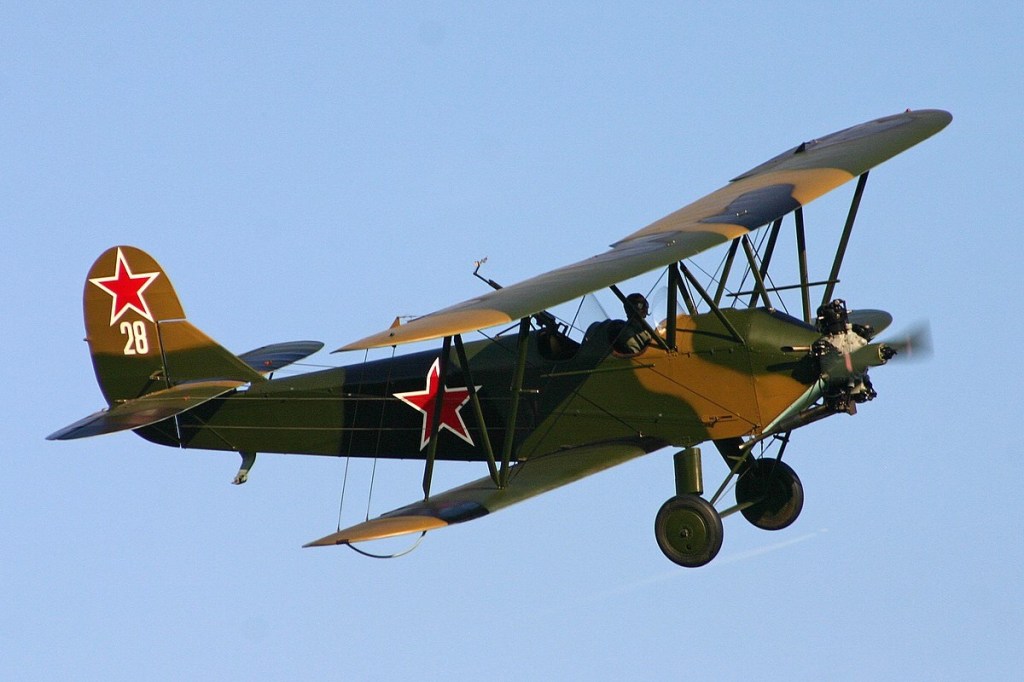
That day was spent on an airfield and in the gigantic hangar in what I call 99-square weather: 99 degrees, with 99% humidity. It was brutal. We did take a break from the heat in midday, when we met to discuss our vision for the European tour, and were treated to a lovely lunch (in an air-conditioned dining hall) by the great airmen of the CAF — all World War II veterans, of course — followed by a flight in a plane of our choice. The two Bills and Mrs. Chetverikov passed on the offer, and only Sergey and I opted for a flight — he in a fighter plane, and I in a biplane with the passenger seat in front of the pilot, and just above tree-top level. I felt as though I was piloting the plane, and I could have stayed in the air forever — or until we ran out of fuel — whichever came first. But as exhilarating as it was, I kept wondering how quickly I could get across the border into Mexico in the event Sergey’s plane took a nosedive into the ground and the full force of two governments came looking for me.
World War II Biplane
One other nerve-wracking incident occurred when Sergey decided to go swimming in the Gulf the next morning. I don’t know whether the water there is always that choppy, but again I was plagued by nightmarish mental images of his being carried out to sea on a giant wave. I was beginning to feel like Walter Mitty with a death wish! But Sergey was a strong swimmer and emerged from the sea unscathed and refreshed. We spent the remainder of the day relaxing, playing chess, eating, drinking, and discussing every controversial subject imaginable.
All too soon the two days had passed and it was time to leave for the long drive back to the airport. Sergey asked if it would be possible to see the Mexican border, as he had never been to Mexico. He knew he would not be able to cross the border that day either, but he just wanted to be able to say he had seen it, and perhaps to buy some Mexican souvenirs. Bill Anawaty knew of a place at Brownsville where the Rio Grande River was quite narrow and nearly dry at that time of the year, and there was an actual border crossing, so off we went.
The crossing at that point consisted of a pedestrian bridge, over which Mexican workers would come into the U.S. each morning to their jobs, and return home at the end of the day. There were no souvenir shops — or shops of any kind — within sight, so I approached the lone Border Patrol officer and asked if he knew of any on this side of the river. He said there were none, but that we would find plenty if we just walked across the bridge into Mexico. I explained to him that we couldn’t do that, as two of our party were a Soviet diplomat and his wife from Washington, and that they did not have clearance to leave the country.
Now, our modern-day problems along the U.S.-Mexican border are legion and well-known, but nothing I’ve heard lately can compare with the response I received from that officer. He simply shrugged nonchalantly and said, “Oh, that’s all right — they can go across. No problem.”
NO PROBLEM???????What the hell had he been smoking??!!!
I gave him my best “mother-who-just-caught-her-child-sneaking-a joint” look, and said, “Well, it may not be a problem for you, but it damn well would be a problem for the Soviet Embassy, and it would be a problem for your bosses, and it would be a problem for the State Department — and it would be a gigantic problem for me!” Sure, this was long before 9-11, so things were somewhat more relaxed, but still . . . I tried to explain the legal and diplomatic implications to him, but he just didn’t get it. So we turned around, got back into our rental car, and continued on our way to the airport. I have no idea whether we were still under surveillance at that point, but if we were — and whoever they were — I can just imagine the nail-biting that went on in their vehicle when the Chetverikovs walked right up to that border crossing!
Luckily, we found a Mexican restaurant along the highway with a nice little gift shop. It was between lunch and dinner hours and they were officially closed; but when we introduced ourselves, they happily invited us in, went back to the kitchen, and prepared a wonderful, authentic Mexican lunch for us. So we were able to satisfy our appetites for food and souvenirs, and to meet some lovely, generous people, before continuing on our way.
We made it to the airport with plenty of time to spare, and also in time to witness the very swift, well-executed arrest of a young man, on charges unknown. Drugs? Smuggling? Mass murder? It’s always something, isn’t it?
Our flight home was smooth, except for the mother with the crying baby seated next to me, whom I did manage to calm down for a while by making funny faces and letting him play with my keys. Oh . . . and there was the encounter with the Stealth aircraft. At some point during the flight, the pilot announced that if we hurried and looked out the left side of the plane, we might catch a glimpse of a Stealth fighter passing in the opposite direction. Being seated on the right side, and with a baby on my lap, I didn’t even try. But Sergey did, and was disappointed to have missed it. Then he said to me that of course there was no way we could have seen it anyway, since it was a Stealth and thus invisible.
Excuse me? Did I hear that correctly? I have to assume he was joking, right?
Well, we finally landed safely at National Airport, and I was able to return the baby to his mother and Mr. and Mrs. Chetverikov back into the hands of their Soviet keepers. I also reported in to the State Department the following morning. They never asked why they hadn’t heard from me earlier, and I wasn’t about to bring it up.
The disappointing end to this story, though, is that, despite our continuing efforts and the enthusiastic backing of all of the countries involved, the financing for the project never came through. It turned out to be horrifically expensive to try to transport all of those planes and people over to Europe and from country to country, with no guarantee that the shows would earn enough to cover the costs. Which is why you never heard anything about it, of course. But it was a wonderful idea, and would have been a grand adventure.
It wasn’t a total loss, however. New friendships were forged, with the wonderful airmen of the CAF, and with the Chetverikovs (who later chose to stay in the United States, where Sergey — an accredited attorney — joined the renowned law firm of Hogan Lovells in Washington).
Of course, I had no idea at that point that a different sort of adventure awaited me a year later, in the summer of 1991. So tune in again next week, please, for my tale of castles, water shutdowns, German tourists, power failures, beer halls, gypsies, dogs, Paul Simon, and the Czech President. And arguably the most beautiful, magical city in the world: Prague.
TTFN, Brendochka 2/16/23
*. *. *
And so today, with fond memories, I bid a final farewell to Sergey . . . now, I presume, enjoying his eternal flight above the clouds.
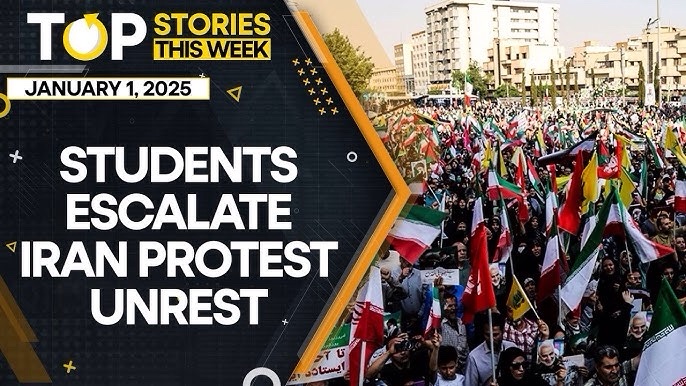
It was just a matter of time: the worsening economic and human rights conditions in Iran finally drove the citizens to end 2025 and begin 2026 with mass protests demanding change, during which at least eight people are reported to have been killed.
And Donald Trump — ever on the lookout for an opportunity to stick his nose in where it doesn’t belong, but where he smells money to be made — has warned the Iranian authorities against killing peaceful protesters, saying that Washington “will come to their rescue,” and that “We are locked and loaded and ready to go.” [Jaroslav Lukiv, BBC, January 2, 2026.]
Two days ago, that may have sounded like just another of his manic midnight tweets. But yesterday changed all that, when he made good on his threats to invade Venezuela . . . even going so far as to kidnap President Maduro and his wife.
Though his rationale is that his action against Venezuela is part of his war on illegal drugs and the need to bring down a murderous regime, everyone knows what it’s really about: it’s about the massive oil reserves that Trump and his cronies will now “invest” in — and profit hugely from — while Trump “runs” Venezuela “until such time as we can do a safe, proper and judicious transition.” [BBC, January 3, 2026.]
Like Venezuela, Iran also sits on huge crude oil reserves — reportedly the fourth largest in the world — as well as substantial supplies of natural gas. And that is a temptation that would be difficult, if not impossible, for him to resist. On Friday, January 2nd, he posted on Truth Social:
“If Iran shots [sic] and violently kills peaceful protesters, which is their custom, the United States of America will come to their rescue.” [Id.]
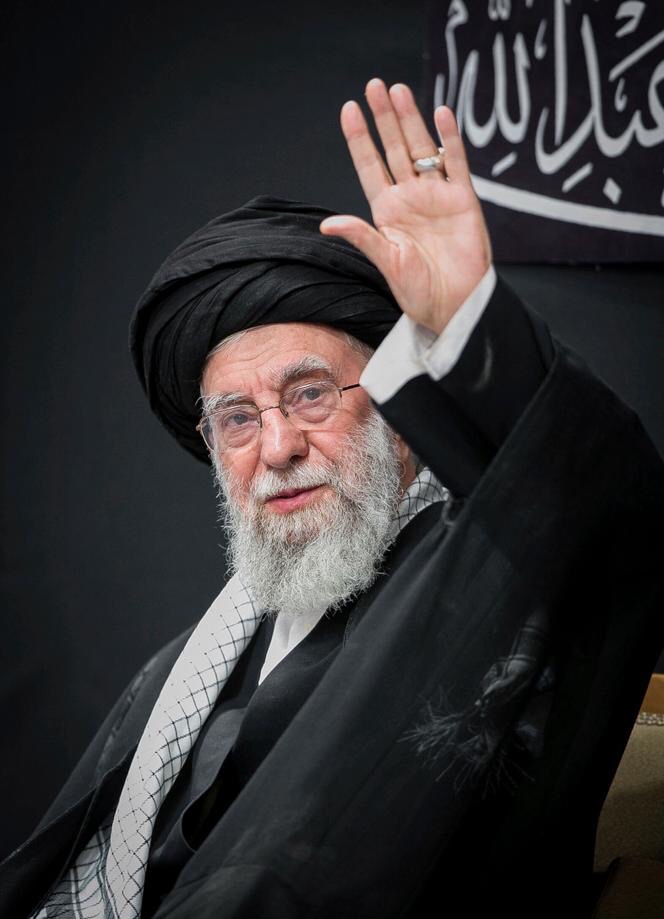
But Iran is not Venezuela. Supreme Leader Ayatollah Ali Khamenei responded that Trump should “be careful” of potentially causing chaos throughout the Middle East. And his adviser, Ali Larijani, issued this additional warning:
“Trump should know that US interference in this internal matter would mean destabilising the entire region and destroying America’s interests.” [Id.]
Ayatollah Ali Khamenei
Still, in an eerie echo of the 1979 protests that expanded into a full-fledged revolution and overthrew the last Shah, the Iranian protesters have not been silenced. One protester, speaking anonymously, told the BBC that they have been asking for US support for years, because the security forces “. . . are afraid and they shake to the bones when Mr Trump says something . . . [They] believe that if Mr Trump says something, he will do it . . . [and they]know if anything happens, they would have to take the consequences.” [Id.]
But those idealistic young protesters may be pinning their hopes on an America that used to bring freedom and democracy to the oppressed peoples of the world . . . not the bastardized version of America that has emerged under Trump’s regime.
I’m not suggesting the Iranian people should give up the fight for reforms; but they may want to rethink the best way to achieve their goals. And inviting Donald Trump into their home . . . well, let’s just say it might not be the answer to their prayers.
Consider what he’s already done to his own country.
On this two-year anniversary of the start of my weekly tribute to the political prisoners being held hostage by the tyrannical regimes of Vladimir Putin and his allies, I find my righteous anger at those regimes tempered somewhat by feelings of shame and guilt . . . not from any overt acts of my own, but on behalf of my country.
For yesterday morning, I awoke — as we all did — to the unfathomable news that forces of the United States military had, without provocation and in violation of international law, invaded the sovereign nation of Venezuela, forcibly kidnapped its president and his wife, and transported them to the U.S. mainland for prosecution on drug charges.
Yesterday, my country — the nation founded on the tenets of peace and democracy — became the hostage-taker. A public announcement from Donald Trump declared that “we” — meaning he — would hereafter “run” Venezuela until a “safe, proper and judicious transition” could be effected.
Thus, the self-proclaimed “President of Peace” officially became the Fourth Horseman of the Apocalypse, raining war and devastation upon the Earth — and, I fear, upon the hostages held in those faraway prisons by Putin and his minions. For we have joined the league of those who trade in human misery, and place no value on the sanctity of life. Who, then, will be willing to negotiate with the U.S. government, when we can no longer be trusted to do so in good faith? What have we left to offer as a guarantee of our supposedly noble intentions?
*. *. *
But that is no reason for me, or any of us, to abandon those prisoners still praying for release. And so, with the addition of this week’s newest political hostages, here they are for the first time in 2026:
Victims of Greed:
The President, First Lady, and citizens of Venezuela
Europeans Under Threat:
The people of NATO and EU member states
Prisoners of War:
The 19,500 Kidnapped Ukrainian Children The People of Ukraine
Immigrant Detainees in Russia:
Migrants from the Central Asian nations of Kazakhstan, Kyrgyzstan, Tajikistan, Turkmenistan and Uzbekistan
Endangered Exiles:
Mikita Losik Yulia Navalnaya Countless Journalists and Other Dissidents
Andrei Chapiuk Uladzimir Labkovich Andrzej Poczobut Marfa Rabkova Valiantsin Stafanovic Yuras Zyankovich
In Georgia:
Mzia Amaglobeli
In China:
Chenyue Mao (American)
In Russia:
The “Crimea 8”: — Oleg Antipov — Artyom Azatyan — Georgy Azatyan — Aleksandr Bylin — Roman Solomko — Artur Terchanyan — Dmitry Tyazhelykh — Vladimir Zloba
James Scott Rhys Anderson (British) David Barnes (American) Gordon Black (American) Hayden Davies (British) Antonina Favorskaya Konstantin Gabov Robert Gilman (American) Stephen James Hubbard (American) Sergey Karelin Timur Kishukov Vadim Kobzev Darya Kozyreva Artyom Kriger Michael Travis Leake (American) Aleksei Liptser Grigory Melkonyants Nika Novak Leonid Pshenychnov (in Russian-occupied Crimea) Nadezhda Rossinskaya (a.k.a. Nadin Geisler) Sofiane Sehili (French) Igor Sergunin Dmitry Shatresov Robert Shonov Grigory Skvortsov Eugene Spector (American) Laurent Vinatier Robert Romanov Woodland (American)
Please do not lose hope. The one constant in life is change . . . and the next surprise may turn out to be a better one.
My first impulse this morning was to start with a mea culpa to the people of Venezuela . . . but I didn’t launch the invasion.
Then I considered a plea for forgiveness to all of America’s traditional allies . . . but I had no part in the decision.
Hell . . . I didn’t even vote for him. Not in 2016, or 2020, or 2024.
I even gave a fleeting thought to renouncing — symbolically, at least — my treasured U.S. citizenship. But I found that to be impossible. I was born here, and I have spent a lifetime loving my country, warts and all. I have verbally defended her to people from other lands who saw only her faults, and proudly pointed out her many incomparable virtues.
And, despite everything we are experiencing, I continue to hold out hope for her salvation and renewal when these dark days are behind us at last.
But — short of putting my fist through a door, or running down the street screaming “I’m mad as hell and I’m not gonna take it anymore” — I need an outlet for the shock, the anger, and the grief I am feeling today. And so I write.
My country — my America — does not start wars. We do not invade countries that are not threatening our borders. We do not kidnap heads of other governments. We do not pretend to be engaged in a “war on drugs” when the real target is oil.
But that is precisely what he — not “we” — has done. But “we” are complicit, because we didn’t stop him. The signs were there when he blew the first suspected drug boat out of the water, taking the lives of his first victims. His verbal threats could not have been more explicit. And his intentions were made clearer when he deployed the USS GERALD R. FORD to the waters off the coast of Venezuela.
No one — not the Supreme Court, not our elected members of Congress, and not his supposed “advisers” — has held him accountable for a single one of his illegal, unconstitutional actions over the past ten months. So why wouldn’t he think he had carte blanche to carry his madness to the next level?
This man who calls himself the “Peace President”; who preaches to other world leaders about legality and human rights; who claims to have ended seven or eight or nine conflicts around the world; who threw a tantrum when he was denied the Nobel Peace Prize . . . this person has now positioned himself as the single most denigrated head of state on the planet.
When even the worst of the worst — tyrannical regimes like Russia, Iran, North Korea and China — have denounced his action, one would expect that he might be having second thoughts. Instead, he declares that the U.S. will “run” Venezuela “until such time as we can do a safe, proper and judicious transition.” [BBC, January 3, 2026.]
Where have we heard those words before? Oh, yes . . . from Vladimir Putin, in regard to his conditions for ending the war in Ukraine.
And what about our allies — the countries of Europe, Canada, Japan, and others? Their silence thus far has been deafening, and understandably so. Just when they must have been thinking he couldn’t get any worse . . .
*. *. *
So, what is the solution? If I knew that, I expect I would be the front runner for next year’s Nobel Peace Prize. But I do know what my idea of justice would be; and it would involve a “safe, proper and judicious transition,” right here in the United States.
For God’s sake, Congress . . . wake up, and stand up, before it’s too late! This is your moment.
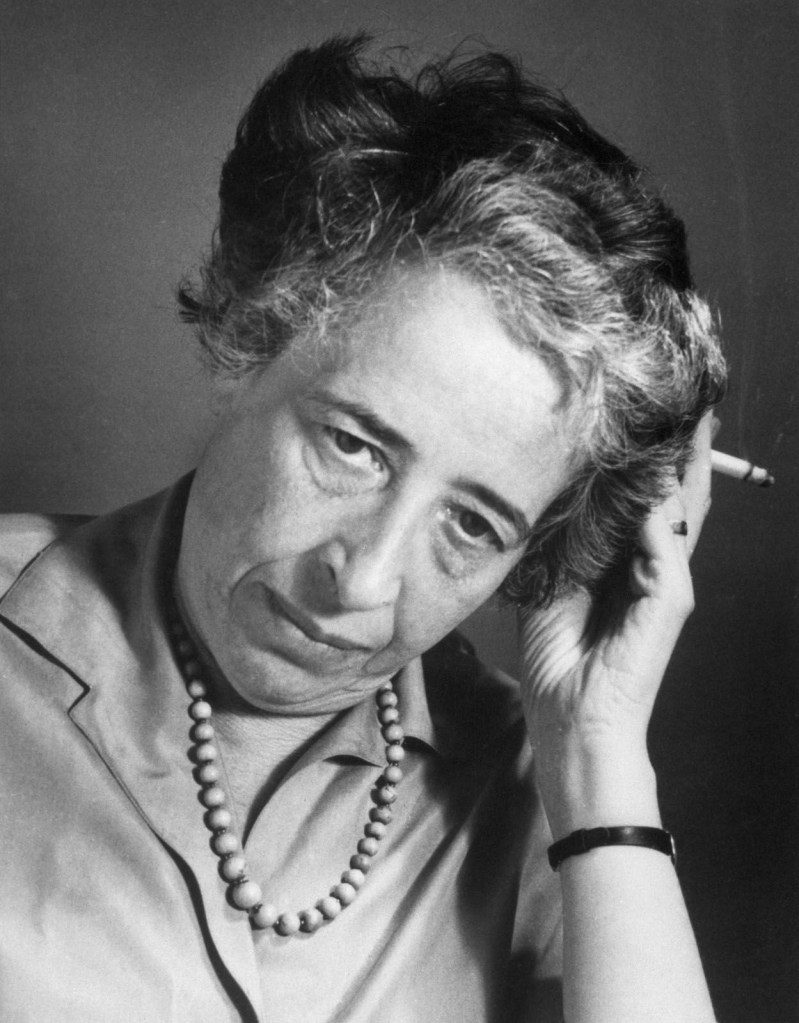
Hannah Arendt was a Jewish intellectual in Nazi Germany. Arrested by the Gestapo, she escaped on foot through Czechoslovakia and on to France, and finally to the United States.
Hannah Arendt (1906-75)
She had experienced the early days of the living hell, later to become known as the Holocaust, created by the regime of a monster too evil to be considered a human being. And in 1951, she tried to warn the world that tyranny does not begin when people believe the lies they are told; it begins when people stop believing in anything at all. She wrote:
“The ideal subject of totalitarian rule is not the convinced Nazi or the convinced communist, but the people for whom the distinction between fact and fiction . . . no longer holds.”
– Hannah Arendt, Lessons for Our Times
She argued that our ability to resist totalitarianism lies in our capacity to think, to question, to listen, to demand evidence . . . because once we stop caring about what is real, we have surrendered our freedom.
Hannah Arendt died before the advent of the internet and social media. How much more urgently her words resonate in today’s cyber world . . . and how much more imperative it is that we heed them.
Variously known as “The Art of Deflection,” “The Blame Game,” or simply “Lying Through Your Teeth,” Plan B is a time-honored device used by tyrants everywhere, from the six-year-old bully on the playground declaring “he hit me first,” to the politician seeking to avoid a scandal, to the barbaric head of state in need of an excuse to start — or prolong — a war.
“They started it!”
And no one does it better than Vladimir Putin. Using his contorted view of Russian/Ukrainian history as an excuse, he sought to satisfy his lust for renewal of the Russian Empire by invading and occupying the Crimean Peninsula in 2014.
In 2022, his bizarre claim that the Russian-speaking population of Ukraine were begging to be rescued from oppression by an imaginary “nazi” leadership was the rationale for his full-force attack on the eastern Donbas region, and subsequently the entirety of Ukraine . . . an all-out war of attrition, labeled by him a “special military operation,” that continues to this day.
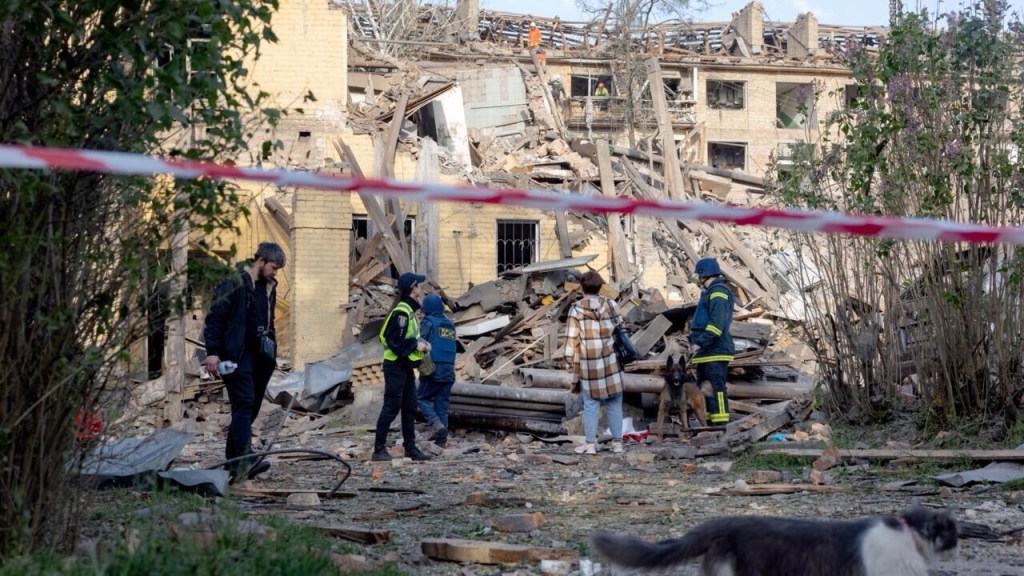
Ukraine: Being “rescued” by Russia
For four years, as the free world’s leaders have come to Ukraine’s defense while simultaneously seeking to negotiate a solution to the conflict, Putin has stalled, promised, reneged, and deflected time and time again, repeatedly attempting to shift the blame for the carnage to NATO, the EU, and to Ukraine itself.
And as 2025 drew to a close, and Ukrainian President Volodymyr Zelensky offered a revised, 20-point peace plan for consideration by the Russian side, Putin came up with yet another ingenious charge to levy against Zelensky: he claimed that a Ukrainian “strike” on his residence at Valdai in the Novgorod Oblast of Russia — which cannot be verified as having happened at all — was an assassination attempt against him personally.
But the Kremlin doesn’t need proof; just putting it out there was enough for Russian Foreign Minister Lavrov, who quickly issued a statement reiterating their original immovable, one-sided demands for a cessation of hostilities. And he even had a little help from Donald Trump, who said he had been told about the “attack” by Putin during their last telephone conversation, which had made him very “angry” . . . implying that if Putin said it happened, it must be true.
“Putin told me . . .”
Ukraine — always more than happy to take credit for any real assaults on Russian forces or territory — categorically denies this claim of an attack on Valdai. And George Barros, a Russia analyst at the Institute for the Study of War (ISW), said in an exclusive interview:
“There’s no evidence that Ukraine conducted any kind of strike targeting Putin’s residence in Valdai. It’s fairly telling [that] the Kremlin spokesman even rejected the notion that Moscow should provide evidence. Kremlin officials are using the alleged Ukrainian strike in Novgorod Oblast to justify Russia’s continued insistence that both Ukraine and the West capitulate to Russia’s original demands from 2021 and 2022.” [Alex Raufoglu, Kyiv Post, January 1, 2026.] [Bold emphasis is mine.]
Deflect . . . blame . . . lie. They all do it: the autocrats, the plutocrats, the kleptocrats. And Vladimir Putin does it better than most. But, like the mythical boy who cried wolf, no one believes him any longer — no one, that is, with a functioning brain.