Having a wonderful time reminiscing about all my past travel (and other) adventures. Hope you’ll share them with me in my blog, “All Roads Led to Russia.”
It’s not the proliferation of spin doctors that has me feeling dizzy . . . though goodness knows, there are more than enough of them to go around. But no . . . instead, it’s the frequency and speed of the 180-degree turns in what passes for U.S. foreign policy these days.
I never would have imagined that someone carrying as much bulk as Donald Trump could be capable of completing even a single pirouette, much less a constant succession of them. But when it comes to his frantic attempt to negotiate an end to the war in Ukraine before the 2025 Nobel Peace Prize is announced in December, he just keeps twirling on those little toes with an agility that would make Mikhail Baryshnikov turn green with envy.
In all fairness, he is dealing with the most evil spin-master of them all: Vladimir Putin. And that requires more than just agility and flexibility; it also requires an understanding of the adversary, which is something that Trump never has had, and likely never will have. Perhaps it’s because they’re so alike in so many ways, and Trump lacks the introspection to understand himself, much less anyone else.
Add to that the well-known Kremlin tactic of making ambiguous statements, and the next day claiming that the entire world had misheard or misinterpreted what had clearly been said, and it’s no wonder we’re all feeling a bit light-headed.
One would think — or at least hope — that a Trump-Putin summit on Friday, August 15th, followed by a multi-lateral White House meeting on Monday the 18th that included Trump, Ukrainian President Zelensky, five other European heads of state, and the leaders of the EC and NATO, would have yielded some concrete results.
But no, it was not to be. Perhaps it’s the recent rainy weather, but the concrete simply refuses to harden. While everyone seems to have been in agreement that post-war security guarantees for Ukraine are of primary importance, Trump can’t make up his mind as to the extent of U.S. involvement in any such guarantees. One day he’s in, the next day he has reservations.
“Uhhh . . .”
And then there was his 40-minute phone call with Vladimir Putin from the Oval Office while the European contingent waited in the meeting room. Trump later posted on Truth Social that his discussion with Putin had covered the possibility of a bilateral (Putin-Zelensky) face-to-face, and/or a trilateral (Putin-Zelensky-Trump) meeting, and that “This was a very good, early step for a War that has been going on for almost four years.” [RFE/RL, August 18, 2025.]
And he was pushing for the first such meeting to be held as quickly as possible, preferably within a few days.
The following morning, that idea was blown out of the water by Russian foreign affairs adviser Yury Ushakov, whose statement to the press made it quite clear that Putin’s attendance at such a meeting was not engraved in stone, and that they had merely “discussed that it would be worthwhile to explore the possibility of raising the level of representatives from the Ukrainian and Russian sides — that is, those representatives participating in the mentioned direct negotiations. Vladimir Putin and Donald Trump agreed to maintain close contact with each other on the Ukrainian issue and other pressing topics on the international and bilateral agenda.” [Lidia Kelly, Reuters, August 18, 2025.]
“Other pressing topics”?? With half of Europe’s leadership waiting in the next room to tackle one urgent issue — Ukraine — Donnie and Vlad were discussing . . . what? Increased trade? Easing of sanctions? The price of vodka and caviar?
But what about the f*cking war??!!!
Well, on Tuesday the 19th, Trump finally admitted that this conflict has turned out to be “a tough one” to resolve, and that it was possible that Putin has zero interest in ending the war in the foreseeable future. His comment:
“We’re going to find out about President Putin in the next couple of weeks. It’s possible that he doesn’t want to make a deal.” [Laura Gozzi, BBC News, August 20, 2025.]
Welcome to reality, genius.
“Holy crap! Why didn’t somebody tell me?”
So now, after a frantic week of hastily-arranged meetings, overseas flights and multiple phone conferences, we’re back to a “couple of weeks.” Which means we’re essentially back to square one. Only now, Putin has not merely bought himself more time — during which, not incidentally, he has continued to bomb the hell out of Ukraine — but has also emerged, bright and shiny, from the political purgatory he brought on himself when he invaded Ukraine.
Yes, Vladimir Putin is back . . . large and in charge. And Trump doesn’t know which way to turn.
I could offer a suggestion, but it wouldn’t be nice.
Today is the 57th anniversary of the Soviet invasion of Czechoslovakia — launched on August 20, 1968 — to crush the liberalization that had begun in 1964, and had been gaining strength under the leadership of reformist Alexander Dubcek.
Determined to prevent a loss of Communist Party control over the country, Soviet leader Leonid Brezhnev deployed nearly 200,000 Warsaw Pact troops — Soviet, East German, Polish, Hungarian and Bulgarian — and 5,000 tanks to crush what had been called the “Prague Spring.”
Widespread demonstrations erupted, but were clearly no match for the Soviet manpower. By the time it was over, more than 100 Czech and Slovak protesters had been shot to death.
Prague, Czechoslovakia – August 1968
Being reminded of this naturally took me back to 1991, when I spent the summer living and working in Zlata Praha — Golden Prague, as it is known. The week that I arrived there, the last of the Soviet occupying troops were just leaving the country.
I’ve told my two-part story before; but for those who may have missed it, I have chosen to offer, once again, the best summer of my life.
*. *. *
In 1991, I was working in the Washington office of the Squire Sanders law firm, and feeling bored with my life in general, when a bit of manna from Heaven fell into my lap. Two of the partners — one from the home office in Cleveland — were discussing the firm’s foreign offices. I said, half jokingly, that if there was any thought being given to opening an office in Moscow, I’d like to volunteer. The Cleveland partner said there was not, but that they had a new branch in Prague in need of someone who could organize the office and help to train the Czech staff. He asked if I would be interested, and — assuming he was also kidding — I laughingly replied that I could be packed and ready in an hour.
Never assume anything.
A few short weeks later, I found myself, and my six pieces of seriously overweight luggage, on a plane to the historic capital of Czechoslovakia, where I knew absolutely no one. I also did not know the Czech language, but I had studied Russian, and since they’re both Slavic languages, I figured it couldn’t be that hard, right? This was going to be great!
Old Town Square Prague
When my overnight flight landed at Prague, I found a very pleasant-looking young man named Rudy holding a sign with my name, and I met my first friend in my new home. On the ride from the airport, I discovered why Prague is called the Golden City: the name refers to the golden spires of its abundance of churches, the estimated number ranging anywhere from 100 to 1,000, depending on which travel guide you’re reading. Rudy drove me first to the apartment the firm had rented for me, about a kilometer from the office; dropped off my luggage; and then headed straight for the office along a very direct route that would clearly be an easy walk for me the next morning, and every day after that for the next three months.
I could not have arrived in Prague at a better time. It was May of yet another “Prague Spring.” But this time it was not about an anti-communist revolt as it had been when the Soviet Union invaded in 1968; it was, conversely, all about celebrating the departure of the last of the occupying Soviet troops that very week. Independence had at last returned to Czechoslovakia, and to the rest of Eastern Europe, after the fall of the Berlin Wall a year and a half earlier; and Prague had not stopped partying since.
My apartment was on the second floor of a generic Soviet-style building near the foot of a ridiculously steep hill. The hallway light operated on a timer and had to be switched on each time I entered the building or left my apartment, if I didn’t want to be groping around in the dark. The apartment itself had a fairly large bedroom, and a small living room, where there was a wardrobe with a man’s clothes still hanging in it. (I never did find out who they belonged to, and no one ever came to claim them.) There was also a tiny bathroom where the hot water ran reddish-brown for several minutes before clearing enough for a quick shower. A sit-down bath was out of the question. The kitchen contained a working refrigerator, stovetop and sink; but I never learned to use the oven, which showed temperatures in centigrade, or the Russian-made microwave, which I was sure would zap me with some sort of deadly rays if I dared try.
But none of that mattered, as I only slept, showered and changed clothes there. The rest of my time was spent at the office, followed by dinner every evening with one or more of my co-workers at any of the many outstanding restaurants the city had to offer, and sightseeing all weekend, every weekend. I quickly got into the habit of stopping on my way to work in the morning at a bakery near my apartment for fresh bread and pastries to share with all of my new colleagues, and Rudy brought in our daily supply of deli meats and cheeses for lunch.
On my first walk to work, I also discovered that I had seemingly been transported to Dorothy’s Emerald City. At the top of my hill was a store with a large sign that appeared from a distance to read “OZ.” Of course, my curiosity led me directly to it, and as I came closer, I found that those letters were — not the end of the yellow brick road — but the initials of the words “ovoshchi” and “zelenina.” Optimistically thinking that there must be a measure of similarity between the two Slavic languages, I tried to use my limited Russian skills to translate. In Russian, “ovoshchi” means vegetables, so that one was easy — or so I thought. But “zelenina” was a bit of a puzzle. I reasoned that it had to come from the root word for “green,” which in Russian is “zelyoni.” So, OZ seemed to stand for vegetables and . . . what? green things? — which obviously made no sense whatsoever. OZ was a produce store, all right, but it turned out that a Russian vegetable translated to a Czech fruit, and the “green things” were the veggies. My first foray into this new language was a complete bust, and it never did get much better. But I arrived at work that morning with a bag full of delicious fruit.
The next day I got to the office to find that there was great excitement among all the employees, who included the aforementioned Rudy (our driver and jack-of-all-trades); another young man named Roman (our second driver and office courier); three very attractive, blonde young ladies all named Jana; Beata, who was a multi-lingual American paralegal of Czech birth; and a Czech-American attorney named Milan. It seemed that Rudy — a man of many talents, as it turned out — had scored a handful of tickets for a concert coming up the following weekend at the local football — soccer, to us Americans — stadium to celebrate the Russian exodus. The performer was none other than Paul Simon, of Simon & Garfunkel fame; and there was a ticket for me. And I’d only had to travel 4,300 miles to get there!
As if that weren’t enough, when we arrived at the packed stadium on Saturday evening, we discovered that an even greater star was in attendance: President Vaclav Havel, the hero of the newly freed, democratic Czechoslovakia. We were able to see him from our seats, and the excitement was palpable throughout the crowd. Welcome to Prague, Brenda. This was just the first week, and I had spent it with an American music icon, the President of Czechoslovakia, and a whole bunch of welcoming strangers, most of whose females seemed to be named Jana.
Vaclav Havel, Hero of the Velvet Revolution
But Paul Simon wasn’t the only act in town. It happened that 1991 also marked the bicentennial anniversary of the death of one Wolfgang Amadeus Mozart, and throughout Europe his genius was being celebrated ad nauseum, all summer long. And I couldn’t get enough of it. Dragging various people along with me, I must have gone to a half dozen concerts. My favorites were held in a small theater on the banks of the Vltava River, and were called — if I remember correctly — “Mostly Mozart.” To the beautifully performed melodies and lyrics of the operatic arias (in the originally written languages), satirical plays were presented by the singers onstage that were absolutely hilarious; and somehow, the interplay of comedy and Mozart’s masterpieces just worked. “Wolfie” may have been turning over in his grave, but I loved it, and so did the rest of Prague.
*. *. *
As for any spoken language barrier, I soon learned that everyone in the country had been required to study Russian during the Soviet occupation, but that most Czechs refused to speak it any longer, for obvious reasons. Along with their other freedoms, they were thrilled to have their native language back. But when I rode in a taxi or shopped in a local store, the conversation would usually go something like this:
Me (in Czech): “Dobry den” (“Good day”). Then, in English: “Do you speak English?”
Them (in German): “No. Do you speak German?” (It seemed they’d forgiven the Germans for the long-ago Nazi occupation, but the Russians . . . not so much.)
Me: “Nein.” (One of the dozen or so words I know in German, two of the others being Schweinehund and Dummkopf. You see how my mind works?)
Me (continuing, this time in Russian): “Maybe you speak Russian?”
Them (in Czech, and suddenly stiffening as though someone had shoved a pole up their butt): “No! No Russian!”
Me (still in Russian, and very apologetically): “Sorry. I’m American, and I only speak English and a little Russian. Can you understand me?”
Them (still in Czech, but now visibly relaxing): “Oh, American! Good! Welcome! Yes, I understand a little Russian.”
Problem solved. They would continue to speak in Czech, very slowly and with a lot of gestures; and I would respond in Russian, the same way. And somehow, we managed to communicate. Through the weeks, as I picked up some words and phrases in Czech, I would use a mixture of the two languages. Every cab driver in Prague came to know me and where I lived and worked — there weren’t a lot of American expats in Prague at the time, and a redheaded American woman who spoke to them in Russian was memorable. Being a good tipper didn’t hurt either.
*. *. *
Personal note: I hate beer. In my opinion, it’s bitter, it’s bloating, it smells bad, and it leaves a bad aftertaste. (I feel the same way about coffee, except for the bloating part). If that makes me weird, so be it. But the folks in Prague weren’t ready to accept that, and kept trying to convince me that their renowned Czech beer, Pilsner, was different and so much better. So one evening, when we were all out partying after work (not an unusual occurrence), I agreed to take a sip from Jana’s (it doesn’t matter which Jana’s) glass — and almost did a vaudeville-style spit-take. I’m sorry, but beer is beer, and I can’t tell a good brewski from a bad one. And I said so, as gently as possible. But I don’t think they ever forgave me for that.
I did, however, discover a local drink that I loved, and still keep in my freezer to this day, right next to the Stolichnaya vodka. It’s called Becherovka, and is a clear, herbal, after-dinner liqueur, to which I was introduced one evening at dinner when I happened to mention that my feet were killing me from all the sight-seeing along the cobblestoned streets of Prague. On their promise that it would relieve my pain, I tried a shot before dinner. And a second. It was uniquely refreshing, and couldn’t possibly do any harm — after all, it was herbal, wasn’t it? Well, after those two shots, and another one after dinner, absolutely nothing hurt. In fact, although I swore I was not the least bit lightheaded, I couldn’t feel my feet at all. Luckily, I wasn’t doing the driving. So who needs opioids — or even ibuprofen — when you’ve got Becherovka? I do limit myself these days to one or two small shots, but it’s still my pain-killer of choice. (BTW, it can be ordered online, if you’re interested, and over 21.)
Herbal Pain Killer
Then there was the night I met the Dobermans. No, not the nice Jewish couple next door; these two were from upstairs. When I got out of the taxi in front of my building after dinner one evening, there was a small group of men standing nearby, just talking and enjoying the mild summer air. One of them called out to me, but he was speaking Czech and I couldn’t understand him. Thinking they were just being neighborly, I gave them a friendly wave as I opened the door to my building . . . and was confronted in the dark hallway by two humongous, solid black, barking, drooling, straining-at-the-leash Doberman Pinschers, ears up and tails down, obviously looking for someone to kill. Someone like me. Startled out of my wits, I let loose with a primal scream . . . the dogs’ owner screamed in response . . . the dogs barked louder . . . and all the while the men on the street were roaring with laughter. That was what they had been trying to tell me: look out for the dogs, who had just come back from their evening walkies. And when my neighbor and I finally stopped screaming, we joined the others in laughing at ourselves. The dogs — who lived directly above me — turned out to be sweethearts, once they got to know me, and their owner was also quite friendly; though I would have preferred to meet them some other way — any other way.
Howdy, Neighbors
Dogs are treasured as pets in Europe, just as they are here. And that included the dog belonging to the Czech Foreign Minister.
We had an American attorney working with us — a bright but spoiled young woman from a well-to-do family, who never quite adapted to the easy-breezy way of life in Prague. Our law firm had been retained by the new Czech government to advise and assist in formulating a new constitution and legal framework, and she — we’ll call her Valerie — had been assigned a desk at the Foreign Ministry where she worked pretty much full-time. As a convenience, she brought her lunch to work every day and kept it in the Ministry’s refrigerator, as did many others.
Now, I have to insert here that Valerie was, shall we say, less than popular with the Ministry staff. She had way too much Attitude. On the day in question, the Foreign Minister was leaving town on government business, and had brought along his beloved dog — a terrier, I believe — to hand over to a friend who was going to care for the pooch during his master’s absence. The Minister parked in his usual spot in front of the building, opened the driver’s-side car door, and before he could turn around, his dog ran out into the street — and directly into the path of an oncoming vehicle. The poor baby was killed instantly as his owner watched, helpless.
Needless to say, the Minister was devastated, but was unable to cancel or postpone his official trip at the last moment. So he had to make some hasty arrangement for his dog until a funeral could be planned for the following week. And this being Prague, the solution turned out to be . . . well . . . unique.
When Valerie arrived for work a little later that morning, no one took the trouble to warn her that anything was amiss. She went directly to the kitchen to put her lunch into the refrigerator, and had one item that needed to be kept frozen. So she opened the freezer door . . . and let out a SHRIEK that must have been heard in Belgium. Because in the freezer — staring sightlessly out at her, arms and legs akimbo, a silvery frost already forming on his fur and his little black nose and protruding pink tongue — was the Minister’s dog. The Minister’s dead dog. Sad . . . stiff . . . bloody . . . undeniably, irretrievably dead doggie . . . without so much as a blanket or a newspaper to cover his sorrowful condition. And the shrieking continued, while all around her, Valerie’s co-workers were laughing their asses off. Not at the dog, of course, but at her. They really didn’t like her.
NOT the Minister’s Dog
You will be relieved to know, incidentally, that that unfortunate, cryogenically-preserved canine received what was reportedly a lovely burial the following week in the Minister’s home town, alongside all of his previous pets. I assume he was thawed first. The dog, not the Minister. Requiescat in pace — R.I.P., little pup.
Prague seemed intent on getting back at Valerie for not being happy there. Sometime during the summer, we suffered a city-wide power failure for nearly an entire day. As the locals were fond of saying, “Oh, well . . . that’s Prague.” While the rest of us enjoyed a lunch at a nearby restaurant, consisting of cold cuts and fresh vegetables, with potatoes cooked slowly over a huge collection of candles (Czech ingenuity at its finest), Valerie was stuck in the elevator at the Ministry. Stranded alone in the car, she again displayed her usual aplomb in times of crisis: she screamed, pounded the elevator door, screamed some more, repeatedly pushed the buttons to all the floors . . . and continued to scream for someone to get her the %#*#& out of there. When stressed, it seemed her upper-class upbringing went directly down the drain. She was, of course, ultimately rescued. But no one was in the least surprised — or in the least saddened — when she finally was granted a transfer back to the States.
Valerie may have considered Prague to be a living theatre of the absurd; but to me it was an endless tapestry of humanity at its best, and life as it is meant to be lived: freely, joyously, and always hopefully.
There is so much more to tell about that summer in Prague — water shut-offs, Gypsies, German tourists, rotisserie chickens, a Catholic priest, Chanukah candles, and more — so I’ll have to make this a two-part chapter. See you next week for the rest of the story.
One question has been eating away at me since February 24, 2022 — the day Russian troops invaded eastern Ukraine and began stealing mile after mile of Ukrainian territory, claiming it as rightfully belonging to Mother Russia. And that question is:
If Russia is ultimately allowed to keep the territory it has succeeded in occupying, what will happen to all of the Ukrainian people living there who will suddenly find themselves the newest residents of Russia? What, if any, options will they have?
Боже мой!!! (“Oh, my God!!!”)
Much, of course, will depend on the terms of the final peace treaty; perhaps there will be a provision allowing those who wish to leave to do so. But where will they go? And what will it mean to them to be uprooted from the homes and the lives they have built?
In the Donbas area, for example — which encompasses the Donetsk and Luhansk Regions — there are quite a few Russian sympathizers who will choose to remain under Russian rule. But they constitute a minority of the total population (currently estimated at 6.5 million). It is difficult to imagine a mass exodus of that magnitude.
Ukrainian Refugees – 2022
So, for the millions who are unable or unwilling to leave, but who oppose the Putin regime, what will the future hold?
First, of course, will be the “award” of Russian citizenship and the issuance of Russian passports.
The Russian language will become dominant; eventually, speaking Ukrainian may become illegal.
The children will quickly be “Russianized.” New school curricula will be instituted immediately, teachers retrained, and children’s “clubs” formed to augment the indoctrination process, similar to the Soviet Komsomol and Pioneer groups. They will be trained for future military service. Their young, vulnerable minds will be molded to form the next generation of good Russian citizens.
Young Pioneers – “Always Prepared” – USSR, 1937
Young adults will become eligible for conscription into the Russian military, possibly sent to fight their own Ukrainian people in some future conflict.
Communications — the press, TV, internet — will be restricted in accordance with Russian laws.
Friends, relatives, neighbors, co-workers will be encouraged to report any expressions of political dissidence or resistance, creating an endemic atmosphere of suspicion and fear.
I shudder to think of what will happen to the Ukrainian Orthodox churches in those regions, the historic Ukrainian monuments and memorials, and the libraries filled with Ukrainian books.
Iversky Monastery – Donetsk, Ukraine
Et cetera, et cetera, et cetera.
*. *. *
These are the images — in addition to the relentless death and destruction — that keep me awake at night.
I see my grandparents, and millions of others — honest, decent, hard-working people — fleeing the tyranny and the pogroms of the tsar in the early 1900s, courageously coming to a strange land to learn a new language, a new way of life.
But the doors that were open to their generation are being slammed shut today; there is no longer any room for them, any “promised land” to run to . . . not in those numbers.
Behind the big smile, and the handshakes, and the assurances that he’s just joking, you never know what really is going through Donald Trump’s mind.
In the Oval Office – August 18, 2025
One of the major sticking points in Russia-Ukraine negotiations has been Vladimir Putin’s assertion that Volodymyr Zelensky is no longer the legitimate president of Ukraine, his term having run out in May of 2024, and therefore has no standing to negotiate peace terms. But the Ukrainian Constitution provides that no presidential election may be held while the country is at war . . . which, of course, it has been since the Russian invasion of February 2022. So Putin’s claim is specious at best, and merely another stalling tactic.
But during this week’s meeting at the White House, the subject was raised by a journalist, and Zelensky assured Trump and the others present in the Oval Office that, once the war was over, his country would definitely hold a proper, legal, democratic election.
Now, we’ve all heard Trump’s suggestive comments about finding a way to run for a third term, despite the U.S. Constitutional limitation of two presidential terms. So it comes as no surprise that he would jump on the opportunity to respond to Zelensky, in front of the assembled press corps:
“During the war, you can’t have elections? So let me just see, three and a half years from now, if we happen to be in a war with somebody, no more elections? That’s good.” [C-Span, August 18, 2025.]
Then he laughed. But somewhere in the back of his mind, might a seed have been planted to the effect that perhaps, in the next three and a half years, he could manage both to push through a similar Constitutional provision and start a war, leaving him free to remain in office?
Extreme? Certainly. And if it weren’t for his previous suggestions, this could easily be dismissed as a joke. But Trump’s friend Vladimir Putin has done it — not just once, but with two Constitutional amendments, a couple of wars in Chechnya, and an ongoing one in Ukraine.
So why not . . . ?
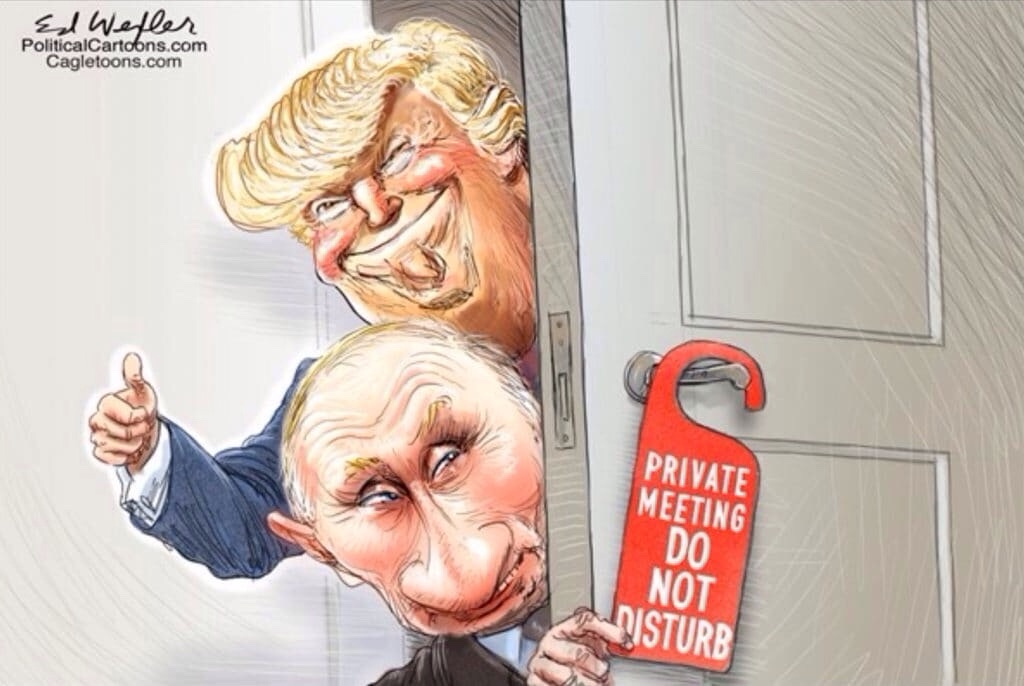
Birds of a Feather?
*. *. *
Conversely, it can also be dangerous to take Trump at his word when he is at his most serious. Case in point:
In that same Oval Office meeting on Monday, August 18th, when asked by a reporter if a failure to reach a peace deal would mean “the end of the road” for U.S. aid to Ukraine, Trump replied:
“I can never say that, it’s never the end of the road.” [Zac Anderson and Francesca Chambers, USA Today, August 18, 2025.]
And when pressed further for an answer as to whether he would be willing to send U.S. peacekeepers to Ukraine as part of post-war security guarantees, he replied that, while European nations would be the “first line of defense . . . we’re going to help them out also. We’ll be involved.” [Zac Anderson, USA Today, August 19, 2025.]
But in a Fox News interview the very next day, August 19th, he said that U.S. troops would not be involved in any peacekeeping effort in Ukraine after the war. And he was asked specifically:
“What kind of assurances do you feel like you have, going forward, past this Trump administration, that it won’t be American boots on the ground defending [Ukraine’s] border?” And his response was:
“Well, you have my assurance, and I’m president.” [Alayna Treene and Kevin Liptak, CNN, August 19, 2025.]
Well, that’s reassuring as hell!
“ . . . NOT!”
*. *. *
What’s the old saying? . . . “Fool me once, shame on you; fool me twice, shame on me.”
I’ve lost count of the number of times we’ve already been “fooled.”
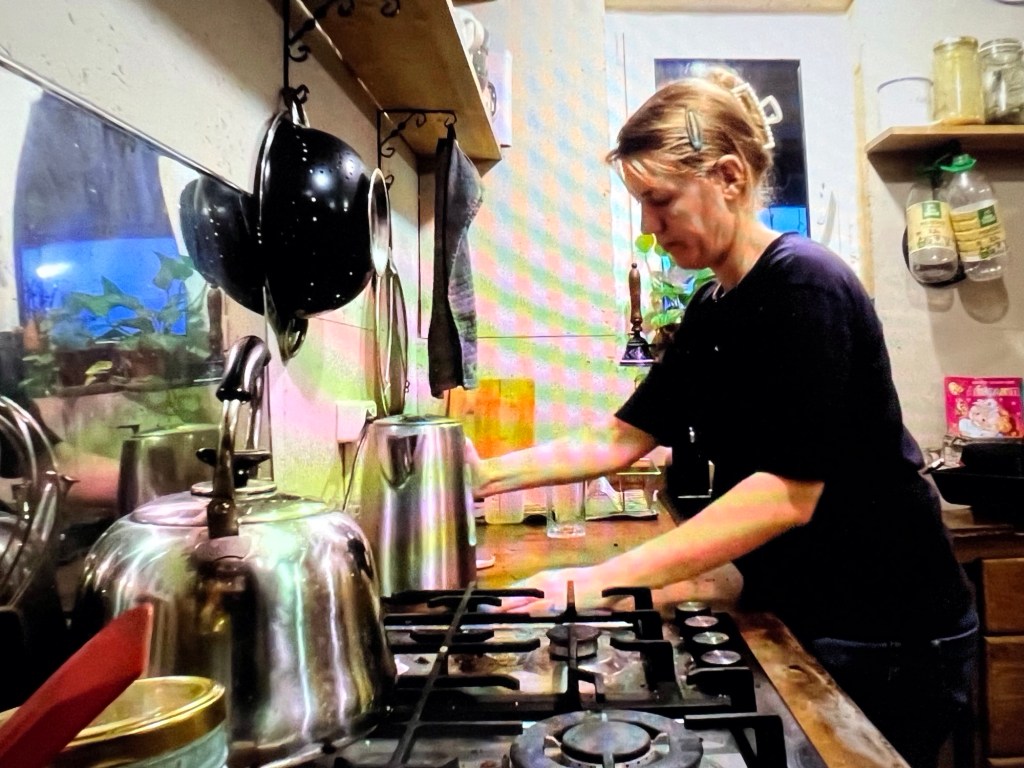
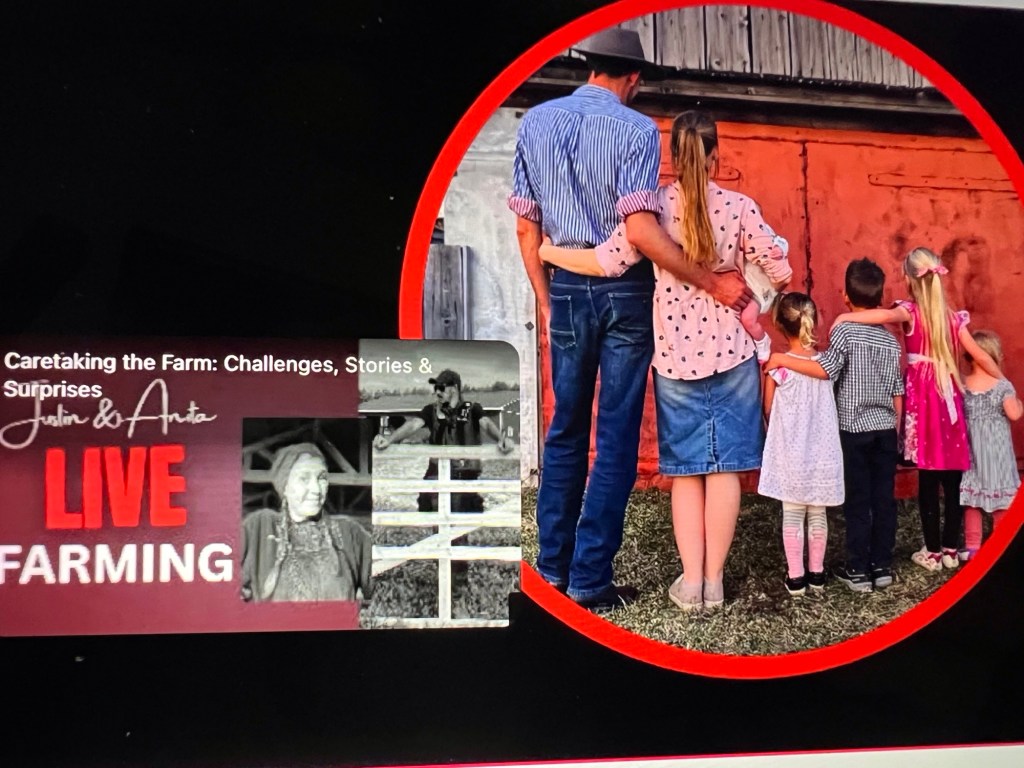
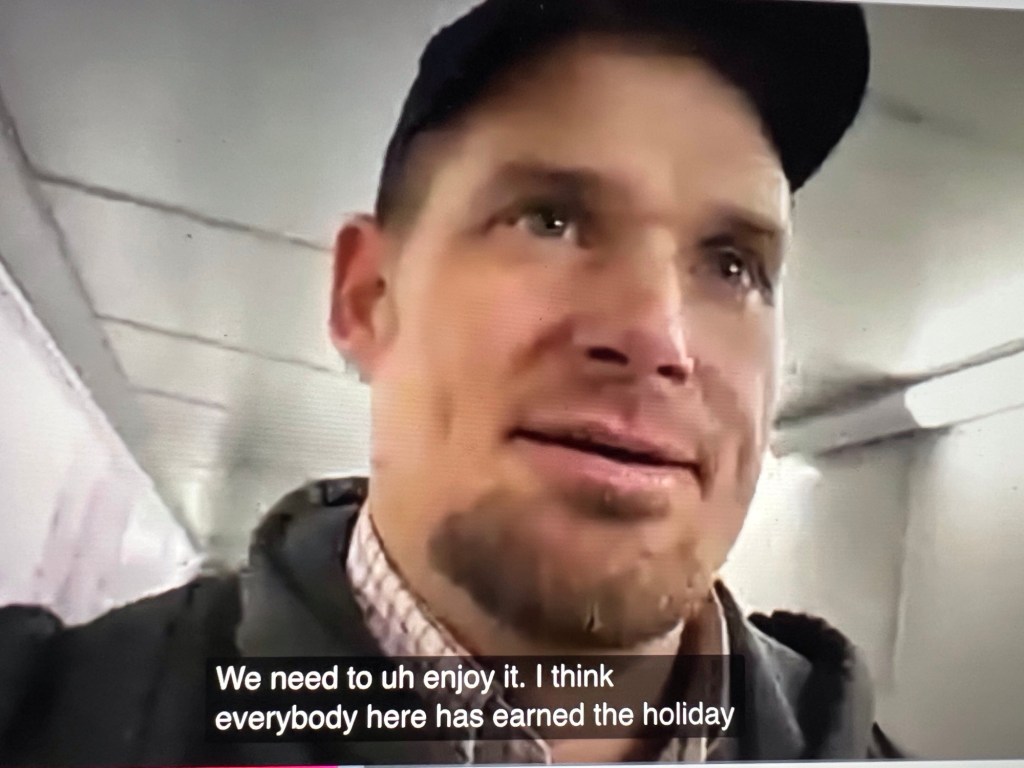
After weeks of watching the Feenstras building the little guest house on their farm in Nizhny Novgorod, Russia, preparing for the arrival of unnamed visitors, the so-called big reveal came yesterday . . . only it was something of an anti-climax after all the build-up.
Welcoming the New Tenants
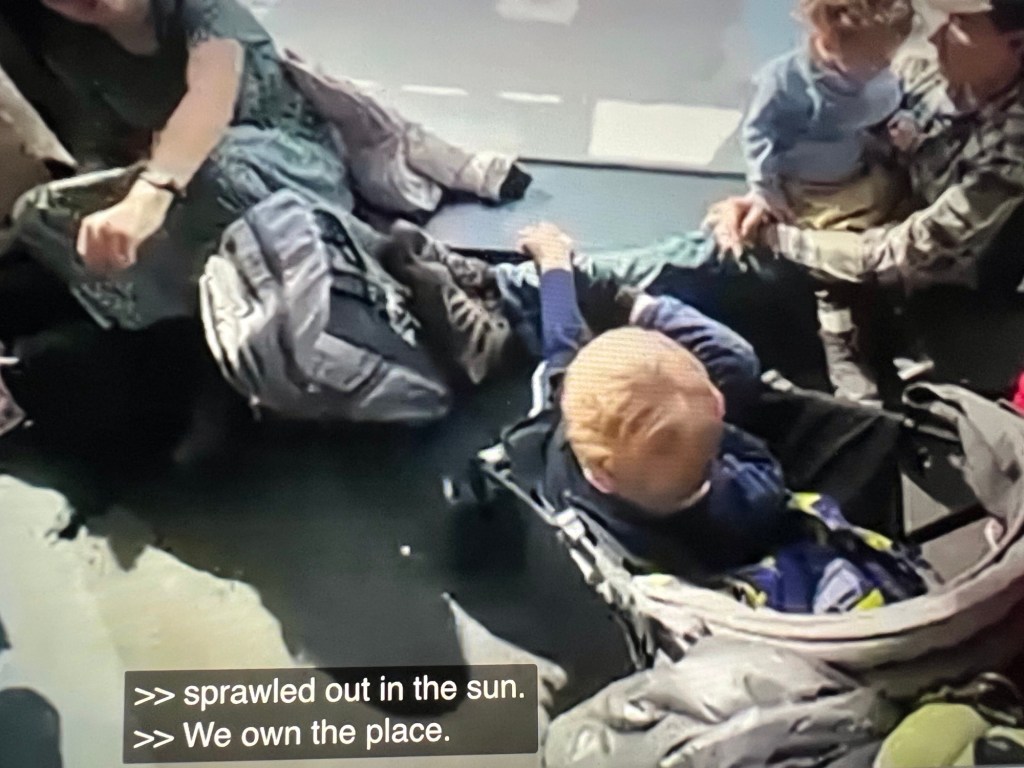
Toward the end of another of Arend Feenstra’s laborious workdays, we were told that guests had indeed moved in. But it wasn’t until breakfast the next morning that they actually made an appearance, and were shown being welcomed by their host family in the kitchen of the main house, where the long table was set for what appeared to me to be a small army. But when you’re already a family of ten, what’s another six people?
Getting Ready for Breakfast … for 16!
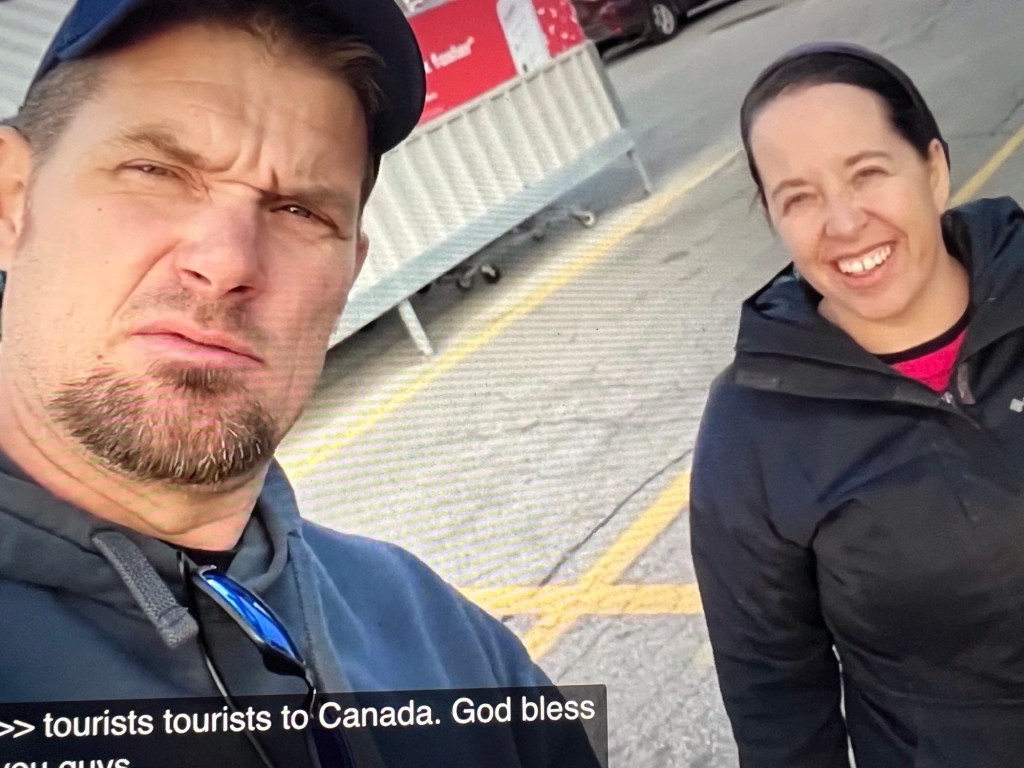
The new arrivals were the Pulley family, consisting of an attractive young couple and four small children. But that’s all we know so far.
There was no information as to where they came from, other than a later comment by Arend that they had arrived “from Altai, Russia, via Australia,” and were there to “work for” the Feenstras while building their own new lives in Nizhny Novgorod.
(My guess is that Arend had it backwards, and that they had actually arrived from Australia via Altai; but we’ll have to await clarification of that.)
We were not told anything more about their backgrounds . . . Are they Australian? Perhaps Canadian? American? I thought I heard them greet each other in English, but the words they exchanged were off-mike and unclear. They were never actually introduced to the viewing audience, though Arend Feenstra did say, at the very end of the video, that they would be arranging an interview at which the Pulleys would explain their motivation for moving to a muddy farm in Nizhny Novgorod and their hopes for the future.
Getting Right to Work
Whatever their origins, it appears that the Pulleys are another of Vladimir Putin’s new wave of young, multi-child immigrant families; and the Feenstras — ever anxious to serve their adopted country — have been selected to help them assimilate . . . all in view of the ever-present cameras, of course. In return, the Feenstras receive the benefit of two extra pairs of hands to help with the never-ending work on their growing farm.
A Few of the Other Residents
And speaking of growing, at the beginning of the video we learned that there were more new arrivals expected, though they’re now a couple of weeks behind schedule: some cows and sheep for the nearly-completed, big red barn.
The Feenstra Farm may still be awash in mud, but it is obviously prospering . . . which goes to show what can be accomplished with a lot of hard work, the right contacts, and a willingness to live under — and proselytize for — an autocratic, tyrannical regime.
The visuals started when Ukrainian President Volodymyr Zelensky showed up at the White House wearing a suit instead of his signature military garb. He had long since humbled himself after last February’s disastrous visit when Donald Trump chastised him for being (in Trump’s opinion) improperly dressed, and for not saying “thank you” a sufficient number of times.
The Welcoming Committee
So it was smart of Zelensky — who obviously had come as a supplicant — to avoid that pitfall; but it was also a bow to the king that would not have been necessary if the “king” were possessed of a modicum of human kindness. I have to wonder whether an Arab sheik would have been criticized for wearing his traditional bisht, or an African leader for arriving in a dashiki.
But sartorial choices aside, the two men — flanked by their aides — held a press conference in the Oval Office before joining the European delegation waiting in another room. The body language of Trump and his minions — JD Vance, Marco Rubio and Steve Witkoff — could not have been more different from last February’s meeting. Trump was smiling and gracious, also complimenting Zelensky on his appearance when a reporter first mentioned it. He even touched Zelensky’s arm a couple of times in a gesture intended to appear friendly.
He was the King of Schmooze.
Friends Again
But Trump’s words belied his toothy smiles. Amidst all the assurances of support and future security guarantees for Ukraine, there were still the none-too-subtle hints that a ceasefire during peace negotiations was now off the table, and that future security assurances, while decidedly necessary, remained to be ironed out.
Then Trump launched into one of his standard, rambling, irrelevant diatribes about how many wars and conflicts he’s ended this year (six); how his takeover of the capital city has already made it so much safer; and how “corrupt” and “stupid” former President Joe Biden — whom he blames for Putin’s war against Ukraine (not to mention his alleged theft of the 2020 election) — was and is.
None of which had anything to do with the purpose of yesterday’s meeting, which had hastily brought together six European heads of state — Ukrainian President Volodymyr Zelensky, UK Prime Minister Keir Starmer, French President Emmanuel Macron, German Chancellor Friedrich Merz, Italian President Giorgia Meloni, and Finnish President Alexander Stubb — as well as European Commission President Ursula von der Leyen and NATO General Secretary Mark Rutte.
The group appeared briefly on camera to introduce themselves and to state their principal concerns, which centered primarily on the future provision of “Article 5-style” security assurances* to Ukraine. And then they adjourned to meet privately.
* Article 5 of the NATO Treaty provides that an attack against one member is considered an attack against all.
The Gathering at the White House
In parting statements from some of the leaders following that session, very little detail was made available — again focusing on security issues, and indicating that territorial disputes would be decided by Ukraine and Russia, and not by third parties.
French President Macron said:
“We are going to need a strong Ukrainian army and will need to help Ukraine with boots on the ground. We will need peacekeeping operations which allies of Ukraine are willing to supply.” [BBC, August 18,, 2025.]
He added that Trump had indicated he would be “willing” to impose secondary sanctions and tariffs on Moscow “if Russia doesn’t play ball.” [Id.]
(Of course, we’ve heard that one from Putin before . . . how many times?)
French President Emmanuel Macron
Finnish President Stubb characterized the talks as “partially successful,” but said that there was “nothing concrete” from the U.S. as to its participation in any security guarantees. As to Trump’s proposed meeting between Putin and Zelensky, Stubb said the Russian president “cannot be trusted . . . We will see if Putin has the courage to come to such a meeting.” [Id.]
As a smaller nation sharing a border with Russia, Finland has the most imminent concerns as to its own security, and has recently begun increasing its military presence and securing its borders.
Finnish President Alexander Stubb
Meanwhile, in Lafayette Park, directly across Pennsylvania Avenue from the White House, President Volodymyr Zelensky gave a press conference of his own. He talked about the possibility of a trilateral — or even a bilateral — meeting with Putin, saying that:
“ . . . if Russia proposed to the president of the United States a bilateral, then we will see the result.” [Id.]
President Zelensky Takes a Walk in the Park
Which brings us to the big announcement of the day: Donald Trump’s 40-minute telephone conversation with Vladimir Putin in the middle of the proceeding, which Trump said was to discuss a possible meeting with Zelensky. The time and place of such a meeting was yet to be decided; and whether it would be bilateral (Putin and Zelensky) or trilateral (to include Trump), or perhaps one of each, was unclear. But Trump posted on Truth Social that the details were being coordinated by JD Vance, Marco Rubio and Steve Witkoff, and said:
“This was a very good, early step for a War that has been going on for almost four years.” [RFE/RL, August 18, 2025.]
Talking to Vladimir
But . . . and remember that, when you’re dealing with Russia, there is always a “but” . . .
Putin’s foreign affairs adviser, Yury Ushakov, said on the Kremlin’s Telegram channel that “The idea was discussed that it would be worthwhile to explore the possibility of raising the level of representatives from the Ukrainian and Russia sides — that is, those representatives participating in the mentioned direct negotiations. Vladimir Putin and Donald Trump agreed to maintain close contact with each other on the Ukrainian issue and other pressing topics on the international and bilateral agenda.” [Lidia Kelly, Reuters, August 18, 2025.]
But . . . and here it comes . . . it was not clear from Ushakov’s statement whether Putin had actually agreed to meet with Zelensky personally.
Putin with Yury Ushakov
*. *. *
So, was anything resolved by today’s meeting?
Finally resolved . . . well, no; but it appears to have been a major step in the right direction.
Tragically, the war rages on, with at least 14 people (including children) killed and dozens injured yesterday by Russian assaults on Ukrainian cities and villages near the front, including Kharkiv. Zelensky’s chief of staff, Andriy Yermak, said:
“That’s why Putin doesn’t want to cease fire. He enjoys shelling peaceful cities while talking about his desire to end the war.” [Constant Meheut, New York Times, August 18, 2025.]
Andriy Yermak
Perhaps enjoyment is not the right word; but the events of last Friday and yesterday have certainly been strategically beneficial for Putin, allowing him still more time to (he hopes) make further territorial gains before possibly having to call an end to the fighting.
*. *. *
And now the real work begins — in Washington, Moscow, Kyiv, and across Europe — to keep the momentum going.
As Lenny Kravitz sang: “It Ain’t Over ‘Til It’s Over.” And right now, no one has any idea when that will be.
As I was heading off to bed, I made one final check of the headlines, and found — much to my dismay — that Donald Trump has already, ahead of today’s meetings, warned Ukrainian President Volodymyr Zelensky that he will most likely have to give up Russian-occupied areas of his country in exchange for “robust” future security guarantees. [Kathleen Magramo, CNN, August 18, 2025.]
As we head into Monday and the scheduled meeting in the Washington White House with Ukrainian President Volodymyr Zelensky, there is a bit of good news and some additional promising news.
First, the good news: It was revealed yesterday that the meeting will be attended by several European leaders, including German Chancellor Friedrich Merz, French President Emmanuel Macron, and UK Prime Minister Keir Starmer [CNN, August 17, 2025] . . . thus providing a much-needed layer of sanity to the discussions, and hopefully preventing a repeat of the notorious verbal attack on Zelensky by Donald Trump and JD Vance in the same spot last February.
As for the promising news, whether it will come to fruition will depend entirely upon Vladimir Putin’s follow-through on what was reportedly said in Friday’s meeting in Alaska.
According to White House special envoy Steve Witkoff, Putin agreed at that summit to allow the U.S. and our European allies to offer Ukraine a security guarantee similar to NATO’s Article 5 protection* in exchange for Russia’s promise to “not go after any other European countries and violate their sovereignty . . . [and] plenty more.“ [Jill Colvin, John Leicester and Samya Kullab, Associated Press, August 17, 2025.]
* Article 5 of the NATO Treaty provides for mutual protection, i.e., an attack against one or more NATO member nations will be considered an attack against all NATO members.
While this represents a hopeful sign from the Russian side, it is too soon to begin celebrating, as there is some distance to go before any sort of peace agreement is reached. And there is the matter of what Putin will demand in exchange for such a concession. But Witkoff said, “We began to see some moderation in the way they’re thinking about getting to a final peace deal.” [Id.]
Steve Witkoff and Marco Rubio
The big question remains: Is Putin weakening?
Secretary of State Marco Rubio was more cautious in his approach to this development. Speaking on three Sunday news programs, he said:
“We made progress in the sense that we identified potential areas of agreement, but there remains [sic] some big areas of disagreement. So we’re still a long ways off.” [Id.]
And Witkoff confirmed:
“I think everybody agreed that we had made progress. Maybe not enough for a peace deal, but we are on the path for the first time. The fundamental issue, which is some sort of land swap, which is obviously ultimately in the control of the Ukrainians — that could not have been discussed at this meeting [with Putin]. We intend to discuss it on Monday. Hopefully we have some clarity on it and hopefully that ends up in a peace deal very, very soon.” [Id.]
Again, while there appears to be a ray of hope, today’s meeting in the Oval Office will certainly be influenced by the way in which Ukraine views Moscow’s apparent shift in position. And since Putin is still insistent on holding a large swath of territory in eastern Ukraine, there is likely to be considerable push-back from Zelensky.
Also, we must never lose sight of the fact that Vladimir Putin is not what one could characterize as a reliable or reasonable adversary. He is wily, mercurial, and completely untrustworthy. What he said on Friday, he can easily disavow tomorrow, depending on what he hears from Zelensky today . . . and we could find ourselves back at square one. Hopefully, that won’t happen.
And there is also the lingering uncertainty as to whose side Donald Trump will take. In one breath, he asserts his continuing support for Ukraine’s defense; while in the next, he gushes over the importance of increasing trade relations with his old friend Vladimir.
All things considered, I’m going to play it safe and hold off on making any predictions for the time being. But I’ll be back after the White House meeting.
Just when I think I’ve surely seen or heard it all, I am once more proven wrong.
It happened again yesterday, when I read this follow-up to the Trump-Putin love-fest in Alaska:
“During the flight to Alaska, Trump said he also spoke with Belarusian leader Aleksandr Lukashenko, who is a close ally of Russia, and frequent interlocutor for Putin.” [RFE/RL, August 16, 2025.]
A Well-Matched Pair: Putin and Lukashenko
Lukashenko — once labeled “Europe’s last dictator” — is an unabashed tyrant, cut from the same cloth as his mentor, Vladimir Putin. His arrests of dissidents, journalists, and any others who may represent a threat to his totalitarian regime are well-documented; his assaults on civil and human rights mirror those of Putin. And, while not actively participating in Russia’s war against Ukraine, he has buttressed it by providing shelter to Putin’s troops and weaponry, as well as open access to a 1,000-km. stretch of border with northern Ukraine.
But Donald Trump — while en route to a meeting with Putin allegedly designed to clear a path toward ending Russia’s war against Ukraine — took time to call Lukashenko. The purpose of the call: ostensibly to thank the dictator for the release in June — two months ago — of 16 prisoners, and to urge the release of 1,300 more. [Id.]
He also wrote that he planned to meet with Lukashenko at an unspecified time “in the future.” [Id.]
But why? And why now? On his way to welcome a wanted war criminal onto U.S. soil, he’s simultaneously preparing to offer political rehabilitation to yet another international pariah.
The only words that come to my mind at this moment are — and please excuse the language — WHAT THE FUCK??!!!
Following Friday’s meeting in Alaska, Vladimir Putin spoke to the press from prepared notes, but offered little or no useful information. He took no questions, but hurried off the dais, skipped lunch, and boarded his plane for the long flight back to Moscow.
But on Saturday, he finally had a few words to say . . . very few, and, again, virtually useless as they merely reiterate what he has said many times before. Describing the summit as “very useful,” and saying that he had “set out our position” to Trump, he added:
“We had the opportunity, which we did, to talk about the genesis, about the causes of this crisis. It is the elimination of these root causes that should be the basis for settlement.” [Asya Robins and Tabby Wilson, BBC News, August 16, 2025.]
So, he still effectively has said nothing. But I suspect that more of what he proposed to Trump, Marco Rubio and Steve Witkoff in that closed-door session on Friday will be revealed by what Trump has to offer Ukrainian President Zelensky in Washington on Monday. Trump has already made his current position clear by saying that Zelensky should “take the deal” — whatever “the deal” turns out to be.
Meanwhile, Putin is playing his cards close to the chest, as always. His reaction to the outcome of Monday’s Trump-Zelensky sit-down will be most interesting.
This is almost like waiting for the next episode of Downton Abbey . . . only with real-life, high-stakes outcomes.