Having a wonderful time reminiscing about all my past travel (and other) adventures. Hope you’ll share them with me in my blog, “All Roads Led to Russia.”
Well, actually, it’s both. But timing, delivery and inflection can make a huge difference.
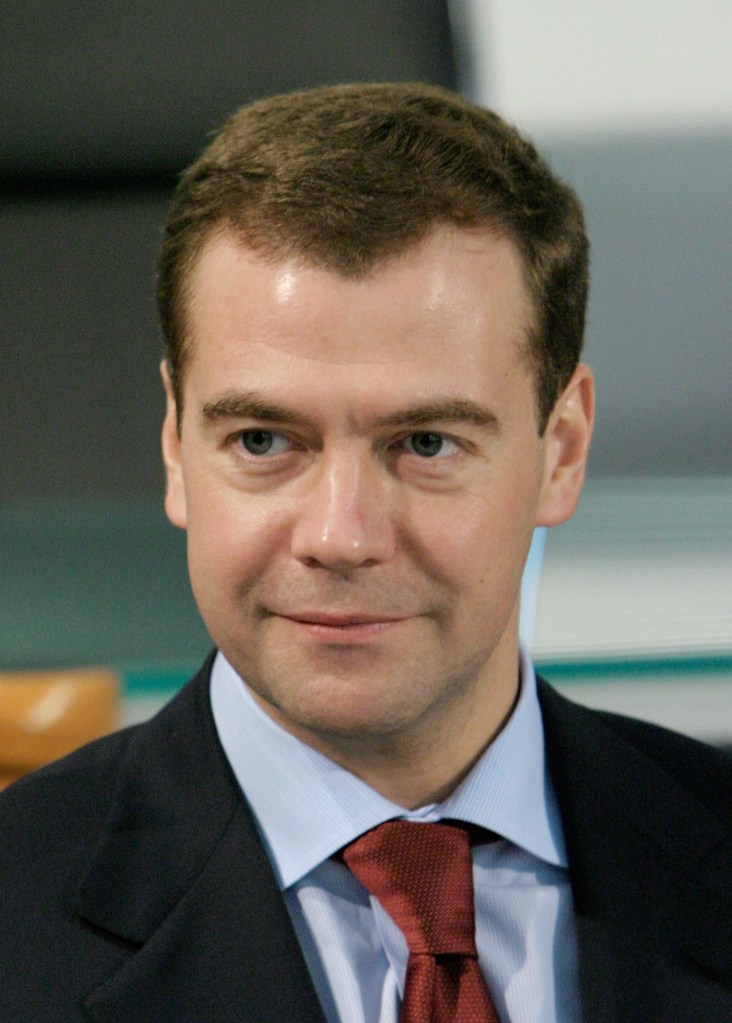
Here we have Dmitry Medvedev, once officially President of the Russian Federation (2008-2012) while Vladimir Putin pulled the strings from the office of the Prime Minister during the constitutionally-required waiting period before he could resume the presidency for several more extended terms . . . Well, it’s complicated. Suffice it to say, Medvedev played the role beautifully, acting as the calm, reasonable, almost democratic foil to the more bombastic, authoritarian Putin.
A younger (c. 2008-2012), gentler Dmitry Medvedev
Then, by pre-arrangement, in 2012 they switched places again when Putin was elected — not for another four years — but for six, in accordance with a constitutional amendment he had rammed through the Russian Parliament.
And Medvedev was right there with him, serving as Prime Minister for the next eight years, until 2020 . . .
. . . when for some unexplained reason, he was shifted to his current role of Deputy Chairman of the Security Council of the Russian Federation.
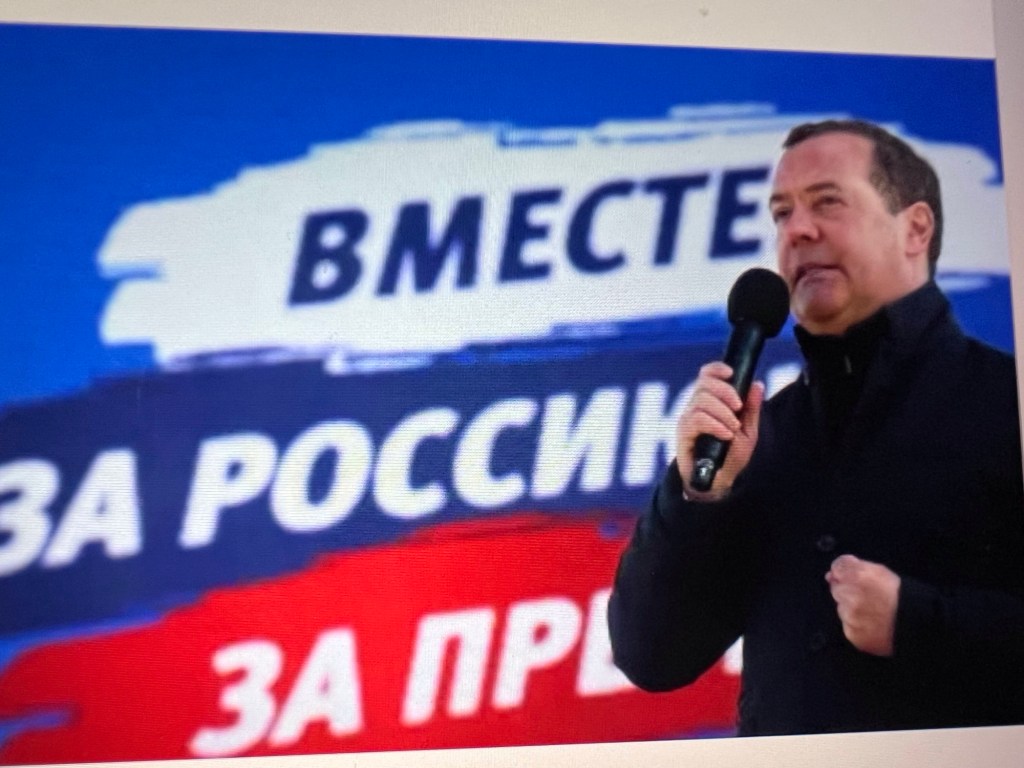
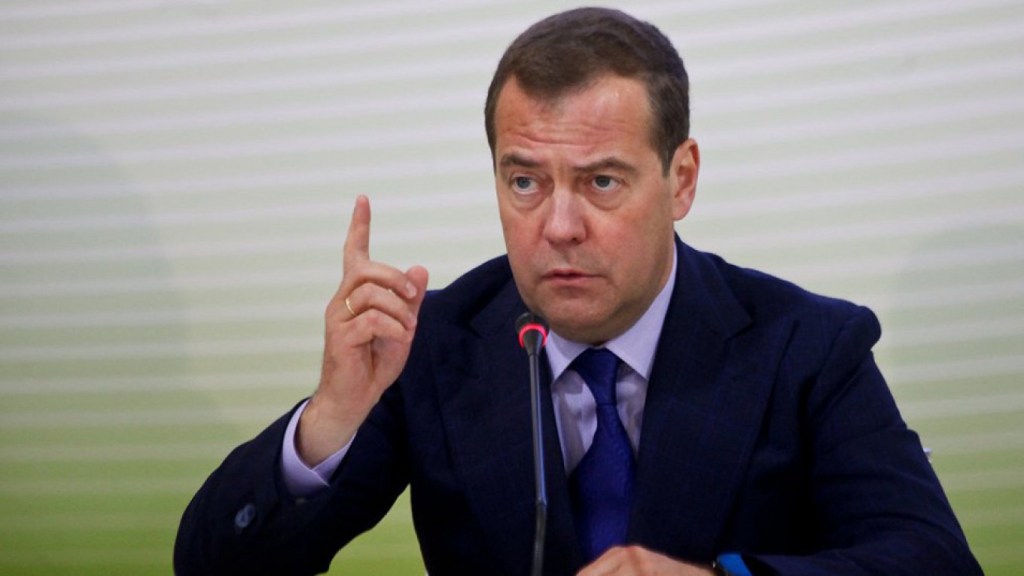
If that seems like a demotion, don’t be fooled — it isn’t. The Chairman of the Security Council is Vladimir Putin himself, making Medvedev effectively Putin’s No. 1 right-hand security guy. And he has been taking full advantage of his position, making himself heard — loud and clear — at every opportunity. And what we are hearing is anger, and hatred, and vengefulness.
His is the dominant voice warning of a Russian nuclear response to any perceived threat from the West. And most recently, he threatened that such a response — in the event of Ukraine’s use of U.S.-supplied long-range missiles to strike deep within Russian territory — would have “irreversible consequences.”
Dmitry Medvedev has evolved over the past two dozen years from Mr. Nice Guy to The Face of Armageddon: the man who would love to push the button to begin the ultimate meltdown. How did that happen? Was it the result of years of association with Putin and his inner circle? Or is this the real Medvedev, previously cloaked in a patina of reason and gentility, only now permitted by circumstances to reveal his true self?
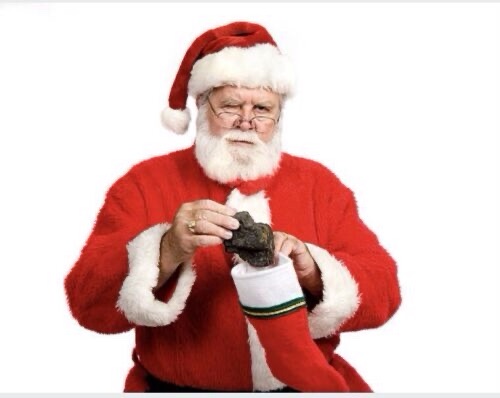
Whatever the answer, this “new” Medvedev is clearly not on Santa’s “nice” list. I foresee a lump of coal in his Christmas stocking.
There’s a lot of strange stuff happening in the world these days, such as:
– Immigrants being accused of eating their neighbors’ pets in Ohio.
– Elon Musk wondering aloud why no one has taken potshots at a Democrat as yet.
– Civilians going walkabout in space.
– Sports teams tossing a dead, decapitated, quadriplegic goat’s carcass into a goal-bowl.
– People doing . . .
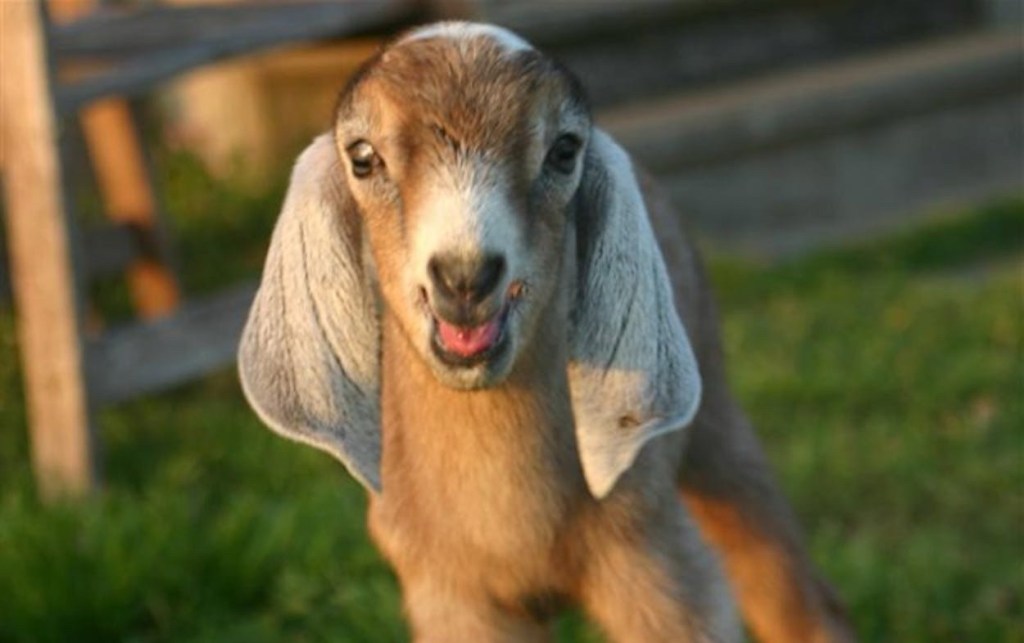
Wait! WHAT??!!! Back up a couple of steps, please. Surely they’re not talking about that little cutie in the picture!
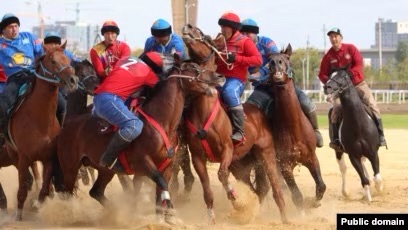
Fortunately, no, they’re not. They’re talking about something called the game of Goat-Grabbing, which, I’m disturbed to report, has absolutely nothing to do with grabbing any of the parts of a living goat, but rather tossing the torso of a dead one — from the back of a horse, no less — into the goal, which is some sort of large, elevated bowl.
Shouldn’t it, then, be called Goat-Tossing? Oh, well . . .
Goat-Grabbing: The Sport of Khans?
This ancient sport is apparently very big in Kazakhstan and Kyrgyzstan — two of the former Soviet Central Asian republics — and has been likened by some of the foreign media to a sort of “goat polo.” And, to be fair, the use of a once-living creature has been done away with; they now use a synthetic likeness weighing about 30 kilos (66 pounds, if I’m not mistaken). That’s about four times the weight of a shot put! [RadioFreeEurope/RadioLiberty, September 15, 2024.]
But the game is not limited to those two countries. Last week saw the conclusion of the biannual World Nomad Games, with more nations participating than ever before. The U.S. was entered this year, as were Turkey, Uzbekistan and Russia.
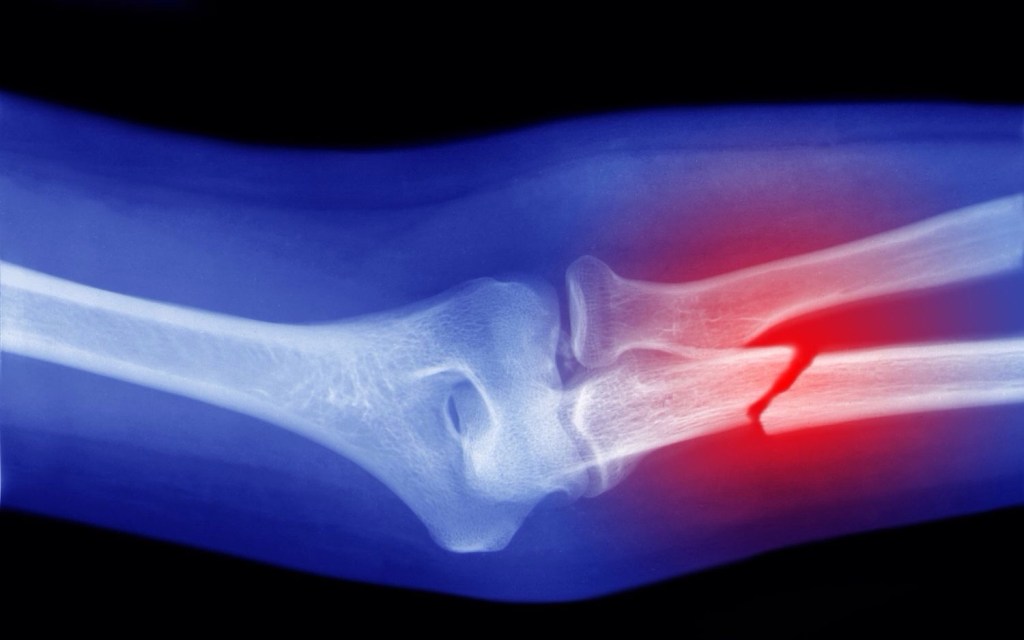
The major rivalry, however, appears to be between Kazakhstan and Kyrgyzstan, with each presenting their own version of the game, differing primarily in the details. The specifics are complicated — too much so for this non-sports-oriented onlooker — but to me it seems like something from an orthopedist’s erotic dream.
So if you are into team sports, and you’re bored with football (American and European), basketball, and rugby, check it out. It could turn out to be the new favorite way to spend Thanksgiving.
And if it gets the Russians and the Americans out there on the field, fighting over something besides Ukraine, then it can’t be all bad.
Washington, first week of March 1994: Things were not going well. With word out that Shvets’ book was about to be released, the press was expected to engage in one of its usual feeding frenzies, and I knew I had to take preemptive action; I couldn’t let my Russian contacts find out about my involvement from a news release. So I went to see Natalya at the Embassy. She was expecting to hear about the conference in Malta; what she heard instead appeared to send her into shock.
Natalya Semenikhina was an exceptional woman: smart, efficient, attractive, with a natural charm and warmth that made her perfect for her position in the Cultural Section of the Embassy. And she had been extremely helpful to me in working toward the creation of my U.S. training program and establishment of a business school in Moscow. I genuinely liked and respected her, and had enjoyed working with her. And now I had to try to salvage our relationship — and all of my hard work and dreams — without betraying the two people to whom I owed a professional responsibility . . . whether they deserved it or not.
She and I sat facing one another over tea in one of the Embassy’s formal meeting rooms, talking first about Malta, the people I had met there, the business opportunities, etc. Then I said I had something else to discuss with her . . . something quite serious. And as I related the story of my meeting the year before with Aksilenko in Moscow, his revelation as to his friend’s tell-all book, their subsequent “relocation” to the United States, and the imminent publication of the book, her face paled and her expression turned to one of total horror. Although I stressed the strictly commercial nature of my relationship with them, I could see clearly that she knew exactly who they were and what was at stake. And, for the first time in all the months I had known her, she was speechless.
Finally composing herself, she said that this was completely outside her purview, and that she would have to discuss it with someone else. At that point, I’m not sure she even knew whom to go to, but she did know she couldn’t deal with it alone. She said she would call me to set up another meeting, and I left the Embassy with a sinking feeling that my work in Russia was about to come to an end. My one hope might be to cut short my working relationship with Aksilenko and Shvets, and perhaps even to forfeit my financial interest in the book. I would have to give that some thought while I waited to hear from her, but I wasn’t optimistic — you can’t unring a bell.
She called the very next day and asked me to come to the Embassy on the day after that. Her voice left no doubt that she was under serious stress. As concerned as I was for my own situation, I also felt regret that it had become necessary for her to be involved — she had had nothing to do with any of it.
The next morning I arrived at the Embassy to be greeted by a very somber Natalya. There was no tea service in the meeting room that day — a bad sign from the normally hospitable Russians. Her speech was hesitant, and had obviously been carefully rehearsed. All of the public rooms in the Embassy were assumed to be bugged, probably even wired with cameras; so I was sure she was being careful to say everything she’d been instructed to say, and nothing more. I, on the other hand, had no idea of what to expect. For me, this was going to be like amateur night at the Improv.
Natalya told me she would normally have arranged for me to meet with a Mr. Lysenko — the name was unfamiliar to me — but that he had returned to Moscow just a few days earlier. So she had talked with someone else in his department, and that person had suggested that I should prepare and submit to them — now check this out — a written statement detailing the history of my relationship with Aksilenko and Shvets, from beginning to end, leaving nothing out: everything I knew about them, everything they had ever told me, everything about the contents of the book, my business arrangement with them, and where they were and what they were doing now. Then, and only then, could my own situation be reevaluated and given careful consideration.
Momentary silence . . . deep breath . . . then . . .
“You’re kidding . . . right??!!!”
Okay, so I didn’t actually laugh. But oh, how I wanted to! Did they really believe for one moment that I would even consider delivering to the government of any country — let alone an adversarial one — any information that could conceivably be used against American interests? Did they think I was personally low enough to sell out another human being (or two)? Or that I was stupid enough not to realize that anything I might give them would go directly to the Russian Foreign Ministry as well as KGB Headquarters, and could potentially reach all the way to the Kremlin itself? And did they also believe I was weak enough or greedy enough to simply break down and submit to their transparent attempt at coercion?
Actually . . . yes, I suppose that is what they thought. Well, then . . . they clearly had no idea of what kind of person they were dealing with!
Of course, I kept all those thoughts to myself, and somehow managed to remain calm. I briefly considered keeping them hanging for a couple of days by telling Natalya I’d think it over and get back to her. But no . . . there was nothing to think over, and I wanted them to know that. So what I did say was that — for better or worse — Aksilenko and Shvets were my clients in a publishing venture, and that it would be professionally unethical and personally reprehensible (my exact words) for me to betray them in the manner her people were suggesting. Bottom line: a flat-out “Nyet!”
As I spoke, Natalya almost seemed physically to deflate. She had failed, and she looked worried, even frightened. Then she stood up, whispered something that sounded vaguely apologetic . . . and I was politely shown the door.
*. *. *
Walking down 16th Street away from the Embassy, I knew that I, too, had failed in my efforts to guide some of Russia’s middle class into the approaching 21st Century. But they would manage without me and my business school; the Russian people always did, somehow. In a different sense, though, I knew I had succeeded. I had stood my ground, refused to be intimidated, and had managed to preserve my principles of honor and decency. I was, in human terms, the clear winner.
“Ta-da!!”
When I reported all of this to Eric later that day, he told me that the man I was supposed to have met — Aleksandr Lysenko — was well known to the FBI: he had been the rezident, or chief of station, at the Russian Embassy for several months. In other words, the top KGB agent in Washington. He had been expelled from the U.S. just days earlier for his role in running the CIA turncoat Aldrich Ames. The fact that I was intended to have met with a person of Lysenko’s rank clearly indicated how seriously the Russians were treating this whole situation. On the one hand, I was obviously relieved that a meeting with him had been averted; but on the other hand, I thought it might have been an interesting experience . . . in a rather perverse way. But that’s one more thing I’ll never know.
Aldrich Ames and Aleksandr Lysenko — two men I didn’t know, and had never even heard of before they made the news just a few days earlier — had somehow, indirectly, invaded my life and changed it forever. Unbelievable!
*. *. *
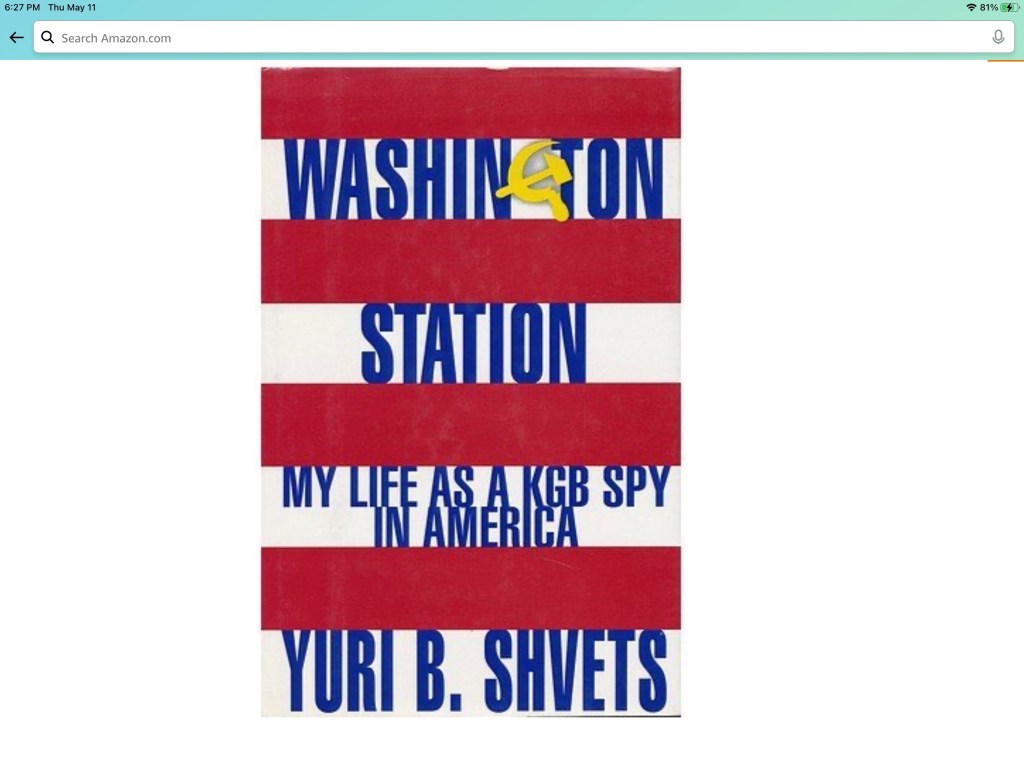
In April of 1994, Shvets’ book, Washington Station, was finally released.
The Root of the Trouble
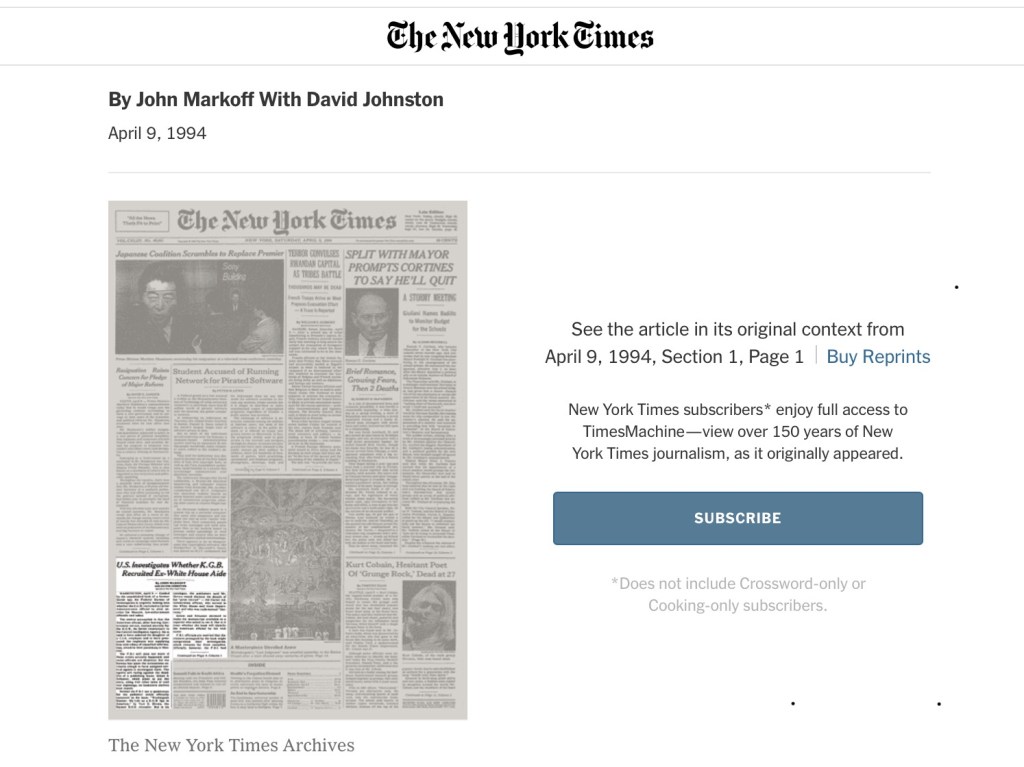
On April 9th, an article by John Markoff and David Johnston appeared in the New York Times about the book, about Yuri Shvets himself, and about my role — not entirely accurately presented — in having brought Shvets and his colleague, Valentin Aksilenko, to the United States the previous year. But the article didn’t stop there. It went on to suggest a possible connection between the arrival of the two men in the U.S. for ten days in April-May of 1993 and the opening of the FBI’s official case against Aldrich Ames on May 12th, just one week after their departure on May 5th.
And as I read that article, a comic-strip lightbulb lit up over my head. It all began to make sense, in a totally convoluted, nonsensical way. All of the attention from the FBI at home and the KGB and Militia in Moscow; the “watchers” and “Good Samaritans” repeatedly showing up during my travels; the ease with which the two former KGB spies had gotten back into the U.S. — it hadn’t been my imagination at all.
No . . . I was just a person who had been in the right place at the wrong time — not really involved, but ultimately the one who had been used to tie the various strings together. Metaphorically speaking, I had become a pawn in someone else’s political chess game, and now, at the end of that game . . . well, now I was simply collateral damage.
You just can’t make this stuff up!
*. *. *
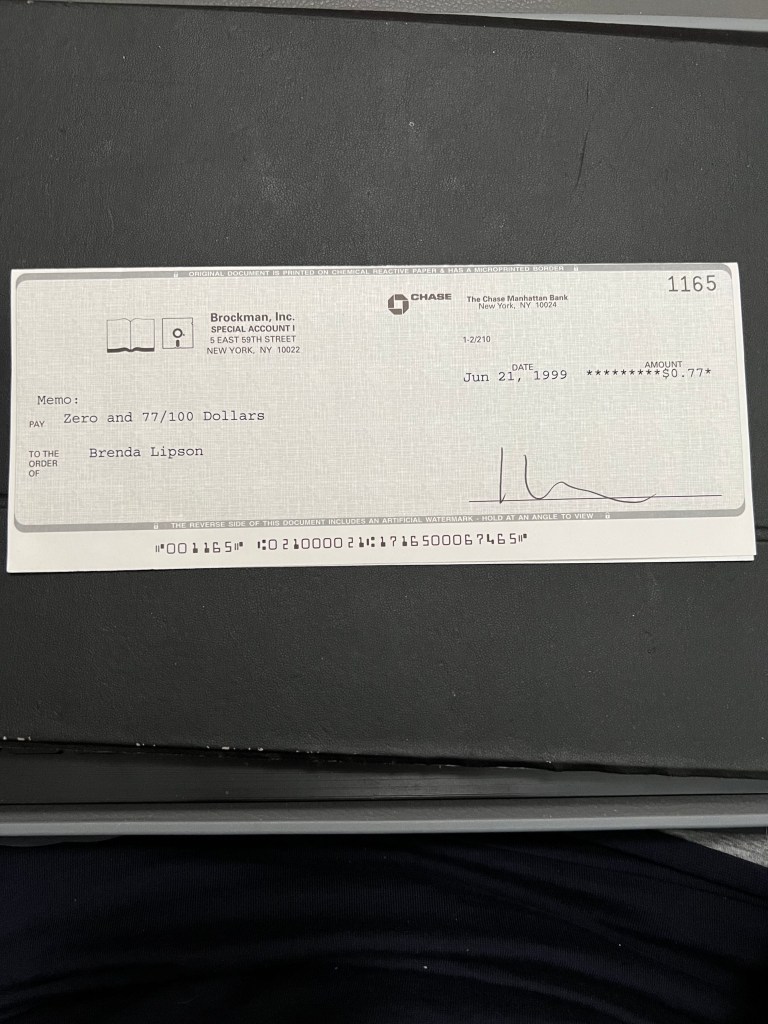
There’s more — lots more — that I really don’t need to go into here. But there is an interesting footnote. Because of the brouhaha surrounding Aldrich Ames’ arrest and eventual conviction and sentencing on charges of espionage, Yuri Shvets’ book could not have hit the stands at a worse time. It was totally overshadowed by the bigger story. The first — and only — printing was smaller than originally planned, and didn’t do well. It was withdrawn from the bookstore shelves before most of the world even knew it was there. Other than my small percentage of their advance payment, my only royalty check arrived in the mail a full five years later, in June of 1999, in the amount of . . . drumroll, please. . . seventy-seven cents ($0.77). As I stood by the wall of mailboxes in the lobby of my apartment building and opened the unexpected envelope from Brockman, Inc., I burst out laughing — so hard, and so loudly, that several passing neighbors thought I’d lost my marbles. I managed to choke out “I’m okay,” and continued laughing all the way to the elevator, up to the third floor, and down the long hallway to my apartment.
I still have that check, and it still tickles me to look at it.
Don’t spend it all at once!
*. *. *
So how does it all end? Am I going to leave you hanging after dragging you around Europe with me for half a year, wondering why I’ve bothered writing all of this stuff? No . . . of course I wouldn’t do that to my loyal readers. So, see you next time for the grand finale.
This morning I was whining about having a bad case of writer’s block. A few hours later, I checked the headlines again, and . . . BINGO! Back in business.
It seems wrong, somehow, that I look forward to the daily evidence of a world gone mad. But what could be more interesting — albeit in a truly perverse sense — than lunatics taking aim at presidential candidates? Or those candidates accusing immigrants of eating other people’s pets? Or billionaires shooting off their mouths about . . . well, never mind that one.
Anyway, here I am, back at my keyboard and going strong. Got a couple more headlines to cover before day’s end, so off I go.
I believe his exact words were: “Actions have consequences.”
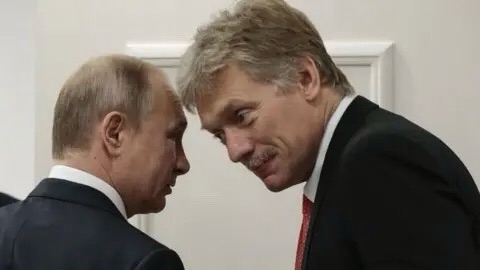
Dmitry Peskov, head to head with the boss
Most of us have heard of Newton’s Third Law of Motion, which states that “for every action . . . there is an equal and opposite reaction . . .”
But that is not what Dmitry Peskov meant when he said . . . well, what he said today about the apparent attempt on Donald Trump’s life yesterday.
The shooter — a man from Hawaii with a fixation on helping to end the war in Ukraine, among other things — failed to hit Trump or anyone else, thanks to the sharp eyes and quick reaction of the Secret Service agents covering Trump on his Sunday golf outing. And government leaders from around the world have expressed their relief that Trump was unhurt and the suspect had been taken into custody.
Except Russia.
Instead, the irrepressible Kremlin spokesman, good old Dmitry Peskov, had this to say when asked for his thoughts:
“It is not us who should be thinking, it is the U.S. intelligence services who should be thinking. In any case, playing with fire has its consequences.” [Dmitry Antonov, Guy Faulconbridge and Felix Light, Reuters, September 16, 2024.]
Playing with fire? Is that a reference to the West’s aid to Ukraine in its defense against Russia’s continuing onslaught? Well, of course it is! But what is he saying? That this is payback? By whom? Surely, not by themselves! No . . . they would never admit to such a possibility.
And when asked if he thought the assassination attempt might cause political destabilization of the United States, he said — rather ingenuously, I thought — that, “This is not really our business. We are watching the information coming from the US.” [Censor.NET, September 16, 2024.]
“Not really our business.” Oh, Dima . . . you got me again!
Then, on a more serious note, he had this to say:
“We see how tense the situation is there, including between political competitors. The political struggle is escalating, and a variety of methods are being used.” [Id.]
So, now what? Is he somehow implying that the Biden administration, the Harris campaign, or some other Democrats are behind it? Or, because of the suspect’s ties to Ukraine, perhaps he thinks it was Volodymyr Zelensky. Or was he simply thinking in terms of the way things are done in his own country?
But wait . . .
It couldn’t possibly be Trump’s own words that have made him a literal target for crazed conspiracy theorists, could it?
[Just two more chapters — 27 and 28 — after this one, and we will have reached the conclusion of my tale of espionage and betrayal. Stay tuned — you’ve hung on this long.]
February 25, 1994: Homeward bound once more, and happily not on Aeroflot this time. But because my original booking had been through Rome, returning the same way turned out to be the least expensive route, even though there was no connecting flight and it meant an overnight stay in Rome. I had reserved a room at a small hotel near the airport and arrived around 11:00 p.m., well after the hotel’s dining room had shut down for the night. But one of the benefits of a boutique hotel is the personal attention they are able to pay to their guests, and this one was no exception. The concierge found a person still in the kitchen who was able to prepare some of the food that hadn’t been served at dinner, and delivered my light meal to me personally. It was delicious, and with a glass of Chianti to wash it down, I was able to sleep like a baby.
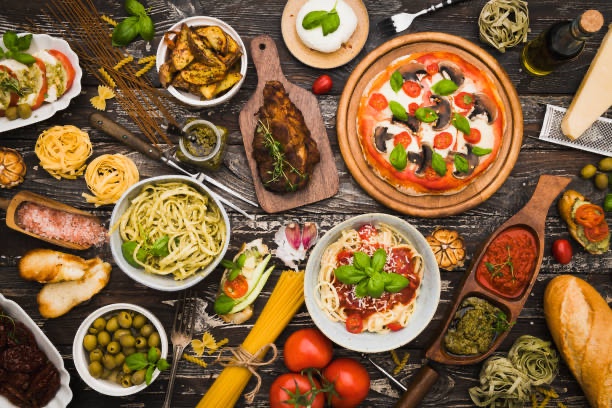
Italian Snack
I awoke early the next morning — Saturday the 26th — in order to catch the hotel’s shuttle bus to the airport. As I was dressing, I again tuned in to CNN, this time to learn that there had been yet another shooting incident in Hebron, a Palestinian city in the West Bank of Israel. Would they never stop?!! I wondered. It was an ongoing tragedy; but as an American who lived geographically far removed from the problems of the Middle East, and this being years before acts of foreign terrorism reached our shores, I never thought of the effect it might have here in Italy. That is, until I got to the airport . . .
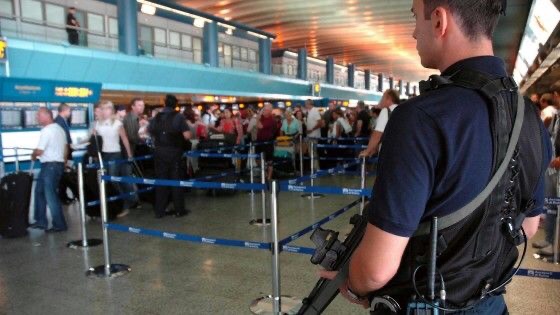
The lines in the terminal appeared endless. They snaked around the inside of the building to every airline counter, including mine. The police and military presences were heavy and heavily armed, many accompanied by their canine partners. This was Europe, where they had suffered their fair share of terrorist attacks; and I had forgotten that when things heated up in the Middle East, the response here was immediate . . . and impressive. So I found my line and waited as the security officer worked her way toward me.
Airport Security – Rome, Italy
When she finally reached me, she began by asking the usual questions: “What was the purpose of your visit to Rome, and how long were you here?”
Answer: “Overnight, just transiting.”
Logical next question: “Transiting from where to where?”
Oh-oh. My answer — “Moscow to Washington” — was clearly going to set off some alarms. And did it ever! Her next questions concerned the purpose of my visit to Moscow, where I had stayed and for how long, whether my luggage had ever been out of my sight, whether anyone else might have had access to it . . . And when I answered truthfully that I had stayed in an apartment and that yes, others had been alone with my bags for a while, she very apologetically said she would have to perform a search of my luggage. I responded that it was no problem, as long as I didn’t miss my flight, which she assured me would not happen.
And I said a silent prayer of thanks that I had had the good sense not to take Shvets’ $3,000, and even more so his son’s passport, from his mother. This was exactly the sort of thing I had been afraid of, although I certainly could not have known there would be an overnight Middle East problem. But there are many possible reasons for a baggage search — even a simple random check — and it was almost as though Mama Shvets had been hoping for that when she loudly insisted that I could hide the passport under my clothing. The things I thought about her and her precious son in those moments do not bear repeating, but I’m sure they’re not difficult to imagine.
Not My Finest Moment
In any event, the search was quick and respectful. Security officers are trained to read people’s reactions and body language, and I suppose she could sense that I wasn’t hiding anything. When she finished, she even took me up to the head of the line to be checked in, as a sort of apology for the inconvenience. The plane was boarded on time, and off we went.
I had a seat mate this time: an American woman, 40-ish, well-dressed, professional-appearing — someone I thought I might enjoy chatting with. But she was as silent as the American man on last summer’s Aeroflot flight. My usual get-acquainted questions — was this your first visit to Italy? business or vacation? what line of work are you in? — met with non-responsive, monosyllabic answers. She clearly did not feel like talking. I didn’t want to be intrusive, so I resigned myself to a long, quiet flight ahead and settled in with the book I had brought, thinking she might be more willing to talk a bit later. She wasn’t. We landed at Dulles on time, and she walked away without a word. So much for the friendly skies.
The next day, all hell broke loose.
Well . . . maybe not this bad.
First, there was Yuri Shvets to deal with. He was anxious to receive whatever his mother had sent back for him. The FedEx envelope with the passport was already en route (and actually arrived a couple of days later); but when he saw that I had brought only a letter and no money, and that most of his gifts for her had not made it into my luggage in the first place, he was livid . . . which was nothing compared to what I was feeling. I told him in minute detail of his mother’s performance and how irresponsibly, and even recklessly, she had behaved. His excuse was, again, that she was just a “simple Russian woman,” to which I replied, “Bull shit! She’s the mother of a KGB Major. Don’t tell me she doesn’t know how to behave in public.” I also let him know what had happened at the Rome airport. The conversation deteriorated from there, and I stopped just short of accusing him of trying to set me up — only because I had no proof. And because I was alone in my apartment with a very angry man. He finally took the bag and the letter and left, slamming the door behind him. I never saw or spoke to him again.
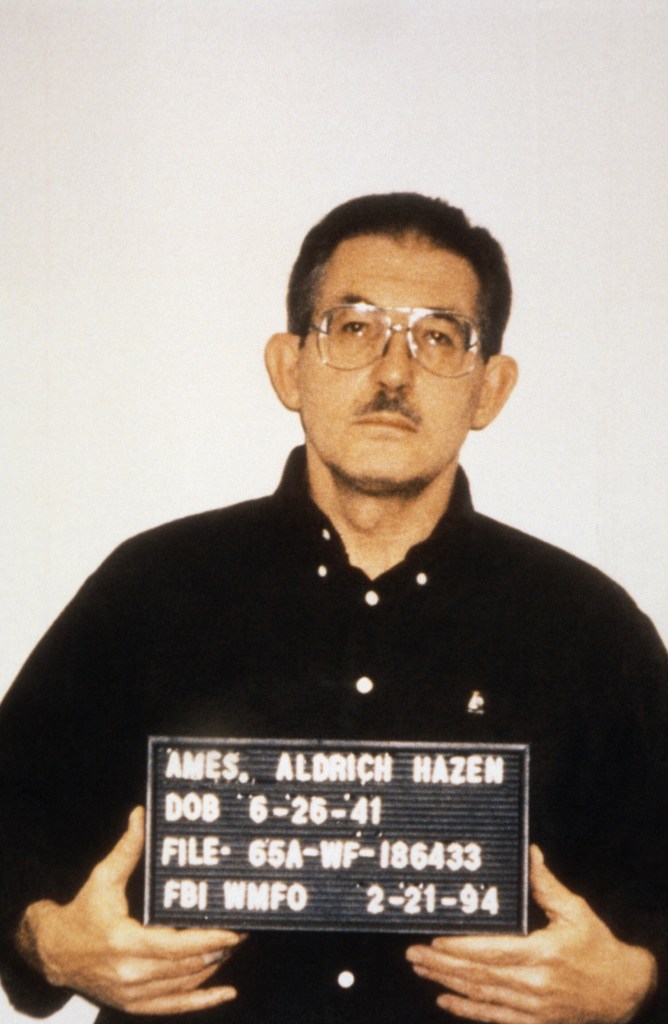
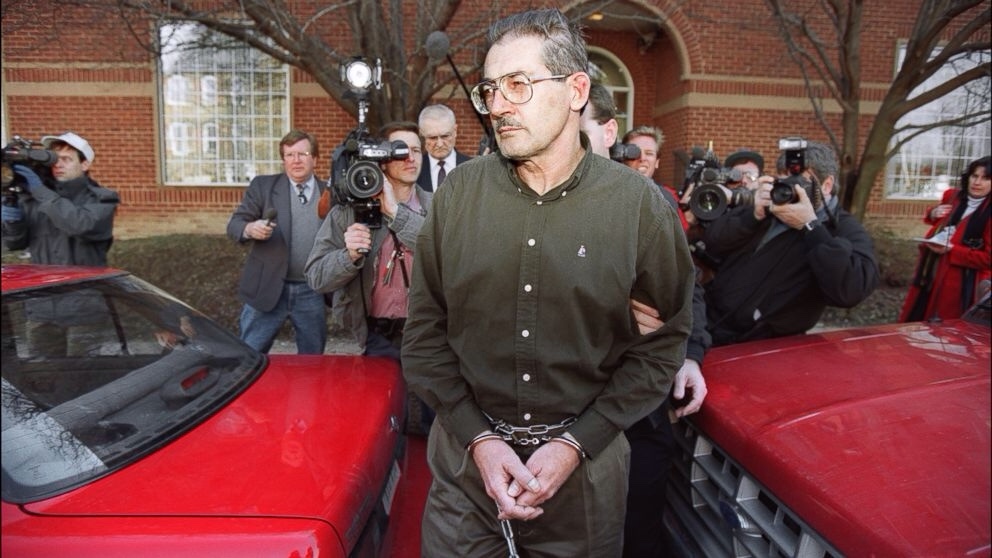
I called Eric on Monday to let him know I was safely back, and we made plans to get together in a day or so. In the meantime, I had caught up on the national and local news, which turned out to be full of the story of the CIA agent who had been caught spying for the KGB: Aldrich Ames, the man I had first heard of on CNN in Moscow. Folks there had shrugged it off as just another remnant of the Cold War; but here at home it was a big deal. Still, it had nothing to do with me.
Well, at least not directly, it didn’t. But as I read the details of his arrest, and the FBI’s actions in the days leading up to it, I realized that the coincidence in timing between that activity and my pending travel to Moscow was more than a little interesting. It was reported that Ames had been part of a CIA team scheduled for an official visit to Moscow, due to leave Washington on February 22nd — the very middle of the time I was also to be in Moscow — and that his arrest had been set for the 21st in order to forestall his leaving the country. But again I wondered: so what? I hadn’t even known the man existed.
Aldrich Ames
And I had my own problems. Shvets’ book was soon to be released, and John Brockman was talking about pre-release publicity. My name was tied to both Shvets and Aksilenko, and I knew it was time to do damage control with Natalya at the Russian Embassy. This was not going to be pleasant . . .
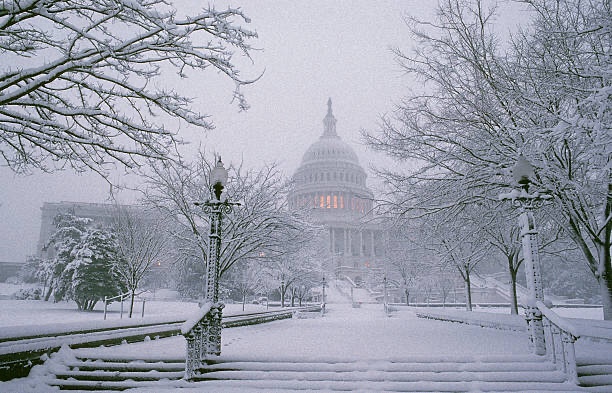
February 1994: If you’ve never been in Washington when it snowed . . . count your blessings. It’s a total nightmare. Sure, the city looks beautiful blanketed in the clean white stuff — if you’re indoors, looking out. But if you’re trying to get home from work — or anywhere, for that matter — you had better have a full tank of gas, an emergency survival kit, and a strong bladder. Because, depending on how far you have to travel, it can take as much as twelve hours to get there. And that is not an exaggeration. I recall that during one blizzard, some of the people I worked with actually were on the road for between eight and twelve hours trying to make it home to the suburbs. And it doesn’t even take a blizzard to screw things up — the slightest dusting will do it. My eight-mile commute once took me three hours.
Snowy Washington
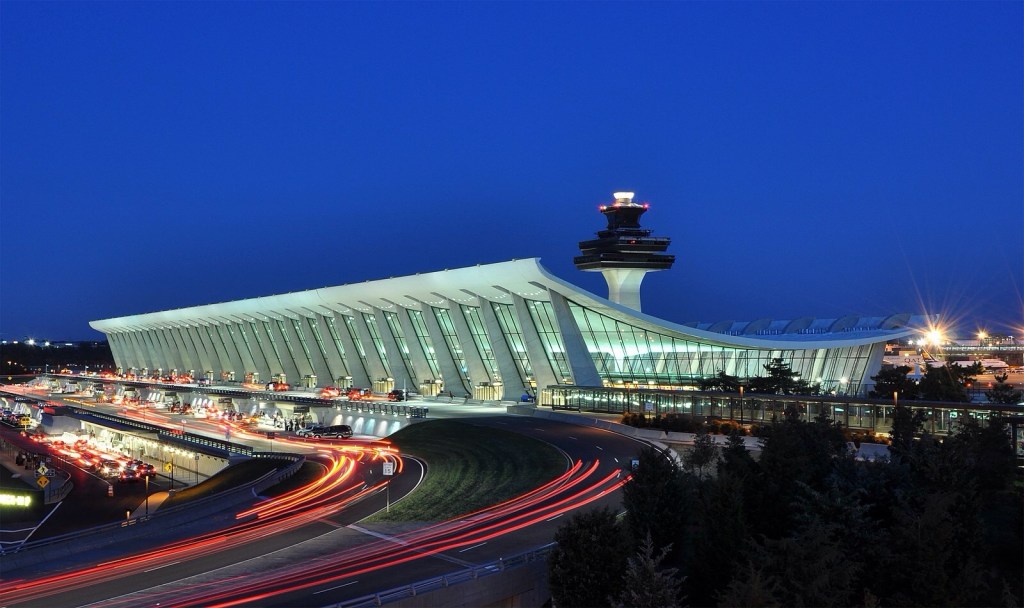
But now here I was, facing the prospect of a treacherous 23-mile cab ride to Dulles Airport on the frozen suburban Virginia roads, not knowing whether my flight to Italy would even be able to take off. So I checked with the airline, found that I could book the same flights one day later, and decided to play it safe. I changed my reservations, called the conference coordinator in Malta, faxed Olga in Moscow, and settled down with a cup of cocoa and a good book — my favorite thing to do on a snowy day at home.
Then I remembered to call Eric, just to keep him informed of my whereabouts; this trip actually had nothing to do with Aksilenko, Shvets, or the FBI. But then, why did he react as though I’d just asked him for a divorce?
No, seriously — he was clearly not happy. He even tried to talk me into changing my mind, and said he would drive me to the airport himself. But it was too late — there wasn’t time to reverse what had already been done. And he finally, somewhat grudgingly, acknowledged that I was probably smart not to take the risk; but I still couldn’t shake the feeling that something else was going on that I wasn’t aware of.
By the next day, it had stopped snowing, the main roads had been cleared, and I was on my way to sunny Malta at last. As I usually do, I left home a little earlier than necessary, and had time to spare at the airport. I checked in, made my way through security to the boarding area, and found a spot to sit and read while I waited for the announcement of my flight.
Then I noticed him: a man, sitting a little distance away and periodically looking over at me as though he might have known me. I asked myself if I recognized him from somewhere. No, not that I could recall. Did he seem to be flirting? Well, when he caught me looking at him, he quickly looked away, so . . . no, definitely not that. Was there something wrong with my appearance, like one of those dreams where you’re naked in public? Again, no . . . not naked. Or was I most likely imagining things? That had to be it. So I ignored him as best I could, and got up to board my flight when it was called.
Dulles International Airport
The flight itself was uneventful, though the hassle of going through security in Milan was a royal pain. But we made it to Rome, where I had to switch to a smaller plane for the short hop to Malta . . . which was when I ran into a problem. Checking in for the second flight, I was told they had no reservation for me. I didn’t exist. I explained to the agent that I had rescheduled my reservation from the day before, and she still couldn’t find me in her computer. I asked if she could just get me onto the flight — that I would pay the additional cost — but was told that was not possible. And that’s when another good Samaritan came into my life, seemingly out of nowhere. This was beginning to feel like JFK Airport in April of ‘93 again, only in Italy this time. Did these guys just hang around airports waiting to rescue people, or what?
This one was also an attractive, well-dressed man. Apparently having heard my exchange with the agent, he simply nodded at me, walked up to the counter, quietly said a few words to her in Italian — which of course I did not understand — and suddenly I was no longer a non-person. In a couple of minutes, I was ticketed and wished “Buon viaggio, signora.” Even I understood that. What I didn’t understand was how my name had suddenly managed to appear on their computer. But my mysterious benefactor had already vanished, and I hadn’t had a chance to ask, or to thank him. And there was no time to think about it now — I had a plane to catch. So off I went, leaving one more mystery behind me.
*. *. *
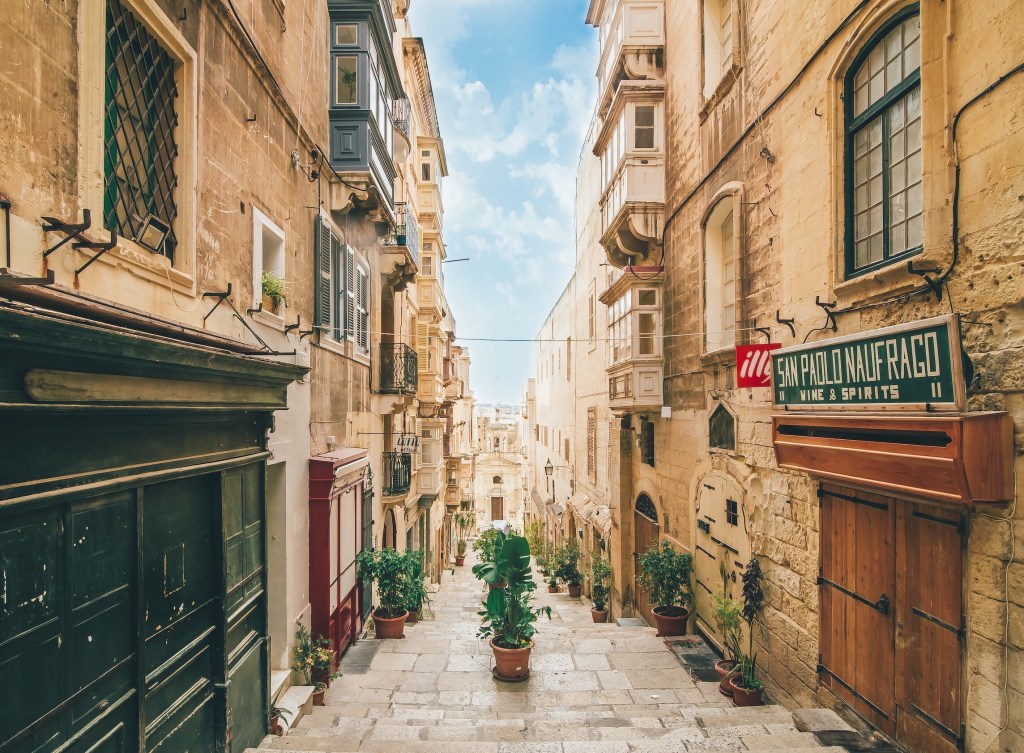
Valletta, the capital city of Malta, was breathtakingly beautiful, with its blue Mediterranean harbour, ancient multi-cultural architecture, stone-paved streets, and an endless array of wonderful shops and restaurants. The mild spring weather was a delightful break from the snow and ice I’d left behind, and all of my free time was spent wandering and discovering charming little neighborhoods, shops and magnificent churches. And eating. With a group of fellow foodies from the conference, I was introduced to the best Italian food I had ever tasted.
A street in Valletta, Malta
The conference itself was mildly interesting, and included a reception at the Russian Embassy. I did learn a great deal about the emergence of Malta as a second Cyprus in terms of doing business and hiding assets. But otherwise, I can’t say there was anything meaningful to take home from the conference sessions. If it hadn’t been for the idyllic setting and the free time spent enjoying the surroundings, it would have been something of a waste. The Russian participants seemed most interested in eating, drinking, sightseeing, shopping, and altogether enjoying the respite away from their frigid homeland, and I can’t say I blamed them. It was a wonderful little vacation, and I highly recommend it as a destination for all you travel buffs out there.
But the coming week in Moscow, I was sure, would make the whole trip worthwhile. And I was right . . . though not exactly in the way I had expected.
*. *. *
Vitold was waiting for me at the now-familiar Sheremetyevo Airport, this time with his own car and not the borrowed truck from last summer — which I felt sure had long since been sold for parts, or should have been. I was once again in the bitter cold and snow, but unlike Washington, nothing stops for the winter weather in Moscow. I had a wonderful, heartfelt reunion at the office with my “besties” Olga, Lena, Maya and Tamara, who had all taken great pains to make sure I had my favorite foods in the kitchen, fresh linens in my old bedroom, and anything else I might need during that week. I was back in my second home.
There was just one string attached to my use of the Foundation’s apartment: Gil Robinson had asked me to meet with our old friends from Petrovka 38 on his behalf. So on the Tuesday after my arrival, my buddy from the previous summer, the KGB’s own Vladimir Bragin, dropped by to welcome me back and provide transportation once again. There he was, in my living room, greeting me with a big smile and a handshake — not just to drive me to Petrovka that day, but with an “offer” (the kind you can’t refuse) to escort me back to the airport on my departure date. It was deja vu all over again.
Earlier that morning, while getting ready to head out to the Petrovka meeting, I had turned on the satellite TV to catch the news on CNN and learned that an American CIA agent had been arrested near his home in Virginia the previous day on charges of espionage. He had allegedly been selling secrets to the Soviet Union, and then to the Russian government, for nine years. His name was Aldrich Ames. I had never heard of him, of course, and my immediate thought was how sad it was that our two countries were still playing those “silly spy games.” Then I put it out of my mind and went about the business of the day. It had nothing to do with me.
The Arrest of Aldrich Ames
But the week was not yet over. I still had Yuri Shvets’ mother to deal with, and had purposely put that off to the very end of my stay. I arranged to meet her on my next-to-last day in Moscow at the most public indoor place I could think of where we could sit and talk: my old haunt, the Radisson Hotel. I was waiting in the lobby when a small, elderly lady, dressed in a plain cloth coat and “babushka” head scarf, walked uncertainly through the door, clearly out of place in a hotel frequented by foreign businessmen and women. I approached her and asked if she was Mrs. Shvets, which she said she was.
It was my plan to take her up to the business center on the mezzanine level where we could talk quietly, but she had other ideas. In a voice that could shatter glass, she insisted that we sit right there, in the lobby, directly across from the concierge desk. There were dozens of people milling around, and I was not comfortable with the setting; but that “simple Russian grandmother” was pushy and would not be refused.
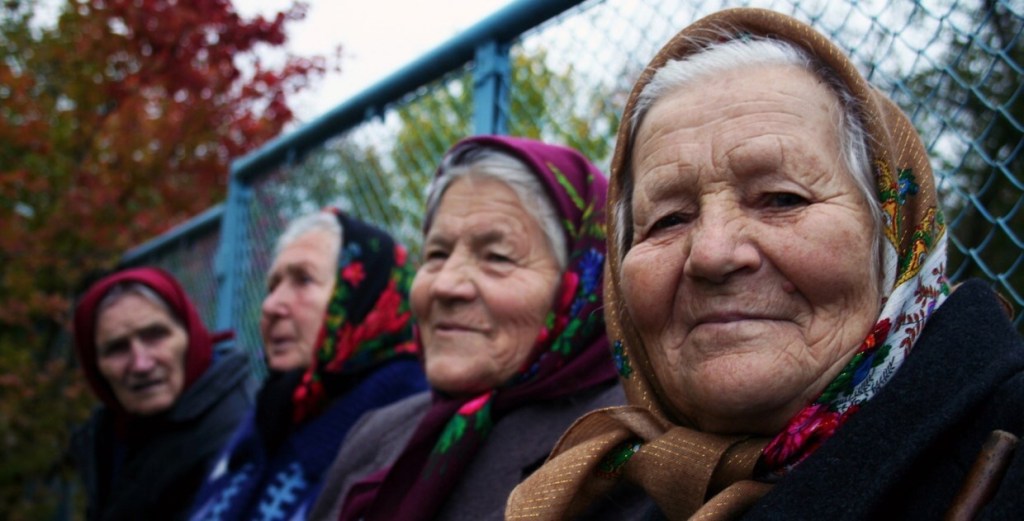
A Bevy of Babushkas
As we sat there, I gave her the few little gifts I had brought from Yuri, along with his letter and some snapshots. She looked closely at the pictures and loudly exclaimed over each one, calling out his name, where he lived, the names of his wife and children — everything but his phone number. “Oh, look — there’s Yuri.” “And Zhenya.” “Is that their beautiful house in Virginia?” And on, and on, as I kept trying, unsuccessfully, to shush her.
Then — still as loudly and visibly as possible — she capped it off by pulling out of her purse some things for me to take back to him, naming each item as she handed them to me: a letter for Yuri; $3,000 in cash, allegedly from the rental of his Moscow apartment; and . . . wait for it . . . her younger grandson’s new Russian passport.
Are you freakin’ kidding me??!!!
First, about the money. It was the law in Russia at that time (and probably still is) that visitors could not take more hard currency out of the country than the amount they had declared to Customs on arrival, so as to prevent a currency drain. And I had brought nowhere near $3,000 in cash with me, so that was out of the question. Then there was the passport. Did she and her son really think I was stupid enough to try to carry someone else’s Russian passport across international borders — someone who wasn’t supposed to be out of Russia in the first place — without written authorization? Did I look as though I wanted to spend the next few years in some foreign prison? What was going on here?
My New Roomies? Uh … no thanks.
So I explained to her about the currency, and told her she could take it to an American Express office — I even gave her the location of one that I knew of — to be safely transferred to him. And as for the passport, I said there was a FedEx counter right upstairs in the business center, and I would help her send it to him from there; she could pay for it out of the $3,000. She tried hard to convince me — still at the top of her lungs, and with gestures — that I could just hide it all among the clothes in my suitcase; but her loud protestations fell on deaf ears this time. My deaf ears, that is — everyone else in the lobby heard her quite well.
Seeing that I wasn’t going to budge, she finally gave in, and we went upstairs to FedEx, where I addressed the envelope to Yuri, sealed the passport inside, and took $40 from her for the shipping costs. The remaining $2,960 went back into her purse. Then I hustled her out of the hotel as quickly as possible, hoping she wouldn’t be mugged on her way home, and headed into the coffee shop for a cup of tea to calm my nerves. Unfortunately, it was too early in the day for vodka.
*. *. *
That evening, I said goodbye to my friends yet again, wondering whether it would be the last time I would ever see them. I had filled the days with back-to-back meetings that week, and evenings had been set aside for get-togethers with friends. Somehow, in all the rush, I had completely forgotten to pay my usual good-luck visit to Red Square. And with Bragin driving me to the airport via the beltway, there would be no way to detour into the city before leaving.
The following morning, true to his word, Bragin again showed up on time, and I headed back to Washington once more. As I left the apartment, I somehow felt that another, even bigger door was closing behind me.
If you want to deprive a people of their national identity, a good way to start is by taking away their language and replacing it with your own. The rest — the economic, political and cultural changes — will then fall into place more easily.
Just ask the people of Belarus.
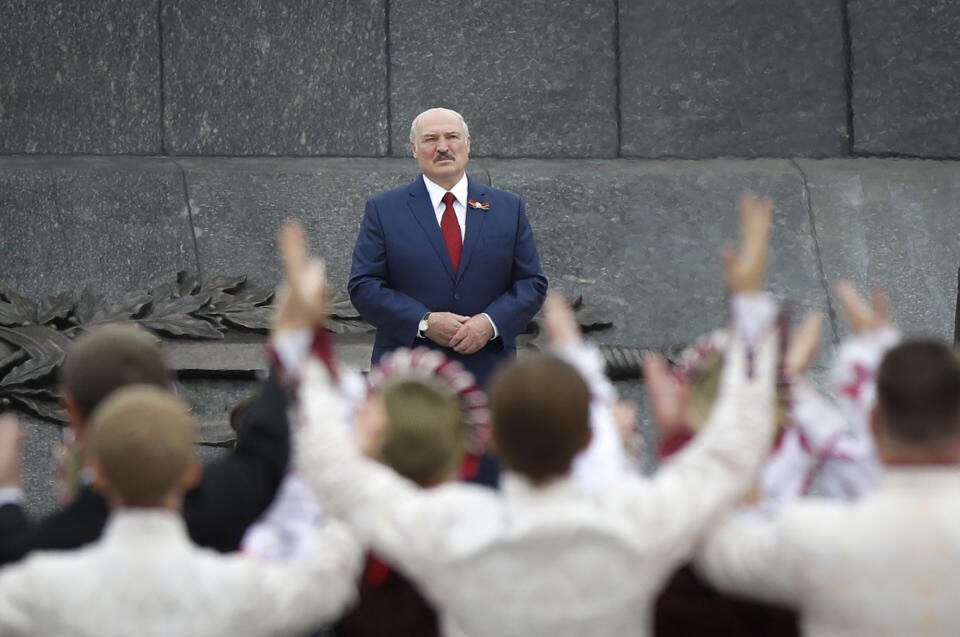
Belarusian President Lukashenko, speaking to a school class
Now in his sixth term as president — despite the highly contested vote of the 2020 election — Lukashenko is an autocrat, a corrupt and devoted sycophant of Vladimir Putin, who is doing everything possible to strip Belarus of its independence and realign it with its Russian neighbor. Barely three decades after the collapse of the Soviet Union, in which Belarus was one of the fifteen Soviet republics, the transition is proving fairly simple.
Classes in most Belarusian schools are now being taught in Russian, which has been made the second official language of the country. Belarus’ nationalist symbols have been eliminated. Official business is conducted in Russian, as are most of the media programs. Hundreds of nationalist organizations have been shut down, and popular cultural individuals are being persecuted.
One citizen said, on condition of anonymity for fear of retribution:
“It is obvious that our children are being deliberately deprived of their native language, history and Belarusian identity, but parents have been strongly advised not to ask questions about Russification. We were informed about the synchronization of the curriculum with Russia this year and were shown a propaganda film about how the Ukrainian special services are allegedly recruiting our teenagers and forcing them to commit sabotage in Belarus.” In his son’s school, dozens of teachers were fired in recent years, and the Belarusian-language section of its website shut down. [Yuras Karmanau, Associated Press, September 14, 2024.]
On condition of anonymity . . .
One of the half-million Belarusians who have fled the oppression of their homeland is Svetlana Alexievich, recipient of the 2015 Nobel Prize for literature. Now residing in exile in Germany, she said in an interview:
“I understand that our Belarus is occupied . . . And who is the president there? Not Lukashenko. The president is Putin. The nation has been humiliated and it will be very difficult for Belarusians to recover from this.” [Id.]
Lukashenko himself has ridiculed his own native language, saying that “nothing great can be expressed in Belarusian . . . There are only two great languages in the world: Russian and English.” [Id.]
Anais Marin, the U.N. Special Rapporteur for Human Rights in Belarus, has said:
“The Belarusian language is increasingly perceived as a sign of political disloyalty and is being abandoned in favor of Russian in the public administration, education, culture and the mass media, upon orders from the hierarchy or out of fear of discrimination.” [Id.]
*. *. *
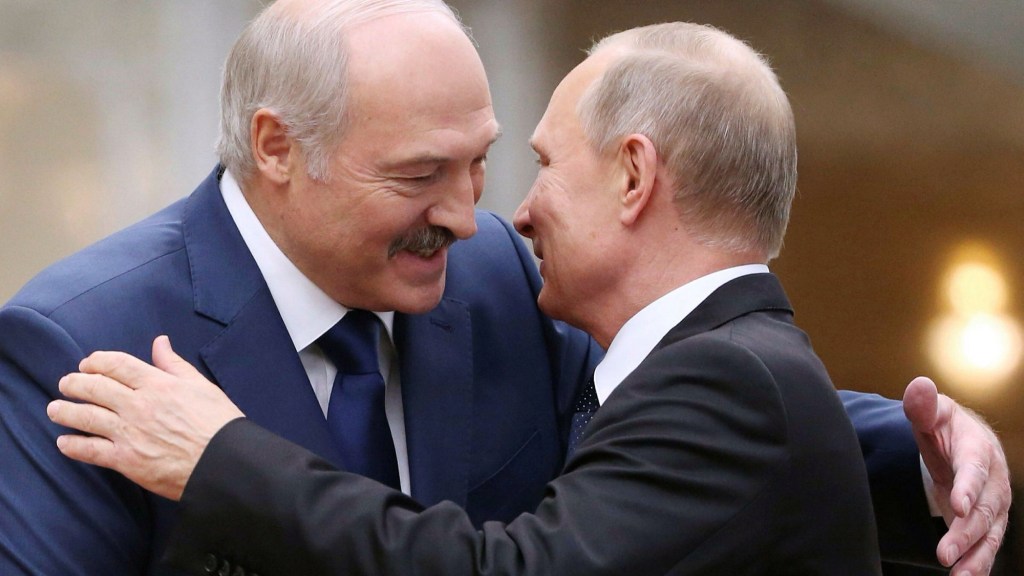
This is not what the people of Belarus want; this is what Vladimir Putin wants. As he fights to achieve dominance in Ukraine, he seeks also to take back Belarus, under the cloak of a Slavic reunification. In Ukraine, he unexpectedly met with the resistance of a populace — and a government — that are fiercely anti-Russian. In Belarus, however, he has a “president” who is not only on his side, but is deeply reliant on Russia for energy, and indebted in terms of existing loans: Putin’s Perfect Puppet.
Best Buddies
Sorry, good people of Belarus . . . it’s practically a done deal.
I’ve been sitting here in the wee hours, enjoying the quiet when I’m the only one still awake. And when I looked at the date, I realized that there are two birthdays coming up in the next eight days of people I have lost and will never stop missing.
Merna — my only sibling and best friend for life (in spite of all the youthful fights) — would have celebrated 91 years on Wednesday, September 18th. We would have gone to dinner, probably at our favorite little French cafe, Le Refuge, in Old Town Alexandria, Virginia . . . assuming we could both still walk, that is. Or we could simply have ordered Chinese takeout and watched a couple of old movies. It didn’t matter where we celebrated, just as long as we did it together.
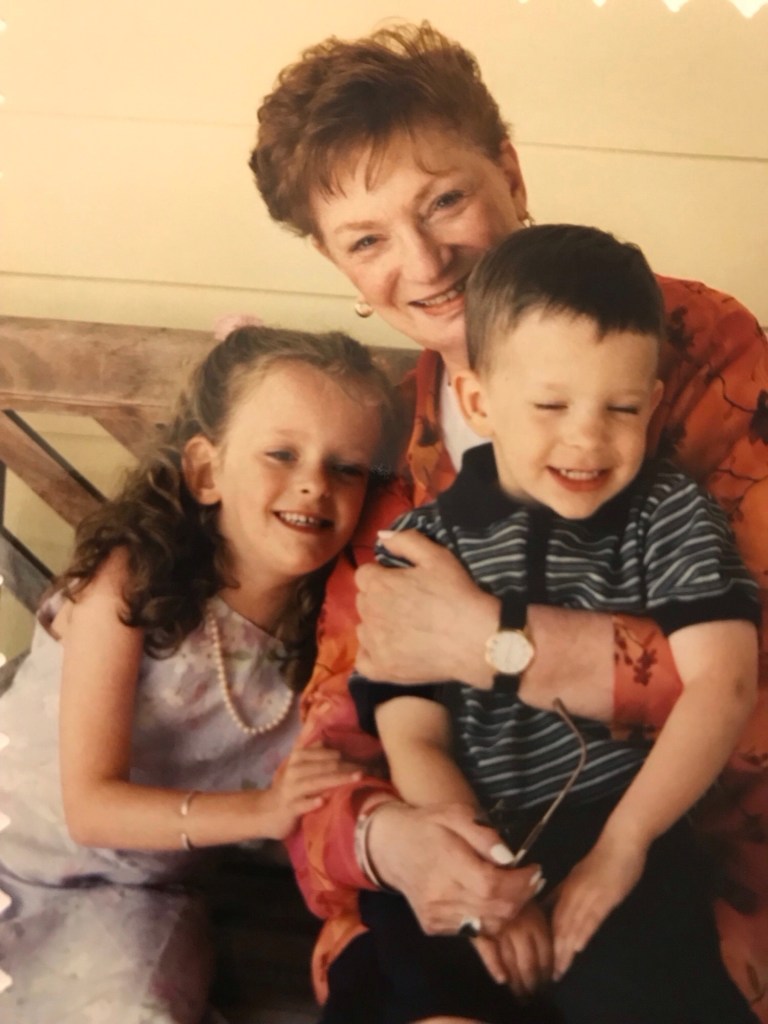
Merna, with Emi and Nate– Mother’s Day, c. 2000
And Emily — my precious, beautiful, brilliant granddaughter who left us a little over two years ago — would have been 29 on the 23rd. She crammed so much living into the nearly 27 years she was given, in spite of — or maybe because of — the difficulties with which she was born. All she wanted in life was to save the world. Given more time, she might have succeeded.
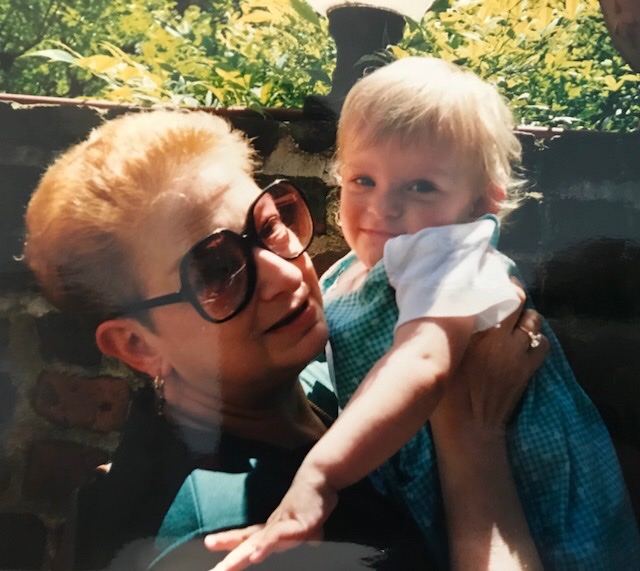
Me, with Emi – Mother’s Day, c. 1997
They say the grief fades, or gets less intense with time. I don’t find that to be true. I think you simply learn to live with it.
Happy birthdays, Merna and Emi. I miss you both, every minute of every day, and even in my dreams.














 The Blog About Everything … and Sometimes Nothing