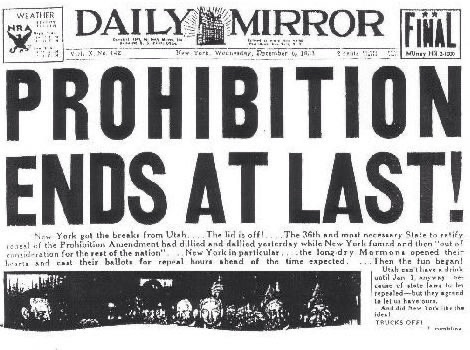
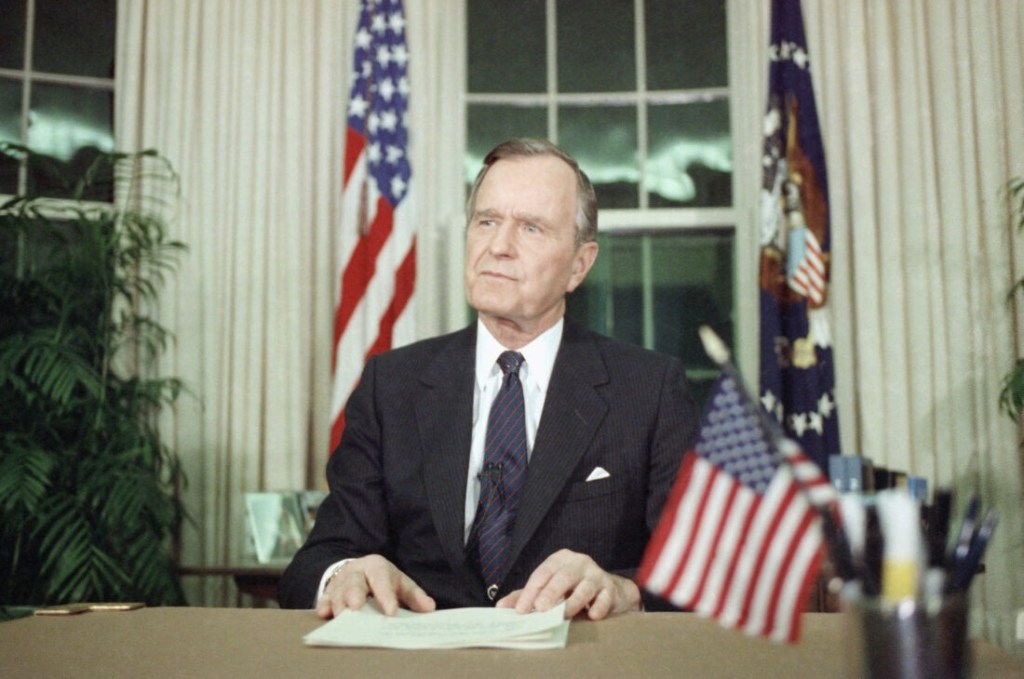
Happy 100th birthday, Mr. President. Another major accomplishment to add to your already impressive list.

The world could use a great many more individuals of your caliber.
Respectfully,
Brendochka
10/1/24
Happy 100th birthday, Mr. President. Another major accomplishment to add to your already impressive list.

The world could use a great many more individuals of your caliber.
Respectfully,
Brendochka
10/1/24
Yesterday I was reminded, by an item in my favorite “This Day In History” column, that it was the 75th anniversary of the end of the post-World War II Berlin Airlift — an event that even I am not old enough to remember. But it brought to mind another major event of that war — Lend-Lease — that, some 50 years after the fact, was the impetus for a brief but memorable adventure in my life.
It involved a trip in July of 1990 from my home in Washington, D.C., to an airfield in Harlingen, Texas, with two American attorneys, the Minister-Counselor from the Soviet Embassy in Washington, and the Minister-Counselor’s wife; plus the U.S. State Department; a clueless border crossing guard; and a dip in the Gulf of Mexico.
This is beginning to sound like the plot of a Gilbert and Sullivan operetta. (Musical cue: “I am the very model of a modern Minister-Counselor.”) **
** Take-off on The Major-General’s Song, from “Pirates of Penzance.”
Sorry . . . easily sidetracked.
So why don’t I just fill in the blanks by re-printing my original blog post of February 16, 2023, enticingly titled “The Confederate Air Force.”

And off we go . . .
*. *. *
CH. 10: The Confederate Air Force
The War Between the States — more popularly known as the Civil War, though there doesn’t seem to have been anything even remotely civil about it — ended just about 158 years ago, on April 9, 1865, at Appomattox, Virginia. But history cannot be erased entirely, despite growing efforts to disclaim parts of it; and the use of “Confederate” still pops up from time to time in the American South.
One day in 1990, an attorney friend of mine from Washington, DC, Bill Anawaty, was in his home state of Texas, driving along a highway near Harlingen, when he spotted a sign directing travelers to something called the Confederate Air Force. The imaginative name caught his attention, and on a whim he decided to check it out. What he found was so totally unexpected that it led him to undertake a project that would ultimately involve a group of World War II pilots, diplomats from the Soviet Embassy in Washington, another attorney from DC, and yours truly.

A naturally gregarious individual, Bill went directly to the CAF’s office and began asking questions of some of the people there. What he learned was that the CAF (today known by the more politically correct name of Commemorative Air Force) had begun in 1957 with the purchase and restoration of a single P-51 Mustang by a small group of ex-service pilots, and had since grown to include an example of virtually every aircraft that flew during World War II. [For more information on the fascinating history and mission of the CAF, check out their website at commemorativeairforce.org.]
Timing is everything in life, and the timing of Bill’s impulsive detour could not have been more fortuitous. The 50th anniversary of the start of America’s World War II Lend-Lease program was coming up in 1991, and he had just stumbled upon a group of WWII veterans, with a collection of WWII planes, performing WWII-themed air shows around the country. Why not take the show across the Atlantic to Europe, Bill thought, where the Lend-Lease program had actually taken place half a century earlier? What an amazing hands-across-the-sea celebration that would be!
Never one to let grass grow under his feet, Bill immediately began looking into the possibilities. And as his excitement grew, so did his vision. Along with Great Britain and France, he reasoned that we couldn’t ignore the Soviet Union, which had been one of our staunchest allies in the fight against Nazi Germany. And who better to make the initial contact with the Soviet Embassy than his Russia-obsessed friend: me?
Another attorney friend, former American Enterprise Institute president Bill Baroody, signed on, and the two Bills set about planning and seeking logistical and financial support for the project. At the same time, I contacted my friend at the Soviet Embassy — the aide to the Ambassador mentioned in last week’s Chapter 9 — to determine what the level of interest might be on their end. I never dreamed that the mere mention of WWII planes would have such a dramatic effect. It turned out that my friend — let’s call him Dima — was crazy about planes, and about history in general. And when I told him that we had also discussed inviting the Soviet Ambassador to accompany us on a visit to the CAF in Texas, the deal was as good as sealed. Dima took the plan to the Ambassador, who loved the idea, and dates were chosen for a trip to Texas in July.
But, as we all know, the best-laid plans . . .
As apparently happened all too frequently, the Ambassador’s schedule changed at the 11th hour, and he — accompanied by a terribly disappointed Dima — was needed elsewhere. But interest in the Lend-Lease project was still high, and the then Minister-Counselor/Deputy Ambassador, Sergei Chetverikov, was given the pleasure of taking the Ambassador’s place, with Mrs. Chetverikov to accompany him. Second only in rank to the Ambassador himself, Sergei was no slouch when it came to diplomacy. And he and his wife were a delightful and fascinating couple, who contributed greatly to what turned out to be a memorable few days.
Being the closest thing our trio had to a Russia expert, it fell to me to figure out the legal and diplomatic implications of traveling from state to state with a Soviet diplomat, and then to make the appropriate arrangements. Since diplomats and staff members from the Embassy were not allowed to travel more than twenty-five miles from Washington without special permission, it was necessary to begin my inquiries with the U.S. Department of State. Talk about opening a bureaucratic can of worms! Not only did I have to answer more questions than a new patient in a doctor’s office; I was also told that I was to be the individual responsible for the welfare, safety, and good behavior of the Chetverikovs. So if something were to happen to either of them on this trip . . . Well, I didn’t even want to think about that.

Among the slew of questions asked were several having to do with our means of travel and our actual schedule. Bill Anawaty had made all the travel arrangements, so airline schedules were no problem. But, to cap off the day at the CAF in Harlingen, he had thoughtfully booked a huge duplex apartment for a two-night stay on South Padre Island, in a building directly on the shores of the Gulf of Mexico, with its own private strip of beach. The man at the State Department asked how we were going to get from the airport to Harlingen and then to South Padre, and when I said we would be driving, he wanted to know the make, model, color, and tag number of the car. But I couldn’t answer that one. Bill had reserved a rental car, and we wouldn’t have those details until we picked it up at the airport. So I was instructed to call a certain number at State and report in once we had arrived at Houston Airport and gotten the vehicle.
Sounds good, right? Well, first of all, this was at a time before cell phones were attached to everyone’s hands, and it was anyone’s guess as to whether I would even be able to sneak off to a pay phone. I did manage to find one easily enough, but no one answered at the number I had been given, and there was no voice mail at that number, and no one to take a message. I even tried reaching my contact through the main State Department number, but still no luck. So I shrugged it off and decided to try again later. Their mistake; their problem. But Sergei was very observant and noticed my telephone activity. Irritated at the State Department official’s failure to be where he was supposed to be when he was supposed to be there, I decided to let the team in on the screw-up. Sergei merely rolled his eyes, shook his head, and smiled. He was well acquainted with bureaucratic bull . . . er, nonsense.
In the rush to get to the CAF, that call never did take place. But somehow we were still on someone’s radar, as evidenced by the man and woman — dressed in business suits despite the blistering hot weather — lingering in the CAF hangar, ostensibly eyeing the planes but clearly far more interested in our group as we were given a tour by our new CAF friends. Sergei also spotted the couple, and he and I had a good laugh at their expense. I never did figure out whether they were “our” people or “his,” but my guess is they were ours. Subtle. Really subtle.

That day was spent on an airfield and in the gigantic hangar in what I call 99-square weather: 99 degrees, with 99% humidity. It was brutal. We did take a break from the heat in midday, when we met to discuss our vision for the European tour, and were treated to a lovely lunch (in an air-conditioned dining hall) by the great airmen of the CAF — all World War II veterans, of course — followed by a flight in a plane of our choice. The two Bills and Mrs. Chetverikov passed on the offer, and only Sergei and I opted for a flight — he in a fighter plane, and I in a biplane with the passenger seat in front of the pilot, and just above tree-top level. I felt as though I was piloting the plane, and I could have stayed in the air forever — or until we ran out of fuel — whichever came first. But as exhilarating as it was, I kept wondering how quickly I could get across the border into Mexico in the event Sergei’s plane took a nosedive into the ground and the full force of two governments came looking for me.

One other nerve-wracking incident occurred when Sergei decided to go swimming in the Gulf the next morning. I don’t know whether the water there is always that choppy, but again I was plagued by nightmarish mental images of his being carried out to sea on a giant wave. I was beginning to feel like Walter Mitty with a death wish! But Sergei was a strong swimmer and emerged from the sea unscathed and refreshed. We spent the remainder of the day relaxing, playing chess, eating, drinking, and discussing every controversial subject imaginable.
All too soon the two days had passed and it was time to leave for the long drive back to the airport. Sergei asked if it would be possible to see the Mexican border, as he had never been to Mexico. He knew he would not be able to cross the border that day either, but he just wanted to be able to say he had seen it, and perhaps to buy some Mexican souvenirs. Bill Anawaty knew of a place at Brownsville where the Rio Grande River was quite narrow and nearly dry at that time of the year, and there was an actual border crossing, so off we went.
The crossing at that point consisted of a pedestrian bridge, over which Mexican workers would come into the U.S. each morning to their jobs, and return home at the end of the day. There were no souvenir shops — or shops of any kind — within sight, so I approached the lone Border Patrol officer and asked if he knew of any on this side of the river. He said there were none, but that we would find plenty if we just walked across the bridge into Mexico. I explained to him that we couldn’t do that, as two of our party were a Soviet diplomat and his wife from Washington, and that they did not have clearance to leave the country.

Now, our modern-day problems along the U.S.-Mexican border are legion and well-known, but nothing I’ve heard lately can compare with the response I received from that officer. He simply shrugged nonchalantly and said, “Oh, that’s all right — they can go across. No problem.”
NO PROBLEM??????? What the hell had he been smoking??!!!
I gave him my best “mother-who-just-caught-her-child-sneaking-a joint” look, and said, “Well, it may not be a problem for you, but it damn well would be a problem for the Soviet Embassy, and it would be a problem for your bosses, and it would be a problem for the State Department — and it would be a gigantic problem for me!” Sure, this was long before 9-11, so things were somewhat more relaxed, but still . . . I tried to explain the legal and diplomatic implications to him, but he just didn’t get it. So we turned around, got back into our rental car, and continued on our way to the airport. I have no idea whether we were still under surveillance at that point, but if we were — and whoever they were — I can just imagine the nail-biting that went on in their vehicle when the Chetverikovs walked right up to that border crossing!
Luckily, we found a Mexican restaurant along the highway with a nice little gift shop. It was between lunch and dinner hours and they were officially closed; but when we introduced ourselves, they happily invited us in, went back to the kitchen, and prepared a wonderful, authentic Mexican lunch for us. So we were able to satisfy our appetites for food and souvenirs, and to meet some lovely, generous people, before continuing on our way.
We made it to the airport with plenty of time to spare, and also in time to witness the very swift, well-executed arrest of a young man, on charges unknown. Drugs? Smuggling? Mass murder? It’s always something, isn’t it?
Our flight home was smooth, except for the mother with the crying baby seated next to me, whom I did manage to calm down for a while by making funny faces and letting him play with my keys. Oh . . . and there was the encounter with the Stealth aircraft. At some point during the flight, the pilot announced that if we hurried and looked out the left side of the plane, we might catch a glimpse of a Stealth fighter passing in the opposite direction. Being seated on the right side, and with a baby on my lap, I didn’t even try. But Sergei did, and was disappointed to have missed it. Then he said to me that of course there was no way we could have seen it anyway, since it was a Stealth and thus invisible.
Excuse me? Did I hear that correctly? I have to assume he was joking, right?

Well, we finally landed safely at National Airport, and I was able to return the baby to his mother and Mr. and Mrs. Chetverikov back into the hands of their Soviet keepers. I also reported in to the State Department the following morning. They never asked why they hadn’t heard from me earlier, and I wasn’t about to bring it up.
The disappointing end to this story, though, is that, despite our continuing efforts and the enthusiastic backing of all of the countries involved, the financing for the project never came through. It turned out to be horrifically expensive to try to transport all of those planes and people over to Europe and from country to country, with no guarantee that the shows would earn enough to cover the costs. Which is why you never heard anything about it, of course. But it was a wonderful idea, and would have been a grand adventure.
It wasn’t a total loss, however. New friendships were forged, with the wonderful airmen of the CAF, and with the Chetverikovs (who later chose to stay in the United States, where Sergei — an accredited attorney — joined the renowned law firm of Hogan Lovells in Washington).
Of course, I had no idea at that point that a different sort of adventure awaited me a year later, in the summer of 1991. So tune in again next week, please, for my tale of castles, water shutdowns, German tourists, power failures, beer halls, gypsies, dogs, Paul Simon, and the Czech President. And arguably the most beautiful, magical city in the world: Prague.
TTFN,
Brendochka
2/16/23 (Re-posted 10/1/24)
Actually, it was just yesterday that I commented on the results of Austria’s parliamentary election and the astonishing victory of the far-far-far-right Herbert Kickl and his Freedom Party of Austria (FPO).
And on the heels of that story comes another — this time about Austria’s former Foreign Minister, Karinn Kneissi, and her notorious curtsy to the star guest at her wedding in 2018: none other than Vladimir Putin. [James Crisp, The Telegraph, September 30, 2024.]
What’s that? You’re skeptical? Well, here you go — an actual photograph, not AI-generated. And don’t they look like the best of friends!
Yes, it is ancient history; Ms. Kneissi is no longer Foreign Minister. But the party that appointed her back then — the FPO — is the same party that just won the general election. And that party has a “friendship pact” with Putin’s United Russia party.
In 1955, the Soviet Union’s approval of the withdrawal of Allied troops from Austria was conditioned upon Austria’s promise of permanent neutrality, which is why Austria has never joined NATO. And although it is a member of the EU, its aid to Ukraine has been limited. Now, the FPO is attempting to form a coalition government that would give Kickl the authority he desires to oppose any further aid to Ukraine, as well as to attack the EU’s sanctions against Moscow. [Id.]
That authority would also be a boon to Kickl’s allies in Hungary — Viktor Orban — and in Slovakia — Robert Fico . . . both outspoken pro-Putinists.

This European slide toward the extreme right and growing alliances with Russia could not be more disturbing. And all that we average citizens can do is sit here and watch it happen.
And vote.
Just sayin’ . . .
Brendochka
10/1/24
September has long been considered an unlucky month on my mother’s side of my family. I celebrate October 1st each year to give thanks for not having died in September.

Being Jewish automatically brings with it a certain amount of . . . well, tseuris (grief), of course . . . but also superstition; and the “September curse” is my cross (so to speak) to bear. That, and knocking on wood for practically everything.
It all started when I was eight years old. My great-grandmother died while I was sitting by her bed, holding her hand and talking to her, though she wasn’t really responding. Suddenly her hand went limp. I eased my fingers out from under hers, tried unsuccessfully to wake her, and then walked out to the kitchen — where the family was gathered on death watch — and authoritatively announced, “Baba’s dead.”
In unison, they all began assuring me that she must just be asleep; they were so certain I would be traumatized, and wanted to protect me. But I just shook my head and matter-of-factly declared, “No. She’s really dead. I checked.” One of my uncles then went into her room to see if this snippy little eight-year-old knew what she was talking about, and a moment later he returned nodding in confirmation. She had quietly slipped away while holding my hand. It was September.
And three days later, my grandfather — who had been in the hospital following successful gall bladder surgery, and had not yet been told that his mother-in-law had died — had a sudden, completely unexpected heart attack and passed away. It was still September.
Since that time, in September every gas pain is a heart attack, and you can’t convince me otherwise.

*. *. *
But sometimes they really are more than just gas. In 1960, my mother, my sister Merna and I were moving into a new apartment in D.C. There were no cell phones in those days, but luckily the phone company arrived on time to install our new house phone. Almost immediately, it rang — which was rather spooky since no one had our new number yet, except for the “Information” operators, who were very efficient in those days. It was my mother’s younger sister in Rhode Island, calling to tell her that their older sister had passed away in her sleep during an afternoon nap. It was only July, but she had had a heart attack without waiting for September. We thought perhaps the “September curse” had been broken.
Until two months later, when my grandmother succumbed to . . . you guessed it . . . a heart attack. In September.
*. *. *
Three decades passed quickly. Then it was my mother’s turn. The year was 1991. I had spent the summer working overseas in Prague, and had been back home for only about a week when she was rushed to the hospital with chest pains. She had had congestive heart failure for a number of years, so it was not totally unexpected. She spent a few days in the hospital, came home, then returned to the hospital a week or so later. She died on September 18th — which also happened to be my sister’s birthday. Double whammy.
So even being born in September can be unlucky. Merna’s birthday celebrations were never the same after that.

*. *. *
And the September curse nearly took away Merna’s life as well. It was 2017, and she was terminally ill with malignant pleural effusion. It was only her determination to see her beloved Washington Redskins (we do not acknowledge the recent name change) play for at least part of the season that kept her going as long as she did. She barely made it through the month, entering hospice in early October. The doctor gave her an estimated three to ten days; she lasted three weeks. The nurses told me they had never seen such a stubborn patient. But sadly, the Redskins had to finish the season without her.
*. *. *
And the “being born in September curse” applies doubly, this time to my granddaughter Emily. She was born prematurely — at 26 weeks — in September of 1995. Through the twin miracles of medical science and motherly love and determination, she survived, but not without serious medical complications that ultimately took her from us at the age of 26, just over two years ago. That was the hardest loss of all.

*. *. *
So you can see why I hold my breath for 30 days every year at this time. The world lost quite a few souls this past month, as it inevitably does; but I’m happy (and more than a little relieved) to say that my family — what’s left of it — is still intact.
This September we had a hurricane named Helene instead. It blew away more than 100 lives in the southeastern United States. And not one of them was a relative of mine.

There are no guarantees, of course; but perhaps I can breathe a little easier for the next eleven months.
Just sayin’ . . .
Brendochka
10/1/24
We’re not all born beautiful. This bird — the Northern Bald Ibis, once native to Europe, North Africa and the Middle East — certainly wasn’t. But when she was hovering (no pun intended) on the brink of extinction, some Moroccan conservationists thought this rare, ancient species worth saving. And now these flocking birds are increasing in numbers once again. The Moroccan population is more than 500, and its status there has been changed from critically endangered to endangered. [Joshua Korber Hoffman, CNN, September 30, 2024.]

In addition, a unique reintroduction program has brought the ibis migration in Europe back for the first time since the 1600s — more than 300 years! — with a managed migratory population currently numbering around 270 birds. [Id.]

It isn’t about being beautiful. It’s about everyone having a place in this world.
I wonder why we humans can’t feel the same acceptance and concern toward each other.
Just sayin’ . . .
Brendochka
9/30/24
Oh, this is so not good.
At the annual session of the United Nations General Assembly in New York on Saturday, September 28th, Russia’s Minister for Foreign Affairs, Sergei Lavrov, lambasted the West with accusations of “global domination and machinations in Ukraine,” and followed up with perhaps the most virulent threats of nuclear retaliation to date.

He started by accusing the West of using Ukraine as a tool to try to defeat Moscow strategically, and “preparing Europe for it to also throw itself into this suicidal escapade.” [Edith M. Lederer and Jennifer Peltz, Associated Press, September 28, 2024.]
And continuing: “I’m not going to talk here about the senselessness and the danger of the very idea of trying to fight to victory with a nuclear power, which is what Russia is.” [Id.]
At a news conference following his speech on Saturday, he added:
“Whether or not they [the U.S. and other Western allies] will provide the permission for Ukraine for long-range weapons, then we will see what their understanding was of what they heard.” [Id.]
Earlier in the week, following a meeting in the Washington White House, Ukrainian President Volodymyr Zelensky walked away with an additional $2.7 billion in military aid — but without the long-range weapons Lavrov was talking about, and without the okay to use such weapons to strike farther into Russia. Presumably, though, that option remains open.

And Lavrov wasn’t finished yet. About the geopolitical and military expansion of NATO, he had this to say:
“It is now trying to take root in the south Caucusus [sic], in central Asia, creating direct threats to the security of our country. And now the same is happening in the Asia-Pacific region, where NATO infrastructure is creeping in to contain or deter China and Russia.” [Id.]
He accused the United States of seeking “to preserve their hegemony and to govern everything,” and made reference to NATO’s relations with New Zealand, Australia, South Korea and Japan; as well as the Quadrilateral Security Dialogue (commonly called the “Quad”) encompassing the U.S., India, Australia and Japan, an alliance which — he neglected to mention — had been formed as a counter to China’s growing aggression in the Indo-Pacific region.
What he also conveniently omitted was any mention of BRICS.
Conceived by Vladimir Putin, BRICS was formed in 2009 as BRIC, an acronym from the initials of the four founding nations: Brazil, Russia, India and China. South Africa joined shortly thereafter, when the name was changed to BRICS. Since then, membership has doubled to include Egypt, Ethiopia, Iran, Saudi Arabia, and the United Arab Emirates; and no fewer than 40 additional countries are said to have applied for or expressed an interest in membership.

Though its original purpose was said to be directed toward identifying investment opportunities, BRICS has clearly evolved into a geopolitical bloc. According to BBC.com (Feb. 1, 2024):
“The group was designed to bring together the world’s most important developing countries, to challenge the political and economic power of the wealthier nations of North America and Western Europe.”
In other words — in fact, in Lavrov’s very own words — “to govern everything.”
But he carefully sidestepped that.
*. *. *
At some point, the U.N. photographer must have asked Sergei Lavrov for a photo op. It clearly was not the best timing, because this is what the world got to see:

Sometimes you just don’t feel like smiling.
Just sayin’ . . .
Brendochka
9/30/24
Actually, September 30th is a really boring day for celebrations; but I found a few promising ones for tomorrow and decided to skip right ahead to October 1st:
To begin with, it’s the very first day of Breast Cancer Awareness Month. So let’s all take a moment to reflect on taking care of ourselves and our loved ones, and perhaps making a contribution — whatever you can afford — to help fight this terrible disease.

And on a more cheerful note, tomorrow we have both . . .
International Coffee Day and National Homemade Cookies Day. I don’t know whether that was planned or coincidental, but it sure sounds like a good way to spend the beginning of a new month. Make mine good, old-fashioned chocolate chip, please.
National Fire Pup Day. What a fantastic idea! This is a day set aside to honor the pooches that work with fire departments across the country. I love that. An extra treat for each and every one of those 101 Dalmatians — and all the other breeds that fill those important and dangerous jobs.

Urticaria Day. Had to look this one up. It turns out to be an icky-sounding skin disease. I don’t know why it rates its own day, and I’d rather not find out. I’m just thankful I don’t have it, and I wish happy healing to those who do.
International Day of Older Persons. Finally! A holiday for me. Don’t send me flowers or chocolates, because one dies and the other just goes directly to my hips. But theater tickets would be lovely, thank you. And promise to be nice to all the older people you know. We’ve been through a lot, and we deserve it.

International Music Day. Just make those theater tickets to a musical, and we’ve done a twofer.
National Hair Day. Yes, please . . . I’d like to get back what’s come off in my hairbrush over the years.
And finally . . .
World Vegetarian Day. I know of some cows and chickens who would like to throw a party for this one. Just be sure to get your complete protein, and you’ll be fine without the meat.


So, lots to look forward to tomorrow. You’d better get busy baking those cookies and ordering my theater tickets. And have a very nice day — today, tomorrow, and every day.
TTFN,
Brendochka
9/30/24
First of all, has anyone outside of Austria heard of Herbert Kickl? I have to admit that I had not, until I learned that he and his Freedom Party seem to be headed for a general election victory. And since I am writing this on the day of that election — the 29th — we may have those results before I publish.

However, it seems that even a victory over the opposing People’s Party won’t guarantee that he will be able to form a coalition, since — as so colorfully expressed by incumbent Chancellor Karl Nehammer of the People’s Party — “it is impossible to form a government with someone who adores conspiracy theories.”
Well, you know that got me digging into Mr. Kickl’s background in a hurry. And I have to be honest: he’s a scary guy. Aside from being described generally as “far right” (“far” anything worries me), and has been known to refer to himself as Volkskanzler (The People’s Chancellor).
— According to his biography on Wikipedia, his political positions include the following:
— In 2016, he was keynote speaker of the “Defenders of Europe” conference in Linz, which had been organized and was attended by far-right, antisemitic, and racist groups and individuals. He has since maintained ties with many of the same groups.
— In 2017, he stated that his goal in politics was to “make society more fair,” which he described as being “when one can support one’s family through gainful employment and live a self-determined life without ‘social dependence.”
— During the COVID-19 pandemic, he regularly attended and spoke at rallies alongside far-right activists, including neo-Nazi Gottfried Kussel.

— Kickl strongly opposes immigration, and feels that Islam has no place in Europe. His stated goal is to make it virtually impossible for anyone to apply for asylum in Austria. At the start of 2023, he launched a poster campaign with the slogan: “Fortress Austria – closed borders – security guaranteed.”
— He has suggested that Austria should withdraw from human rights agreements if they “prevent us from doing whaat is necessary,” saying that he believes “it is up to the law to follow politics, and not for politics to follow the law.”
And those are just his views on internal affairs. As to foreign policy . . . well, it just gets worse. He is a supporter of close relations between his party and Vladimir Putin’s United Russia. He has rejected criticism of Putin’s authoritarian policies, and says that sanctions imposed against Russia since the 2022 invasions of Ukraine constitute a violation of Austrian neutrality. He has opposed Austria’s acceptance of Ukrainian refugees, and in March of 2023, walked out of parliament during an address by Ukrainian President Zelensky.

I think you get the picture. If elected, and if his party is able to form the necessary coalition to lead Parliament, Herbert Kickl will take his place on the growing list of those Eastern and Central European leaders whose political policies are swinging ever closer to those of Vladimir Putin: most prominently, Aleksandr Lukashenko (Belarus), Viktor Orban (Hungary), and Robert Fico (Slovakia).
I’m afraid to ask, but I have to wonder: Who’s next?
Just sayin’ . . .
Brendochka
9/30/24
ELECTION RESULT: Not surprisingly, Herbert Kickl’s Freedom Party has secured the first far-right parliamentary election victory in Austria since World War II. Preliminary results showed his party finishing first with 29.2% of the vote; Chancellor Nehammer’s People’s Party second with 26..5%; and the center-left Social Democrats third with 21%. The second- and third-place parties say that they will not form the coalition needed by the Freedom Party in order for it to hold a parliamentary majority.

In a TV appearance following the announcement of the election results, Kickl said, “We don’t need to change our position, because we have always said that we’re ready to lead government, we’re ready to push forward this change in Austria side by side with the people. The other parties should ask themselves where they stand on democracy . . . [they should] sleep on the result.” [Associated Press, September 29, 2024.]
About 300 protesters gathered outside the Parliament building Sunday evening, carrying signs with anti-Freedom Party slogans. Some of them read, “Kickl is a Nazi.” [Id.]
Good luck, Austria. Without a clear majority in Parliament, life should be rather interesting, to say the very least.
9/29/24 – 11:39 p.m.
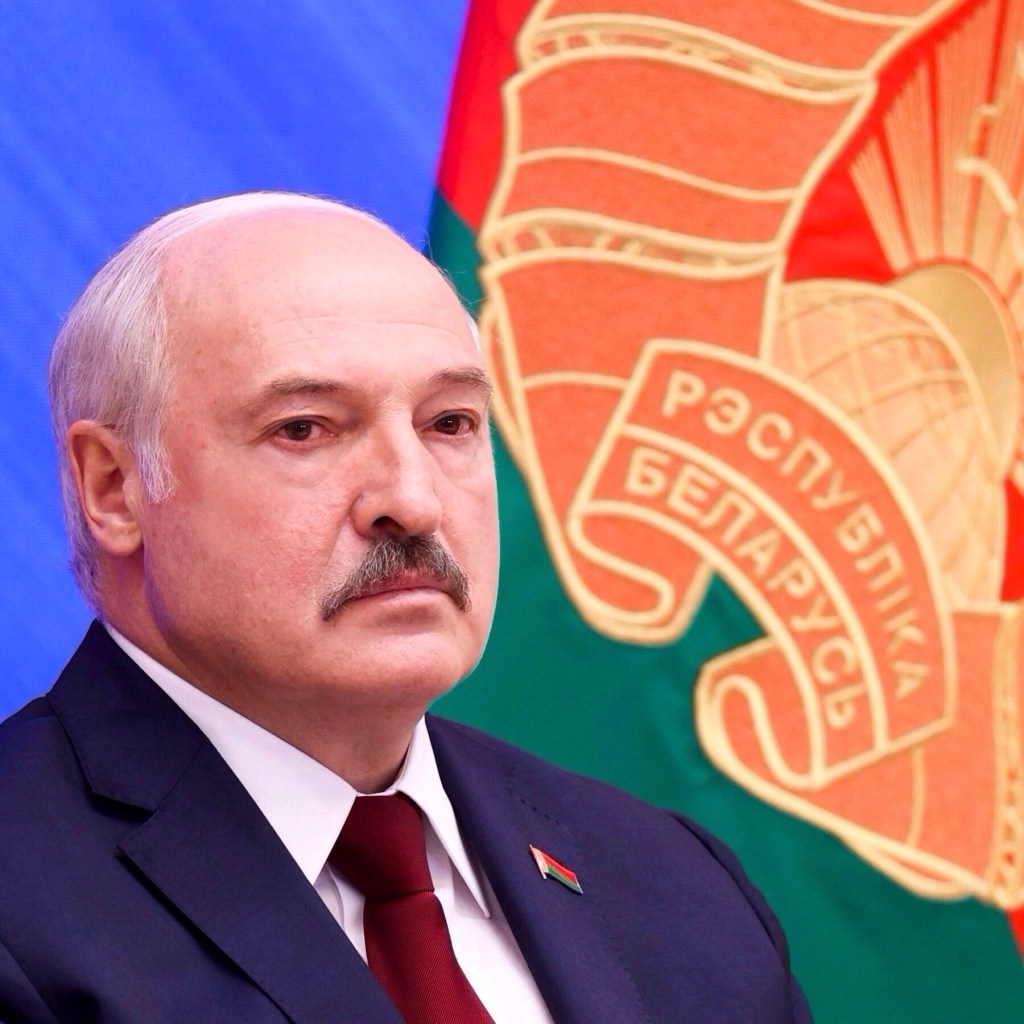
This man — the one who appears to be suffering from a severe case of acid reflux — is Aleksandr Lukashenko, self-proclaimed president (the last election was strongly disputed) of Belarus, which has become pretty much a vassal state of Russia.
Did I say “pretty much”? Let’s tell it like it is: Vladimir Putin owns Aleksandr Lukashenko, who in turn rules Belarus with an iron fist. So it comes as no surprise to hear him parroting the words of Putin and his Moscow minions as he accuses NATO of planning an attack on Belarus and threatens the use of nuclear weapons:
“An attack on Belarus means World War III,” he told students at the State University of Informatics and Radioelectronics in Minsk. [DPA International, September 27, 2024.]
He continued: “Americans and Poles have already positioned themselves along the border, particularly at the Polish one. We know that the Polish leadership is already rubbing their hands.” [Id.]
Right . . . Poland just can’t wait to get started on WW3, because the last one was so much fun.
In Lukashenko’s fantasy world, he envisions Belarus as being well prepared for an immediate response. Then NATO would counter with its own nuclear strikes, and Russia would deploy its entire arsenal — a doomsday scenario for which, he said, the West is not ready. [Id.]
Not incidentally, the nuclear weapons in Belarus are not theirs, but Russia’s, and allegedly under Russia’s control. But such details do not seem to bother Lukashenko.
He really needs to learn to think before he speaks.
*. *. *
Next we have another favorite old curmudgeon, Hungarian Prime Minister Viktor Orban — or, rather, his political director, Balazs Orban (no relation).

Balazs (we’ll use his first name to avoid confusion) said in an interview with the Mandiner website this week that it was Ukrainian President Zelensky’s “irresponsibility” in having resisted Russia’s invasion in February of 2022 that caused the war to continue into its third year and brought about so many thousands of deaths. [Krisztina Than, Anita Komuves and Gergely Szakacs, Reuters, September 27, 2024.]
In Balazs’ own words:
“Considering 1956 [the anti-Soviet uprising in Hungary], we would have probably not done what President Zelenskiy did 2.5 years ago, as it is irresponsible, as we can see that he led his country into a defensive war, many lives were lost and territories lost.
”Let me say again, it is their right and sovereign decision . . . but had they asked us, we would have not recommended this, based on what happened in 1956.” [Id.]
Oh, so that’s where President Zelensky made his mistake: he forgot to ask Viktor Orban for advice. Now I get it.
But in Balazs Orban’s favor, he did at least acknowledge that, for Ukraine, this has been a “defensive” war . . . making Russia officially the “offensive” party.
Well, tell us something we didn’t know.
But wait . . . Balazs may have slipped, and slipped badly. Because Prime Minister Viktor Orban, speaking on national radio on Friday, said it was important to speak “very carefully and clearly” on such sensitive matters:
“Now my political director made an ambiguous statement which is a mistake, as our community stands on the basis of the 1956 revolution, has grown from it.” He added that, as in the past, Hungary will “always defend itself.”

Oh-oh. Now we have Balazs Orban backtracking in a video on his Facebook page, in which he said his words were “deliberately misinterpreted,” and that “the heroes of 1956 are national heroes and their memory is sacred.” [Id.]
And now enter Peter Magyar, Hungary’s leading opposition figure, who could not resist the opportunity to post on Facebook that Balazs Orban “has no place in public life after his scandalous and traitorous comments . . . [and that he] had humiliated the memory of thousands of Hungarian freedom fighters.”
*. *. *
Well, this is turning into one big pot of political Hungarian goulash, with everyone tossing in their own ingredients. If they defend the heroes of the 1956 revolt against the USSR invasion, are they not insulting those Russian forebears of today’s Kremlin regime? Shouldn’t the people of Hungary have succumbed willingly to Soviet rule in 1956, as they now say Ukraine should have done in 2022?
But can we now turn our backs on those who have rightfully been our heroes for 68 years?
Has Orban (Balazs) placed Orban (Viktor) in an untenable position vis-a-vis his relationship with Putin (Vladimir)? By stating that Hungary will “always defend itself,” is he not potentially pitting himself against Russia’s head honcho?

From here, on the outside looking in, this is starting to feel like a free-for-all just waiting to happen. I’m looking forward to the second act.
Just sayin’ . . .
Brendochka
9/29/24
I may have mentioned once or twice that my one — okay, one of my guilty pleasures at this advanced stage of my life is ice cream. One serving (at least) every day. Preferably Haagen-Dazs, and preferably coffee. But in a pinch, a substitute will do.

What to do, though, when there is no ice cream, of any variety, to be found anywhere because a hurricane knocked out the power for two full days and all the stores had to deep-six the perishables: meat, fruits and vegetables, dairy products . . . and everything frozen? And they haven’t been able to re-stock yet? And I’m about to go into withdrawals?
Well, I guess what I do is stop whining, remember all the people who have lost their homes and all of their worldly possessions — not to mention the 50-plus who lost their lives — and suck it up. Which is what all of us who came through this latest challenge unscathed should be doing. Right?
I am very grateful that we only had two days of inconvenience. But damn! That cone looks awfully good right now.
Just sayin’ . . .
Brendochka
9/29/24