Having a wonderful time reminiscing about all my past travel (and other) adventures. Hope you’ll share them with me in my blog, “All Roads Led to Russia.”
Today’s quotation is not, as may have seemed obvious from the header, taken from Charles Dickens or from any of my other usual sources of inspiration. It is, rather, an utterance by a modern-day Scrooge so horrific, so blatantly cruel, so beneath contempt (even for him) that I could not allow it to pass unnoticed or unremarked.
Ebenezer Trump
In proposing a national budget for 2027 that would include defense spending of $1.5 trillion — an increase of some 44 per cent over 2026 — Donald Trump further proposed to reduce spending on non-defense programs by 10 per cent. According to Budget Director Russell Vought, “President Trump promised to reinvest in America’s national security infrastructure, to make sure our nation is safe in a dangerous world.” [Lisa Mascaro and Kevin Freking, Associated Press, April 3, 2026.]
Well, whoopee!
But it was what Trump himself said at a private White House event that made me want to put my fist through a wall:
“We’re fighting wars. We can’t take care of day care. It’s not possible for us to take care of day care, Medicaid, Medicare — all these individual things. They can do it on a state basis. You can’t do it on a federal.” [Id.]
“WTF?!!”
Right. Forget about the fact that the Social Security Amendments of 1965 (the Medicaid and Medicare Act) have been the law of the land for the past 60 years. And forget about the fact that Medicare is funded by payroll taxes that we citizens pay throughout our working lives to help secure our own futures. Or that we continue paying premiums for the limited coverage it provides even after we’re retired. (For those too young to have thought about it, those premiums are deducted from our Social Security checks; they are not optional.)
Of course, the lives of the most vulnerable — the children, the elderly, the sick and disabled — mean nothing. Never mind “all these individual things.”
Forget about all of that; just dump the responsibility onto the individual states, which would have to raise taxes on those same citizens if they were to have even a hope of being able to shoulder the responsibility.
None of that matters, as long as Scrooge has enough money to fight those wars . . . the wars that he himself started.
Adolph Hitler did it; Josef Stalin did it; Vladimir Putin does it with aplomb. One way or another, all dictators surround themselves with sycophants, use them to do their dirty work until they are of no further use or make an unforgivable mistake, and then dump them. Sometimes they’re allowed to escape with their lives . . . what’s left of them.
Being an avid admirer of “strong men,” Donald Trump operates on the same wave length, and always has; he was, after all, the guy who delighted in telling people “You’re fired!” on his reality TV show, and in the operation of his many business undertakings. Why stop now, just because he’s in the White House and his “executive orders” run counter to the core principles, the laws, and the urgent needs of the nation he swore to protect and defend?
His two most recent victims, of course, have been former DHS Secretary Kristi Noem and Attorney General Pam Bondi — both of whom have been shown the door because the tasks he assigned to them backfired when they turned out to be so blatantly illegal that even his rubber-stamp Congress could no longer look away.
And now that he’s on a roll — and since, to the superstitious, bad things usually happen in threes — we should probably be looking for at least one more head to roll in the near future. In that spirit, I have decided to place my bet (but no money) on D. John Sauer, Solicitor General of the U.S. Department of Justice.
U.S. Solicitor General D. John Sauer
Until this week, he was not a headliner in the same category as, say, Pete Hegseth, Bobby Kennedy, or Pam Bondi’s acting replacement, Todd Blanche. But Sauer was the unlucky person in the position of having to plead Trump’s case before the Supreme Court concerning birthright citizenship.
And he screwed up . . . royally.
I won’t attempt to go into the legal intricacies of the disastrous Dred Scott decision (Dred Scott v. Sandford, 60 U.S. 393 (1857)); the 14th Amendment to the U.S. Constitution (ratified in 1868) that rightly overturned that earlier Supreme Court ruling; the Indian Citizenship Act of 1924; or the Nationality Act of 1940 (54 Stat. 1137). Suffice it to say that, when Sauer stood before the Court on April 1st to argue Trump’s contention that not all children born in the United States are automatically entitled to become U.S. citizens, he was unprepared to tackle the thorny issue of Native Americans.
Briefly, Trump and his attorneys have maintained that children of native tribal members are not U.S. citizens in accordance with a 19th-century ruling of the Supreme Court (Elk v. Wilkins, 112 U.S. 94 (1884)), in which the Court held that Native Americans were not “subject to the jurisdiction” of the United States as specified by the 14th Amendment, because of their stated allegiance to their respective tribes.
Not citizens? Wait … who was here first?
And on Wednesday, when Justice Neil Gorsuch — a Trump appointee — questioned Sauer on the logical consequences Trump’s theory would have on Native Americans, all hell broke loose. Gorsuch asked whether, under Trump’s proposed test for birthright citizenship, Native Americans born today would automatically be citizens, Sauer at first said:
“I think so. I mean, obviously they’ve been granted citizenship by statute” — referring to the Indian Citizenship Act of 1924 (43 Stat. 253). [Ashleigh Fields, The Hill, April 1, 2026.]
Gorsuch then told Sauer to set aside the statute, and asked, “Do you think they’re birthright citizens?” — to which Sauer, doing a verbal 180-degree turn, answered:
“No, I think the clear understanding that everybody agrees in the congressional debates is that the children of tribal Indians are not birthright citizens.” [Id.]
But Gorsuch, obviously perceiving the corner into which Sauer had painted himself, pressed for further clarification on the basis of the domicile of the parents, to which Sauer reversed himself again, responding:
“I think so, on our test. They’re lawfully domiciled here. I have to think that through, but that’s my reaction.” [Id.]
Somehow, Sauer seemed to have forgotten that “lawful domicile” is one of the cornerstones of Trump’s theory of qualification for birthright citizenship.
“Holy whiplash, Batman!!!”
At that point, Justice Gorsuch jumped in and said, “I’ll take the yes” [id.], thus rescuing Sauer from further embarrassment.
*. *. *
Okay, that’s a long explanation for my initial suggestion that the Solicitor General may be the next administration bigwig to exit the scene. But — while I wasn’t present and thus am not sure of the exact timing — it appears from reports I have read that it may have been at that point, or shortly thereafter, that Trump beat a hasty retreat from the Court, where he had inexplicably chosen to be present during the oral arguments. People who were there said he did not look happy.
Perhaps Sauer will be luckier than Pam Bondi, and survive the humiliation — especially if the Court should somehow rule in the administration’s favor (which, in my opinion, would be a horrific perversion of justice). We shall see.
And in the meantime, we can entertain ourselves by keeping an eye on the White House’s revolving door to see who actually will be next.
Don’t be surprised if you see something like this pop up in the Washington Post or on ZipRecruiter:
“Position of U.S. Attorney General has unexpectedly opened up due to previous occupant’s sudden decision to return to private sector. Applicants (straight white Christians only) should have law degree and some actual legal experience; however, most important attributes are ability to work long hours, suck up to narcissistic boss, lie to Congress, hurl insults in place of answers to questions, and ignore the law and the Constitution, as well as willingness to sacrifice your own future in exchange for the honor of worshiping at the Temple of Trump and assisting in the destruction of a functioning constitutional democracy. Position offers excellent salary and benefits; but maximum tenure is two years and ten months, and may be terminated without notice on the whim of the Grand Poobah, so consider it a temporary job at best. Application should be submitted by posting on Truth Social, if you seriously want it to be read. Good luck, and thank you for your attention to this matter.”
For those in search of a job that offers a $250K annual salary but no security or future advancement — in fact, no future of any kind other than a wardrobe of orange jumpsuits and free room and board behind bars — this would certainly be an enticement.
Last week I had my regular medical checkup, and yesterday was my six-month appointment with my cardiologist. I am happy to report that everything is still ticking; both doctors said goodbye as though they actually expected to see me again; and I should be good for another six months, assuming a meteorite doesn’t choose my house as its landing pad.
But there’s always that little bit of anxiety before a medical appointment — and more so as we grow older — that starts you thinking about your own mortality, things you wish you had done (or not done) when you were younger, and what you might still do to make your remaining time more meaningful.
So, of course, I began my search for other, wiser people’s thoughts on aging, and I found this from one of my favorite authors (and no, it’s not Shakespeare, for a change):
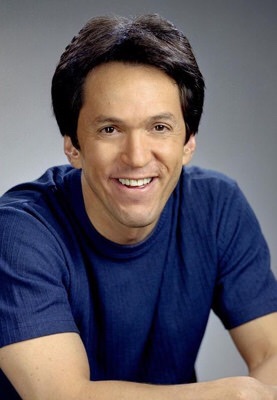
“It’s very simple. As you grow, you learn more. If you stayed at twenty-two, you’d always be as ignorant as you were at twenty-two. Aging is not just decay, you know. It’s growth. It’s more than the negative that you’re going to die, it’s also the positive that you understand you’re going to die, and that you live a better life because of it.”
– Mitch Albom, “Tuesdays with Morrie: An Old Man, a Young Man, and Life’s Greatest Lesson”
Mitch Albom
It would have been nice if I’d taken note of that when I was younger. But I suppose it’s never too late to do better.
When Shakespeare’s Juliet asked that question, she was contemplating the feud between her family, the Capulets, and their bitter enemies, the Montagues — the family of her lover, Romeo.
Romeo and Juliet
Today, the name to be heard and seen everywhere is equally contentious, but hardly associated with nobility: TRUMP. And its standard-bearer, the omnipresent Donald, is seeing to it that it’s plastered everywhere there is a blank space anywhere in the country: on buildings (often along with a Big Brother-sized poster of his face), highway signs, coins (the face again), new paper currency (the Sharpie signature), countless crappy souvenirs — and now even an airport.
As to that last item, after being turned down by New York in his bid to steal John F. Kennedy’s name for a second time, he got Ron DeSantis, the boot-licking governor of Florida, to sign off on renaming Palm Beach International Airport instead.
Normally, places are named for presidents as honorifics after they’re dead. But Trump — possibly beginning to realize that his post-mortem tributes will more closely resemble those of Benito Mussolini than JFK — wants to ensure that he won’t be forgotten too quickly. And besides, he likes looking at images of himself . . . though God alone knows why.
A Face Only a Mother Could Love
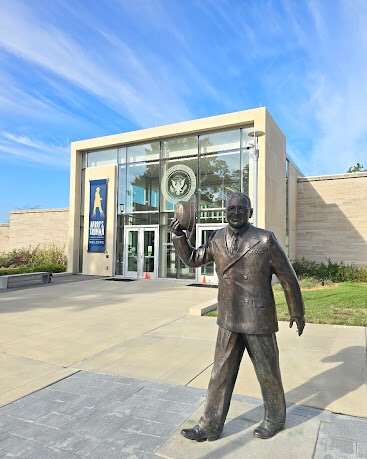
There is, however, one memorial to themselves that sitting presidents plan in advance, though they are not built until after they have left office: their presidential libraries. Since the time of Franklin D. Roosevelt, our leaders have created repositories for their personal papers and other important memorabilia, leaving a bit of themselves to history. The designs have varied from the modest to the more stately, but have always been in good taste. For example:
Franklin D. Roosevelt Library – Hyde Park, New York
Harry S Truman Library – Independence, Missouri
Ronald Reagan Library, Simi Valley, California
Barack Obama Library, Chicago, Illinois (Opening June 2026)
President Joe Biden’s library is a work in progress.
And so, apparently, is Donald Trump’s. With nearly three years left to his term, he has already reserved the site and shared this initial rendering with the public:
Donald J. Trump Library, Miami, Florida
It is unclear whether Trump will, according to tradition, wait until he is out of office before beginning construction, or jump the gun in an effort to ensure being around to see it to completion in his lifetime.
It is also difficult to imagine anyone having enough possessions of historic interest to fill a phallic symbol of this magnitude.
Perhaps, at long last, we’ll get to see all of the unredacted Epstein files.
The following words were written on March 31, 1776 — 250 years and one day ago — by the wife of the man who would become the second President of the brand-new United States of America.
Abigail Adams (1744 – 1818)
We weren’t even officially a nation yet when Abigail Adams urged her husband, John Adams, and the other members of the convening Continental Congress not to overlook the women of the country when declaring our independence from Great Britain. What she said, in part, was this:
“I long to hear that you have declared an independency. And, by the way, in the new code of laws which I suppose it will be necessary for you to make, I desire you would remember the ladies and be more generous and favorable to them than your ancestors. Do not put such unlimited power into the hands of the husbands. Remember, all men would be tyrants if they could. If particular care and attention is not paid to the ladies, we are determined to foment a rebellion, and will not hold ourselves bound by any laws in which we have no voice or representation.”
– “This Day in History,” History.com, March 31, 2026.
Abigail was more than just the “little woman” offering moral support to her husband. She was a person of considerable intellect and clearly ahead of her time, giving forethought to a document — the Constitution of the United States — that would not be completed for another eleven years, or ratified for two years after that.
And it would be 150 years before Abigail Adams’ plea on behalf of American women would be codified as the 19th Amendment to that Constitution. But in the 18th century, she became the second First Lady of the United States, and later the mother of the sixth President, John Quincy Adams — clearly, the kind of FLOTUS this country needed, at exactly the moment she was needed.
You probably thought I was going to name Donald Trump, didn’t you? Well, in all honesty, it was a close call. But this year’s “April Fool Award” — which I just invented, by the way: sort of like that FIFA Peace Prize, but without the medal and the chintzy faux-gold knick-knack — goes to the guy waiting anxiously to move into the Oval Office as soon as the 25th Amendment is invoked against his boss: none other than JD Vance himself.
JD Vance: Looking Skyward
Because surely he was pulling our collective leg when he said on a recent podcast that he doesn’t believe extraterrestrials are aliens from outer space, but are actually something quite different. What he said was:
“When I came in, I was obsessed with the UFO files. … I’ve already had a couple of times where I’m like, ‘All right, we’re going to Area 51. We’re going out to New Mexico. We’re gonna sort of get to the bottom of this.’ And then the timing of the trip just didn’t work out. But trust me, anybody who’s curious about this, I’m more curious than anybody, and I’ve got three years of the very tippy top of the classification. I’m gonna get to the bottom of it.” [Ryan Coleman, Entertainment Weekly, March 29, 2026.]
(Hmm . . . “From the “very tippy top . . . to the bottom of it.” Why does that sound like a man describing a premonition of his own future?)
But, as I tend to do, I digress.
So, just as I was envisioning him clad in his aluminum-foil body suit, carrying a portable Geiger counter or whatever UFOlogists use to detect aliens, he clarified:
“I don’t think they’re aliens. I think they’re demons.” [Id.]
Oh, well, then . . . that’s a whole different ballgame. He doesn’t need a Geiger counter; he needs to take along a priest who specializes in exorcisms.
I expected the next words from his mouth to be, “April fool!” But they weren’t. Instead, he told podcaster Benny Johnson that he believes “celestial beings, who fly around and do weird things to people” are not necessarily E.T.-type aliens. Rather, he said:
“I think that the desire to describe everything celestial [as] otherworldly, to describe it as aliens — I mean, every great world religion, including Christianity, the one that I believe in, has understood that there are weird things out there. And there are things that are very difficult to explain. And I naturally go, when I hear about sort of extra-natural phenomenon, that’s where I go to, is the Christian understanding. … There’s a lot of good out there, but there’s also some evil out there. And I think that one of the devil’s great tricks is to convince people he never existed.” [Id.]
(One further digression: I happen to think one of the devil’s great tricks is the current administration in Washington. But what do I know about the devil? I’m Jewish.)
Sadly, though, JD has been too busy with other things — more Earth-bound matters like a war, a tanking economy, and keeping his job — to pursue this particular interest. As he said, he has “not been able to spend enough time on this to really understand it.” But he is “more curious than anybody” about aliens, demons and such; and luckily:
“I’ve still got three more years as vice president. I will get to the bottom of the UFO files.” [Id.]
Really? Well, the way things are going, I wouldn’t count on that, JD.
I just had to toss this out to my blog buddies and Facebook friends, because we need every bit of encouragement we can find in today’s world.
In an order just issued from the U.S. District Court for the District of Columbia, Senior Judge Richard Leon has granted the request of the National Trust for Historic Preservation to temporarily stop work on the construction of Donald Trump’s 90,000-square-foot ballroom at the east end of the White House pending Congressional approval. In the Judge’s words:
“No statute comes close to giving the President the authority he claims to have.” [Lydia Wheeler, Wall Street Journal, March 31, 2026.]
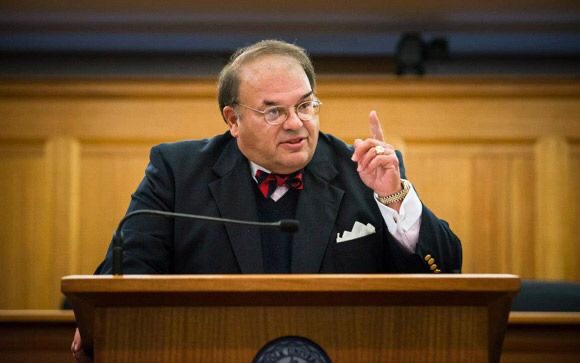
The Honorable Richard J. Leon
Judge Leon went on to state:
“It is not too late for Congress to authorize the continued construction of the ballroom project. The President may at any time go to Congress to obtain express authority to construct a ballroom and to do so with private funds.” [Id.]
In other words, Trump is free to dream up all the crazy schemes he wants . . . but in order to implement them, he must follow all relevant Constitutional and other legal protocols.
The Justice Department — i.e., Pam Bondi — has already filed a notice that they will appeal Judge Leon’s ruling, which is their legal right. It will then be up to the U.S. Court of Appeals to consider and issue a ruling on the merits, presumably after the filing of written briefs and an oral hearing. That is what is known as due process . . . a concept with which too many people in Washington appear to be unfamiliar.
It is a process that takes time. And if it doesn’t pander to Trump’s childish, narcissistic need for instant gratification . . . well, that’s just too bad.
Thank you, Judge Leon, for honoring your oath to abide by the laws of the nation, and for reminding the unfaithful what this country is really about.
Throughout my years of travel, I found much to love in every city and every country I was privileged to visit. Yet I always held tight to my U.S. passport, considering myself the most fortunate of people for having been born under the greatest political system ever devised by man.
Today, that democracy — or republic, if you prefer — is under attack by destructive internal forces never before experienced in our 250-year history. I believe those forces will fail, due both to their innate rot and to the will of the people to prevent them from stealing what is ours.
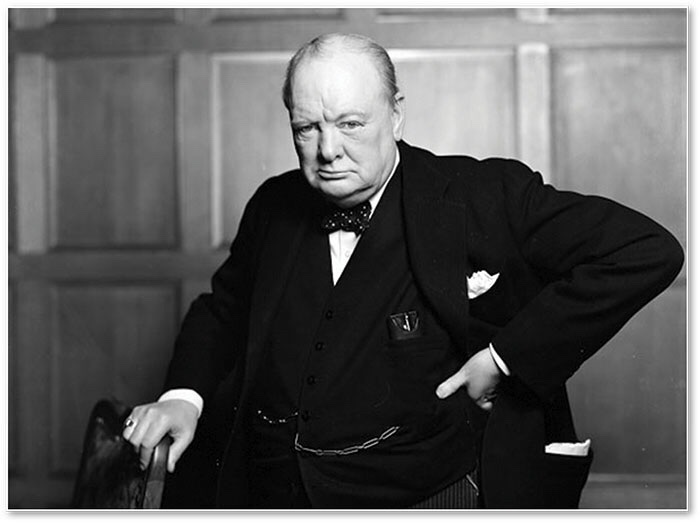
Is the United States a perfect country? Of course not. Countries are comprised of people, who are themselves inherently imperfect. Perhaps a fellow advocate of democracy — not an American, but a great British friend and ally — expressed it best:
“Many forms of Government have been tried, and will be tried in this world of sin and woe. No one pretends that democracy is perfect or all-wise. Indeed it has been said that democracy is the worst form of Government except for all those other forms that have been tried from time to time.”
– Winston S. Churchill, 11 November 1947
Sir Winston Churchill (1874 – 1965)
Imperfect people have yet to devise a perfect form of government. And until someone does, we Americans will continue to fight for the survival of our democracy. We will tolerate no tyrants, no dictators, no fascists.

























 The Blog About Everything … and Sometimes Nothing