“Beware the Ides of March.”
– Shakespeare, “Julius Caesar,” Act I, Scene 2
According to William Shakespeare, if Julius Caesar had been a superstitious man, he would have heeded the words of the soothsayer, avoided the forum on that March 15th in the year 44 B.C., and possibly lived to see another day.
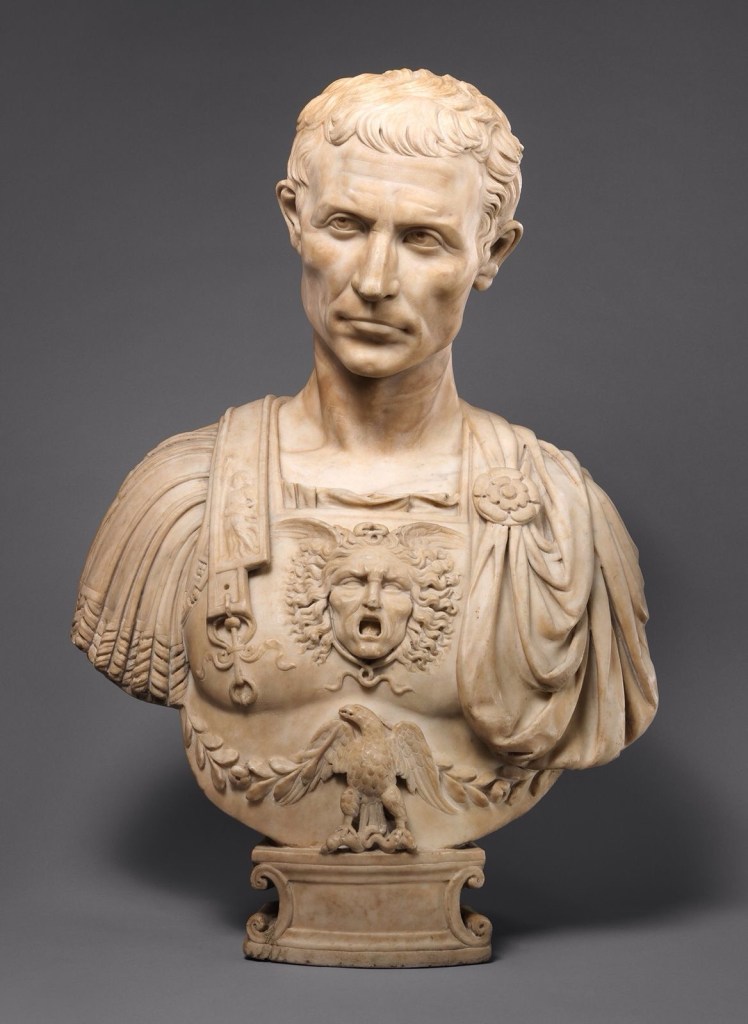
But he wasn’t, and he didn’t. Instead, when the fictitious soothsayer uttered those immortal words, Caesar ignored him and proceeded on, where his supposed friends, Brutus and Cassius — with the eager participation of other members of the Roman Senate — stabbed him to death.
And as he lay dying, he famously spoke his last words to Brutus, the friend who had betrayed him:
“Et tu, Brute?” (“And you, Brutus?”)
– Id., Act III, Scene 1
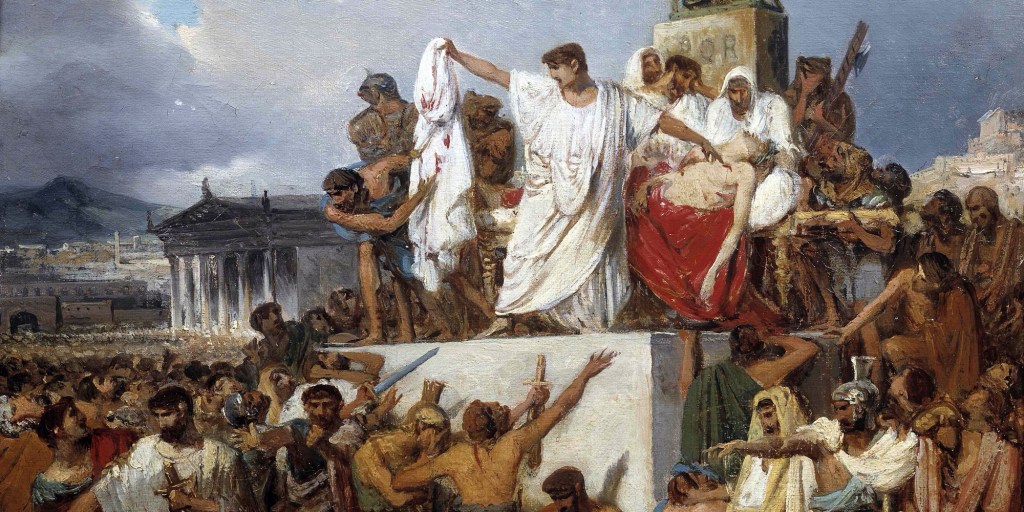
The words of the soothsayer and Caesar were Shakespeare’s inventions, but the assassination is historic fact. It altered the fate of a nation, as on that day — under the rule of Caesar’s successor, Augustus — Rome began its transition from a Republic to an Empire.
*. *. *
Thus was another superstition born of myth, as most superstitions are. Black cats, broken mirrors, spilled salt, opals . . . most date back to ancient beliefs, some to real-life coincidences, and others — like Shakespeare’s Ides of March — to the imaginations of writers.
But if taking precautions against any of them makes you feel better, then by all means, go for it. Julius Caesar probably wished that he had.

Just sayin’ . . .
Brendochka
3/15/26
 The Blog About Everything … and Sometimes Nothing