Not surprisingly, Shakespeare said it first — or his ill-fated King Hamlet did . . .

. . . though most of us probably associate the phrase with the much more recent Agatha Christie’s beloved crime-solving character, Miss Marple.

To me, however, those three little words perfectly describe what has happened to the English language during my lifetime.
From the time I entered the first grade at the age of five, we were taught the basic “three Rs” — reading, (w)riting, and (a)rithmetic. And I mean, we were really taught. We learned addition and subtraction tables in a time before hand-held calculators; and to this day, people of my generation can add and subtract in our heads, without benefit of so much as paper and pencil.
As for English, it was almost a religion: grammar, spelling and punctuation were the Holy Trinity, and a misspelled word or a misplaced comma could cost you that coveted “A” on a test paper.

We knew the difference between subjects and objects, verbs and adverbs, plurals and possessives. Quite simply, by the time we were in the third or fourth grade, we were literate.
So what happened? It would be easy to blame the internet, progenitor of email and texting, with its entirely new dictionary of abbreviations and acronyms. IDK who first thought of it, but IMHO, it’s the work of the devil.
Yet the whole decline into gibberish began long before the advent of the internet. In watching reruns of my favorite TV sitcoms from the 1980s and ‘90s, I have detected such slips as, “Her and I were just good friends,” and, “Me and him had a real fun time.”
Maybe we should look back to the ‘60s — that happy, slappy decade of sex, drugs and rock-and-roll — when the long-cherished standards of interpersonal behavior were swept aside by a sudden urge to be free of all restraints, and a generation of stoned teenagers decided they knew more about life than their parents did.

“If it feels good, do it” became a meme, which also meant that if it didn’t feel good, you could ignore it. Schools that had once been refuges of order and safety became battlegrounds. Teachers who had previously earned absolute respect suddenly found themselves in defensive positions, hoping just to get through the day without anyone being killed. Entire curricula were tossed out and replaced with free-thinking discussion groups. Grammar was of little importance.
By the time the internet came along, the world was ready for all of its wonderful new shortcuts, like spellcheck and autocorrect — two banes of my existence, because half of the time they don’t know what the hell they’re talking about. I have actually found myself screaming at my laptop or iPad:
“DON’T YOU DARE TELL ME WHAT I’M THINKING!!!!”
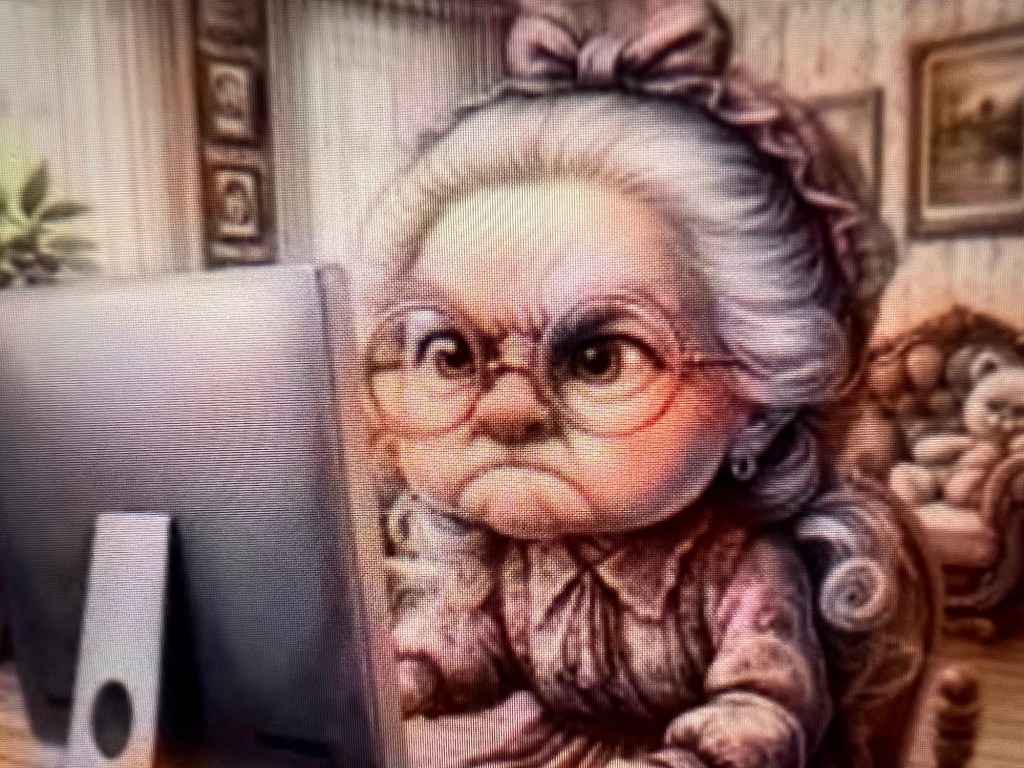
I have a sweatshirt that reads, “I Am Silently Correcting Your Grammar.” And most of the time, I am doing just that. But, like many people of my generation, I have learned to keep my mouth shut when I hear an otherwise intelligent adult say, “I already seen that movie,” or, “It was so fun, we decided to do it again.” Life in general has become more casual, and in many ways, that is not an entirely bad thing.
But what I find unacceptable — indeed, unforgivable — is the massacre of the written word. Forget about the internet — it is a viper’s nest of misinformation, disinformation, and flat-out bullshit.
Books, magazines and newspapers, on the other hand, are supposed to be sources of accurate information, designed to enlighten, educate and inspire us. But we can no longer rely on them, because the editors of those publications have become dependent upon computers and — God help us! — AI, to ensure their accuracy.
As we all know, “AI” stands for “artificial intelligence.” And “artificial” has many synonyms: “synthetic,” “unnatural,” “counterfeit,” “ersatz,” “factitious,” “manufactured,” “faked,” “false,” “imitation,” “mock,” “not genuine,” “plastic,” “simulated,” “substituted,” and so on.
It doesn’t exactly inspire confidence, does it?

Language is a beautiful thing, inexorably connecting us to our personal histories and national identities. It is meant to be descriptive, informative, enlightening, inspiring, moving. Think of the works of Shakespeare, Byron, Hemingway, Flaubert, Dostoyevsky. Think of the people who compiled the first dictionaries in all of the world’s various languages.
And then think about what impression our descendants will have of us, say 100 years from now, when they open a time capsule containing printouts of today’s emails and Facebook postings.
Come to think of it, things may have gotten even worse by then . . . though I’m really rather glad I won’t be around to find out.

Just sayin’ . . .
Brendochka
2/13/26
 The Blog About Everything … and Sometimes Nothing