And why have we never heard of it before?
Most likely because it is a recent invention being sprung on the world from the deepest, darkest recesses of Vladimir Putin’s mind: a smoke-and-mirrors device intended to save his political backside from a complete loss of credence with his own people, and his country from total economic collapse.
And with a little help from his American friend, he might just be able to pull it off.
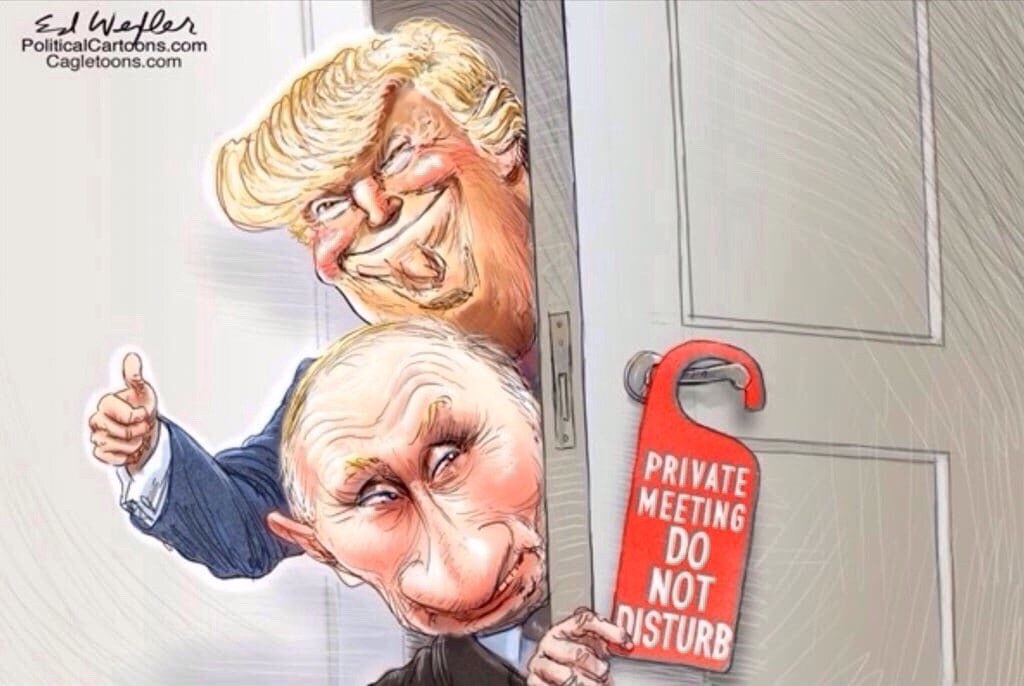
We all remember the high hopes we had for the face-to-face meeting between Putin and Donald Trump in Anchorage, Alaska, on August 15th of last year. That was when a trio from each side — Putin, Foreign Minister Sergey Lavrov, and foreign policy adviser Yuri Ushakov — sat down behind closed doors with Trump, Secretary of State Marco Rubio, and foreign policy newbie Steve Witkoff, and . . .
Well, we don’t know what happened, exactly. All we heard from Trump after the conclusion of the much-touted summit at Anchorage was that he would be meeting the following Monday with Ukrainian President Volodymyr Zelensky in Washington. He also told European leaders that Putin still wanted all of Ukraine’s eastern Donbas region in exchange for a freeze of the current front lines.
And from Moscow, Putin had this to offer:
“Russian-American business and investment partnership has huge potential.” [Anne Applebaum, The Atlantic, August 16, 2025.]
But nothing about a peace treaty, or even a ceasefire.
Talks about Ukraine quieted down for a while, as Trump busied himself with potentially more lucrative matters — Venezuela, Greenland, Cuba — until suddenly, following a disastrous couple of days at Davos, Steve Witkoff and Jared Kushner took off from there for Moscow, where they met with Putin for three hours on January 22nd in discussions about Ukraine described by Yuri Ushakov as “exceptionally substantive, constructive, and, I would say, extremely frank and confidential.” [Helen Regan and Darya Tarasova, CNN, January 23, 2026.]
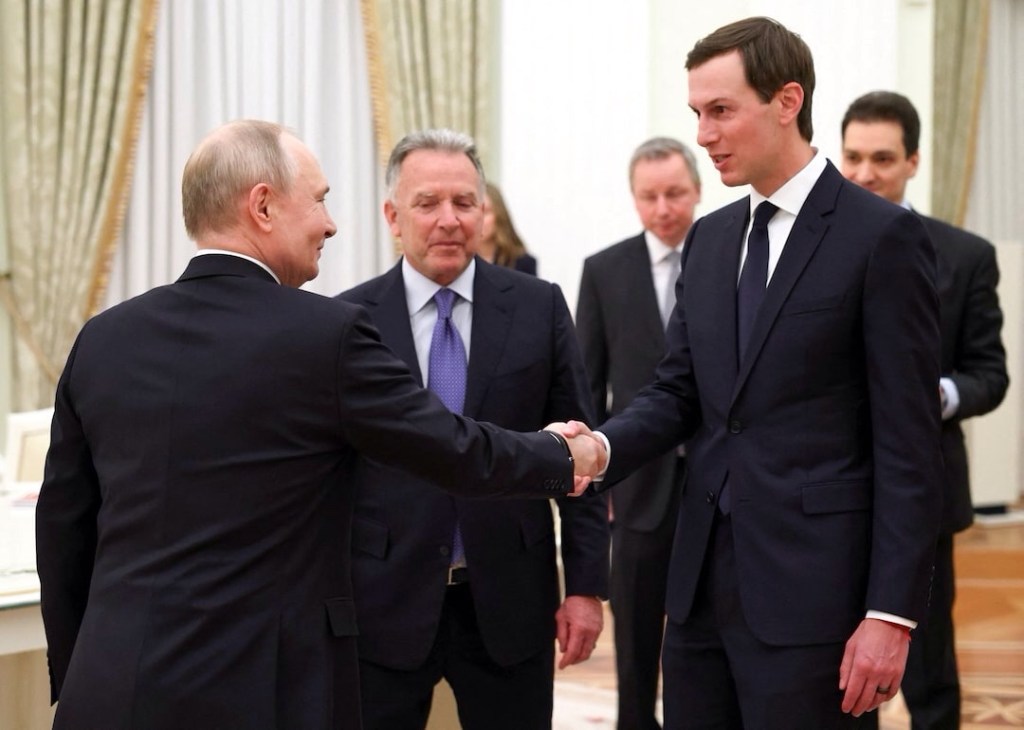
What emerged from that session, as far as the public was told, was an agreement for negotiators to meet a few days later in Abu Dhabi — which they did, again without any resolution other than an agreement to try once more, on February 1st. And I asked myself, not for the first time, why we should expect anything different to emerge from this gathering.
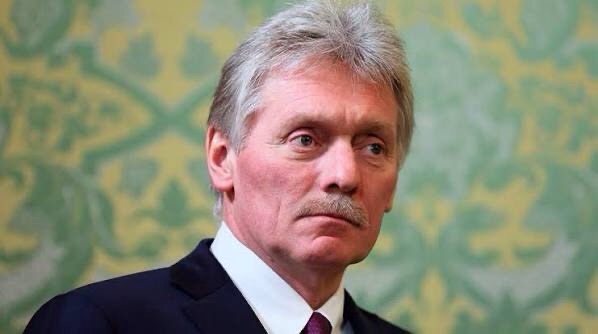
A clue to the answer came on Monday, January 26th, in the form of a statement from Kremlin spokesman Dmitry Peskov:
“The territorial question, which is part of the ‘Anchorage Formula,’ of course carries particular significance for the Russian side.” He added that “our negotiators continue to defend our position.” [Clare Sebastian, CNN, January 27, 2026.]
And in one voice, the world responded: “Anchorage Formula? What Anchorage Formula?”
Well, two days earlier, Deputy Foreign Minister Sergey Ryabkov had mysteriously also brought up that long-ago meeting in Alaska, saying that Moscow wanted a peace deal “that fully corresponds to the fundamental understanding reached by the presidents of Russia and the US during their meeting in Anchorage.” [Id.]
But here’s the thing: We have never heard of an “Anchorage Formula,” or of any sort of agreement reached during that red-carpeted, hail-fellow-well-met summit. So is it something Putin is now claiming to have happened? Or was there some sort of off-the-record understanding reached that has, for whatever nefarious reasons, been kept under wraps for the past five months? And — whichever turns out to be the case — why?

One Ukrainian war reporter, Illia Ponomarenko, believes it is the former. Writing on X, he said:
“They’re [the Russians] literally constructing reality on the fly, Orwell-style, counting on the average consumer of Russian mass propaganda having the attention span of a guppy.” [Id.]
And analysts at the Washington-based Institute for the Study of War agree. In a post on Saturday, they opined that Russia is looking to “exploit the lack of clarity about the outcome of the August 2025 US-Russian Alaska Summit to claim that the summit achieved a joint US-Russian understanding and agreement to end the war in Ukraine, and present the agreement in ways that benefit Russia — including by obfuscating Russia’s own efforts to impede the peace process.” [Id.]
*. *. *
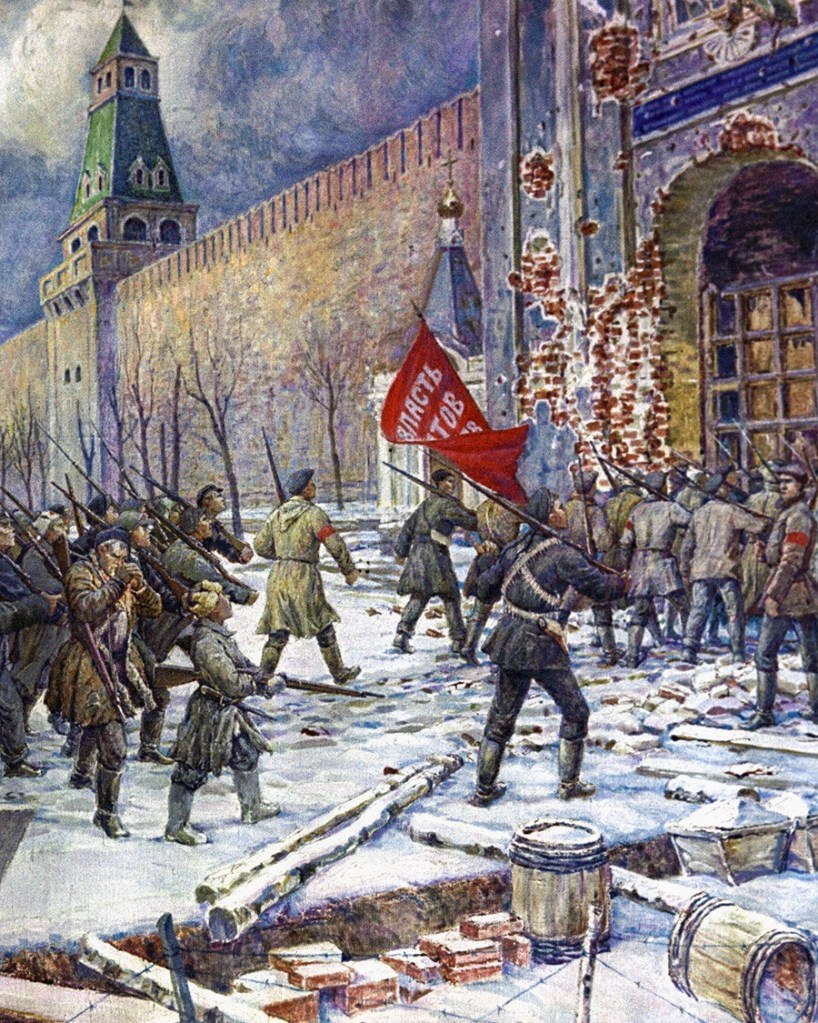
I, for one, am looking forward to the answer. Not that I expect anything earth-shaking to emerge from Abu Dhabi this time; I’m just curious to see how long Putin can stretch this out before the Russian masses get sick of all the bullshit and decide to storm the Kremlin . . . again.
Tragically, while we wait, the people of Ukraine continue to suffer.
Just sayin’ . . .
Brendochka
1/28/26
 The Blog About Everything … and Sometimes Nothing