I suppose it’s still used from time to time, but it was more prevalent during the years of the Cold War: training attractive young Russian women to seduce foreigners whose jobs gave them access to strategically vital information. Euphemistically known as a “honey trap,” it was all part of the ongoing spy wars, and it netted a fair amount of otherwise unobtainable intelligence.
It also destroyed a great many lives . . . and ended more than a few.

That same methodology is being used by the Russian government today to recruit foreigners to fill the ranks of the military fighting in Ukraine. Instead of sex, however, the lure is money; and the targets are naive, desperately poor young men from Middle Eastern countries — mainly Syria, Egypt and Yemen.
In one specific case, Omar (not his real name) — a young, unemployed Syrian man — was approached by a Russian recruiter in Syria who was supposedly offering civilian work guarding oil facilities in Russia. Omar and a few other men jumped at the opportunity, but upon arriving in Moscow in March of 2024, they found that they had been scammed and were stranded at the airport with little money. One of their group searched online for help, and found a site offering work.
The site belonged to a woman named Polina Aleksandrovna Azarnykh. Within hours of being contacted, she met the men at the airport and took them by train to a recruitment center in Bryansk, some 250 miles southwest of Moscow, where they were given one-year contracts — written in Russian, which they did not understand — providing for a sign-up payment equivalent to $5,000 and a monthly salary of around $2,500. [Nawal Al-Maghafi and Sheida Kiran, BBC, January 12, 2025.]

Thinking they had hit the jackpot, they signed the contracts and handed their passports over to Azarnykh, who promised to arrange Russian citizenship for them. She also said that they could avoid being sent into combat if they paid her $3,000 apiece from their sign-up bonuses.
Instead, Omar was given ten days of military training and sent into battle. When he refused to pay the $3,000 to Azarnykh, she burned his passport. When he complained to his commanders, they threatened to imprison or kill him. [Id.]
Omar later discovered another fact that Azarnykh had failed to mention: that a 2022 Russian decree allows the military to extend soldiers’ contracts automatically until the end of the war in Ukraine. His contract has since been renewed.
A BBC investigation of Azarnykh determined that she had previously run a Facebook group helping Arab students come to Moscow to study. In 2024, she started a Telegram channel through which she operated her recruitment activities, and is said by one source to have become “one of the most important recruiters” for the Russian army, allegedly receiving the equivalent of $300 from the army for each person she recruited. [Id.]
In mid-2024, her posts began referring to the fact that recruits would be “participating in hostilities.” In one video, posted in October 2024, she says:
“You all understood well that you were going to war. You thought that you could get a Russian passport, do nothing and live in a five-star hotel? . . . Nothing happens for free.” [Id.]
And in a voice message sent to the mother of a soldier, she accused the woman of “publish[ing] something horrible about the Russian army” and threatened the soldier’s life, further warning the woman, “I’ll find you and all your children.” [Id.]
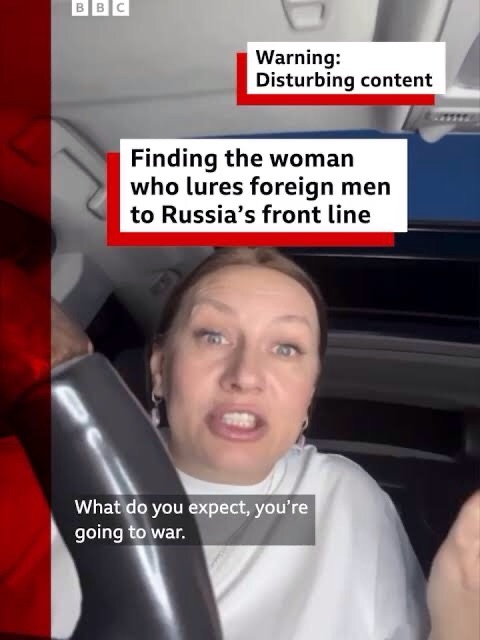
The BBC World Service has identified nearly 500 cases in which Azarnykh has “invited” young men to come to Russia to join the military in (allegedly) non-combatant positions, obtained their passport details from them, and failed to mention that they would not be allowed to leave in a year. Twelve families have told of young men recruited by her who are now dead or missing.
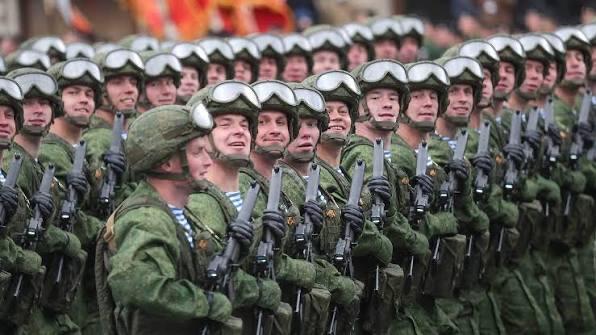
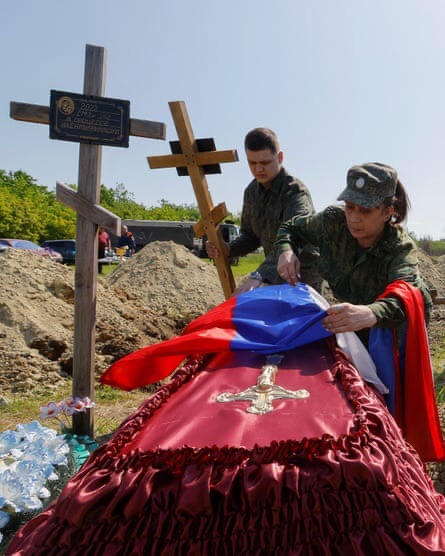
While it is unknown how many foreigners have joined Russia’s war against Ukraine since it was launched nearly four years ago, studies suggest the number may be as high as 20,000 or more, including from countries like Cuba, North Korea and Nepal. [Id.] Basically, they are nothing more than cannon fodder, sent into combat with just a few days of training, in a language they can’t understand, to replace the hundreds of thousands of Russian casualties.
And “entrepreneurs” like Polina Azarnykh are earning a living by leading the lambs to their slaughter.
I have to wonder whether the governments of these targeted countries are taking steps to warn their young men of the truth behind these recruitments, and if not . . . why not?

Just sayin’ . . .
Brendochka
1/13/26
 The Blog About Everything … and Sometimes Nothing