If you’re under the age of 45 or 50, or didn’t pay much attention to the U.S.-Russian spy wars of the 1980s and ‘90s, you’re probably wondering, “Who is — or was — Aldrich Ames?”
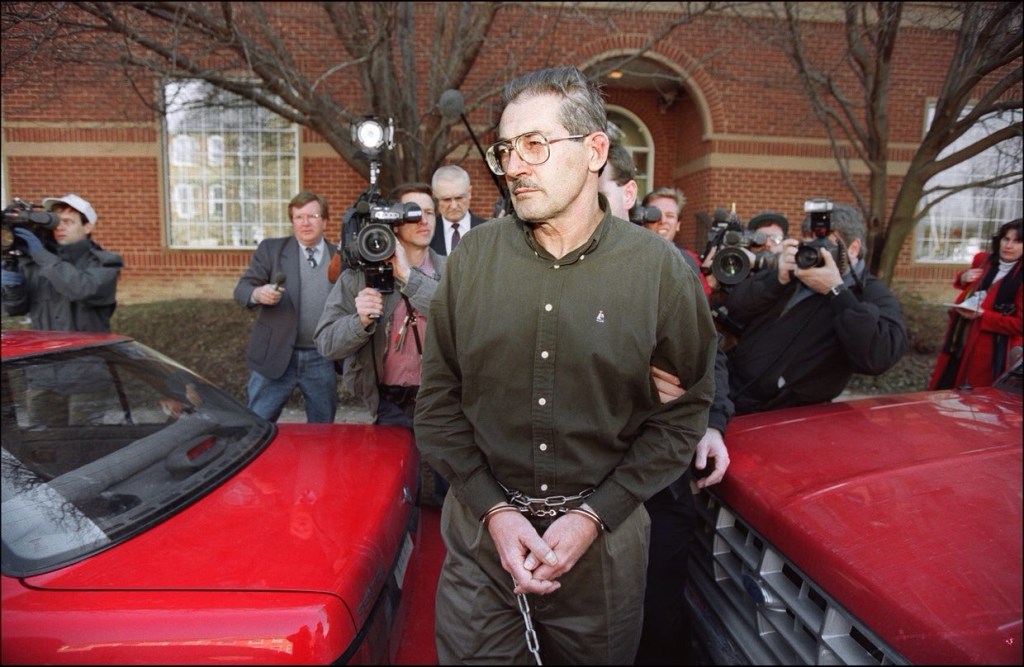
Briefly, he was an American CIA counterintelligence officer who spied for the Russians from 1985 to 1994. Described as one of the most damaging spies in U.S. counterintelligence history, he sold the Russians classified information, including the identities of CIA and FBI sources, resulting in the deaths of at least nine valuable agents. Following an extensive internal investigation at the CIA and a joint operation with the FBI, Ames was finally identified . . . with the additional help of information elicited from a Russian KGB defector in 1993.
Ames was ultimately arrested outside his home in the Washington, D.C., suburb of Arlington, Virginia, on February 21, 1994. He pled guilty to charges of espionage and tax evasion (shades of Al Capone!), and was sentenced to life in prison without possibility of parole.
Two days ago, after serving nearly 32 years in the federal prison system, Ames died at the age of 84. No cause of death has yet been announced.
And now you’re wondering: “So what?”
From the reader’s point of view, that would be a reasonable reaction. But my interest in the case was more personal, as shared in some of my earlier posts on this blog. And learning of Ames’ death yesterday led me to look back to that earlier time, and to share a small part of my tale with you once again.
So here we go . . .
*. *. *
LOOKING BACK: A 40-YEAR-OLD SPY STORY
“Life’s a pitch, then you spy.”
– John Alejandro King
On April 16, 1985, an American man walked into the Soviet Embassy on 16th Street in the northwest quadrant of Washington, D.C., and asked the guard at the glass-protected desk if he might speak with an Embassy diplomat, Sergei Chuvakhin. When the guard called Chuvakhin to the front entry, the American man handed him an envelope addressed to Stanislav Androsov, then the KGB rezident (chief of station) at the Embassy. Unknown to Chuvakhin, the envelope contained a few documents and an offer to procure and provide more of the same in exchange for the sum of $50,000. The American then left the Embassy and returned to his office in suburban Langley, Virginia.
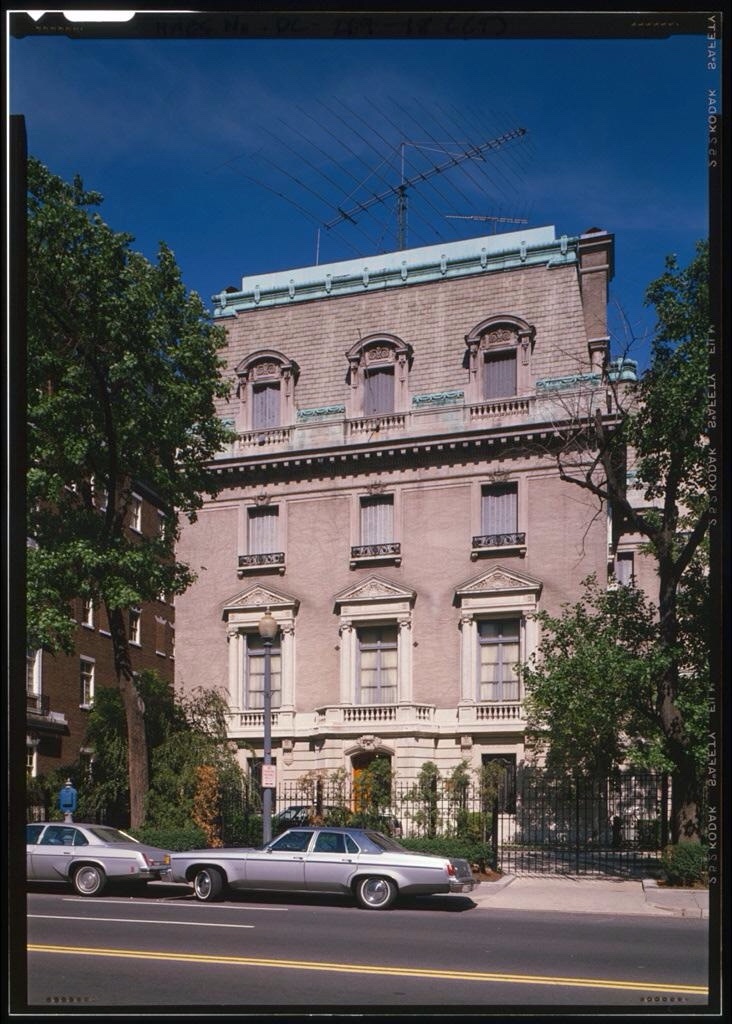
Upon receiving and opening the envelope and reviewing its contents, Androsov summoned his deputy, Viktor Cherkashin, then the head of counterintelligence at the Embassy, to discuss the significance of the unexpected and unconventional communique.
The American waited nervously until a month later, when he finally received a call inviting him to meet again with Sergei Chuvakhin at the Embassy on May 17th. On the American’s arrival, Mr. Chuvakhin greeted him, showed him into a small fourth-floor meeting room, and withdrew as he had been instructed. In a few moments, a different gentleman entered the room and introduced himself as Viktor Cherkashin. Their meeting was brief but productive, culminating in an agreement by the KGB to the payment of $50,000 in exchange for additional documents from the American.
Cherkashin and the American next met on June 13, 1985, at Chadwick’s Restaurant, a popular watering hole in the historic Georgetown neighborhood of Washington. The American brought with him a larger package of classified CIA files, which he exchanged with Cherkashin for the agreed amount of $50,000.

Thus began the career of Aldrich Ames as a mole for the Soviet KGB inside the CIA — a career that lasted for nine years, until his eventual arrest on February 21, 1994. Nine years, during which a troubling number of U.S. human assets in Russia were lost, engendering the beginning of a years-long mole hunt within the CIA’s ranks.
Nine years, during which Ames evaded detection despite internal CIA investigations, lie detector tests, routine vetting, and his own reckless extravagance and general carelessness.
Nine years, until — with Ames already at or near the top of the CIA’s short list of suspects — a recently-arrived former KGB officer talked to the FBI and revealed, either knowingly or inadvertently, a key bit of information that allowed the FBI to make its airtight case of espionage against Aldrich Ames.
Without the CIA task force’s relentless, top-secret internal search for a mole, Ames might never have become a suspect. But the CIA has no law enforcement authority in the United States, and so they finally had no choice but to enlist the help of the FBI. It was the joint effort of the two agencies — a rather exceptional collaboration at the time — that brought down the man who still, more than thirty years later, is described by many as perhaps the most destructive U.S. traitor of the 20th Century.
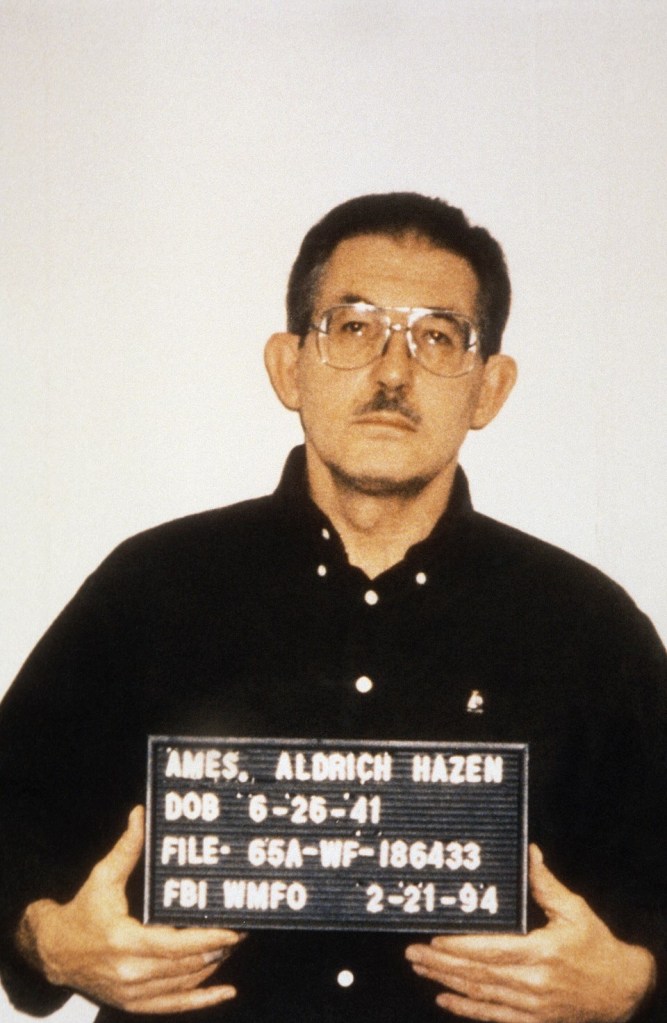
Much has since been revealed about the extent of the damage done by Aldrich Ames and the lives lost as a result of his betrayal. But still, more than thirty years later — as he continues to live out his life sentence in the Federal Correctional Institution at Terre Haute, Indiana — Ames claims to have additional information yet to be shared with U.S. intelligence authorities.
And still — three decades after the fact — the identity of the Russian defector who provided that last vital piece of the puzzle also continues to be protected, presumably for his own safety. A few names have been posited by various sources and, not surprisingly, vehemently denied or simply not commented upon.
One was an acquaintance of mine.
*. *. *
The Second Part of the Story
“Though this be madness, yet there is method in’t.”
– William Shakespeare, Hamlet
On April 25, 1993, two former Soviet KGB officers — we’ll call them Comrade X and Comrade Z — arrived at JFK International Airport in New York and spent the night at the Connecticut home of their new literary agent. The following day, they met with book publishers in New York City, one of whom agreed to purchase and publish an as-yet-unfinished book being written by Comrade Z based on his years in Washington as a spy for the KGB. The two men then traveled to the Washington, D.C., area, where they remained until their return to Moscow at the expiration of their visas on May 5th. During that period, they met and spoke with agents of the FBI.
One week later — on May 12, 1993 — the FBI opened its formal investigation of Aldrich Ames, an agent of the Central Intelligence Agency suspected of being a long-time Soviet mole inside the CIA.
I am the person who brought Comrades X and Z to the United States in the spring of 1993 for the purpose of selling that book, thus making it possible for the FBI to interview them at length, and later to pave the way for their defection to the United States.
What followed were two years of madness . . . and two of the more, let’s just say, interesting years of my life. Questions were raised, by journalists and others, as to the identity of the person who provided that final piece of the Ames puzzle needed to form an air-tight case against him. Some suggested it was Comrade X — “my” Comrade X — but that has not, to my knowledge, ever been revealed. It certainly has not been confirmed (or denied) to me.
*. *. *
Over the years, friends have asked why I haven’t tried writing a book about my experiences of those times, and my answer has always been two-fold: First, that I’ve not been sure whether the subject matter, from the U.S. government’s standpoint, might still be sensitive; and second, because it all happened so long ago, it may have ceased to be of much interest during the years of detente between the U.S. and Russia.
But now, after so many years, and with the return of Russia under Putin to the “bad old days” of totalitarian rule . . . not to mention the near-extinction of relations between Russia and the Western allies since Putin’s invasion of Ukraine . . . it seems somehow appropriate to remind people of how long, and how consistently, the spy wars have been going on while we were looking the other way.
“The whole question is: who controls whom.”
– Vladimir Ilyich Lenin
*. *. *
Some things never seem to change.
Just sayin’ . . .
Brendochka
1/7/26
 The Blog About Everything … and Sometimes Nothing