Yesterday, December 30th, was the 103rd anniversary of the establishment of the Union of Soviet Socialist Republics (USSR), then comprised of Russia, Belorussia, Ukraine, and the Transcaucasian Federation (later divided into the republics of Georgia, Armenia and Azerbaijan). It eventually grew to encompass 15 republics, only disintegrating from its own rot in December of 1991.
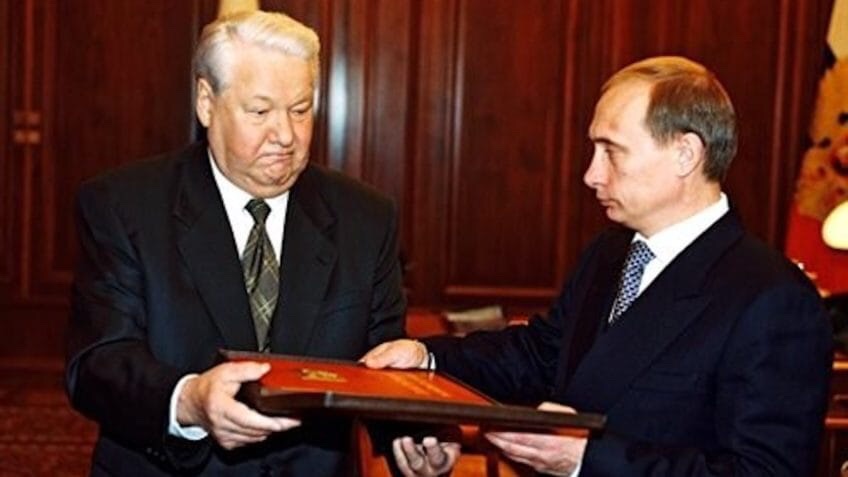
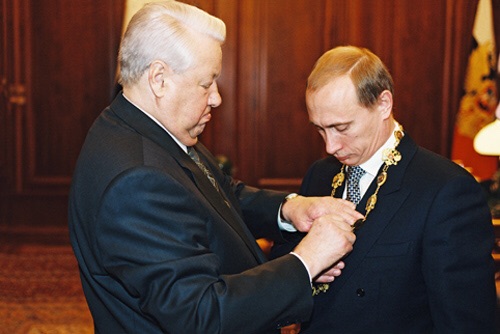
And today, December 31st, is the 25th anniversary of Vladimir Putin’s accession to the presidency of the Russian Federation — the day in 1999 that Boris Yeltsin walked off the job. His departure left Putin, then Prime Minister, in charge as interim President until the next scheduled election in March of 2000, when he officially took hold of the reins . . . reins he has tightened again and again until it almost seems as though the Gorbachev-Yeltsin years of glasnost and perestroika (1985-‘99) were nothing more than another Russian fairy tale.
The five years between the Russian Revolution of 1917 and the formal establishment of the USSR, or Soviet Union, in 1922 were politically chaotic, and represented perhaps the most world-altering events of the early 20th century.
But the arrival of Vladimir Putin at the head of the world’s second most powerful nation, though quieter and less dramatic, signaled changes that would prove as life-changing to the Russian people — and to the rest of the world — as that brutal revolution nearly a century earlier.
Putin had served for 15 years as an officer of the Soviet KGB and was at his then-assigned post in Dresden, East Germany, in August of 1991 when news was received of an attempted coup against Russian President Mikhail Gorbachev. Correctly assessing the possible future ramifications of the event, he quickly left Germany and returned home to Leningrad (soon to be renamed St. Petersburg), joined forces with Mayor Anatoly Sobchak, and began his ascent from jack-of-all-trades to Deputy Mayor.
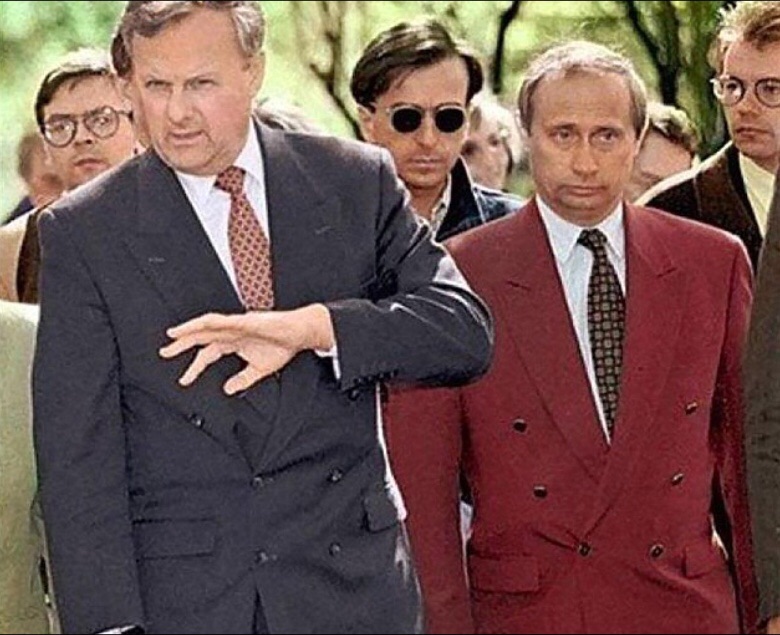
In 1996, when Sobchak lost his bid for reelection, Putin moved to Moscow, where Yeltsin was duly impressed by the younger man’s ability to get things done . . . by any means. Starting out in the Presidential Property Management Department, he rose to Deputy Head of the Presidential Administration in 1997, and First Deputy Head in 1998.
In July of 1998, he returned to his professional roots when he was appointed Director of the Federal Security Service (FSB), successor to the KGB. In March of 1999, he added to his duties by becoming Secretary of the Security Council — one of the most influential positions in the Russian government.
And finally, in August of 1999, Yeltsin — then on his last legs due to ill health and long years of alcoholism — appointed Putin his Prime Minister.
And that, my friends, is how history is made. It takes just one person with the right skills for the job, in the right place at the right time, to alter the course of events for an entire nation . . . and, by extension, the whole world.
Tragically, sometimes that individual also happens to have a narcissistic personality disorder, the instincts of a cold-blooded killer, and a complete lack of conscience or scruples.
The good news is that nothing — and no one — lasts forever.

Just sayin’ . . .
Brendochka
12/31/25
 The Blog About Everything … and Sometimes Nothing