I’m talking about the Russian oligarchs (not the Washington Billionaires’ Club) — the ones who made their first millions from the economic chaos that followed the breakup of the Soviet Union 34 years ago this week, thereby gaining tremendous political influence under newly-anointed President Boris Yeltsin.

Among the biggest of the big shots in those early days of Russian-style capitalism were Boris Berezovsky, Mikhail Khodorkovsky, Mikhail Fridman, Vladimir Gusinsky, Vladimir Potanin and Roman Abramovich. Among them, they gained control of the most profitable major industries, including oil and gas, metals, banking, and the media. Wisely, they tied themselves to Yeltsin’s apron strings, for his financial benefit as well as their own.
Then along came Vladimir Putin. Having worked his way up from his years in the KGB, to a position as aide to reformist St. Petersburg Mayor Anatoly Sobchak, and then through the ranks of the Yeltsin hierarchy, he was perfectly situated as Prime Minister to step in when Yeltsin resigned the presidency on December 31, 1999. Serving as interim president until an election could be held the following March, his victory was practically assured — as it has been in every election since.
But despite his years with Sobchak, Putin was no reformer, as we now know all too well. And life for the oligarchs began to change when Putin informed them in no uncertain terms that they would be allowed to keep their fortunes and conduct their businesses . . . as long as they understood that he, and only he, was in charge of the government.
And some have continued to thrive by staying on Putin’s good side. For example:
> Mikhail Fridman, 61, was a co-founder of Alfa Bank, and remains a member of numerous Russian organizations, including the National Council of Corporate Governance in Russia and the Russian Union of Industrialists and Entrepreneurs. As of 2024, Bloomberg listed his net worth at approximately $13.1 billion.
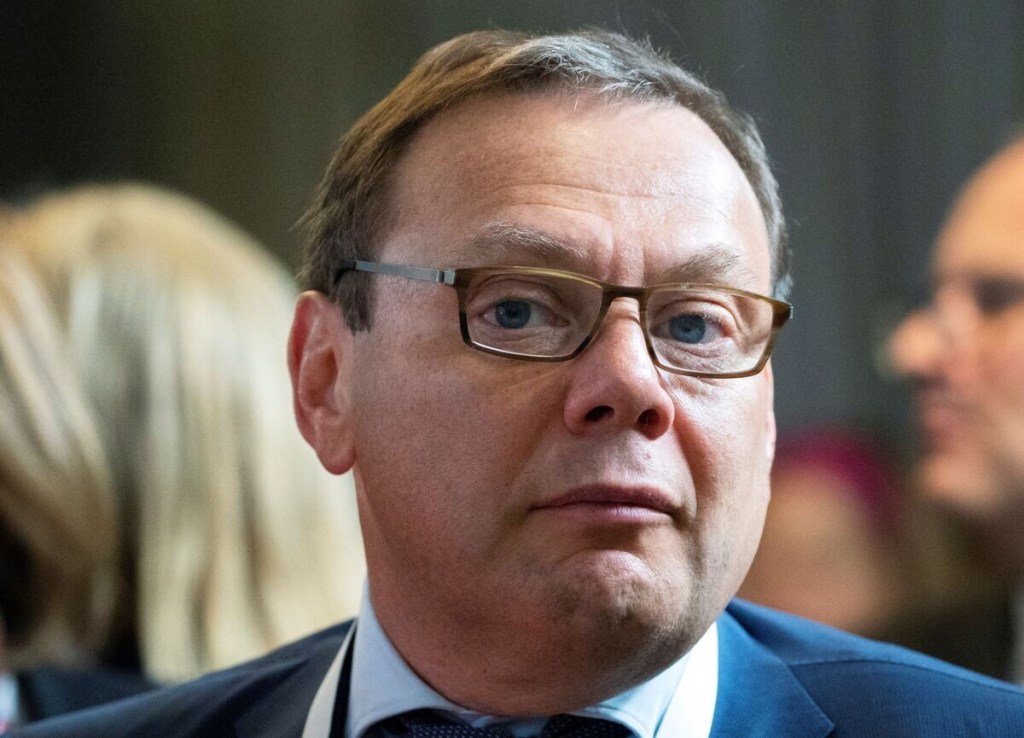
> Vladimir Potanin, 64, is founder and president of Interros, which holds stakes in MMC Norilsk Nickel, Rosbank, Yandex, and others. He is said to be Russia’s fifth-richest businessman; Forbes estimates his net worth at $24.2 billion.

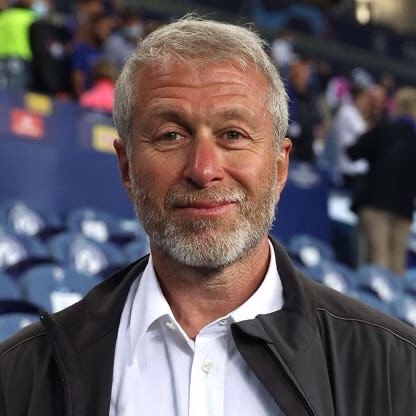
> Roman Abramovich, 59, is one of the most widely known of this little group today. He once owned London’s Chelsea Football Club, though he was forced to sell it in 2022 due to sanctions imposed after Putin’s invasion of Ukraine. He is said to have a good relationship with Putin, though he denies it, and has even been labeled by U.S. intelligence sources as Putin’s financial middleman. In 2023, Forbes estimated his net worth at $9.2 billion.
Others haven’t been quite so lucky.
> Mikhail Khodorkovsky, 62, once thought to be the wealthiest man in Russia, ran afoul of Putin in 2001 when he founded Open Russia, a reform-minded organization aimed at strengthening civil society in Russia. In 2003, his assets were frozen and he was imprisoned. After serving ten years, he was pardoned in 2013 and immediately left Russia, obtaining residency in Switzerland. He later moved to London, and continues to work, both independently and in conjunction with other exiles, in opposition to the Putin regime. Though he is no longer the multi-billionaire he had been in Russia — thought to have been worth around $15 billion from his energy and other holdings — he is still worth an estimated $170 million or more. But he knows that, at least as long as Vladimir Putin sits in the Kremlin, he can never go home again.

> Vladimir Gusinsky,73, is also living in exile due to legal problems in Russia. His original multi-billion-dollar fortune was largely derived from his media holdings, including Media-Most (which includes the NTV channel), the Sevodnya newspaper, and a number of magazines. He now enjoys both Israeli and Spanish citizenship, and has considerable investments in both countries. While his net worth is unknown, he did sell his remaining media assets in Russia for $300 million before fleeing in 2000, and it can be assumed that he has built on that in the past 25 years. Still, like Khodorkovsky, he has been forced to leave behind his homeland and the political and professional status he once enjoyed.
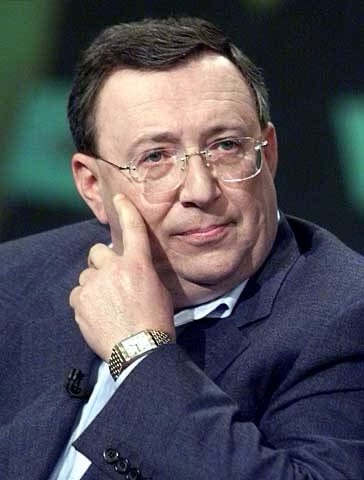
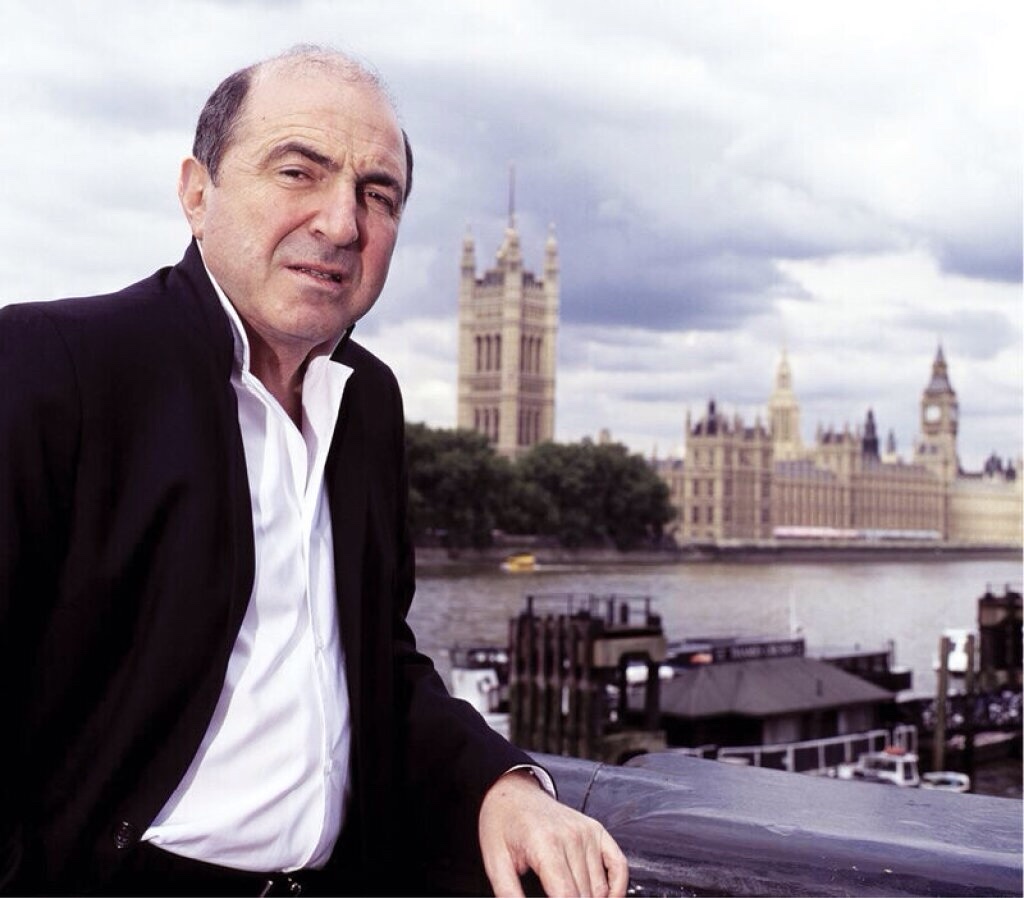
> Boris Berezovsky is unquestionably the saddest case of all. One of the original oligarchs, he had been a government official, an engineer and mathematician, and a member of the illustrious Russian Academy of Sciences. In 1997, he was estimated to have accrued holdings of $3 billion, primarily from Russia’s main TV channel, Channel One. But his foray into politics was his downfall. After initially backing Putin’s election, and himself being elected to the State Duma, Berezovsky opposed Putin’s increasingly autocratic rule, resigned from the Duma, and joined the vocal opposition. Under threat of investigation, he fled Russia for the UK in 2000, where he was granted political asylum. But he was dogged by personal problems and financial losses, and was found, at the age of 67 on March 23, 2013, hanged in the bathroom of his Berkshire home. Nearly bankrupt, he had reportedly become depressed and isolated. But his death was classified by police as “unexplained” due to questionable findings by investigators and a pathologist. The final inquest resulted in an “open verdict,” with a statement by the coroner saying: “I am not saying Mr Berezovsky took his own life, I am not saying Mr Berezovsky was unlawfully killed. What I am saying is that the burden of proof sets such a high standard it is impossible for me to say.” [en.wikipedia.org.]
*. *. *
Today, it is estimated that there may be as many as 100 oligarchs in Russia, many of them billionaires. Despite sanctions since the start of the war in Ukraine, they continue to live their sumptuous lives . . . as long as they pledge fealty to Vladimir Putin. What they lack — what the first oligarchs enjoyed to the fullest — is political power. But they no longer seem to care.
Which sounds very much like billionaires around the world.

Just sayin’ . . .
Brendochka
12/29/25
 The Blog About Everything … and Sometimes Nothing