It’s been going on for some time now: the Kremlin’s blocking of social media and international apps including WhatsApp, Facebook, Instagram, X, Signal, Viber, Snapchat, and now also Apple’s FaceTime video service.
In their place, the Russian government has created an all-powerful new app called Max, developed by the state-run social media company formerly known as VKontakte (now merely called VK), making it much easier for officials to monitor communications.

Russia’s state services portal, Gosuslugi (literally, “State Services”), serves as the country’s primary digital gateway between the state and its people. It is used for tax returns, medical services, legal documentation, and — in accordance with recently-enacted legislation — includes the delivery of electronic draft notices to military enlistment offices. [Current time and RFE/RL’s Russian Service, December 10, 2025.]
And now Deputy Prime Minister Dmitry Grigorenko has advised that the government has instituted a ban on international incoming calls made without the consent of the receiver, allegedly aimed at “protecting citizens from phone and Internet fraud.” The new measures will include mandatory labeling of all international calls, issuance of special “children’s SIM cards,” and stricter limits on issuance of mass SIM cards. [Id.]
Further, the Ministry of Digital Development, Communications and Mass Media has said that it is gradually phasing out SMS-based logins to Gosuslugi on mobile devices. Access to Gosuslugi via smartphone will hereafter be possible only through Max. [Id.]
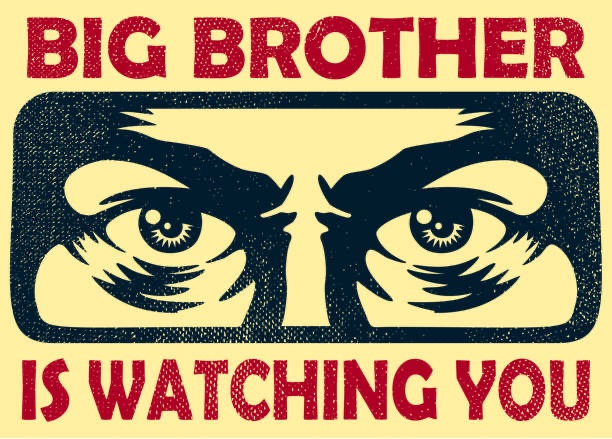
When I made my first trip to the Soviet Union in 1988 with an American tour group, I decided to make one phone call home to the U.S., just to let my family know I was alive and well. Communications were difficult in those days; few people even had their own home phones, as the waiting list was years long. But the hotel was finally able to put the call through for me — at a cost of $50! — and I knew, or at least assumed, that it was being monitored.
The advent of the cell phone changed all of that, and today — at least in the cities — nearly everyone walks around with a phone in hand. The internet has also offered Russian citizens greater access to information, as well as the ability to keep in touch with friends and relatives abroad.
But that is changing. Throughout the world, individual privacy has been chipped away by the very technology on which we have come to depend. And in Russia, that is being taken to an extreme not seen since the 1980s . . . all in the name of “protection.”
In Putin’s world, everything old is becoming new again. But today’s young adults are better informed than their parents and grandparents were. They have known freedom; in fact, an entire generation has never lived under communism. So the question is: How much of this Soviet-style repression will they accept before they rebel?
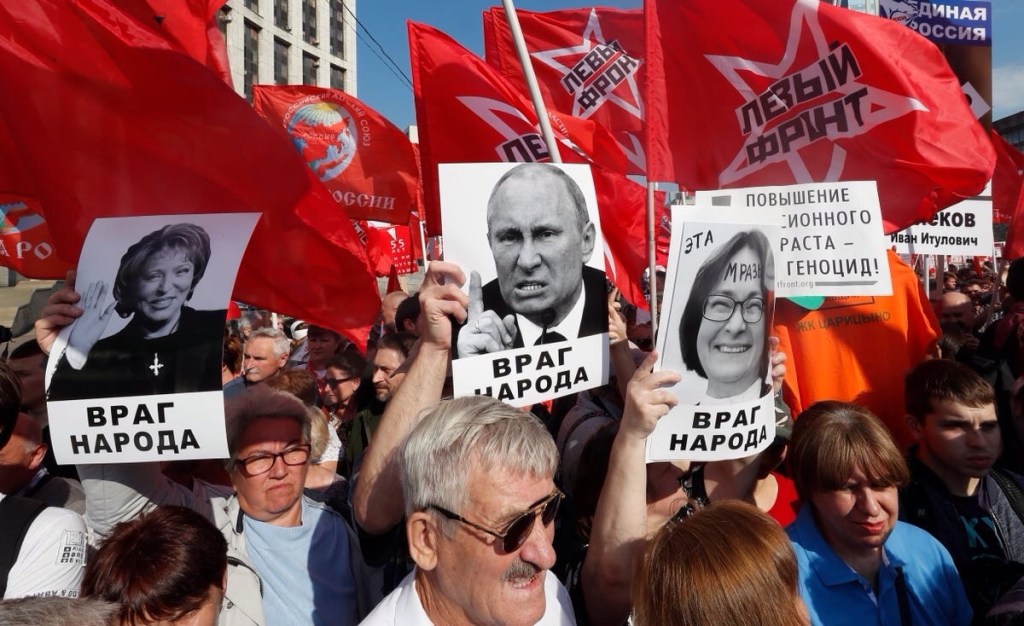
(The three pictures read “Enemy of the People”)
(The red flags at top right say “The Left Front”)
Just sayin’ . . .
Brendochka
12/13/25
 The Blog About Everything … and Sometimes Nothing