Let’s be realistic: No one is immortal. That is an indisputable fact that even Donald Trump cannot change through bribery, bullying, or gaslighting. And it applies to world leaders as well as to us mere mortals.
Much has been made recently of Trump’s apparent inability to stay awake through meetings, his slurred and often incoherent speech, and his sickly appearance. He may have a good number of years ahead of him; but at 79, he is showing his age and an increasing measure of frailty.
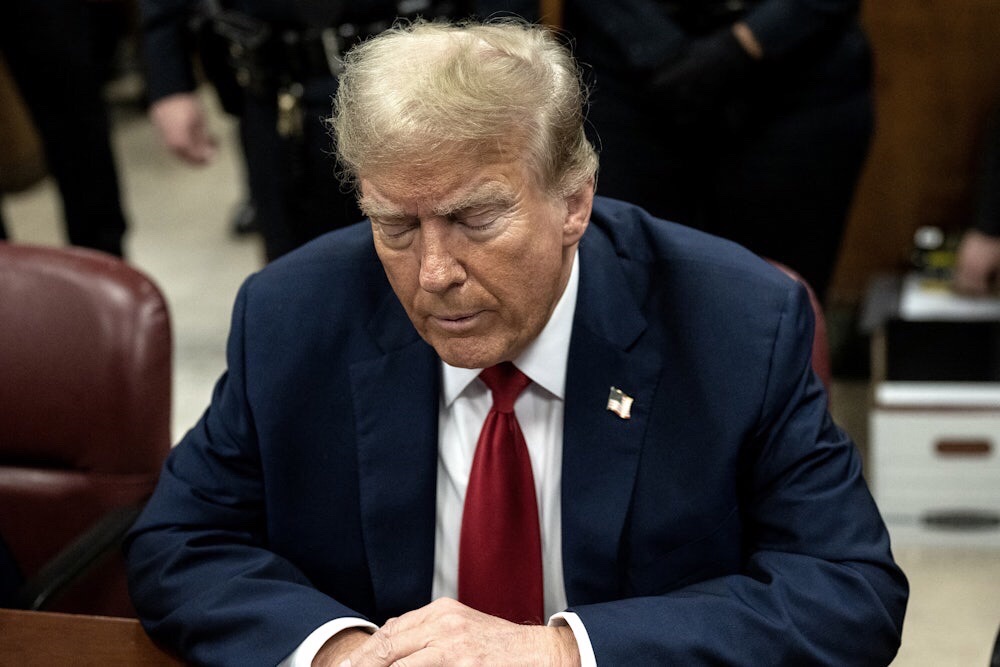
But he’s not alone in the creeping decrepitude category. In the eastern hemisphere, three of the free world’s fiercest adversaries — and three of the five founding members of BRICS — are also in their declining years: Russian President Vladimir Putin, 73; Chinese Premier Xi Jinping, 72; and Indian Prime Minister Narendra Modi, 75.
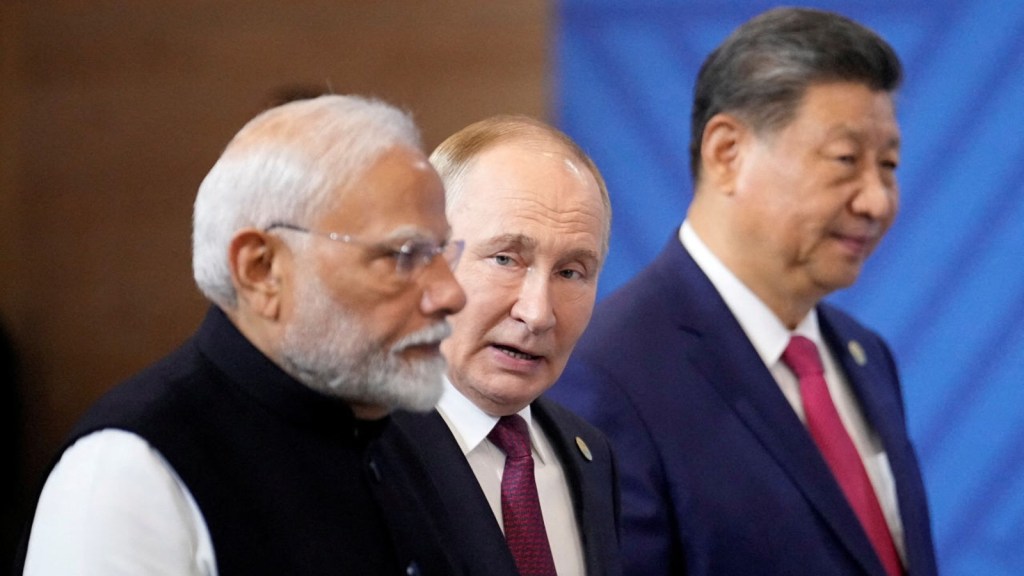
In the way of autocrats the world over, each of them keeps details concerning their health secret, in order to maintain an aura of strength and omnipotence. But the fact remains that they are, in the end, mortal. And one day, either by reason of incapacity or death, they will need to be replaced.
So what would happen if any one of them were suddenly — in the words of William Shakespeare’s Hamlet — to “shuffle off this mortal coil”? Let’s look at Trump first, since the United States is the only one of the four countries with a clearly-mandated order of succession.
According to the U.S. Constitution, in the event of the death or other removal of the president, the vice-president immediately takes the oath of office, as happened with Roosevelt and Truman, and Kennedy and Johnson. In line after the vice-president are the Speaker of the House of Representatives, the President pro tempore of the Senate, and finally — in what would be an extraordinary circumstance — members of the Cabinet, beginning with the Secretaries of State, Treasury and Defense.
So, if this were to occur in the near future, we’re talking about JD Vance, Mike Johnson, Chuck Grassley (already 92 years old), Marco Rubio, Scott Bessent, Pete Hegseth, and so on.

Looking at that list — and I never thought I’d hear myself say this — I’d almost rather we followed the examples of countries that hold new free-for-all elections. Almost.
But what about those other countries?
China has no specific order of succession, and it is unclear whether anyone is currently favored as next in line. So in terms of the future, it is something of a wild card.
India also poses some interesting questions. While its Prime Minister, Narendra Modi, has been the public face of the Indian government, in reality he is third in power, following the president and vice-president. His position is filled by presidential appointment, but that appointment goes to the leader of the majority party or coalition in the lower house of parliament. Therefore, in the event of Modi’s death, the president would appoint an acting prime minister until the party elected a new leader, who would then assume the office.
*. *. *
The big question, of course, is what would happen in Russia if Putin were to die, or if — as some experts are prognosticating — his disastrous war against Ukraine were to drag his country’s economy and morale into such a downward spiral that the people finally declared “Enough!” and forced him out of office.
Russia has a constitution, which provides that, in the event of the death or other departure of the president, the prime minister (currently Mikhail Mishustin — never heard of him, have you?) becomes acting president until the next scheduled presidential election. That is how Putin inherited the office from Boris Yeltsin when Yeltsin resigned in December of 1999. In March of 2000, a new election was held, and Putin — to no one’s surprise — won handily.
But Mishustin does not appear to have Putin’s power base. What he does have is a lot more competition for the top job. There would first be a monumental internecine battle of Kremlin favorites — politicians and oligarchs aplenty — ready to cut each other’s throats (or start pushing people out of windows) to be first in line.
Then you would have the reformers — the dissidents anxious to guide the country back onto the road to democracy. Aleksei Navalny would have been the logical choice, had he not been eliminated by Putin in a Siberian prison camp. But some are now pointing to reformers-in-exile, such as Vladimir Kara-Murza, Garry Kasparov, or Mikhail Khodorkovsky.
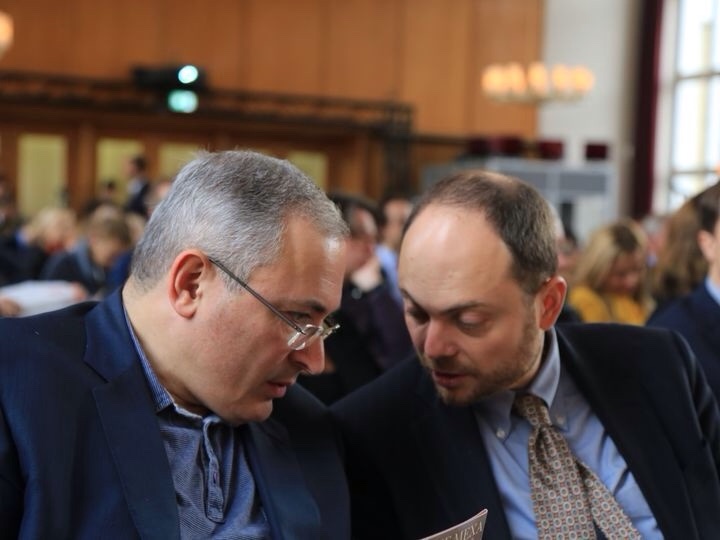
In Russia, anything can happen. And with Vladimir Putin getting older, and his popularity waning as the war drags on and begins to be felt on Russian soil, the rest of the world needs to be prepared.
Exactly how we do that . . . well, thankfully, that’s not my job.

Just sayin’ . . .
Brendochka
12/11/25
 The Blog About Everything … and Sometimes Nothing