I first reported on the plight of Russian journalist Nika Novak on March 9th of this year. She had been found guilty the previous year of “confidential cooperation with a foreign state, international or foreign organization.” [RFE/RL, March 4, 2025.]

Novak was charged under Article 275.1 of the Russian Criminal Code, which had been adopted in 2022 specifically to deal with persons and organizations expressing opposition to Vladimir Putin’s invasion of Ukraine in February of that year. She was the first journalist to be sentenced under that specific article, which Human Rights Watch has called “reminiscent of the Soviet-era ban on contacts with foreigners.” [Id.]
Arrested in the middle of the night at her home in the Siberian city of Chita on Christmas day of 2023, Novak was flown to Moscow to be placed in pretrial detention. Nearly a year later, on November 26, 2024, she was convicted following a closed-door trial and sentenced to four years in prison. She was later moved to prisons in other locations, including Irkutsk. Finally, it was determined that she had been transferred on March 1st to a penal colony in Novosibirsk, described by some of her relatives as being worse than any of the other facilities in which she had been held.
At that location, she was forced to share a cell with ten other inmates — women convicted of a variety of criminal (not political) charges. Her attorneys filed a motion to have her moved to a different cell, and had also filed an appeal of her sentence, which was denied on March 31st of this year.
On May 25th, Novak was transferred once again, this time to women’s Penal Colony No. 11 in Irkutsk, Siberia, known as one of the harshest in the region. Reports from former inmates have told of regular beatings, psychological pressure, blackmail, and prolonged detention in punishment cells. In August, Novak was placed in solitary confinement for five days for refusing to to lie about the conditions under which she was being held.
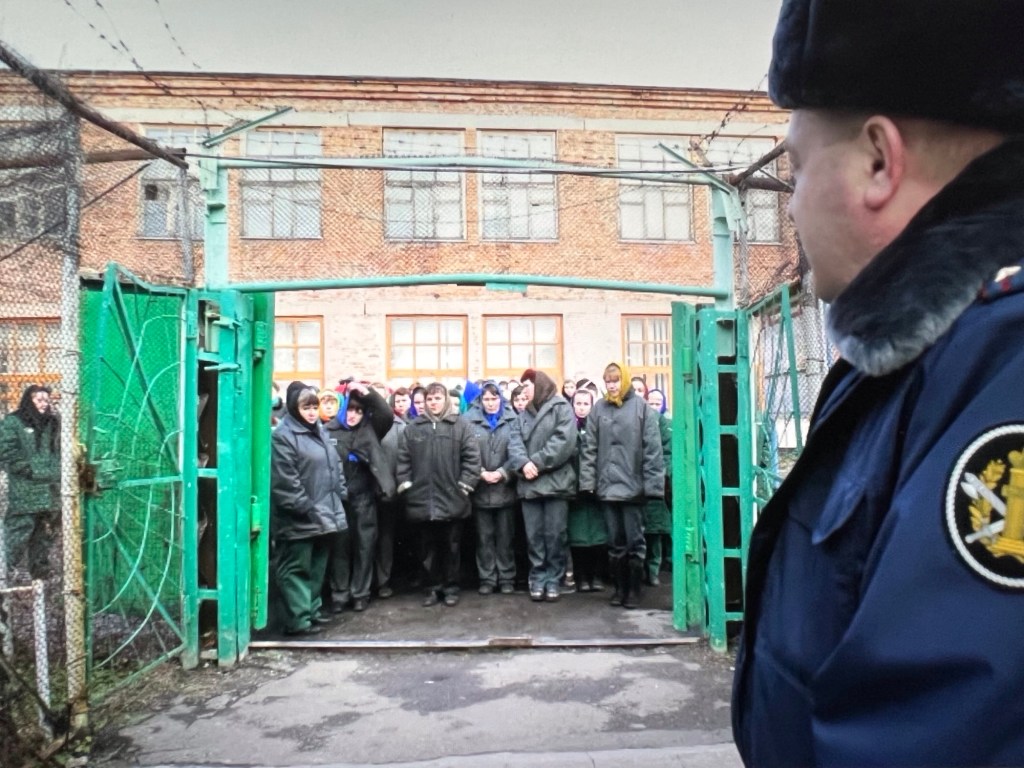
Now her lawyer, Yulia Kuznetsova, has posted on social media that it appears Novak is being transferred once again from Irkutsk, though her destination is unknown. Kuznetsova wrote:
“This week, a lawyer colleague of mine tried to visit Nika, but was denied entry. He noticed a loud noise and a large number of Investigative Committee officers in the colony. The prison staff are not explaining what exactly happened.” [Current Time and RFE/RL’s Russian Service, December 1, 2025.]
Kuznetsova called the colony in Irkutsk on November 30th for information, but was told only to submit a request, which she has done.
In Putin’s prison system, unannounced and unexplained transfers of this sort are not uncommon. There can be any number of reasons: punishment by transfer to an even worse facility than the last; a medical condition requiring hospitalization; or even — in the case of a miracle — preparation for release as part of a prisoner swap. They always show up eventually; but in the meantime, the prisoner’s family and friends wait, and fear the worst.
In Nika Novak’s case, I worry about the unidentified “loud noise” and the presence of “a large number of Investigative Committee officers” reported by the lawyer.

Just sayin’ . . .
Brendochka
12/2/25
 The Blog About Everything … and Sometimes Nothing