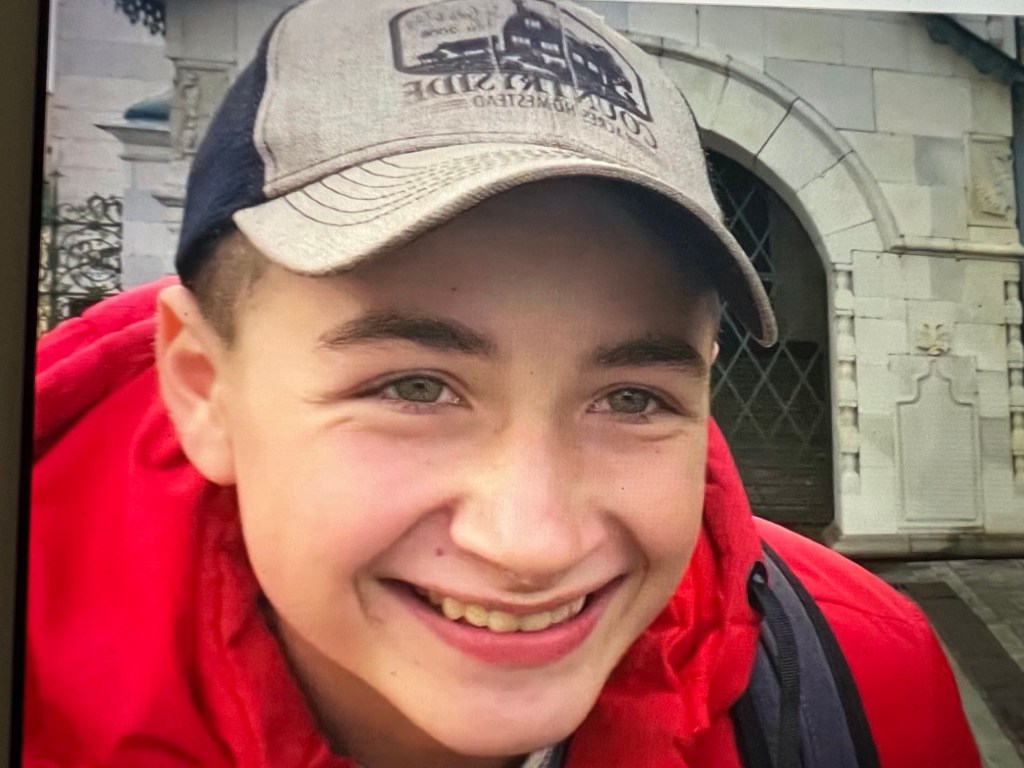
Obviously, no one can accurately foretell the future. But we can think ahead to the most likely possibilities . . . and in the case of young Wesley (“Wes”) Feenstra — the 16-year-old Canadian living with his parents and seven siblings on their farm in the Nizhny Novgorod region of Russia — there are some big “ifs” to be considered.
Because on November 5th, Vladimir Putin signed into law Decree No. 821: “Executive Order On the Temporary Procedure for Granting Citizenship of the Russian Federation and Issuing Residence Permits in the Russian Federation.”
And no one seems sure exactly what it means, to whom it applies, what is meant by “temporary,” or whether it was intentionally left ambiguous or was the result of hasty, sloppy drafting. But one thing is clear: It involves military service as a prerequisite to obtaining Russian citizenship or permanent residency.
And Wesley’s dad, Arend Feenstra, is understandably concerned, both for himself and his sons.
The Feenstras — Arend, Anneesa, and eight of their nine children — moved from Saskatchewan, Canada, to the Nizhny Novgorod region of Russia nearly two years ago, to build a farm and a new life away from the perceived “wokeness” of their native country in a place they thought would be better suited to their conservative beliefs. After a rough start, things began to fall into place for them, and they have been doing surprisingly well, with a great deal of hard work and an abundance of social media promotion for Putin’s immigration drive.
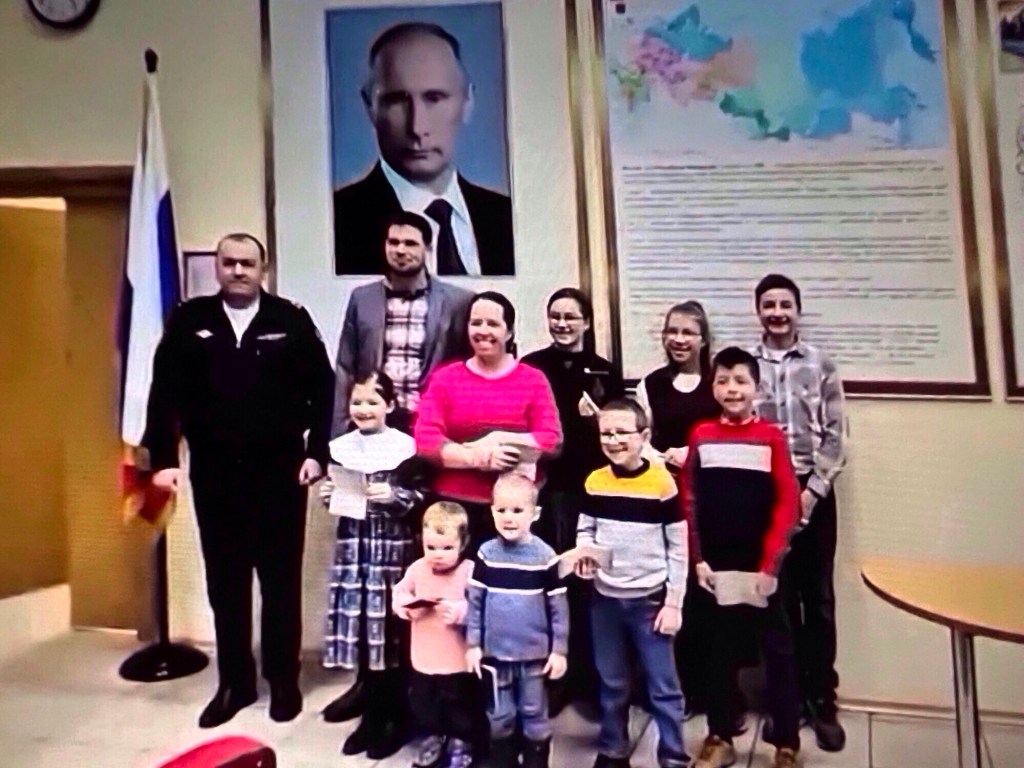
About a year ago, they obtained temporary residence status, meaning that in another three years’ time, they would be eligible to apply for permanent residency. With two years still to go, that would bring young Wes to his 18th birthday — the age of eligibility for military service.
And the new Decree No. 821 states that :
“ . . . [in order] to obtain Russian citizenship and a residence permit in Russia, certain categories of capable men aged 18 to 65 must now provide one of two documents:
– A discharge certificate from military service in the Russian Armed Forces or the Russian Ministry of Emergency Situations.
– A certificate confirming unfitness for military service.
[Eng.confidencegroup.ru, November 10, 2025.]
Without either of those, they would be required to serve at least a year in the military.
A clear exception is made for citizens of the Republic of Belarus. Not clear, however, is what other exceptions or requirements may exist under 821.
Nor does the decree specify what is meant by a “Temporary Procedure for Granting Citizenship.” Is it intended to be effective only for the duration of the “special military operation” in Ukraine? Or is it open-ended?

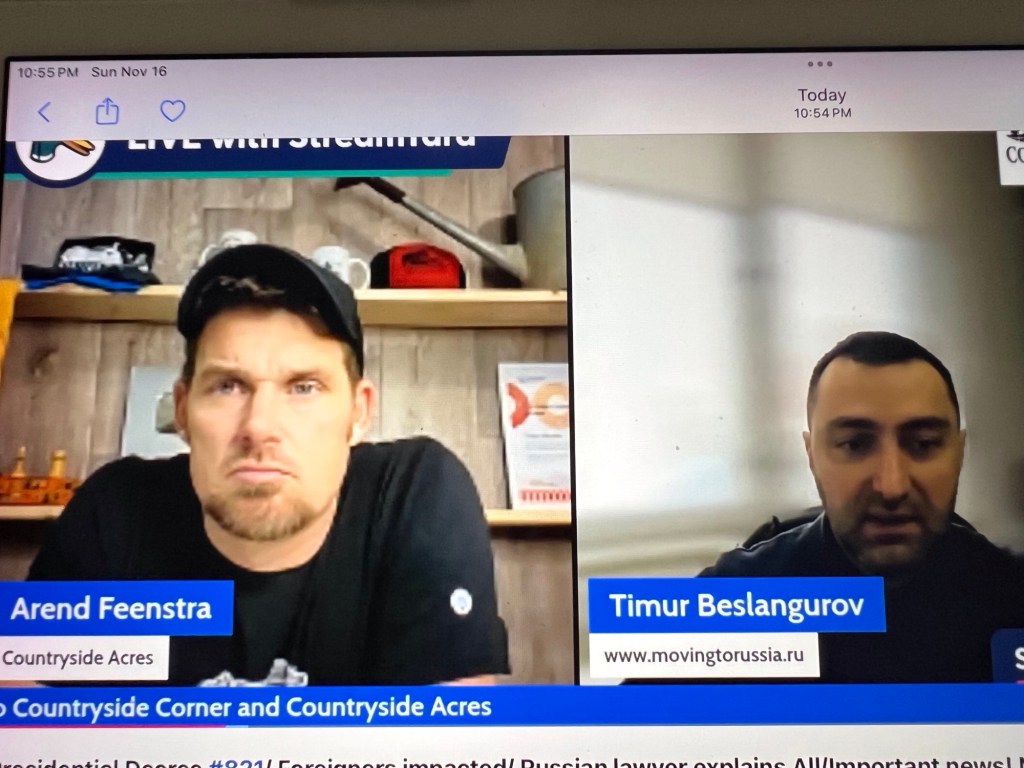
Certainly, Arend Feenstra needed answers. So he called upon Timur Beslangurov, a leading Russian expert on immigration law, who appeared with Feenstra on social media. And after watching the broadcast twice, all I was able to discern were a lot of “ifs” and “maybes” and an occasional “probably.”
For example: Beslangurov “hopes” the unclear portions of the decree will be amended; said that “supposedly” they won’t take anyone who doesn’t speak Russian; and “believes” the decree is intended to apply primarily to citizens of the Central Asian “Stans,” of whom there are millions in Russia.
He also spoke of a pending decree on immigrants who came to Russia because of “shared values” — as did the Feenstras — and said that, in any event, their family was “probably” all right for at least the next two years, when their temporary residency permits expire.
*. *. *
Throughout Beslangurov’s attempt to allay everyone’s fears, Arend Feenstra appeared uncharacteristically serious and increasingly concerned . . . as well he might. But he managed to close the broadcast with his customary promotion of life in Russia, saying it’s still a “really good place” with a “pile of opportunities.” He said he continues to feel that immigrants are welcome there, that it is a safe place to be, and that a “traditional value” visa is the best way to go.
But his customary enthusiasm was missing, and it was obvious to me, after observing this family for nearly two years, that Arend Feenstra has suddenly been hit with one of the realities of life in Putin’s Russia: the unpredictability and capriciousness of the government.
So he now faces the possibility of military conscription for himself and/or his eldest son . . . or alternatively, losing all of the money and hard work they have invested in their thriving new farm and having to start over again, back in Canada or elsewhere.
And that is truly an overwhelming prospect.

Just sayin’ . . .
Brendochka
11/17/25
 The Blog About Everything … and Sometimes Nothing