As Prime Minister of a country that fought so valiantly for freedom and democracy 35 years ago and has since become a member of both NATO and the EU, Viktor Orban has been uncomfortably seated on the fence between Hungary’s obligations to the West and his personal alliance with Vladimir Putin.
Not to mention his country’s dependence on Russian oil and gas.
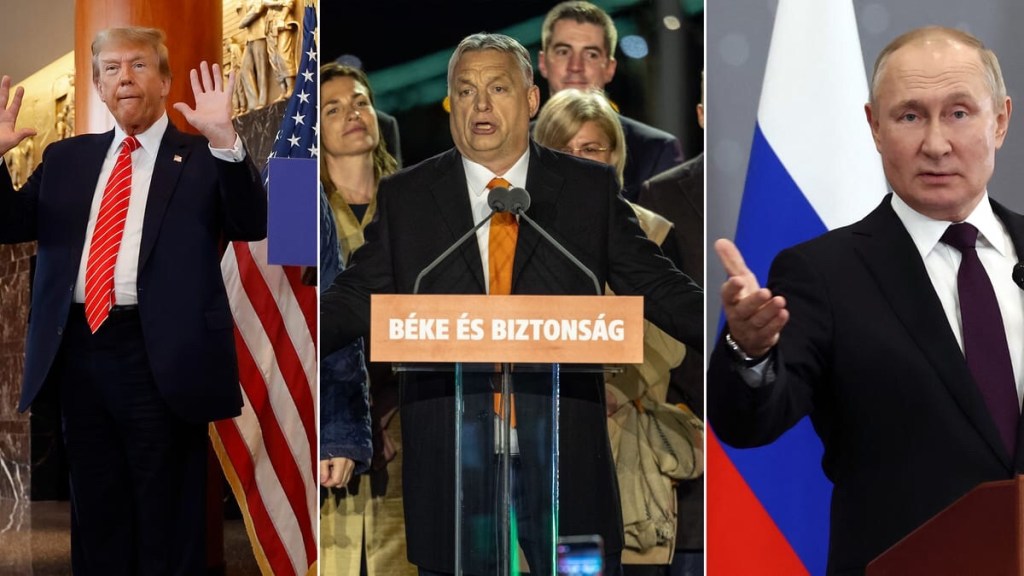
In office since 2010, and as leader of the ruling Fidesz party since 2003, Orban has used his unique position to promote himself as the perfect mediator between Russia and the West. And he believed his moment of glory had come when Putin suggested Budapest as the site of a bilateral summit with Donald Trump earlier this month. But when Trump called off the meeting, Orban’s dream suddenly faded.
Equally upsetting to him is the effect on Hungary of Trump’s and the EU nations’ latest sanctions against Russia’s two largest oil and gas companies. Demands are now being made upon Russia’s remaining customers — specifically, Hungary and Slovakia — to cut their purchases of Russian oil, as the others have already done.
And Orban is scheduled to meet with Trump in Washington next week, where he knows that further pressure will be exerted for him to join in the sanctions. Doing so, however, would obviously — to put it mildly — place him in a difficult position vis-a-vis his relationship with Putin. He needs Russia’s oil . . . and not because he can’t buy it elsewhere, as much of the rest of Europe is already doing.
Viktor Orban’s problem is that he is up for reelection in April, and he is not a shoo-in this time around. The leader of the opposition Tisza party, Peter Magyar, has recently staged an unexpected surge in popularity, soaring ahead of Orban in most of the opinion polls. And one of Orban’s biggest selling points has been his promise to the people of a continuing source of “cheap Russian energy.” In fact, asked recently whether he thought Trump’s latest sanctions might have been excessive, he replied:
“ . . . from a Hungarian point of view, yes.” [Nick Thorpe, BBC, October 28, 2025.]
And that certainly is not what Trump wants to hear . . . nor will he be likely to overlook it at their upcoming meeting. Orban is hoping to buy a few more months, until after the election, before having to stop or reduce his purchases of Russian oil. But if he is counting on his supposed friendship with Trump, he would do well to remember that he is dealing with a man to whom loyalty is strictly a one-way proposition.

It appears that Viktor Orban has suddenly found himself walking a very thin political high wire, and without a visible safety net. At best, he may have five months to find his perfect balance . . . or to begin planning for an early retirement.

Just sayin’ . . .
Brendochka
10/29/25
 The Blog About Everything … and Sometimes Nothing