During my years of travel to the Soviet Union (1988) and to the downsized Russian Federation (1992-94), I was privileged to experience many of that ancient country’s wonders: the White Nights of Leningrad (now St. Petersburg),; the lush Black Sea resort of Sochi; the Winter Palace (now the Hermitage Museum); the Summer Palace at Petrodvorets (or Peterhof); the writers’ colony at Peredelkino; the inside of Petrovka 38, better known as Moscow’s Militia Headquarters; performances at the illustrious Bolshoi and Mariinsky (Kirov) Theaters; countless museums, cemeteries, galleries, and ethnic restaurants . . . and of course, the Kremlin and adjoining Red Square.
But I was never able to tour the inside of St. Basil’s Cathedral; it was always “na remontе” — under repair.
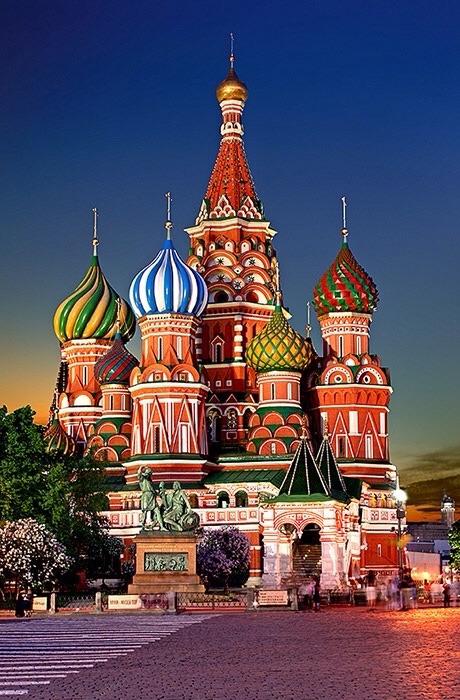
But this week, I was at last able to see what the remont had been leading up to when I took a vicarious tour, via the wonders of YouTube, with Canadian transplants Arend and Anneesa Feenstra.
For whatever reason, the charming couple from Saskatchewan left their farm in Nizhny Novgorod, Russia, and their eight children, in order to spend a couple of days by themselves in the big city. They traveled by train and Metro — a total of four and a half hours each way — to Moscow, where they had booked a small rental apartment for the overnight stay.
But instead of a tour of the city, they walked along a high-end shopping street, past the Bolshoi Theater, and directly onto Red Square. Although Arend said that they were in the Kremlin, he was mistaken; they never entered the Kremlin grounds, but instead strolled along the entire perimeter of the massive fortress, outside its red brick walls — a distance of some 8,200 feet. (A mile is 5,280 feet long.)

Entering Red Square, they ignored the Historical Museum and Lenin’s Tomb; briefly pointed out, but didn’t enter, GUM Department Store; and headed directly for St. Basil’s, which is now open to the public. And I was thrilled to find that they were able to photograph the interior, which is now a world-class museum of Russian history and magnificent 16th-century architecture.
It may have taken the better part of 30 years, and unknown amounts of money, but the end result was clearly worth it.
As they filmed their way through the labyrinth of rooms and hallways, Arend refrained from offering his usual running commentary, instead focusing on the architectural and religious wonders before his eyes. While he spent a good deal of time reading the explanatory signs alongside the glass-enclosed exhibits — which, to my surprise, were printed in both Russian and English — I was more taken with the architecture.

The history of St. Basil’s is fascinating. Briefly, it was commissioned by Tsar Ivan IV — more popularly referred to as Ivan the Terrible — in the mid-1500s, to celebrate a military victory. It is said, though not proven, that when the cathedral had been completed, he ordered the architect blinded so that it might never be replicated. That may be no more than an urban legend . . . but knowing Ivan’s history, anything is possible.
As I watched — and envied — the Feenstras on their walk through history, I took some screen shots of their video, a few of which I will share with you now.
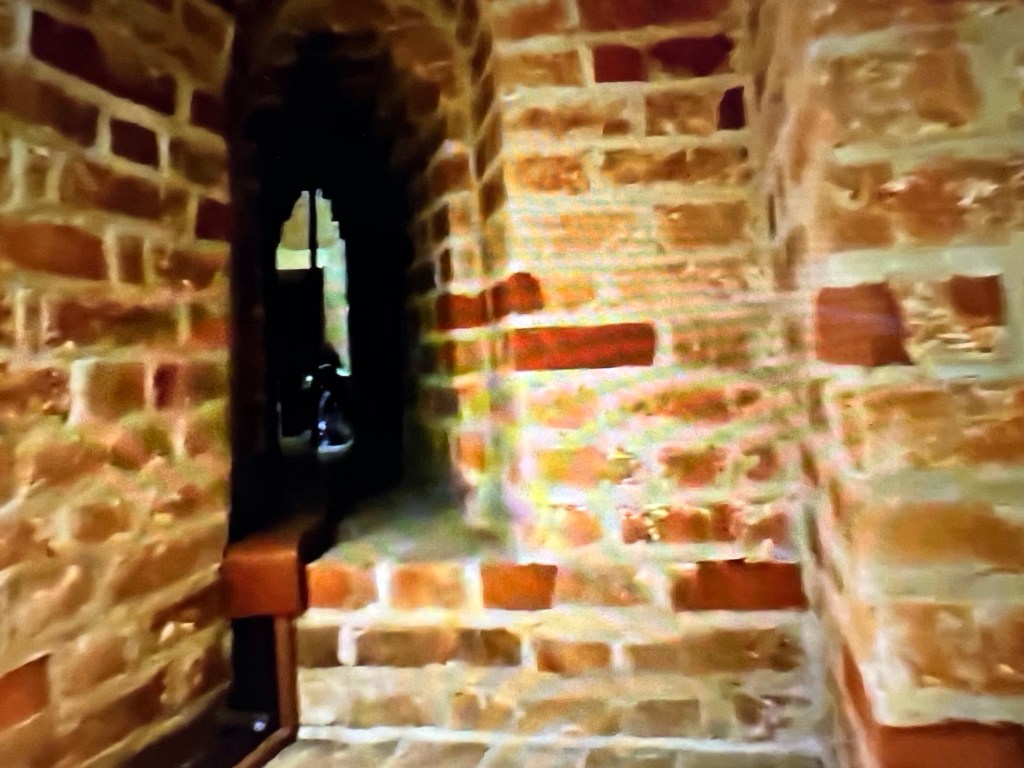


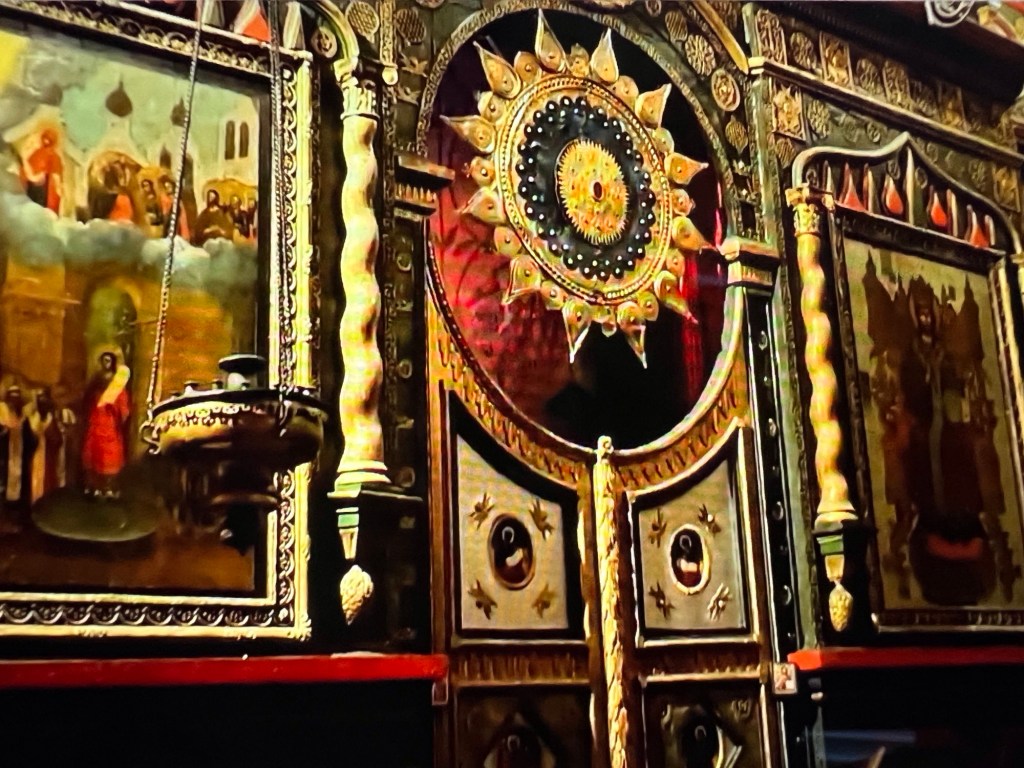

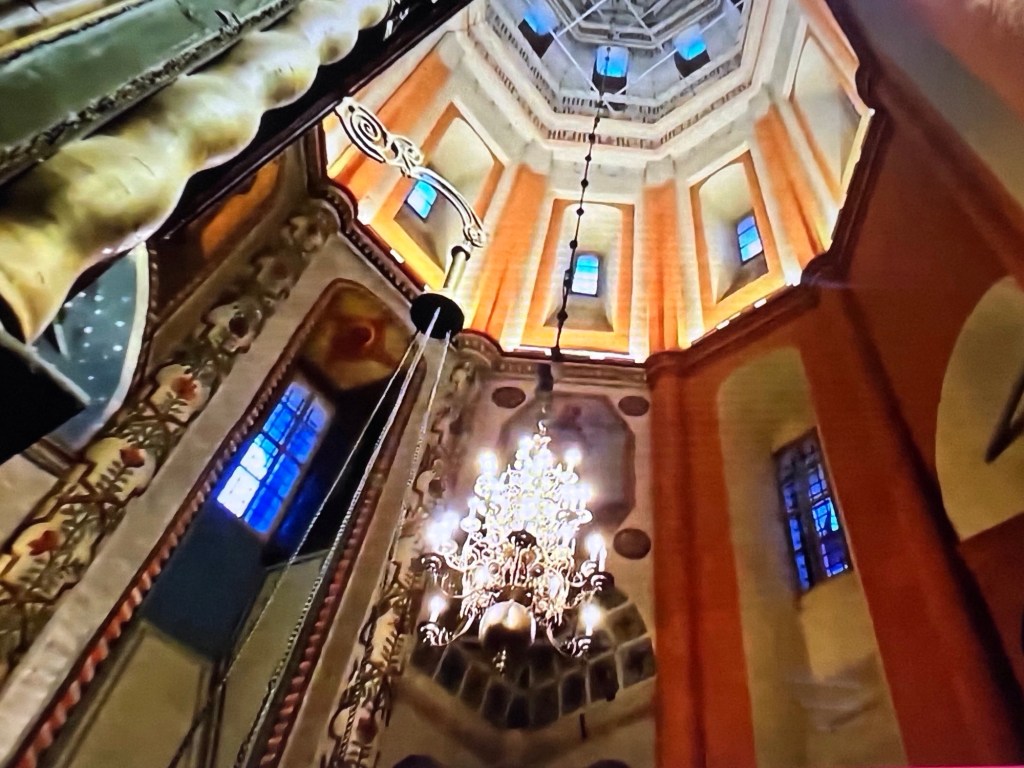
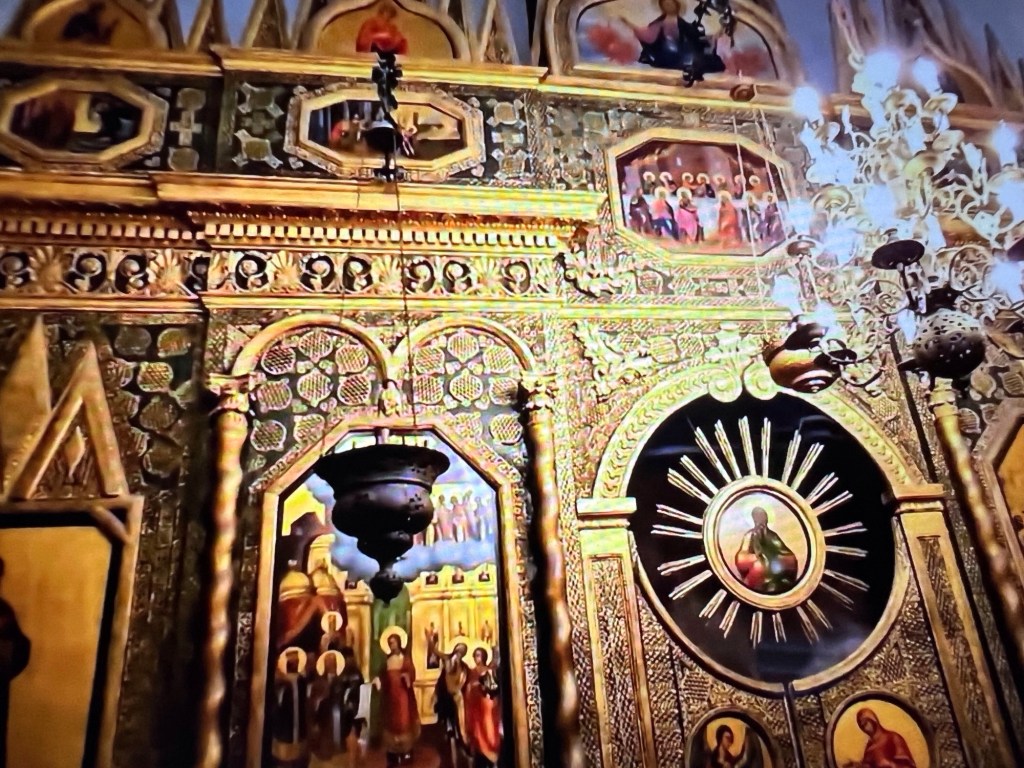


I never cease to be amazed by the dichotomy of a people who are so inherently capable of unspeakable acts of brutality, yet are also able to produce such a vast legacy of architectural, artistic, musical and literary splendor.
And now, I believe this calls for a shot of Stolichnaya vodka and an hour or so of Tchaikovsky.
*. *. *
They can’t hear me, but I thank the Feenstras for the unexpected tour that I was never able to take in person.
As for a description of St. Basil’s Cathedral itself, I can only offer a phrase recalled from my many years spent working in the legal profession: Res ipsa loquitur.
“The thing speaks for itself.”

Just sayin’ . . .
Brendochka
10/22/25
 The Blog About Everything … and Sometimes Nothing